Wolf Island Diver
Well-Known Member
- Thread starter
- #1
First, let me preface this by saying that I love my T4 Plus. It does well in rain, the removable floors are fantastic, it’s great for stargazing, etc. I don’t like RTTs especially with a dog so it’s either a tent like this with cots or an off-road trailer for me. I also understand that in adverse conditions any tent needs to be properly guyed out. I’m generally pretty OCD about this. Lastly all hub tents suffer from some version of this problem under certain conditions, because the pop in and out and tension keeps them open or closed.
This weekend while in Hatteras, the roof in the forward compartment of my guyed out T4 plus tent violently collapsed on my 9 year old’s head in a storm. While there is some lessons here for future use, this tent’s rain fly has some major design problems that can cause this.
I’m not the first person to experience the problem. This video explains it as well as I can with visuals:
In our situation, the tent sides, fly sides and rear were guyed out (9 lines) using sand stakes. All points of the floor were staked down using high quality stakes, not the cheap Gazelle ones. None of the stakes or guy lines gave way and all remained taut. We encountered wind gusts around 20MPH throughout the evening. Most of the night we had no issues, even in strong gusts. However, by mid morning while we were packing up, the roof collapsed in more moderate winds. This caused the roof hub to violently slam into my sons head without warning. I’m not exaggerating when I say that he’s lucky to have not suffered a concussion or worse.
The root of the problem is that the fly is far too shallow and attaches to the ends of the two roof poles. Wind can blow directly under it and it buffets constantly. Just as a rain fly, it’s not great and provides poor coverage fore and aft. Thankfully the front and rear doors are fairly water resistant. There’s also no vestibule. The elastic cords on sides and the fore and aft poles are not enough to hold the fly in place well. Designed to absorb shock they simply allow the fly to move even more.
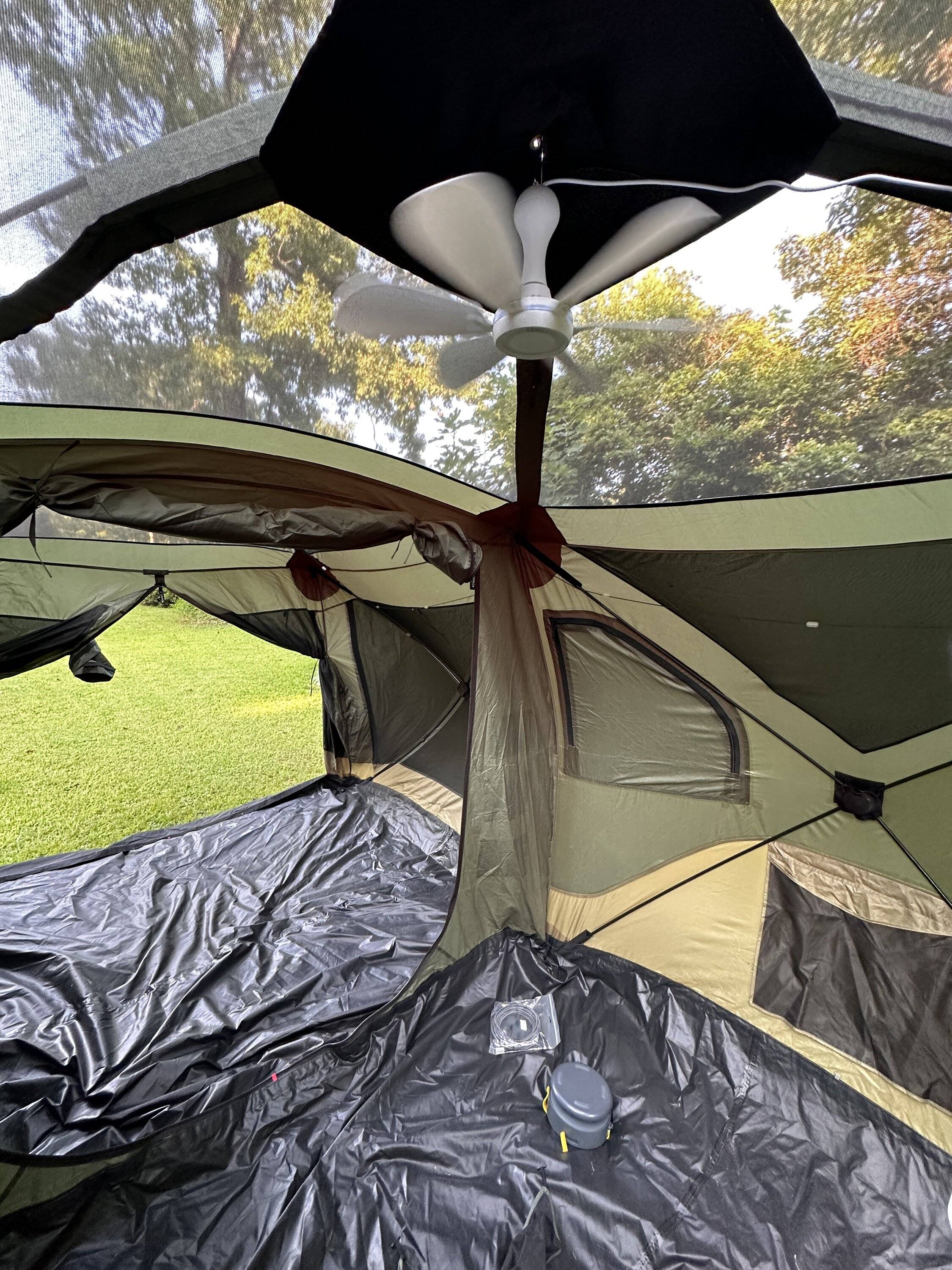
Under the certain but relatively mild conditions, the fly becomes a sail and its attachment to the ends of the roof poles provides it with tremendous leverage. This can be enough to invert the roof itself. Again, our tent did this under more moderate winds.
I’ve had dome tent poles invert before. The problem is that with a hub tent you have 4 poles under immense tension and you have the hub itself. This isn’t like a single pole inverting. It’s a massive concentrated force right in the center of the tent slamming into the top of someone’s head with no warning. It could easily result in injury or death. Again, this is with 9 tight guy lines attached.
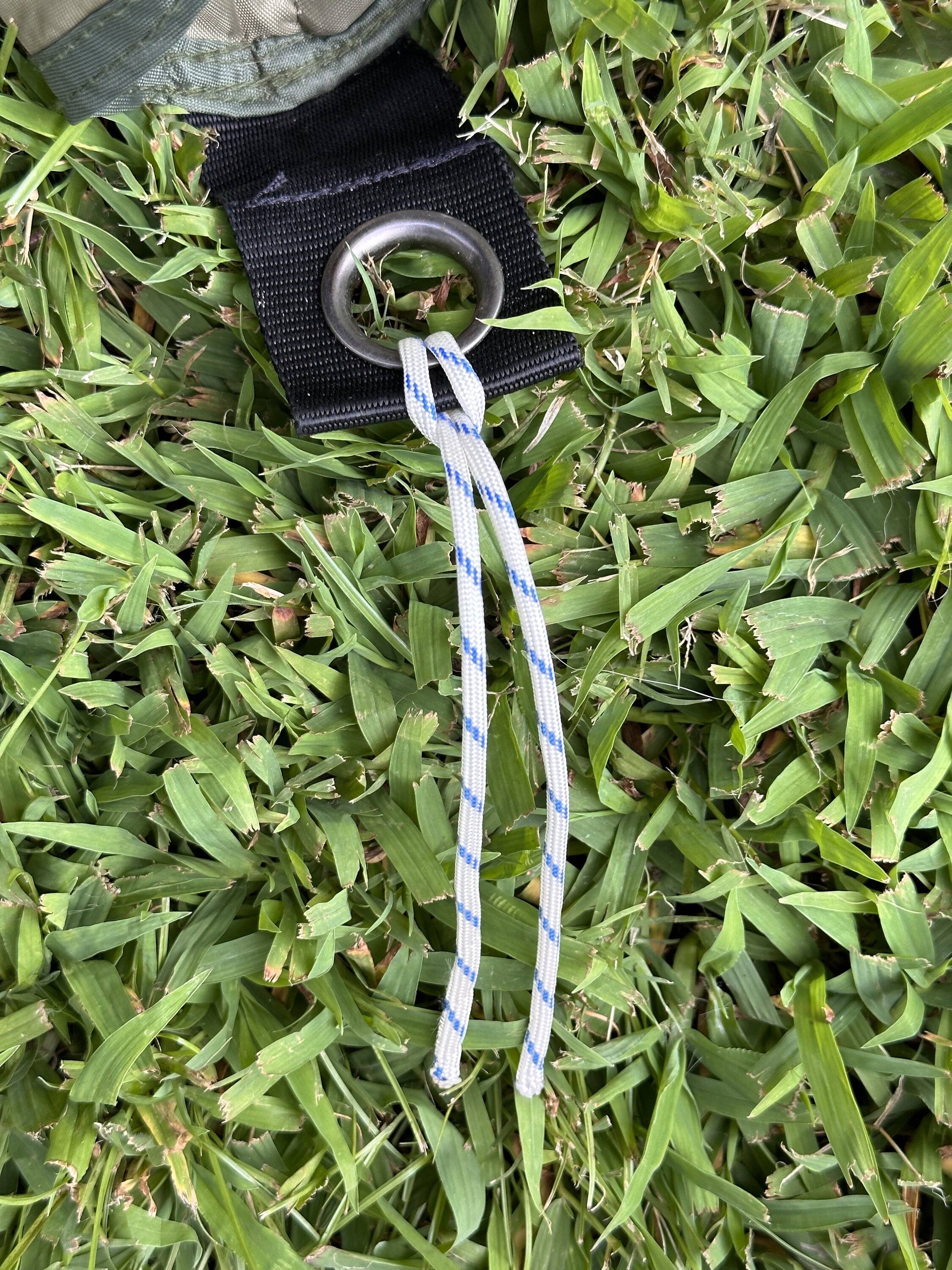
I feel like this fly requires a redesign but at the very least no one should use this tent with out guying out the fore and aft ends of the fly where it attaches to the ends of the roof poles. The side lines are not enough. I’m not even sure that the ends are enough. I myself plan on testing to see how much additional resistance this provides against pulling down the roof.
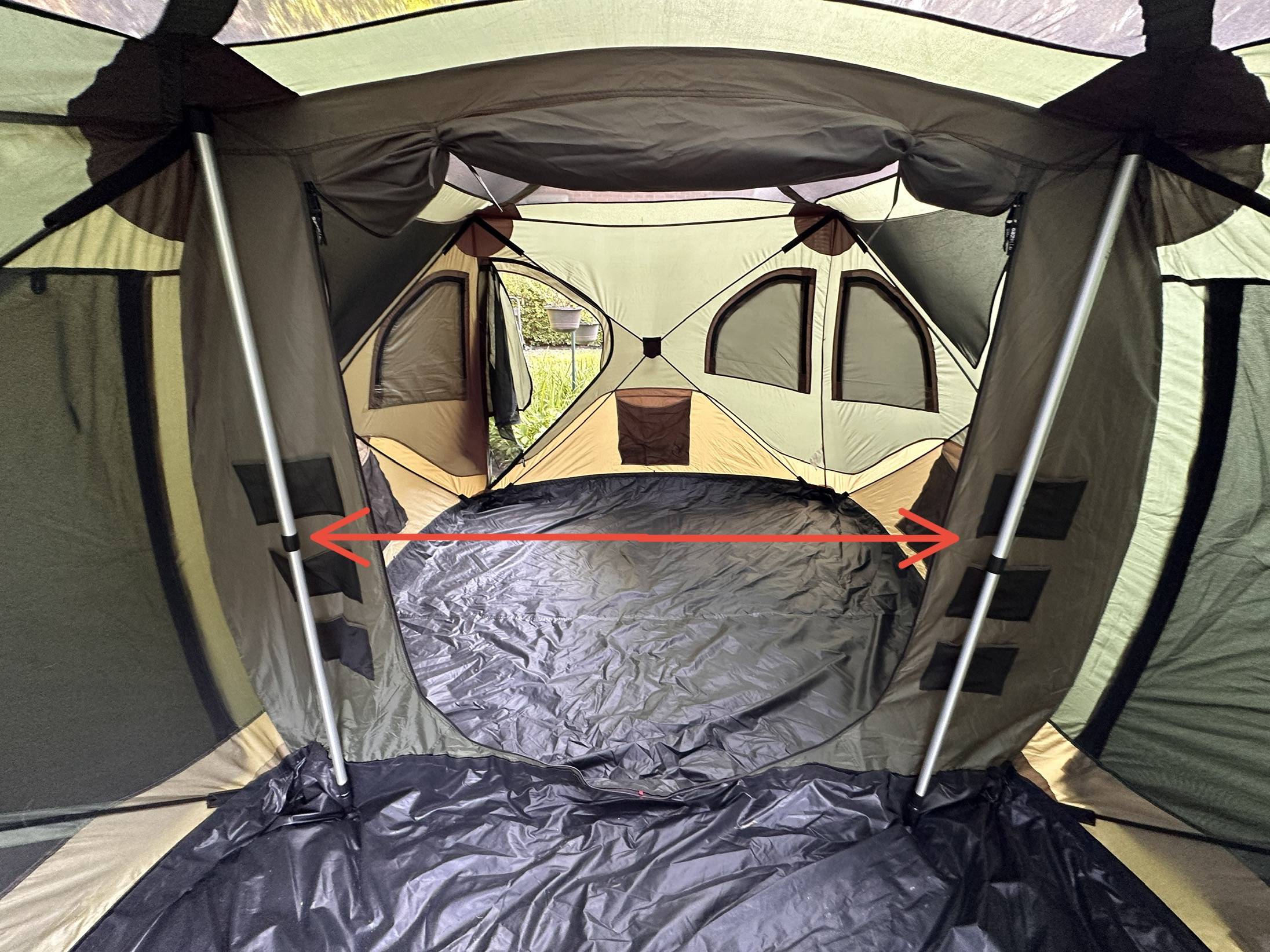
I also encountered another problem for which I don’t know of any mitigation. I believe this is unique to the double compartment tents like the T8 and T4 plus. Where the two sections connect, it’s a week point. The inside roof poles meet here and just float. In other words they don’t go down the sides like at the ends. The result is that on either side, under the right conditions, one side (left or right) of this center section will partially collapse. When you push it back up the opposite side will collapse. I joked that I was going to have to stand up all night holding the center of the tent up. This happens with the tent fully staked at all 7 points. I’ve noticed that this will happen in both moderate wind or uneven ground. A partial mitigation is to zip up the center divider which brings the sides under tension. I also found that the tension of the side guy lines seems to exacerbate this issue. I feel that the tent needs additional support poles in the middle similar to the front door area. A guy line pulling down and out from this area would probably exacerbate the problem.
This all sounds rather damning and I’m actually considering filing a CPSC complaint. Failure to guy out a tent or fully guy out a tent reasonably carries the expectation of problems but not necessarily the potential for serious injury from the tent itself. I don’t think failed to properly guy out the tent because it wasn’t clear that not doing then ends would result in this problem. Lots of tents have additional guy points that you may chose to use or not depending on the situation so I definitely think the onus is on Gazelle here. Despite this, I really like this tent. I just can’t use something if I think my kid is going to get his head smashed in walking around in a tent. I’m going to test it with the additional guy lines and make a determination if I think this can be made safe to my satisfaction. I’ll report back on my findings.
Gazelle needs to redesign this fly, add additional attachment points and make it clear to customers that guy lines at the fore and aft attachments points of the fly are a must for safety. Guy lines are already a known requirement for the sides of most hub tents, but an inverting side won’t give you a concussion.
This weekend while in Hatteras, the roof in the forward compartment of my guyed out T4 plus tent violently collapsed on my 9 year old’s head in a storm. While there is some lessons here for future use, this tent’s rain fly has some major design problems that can cause this.
I’m not the first person to experience the problem. This video explains it as well as I can with visuals:
In our situation, the tent sides, fly sides and rear were guyed out (9 lines) using sand stakes. All points of the floor were staked down using high quality stakes, not the cheap Gazelle ones. None of the stakes or guy lines gave way and all remained taut. We encountered wind gusts around 20MPH throughout the evening. Most of the night we had no issues, even in strong gusts. However, by mid morning while we were packing up, the roof collapsed in more moderate winds. This caused the roof hub to violently slam into my sons head without warning. I’m not exaggerating when I say that he’s lucky to have not suffered a concussion or worse.
The root of the problem is that the fly is far too shallow and attaches to the ends of the two roof poles. Wind can blow directly under it and it buffets constantly. Just as a rain fly, it’s not great and provides poor coverage fore and aft. Thankfully the front and rear doors are fairly water resistant. There’s also no vestibule. The elastic cords on sides and the fore and aft poles are not enough to hold the fly in place well. Designed to absorb shock they simply allow the fly to move even more.
Under the certain but relatively mild conditions, the fly becomes a sail and its attachment to the ends of the roof poles provides it with tremendous leverage. This can be enough to invert the roof itself. Again, our tent did this under more moderate winds.
I’ve had dome tent poles invert before. The problem is that with a hub tent you have 4 poles under immense tension and you have the hub itself. This isn’t like a single pole inverting. It’s a massive concentrated force right in the center of the tent slamming into the top of someone’s head with no warning. It could easily result in injury or death. Again, this is with 9 tight guy lines attached.
I feel like this fly requires a redesign but at the very least no one should use this tent with out guying out the fore and aft ends of the fly where it attaches to the ends of the roof poles. The side lines are not enough. I’m not even sure that the ends are enough. I myself plan on testing to see how much additional resistance this provides against pulling down the roof.
I also encountered another problem for which I don’t know of any mitigation. I believe this is unique to the double compartment tents like the T8 and T4 plus. Where the two sections connect, it’s a week point. The inside roof poles meet here and just float. In other words they don’t go down the sides like at the ends. The result is that on either side, under the right conditions, one side (left or right) of this center section will partially collapse. When you push it back up the opposite side will collapse. I joked that I was going to have to stand up all night holding the center of the tent up. This happens with the tent fully staked at all 7 points. I’ve noticed that this will happen in both moderate wind or uneven ground. A partial mitigation is to zip up the center divider which brings the sides under tension. I also found that the tension of the side guy lines seems to exacerbate this issue. I feel that the tent needs additional support poles in the middle similar to the front door area. A guy line pulling down and out from this area would probably exacerbate the problem.
This all sounds rather damning and I’m actually considering filing a CPSC complaint. Failure to guy out a tent or fully guy out a tent reasonably carries the expectation of problems but not necessarily the potential for serious injury from the tent itself. I don’t think failed to properly guy out the tent because it wasn’t clear that not doing then ends would result in this problem. Lots of tents have additional guy points that you may chose to use or not depending on the situation so I definitely think the onus is on Gazelle here. Despite this, I really like this tent. I just can’t use something if I think my kid is going to get his head smashed in walking around in a tent. I’m going to test it with the additional guy lines and make a determination if I think this can be made safe to my satisfaction. I’ll report back on my findings.
Gazelle needs to redesign this fly, add additional attachment points and make it clear to customers that guy lines at the fore and aft attachments points of the fly are a must for safety. Guy lines are already a known requirement for the sides of most hub tents, but an inverting side won’t give you a concussion.
Sponsored