Sponsored

Potential Diesel Buyer

Pk2abilene

Active Member
Joined
Mar 22, 2019
Threads
4
Messages
32
Reaction score
28
Location
Abilene
Vehicle(s)
1987 Cherokee
It should be noted that it wasn't poor planning, but a lack of diesel fuel stations with the small nozzles that lead to the crisis. I always started looking at 1/4 tank. I never waited for the low fuel light.
Just saying I’ve been from Texas to California, Texas to Florida, Texas to Alaska. Never had an issue.
Sponsored


JP1

Well-Known Member
First Name
John
Joined
Mar 29, 2019
Threads
13
Messages
1,506
Reaction score
2,885
Location
Fort Lauderdale, FL
Vehicle(s)
2024 JLU Rubicon 4xe
Build Thread
Link
I currently have a Diesel ZR2.
Yet to have ANY issues finding pumps.
 

lrtexasman

Well-Known Member
First Name
Larry
Joined
Sep 7, 2017
Threads
6
Messages
853
Reaction score
717
Location
Dallas, TX
Vehicle(s)
Tahoe
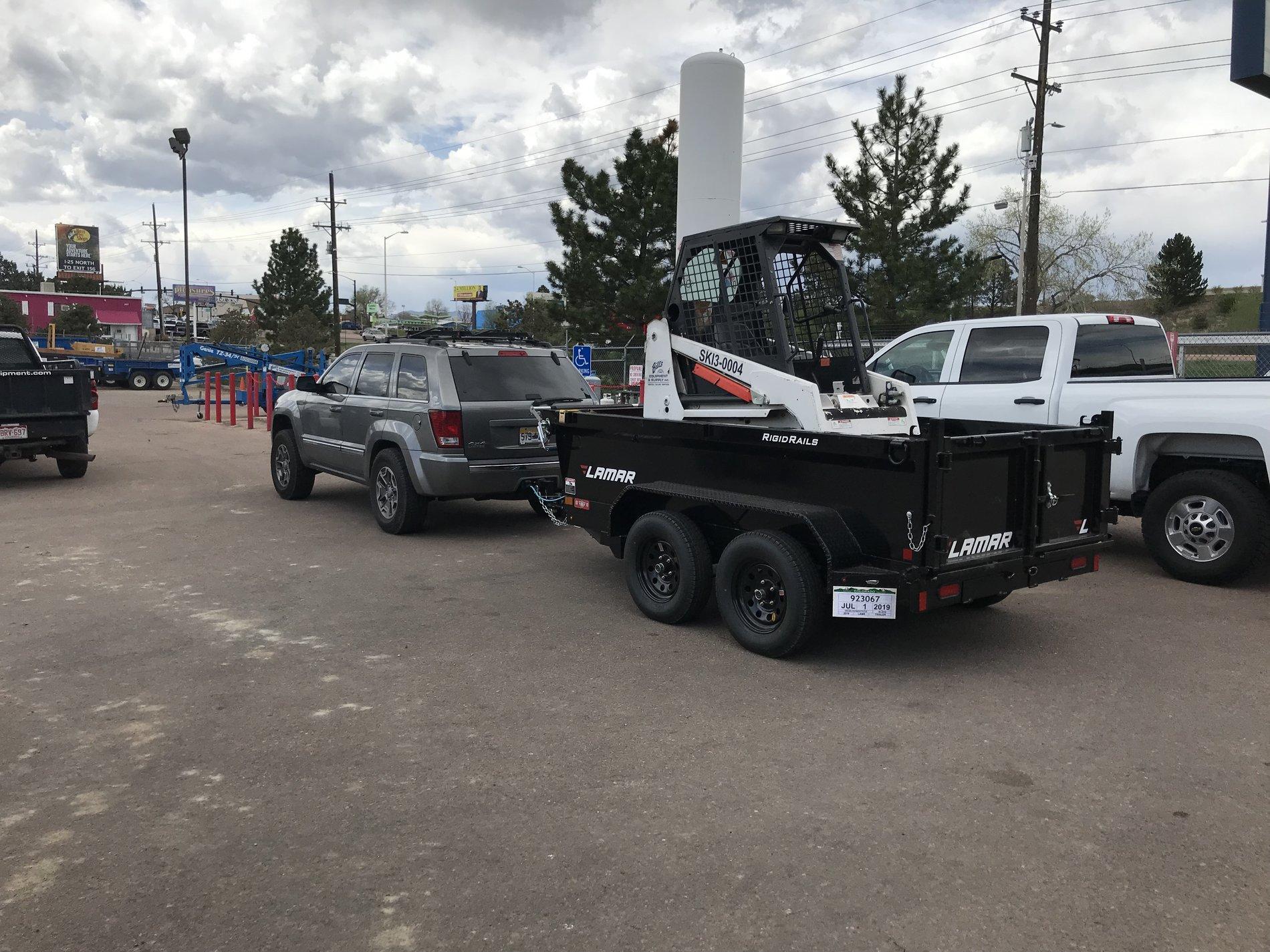
I’ve owned my 2008 Grand Cherokee Diesel for the past 4 years and about 50,000 miles. I’ve towed a lot with it, all the way from a tandem axle car hauler with a Jeep Cherokee on it, to my current 7K dump trailer with a bobcat in it. I will say that it tows like a dream. The rear suspension on the Jeep is the weak point, it’ll sag way before the Jeep is ready to give up. The extra torque from the turbo outs so much less stress on the engine for pulling and getting going.

As far as fuel goes, you know where your stations are and it’s only been a minor inconvenience maybe once in my ownership to not find a fuel station right away.

In the maintence point, I understand that the Diesel engine in my Jeep is a Mercedes engine and not the same one that’s in the new FCA vehicles. But I have 185K miles on my Jeep and haven’t had to do anything to my Jeep except replace the glow plugs and the battery. Oil changes are more expensive because it’s a special oil and requires 10 quarts, but you also don’t have to change the oil as soon as a gasser. I can pay someone to do an oil change for $110 every 8,500 miles with the special Mercedes engine oil that it requires.

I really don’t see the reasoning for them costing more in maintenance but I also realize that the diesel engine currently offered has had some notorious faults.

Having owned this Jeep and knowing how well it tows compared to a gasser I would be eager to see how well the diesel does in the Gladiator.

27F2AC50-BA38-495C-A858-BBADF02754D8.jpeg
Thanks for real world info
 

biodiesel

Well-Known Member
Joined
Dec 8, 2018
Threads
15
Messages
2,258
Reaction score
2,926
Location
New Mexico
Vehicle(s)
2015 Ram 1500 Ecodiesel
The main issue I have with the EcoDiesel is that it has a history of a high % of engine failures, mainly due to the way the cam sprockets were designed, and also because it apparently uses the Bosch CP4 fuel injection pump which is notoriously unreliable and there've been guys that have spent upward of $10,000 on the repair. Warranty hasn't covered all those repairs, because the manufacturer claims that "poor fuel" caused the seizure of the pump.
We do not know why some engines have experienced failures and why others have not. There are many theories, but poor assembly seems to be a popular theory. Some engines have 300,000 miles on them and other engines failed at 5,000 miles. If it were a design flaw, there would be more consistency in engine failures.

Unlike the CP3, the CP4 is sensitive to bad fuel. So yes, the dealership will claim poor fuel. If so, then comprehensive insurance will pay for it.

It's just a really scary proposition. Parts are twice as expensive, maintenance is twice as expensive, upfront purchase cost is high, and there is the possibility of catastrophic failure prior to 100,000 miles. The low RPM torque is nice, but is it that nice?
I have a 2015 Ram Ecodiesel. I've towed a 7,000 lb travel trailer through 17 states including over Wolf Creek Pass in Colorado. On Wolf Creek Pass, the engine detuned because of the excessive heat generated. With that being said, we now have 70,000 miles on the engine and haven't had any problems except for the emissions issues. The emissions issues can be resolved if you buy the GDE tune which will turnoff the EGR and DEF.

I'm getting the AEM installed today so that I can receive the $3,075 FCA settlement check, but overall, I've been happy with the 1st generation Ecodiesel. From my understanding, there are quite a few changes to the 2nd generation Ecodiesel (including larger turbo) that will be released in the 2020 trucks. My guess is that many of the emissions problems in the 1st generation will be resolved, but time will tell.

As for drivability and towing, I would take the Ecodiesel anyway over the Pentastar, but that's obviously an opinion.
 

TXJT

Member
First Name
Craig
Joined
Mar 6, 2019
Threads
0
Messages
13
Reaction score
4
Location
Lucas, Tejas
Vehicle(s)
Her Jeep: 2012 JKUR on 33s, My Jeep: 2010 JKUR on 37s w/5.7 Hemi, Project Jeep: 1981 CJ-8 on 35's w/5.7 Hemi
It should be noted that it wasn't poor planning, but a lack of diesel fuel stations with the small nozzles that lead to the crisis. I always started looking at 1/4 tank. I never waited for the low fuel light.
How long ago was this? I've been driving 3/4 and 1 ton diesel pickups for about 15 years now and while at first, passenger diesel stations were harder to find, they are all over the place now (at least in the south anyways). In the last 5+ years, from coast to coast primarily in the south, I've never had a problem finding a station to fill up.

I currently own a 2016 Ram Ecodiesel and (knock on wood) haven't experienced any of these so called "common" issues at all although it will be traded for a 3.0 Gladiator here in a few years! It has been flawless and I have absolutely no complaints with the power plant / drivetrain...although the fit and finish is a whole 'nother story!

I think in head to head towing tests such as the "Ike Gauntlet" that TFL Truck does, folks are going to be shocked when the EcoDiesel takes the same or more time to climb the mountain when compared to the gas V6 offerings in the segment. This is because speed is proportional to horsepower, and the EcoDiesel is low on horsepower. Yes, it'll tow just fine. It just won't do it quickly.
The diesel power plant is WAY more efficient than the gas power plant ever dreamed of being and to say that it doesn't perform any better than a 3.6L gas V6 is absurd. How many people are going to be pulling Ike Gauntlet on a regular basis? I would dare say very few...Speed is also proportional to torque and we've all heard the saying "HP sells cars, Torque wins races". The 3.0 like every diesel engine makes torque at very low RPMs, while the 3.6 sounds like its going to explode, the 3.0 won't even be turning 3k rpms. I've personally towed with a 1/2 ton Ram 5.7 Hemi and 3.0 Eco as well as multiple 5.9 Cummins and this little 3.0 is no 5.9 but does hold its own and is way more pleasurable to tow with than the Hemi is anyday! Coming from the 5.9, the 3.0 has surprised me on more than one occasion but expectations were low, rightly so. Anyone who expects the 3.0 to pull like a 5.9 will be disappointed. Anyone who has pulled with a Hemi or even a 3.6 Pentastar will be more than pleased with a 3.0

I'm not trying to change anyone's mind, but for all of those on the fence, the 3.0 is getting highly misrepresented here. Yes, there were problems the first couple of years but that is to be expected, even the 3.6 had its issues when it was first released. Personally, that is the reason I waited until the 3rd year of production to buy one and will wait till about the 3rd year of production for the Gladiator as well. All this being said, the diesel (especially modern day diesel) is not for everyone, and if you're considering one, do your research and make an informed decision. The engine option is likely to be $3k plus and they do require more maintenance that is more expensive, the higher cost of fuel is negligible most of the time (5-7 cents difference around me right now). If you're that uncomfortable with the 3.0, either buy an extended warranty or skip it all together. For anyone that does any degree of towing, the driveability will be way better than the 3.6 regardless of manufacturer tow ratings.
 

Sponsored

Bobzdar

Well-Known Member
Joined
Apr 3, 2019
Threads
7
Messages
523
Reaction score
641
Location
Richmond
Vehicle(s)
2020 Gladiator Rubicon, 1989 grand wagoneer
Hello Everyone!

I live in Idaho and am quite the big mopar head. I own a 1999 Dodge Durango with the 360 magnum V8, hence my user name. It has Flame Red paint and the Camel Brown cloth interior, it will be a future classic in these colors. I love to travel and don't want to keep putting miles on it. So I have been interested in a truck that can work and play. I have been intrigued by the flood of Diesel light duty trucks coming into the us market. Obviously the Gladiator is one one of them.

With that said, I am keeping an eye on the ecodiesel. However I know someone who has had to sell their Ram back to FCA after replacing the engine 3 times in a two year period! So hence why I am not one hundred percent sold yet. However if they get it right this time, it would be a fun truck to own. That can work and play really well! I expect it will hold 1500lbs and tow a little over 7000lbs. Which meets my minimum towing and payload requirements as a buyer. I want to be able to tow a decent sized boat or tow a project car if need be. Normally I would be towing a T@B 400 Boondock or Airstream Basecamp X camper. One of which I am hoping to get in the next few months if everything goes to plan.

Now my dream configuration as of now, the Sport S with max tow package. It will be the only way to get the towing capacity I want, at least with the current line up. I would like to get the freedom top, as a soft top is not fun to replace. I am currently replacing one on my VW. I would like to try the headliner option as well. I am hoping to get one painted in Fire Cracker Red, and Brown Heritage interior. As it would be the same color choice I currently enjoy in my Durango.

Well know you have a background story of who I am, and what I'm looking for. This is a truck I plan on keeping for the long haul. Yes well after it is paid off! I tend to get attached to my vehicles, if you need proof. My Durango is my first car from when I was 16. Plus the JT will serve as a time capsule in the future. As long as I take care of it, and keep it original like I have been doing with my Durango. With all that said I look forward to keeping up with the news on the diesel variant.

Thanks for letting me join!
According to FCA, the diesel will have lower tow rating than the gas v6 due to the Gladiator being maxed for cooling as it is now, and with the diesel and additional need for an intercooler it won't be able to handle as much weight and stay cool. This article explains a lot of it here, a former FCA engineer interviewing a current FCA engineer, both worked on the Wrangler/Gladiator.

https://jalopnik.com/the-engineering-behind-the-jeep-gladiators-tow-rating-1833657453

edit: You'll have zero issue towing a Basecamp with any of them with a tow package. That's not a heavy trailer and it's fairly aerodynamic.
 

TXJT

Member
First Name
Craig
Joined
Mar 6, 2019
Threads
0
Messages
13
Reaction score
4
Location
Lucas, Tejas
Vehicle(s)
Her Jeep: 2012 JKUR on 33s, My Jeep: 2010 JKUR on 37s w/5.7 Hemi, Project Jeep: 1981 CJ-8 on 35's w/5.7 Hemi
Similarly, the Hemi has a higher tow rating than the Ecodiesel in the RAM 1500 but the driveability is night and day difference. In similar situations, the Ecodiesel purrs like a kitten while the Hemi sounds like its going to throw a rod through the side of the block! If you are maxing out the tow rating on this truck, it is probably not the best choice for you regardless of engine choice. Personally, regardless of what it is rated for, I'll probably never put more than about 5,000 lbs behind it. Use the right tool for the job, that's what the Cummins is for!
 

Sorbs

Well-Known Member
First Name
Brian & Sunny
Joined
Aug 3, 2018
Threads
18
Messages
858
Reaction score
1,601
Location
Colorado Springs
Vehicle(s)
2021 Ram TRX, 2020 Gladiator LE
Vehicle Showcase
1
According to FCA, the diesel will have lower tow rating than the gas v6 due to the Gladiator being maxed for cooling as it is now, and with the diesel and additional need for an intercooler it won't be able to handle as much weight and stay cool. This article explains a lot of it here, a former FCA engineer interviewing a current FCA engineer, both worked on the Wrangler/Gladiator.

https://jalopnik.com/the-engineering-behind-the-jeep-gladiators-tow-rating-1833657453
I can attest to the heat generated by the ED. As I wait for my EcoDiesel get its software flash done today, required for $3k settlement check, I can reflect on our ownership experience.

The power delivery is smooth, the torque is great off the line, and it pulls like a train once you get going. There is turbo lag. If had done Green Diesel Engineering PCM I’d be hosed on the settlement check but if I were planning on keeping the GC forever I’d consider it.

If you’re waiting for the diesel know it’ll probably add $3,500+ to the bill. It may also require HD package option and trim level (Overland, Rubicon). Living with a diesel means added expense on acquisition and routine maintenance. Finally, buy an extended warranty.
 

Bobzdar

Well-Known Member
Joined
Apr 3, 2019
Threads
7
Messages
523
Reaction score
641
Location
Richmond
Vehicle(s)
2020 Gladiator Rubicon, 1989 grand wagoneer
Similarly, the Hemi has a higher tow rating than the Ecodiesel in the RAM 1500 but the driveability is night and day difference. In similar situations, the Ecodiesel purrs like a kitten while the Hemi sounds like its going to throw a rod through the side of the block! If you are maxing out the tow rating on this truck, it is probably not the best choice for you regardless of engine choice. Personally, regardless of what it is rated for, I'll probably never put more than about 5,000 lbs behind it. Use the right tool for the job, that's what the Cummins is for!
I'll just add, sound isn't a good indicator of stress - the diesel may sound like it's not working as hard but it may have even more stress due to the amount of boost. I think people get a false sense of security with turbocharged engines thinking they're under less stress simply because they operate at lower revs, but the reality is often the opposite (which is why they're usually beefier than their larger gas counterparts, especially diesels).
 

Sponsored

TXJT

Member
First Name
Craig
Joined
Mar 6, 2019
Threads
0
Messages
13
Reaction score
4
Location
Lucas, Tejas
Vehicle(s)
Her Jeep: 2012 JKUR on 33s, My Jeep: 2010 JKUR on 37s w/5.7 Hemi, Project Jeep: 1981 CJ-8 on 35's w/5.7 Hemi
There is turbo lag.
I'm curious as to what gears and tire size you are running? I keep hearing people complain about turbo lag with these trucks, and i'm not saying it doesn't exist, but I haven't experienced it enough to complain about it. I just wonder if it has more to do with gearing (most of the RAMs came with 3.55s) while I purchased my truck with 3.92 gears because I knew it would get a set of 35's almost immediately. I sincerely hope that Jeep will keep the 4.10 gear option with the diesel offering knowing that people are going to immediately throw bigger tires on them.

I'll just add, sound isn't a good indicator of stress - the diesel may sound like it's not working as hard but it may have even more stress due to the amount of boost. I think people get a false sense of security with turbocharged engines thinking they're under less stress simply because they operate at lower revs, but the reality is often the opposite (which is why they're usually beefier than their larger gas counterparts, especially diesels).
I'll politely disagree, sound is a very good indicator of stress. If one is paying attention to what their turbo is doing, you can hear just how fast it is spinning and deduce how much boost it is making indicating just how hard the engine is working. Ever seen pictures of turbo charger glowing red from over use? Lots of turbo chargers are thrown on every kind of naturally aspirated engine out there (gas and diesel) especially in the Honda, etc. street racing crowds. Diesel engines are beefier because they operate on a compression cycle where extremely high cylinder pressure and temperature are used for combustion of the fuel/air mixture. There is no spark plug to ignite a fuel air mixture like in a gas engine.
 

Bobzdar

Well-Known Member
Joined
Apr 3, 2019
Threads
7
Messages
523
Reaction score
641
Location
Richmond
Vehicle(s)
2020 Gladiator Rubicon, 1989 grand wagoneer
I'm curious as to what gears and tire size you are running? I keep hearing people complain about turbo lag with these trucks, and i'm not saying it doesn't exist, but I haven't experienced it enough to complain about it. I just wonder if it has more to do with gearing (most of the RAMs came with 3.55s) while I purchased my truck with 3.92 gears because I knew it would get a set of 35's almost immediately. I sincerely hope that Jeep will keep the 4.10 gear option with the diesel offering knowing that people are going to immediately throw bigger tires on them.


I'll politely disagree, sound is a very good indicator of stress. If one is paying attention to what their turbo is doing, you can hear just how fast it is spinning and deduce how much boost it is making indicating just how hard the engine is working. Ever seen pictures of turbo charger glowing red from over use? Lots of turbo chargers are thrown on every kind of naturally aspirated engine out there (gas and diesel) especially in the Honda, etc. street racing crowds. Diesel engines are beefier because they operate on a compression cycle where extremely high cylinder pressure and temperature are used for combustion of the fuel/air mixture. There is no spark plug to ignite a fuel air mixture like in a gas engine.
I think you missed the point a bit, but a smaller engine under boost is under more stress than a larger engine making the same power. It's physics, and what they sound like doesn't matter - the smaller engine will be under more stress even if it's silent. So a Hemi making more noise compared to an eco diesel has no real bearing on the amount of stress they're under - the smaller eco diesel is under (a lot) more stress pulling the same load. If it's built for it, fine, but the Hemi having a higher tow rating and more power is more important than the amount of noise it makes, at least regarding how stressed it is and how hard it's actually working with respect to it's design limits while towing.
 

TXJT

Member
First Name
Craig
Joined
Mar 6, 2019
Threads
0
Messages
13
Reaction score
4
Location
Lucas, Tejas
Vehicle(s)
Her Jeep: 2012 JKUR on 33s, My Jeep: 2010 JKUR on 37s w/5.7 Hemi, Project Jeep: 1981 CJ-8 on 35's w/5.7 Hemi
I think you missed the point a bit, but a smaller engine under boost is under more stress than a larger engine making the same power. It's physics, and what they sound like doesn't matter - the smaller engine will be under more stress even if it's silent. So a Hemi making more noise compared to an eco diesel has no real bearing on the amount of stress they're under - the smaller eco diesel is under (a lot) more stress pulling the same load. If it's built for it, fine, but the Hemi having a higher tow rating and more power is more important than the amount of noise it makes, at least regarding how stressed it is and how hard it's actually working with respect to it's design limits while towing.
If you're talking RPM to RPM, then yes I agree but have you ever towed similar loads with both engines? For a gas engine to make enough torque to keep up with a diesel engine, it is nearly red lining the engine so don't tell me that it isn't under an extreme amount of stress. The Eco actually has a higher torque rating than the Hemi and makes it at much lower RPMs. The higher tow rating has nothing to do with the engine and everything to do with total weight and cooling requirements. The Hemi has a higher tow rating because of less weight and cooling requirements, same as the 3.6 in the Gladiator. Modern diesel engines are designed and built for forced induction so this argument is really mute anyways.
 

Bobzdar

Well-Known Member
Joined
Apr 3, 2019
Threads
7
Messages
523
Reaction score
641
Location
Richmond
Vehicle(s)
2020 Gladiator Rubicon, 1989 grand wagoneer
If you're talking RPM to RPM, then yes I agree but have you ever towed similar loads with both engines? For a gas engine to make enough torque to keep up with a diesel engine, it is nearly red lining the engine so don't tell me that it isn't under an extreme amount of stress. The Eco actually has a higher torque rating than the Hemi and makes it at much lower RPMs. The higher tow rating has nothing to do with the engine and everything to do with total weight and cooling requirements. The Hemi has a higher tow rating because of less weight and cooling requirements, same as the 3.6 in the Gladiator. Modern diesel engines are designed and built for forced induction so this argument is really mute anyways.
If an engine pumps out more heat for a given amount of power, it's less efficient and it's working harder. So you may be lulled into a false sense of security because it's revving lower, but it's also having a ton of boost pumped in and the smaller cylinders producing the same power are under more stress. It's physics - the cylinder temps are higher, cylinder pressures higher, the pistons and rods have more force being pushed through them because they're smaller. Being a diesel, it's magnified because the cylinder pressures are even higher. The only thing that's saved is some rotational friction and valvetrain stress, but that's not really what tends to blow up. It's a rod being twisted or a rod journal pounded into oblivion, or a piston top melting. The lower rpms don't save you from those when the cylinder pressures involved are 3x as high.

That's not to say diesels are bad, but it's a misconception that because they run lower rpm's they're under less stress. They're usually under a lot more.
 

J Redding

Member
First Name
John
Joined
May 7, 2019
Threads
0
Messages
11
Reaction score
14
Location
Maryland
Vehicle(s)
2011 Jeep Grand Cherokee Overland 2020 Billet Silver Gladiator Overland
Occupation
CNC Machinist
If you plan on doing any kind of serious towing the Gladiator in my opinion is not the truck to buy, I think it is designed to be towing around toys and light weight stuff less the 5,000 lbs for playing.
Sponsored


Top