Artidemic13
Member
- Thread starter
- #1
Hello all,
Not a regular poster to the forum, though I am an active reader here and have learned much from everyone's experiences. I'm writing with a question about rooftop tents, their size and weight. Specifically, I'm about to pull the trigger on the purchase of a rooftop tent, for my Gladiator, deciding between the Topoak Galaxy Pro and the Topoak Galaxy Light. I've researched RTTs for months and these two models shake out as the best in terms price::quality::comfort::convenience. I've looked at all the other ultra-light low-profile options, not interested in any of them: they either use soft tonneau cover material, or have a slatted floor, or both. Both of the Topoak models share many features (same tent material, same all-aluminum frame material and solid floor, diesel heater ports, full surround rain fly, built in Anderson port, LED lighting, solar panel-ready roofs), but both pose pros and cons.
The Pro weighs in at 165 lbs, while the XL version of the Light that I would get weighs 136 lbs, so a 30-lb. savings. The Pro interests me because it's sleeping area is slightly larger (79"l x 52"w vs. 77"l x 50" for the Light), its mattress is thicker (3" vs. 1 5/8" for the Light), and it has wrap-around T-channels that allow you to attach accessories like awnings directly to the tent frame. The Pro is also several inches thicker when closed: ~8" vs. ~5" for the ultra-low-profile Light. This means that there's more room to store bedding inside the Pro when the tent is closed, but also means the tent sits taller, pushing the center of gravity higher and, presumably, affecting handling and wind drag adversely (albeit, negligibly?). The Light interests me, well, for the lighter weight and lower profile. It should be easier to get on and off my truck, and should offer marginally less wind drag and less of an MPG hit. (Worth noting: I've also looked hard at the Sterling Adventure Co. Wasatch Lite, which weighs only 96 lbs, but its mattress/sleeping area is only 48" wide, and that just seems too narrow for two adults.)
Where I'm getting hung up, quite frankly, is that weight and height difference. One one hand, the idea of keeping my rig as light and low-profile as reasonably possible is definitely appealing. On the other, I'm just not sure how much I'll notice the 30lbs and 3 extra inches of height, though I do reckon I'll appreciate the larger and plusher sleep area, as well as the convenience of bedding storage and T-channel accessory options. (I contacted Topoak and they told me it is also possible to store bedding in the Galaxy Light, so long as it doesn't take up more than 2.75" vertically. That's some light bedding, but doable). Obviously, the stock mattresses in both tents could be replaced by self-inflating foam mattress like my Exped Megamat Duo LW+, which you can then deflate to create more space before closing.
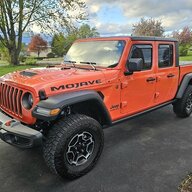
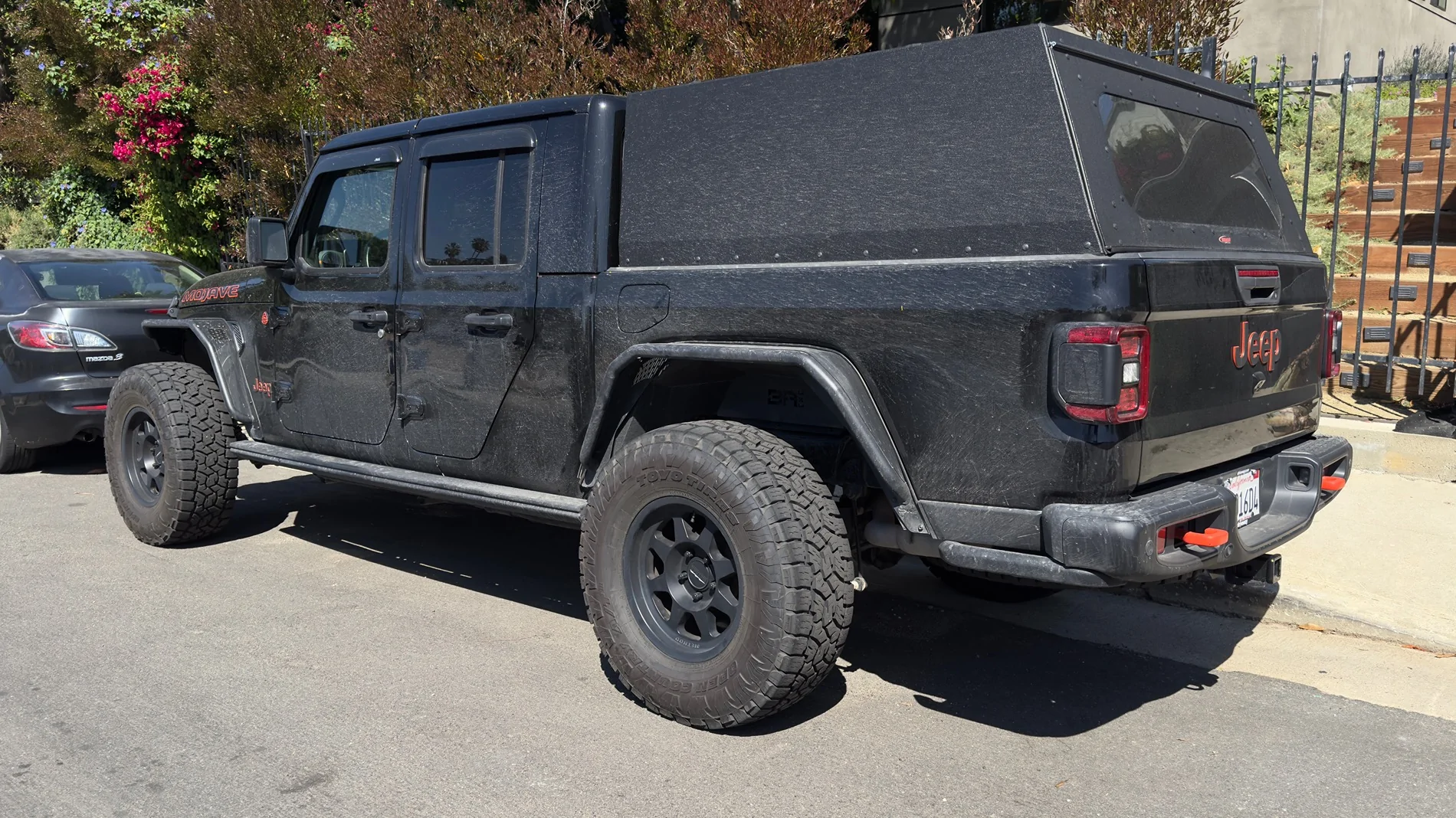
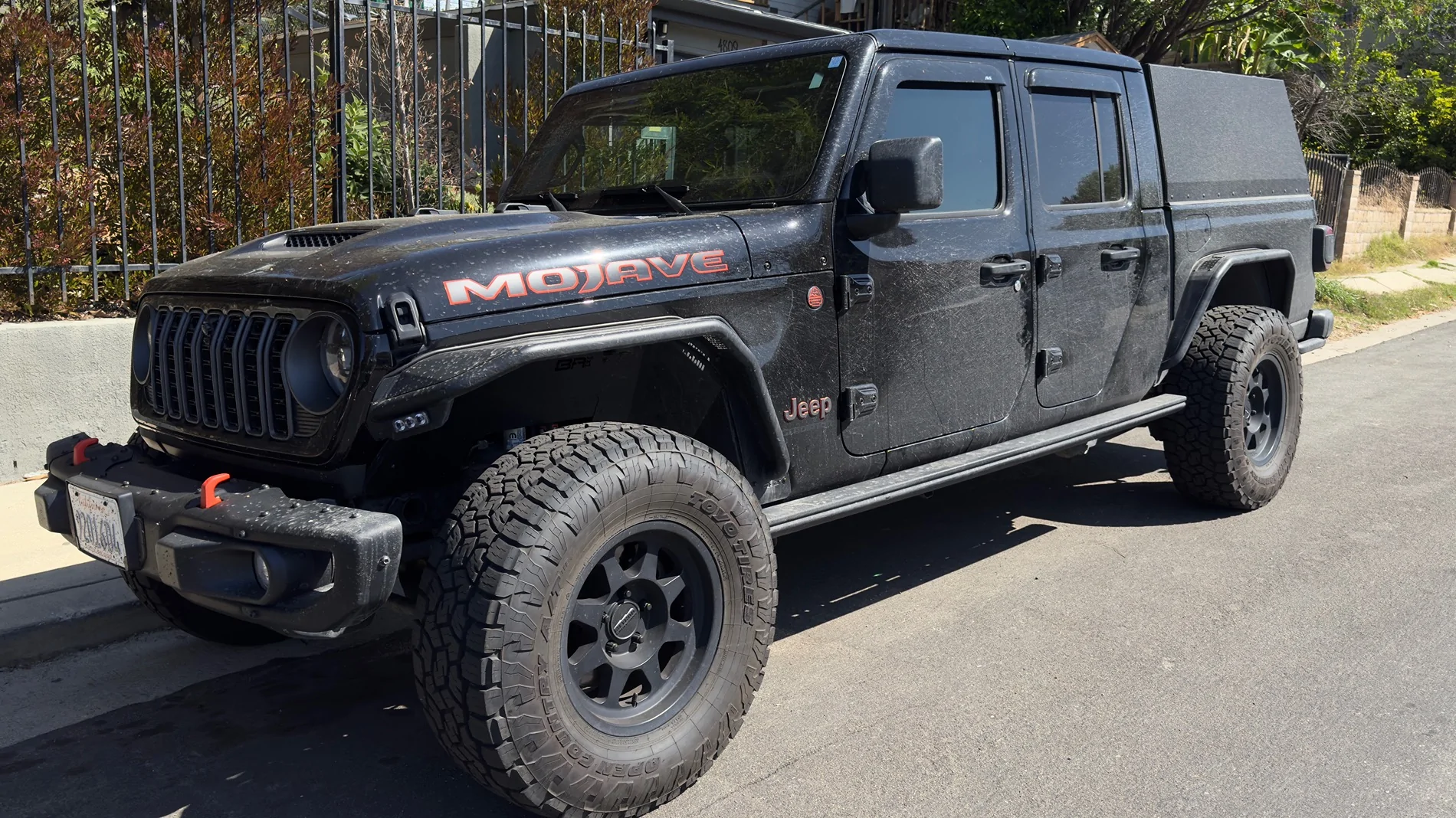
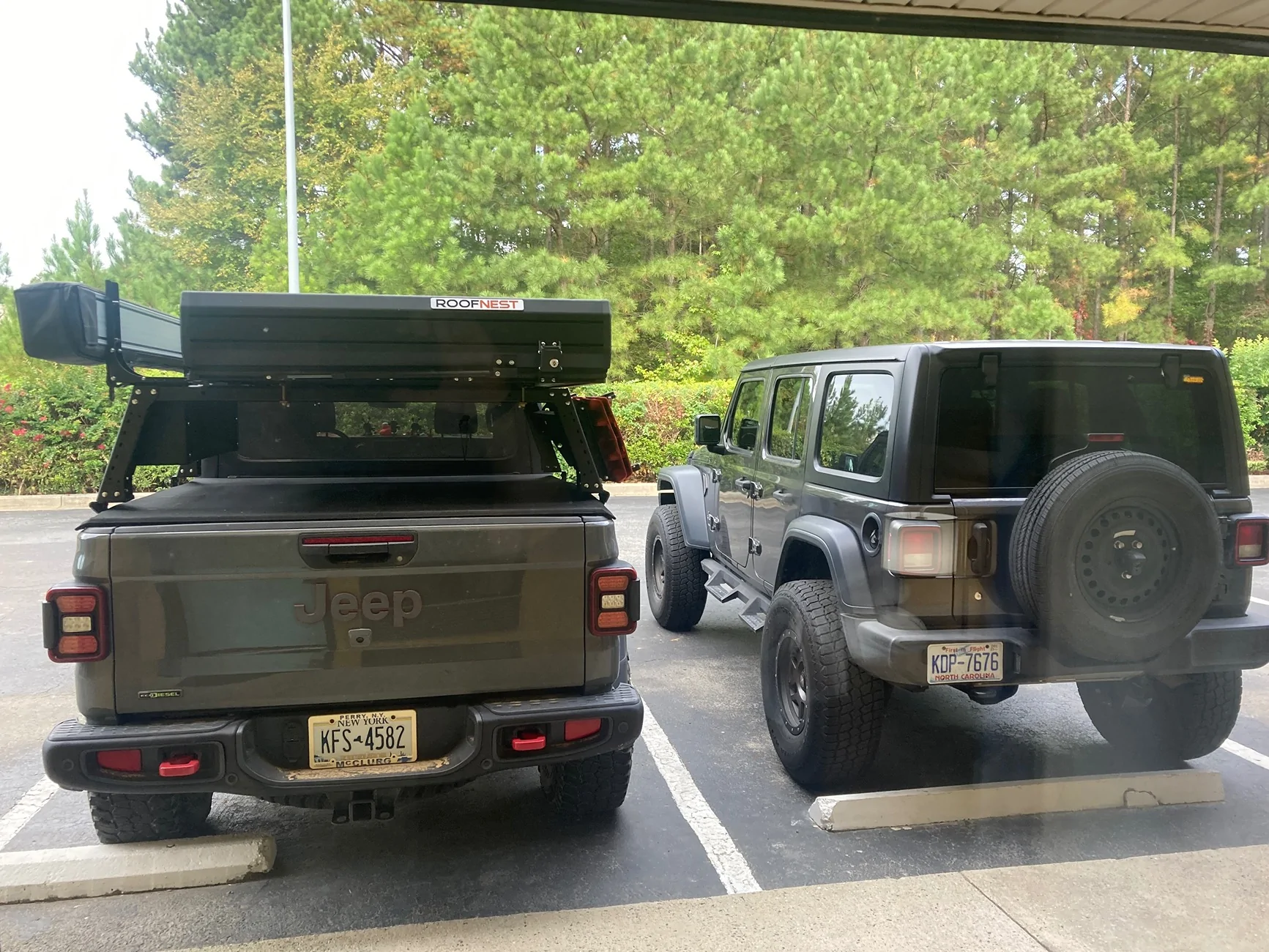
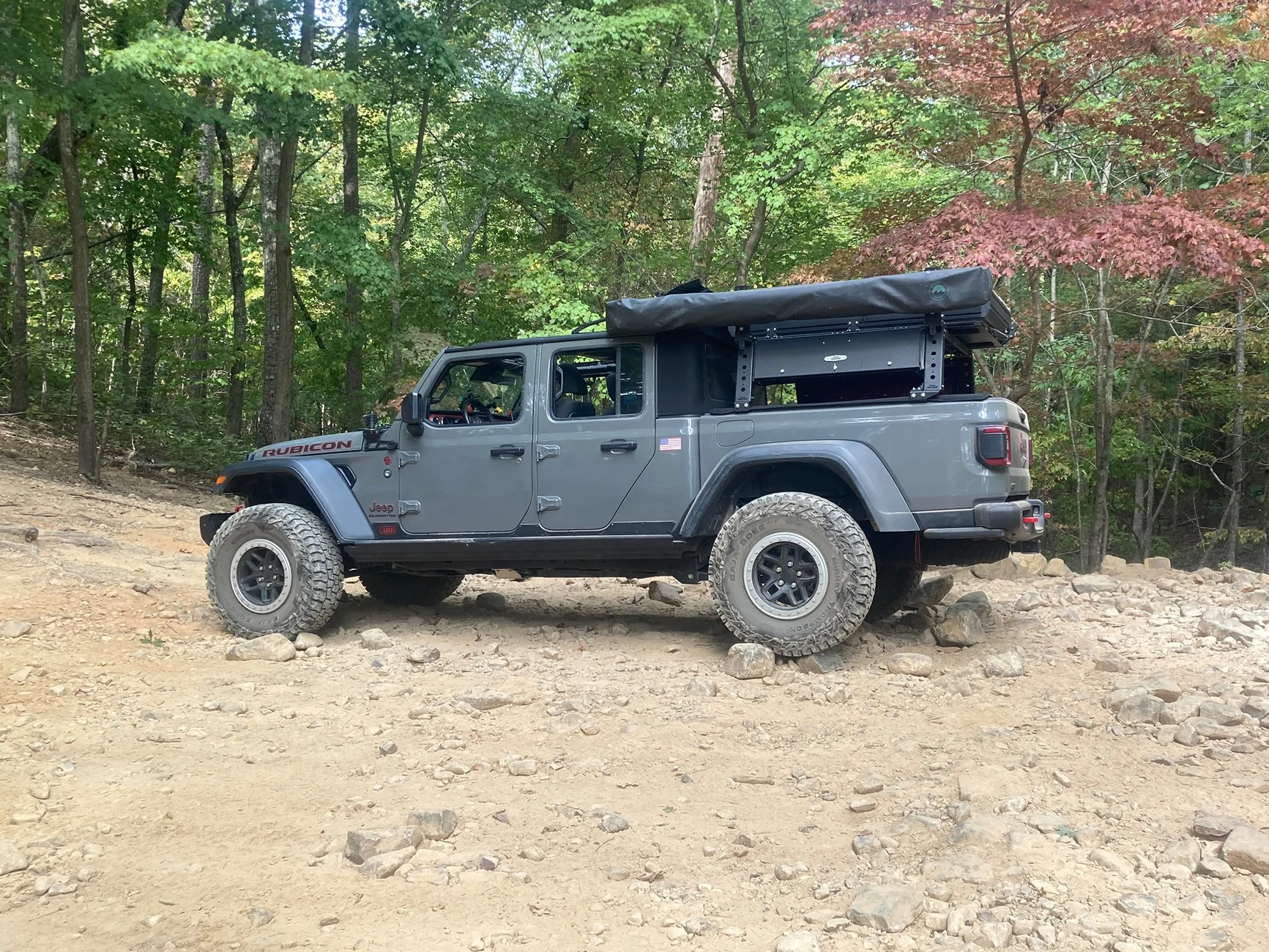
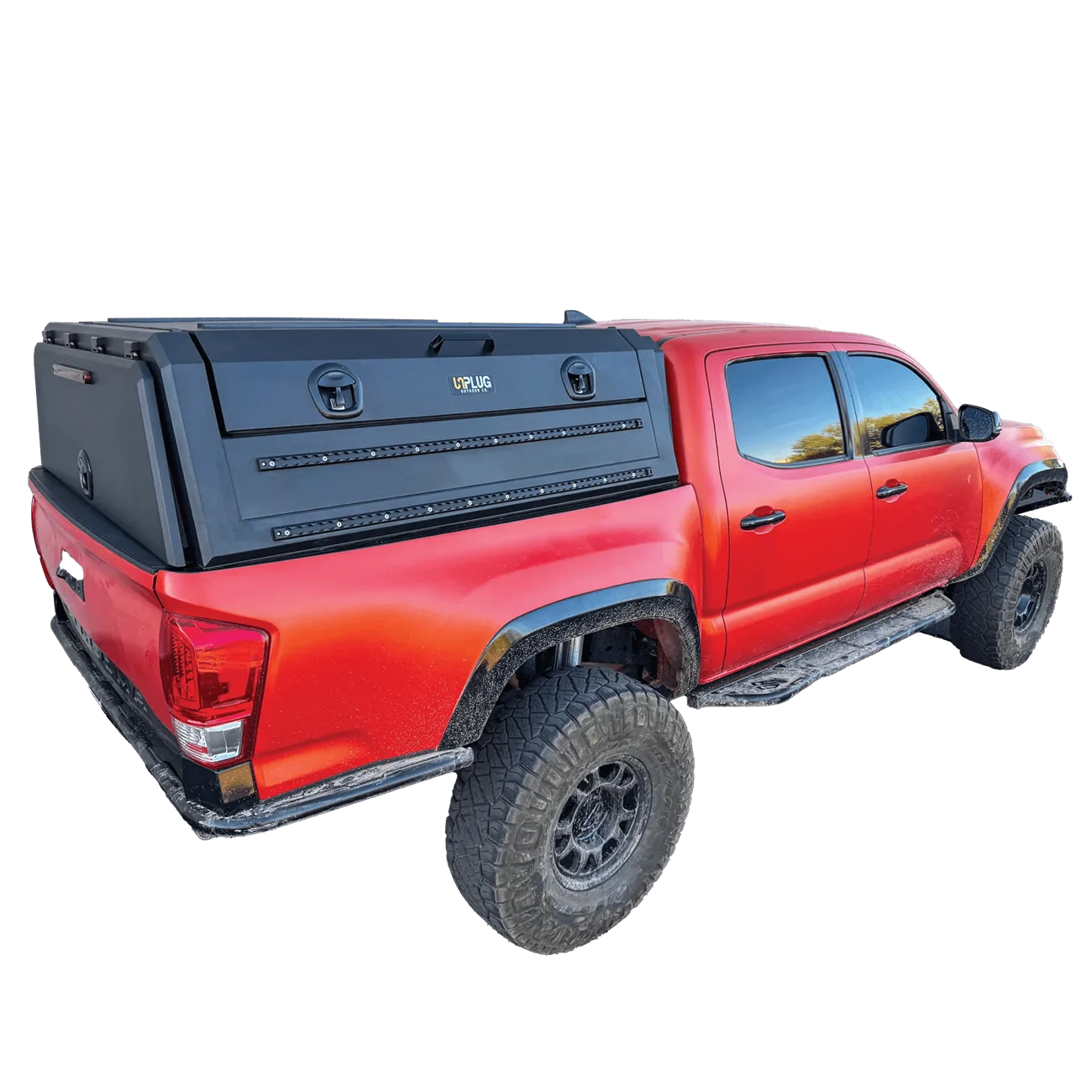
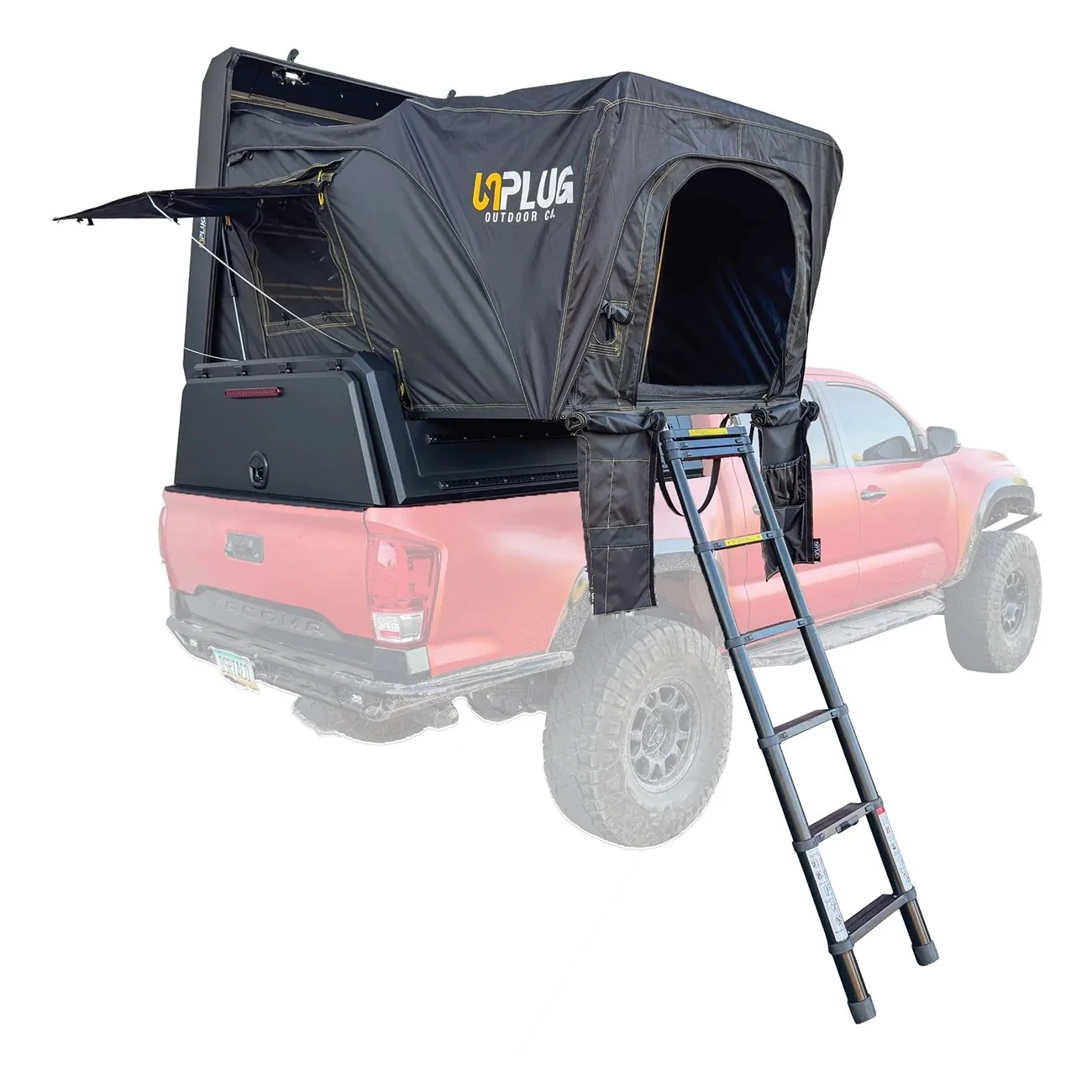
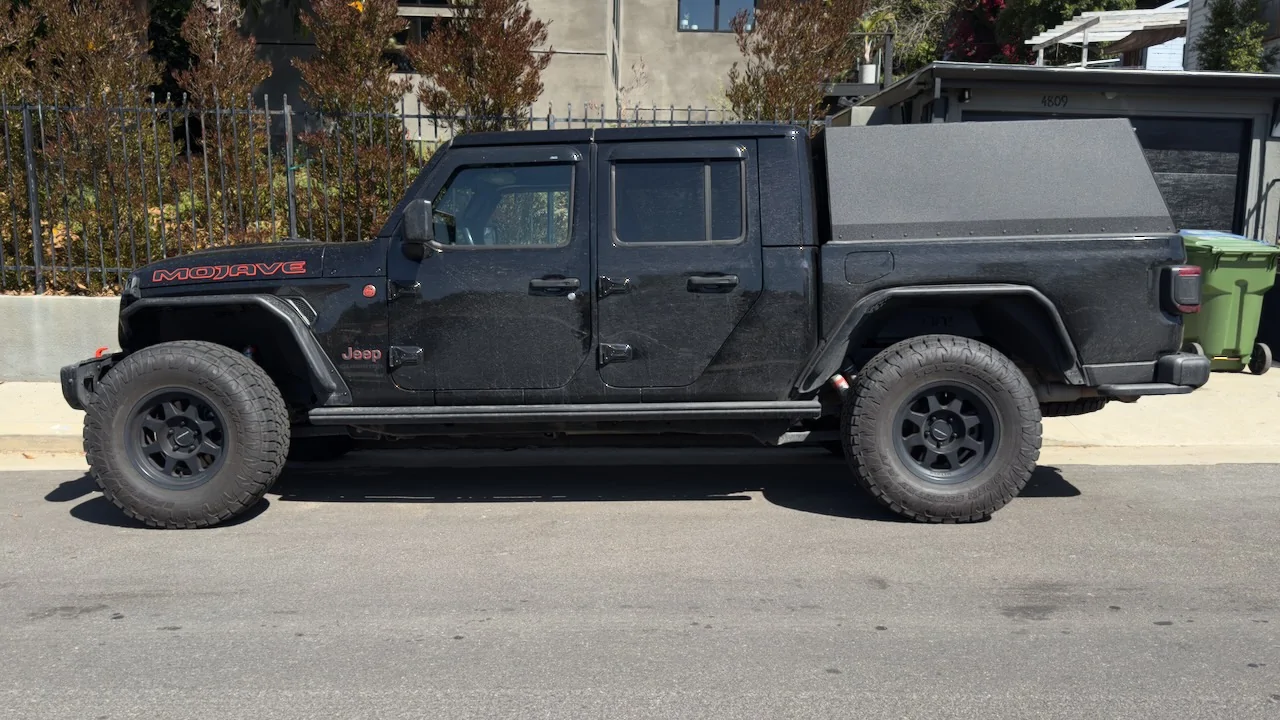
Quick background: my rig (see pic) is a 2024 Mojave X on 35x12.5R17 E-rated Toyo Open Country AT3s, stock suspension, Method 701 wheels, and I'm running DV8 steel fender flares with Body Armor 4x4 aluminum wheel liners on all corners. I also have a Bedslide S mounted in the bed (weighs 100 lbs) and an Agri-Cover Duracap Journey topper, which is all aluminum, weighs only 90lbs, and can hold 1000lbs static/500lbs dynamic on its cross bars. Sharing this info just to give an idea of what I've got already eating into my Gladiator's innately limited payload, before loading all the rest of my overland gear.
So, long story short, I'd love to know where others weigh in on the weight question for RTTs on the Mojave (especially considering its softer springs). Am I crazy to be worrying about 30 measly pounds' difference here? Or should I truly be looking to shave grams and save weight wherever I can? What have your experiences been with RTTs mounted onto a topper on the Gladiator (especially the Mojave). Did you feel the need to upgrade to stiffer springs to account for the weight? Are there other factors I'm missing?
Thanks for your insights!

Not a regular poster to the forum, though I am an active reader here and have learned much from everyone's experiences. I'm writing with a question about rooftop tents, their size and weight. Specifically, I'm about to pull the trigger on the purchase of a rooftop tent, for my Gladiator, deciding between the Topoak Galaxy Pro and the Topoak Galaxy Light. I've researched RTTs for months and these two models shake out as the best in terms price::quality::comfort::convenience. I've looked at all the other ultra-light low-profile options, not interested in any of them: they either use soft tonneau cover material, or have a slatted floor, or both. Both of the Topoak models share many features (same tent material, same all-aluminum frame material and solid floor, diesel heater ports, full surround rain fly, built in Anderson port, LED lighting, solar panel-ready roofs), but both pose pros and cons.
The Pro weighs in at 165 lbs, while the XL version of the Light that I would get weighs 136 lbs, so a 30-lb. savings. The Pro interests me because it's sleeping area is slightly larger (79"l x 52"w vs. 77"l x 50" for the Light), its mattress is thicker (3" vs. 1 5/8" for the Light), and it has wrap-around T-channels that allow you to attach accessories like awnings directly to the tent frame. The Pro is also several inches thicker when closed: ~8" vs. ~5" for the ultra-low-profile Light. This means that there's more room to store bedding inside the Pro when the tent is closed, but also means the tent sits taller, pushing the center of gravity higher and, presumably, affecting handling and wind drag adversely (albeit, negligibly?). The Light interests me, well, for the lighter weight and lower profile. It should be easier to get on and off my truck, and should offer marginally less wind drag and less of an MPG hit. (Worth noting: I've also looked hard at the Sterling Adventure Co. Wasatch Lite, which weighs only 96 lbs, but its mattress/sleeping area is only 48" wide, and that just seems too narrow for two adults.)
Where I'm getting hung up, quite frankly, is that weight and height difference. One one hand, the idea of keeping my rig as light and low-profile as reasonably possible is definitely appealing. On the other, I'm just not sure how much I'll notice the 30lbs and 3 extra inches of height, though I do reckon I'll appreciate the larger and plusher sleep area, as well as the convenience of bedding storage and T-channel accessory options. (I contacted Topoak and they told me it is also possible to store bedding in the Galaxy Light, so long as it doesn't take up more than 2.75" vertically. That's some light bedding, but doable). Obviously, the stock mattresses in both tents could be replaced by self-inflating foam mattress like my Exped Megamat Duo LW+, which you can then deflate to create more space before closing.
Quick background: my rig (see pic) is a 2024 Mojave X on 35x12.5R17 E-rated Toyo Open Country AT3s, stock suspension, Method 701 wheels, and I'm running DV8 steel fender flares with Body Armor 4x4 aluminum wheel liners on all corners. I also have a Bedslide S mounted in the bed (weighs 100 lbs) and an Agri-Cover Duracap Journey topper, which is all aluminum, weighs only 90lbs, and can hold 1000lbs static/500lbs dynamic on its cross bars. Sharing this info just to give an idea of what I've got already eating into my Gladiator's innately limited payload, before loading all the rest of my overland gear.
So, long story short, I'd love to know where others weigh in on the weight question for RTTs on the Mojave (especially considering its softer springs). Am I crazy to be worrying about 30 measly pounds' difference here? Or should I truly be looking to shave grams and save weight wherever I can? What have your experiences been with RTTs mounted onto a topper on the Gladiator (especially the Mojave). Did you feel the need to upgrade to stiffer springs to account for the weight? Are there other factors I'm missing?
Thanks for your insights!
Sponsored