Sponsored

A new hope ... (build journal and component reviews)

HooliganActual

Well-Known Member
First Name
Robert
Joined
Jun 27, 2020
Threads
9
Messages
1,410
Reaction score
3,601
Location
10 miles from the Sun
Vehicle(s)
2020 Gladiator Rubicon
Occupation
Retired
LOL. I probably would have built a small ramp with Maxtrax boards, but this is also a situation where I might have gotten stuck ...
Like I said, I was testing it. The rock was just a big wedge that ends just out of frame but on this particular trail there weren't many obstacles to test departure angle on.

EDIT: I winched off a tree on the other side of the rock to get unstuck and then backed down at an offset.
Sponsored


 
  • Like
Reactions: cug
OP
OP
cug

cug

Well-Known Member
First Name
Guido
Joined
Apr 1, 2023
Threads
13
Messages
602
Reaction score
664
Location
Christchurch, New Zealand
Vehicle(s)
JTR EcoDiesel, Land Cruiser 79, BMW R1250GS
Build Thread
Link
Occupation
Just keeping busy
So, let's talk electrics ...

This is not a review and not a plan just yet, I'm just rolling around ideas.

My overall goal is to be able to use induction cooking and an electric kettle for hot water. I don't want to deal with propane or isob-butane containers anymore. I'm not sure I'll be able to do this as planned, maybe I'll still have to run my MSR Windburner, but that would already be a massive improvement.

Since it would be incredibly expensive to have a company wire everything up and I want to actually understand the full system, I'm planning to do this myself. Whether that's a good idea or not, we'll just have to see ... ;-)

I have two very different ideas around this, one relatively simple and straightforward, but not able to run higher DC loads like a compressor or such, the other one more complex, but probably leading to a better, more flexible system.

Idea 1: Simple Solution

Get wiring into the camper from the starter battery, including an ignition trigger. Wire up a DC-DC Converter to convert the voltage up to 30V, run this to the solar charging input of an EcoFlow Delta (2 or Max) and use this as the power supply for all the small 12V loads as well as the large AC loads.

Idea 2: More Complex, but hopefully manageable

Get an EGON DC-Hub as the central "wiring simplifier", get either a Redarc Manager 30 or just a DC-DC charger, currently trending towards a Manager 30 since it simplifies some of the other pieces in the puzzle, like AC charging, on the other end, it makes charging slower, since it's 30A only. Would prefer to get to 40A or 50A into the house battery for quicker charging cycles, but I think with the help of some solar I could make it work. Need to calculate a bit more.

Now, if I were to use a Redarc DCDC charger, I could get higher charge power, but don't have AC charging. Decisions ...

The components as far as I can see right now:
  • EGON DC-Hub
  • Manager 30 or DCDC charger
  • Battery Isolator
  • Solar panel or blanket (thinking blanket for now)
  • A shunt (needed?)
  • A 2000W inverter
  • One 200Ah or two 100Ah LiFePo4 batteries
I'm unclear right now whether I need a battery monitoring system, need to read some more. It's probably a good idea though. Also might give me Bluetooth battery monitoring while driving.

The rest of the wiring should be relatively simple with the help of the EGON DC-Hub. Sure, no remote switching and all that, but good old style analog switches on the actual consumers, a simpler setup, but also supports high DC loads, like a dual ARB compressor.

Required work for both is to get reasonable gauge wire into the cabin, so that'll be done right away, the rest will just have follow somehow.

I'm still tempted to let the shop install a full system, but it gets expensive REALLY fast, I will not understand the whole system, and it might not be as flexible as I'd like, even for that price. So, the most likely route for me is to just suck it up and learn.
 

smlobx

Well-Known Member
First Name
Eddie
Joined
Jun 28, 2018
Threads
87
Messages
2,657
Reaction score
4,543
Location
Mid Atlantic
Vehicle(s)
JTR, F-350 diesel, Porsche Spyder, Model Y
Occupation
Semi retired consultant
The egon hub and the manager 30 are way overpriced for what they deliver and more importantly what you need IMHO.
I have a Redarc 1240 BCDC wired to a BattleBorn 100 ah battery. I also have a 100 ah flexible solar panel to supplement when we are stationary for a few days. I can completely charge my battery after driving only an hour or two but I suspect your energy usage will be greater with your electric set up, so…

In your case you will probably have to increase both the storage capacity (200 ah?) and, depending on how you’ll be using your rig also upgrade your solar capability if you’ll be stationary for mor than a couple of days.

Happy to go into more details if wanted. We have taken month long trips with our set up and never missed a beat.
 
  • Like
Reactions: cug
OP
OP
cug

cug

Well-Known Member
First Name
Guido
Joined
Apr 1, 2023
Threads
13
Messages
602
Reaction score
664
Location
Christchurch, New Zealand
Vehicle(s)
JTR EcoDiesel, Land Cruiser 79, BMW R1250GS
Build Thread
Link
Occupation
Just keeping busy
@smlobx

Agreed on battery capacity. From all I can gather so far (no testing yet, that will happen in early July), I would need about 200Ah capacity to be on the safe side. The fridge will run off a separate battery, since it's in the rear seat area, so this is for cooking, boiling water, and running all the 12V gadgets in the camper cabin and possibly a compressor if I do a fixed install for that. I have the single ARB in the toolbox that gets just hooked up to the battery with alligator clamps right now. That has worked for us, but isn't overly convenient.

I like the EGON DC-Hub for the simplified cabling. If I have to do fuses, bus bar, etc. all by myself it will neither be nice nor as easy to do. I agree that it is not cheap for what it is, basically a "central wiring and fuse block", but it seems to make my life installing this sufficiently easier to use one. And once you convert the price to USD from AUD it's also not quite as bad anymore.

Regarding the Manager 30, it does way more than I need, I agree mostly. I like that it has three inputs (Solar, DC, AC) which means I can use AC charging when available. On the other hand, if AC charging is available, I can probably just hook up a power strip to that and use all the heavy loads right from the hookup and use solar for charging. But that would mean that I need to hard install a solar panel to the roof, not particularly hard, just another component to think about mounting.

I have a BCDC1240 manual here to look at the typical wiring. An open question for me is whether I need a battery monitor. It's not shown in the wiring diagram in the manual, so maybe not, how would I then know the charge status of the battery?
 
Last edited:

smlobx

Well-Known Member
First Name
Eddie
Joined
Jun 28, 2018
Threads
87
Messages
2,657
Reaction score
4,543
Location
Mid Atlantic
Vehicle(s)
JTR, F-350 diesel, Porsche Spyder, Model Y
Occupation
Semi retired consultant
@cug

What kind of camping/overlanding will you be doing? This is at the heart of determining what you’ll need. I wired my truck myself even though I had minimal knowledge in the area, but it was fun to learn and like you said I now have complete knowledge of how the system works and if I would ever need to do any trail repairs I’m confident in my ability to handle it.

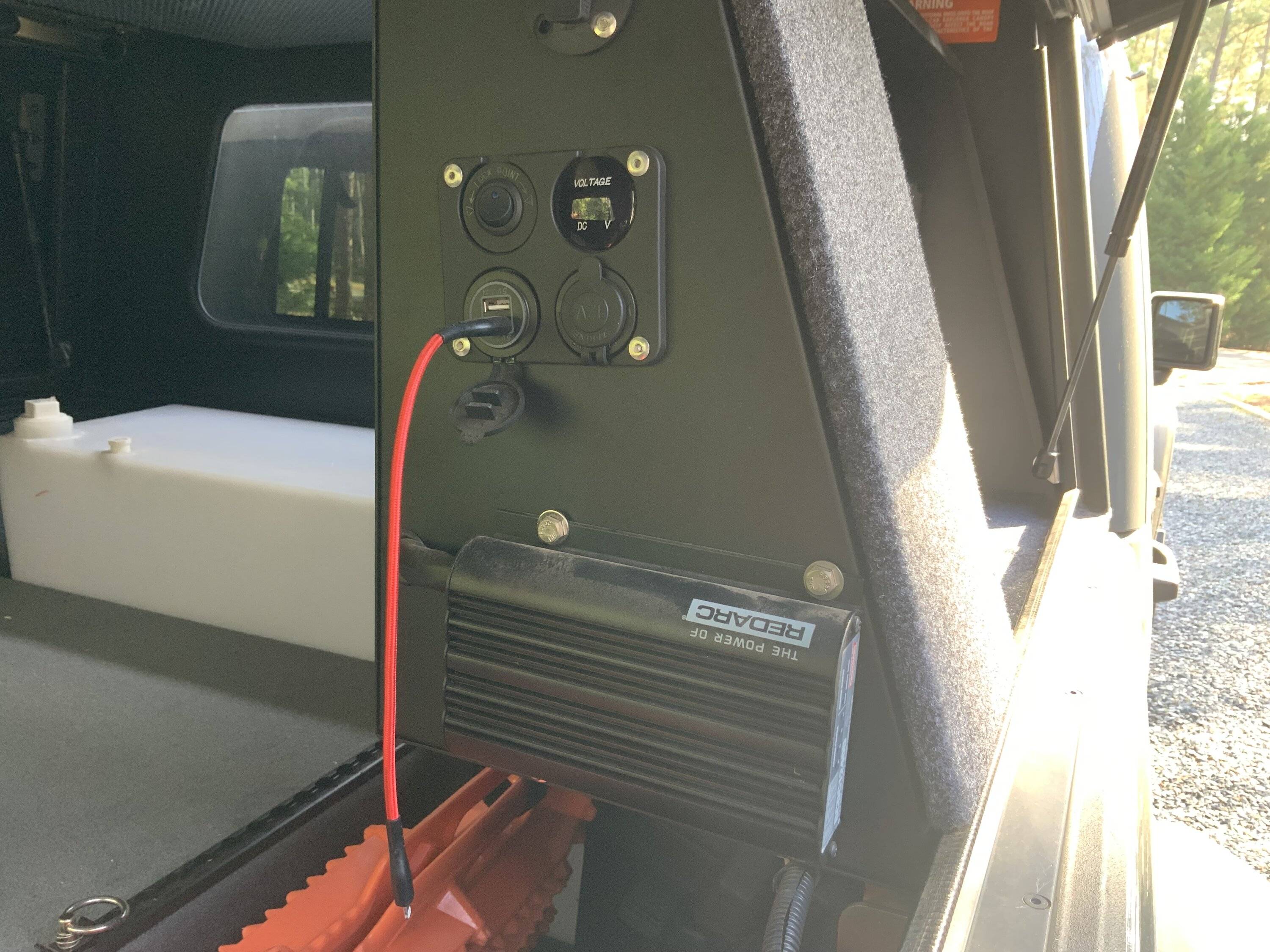
As far as battery monitor goes I ordered this:
https://www.amazon.com/Upgraded-Cha...1994665&sprefix=12+volt+,aps,172&sr=8-10&th=1
and it has worked fantastically. Here’s a picture of my set up in the back of my Alu-Cab with my Redarc below it on the side of the cabinet.
Jeep Gladiator A new hope ... (build journal and component reviews) IMG_1135
 
  • Like
Reactions: cug

Sponsored

OP
OP
cug

cug

Well-Known Member
First Name
Guido
Joined
Apr 1, 2023
Threads
13
Messages
602
Reaction score
664
Location
Christchurch, New Zealand
Vehicle(s)
JTR EcoDiesel, Land Cruiser 79, BMW R1250GS
Build Thread
Link
Occupation
Just keeping busy
Ah, that's interesting, I like that panel. And I like the mounting you have done there.

Overall, this really isn't rocket science, I have enough electrical knowledge to understand what not to do, but not enough patience, tools, and experience to get wiring as clean as I would like it. I know a lot of folks who could help, but they are all in Europe.

Again, I think I might go with the EGON, but will likely follow your recommendation to avoid the Manager 30, since it's overkill (e.g. I don't need to monitor water tanks or do any remote switching. I might even go down the Victron route for the simple reason that we have these in our Land Cruiser in Europe and doing it by myself here with a very similar setup, I get a better understanding of that that car's electrical components "for free" instead of learning about a different set of typical problems ... ;-) But that part is still undecided.

But it all goes more and more towards a flexible setup that I can add to as needed instead of an integrated power station or having it wired by the shop.

Thanks for the pointer regarding the sale, unfortunately, that's not going to work for me this time since we are leaving for Europe soon and I will have to continue the build in late June / early July. I was considering the Battle Born batteries, two of the 100Ah should do the trick.
 
OP
OP
cug

cug

Well-Known Member
First Name
Guido
Joined
Apr 1, 2023
Threads
13
Messages
602
Reaction score
664
Location
Christchurch, New Zealand
Vehicle(s)
JTR EcoDiesel, Land Cruiser 79, BMW R1250GS
Build Thread
Link
Occupation
Just keeping busy
What kind of camping/overlanding will you be doing?
This as a separate reply to not have it disappear within the technical discussion:

What we build this Jeep for is "traveling in the US and Canada for extended periods of time" – we will decide later on if we ever ship the Gladiator to other countries. We will drive long distances on roads, probably also some distance on unpaved roads and easy trails. Then, when it comes time to stopping for the night, we will try to find opportunities as far away from other people as reasonably possible. We don't like "people" all too much, while we aren't "anti-social", at this point, we just prefer to stay away from areas, where there are too many other people. Another camper here and there is nice and we've met great people on our trips, but standing side to side in an RV park with dozens of massive monsters with running ACs or being in an area that is flooded with drunk morons in beat up SUVs is not in our plan.

So, while we don't need all that much off-roading capabilities or self reliance during most of the days, we'll need exactly these for getting to and from our overnight spots. We will be back and forth between backcountry and towns, we will avoid larger cities, we don't need weeklong independence, but a few days are always good. We may take trails through backcountry that will take multiple days to traverse, but we are not going to do any planned difficult rock-crawling or other off-roading. This may happen due to changing conditions, like trails turning to mudpits in rain, trail damage requiring a certain amount of more difficult terrain traversing, or just the odd trail to get us away from the average SUV crowd, or plain getting lost or underestimating the difficulty of a trail.

What that means in terms of setup:
  • Enough off-road capabilities to traverse trails that have turned to shit due to incliment weather, meaning, I'll likely trade off the downsides of mud terrain tires for the few occasions where they might actually make our life much easier. Undecided yet, we'll try to push the KO2 on the Land Cruiser through a bit of mud to test them in these conditions. The Gladiator will get a lift to improve break over and departure angles, but I will stick to "normal" sized tires (33" most likely) and not do a lift beyond two or three inches.
  • Enough "range" (fuel, food, water, electricity) to do multi-day excursions away from populated areas and supplies.
  • Typically we will stay only one night in any given location, therefore driving daily for some time, which means regular charging of batteries. I'm happy to supplement via solar, but might not even need that for our typical travel times. Sometimes we'll stay a bit longer in a single place for hiking or sightseeing, but probably this will occur more in areas where we leave the vehicle on a regular campground or such and could use shore power to run heavy loads.
  • "We" always means two people, wife and myself. We like to cook fresh meals, but we can keep these simple and adjust to technical capabilities. This means, that we aren't going to live on dehydrated backpacking meals, but aren't cooking gourmet stuff either. In the morning we need hot water for coffee/tea, in the afternoons or evenings, we'll be cooking a simple one pot or one pan meal. Some stops for coffee/tea and snacks during the day. So, overall electrical consumption shouldn't be too high. Why I want to get away from propane is that I find it a pain in the rear most of the time. Hose hookup, inefficient energy use, especially in wind, less then stellar heat regulation on most stoves, messy cleanup, etc.
That could cover your question.
 

smlobx

Well-Known Member
First Name
Eddie
Joined
Jun 28, 2018
Threads
87
Messages
2,657
Reaction score
4,543
Location
Mid Atlantic
Vehicle(s)
JTR, F-350 diesel, Porsche Spyder, Model Y
Occupation
Semi retired consultant
Your type of travel is exactly what we do. The more remote the better…
Jeep Gladiator A new hope ... (build journal and component reviews) IMG_5147
 

Discount Tire

Well-Known Member
Joined
Feb 3, 2020
Threads
14
Messages
891
Reaction score
862
Location
Arizona, USA
Website
discountti.re
Vehicle(s)
All Things JEEP
Occupation
Tire & Wheel Specialists
From the horse's mouth, meaning the manufacturers websites. I've seen lots of errors on Discount Tire's website, so I tend to go to the source now. Again, it's just quoted numbers from websites, and there can be mistakes, on their end as well as on mine.

The reason why our LC79 is not a diesel is that you can still get the V6 EURO6 certified, but there is no way to do that for the current diesels. I would have gotten a V8 diesel in a heartbeat if I could actually buy it.

We are living a split life about 2/3s in the US and 1/3 in Europe and we like to travel in Europe as well as Africa as well, that's where the Land Cruiser comes in.
I apologize for the website presenting some conflicting information. It will definitely be addressed.

If there is ever a question regarding weight accuracy, please shoot us a DM and we will be happy to look into it.
 

Sponsored

OP
OP
cug

cug

Well-Known Member
First Name
Guido
Joined
Apr 1, 2023
Threads
13
Messages
602
Reaction score
664
Location
Christchurch, New Zealand
Vehicle(s)
JTR EcoDiesel, Land Cruiser 79, BMW R1250GS
Build Thread
Link
Occupation
Just keeping busy
If there is ever a question regarding weight accuracy, please shoot us a DM and we will be happy to look into it.
Ah, nice to hear from you guys. I'll do that when I see inaccurate or questionable information, e.g. larger size showing lower weight than smaller size at same weight rating for the same tire, I've seen this a few times before, but it's been a while, it was when I researched tires for my 4Runner.

Since then I've been going to manufacturer's websites – and I have found mistakes there as well.
 

HooliganActual

Well-Known Member
First Name
Robert
Joined
Jun 27, 2020
Threads
9
Messages
1,410
Reaction score
3,601
Location
10 miles from the Sun
Vehicle(s)
2020 Gladiator Rubicon
Occupation
Retired
I know there isn't a lot of love for Renogy out there, but I'm running the Renogy 30A DC-DC with 100aH battery and 200W worth of flexible solar panels. I've had them a while now and literally had no issues. @Dan Grec of TheRoadChose me ran a similar set up all around Australia for 18 months. They are way more competitively priced than BattleBorn and RedArc....FWIW. All my system management is done via Bluetooth app on my phone.

I assume you have experience with induction cooking and electric kettles but my preference is to stay away from AC appliances. Remember that anything you use AC for is going to require installing an inverter and now you have to take "Consumption Losses" into consideration. ex. using a 1000W inverter that is 92% efficient (typical number), you will lose 8% of your power to the inverter itself. So just having the inverter turned on, you are losing 80W/h or 6aH per hour (assuming 12V system). Inverters create a lot of heat so make sure you account for ventilation of the mounting location of the inverter.

So make sure you are sizing the battery and photovoltaic panels to account for that loss. Another thing you should definitely do is have a cutout switch for the inverter so that it isn't pulling an electrical load until you want to use an AC load. Turn it on when you need it and turn it off when you don't.

Induction cooktops use a ton of power...personally I'd be looking at propane for cooking.
 
OP
OP
cug

cug

Well-Known Member
First Name
Guido
Joined
Apr 1, 2023
Threads
13
Messages
602
Reaction score
664
Location
Christchurch, New Zealand
Vehicle(s)
JTR EcoDiesel, Land Cruiser 79, BMW R1250GS
Build Thread
Link
Occupation
Just keeping busy
Thanks for your insight, yes I have looked at Renogy as well, again, I'm not married to any of the systems, overall, I'd like to keep it "analog", meaning not too many things magically happening, but going through old school fuses and switches, but that will just be something that I'll put together when I've had some more time learning.

Induction cooktops use a ton of power...personally I'd be looking at propane for cooking.
That's the thing – I have used propane cooking until now (and still do in Europe) and I find it to be a massive pain the rear. The consumption completely explodes when there is wind, and it feels like from my last ten cooking sessions, nine have been in wind. We had three to four times the real world consumption than in testing in our backyard. I've accounted for twice the consumption, but was pretty shocked how bad it actually was. Using the the propane stuff here in the US West was relatively new to us over the last year, before that I've used white gas stoves for my pots and pans and the small camping gas canister for heating water in a MSR Windburner (which is very efficient, even in wind). In Europe it has been less of a problem since we've been in less windy areas. There the biggest issue is that every damn country has their own rules and regulations about filing and connections.

A friend of us used incuction cooking and his consumption went up about 1.3x to 1.5x in similarly windy conditions compared to backyard (losses from wind cooling the sides of pots and pans).

Propane can be refilled relatively easy, but just considering the following things:
  • I need a basic electrical setup anyways that includes DC and solar charging for running a fridge and other basic 12V appliances, like a mounted compressor, roughly about a single 100Ah battery, no inverter if I don't use AC appliances, still all the basic wiring and components need to be there, so other than the inverter, I'm not saving much complexity.
  • An 11lb propane bottle fully filled weighs about 20 to 23lb. That's about the same as the second 100Ah LFP battery I'll need for my setup.
  • The stoves, pots, and pans are about the same weight if they are of any quality, but for propane, I have to have at least one or two of the small containers as spares in case I unexpectedly run out of propane on the bigger container – that's another 2 to 4lbs.
  • Unless I'm using a MSR Windburner or similar (no, the Jetboil is not an option, it performs actually really poor in wind) an electric kettle blows away an aluminum kettle on a propane burner.
  • A 2kW inverter weighs about 11.6lbs (Redarc 2000W Pure Sine Wave Inverter). Add some cabling and switches to turn it off when not in use, let's say 13lbs.
  • When I'm at a campsite with hookups, I can use my induction system directly.
  • I don't need all the hoses and regulators etc.
  • The induction system only uses a ton of power while it's heating up, after that, the heat retention is very, very good. That's different from a gas burner which also uses a ton of propane to do the initial heating of all compenents and then is near impossible to adjust to a lower flame that is always at the risk of being blown out.
  • The loss in wind is a lot less, the conversion losses in the inverter are dwarved by gas top cooking when its even a bit windy, and again, it has been windy in about 90% of our outings.
  • There is no risk of fire due to no open flame with induction cooking.
  • Cleanup is a breeze.
  • I don't have to find propane fill up stations along my route, which should be easy enough, it's just another thing to take care off on top of finding diesel and DEF.
What I'm missing is being able to cook with something like a Skottle or so, or using a propane fireplace. We aren't using either for various reasons.

I'm also not using a propane heater for the camper, since I can just install a diesel heater that costs about a 10th of a propane "fireplace" instead of propane and uses the same fuel as I'm carrying for the truck. If there is a "cooking emergency", my MSR DragonFly can run on the same diesel.

So, overall, I'm not convinced propane is getting me much, now that we have light weight and long lasting LFP batteries.
 
OP
OP
cug

cug

Well-Known Member
First Name
Guido
Joined
Apr 1, 2023
Threads
13
Messages
602
Reaction score
664
Location
Christchurch, New Zealand
Vehicle(s)
JTR EcoDiesel, Land Cruiser 79, BMW R1250GS
Build Thread
Link
Occupation
Just keeping busy
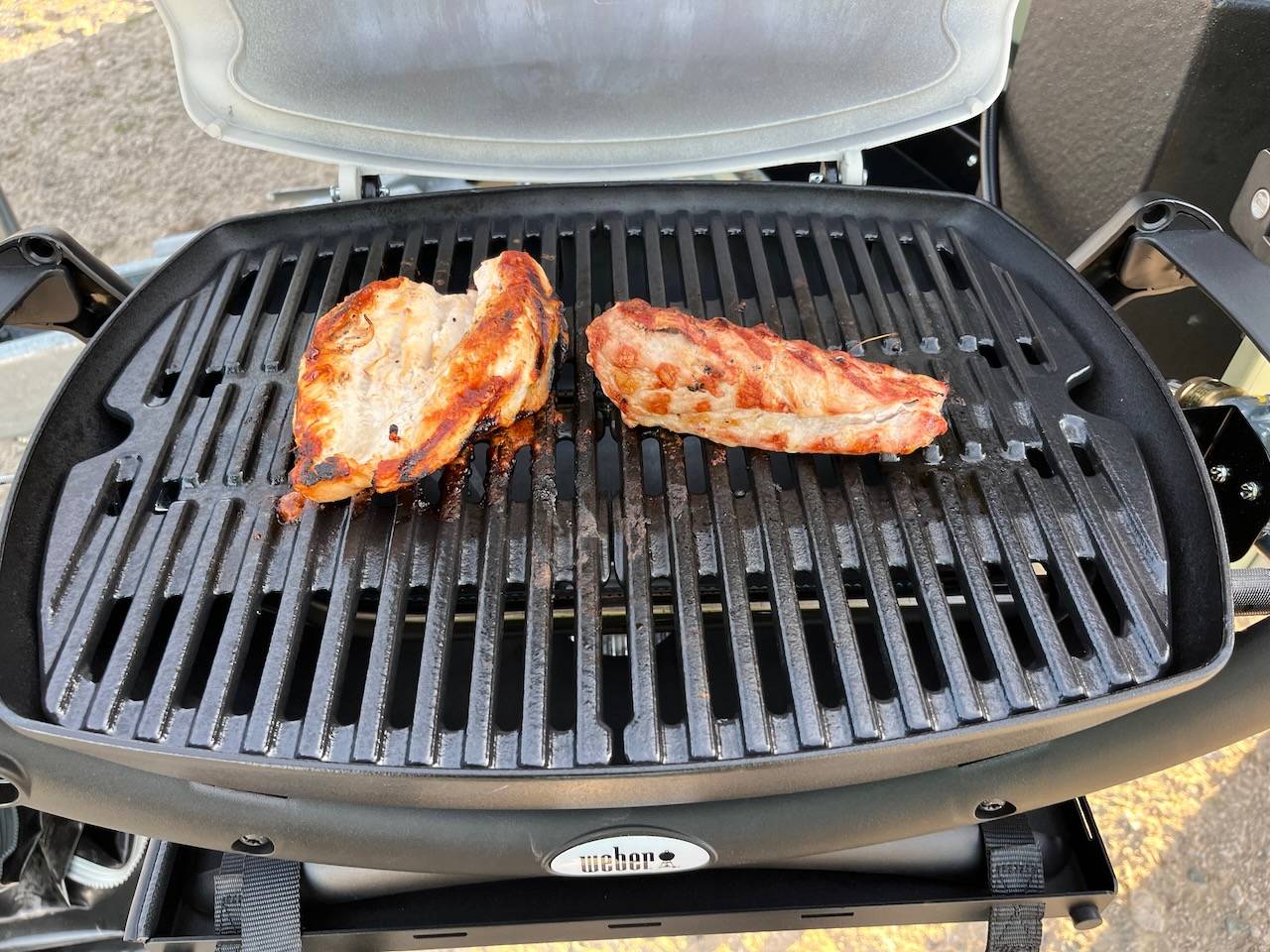
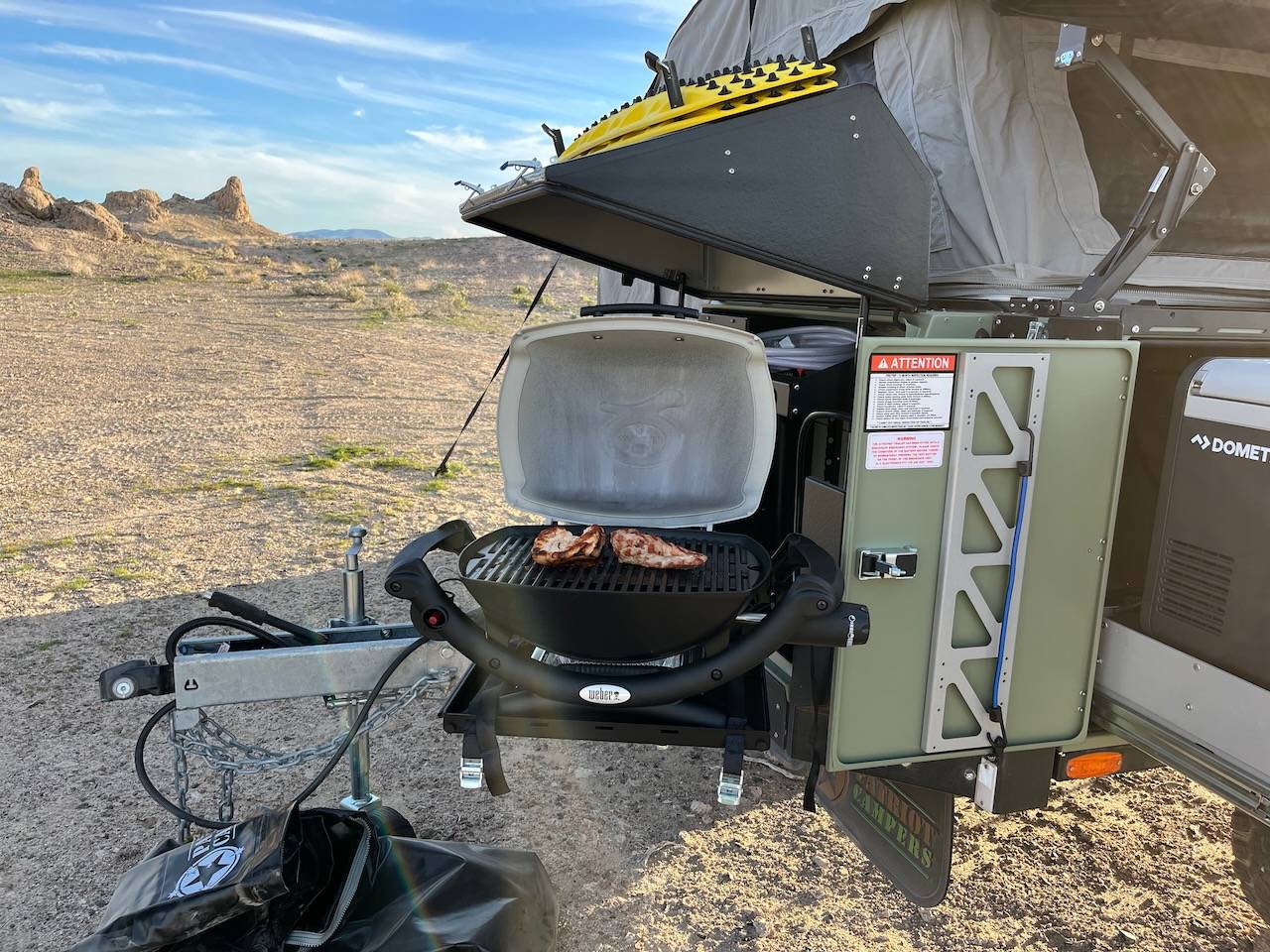
The biggest thing I'll be missing when not using propane at all is this one:

Jeep Gladiator A new hope ... (build journal and component reviews) IMG_5239
Jeep Gladiator A new hope ... (build journal and component reviews) IMG_5240
 

smlobx

Well-Known Member
First Name
Eddie
Joined
Jun 28, 2018
Threads
87
Messages
2,657
Reaction score
4,543
Location
Mid Atlantic
Vehicle(s)
JTR, F-350 diesel, Porsche Spyder, Model Y
Occupation
Semi retired consultant
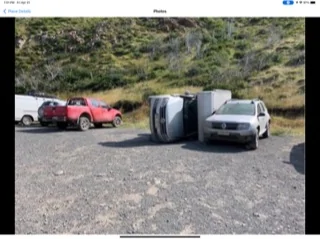
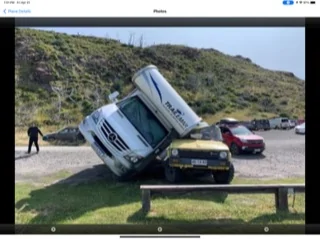
Interesting comment about the wind Cug. We had issues in the past and if we are going to camp in windy conditions, like we recently did in Patagonia we would just position the vehicle to act as our wind block and that worked fantastically.

In case you’re wondering how windy we were camping in here are a few pictures of what the wind in Patagonia can do….
Jeep Gladiator A new hope ... (build journal and component reviews) IMG_1138
Jeep Gladiator A new hope ... (build journal and component reviews) IMG_1137
Sponsored


Top