Sponsored

Using Stock Bumper Tow Eyes For Recovery?

NC_Overland

Well-Known Member
First Name
John
Joined
Feb 21, 2020
Threads
18
Messages
3,377
Reaction score
4,141
Location
Raleigh, NC
Vehicle(s)
2020 JT Overland
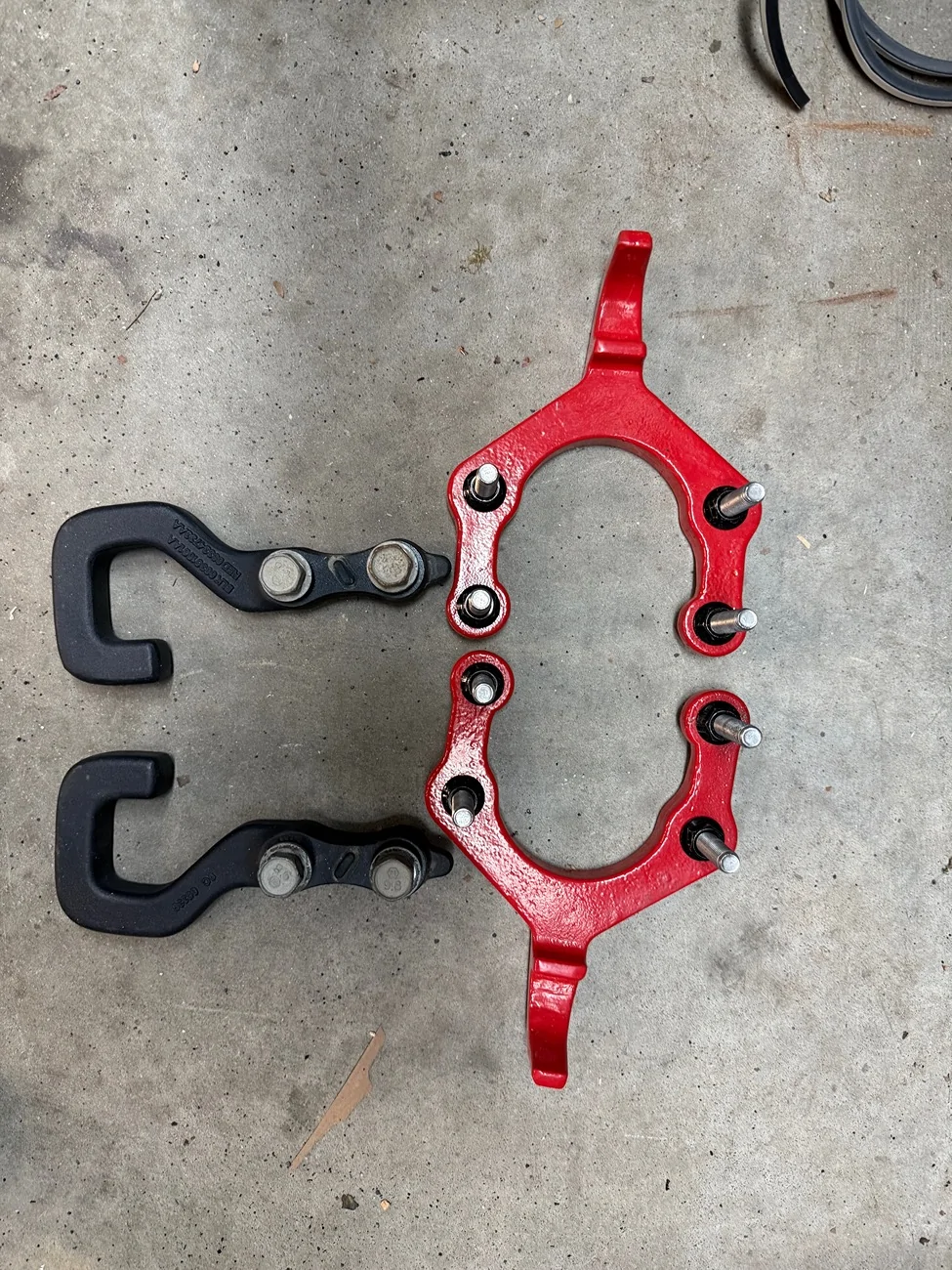
Going off what Freems said, I have stock rear tow hooks and some aftermarket ones that will probably sit in my garage cabinet till the day I die if anyone in the Atlanta south side (30269) wants them. Locks pick up only. Free fitty.

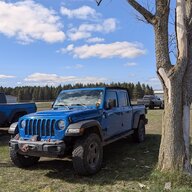
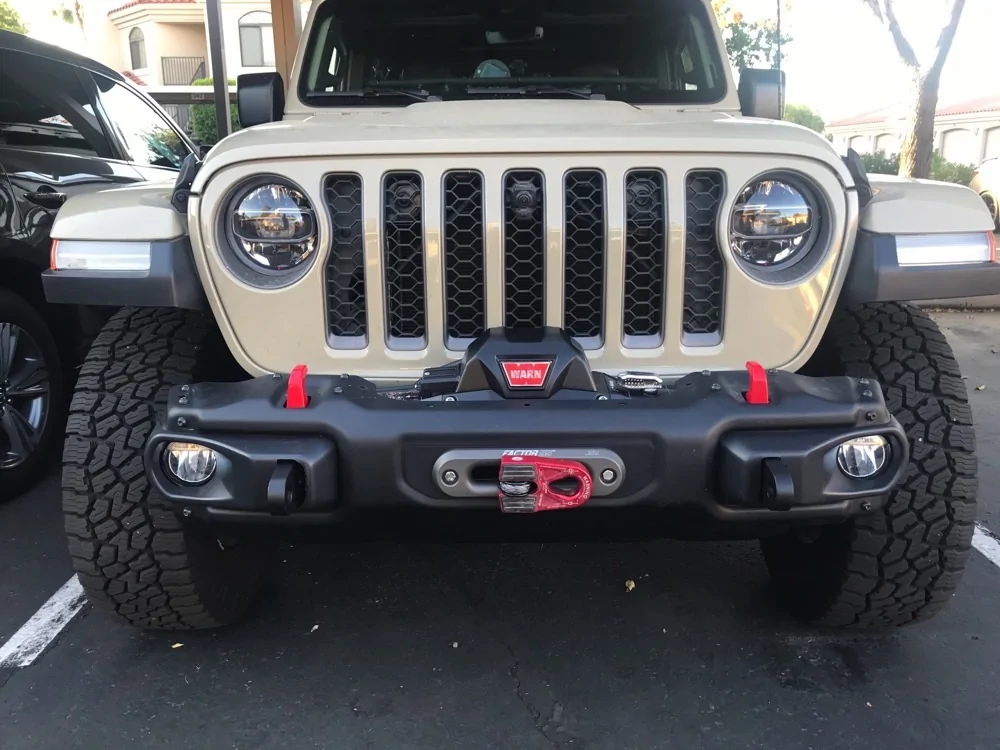
I have two rear because I hated the asymmetry on my overland. I didn’t like the red on my front bumper so I used my stock ones. I like red, but I have no other red accents. I’m not using those bumpers anymore.
Jeep Gladiator Using Stock Bumper Tow Eyes For Recovery? IMG_3306
Sponsored


Gvsukids

Well-Known Member
First Name
Justin
Joined
Mar 7, 2020
Threads
26
Messages
7,283
Reaction score
6,913
Location
Grand Rapids
Website
www.youtube.com
Vehicle(s)
2020 Gladiator Sport S Max Tow
Occupation
Delivery Driver
To head off the obvious next question: the front hooks are fine too.
Yes, they are. Used the passenger side hook as recovery point.


Bandit’s Lair

Well-Known Member
First Name
Jason
Joined
Jul 9, 2025
Threads
31
Messages
2,532
Reaction score
4,193
Location
Southern California
Vehicle(s)
2021 Gladiator Sport S
Occupation
Retired
If you were only to hook a strap to one of them though, which I think most people probably would in a recovery situation, and say yank the jeep backwards in the mud, the direction of the shift of the ass end of the jeep will actually shift the loop to the closed side of the hook. So I think they make sense the way they did them for most people that don't put thought into these things.
I was thinking exactly the opposite. I’d want the pull to go towards the center of the Jeep. In the rear with the tow hitch installed doesn’t that factor in a “triangulation” point? I’d think the frame was stronger there than the force going towards the corner. I’m by no means an engineer though so maybe one of those professional types can chime in on that.

Going off what Freems said, I have stock rear tow hooks and some aftermarket ones that will probably sit in my garage cabinet till the day I die if anyone in the Atlanta south side (30269) wants them. Locks pick up only. Free fitty.
Can you do me a favor and move to SoCal for a while so I can pick those up? :CWL: :like:

My sister does live out that way. They drive a Wrangler 2.0 turbo.
 

BlueScapegoat

Well-Known Member
First Name
Trevor
Joined
Dec 2, 2018
Threads
14
Messages
1,113
Reaction score
2,707
Location
MN
Vehicle(s)
91 ST185, 04 Ram SRT10, 04 Forester XT, SC'd 05 Rubi, 22 JTRD
Occupation
Air Traffic Controller
Vehicle Showcase
4
I was thinking exactly the opposite. I’d want the pull to go towards the center of the Jeep. In the rear with the tow hitch installed doesn’t that factor in a “triangulation” point? I’d think the frame was stronger there than the force going towards the corner. I’m by no means an engineer though so maybe one of those professional types can chime in on that.
I'm just saying I've seen hundreds of people do recoveries and it's really common for people to just throw a strap on one hook. And in that case, the strap is going to pull towards the closed side of the hook if it's a low traction mud situation. There's lots of variables, just saying I bet there was a reason they put them the way they did.

It's not ideal but it's what people do.
 

HooliganActual

Well-Known Member
First Name
Robert
Joined
Jun 27, 2020
Threads
9
Messages
1,410
Reaction score
3,601
Location
10 miles from the Sun
Vehicle(s)
2020 Gladiator Rubicon
Occupation
Retired
If you were only to hook a strap to one of them though, which I think most people probably would in a recovery situation, and say yank the jeep backwards in the mud, the direction of the shift of the ass end of the jeep will actually shift the loop to the closed side of the hook. So I think they make sense the way they did them for most people that don't put thought into these things.
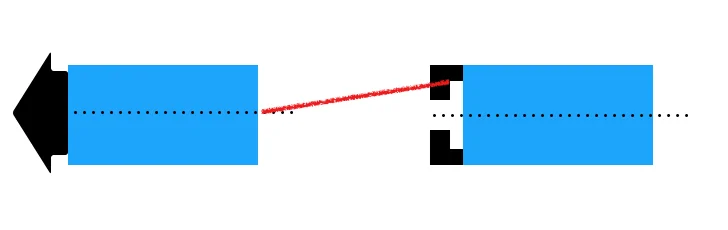
Not trying to disagree, but the scenario you propose only applies if the vehicle pulling on your hook is off centerline from your vehicle and pulling at an angle; much like examples others have already cited where a vehicle has slid off the road into a ditch. In that type of scenario, the pulling vehicle would be up on the road and would be pulling at an angle and would seat the strap loop into the closed side of the hook.
Jeep Gladiator Using Stock Bumper Tow Eyes For Recovery? 1775419394682-lk


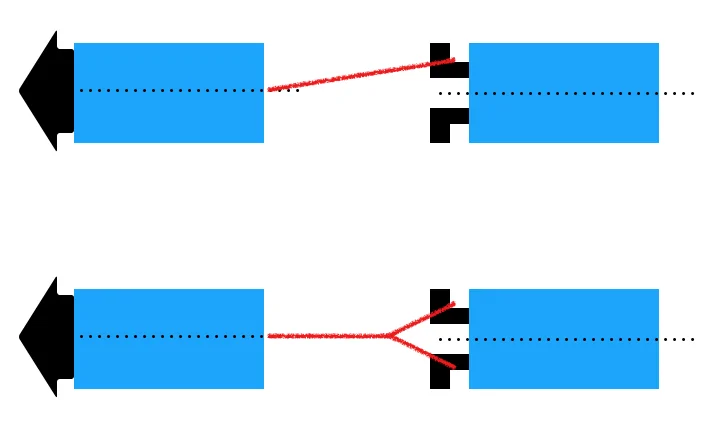
Typically, when I have been recovered or am recovering a vehicle on a trail, the vehicle doing the pulling follows into the tracks/trail that the stuck vehicle went down (again assuming the recovery is pulling the vehicle backwards). In that scenario, the centerline of both vehicles are roughly in line. If you were doing a "snatch from the rear of recovery vehicle to one of the rear hooks of the stuck Gladiator, the angle would be such that the pull is going towards the open side of the hook.

Jeep Gladiator Using Stock Bumper Tow Eyes For Recovery? 1775419496273-x9


That's where using a bridle or even not using a bridle, as I mentioned, would seem best and that would work better if the hook openings faced away from centerline. In the typical recovery situations I have seen, an outward facing hook would minimize the likelihood of the strap slipping off the hook.
Jeep Gladiator Using Stock Bumper Tow Eyes For Recovery? 1775419659784-er


And I know someone will probably want to argue that my third diagram is not or should not be the typical way a recovery happens; I would like to counter that argument by saying that anytime you are doing a pull at an angle you are diminishing the capacity of your recovery gear:
  • 60 degree angle is a 15-20% reduction
  • 45 degree angle is ~40% reduction
  • 30 degree angle is >50% reduction
So before someone makes that argument, I would say that you should be trying to get as close to figure 3 in order to ensure the most power transfer and least likely failure of the gear.
 

Sponsored

BlueScapegoat

Well-Known Member
First Name
Trevor
Joined
Dec 2, 2018
Threads
14
Messages
1,113
Reaction score
2,707
Location
MN
Vehicle(s)
91 ST185, 04 Ram SRT10, 04 Forester XT, SC'd 05 Rubi, 22 JTRD
Occupation
Air Traffic Controller
Vehicle Showcase
4
Not trying to disagree, but the scenario you propose only applies if the vehicle pulling on your hook is off centerline from your vehicle and pulling at an angle; much like examples others have already cited where a vehicle has slid off the road into a ditch. In that type of scenario, the pulling vehicle would be up on the road and would be pulling at an angle and would seat the strap loop into the closed side of the hook.
1775419394682-lk.webp


Typically, when I have been recovered or am recovering a vehicle on a trail, the vehicle doing the pulling follows into the tracks/trail that the stuck vehicle went down (again assuming the recovery is pulling the vehicle backwards). In that scenario, the centerline of both vehicles are roughly in line. If you were doing a "snatch from the rear of recovery vehicle to one of the rear hooks of the stuck Gladiator, the angle would be such that the pull is going towards the open side of the hook.

1775419496273-x9.webp


That's where using a bridle or even not using a bridle, as I mentioned, would seem best and that would work better if the hook openings faced away from centerline. In the typical recovery situations I have seen, an outward facing hook would minimize the likelihood of the strap slipping off the hook.
1775419659784-er.webp


And I know someone will probably want to argue that my third diagram is not or should not be the typical way a recovery happens; I would like to counter that argument by saying that anytime you are doing a pull at an angle you are diminishing the capacity of your recovery gear:
  • 60 degree angle is a 15-20% reduction
  • 45 degree angle is ~40% reduction
  • 30 degree angle is >50% reduction
So before someone makes that argument, I would say that you should be trying to get as close to figure 3 in order to ensure the most power transfer and least likely failure of the gear.
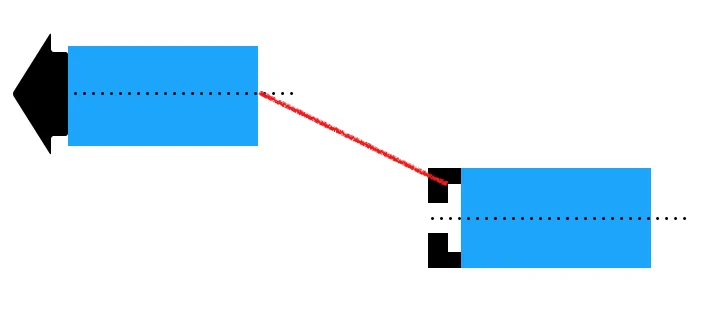
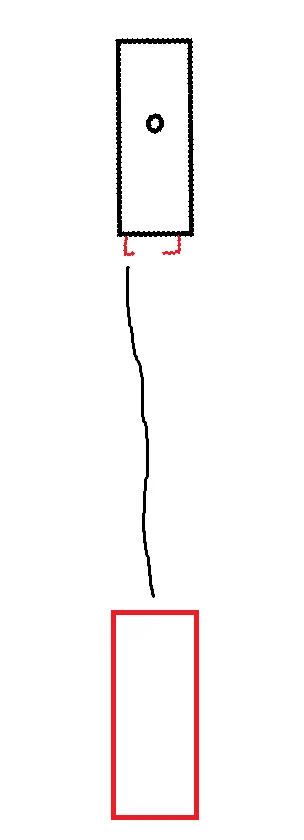
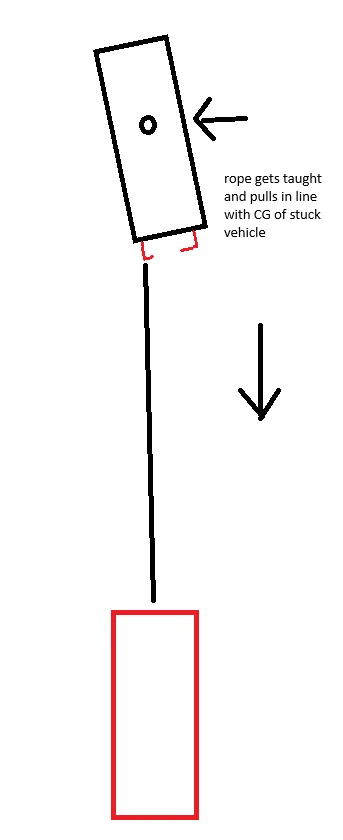
I certainly agree with everything you're saying, like I said, lots of variables anyway. Vehicle positioning and traction will ultimately determine anything. I think we all agree that open hooks aren't the ideal way, regardless. I'm just used to growing up in muddy appalachia and watching people do hard tugs in mud and the momentum in any asymmetric pull would rotate the vehicle being pulled.

I used to be a graphic designer and don't have any software installed on this computer so this kills me a bit but here's my quick paint drawing to try to illustrate what I was talking about

Jeep Gladiator Using Stock Bumper Tow Eyes For Recovery? start


Jeep Gladiator Using Stock Bumper Tow Eyes For Recovery? end
 

HooliganActual

Well-Known Member
First Name
Robert
Joined
Jun 27, 2020
Threads
9
Messages
1,410
Reaction score
3,601
Location
10 miles from the Sun
Vehicle(s)
2020 Gladiator Rubicon
Occupation
Retired
Totally agree. What I don’t like about the hooks in that scenario is the possibility that the loop can pop off the open throat before the back swings and then seats it in the back of the hook.
 

BlueScapegoat

Well-Known Member
First Name
Trevor
Joined
Dec 2, 2018
Threads
14
Messages
1,113
Reaction score
2,707
Location
MN
Vehicle(s)
91 ST185, 04 Ram SRT10, 04 Forester XT, SC'd 05 Rubi, 22 JTRD
Occupation
Air Traffic Controller
Vehicle Showcase
4
Totally agree. What I don’t like about the hooks in that scenario is the possibility that the loop can pop off the open throat before the back swings and then seats it in the back of the hook.
Possible, yeah.

It's funny because I'm sure this was, at one point, discussed at length by a design team.

How much of it just has to do with the odds of the angle of pull from a ditch style recovery in the winter? I have no idea.
 

Gvsukids

Well-Known Member
First Name
Justin
Joined
Mar 7, 2020
Threads
26
Messages
7,283
Reaction score
6,913
Location
Grand Rapids
Website
www.youtube.com
Vehicle(s)
2020 Gladiator Sport S Max Tow
Occupation
Delivery Driver
And I know someone will probably want to argue that my third diagram is not or should not be the typical way a recovery happens; I would like to counter that argument by saying that anytime you are doing a pull at an angle you are diminishing the capacity of your recovery gear:
I use third option to center the tension.
 

HooliganActual

Well-Known Member
First Name
Robert
Joined
Jun 27, 2020
Threads
9
Messages
1,410
Reaction score
3,601
Location
10 miles from the Sun
Vehicle(s)
2020 Gladiator Rubicon
Occupation
Retired
It's funny because I'm sure this was, at one point, discussed at length by a design team
Absolutely right. The funny thing about it IMHO is that there are other vehicles where their design teams came up with outward facing throats and the vehicles were manufactured that way. I even think the 90’s era RAM trucks came that way.

In one of my previous lives I was a certified rigger and always had to account for high incidence angles in the lifts we were performing. We always made sure that we limited the risk associated with that open throat.
 
Last edited:

Sponsored

S JEEPN

Well-Known Member
First Name
Steve
Joined
Jan 19, 2026
Threads
3
Messages
175
Reaction score
180
Location
San Diego County
Vehicle(s)
2024 Gladiator Mojave
Occupation
Road construction and maintenance supervisor
I can see both sides if you are pulling straight on, from that side or the other, one angle or another it could be an issue. I guess if you leave them as is or flip them around you just have to account for the opening either way. The only thing about recovering vehicles, moving things, hoisting or whatever every situation is different. I do not think it matters much the way the openings face as long as you plan for the situation. Accounting for what you want to do and figure out the safest way to do it looking at the possibilities' of what could happen.
 

HooliganActual

Well-Known Member
First Name
Robert
Joined
Jun 27, 2020
Threads
9
Messages
1,410
Reaction score
3,601
Location
10 miles from the Sun
Vehicle(s)
2020 Gladiator Rubicon
Occupation
Retired
Last edited:

Heater

Active Member
First Name
Mark
Joined
Feb 24, 2022
Threads
1
Messages
33
Reaction score
62
Location
North Texas
Vehicle(s)
2017 Ram Power Wagon, 2009 JKUR 392 AMW, 2006 LJ Rubicon, 1984 CJ-7
Occupation
USN Retired PAMO
I'll second the Bandit as well. The rear bumper hooks are perfectly fine. I've not had to use mine but I have winch pulled on other people's JLU's and Gladiators that had the same hooks.

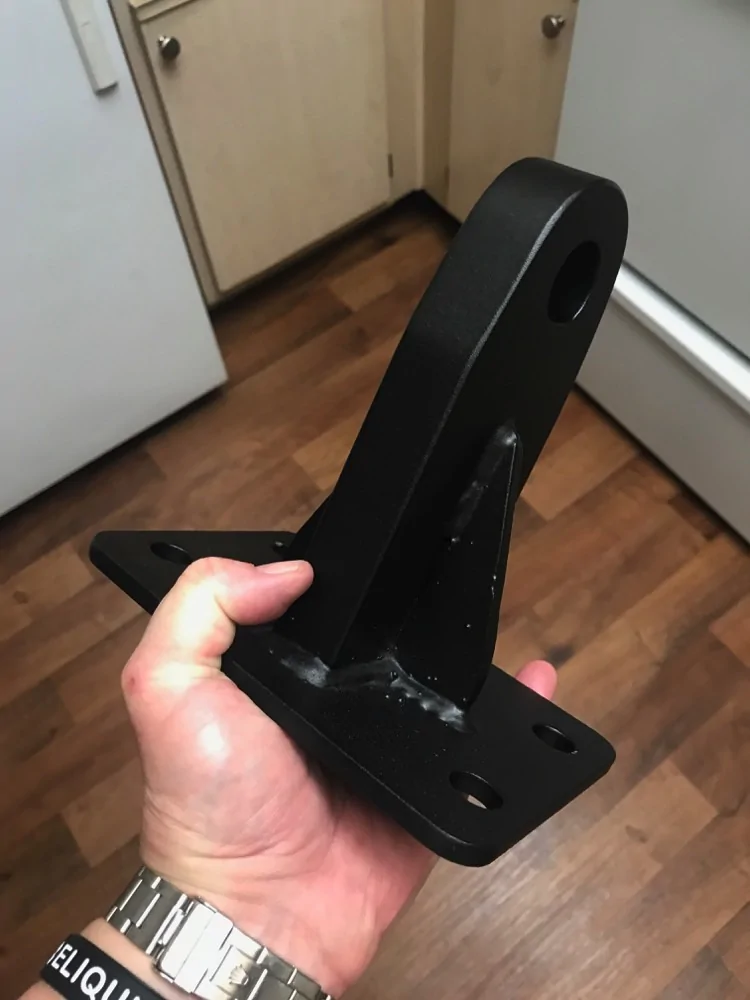
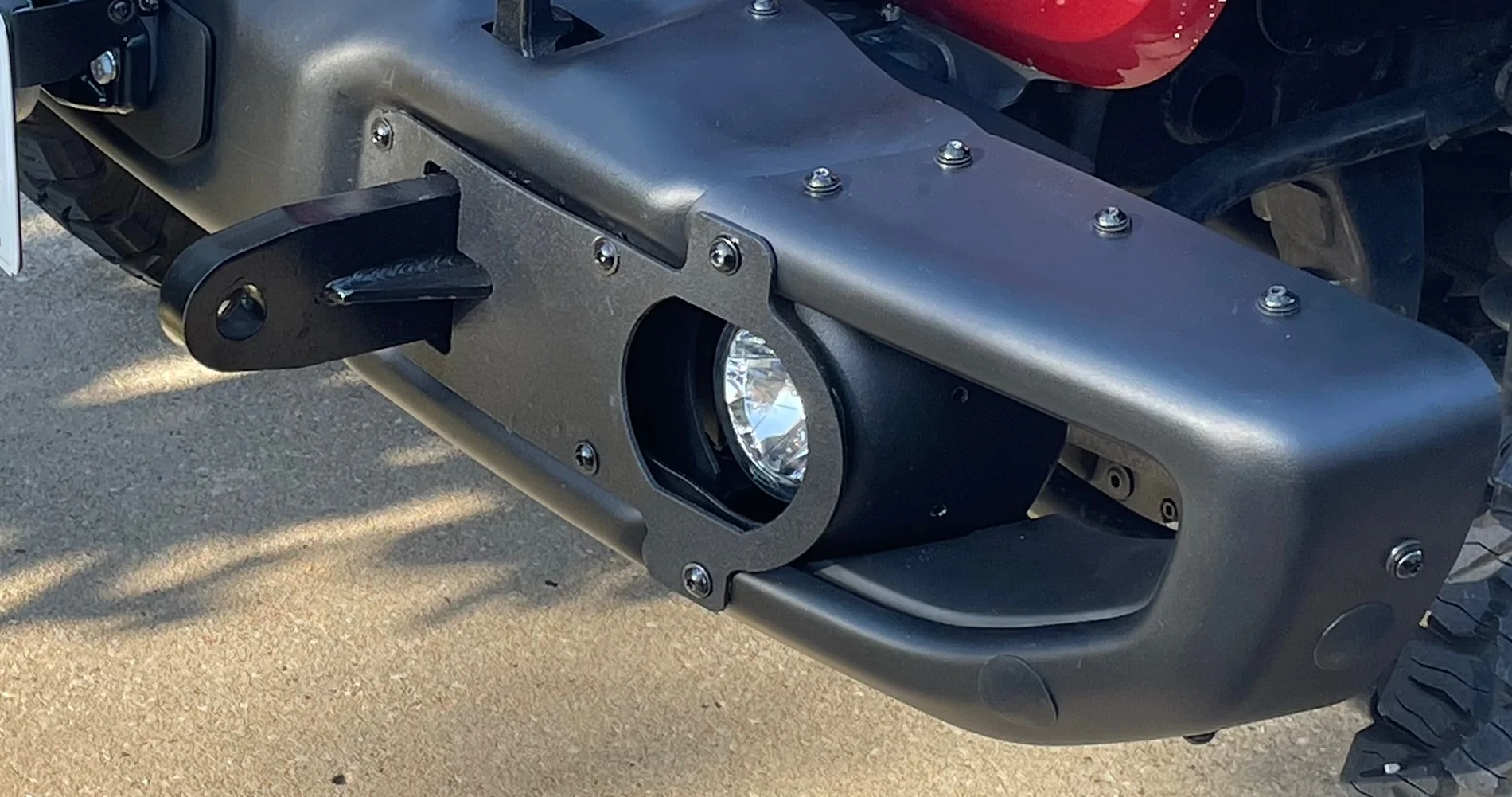
To head off the obvious next question: the front hooks are fine too. I personally don't like that style of hook and prefer something that allows a more positive connection. I "augmented" my front bumper with some shackle mount points that pass through the bumper and bolt to the frame horns:
Jeep Gladiator Using Stock Bumper Tow Eyes For Recovery? {filename}

Jeep Gladiator Using Stock Bumper Tow Eyes For Recovery? {filename}
I used the same FrogFab brackets and combined with these replacement steel bezels:

https://www.hkoffroad.com/collectio...-jt-shackle-tab-kit-for-stock-rubicon-bumpers

Jeep Gladiator Using Stock Bumper Tow Eyes For Recovery? IMG_0523
 

S JEEPN

Well-Known Member
First Name
Steve
Joined
Jan 19, 2026
Threads
3
Messages
175
Reaction score
180
Location
San Diego County
Vehicle(s)
2024 Gladiator Mojave
Occupation
Road construction and maintenance supervisor
He does not mess around with strong enough. That is the beefiest attachment point i have ever seen i used to flat tow my YJ with a tow bar attached with .25 inch thick reinforcement plates welded behind the bumper. I though they were overbuilt those would out last the truck.
Sponsored


Top