Sponsored

Need a tire expert to explain right way to balance

Cooper_D

Well-Known Member
First Name
Duane
Joined
Aug 17, 2022
Threads
6
Messages
132
Reaction score
211
Location
South West Ohio
Vehicle(s)
2023 Jeep Gladiator Mojave, 2020 Grand Cherokee
Occupation
Retired
At 43,000 miles the tire noise was so loud that I couldn't hear the wind noise so I decided to go to the dealer to take advantage of the buy 3 get one for a dollar. Plus I had enough points on my Jeep card to pay for one of the tires.

Told the dealer the brand and size of the tire in load range C not E, made appointment and dropped it off.
Picked it up later and it was quiet, but something didn't seem quite right. Come to find out that they put a passenger car tire on instead of a Light Truck tire.
Returned to dealer, they agreed it was the wrong tire, re-ordered correct tires and installed them.

Upon close inspection the tires had a yellow dot and a red dot on them 3 of the 4 had the Red dot next to the valve stem and the 4th tire was no where near the yellow or red dot.

An internet search brought up:
Yellow Dot

  • Indicates Lightest Point: The yellow dot marks the lightest part of the tire.
  • Alignment: When mounting the tire, the yellow dot should be aligned with the valve stem, which is typically the heaviest point of the wheel. This helps achieve better balance.
Red Dot
  • Indicates Highest Point: The red dot marks the highest point of the tire, which is the most imbalanced area.
  • Alignment: If a red dot is present, it should be aligned with a corresponding mark on the wheel (if available). If no mark exists, the red dot can be aligned with the valve stem, but this is less ideal than matching it with a wheel mark.


Contacted the manufacturer and he said they should be "road forced balanced" which the dealer had done.

So what is the proper procedure in order to get the best possible balance done?

Should the tire be installed on the wheel using the red/yellow dot and then road force balanced or just throw the tire on and balance from there?

As a kid in the '70s I pumped gas, installed tires and used a bubble balancer to make sure there is no vibration.

I asked one of the tire change dealers his opinion and he said "I will put the red/yellow dot anywhere you want if that will make you happy."
Sponsored

 

Commodus

Well-Known Member
First Name
Buck
Joined
Aug 11, 2019
Threads
22
Messages
662
Reaction score
719
Location
San Diego, Ca.
Vehicle(s)
Hydro Blue Gladiator, BMW X3
Occupation
Retired
Vehicle Showcase
2
At 43,000 miles the tire noise was so loud that I couldn't hear the wind noise so I decided to go to the dealer to take advantage of the buy 3 get one for a dollar. Plus I had enough points on my Jeep card to pay for one of the tires.

Told the dealer the brand and size of the tire in load range C not E, made appointment and dropped it off.
Picked it up later and it was quiet, but something didn't seem quite right. Come to find out that they put a passenger car tire on instead of a Light Truck tire.
Returned to dealer, they agreed it was the wrong tire, re-ordered correct tires and installed them.

Upon close inspection the tires had a yellow dot and a red dot on them 3 of the 4 had the Red dot next to the valve stem and the 4th tire was no where near the yellow or red dot.

An internet search brought up:
Yellow Dot

  • Indicates Lightest Point: The yellow dot marks the lightest part of the tire.
  • Alignment: When mounting the tire, the yellow dot should be aligned with the valve stem, which is typically the heaviest point of the wheel. This helps achieve better balance.
Red Dot
  • Indicates Highest Point: The red dot marks the highest point of the tire, which is the most imbalanced area.
  • Alignment: If a red dot is present, it should be aligned with a corresponding mark on the wheel (if available). If no mark exists, the red dot can be aligned with the valve stem, but this is less ideal than matching it with a wheel mark.


Contacted the manufacturer and he said they should be "road forced balanced" which the dealer had done.

So what is the proper procedure in order to get the best possible balance done?

Should the tire be installed on the wheel using the red/yellow dot and then road force balanced or just throw the tire on and balance from there?

As a kid in the '70s I pumped gas, installed tires and used a bubble balancer to make sure there is no vibration.

I asked one of the tire change dealers his opinion and he said "I will put the red/yellow dot anywhere you want if that will make you happy."
Road force balance is the only way to go. Hopefully you didn’t get MT tires or you will be in the same situation again in a few miles The dots are best aligned with the stem and wheel if the tire takes excessive weight to balance but it doesn’t always matter since most wheels are not perfectly round and balanced themselves unless they are a very expensive high end wheel
 

Wildtoad

Well-Known Member
First Name
Thomas
Joined
Jun 26, 2023
Threads
4
Messages
219
Reaction score
268
Location
Blythewood
Vehicle(s)
2021 Gladiator Sport Willys
Occupation
Retired, former mainframe computer bit twiddler
IMO put the tires on, have a road balance done, add weights where needed.
 

Lunentucker

Well-Known Member
Joined
Apr 24, 2022
Threads
248
Messages
5,878
Reaction score
15,397
Location
Virginia
Vehicle(s)
2021 Jeep Gladiator Mojave
Occupation
People Work?

wuykats

Well-Known Member
First Name
Ken
Joined
Oct 16, 2025
Threads
8
Messages
65
Reaction score
73
Location
Brawley, Ca
Vehicle(s)
2020 JTR, 2016 JKUR
Occupation
Retired
Over 50 years ago I worked at a gas station that sold tires. We had a bubble balancer, first you needed to make sure it was on a level surface. Then put the wheel/tire on the machine. Lets say it was out of balance (light) at the 12 o'clock position. You would arrange 4 weights of equal size at 10 and 2 o'clock. Adjust the weight size until the tire showed the bubble in the middle. Mark the spots, remove the wheel/tire from the machine and place one weight at 9:30 and another at 2:30 on the back side of the wheel. Then put the wheel/tire back on the machine. Adjust the remaining 2 weights, they should be at about 10:30 and 1:30 to balance, attach them to the front side of the wheel. Using this method, with the four weights, gave us pretty good results. Many shops would not take the time to follow this procedure, maybe they would use one big weight to get it "close enough" or only put weights on one side of the wheel. Old school system, but it worked pretty well!
 

Sponsored

willys 41

Well-Known Member
First Name
Larry Olund
Joined
Oct 12, 2022
Threads
1
Messages
446
Reaction score
441
Location
Pleasanton Ca.
Vehicle(s)
2020 Jeep Willys
Occupation
Machinist / Auto Technician
At 43,000 miles the tire noise was so loud that I couldn't hear the wind noise so I decided to go to the dealer to take advantage of the buy 3 get one for a dollar. Plus I had enough points on my Jeep card to pay for one of the tires.

Told the dealer the brand and size of the tire in load range C not E, made appointment and dropped it off.
Picked it up later and it was quiet, but something didn't seem quite right. Come to find out that they put a passenger car tire on instead of a Light Truck tire.
Returned to dealer, they agreed it was the wrong tire, re-ordered correct tires and installed them.

Upon close inspection the tires had a yellow dot and a red dot on them 3 of the 4 had the Red dot next to the valve stem and the 4th tire was no where near the yellow or red dot.

An internet search brought up:
Yellow Dot

  • Indicates Lightest Point: The yellow dot marks the lightest part of the tire.
  • Alignment: When mounting the tire, the yellow dot should be aligned with the valve stem, which is typically the heaviest point of the wheel. This helps achieve better balance.
Red Dot
  • Indicates Highest Point: The red dot marks the highest point of the tire, which is the most imbalanced area.
  • Alignment: If a red dot is present, it should be aligned with a corresponding mark on the wheel (if available). If no mark exists, the red dot can be aligned with the valve stem, but this is less ideal than matching it with a wheel mark.


Contacted the manufacturer and he said they should be "road forced balanced" which the dealer had done.

So what is the proper procedure in order to get the best possible balance done?

Should the tire be installed on the wheel using the red/yellow dot and then road force balanced or just throw the tire on and balance from there?

As a kid in the '70s I pumped gas, installed tires and used a bubble balancer to make sure there is no vibration.

I asked one of the tire change dealers his opinion and he said "I will put the red/yellow dot anywhere you want if that will make you happy."
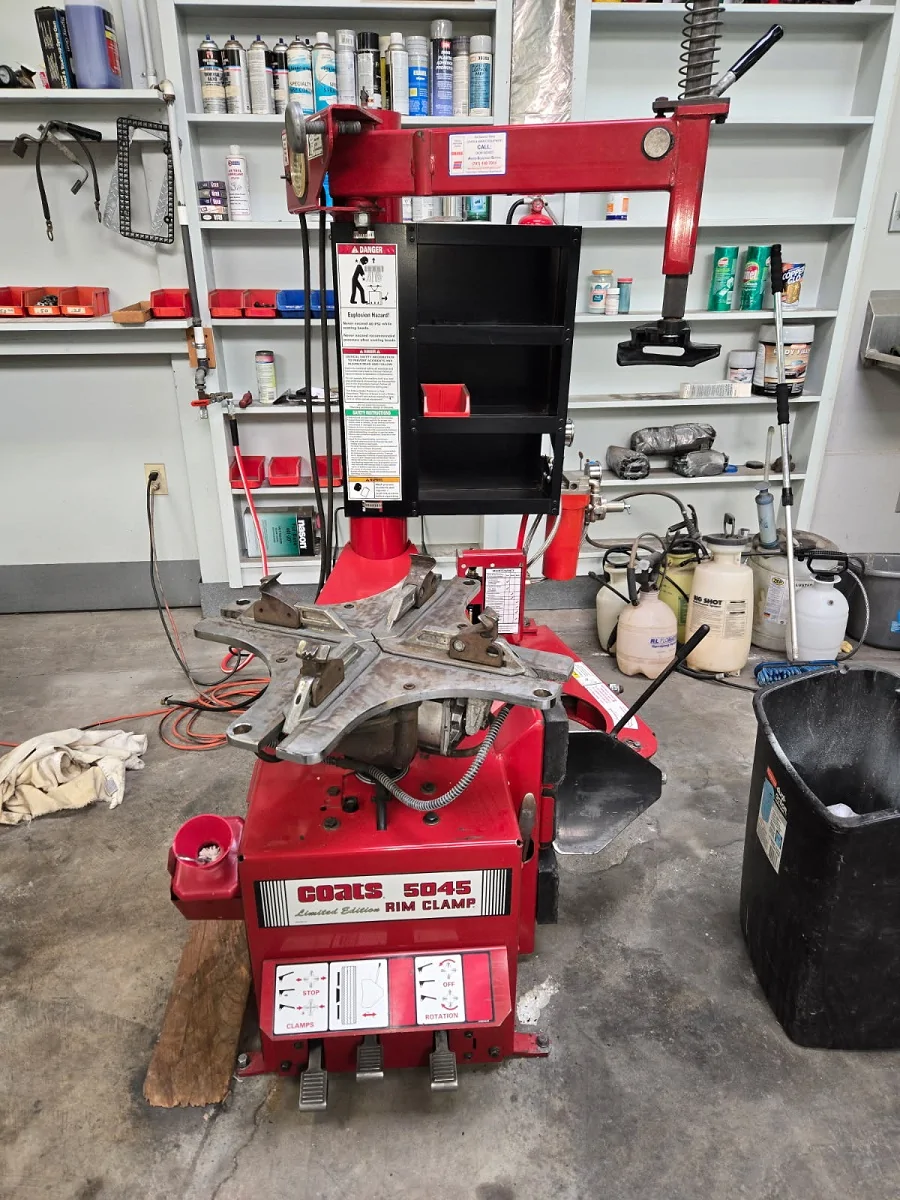
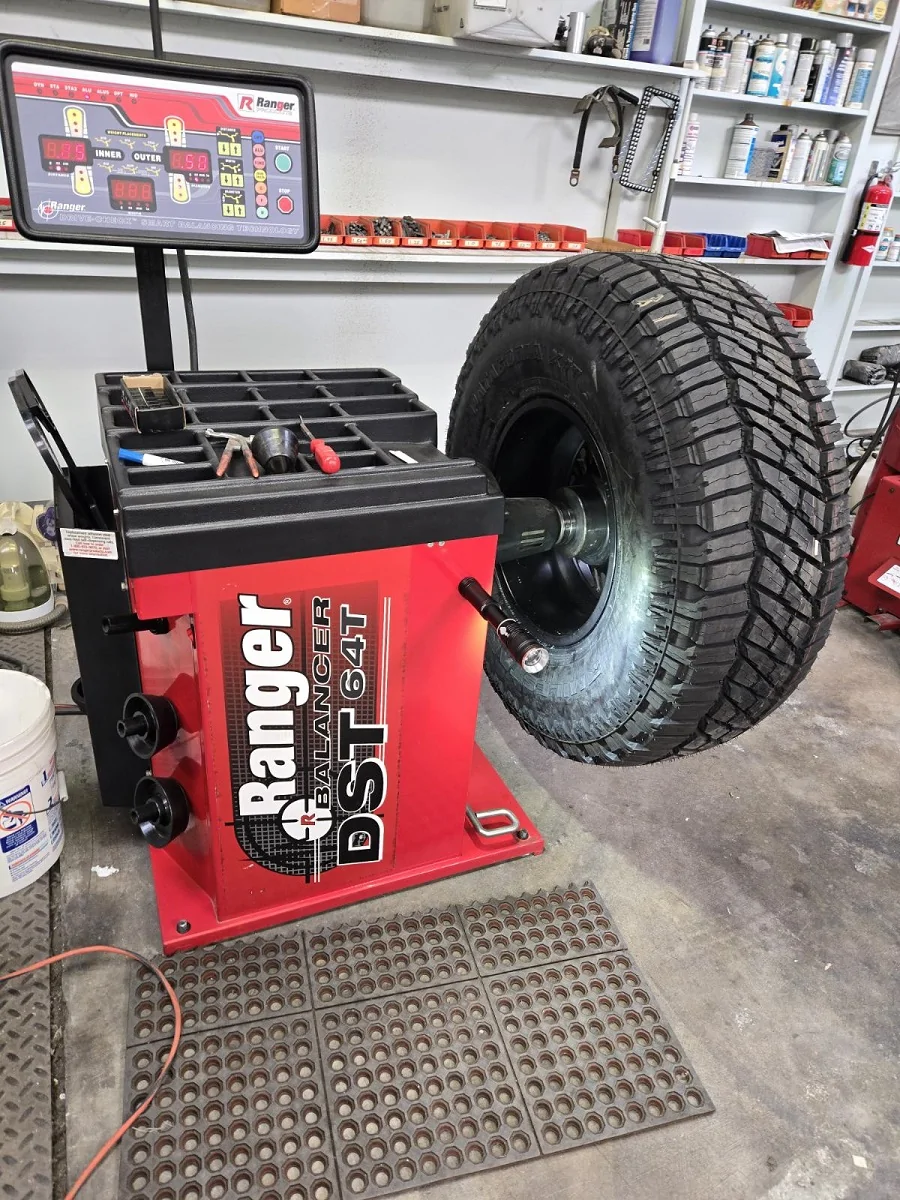
I have been a auto technician for over 50 years. Only a few times did I get lazy and have the tire store balance my new tires. First time I told them not to balance my tires. I have a Coast balancer and I will balance them myself. I was told they have to balance them by law put he would not charge me. Next day on the way to work my truck shook the hole way. Checked the balance and the were off by as much as 3 ozs. re-balanced and now fine. Second time I got lazy and said you balance the tires. Mistake. Same thing shook all the way to work. 3 to 4 ozs off. I took all the old wights back and got my money back for the balance.
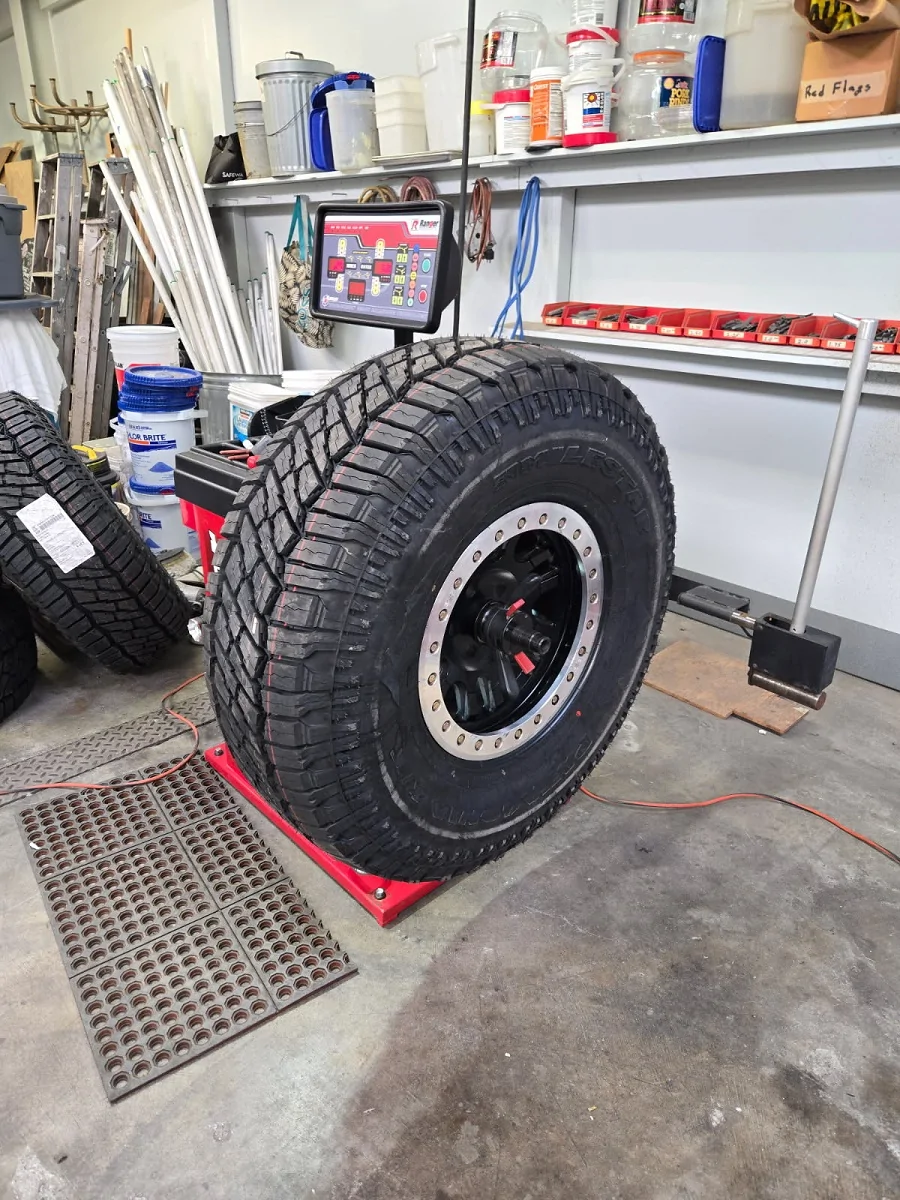
They don't care. garbage in garbage out. They do not take the time to set the machine up properly and double check there work. I now have a new / used tire machine and balancer because my old machines would not do my bead locks and 38in Milestar tires that I won at the 59th Easter jeep Safari raffle Moab .
The Ranger was in storage for 10 years but never used. $700. The Coats lightly used $2500. I will have these for the rest of my life.

Jeep Gladiator Need a tire expert to explain right way to balance BEAD LOCKS (1)


Jeep Gladiator Need a tire expert to explain right way to balance BEAD LOCKS (3)


Jeep Gladiator Need a tire expert to explain right way to balance BEAD LOCKS (2)
 
OP
OP

Cooper_D

Well-Known Member
First Name
Duane
Joined
Aug 17, 2022
Threads
6
Messages
132
Reaction score
211
Location
South West Ohio
Vehicle(s)
2023 Jeep Gladiator Mojave, 2020 Grand Cherokee
Occupation
Retired
Give that man a cheroot!

You understand my question about balancing tires.

Over the last 50+ years many a mechanic who installed tires didn’t know how to get a perfect balance or was pressured for time and couldn’t take the time to do it correctly.

So, someone decided to invent a “Road Force” machine to get a tire to balance no matter how much weight it took.

Every wheel and tire have their heavy or high spots and that is why they put a red/yellow dot on the tire (and mark on the wheel) so that they can be matched properly before putting it on a balancing machine.

The tire manufacturer told me that if it is road force balanced it’s fine, but my OCD thinks that there is something better than what I paid for.

I asked the service advisor if any one of the 4 tires took a lot of weight, and I overheard the technician say one wasn’t really all that bad.

I wish that I had your equipment so that I could balance my own tires.[/QUOTE]
 

GuzziMoto

Well-Known Member
Joined
Jan 28, 2026
Threads
0
Messages
108
Reaction score
111
Location
Skinny part of MD
Vehicle(s)
2023 Jeep Gladiator EcoDiesel
Give that man a cheroot!

You understand my question about balancing tires.

Over the last 50+ years many a mechanic who installed tires didn’t know how to get a perfect balance or was pressured for time and couldn’t take the time to do it correctly.

So, someone decided to invent a “Road Force” machine to get a tire to balance no matter how much weight it took.

Every wheel and tire have their heavy or high spots and that is why they put a red/yellow dot on the tire (and mark on the wheel) so that they can be matched properly before putting it on a balancing machine.

The tire manufacturer told me that if it is road force balanced it’s fine, but my OCD thinks that there is something better than what I paid for.

I asked the service advisor if any one of the 4 tires took a lot of weight, and I overheard the technician say one wasn’t really all that bad.

I wish that I had your equipment so that I could balance my own tires.
[/QUOTE]
That really is not the point of Road Force Balancing. When properly done, Road Force Balancing will typically require less weight to balance a wheel/tire. And it should balance better.
However, all tire balancing is at the mercy of the tech doing it. Any balancing job is only as good (or bad) as the tech who is running the tire balancer. They try to make it as automated as possible, but perhaps all that does is make the person running it worse.
Sponsored


Top