Sponsored

Ecodiesel power derating as temps rise?

just_another_guy

Well-Known Member
Joined
Jan 1, 2021
Threads
8
Messages
327
Reaction score
471
Location
Indiana
Vehicle(s)
Gladiator
Not sure about the engine itself, but all or the plastic and rubber bits under the hood? I know were not used to seeing temps this high in automotive applications, but I don't know if the temps will reduce longevity or not assuming the cool and and oil aren't breaking down.

Was thinking I should start dialog with Jeep on the off chance they arent aware of the problem. Has anyone already started a claim I could reference? A certain contact perhaps?
That's hotter temps than any other motor I know of, and the trucks aren't even pulling anything heavy. If your oil sump is 260°+ what are all those localized hotspots in the motor reaching? I would be very concerned about oil breakdown and loss of viscosity.

I'm curious if anyone has seen a UOA on a diesel that has been running those temperatures?
Sponsored

 
OP
OP
CrazyCooter

CrazyCooter

Well-Known Member
First Name
Tony
Joined
Nov 1, 2020
Threads
11
Messages
2,304
Reaction score
2,557
Location
Far NorCal
Website
www.overlandvehicledynamics.com
Vehicle(s)
1991 JEEP YJ, 2021 JTR Ecodiesel
Occupation
Specialty Off Road Shop Owner
That's hotter temps than any other motor I know of, and the trucks aren't even pulling anything heavy. If your oil sump is 260°+ what are all those localized hotspots in the motor reaching? I would be very concerned about oil breakdown and loss of viscosity.

I'm curious if anyone has seen a UOA on a diesel that has been running those temperatures?
Yes much hotter than anything I've ever run!

I'll be changing my oil in the next week and will be sending it off to Amsoil for UOA. 3% remaining on the oil life @ 6940 miles since the oil was changed. Just over 10K miles on the entire vehicle.
 

ShadowsPapa

Well-Known Member
First Name
Bill
Joined
Oct 12, 2019
Threads
247
Messages
40,442
Reaction score
53,859
Location
Runnells, Iowa
Vehicle(s)
'25 JTMX, '23 JLU 4xe, '82 SX4, '73 Javelin
Occupation
Retired auto mechanic, frmr gov't ntwrk security admin
Vehicle Showcase
3
That's hotter temps than any other motor I know of, and the trucks aren't even pulling anything heavy. If your oil sump is 260°+ what are all those localized hotspots in the motor reaching? I would be very concerned about oil breakdown and loss of viscosity.

I'm curious if anyone has seen a UOA on a diesel that has been running those temperatures?
Oil only starts to break down at temps in the 270-300 area, DEPENDING on the oil itself (different brands have different thermal breakdown properties)
The rating is based on oil being held to a temperature for a period of time. So it's only portions of the oil beginning to break down - beginning because the oil is only exposed to those temps for short periods (bottoms of pistons and so on)
Yes, it means more frequent oil changes - don't take it out many thousands before the next change, but it doesn't mean the oil isn't protecting.
Viscosity is one thing, it's the strength of the oil film that remains that's the issue. Viscosity doesn't lubricate - oil film strength does.
And even with that, different oils vary in their ability to maintain film strength under heat stress.
 

just_another_guy

Well-Known Member
Joined
Jan 1, 2021
Threads
8
Messages
327
Reaction score
471
Location
Indiana
Vehicle(s)
Gladiator
Oil only starts to break down at temps in the 270-300 area, DEPENDING on the oil itself (different brands have different thermal breakdown properties)
The rating is based on oil being held to a temperature for a period of time. So it's only portions of the oil beginning to break down - beginning because the oil is only exposed to those temps for short periods (bottoms of pistons and so on)
Yes, it means more frequent oil changes - don't take it out many thousands before the next change, but it doesn't mean the oil isn't protecting.
Viscosity is one thing, it's the strength of the oil film that remains that's the issue. Viscosity doesn't lubricate - oil film strength does.
And even with that, different oils vary in their ability to maintain film strength under heat stress.
Shell disagrees with you and states "the most important property of a lubricant Is viscosity"

https://www.shell.us/business-custo...filet/effect-of-temperature-on-viscosity.html

The PDF at the bottom of that link that talks about the Arrhenius rate law is also worth reading. Shell is claiming that oil life is halved for every 10°C increase in temperature. It seems like diesel owners should be looking hard into ways to control these elevated temps.
 

ShadowsPapa

Well-Known Member
First Name
Bill
Joined
Oct 12, 2019
Threads
247
Messages
40,442
Reaction score
53,859
Location
Runnells, Iowa
Vehicle(s)
'25 JTMX, '23 JLU 4xe, '82 SX4, '73 Javelin
Occupation
Retired auto mechanic, frmr gov't ntwrk security admin
Vehicle Showcase
3
Thermal breakdown is the point at which the composition of the oil begins to change due to the temperature it’s exposed to.

The “Official” test for this is called the NOACK Volatility Test. In this test, per the ASTM spec, the oil is heated to 250*C (482*F) for one hour. The lighter oil fractions will vaporize, leaving thicker and heavier oil, contributing to poor circulation, reduced fuel economy, increased oil consumption, increased wear and increased emissions.

The test reports results in the percentage, by weight, lost due to “volatilization.” Before July 1, 2001, 5W-30 motor oil in the United States could lose up to 22 percent of its weight and still be regarded as “passable.” Now, with GF-4, the maximum NOACK volatility for API licensing is 15 percent. European standards limit high quality oils to a maximum of 13 percent loss.

This of course means that any motor oil that has been heated above its onset of thermal breakdown point, has started to deteriorate. So, reasonable oil change intervals should be followed.

This from an engineer -

The normal flow of oil between the crank journals and rod or main bearings, is “liquid” oil. And the “liquid” oil in that hydrodynamic wedge is incompressible, just like any liquid is. For a crank journal to ever touch the bearings, the oil has to be reduced to only a film, and that film has to be PENETRATED. Because of course, to achieve metal to metal contact, and thus wear/damage, you have to go THROUGH the oil’s film strength to get there.

If conditions cause a flow of liquid oil to be squeezed out of the way, you are right back to being left with only an oil film, and the need for good film strength.

Here are some comparison numbers from an 830 HP road race engine on the track:

15W50 oil = 80 psi = 265* oil sump temperature

5W20 oil = 65 psi = 240* oil sump temperature

Here you can see how the thicker oil flowed more slowly through the bearings, thus getting hotter, driving up bearing temperatures and increasing sump temperatures. And the thinner oil flowed more freely and quickly through the bearings, thus cooling and lubricating them better than thicker oil, while also reducing sump temperatures.

Here’s some additional background on all this – You might be surprised by how much heat can be generated just from an oil’s internal friction, though friction may not the best term to use here. It is probably better to think of this as the heat generated due to the shearing action taking place within the oil.

It is the shearing action of the oil between the crankshaft and bearings, while the engine is under a heavy loading condition, that generates the bearing heat that we are concerned with. The oil wedge formed as the crankshaft pulls oil in and around the clearance as it spins, is liquid oil. And since liquids cannot be compressed, the oil wedge itself is what carries that heavy engine loading (oil pressure serves only to deliver oil to the crank/bearing interface) and prevents the crankshaft and bearings from coming in contact with each other, once the engine is running. Cold start up after sitting, is when the bearings and cranksaft start out in contact with each other.

The difference in flow rate, and the difference in shearing generated heat, is why the viscosity used, makes a difference in bearing and sump temperatures. Thicker oil which flows more slowly and generates more heat from shearing, it is not carrying heat away and cooling the bearings as well or as quickly as it could, so that drives up bearing temps. This in turn, causes hotter oil to be coming out of the bearings and into the sump, which is why we see higher temps on a gauge. That is the opposite of what we want.

On the other hand, quicker flowing thinner oil, not only generates less heat from shearing, but it also carries heat away much quicker, keeping bearing temps down. And this means the oil coming out from the bearings, and going into the sump, is also cooler. And that is why we see the cooler sump temps. This is precisely what we saw with the road race engine example above.

If an engine is running hot, use a thinner oil to increase flow, increase internal component cooling, and help keep sump temperatures down. Keeping oil temps down is important to help keep oil below the threshold of thermal breakdown.
 

Sponsored

OP
OP
CrazyCooter

CrazyCooter

Well-Known Member
First Name
Tony
Joined
Nov 1, 2020
Threads
11
Messages
2,304
Reaction score
2,557
Location
Far NorCal
Website
www.overlandvehicledynamics.com
Vehicle(s)
1991 JEEP YJ, 2021 JTR Ecodiesel
Occupation
Specialty Off Road Shop Owner
Got tied up waiting on on parts, so I rolled the JT in for its service!

I found no metal chips in the oil filter like I did on the first oil change at 3K miles. The oil was still relatively clean and soot did not stain my skin as it used to with the older diesel engines. Not sure if this is due to the newer oils keeping the soot in suspension so it can be filtered, engines are just that much cleaner now, or if the oil properties just keep it from staining my skin?

I'll send off the sample and see how the UOA comes back!
 

foo.c

Well-Known Member
Joined
Oct 3, 2017
Threads
6
Messages
271
Reaction score
372
Location
127.0.0.1
Vehicle(s)
2021 JTR, 2021 Corvette
To me, Jeep should 100% be paying attention to the heat soak derate. This is stopping after driving in hot conditions and shutting the engine down, then driving again within some period of time. With ambient temps high and all the heat under the hood heat soaks into components, specifically what appears to be something with the turbo temps. When starting to drive again speed is limited to 45 until whatever parts are cool enough. The real joy is being surprised when this happens while merging into traffic. As happened to me on I-10 leaving Quartzite.

I hope Jeep is reading these threads, I'm going to start a dialog with them this week.
Even though it might not say so in the manual, you always want to let a hot diesel idle for a few minutes before shutting it off. If you're filling up, for example and getting back on the road, just keep it running.
 

steelponycowboy

Well-Known Member
First Name
Mike
Joined
Feb 28, 2020
Threads
6
Messages
584
Reaction score
491
Location
Mesa, AZ
Vehicle(s)
2016 JKU Rubicon HR, 2017 Cherokee, 2021 JTR
Occupation
Retired Peace Officer
15mpg and power loss without towing?! That's unreal. I'm at 1500 miles and just towed our 2200lb camper from Denver to Twin Falls, ID in 90+ degree heat without issue. I was crazy nervous that I'd have problems after reading all of these threads but it handled it like a champ, miles better than my old 3.6 JKU. Coolant topped out at 233 and oil at 248. Granted the grades on that trip aren't too bad, we'll see what happens when I take it west on I70. 15 mpg and no power is unacceptable, I'd have to look at lemon laws or selling it.
Remember my issues did not start until I hit over 7K miles but before my 1st oil change. The DPF failed to do it's job and was 92% clogged with no warning until it went into limp mode with every warning light coming on in the dash. Before that I was averaging around 25mpg. In fact at 1500 miles I did a 4000 mile trip that was 2500 miles off road thru 6 states and had averaged 23.5 for that trip. Since the fix when it all but shut down my MPG had gotten progressively worse. Around town I now get maybe 12, highway 16.5 and overall 15.1. Very disappointed. Dealer has no idea why. 37 Jeeps and my 1st lemon ?

The display of the gauges a post or two above this one is my picture after a 4 mile, 6% grade and not towing anything, I'm afraid to tow. Dealer told me that the motor will shut down above 250 something coolant temp and 270 oil temp to protect the engine. As you can see after a 4 mile grade I was not far from those numbers. On the bright side, the 4 mile grade down the other side, the temps quickly returned to normal
 

steelponycowboy

Well-Known Member
First Name
Mike
Joined
Feb 28, 2020
Threads
6
Messages
584
Reaction score
491
Location
Mesa, AZ
Vehicle(s)
2016 JKU Rubicon HR, 2017 Cherokee, 2021 JTR
Occupation
Retired Peace Officer
Not sure about the engine itself, but all or the plastic and rubber bits under the hood? I know were not used to seeing temps this high in automotive applications, but I don't know if the temps will reduce longevity or not assuming the cool and and oil aren't breaking down.

Was thinking I should start dialog with Jeep on the off chance they arent aware of the problem. Has anyone already started a claim I could reference? A certain contact perhaps?
My dealer told me that Jeep is aware of the issue, he has lots of complaints with the eco diesel Jeep and Ram.
 

houseofdiesel

Well-Known Member
First Name
Chris
Joined
Dec 2, 2020
Threads
1
Messages
63
Reaction score
92
Location
Central Texas
Vehicle(s)
2021 Gladiator Rubicon EcoDiesel
At this point, I'd settle for the tow rating at 45mph on a 6% at 100° like they advertise? I don't think 240° oil temp under full load climbing a hill is horrible so long as it drops back down to 220s after the terrain flattens.
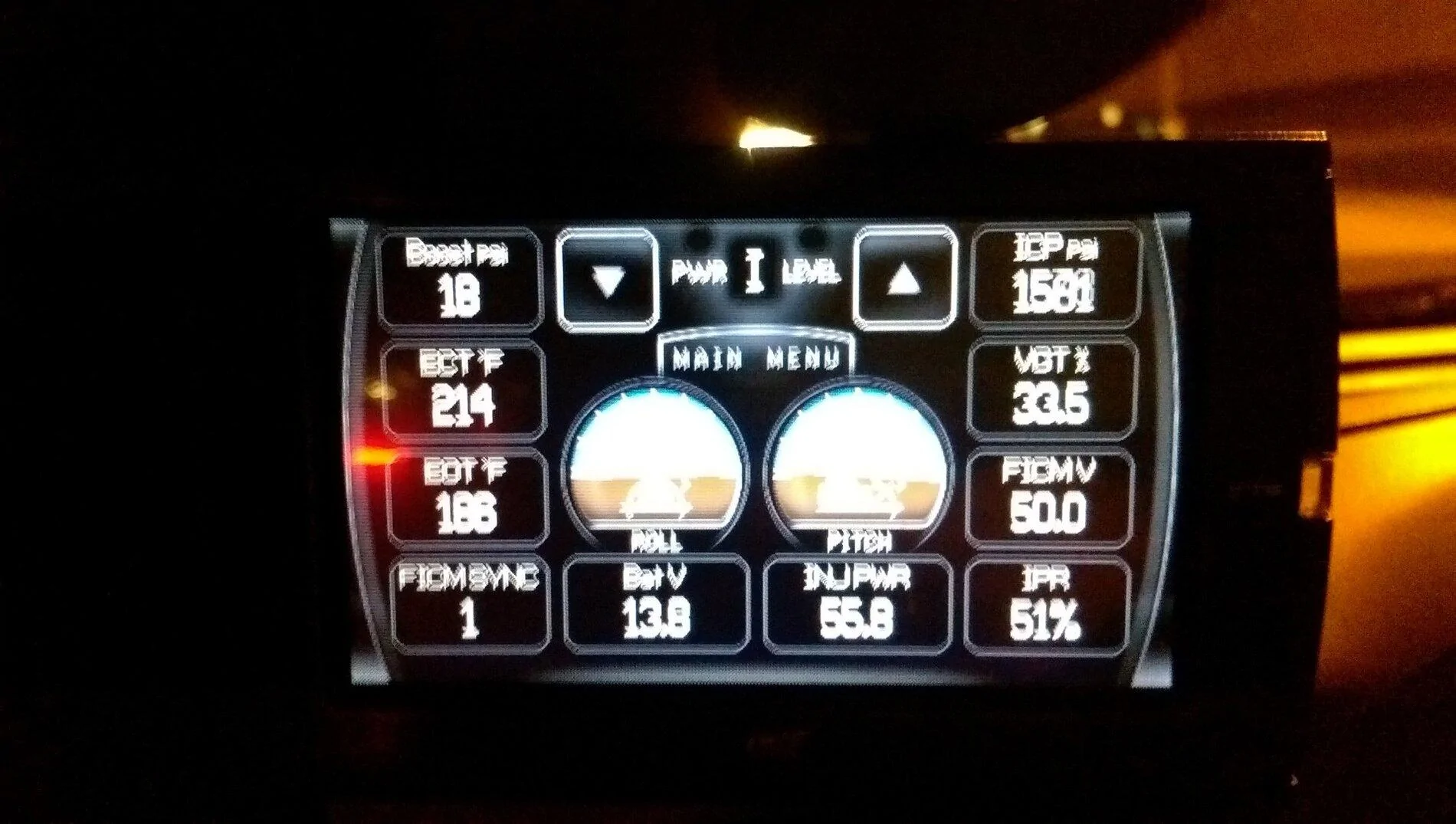
If I was to be using my Gladiator for towing and hauling I want a setup where my oil temps are always below my coolant temps like this. That way I know 100% if my oil cooling system or engine cooling system is having issues or needs attention.

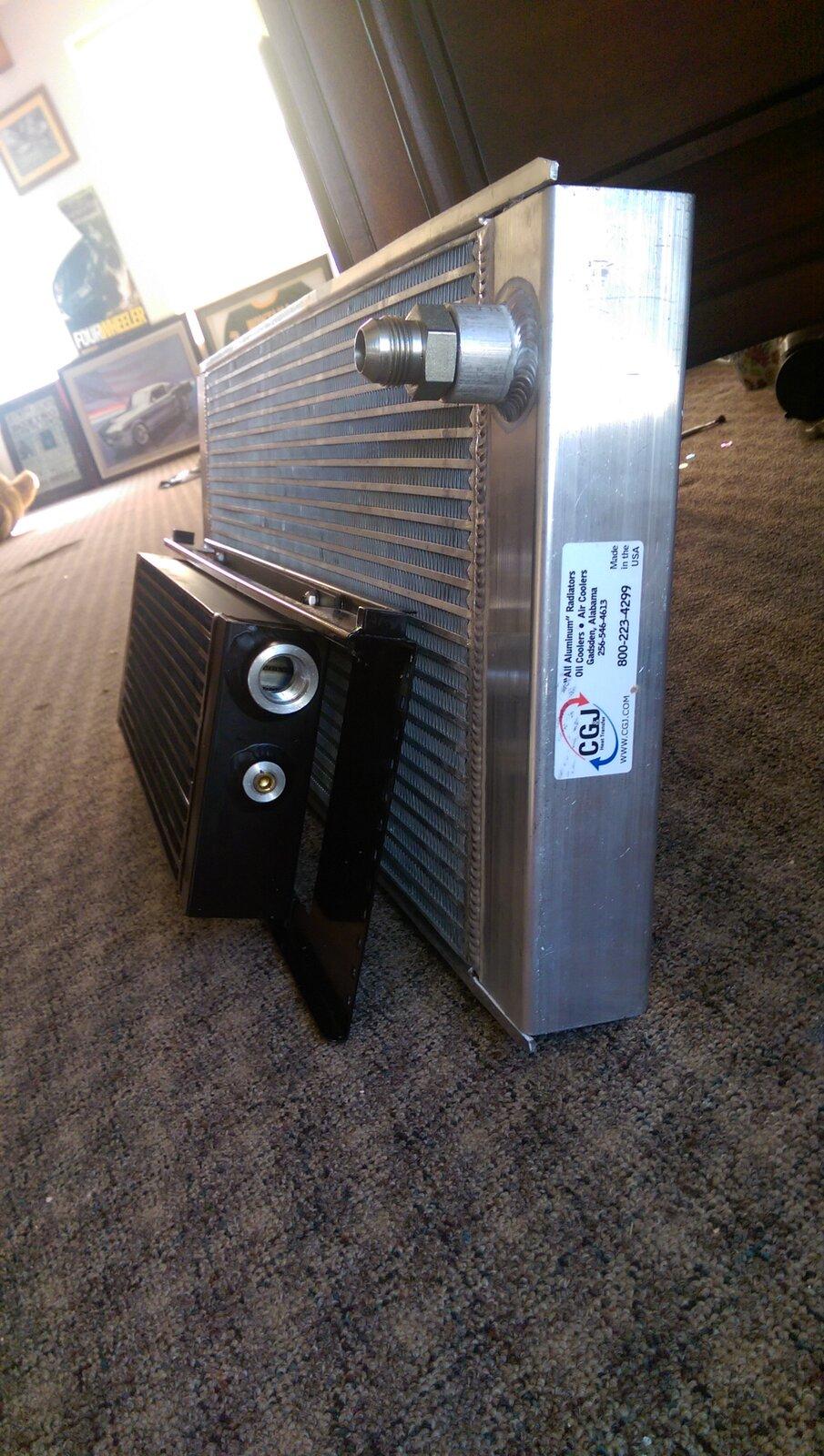
Note** this is on an extreme setup of a 500 rwhp truck that is used to haul and tow daily throughout the Western US. So I had a custom cooler made with 3x the volume over the BulletProof unit.

Jeep Gladiator Ecodiesel power derating as temps rise? WP_20171229_006


Jeep Gladiator Ecodiesel power derating as temps rise? WP_20151013_007
 

Sponsored

Wapiti Jeep

Active Member
First Name
David
Joined
Dec 31, 2020
Threads
4
Messages
29
Reaction score
10
Location
Texas
Vehicle(s)
Sarge Rubicon Diesel
Occupation
Realtor
Has anyone re-geared the diesel and still had the derating issue? Maybe I am wrong, but if the truck was lower geared it seems the engine wouldn’t struggle as much and hopefully not overheat as easy. I have towed with mine several times and seen the loss of power. Not had it go to limp mode yet. Towed my 2 horse trailer with 2 horses and my 5300 lbs travel trailer loaded for a trip. So far only in Texas so no major inclines yet. I have 4.88 gears on order and I am hoping this helps.
 

Hondo1

Well-Known Member
First Name
Matt
Joined
Jul 18, 2021
Threads
1
Messages
63
Reaction score
59
Location
Colorado
Vehicle(s)
2021 Gladiator Rubicon Ecodiesel
Occupation
Oil and gas
Has anyone re-geared the diesel and still had the derating issue? Maybe I am wrong, but if the truck was lower geared it seems the engine wouldn’t struggle as much and hopefully not overheat as easy. I have towed with mine several times and seen the loss of power. Not had it go to limp mode yet. Towed my 2 horse trailer with 2 horses and my 5300 lbs travel trailer loaded for a trip. So far only in Texas so no major inclines yet. I have 4.88 gears on order and I am hoping this helps.
I regeared to 4:56, I’m on 37’s. Overall I’m very pleased how it tows my camper, I now have enough power to pass slower traffic.
As far as derates go it definitely helped but
Here in the mountains in Colorado on hot days and long grades it can still derate.
I’m of the opinion that an auxiliary oil cooler is the right answer followed by water/meth injection.
 
OP
OP
CrazyCooter

CrazyCooter

Well-Known Member
First Name
Tony
Joined
Nov 1, 2020
Threads
11
Messages
2,304
Reaction score
2,557
Location
Far NorCal
Website
www.overlandvehicledynamics.com
Vehicle(s)
1991 JEEP YJ, 2021 JTR Ecodiesel
Occupation
Specialty Off Road Shop Owner
Has anyone re-geared the diesel and still had the derating issue? Maybe I am wrong, but if the truck was lower geared it seems the engine wouldn’t struggle as much and hopefully not overheat as easy. I have towed with mine several times and seen the loss of power. Not had it go to limp mode yet. Towed my 2 horse trailer with 2 horses and my 5300 lbs travel trailer loaded for a trip. So far only in Texas so no major inclines yet. I have 4.88 gears on order and I am hoping this helps.
Did you read this thread?

I ran the same test with stock and oversized tires with pretty much the same results other than the ambient temp was slightly lower on the test with the stock tires. Gearing isn't much of a factor if any with the gear spacing of the 8spd trans.
 
OP
OP
CrazyCooter

CrazyCooter

Well-Known Member
First Name
Tony
Joined
Nov 1, 2020
Threads
11
Messages
2,304
Reaction score
2,557
Location
Far NorCal
Website
www.overlandvehicledynamics.com
Vehicle(s)
1991 JEEP YJ, 2021 JTR Ecodiesel
Occupation
Specialty Off Road Shop Owner
Funny....last night TFL Truck posted another new video excited about testing the new Bronco towing on the Ike.......

They never posted up video testing either of the Ecodiesel Jeeps towing on the Ike.......They always jones to make these vids and share the results. I think the vehicles failed miserably and TFL failed to report their findings.

I know for certain that I would have not bought this truck had they posted a video of it going into derate 4 miles up the Ike and then 10mph limp before the top.
 

Wapiti Jeep

Active Member
First Name
David
Joined
Dec 31, 2020
Threads
4
Messages
29
Reaction score
10
Location
Texas
Vehicle(s)
Sarge Rubicon Diesel
Occupation
Realtor
Did you read this thread?

I ran the same test with stock and oversized tires with pretty much the same results other than the ambient temp was slightly lower on the test with the stock tires. Gearing isn't much of a factor if any with the gear spacing of the 8spd trans.
Did you regear and run the same test again? If not then your reply means nothing. 4.88’s are over 30% more rpm’s with 33” tires than stock 3.73’s. IMO were the heat issue factors in the most on climbs. If the truck will climb a hill in a higher gear and not have to down shift as far it will allow for less stress on the motor and theoretically lower engine temps.
Sponsored


Top