Giersz
Well-Known Member
- Thread starter
- #1
I searched this forum to gain info about lift for ma EcoDiesel Overland.
“You need a Diesel lift for Diesel truck. Gas lift will be crap.”
This is basically what you get here and also form many youtubers that claim that they have experience.
I searched for a full specs of Gladiator to see what is the real weight difference.
Basically 3.0 EcoDiesel Auto is heavier by 365lbs than the same JT 3.6 Auto.
I was wondering what is weight distribution for front and rear and also with different trim levels. Not only engine is heavier. There is bigger transmission (8HP75 vs 850RE) that is installed between wheels so affects both wheels, but Non Rubicon vs Rubicon JT got a lot of differences
Most people claim that the problem is with front so let’s take a closer look.
Full JT Gladiator info is here:

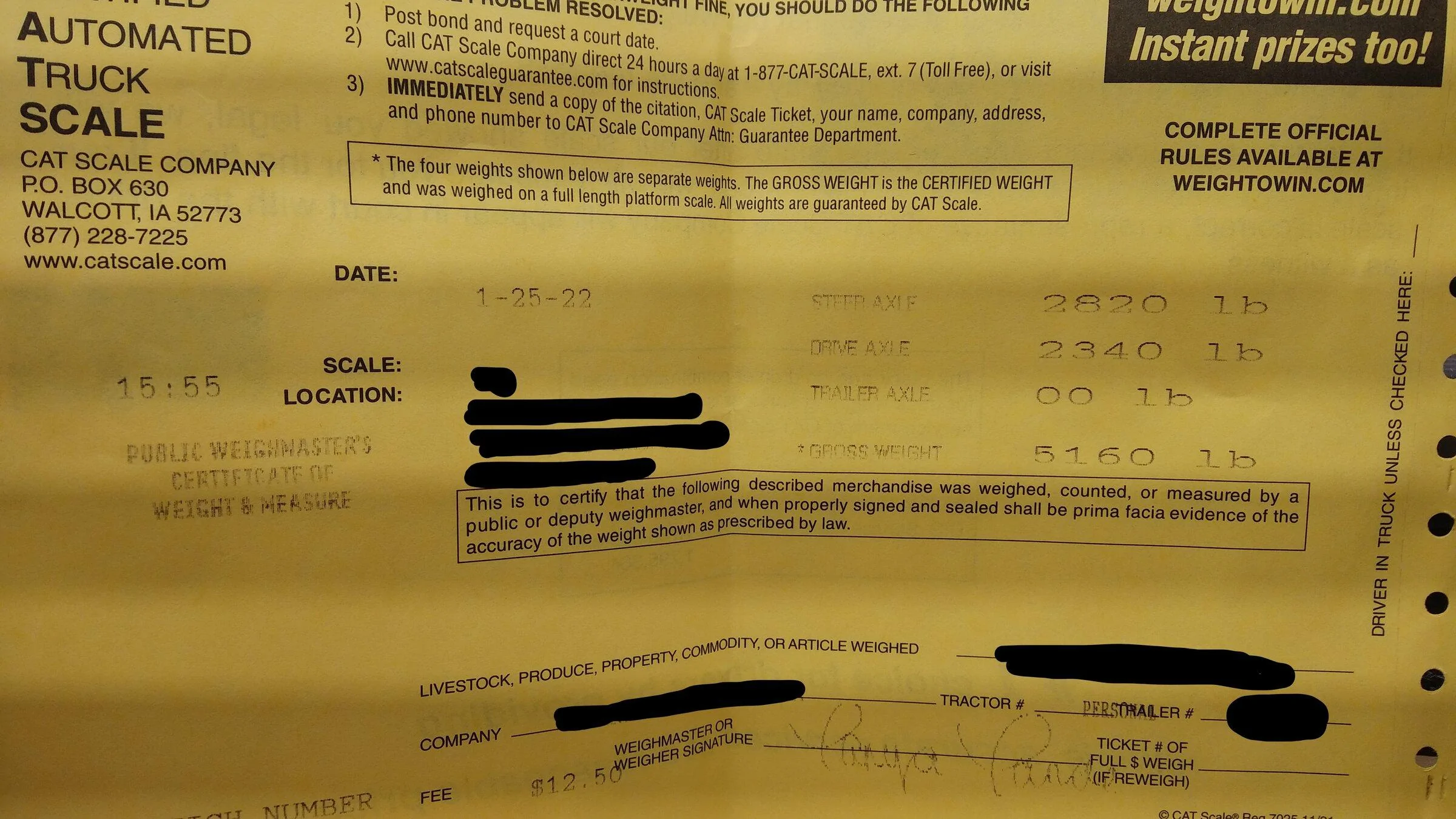
From this sheet you can see that JT Overland 3.0 weight (5041lbs) is smaller than 3.6 Rubicon (5072lbs)On front wheels it is 2756lbs. Rubicon 3.6 auto with lighter engine but heavier front sway bar is 2688 lbs.
It is only 68lbs difference. If you calculate it without wheels or with the same wheels it may change but probably not more than another 20lbs.
If you compare Rubicon with steel bumper to an Overland with standard or aluminium bumper the difference will be more like 40lbs.
Also I checked for a spring rates – for Teraflex it is 140lbs/inch or Clayton is 180lbs/inch – if 40 lbs is evenly distributed over 2 springs it will be 20lbs for each spring. It will go down by 20/140= 1/7 inch so nearly nothing.
So if a lift is ok for gas Rubicon than it is also correct for non-Rubicon Diesel that is nearly the same weight.
I am not sure what makes this difference but front sway bar is much heavier in Rubicon, also locker probalby adds something. Maybe some other suspension components but I think Rubicon aluminium body shocks should be nearly the same weight as other steel body shocks. I know that every weight difference in what you change doing lift will affect this calculation. I do not know exactly what is the difference in front Rubicon sway bar vs sport sway bar but probably this is the heaviest part in front of the Rubicon. Maybe also steel rock sliders?
I do not understand why RUbicon 3.6 vs Sport 3.6 is that much weight different in for rear.
Rocksliders are 95 lbs for both
Rubicon EcoDiesel vs Rubicon 3.6 is 199 lbs difference on front wheels so it will be nearly an inch down if I am calculating it correctly.
Rubicon 3.6 vs sport 3.6 S max Tow is 191 lbs (+difference in wheels) – nobody got any problem with lift kits here and the difference is nearly the same as EcoDiesel vs 3.6
Rubicon 3.6 vs Overland 3.6 is 210 lbs in difference (+difference in wheels) – nobody got any problem with lift kits here and the difference is bigger that with Ecodiesel.
Please correct me if my calculations are wrong or maybe I just miss something.
If it is just weight than I can understand that if a lift is good for 3.6 Rubicon it should be nearly the same for Overland/Sport Diesel.
“You need a Diesel lift for Diesel truck. Gas lift will be crap.”
This is basically what you get here and also form many youtubers that claim that they have experience.
I searched for a full specs of Gladiator to see what is the real weight difference.
Basically 3.0 EcoDiesel Auto is heavier by 365lbs than the same JT 3.6 Auto.
I was wondering what is weight distribution for front and rear and also with different trim levels. Not only engine is heavier. There is bigger transmission (8HP75 vs 850RE) that is installed between wheels so affects both wheels, but Non Rubicon vs Rubicon JT got a lot of differences
Most people claim that the problem is with front so let’s take a closer look.
Full JT Gladiator info is here:
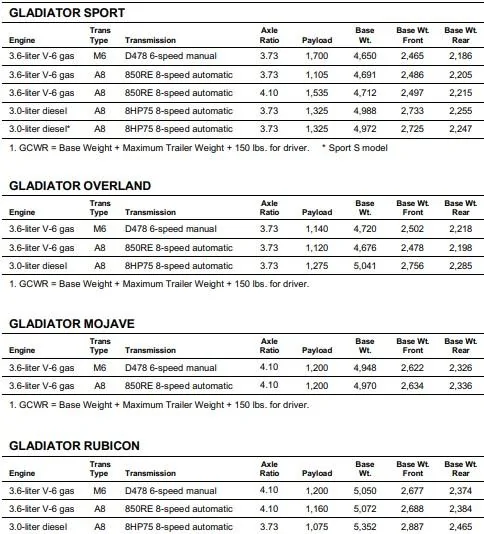
From this sheet you can see that JT Overland 3.0 weight (5041lbs) is smaller than 3.6 Rubicon (5072lbs)On front wheels it is 2756lbs. Rubicon 3.6 auto with lighter engine but heavier front sway bar is 2688 lbs.
It is only 68lbs difference. If you calculate it without wheels or with the same wheels it may change but probably not more than another 20lbs.
If you compare Rubicon with steel bumper to an Overland with standard or aluminium bumper the difference will be more like 40lbs.
Also I checked for a spring rates – for Teraflex it is 140lbs/inch or Clayton is 180lbs/inch – if 40 lbs is evenly distributed over 2 springs it will be 20lbs for each spring. It will go down by 20/140= 1/7 inch so nearly nothing.
So if a lift is ok for gas Rubicon than it is also correct for non-Rubicon Diesel that is nearly the same weight.
I am not sure what makes this difference but front sway bar is much heavier in Rubicon, also locker probalby adds something. Maybe some other suspension components but I think Rubicon aluminium body shocks should be nearly the same weight as other steel body shocks. I know that every weight difference in what you change doing lift will affect this calculation. I do not know exactly what is the difference in front Rubicon sway bar vs sport sway bar but probably this is the heaviest part in front of the Rubicon. Maybe also steel rock sliders?
I do not understand why RUbicon 3.6 vs Sport 3.6 is that much weight different in for rear.
Rocksliders are 95 lbs for both
Rubicon EcoDiesel vs Rubicon 3.6 is 199 lbs difference on front wheels so it will be nearly an inch down if I am calculating it correctly.
Rubicon 3.6 vs sport 3.6 S max Tow is 191 lbs (+difference in wheels) – nobody got any problem with lift kits here and the difference is nearly the same as EcoDiesel vs 3.6
Rubicon 3.6 vs Overland 3.6 is 210 lbs in difference (+difference in wheels) – nobody got any problem with lift kits here and the difference is bigger that with Ecodiesel.
Please correct me if my calculations are wrong or maybe I just miss something.
If it is just weight than I can understand that if a lift is good for 3.6 Rubicon it should be nearly the same for Overland/Sport Diesel.
Sponsored