
Sponsored

Are the batteries really isolated during ESS stops?

ShadowsPapa

Well-Known Member
First Name
Bill
Joined
Oct 12, 2019
Threads
247
Messages
40,440
Reaction score
53,853
Location
Runnells, Iowa
Vehicle(s)
'25 JTMX, '23 JLU 4xe, '82 SX4, '73 Javelin
Occupation
Retired auto mechanic, frmr gov't ntwrk security admin
Vehicle Showcase
3
I thought I read somewhere on this forum in the past that during a crank that auxiliary battery is the one running the starter and the main battery continues to power the rest of the truck and not the other way around.

Or my brain is acting up again.
No - the aux is connected to N1, the main is connected directly to starter and alternator. That aux is definitely not running the starter. No way, too small on a cold day.
Sponsored


ShadowsPapa

Well-Known Member
First Name
Bill
Joined
Oct 12, 2019
Threads
247
Messages
40,440
Reaction score
53,853
Location
Runnells, Iowa
Vehicle(s)
'25 JTMX, '23 JLU 4xe, '82 SX4, '73 Javelin
Occupation
Retired auto mechanic, frmr gov't ntwrk security admin
Vehicle Showcase
3
The goal of the dual battery system isn’t to isolate which battery powers which components, the goal is to maintain a constant voltage during starting events. I don’t see how separating it prior to a start event would help achieve that goal.
Right. Isolated at the beginning of cranking - the BCM checks the delta - differences between the two.
But during the time frame when the engine is actually stopped, they are connected together.
It seems that once again there's a lot of speculation without documentation - and measurements.
Even I thought it was during the whole stop - but my own measurements contradicted that (as well as the documents I had on my computers)

There is no way that main battery voltage can drop at the same time and rate as the aux battery while the engine is off unless they are connected, sharing the load.

I guess we could turn to BMW and Chevrolet and other auto makers documentation as others have used this same exact type of system.
 

ShadowsPapa

Well-Known Member
First Name
Bill
Joined
Oct 12, 2019
Threads
247
Messages
40,440
Reaction score
53,853
Location
Runnells, Iowa
Vehicle(s)
'25 JTMX, '23 JLU 4xe, '82 SX4, '73 Javelin
Occupation
Retired auto mechanic, frmr gov't ntwrk security admin
Vehicle Showcase
3
I go back to - explain how both batteries drop voltage at the same time, same rate, during the time when the engine is off, prior to restart, if they are not both supporting a load - and connected.
 

sharpsicle

Well-Known Member
Joined
Apr 29, 2021
Threads
22
Messages
2,760
Reaction score
6,255
Location
Tampa, FL / Milwaukee, WI
Vehicle(s)
2020 Gladiator Overland, 2002 VTX1800
I guess we could turn to BMW and Chevrolet and other auto makers documentation as others have used this same exact type of system.
But why? What are we trying to do here? Everything quoted and observed here matches what the TSM is saying: it's only separate at a crank event.

You could determine this yourself by putting a meter on the PCR and watching it as you drive and stop, but it's going to go so fast that you likely won't see it change when it does crank. Hell, the TSM even says that too!

So I'm back to where I was at the beginning. It does separate them during crank events, it says that's when it does them, and that's what we're seeing. So what are we asking now? Are we asking if every piece of information we have is lying to us?

Say we all agree that it does separate them only at crank. What does that change for us? What practical application are we trying to get to here?
 

ShadowsPapa

Well-Known Member
First Name
Bill
Joined
Oct 12, 2019
Threads
247
Messages
40,440
Reaction score
53,853
Location
Runnells, Iowa
Vehicle(s)
'25 JTMX, '23 JLU 4xe, '82 SX4, '73 Javelin
Occupation
Retired auto mechanic, frmr gov't ntwrk security admin
Vehicle Showcase
3
But why? What are we trying to do here? Everything quoted and observed here matches what the TSM is saying: it's only separate at a crank event.

You could determine this yourself by putting a meter on the PCR and watching it as you drive and stop, but it's going to go so fast that you likely won't see it change when it does crank. Hell, the TSM even says that too!

So I'm back to where I was at the beginning. It does separate them during crank events, it says that's when it does them, and that's what we're seeing. So what are we asking now? Are we asking if every piece of information we have is lying to us?

Say we all agree that it does separate them only at crank. What does that change for us? What practical application are we trying to get to here?
I was saying that for the non-believers. I've done the voltage tests and read the docs. It's settled for me but apparently not others.
 

Sponsored

OP
OP
Flanders

Flanders

Well-Known Member
Joined
Dec 2, 2023
Threads
11
Messages
152
Reaction score
121
Location
Dyer, NV
Vehicle(s)
2023 JT
@sharpsicle

There's this zombie notion that the AUX battery powers the vehicle while stopped during an ESS event. It surfaces in just about every thread on the dual battery system. @jebiruph and @emiddio both repeated it in this thread within the last 24 hours.

For my part, I started wondering when exactly the relay that connects the two batteries opens. The TSM is not entirely accurate in this regard.
 

ShadowsPapa

Well-Known Member
First Name
Bill
Joined
Oct 12, 2019
Threads
247
Messages
40,440
Reaction score
53,853
Location
Runnells, Iowa
Vehicle(s)
'25 JTMX, '23 JLU 4xe, '82 SX4, '73 Javelin
Occupation
Retired auto mechanic, frmr gov't ntwrk security admin
Vehicle Showcase
3
@sharpsicle

There's this zombie notion that the AUX battery powers the vehicle while stopped during an ESS event. It surfaces in just about every thread on the dual battery system. @jebiruph and @emiddio both repeated it in this thread within the last 24 hours.

For my part, I started wondering when exactly the relay that connects the two batteries opens. The TSM is not entirely accurate in this regard.
And I've been curious since my voltage checks. Made no sense unless connected.
 

sharpsicle

Well-Known Member
Joined
Apr 29, 2021
Threads
22
Messages
2,760
Reaction score
6,255
Location
Tampa, FL / Milwaukee, WI
Vehicle(s)
2020 Gladiator Overland, 2002 VTX1800
I've come to accept that some people will continue to believe bad information even if you try to force-feed them the facts. To me, it's just not worth it to try and shout at the world through a forum post.

And to be honest, I'm not sure how much of a practical difference the exact moment of PCR opening makes at this point. If this is more of a "I'm bored and want to figure this out" thing, great, but if it's more than that I feel it's a waste.
 
OP
OP
Flanders

Flanders

Well-Known Member
Joined
Dec 2, 2023
Threads
11
Messages
152
Reaction score
121
Location
Dyer, NV
Vehicle(s)
2023 JT
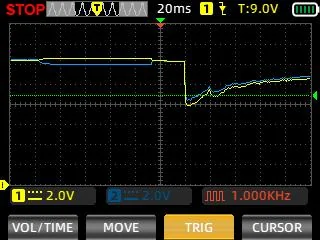
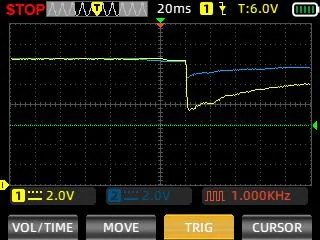
Here are two traces from a cheap handheld scope. It's more toy than tool, and spurious triggers are a real problem, but it fits alongside the battery under the hood and captures the difference between cold start and ESS restart.

Yellow is MAIN, blue is AUX.

Cold start:
Jeep Gladiator Are the batteries really isolated during ESS stops? cold_start2


ESS restart:
Jeep Gladiator Are the batteries really isolated during ESS stops? ess_restart
 

Lost1wing

Well-Known Member
First Name
Tim
Joined
Dec 22, 2020
Threads
24
Messages
2,606
Reaction score
2,845
Location
West Georgia
Vehicle(s)
2020 Jeep Gladiator Rubicon
Occupation
Retired AMT
1731628309919-be.jpg


1731628346220-am.jpg


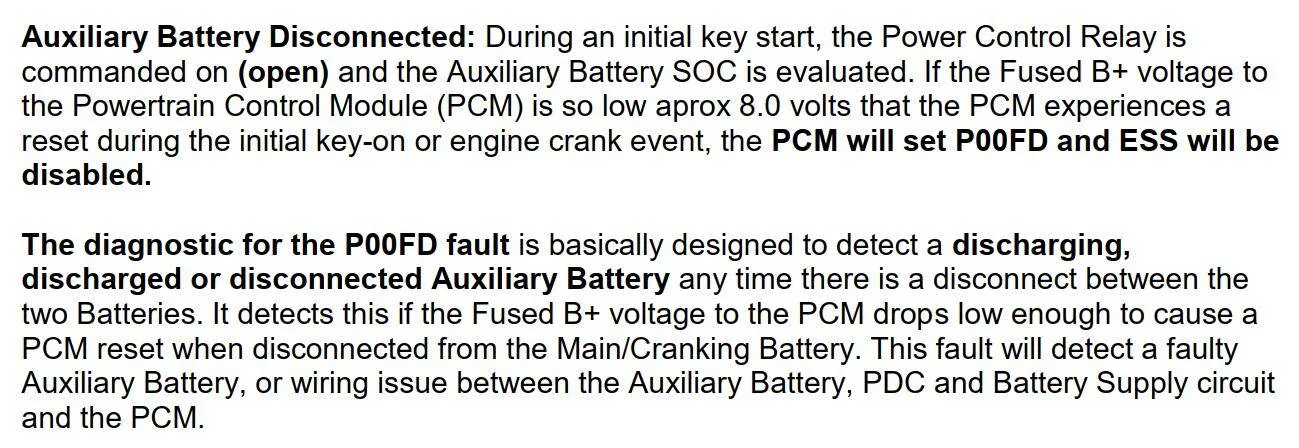
Jerry - it sort of seems, from the above, that the aux is disconnected by a PCR open during an ess stop/start event.........
But note it says the voltage is detected during an ESS START event. Not during the stop, but when it goes into START mode.
That would support the idea that they are indeed connected during the stop, but the PCR opens when it restarts and that's when it detects the aux battery voltage. Not while stopped, but during the start (which happens so darned fast, blink and you'd miss it)

I've tested this in multiple ESS stops and the voltages drop within a couple of tenths of a volt of each other.
I can't see how these things have the load balanced so well that the main drops right along with the aux battery.
I had two meters connected - reading voltages during the stop, and they were BOTH falling, not just the aux.
That suggests they are still in parallel, and that when it goes into ESS start mode, the PCR opens, the aux is checked, and then it closes again.
Both battery voltages would fall. We discussed this before, the cooling fan and powersteering are always main battery hot. I think the best way to test when the system is isolated would be to probe the pcr signal wire, n1 and n2.
 

Sponsored

sharpsicle

Well-Known Member
Joined
Apr 29, 2021
Threads
22
Messages
2,760
Reaction score
6,255
Location
Tampa, FL / Milwaukee, WI
Vehicle(s)
2020 Gladiator Overland, 2002 VTX1800
Both battery voltages would fall. We discussed this before, the cooling fan and powersteering are always main battery hot. I think the best way to test when the system is isolated would be to probe the pcr signal wire, n1 and n2.
That’s essentially what they’ve done. It’s just that it’s isolated for a matter of milliseconds.
 

Lost1wing

Well-Known Member
First Name
Tim
Joined
Dec 22, 2020
Threads
24
Messages
2,606
Reaction score
2,845
Location
West Georgia
Vehicle(s)
2020 Jeep Gladiator Rubicon
Occupation
Retired AMT
There is a brief description in the service .manual that mentions that during a stop event that the pcr opens and then the battery voltage is monitored and if the battery voltage drops to a low enough level the engine will restart and the pcr closes.
Testing n1 and n2 during a stop event you would think you should see 2 different voltages. The signal wire on the pcr would be the only way to see when it opens and closes. I didn't see where the prc was probed in the scope pics. Sorry if I missed that. I will look for that description of the pcr again.
 

Lost1wing

Well-Known Member
First Name
Tim
Joined
Dec 22, 2020
Threads
24
Messages
2,606
Reaction score
2,845
Location
West Georgia
Vehicle(s)
2020 Jeep Gladiator Rubicon
Occupation
Retired AMT
That’s essentially what they’ve done. It’s just that it’s isolated for a matter of milliseconds.
The millisecond isolation was mentioned in the service manual on the initial start to test battery state to ensure they are good enough for a stop start event and trigger a fault if not.

I believe I have read that they are isolated during the entire stop start event.

I have enough on my plate to test myself. I would trust your findings or ShadowsPapa for sure.
 

ShadowsPapa

Well-Known Member
First Name
Bill
Joined
Oct 12, 2019
Threads
247
Messages
40,440
Reaction score
53,853
Location
Runnells, Iowa
Vehicle(s)
'25 JTMX, '23 JLU 4xe, '82 SX4, '73 Javelin
Occupation
Retired auto mechanic, frmr gov't ntwrk security admin
Vehicle Showcase
3
I believe I have read that they are isolated during the entire stop start event.
That's the common belief, which is incorrect.

Testing n1 and n2 during a stop event you would think you should see 2 different voltages.
I did - and the results were all but identical (accounting for differences in rounding, meters, voltage drop across wires, etc.) They were always within 0.1 or even less, sometimes only hundredths of a volt difference. Not going to happen if isolated from each other.

And to be honest, I'm not sure how much of a practical difference the exact moment of PCR opening makes at this point. If this is more of a "I'm bored and want to figure this out" thing, great, but if it's more than that I feel it's a waste.
Since my pre-teen years, I've wanted to know why and how things worked. By the time I was 14, I was actually repairing small engines. At 16, I was doing some motorcycle work in my shop. People ask - how did you know how? If you know how things work, you can figure out why they aren't working later.
Details can be the difference between what we read out there with all of the crap about these systems, or knowing how to predict failures, how to take care of failures, how to troubleshoot and repair.
If you don't know the details, you can't possibly hope to do REAL troubleshooting and proper repairs - and you end up with what we see all over the internet - stuff done because people have no real clue, or believe "internet facts".
I can deal with almost any auto-electric issue because of knowing how things work or how they should work.
Example - the first compound wound wiper motor I came across that wasn't running properly yet it had power. I knew what to look for because I know how those compound wound DC motors work and what controls the speed - even never having seen one of those wiper motors before in my life.
I did this at age 14......I wanted to buy a car. It wouldn't pass the then Iowa inspections. The mechanic who had it for sale said "if you can get the wipers to work, you can buy the car".
I took the wiper motor off, borrowed his bench and tools, fixed it - got the car.
To me, knowing details is important.
I've fixed network issues, among other things, that others spent months and thousands of dollars on because of knowing some details.

Yes, it's important when you want to predict failures, or figure out why something isn't working correctly.
There's a reason the service manuals include such things.

Huge thanks to @Flanders

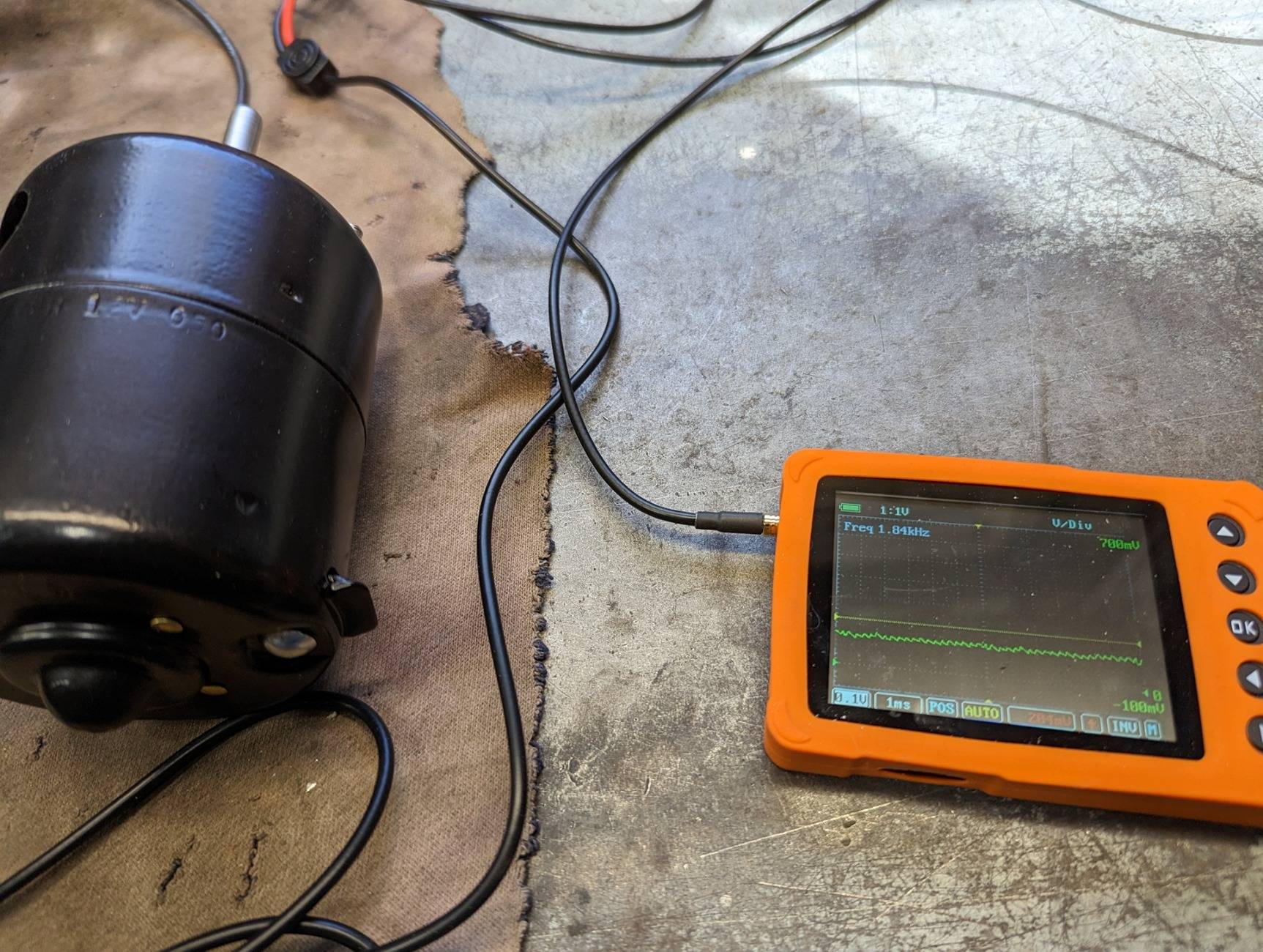
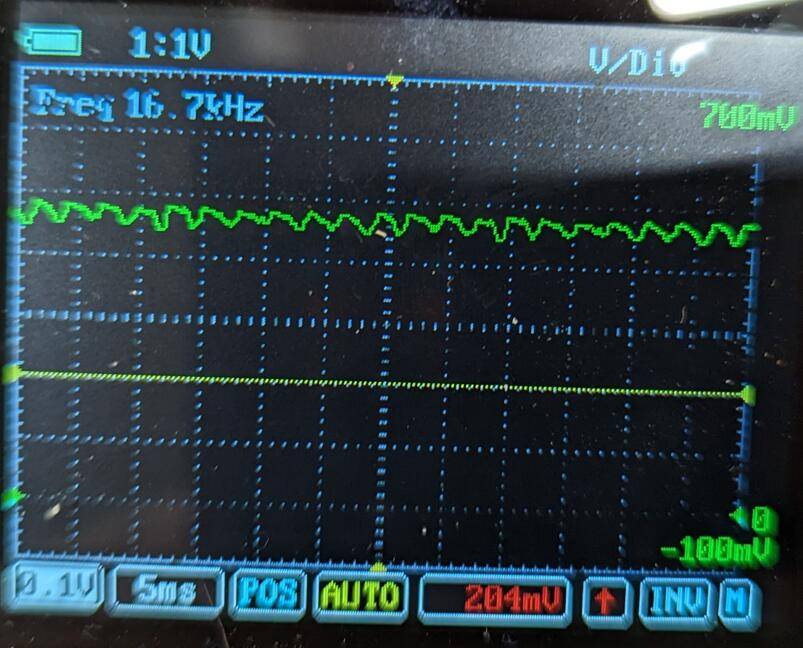
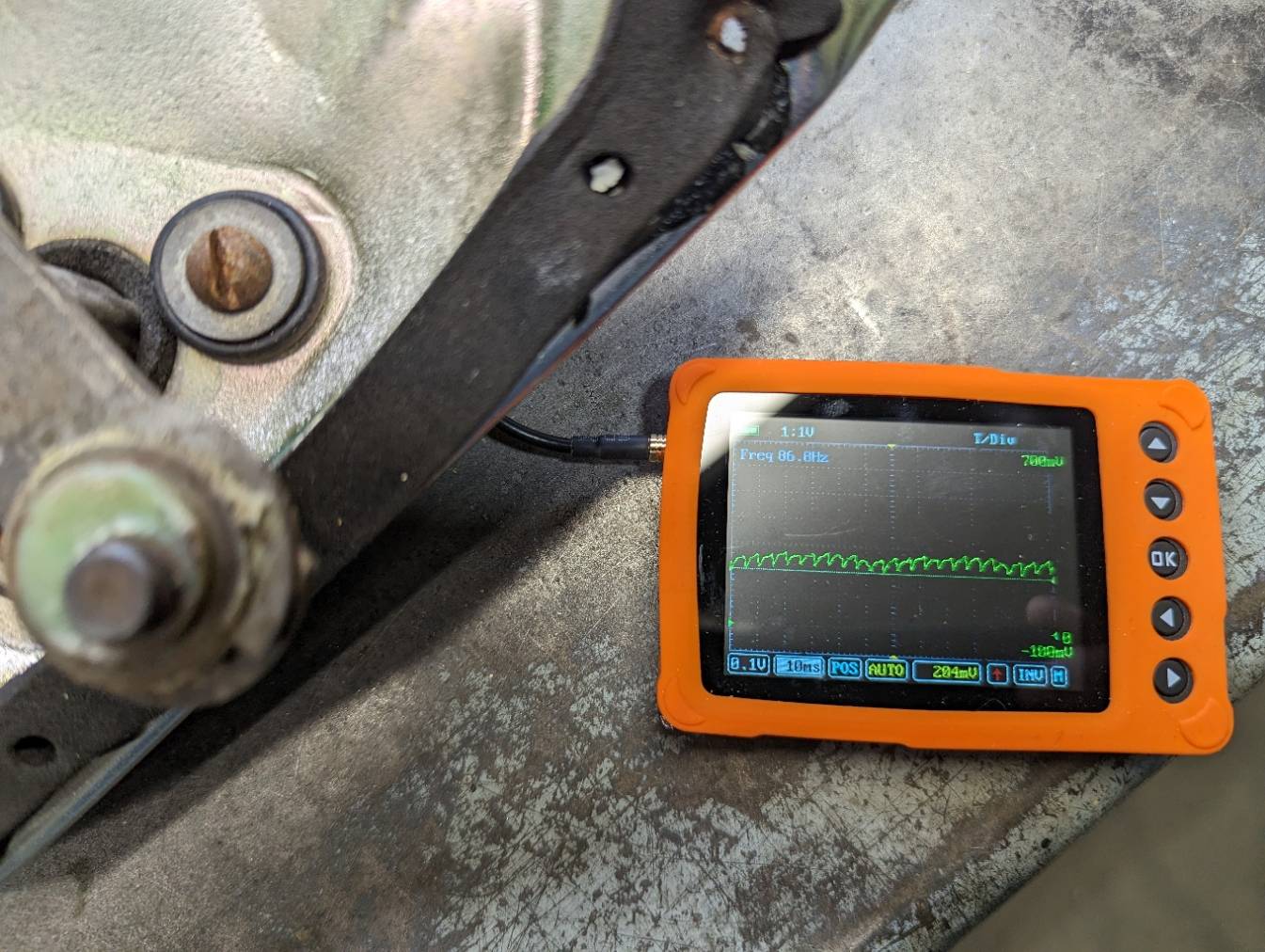
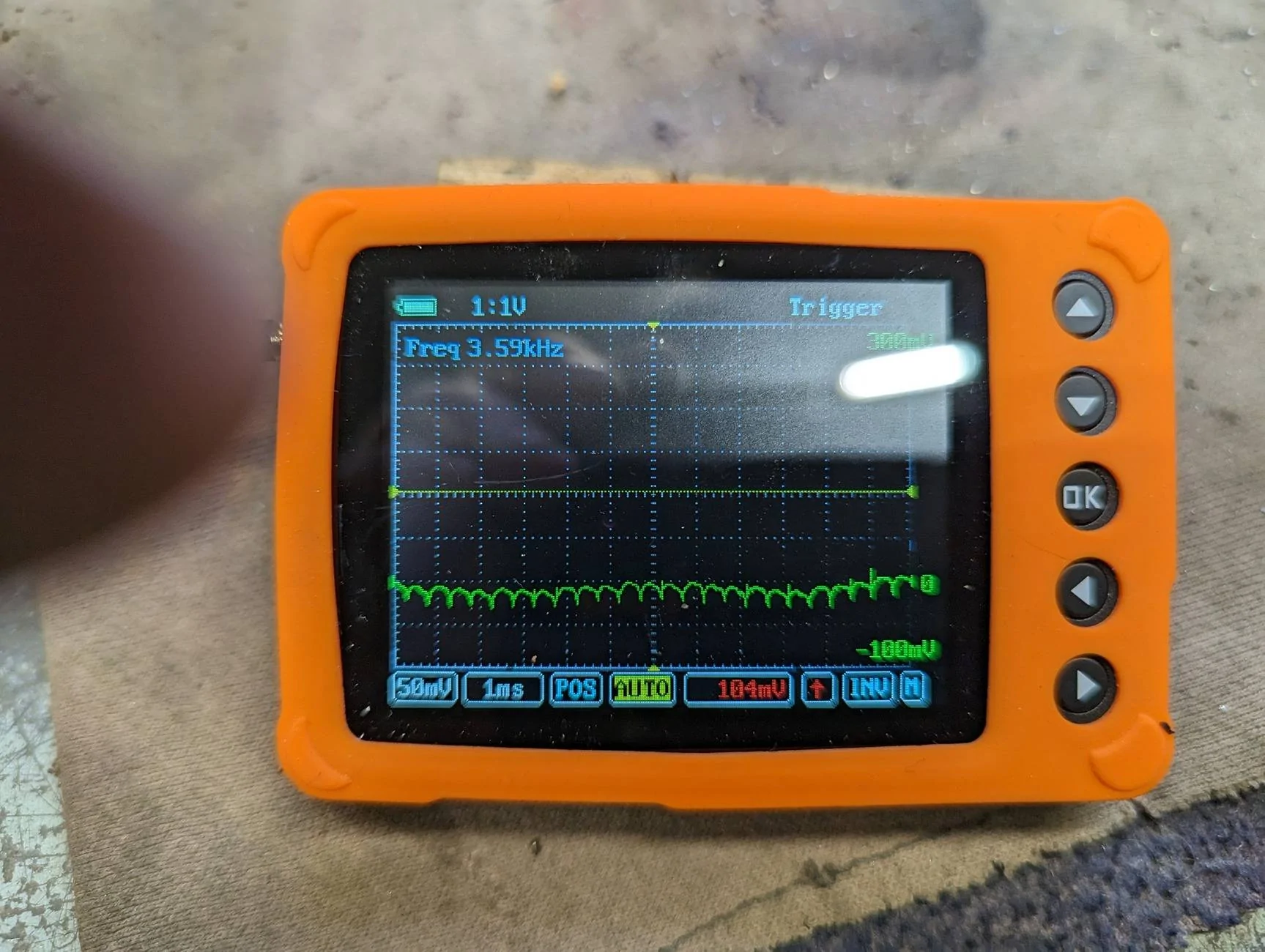
I blew through two big scopes - an HP and a HeathKit scope and ended up getting a uScope to get by with my restorations.

I check patterns of any motor I restore, or any alternator I restore and badly needed a scope.
Jeep Gladiator Are the batteries really isolated during ESS stops? PXL_20230401_204924679


Jeep Gladiator Are the batteries really isolated during ESS stops? 1731730085031-fa


I checked THIS wiper motor before restoration so I could advise the customer on what to expect.
Jeep Gladiator Are the batteries really isolated during ESS stops? Bobbi-Hutton-2


Alternator output -
Jeep Gladiator Are the batteries really isolated during ESS stops? PXL_20230401_142247075
 

jebiruph

Well-Known Member
First Name
Jerry
Joined
Dec 9, 2018
Threads
15
Messages
806
Reaction score
730
Location
IA
Vehicle(s)
2018 Wrangler JL 2024 Grand Cherokee L WL 2020 Gladiator JT
Here are two traces from a cheap handheld scope. It's more toy than tool, and spurious triggers are a real problem, but it fits alongside the battery under the hood and captures the difference between cold start and ESS restart.

Yellow is MAIN, blue is AUX.

Cold start:
cold_start2.jpg


ESS restart:
ess_restart.jpg
Thanks for your posts @Flanders this is very interesting information.

For the ESS restart it looks to me like the batteries are equal for a while, but then the aux battery voltage drops below the main battery (indicating they are separated). This drop in voltage terminates the ESS event, the batteries are reconnected (back to identical voltage) and then both power the restart.

Based on the various situations I've seen posted, this is the behavior I was expecting, but I have been wrong before.
Sponsored


Top