
Sponsored

Are the batteries really isolated during ESS stops?

Andy29847

Well-Known Member
First Name
Andy
Joined
Oct 25, 2020
Threads
14
Messages
552
Reaction score
934
Location
South Carolina
Vehicle(s)
2020 Wrangler Rubicon, 2020 Gladiator Rubicon
Occupation
Retired
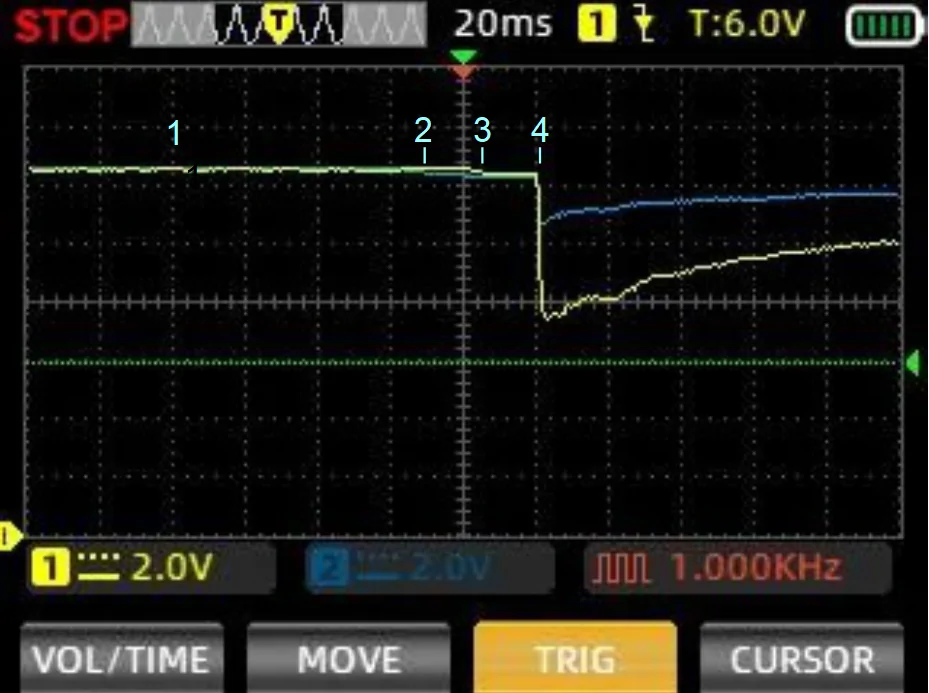
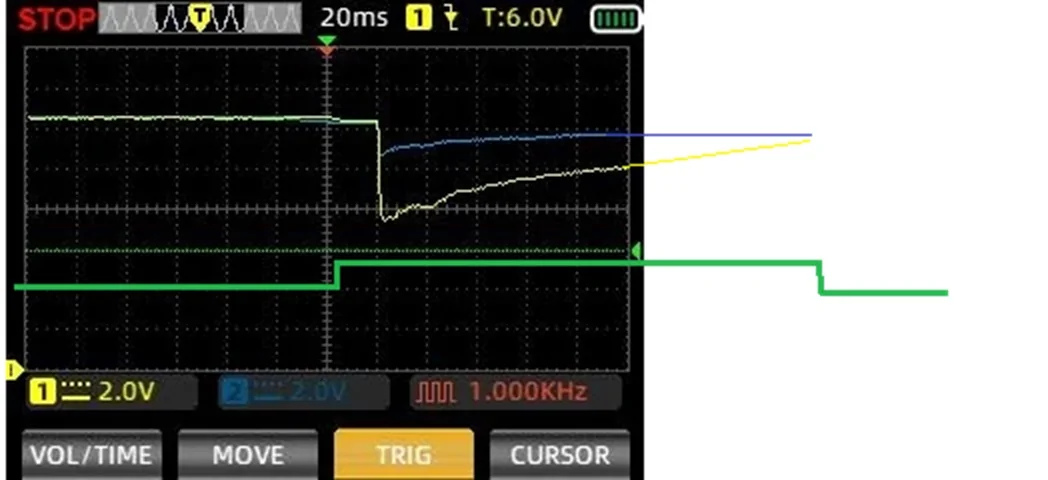
restart scope.webp


1. When the image is enlarged, it's easier to see that while the aux battery (blue line) and main battery (yellow line) voltages are similar, they are not identical. The aux battery voltage appears flat until it starts dropping, while the main battery voltage is fluctuating. This difference between the voltage changes indicates the batteries are separated.

2. Here the voltage of both batteries starts going down, but not at the same time indicating that the batteries are still separated.

3. Now neither voltage is changing indicating a possible reconnection.

4. This is when power is applied to the starter and both voltages drop simultaneously and follow a similar pattern indicating that the batteries are connected and both are powering the starter on a restart.


Some have questioned why the aux battery voltage did not drop as far on the restart as it did on the cold start. I'll refer to the next diagram to explain what is happening.

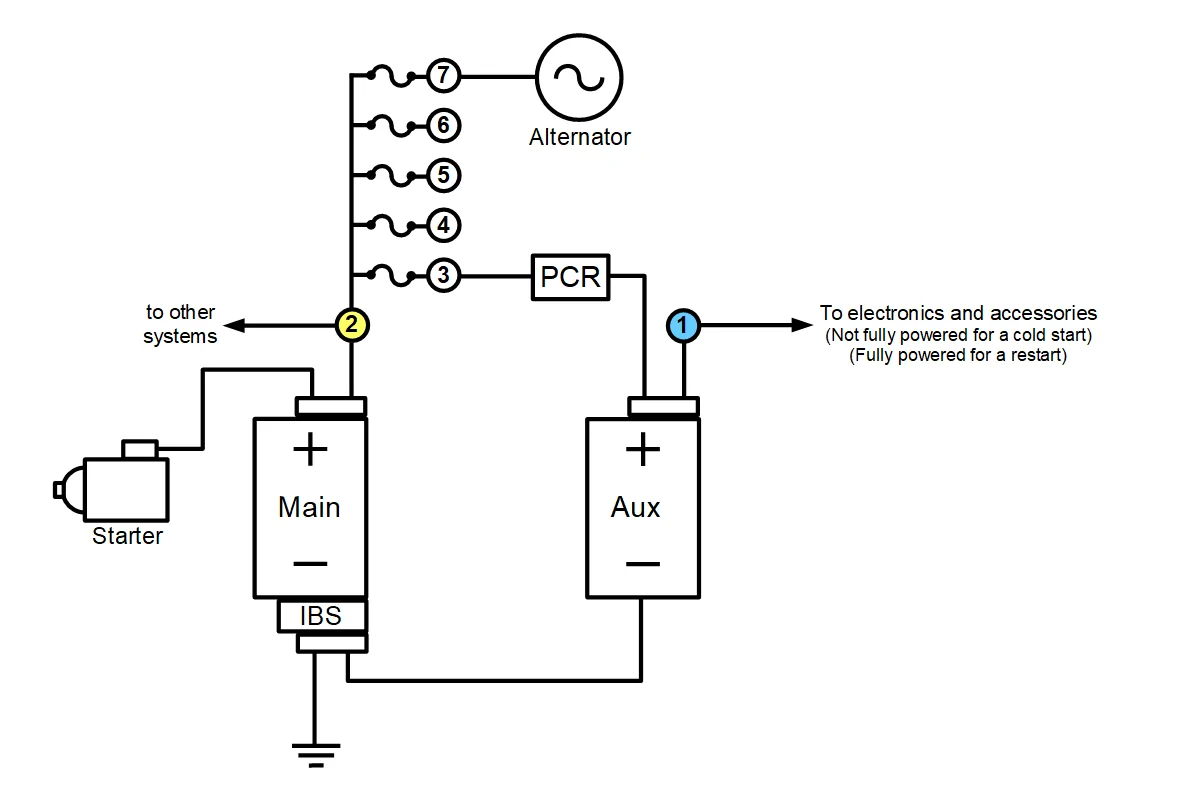
ess simple diagram.webp


As I indicate on the diagram, the aux battery voltage is taken from PDC terminal N1. N1 also connects to electronics and accessories. During a cold start, minimal electronics and accessories are powered up and they have minimal effect on the voltage reading at N1.

But during a restart, the electronics and accessories are fully powered. The additional voltage present in the system from the fully powered electronics and accessories will prevent the voltage reading at N1 from dropping as much as it did during the cold start.

Feel free to comment on my conclusions.
If I understand, you are saying that the difference between N1 and N2 on an ESS restart is due to cab electronics already being powered up (as opposed to a cold start where electronics are off), i.e., lower load. Also, the difference is made more prominent because of the points of measurement. The conclusion is that both batteries are used to start in a cold start and an ESS start. The difference I see in cold start vs ESS start is the batteries appear not to be separated for a test on an ESS start. I'd guess the Jeep system is monitoring both batteries (when they are connected together during an ERSS stop/start event) and if the 2 batteries fall below a programed threshold, the ESS stop is terminated. This seems logical to me except that it calls to question; Why have 2 batteries?
Sponsored


sharpsicle

Well-Known Member
Joined
Apr 29, 2021
Threads
22
Messages
2,760
Reaction score
6,255
Location
Tampa, FL / Milwaukee, WI
Vehicle(s)
2020 Gladiator Overland, 2002 VTX1800
The conclusion is that both batteries are used to start in a cold start and an ESS start.
Used? Yes. But in different configurations...parallel in a cold start, independent in an ESS start.

The difference I see in cold start vs ESS start is the batteries appear not to be separated for a test on an ESS start.
As per the techincal information provided from Jeep, this is accurate. Should be no surprise here.

I'd guess the Jeep system is monitoring both batteries (when they are connected together during an ERSS stop/start event) and if the 2 batteries fall below a programed threshold, the ESS stop is terminated.
Yes, in parallel. Sufficient SOC is one of the parameters required for ESS to engage.

This seems logical to me except that it calls to question; Why have 2 batteries?
Because of the cranking event during an ESS restart? That should also be no surprise at this point. One maintains electronics load (aux), the other engages the starter (main). That helps prevent low voltage conditions for the electronics due to starter engagement.
 
Last edited:

Andy29847

Well-Known Member
First Name
Andy
Joined
Oct 25, 2020
Threads
14
Messages
552
Reaction score
934
Location
South Carolina
Vehicle(s)
2020 Wrangler Rubicon, 2020 Gladiator Rubicon
Occupation
Retired
Used? Yes. But in different configurations...parallel in a cold start, independent in an ESS start.

Because of the cranking event during an ESS restart? That should also be no surprise at this point. One maintains electronics load (aux), the other engages the starter (main). That helps prevent low voltage conditions for the electronics due to starter engagement.
I think some of us are waiting hopefully for J Serria and his bigger better scope to show us actual measurements from an ESS start. Currently, all we have is the screenshot that Flanders shared that only shows the voltage from the main and aux batteries.

Jeep Gladiator Are the batteries really isolated during ESS stops? 1761745565883-ci


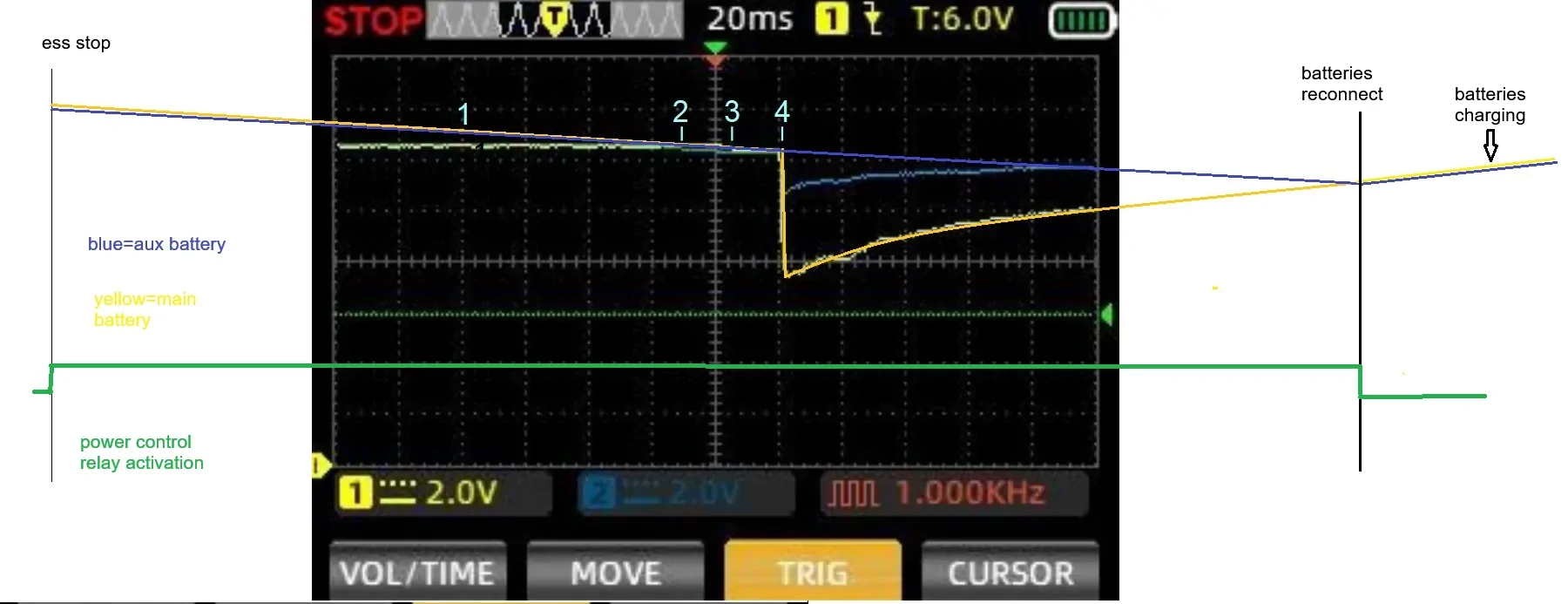
We really need to see the circuit that activates the power control relay to confirm what we think is happening. In the meantime, I've been trying to guess what the waveforms should look like. If what you write is true, then this is my guess:

Jeep Gladiator Are the batteries really isolated during ESS stops? ess start


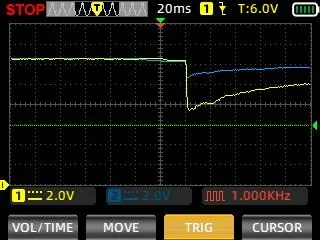
When you compare the 2 scope images, the biggest thing I notice is that the actual measurement doesn't not reflect battery drain while the Jeep is in an ESS stop. This may be because the period of measurement is too short. The original image also does not show the power control relay closing (as reflected by the measurements of the main and aux batteries converging). I'm open minded about what is really happening but very curious. I'm ready to base my conclusions on actual test rather than what we have found in various manuals and posts. I know from my own experience that using just one battery works.
 

Andy29847

Well-Known Member
First Name
Andy
Joined
Oct 25, 2020
Threads
14
Messages
552
Reaction score
934
Location
South Carolina
Vehicle(s)
2020 Wrangler Rubicon, 2020 Gladiator Rubicon
Occupation
Retired
Still sifting through my thoughts. I trying to fit what I see on the scope reading with the information found in this thread. The batteries are not disconnected at the beginning of an ESS stop. They stay together until the start message hits the system. Then the PCR opens the connection between the 2 batteries, start happens, then the PCR relay closes in a predetermined time.

Jeep Gladiator Are the batteries really isolated during ESS stops? scope ess start
 

jebiruph

Well-Known Member
First Name
Jerry
Joined
Dec 9, 2018
Threads
15
Messages
806
Reaction score
730
Location
IA
Vehicle(s)
2018 Wrangler JL 2024 Grand Cherokee L WL 2020 Gladiator JT
I think some of us are waiting hopefully for J Serria and his bigger better scope to show us actual measurements from an ESS start. Currently, all we have is the screenshot that Flanders shared that only shows the voltage from the main and aux batteries.
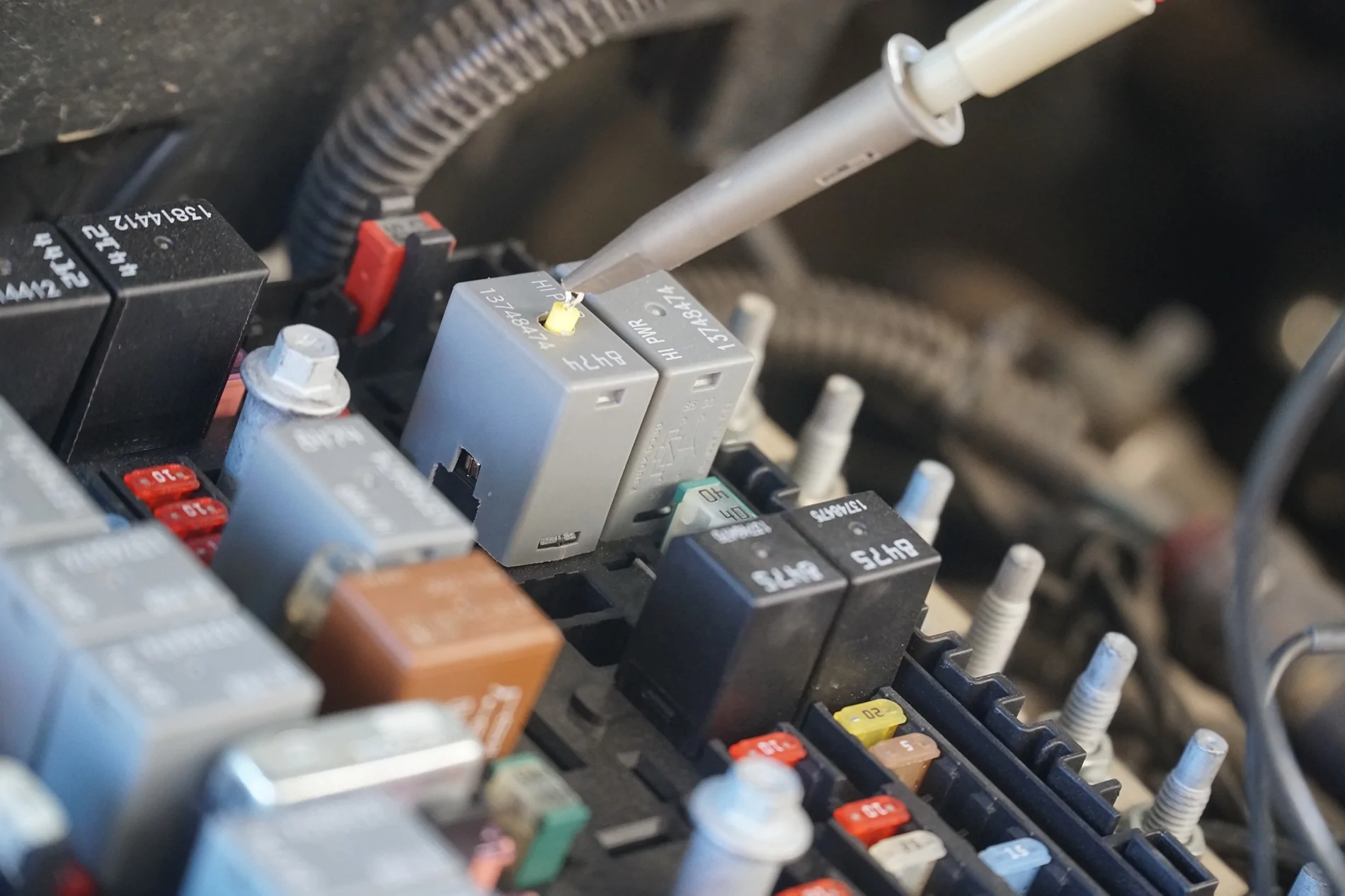
It may be difficult for @J Sierra to capture an ESS start with his AC powered scope. But he did find easy access to the PCR control signal from the fuse panel, so anyone with a 2 channel handheld scope should be able to capture the PCR and the aux battery and/or the PCR and the main battery, then we'll just have to compare multiple images.

I just got one delivered yesterday, but it's been several decades since I used an oscilloscope as a computer technician, so it may take a while for me to get everything figured out.
 

Sponsored

ShadowsPapa

Well-Known Member
First Name
Bill
Joined
Oct 12, 2019
Threads
247
Messages
40,440
Reaction score
53,853
Location
Runnells, Iowa
Vehicle(s)
'25 JTMX, '23 JLU 4xe, '82 SX4, '73 Javelin
Occupation
Retired auto mechanic, frmr gov't ntwrk security admin
Vehicle Showcase
3
the biggest thing I notice is that the actual measurement doesn't not reflect battery drain while the Jeep is in an ESS stop.
depending on the battery health and stat of charge, it may drop a little bit, or a lot.
I sat at a light, engine stopped, and the battery voltage never went below 12.3 - other stops it sat at 12.4 today
With my 2022, near time I traded it, the voltage dropped a bit faster and would have been down to 12.1 or less in the same stop- risky area for electronics.
It will depend on what's running, of course, as well as battery health.
( my JT has been driven a lot lately, plus it was on a charger for 12 hours about 4 days ago so they are healthy and charged)

I know from my own experience that using just one battery works.
it was never about needing extra battery power, it was about protecting the electronics and modules for an ESS restart. They are already powered on, and everything is operating. The radio never blinks, lights never flicker, nothing at all happens when the engine shuts of during ESS stop, and then restarts - because the systems are always powered, no brown-out, nothing to drag them down.
They want the ESS to work as much, as often, as possible.
If you have a large enough battery and it's fully charged, a hot start isn't going to draw down the battery enough to matter. But let that battery get a bit low, older, and now you are going to be pulling it down enough it might matter.
Mine worked from the time I got 1 mile away from home, and at every single stop we made today - even when we made over a dozen stop signs and stop lights, it would shut off every time without fail.

As the head of QA (and EE) at Compressor Controls Corp told me years ago - electronics fail at power up, and when suffering low voltage situations.
This would seem to fit that, and all documents point to it, but then, I guess we prefer proving it ourselves rather than technical documents explaining operation of something.
We finally told people - go ahead and leave the computers on, because we found those left running 24/7 had longer lives than those that got shut down every night.
 

J Sierra

Well-Known Member
First Name
James
Joined
Dec 29, 2020
Threads
9
Messages
156
Reaction score
187
Location
Tucson AZ
Vehicle(s)
2020 Jeep gladiator
Occupation
retired
Vehicle Showcase
1
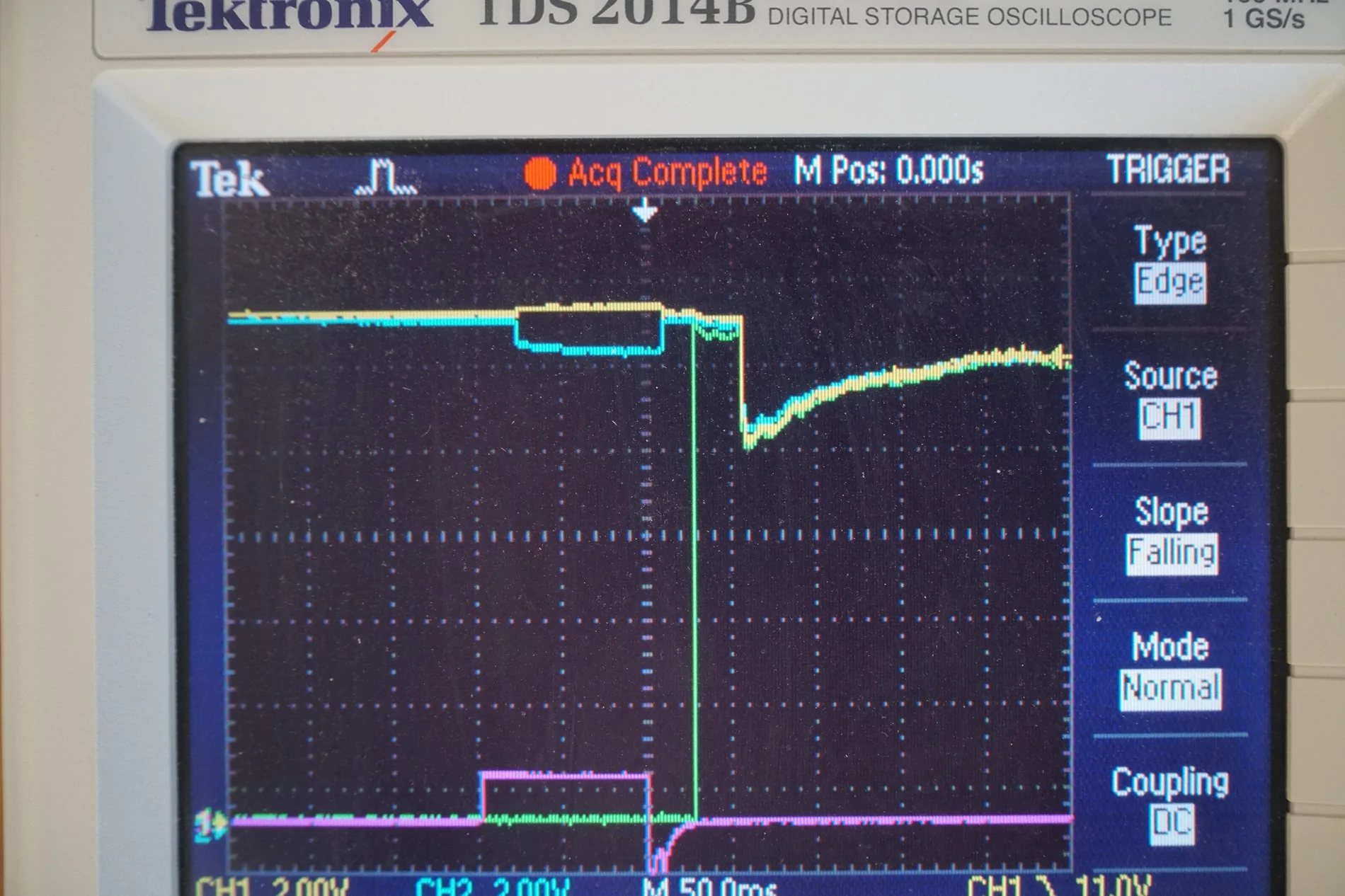
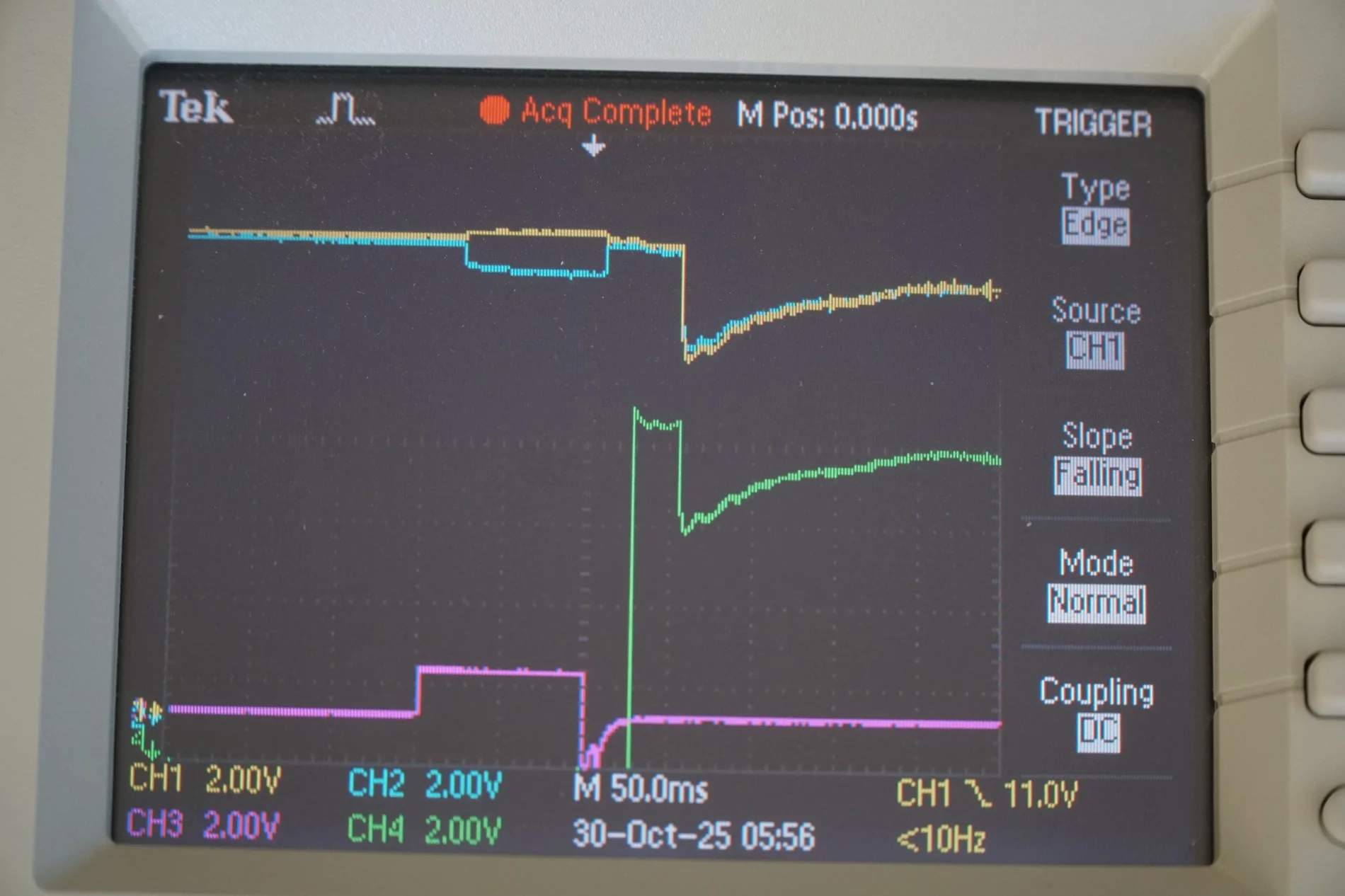
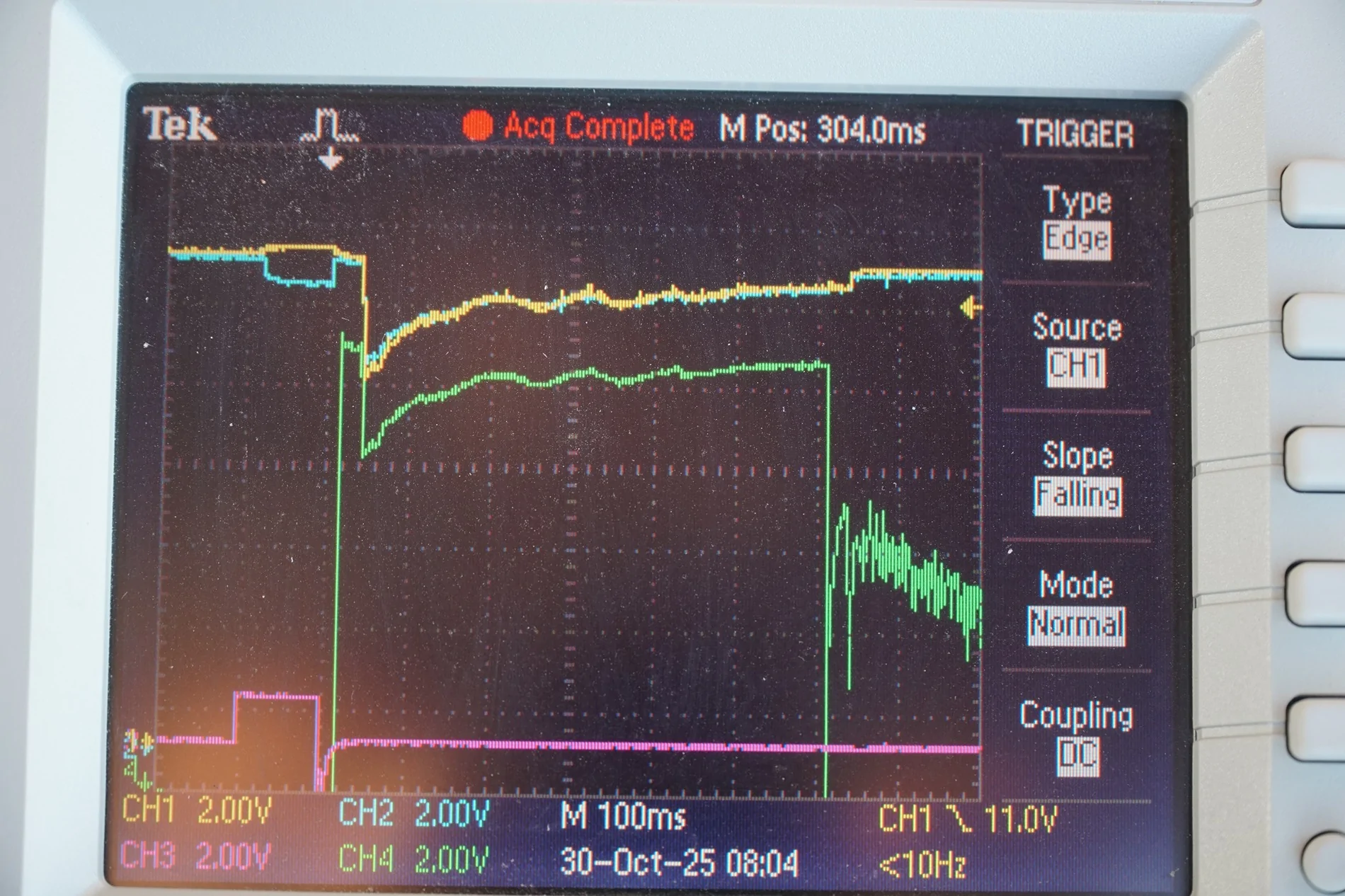
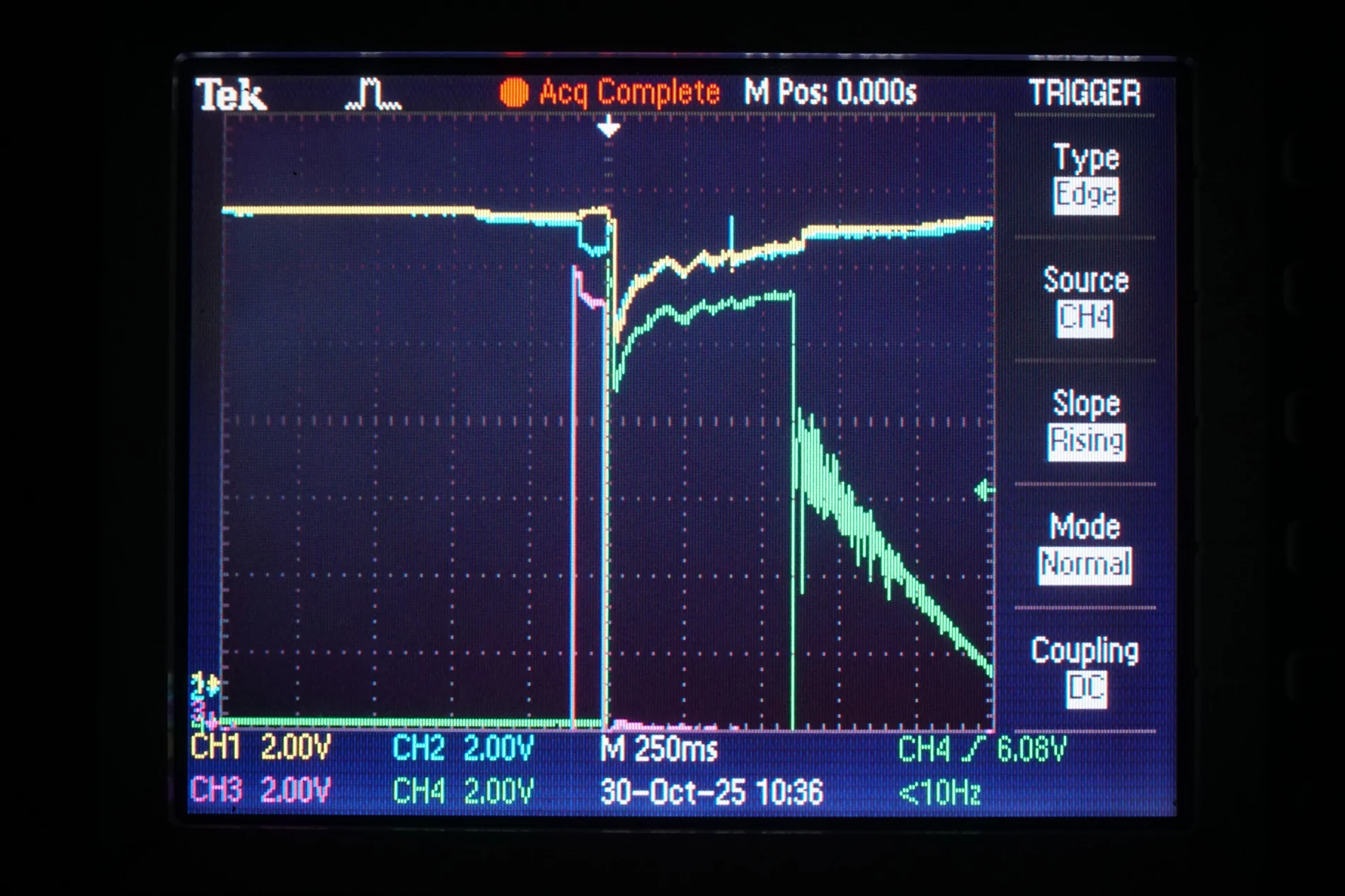
green trace is the starter relay.
Jeep Gladiator Are the batteries really isolated during ESS stops? DSC05432


Jeep Gladiator Are the batteries really isolated during ESS stops? DSC05437


Jeep Gladiator Are the batteries really isolated during ESS stops? DSC05438
 
Last edited:

J Sierra

Well-Known Member
First Name
James
Joined
Dec 29, 2020
Threads
9
Messages
156
Reaction score
187
Location
Tucson AZ
Vehicle(s)
2020 Jeep gladiator
Occupation
retired
Vehicle Showcase
1
Same capture I moved the green trace down.
Jeep Gladiator Are the batteries really isolated during ESS stops? DSC05434


Jeep Gladiator Are the batteries really isolated during ESS stops? DSC05440


Jeep Gladiator Are the batteries really isolated during ESS stops? DSC05444
 
Last edited:

ShadowsPapa

Well-Known Member
First Name
Bill
Joined
Oct 12, 2019
Threads
247
Messages
40,440
Reaction score
53,853
Location
Runnells, Iowa
Vehicle(s)
'25 JTMX, '23 JLU 4xe, '82 SX4, '73 Javelin
Occupation
Retired auto mechanic, frmr gov't ntwrk security admin
Vehicle Showcase
3
When you press that big button in a TIP start vehicle, it's unlike others.
It does not immediately engage the starter. It starts a sequence of events.

And for those wondering about the gap between when the starter relay fires and the dip in battery voltage, indicating starter draw -
The starter relay closes, sending power to the solenoid, which moves the starter drive into the ring gear AND THEN connects the starter to the battery.
It's not instant.
It takes time to engage a starter drive and close the contacts in the starter solenoid.

At one time I made a video of a starter being triggered, catching the drive being pushed out and then the starter engaging. It was enough time you could actually tell there was a gap between when I pressed the button and the drive was fully slung out.
 

Andy29847

Well-Known Member
First Name
Andy
Joined
Oct 25, 2020
Threads
14
Messages
552
Reaction score
934
Location
South Carolina
Vehicle(s)
2020 Wrangler Rubicon, 2020 Gladiator Rubicon
Occupation
Retired
it was never about needing extra battery power, it was about protecting the electronics and modules for an ESS restart. They are already powered on, and everything is operating. The radio never blinks, lights never flicker, nothing at all happens when the engine shuts of during ESS stop, and then restarts - because the systems are always powered, no brown-out, nothing to drag them down.
They want the ESS to work as much, as often, as possible.
If you have a large enough battery and it's fully charged, a hot start isn't going to draw down the battery enough to matter. But let that battery get a bit low, older, and now you are going to be pulling it down enough it might matter.
Mine worked from the time I got 1 mile away from home, and at every single stop we made today - even when we made over a dozen stop signs and stop lights, it would shut off every time without fail.
A valid point regarding the vulnerability of electronics, but even with just one battery, the Avenger light on a Jeep will alert a driver that the battery is getting weak. Besides that, I've have yet to hear a case where low battery power caused damage to cab equipment. I suspect there are some protections built into the system (intentional or unintentional).

Have you had any battery or electronics trouble after switching to just one battery? | Jeep Wrangler Forums (JL / JLU) -- Rubicon, 4xe, 392, Sahara, Sport - JLwranglerforums.com
 

Sponsored

ShadowsPapa

Well-Known Member
First Name
Bill
Joined
Oct 12, 2019
Threads
247
Messages
40,440
Reaction score
53,853
Location
Runnells, Iowa
Vehicle(s)
'25 JTMX, '23 JLU 4xe, '82 SX4, '73 Javelin
Occupation
Retired auto mechanic, frmr gov't ntwrk security admin
Vehicle Showcase
3
A valid point regarding the vulnerability of electronics, but even with just one battery, the Avenger light on a Jeep will alert a driver that the battery is getting weak. Besides that, I've have yet to hear a case where low battery power caused damage to cab equipment. I suspect there are some protections built into the system (intentional or unintentional).

Have you had any battery or electronics trouble after switching to just one battery? | Jeep Wrangler Forums (JL / JLU) -- Rubicon, 4xe, 392, Sahara, Sport - JLwranglerforums.com
The problem is, it's a long-term issue, and most who ditch the aux battery are also ESS haters and have a tazer or other tool to disable ESS. So it won't matter to the majority who convert.
I'd bet that over 3/4 of all people who ditch the aux battery also have ESS set to never shut the engine down.
So you have really cut the number of valid responses down in a big way.

There is no other reason for a second battery, I'm really baffled by those still wondering or scratching their heads over the why of it.

Try to come up with any other reason that aux battery exists at all - It's sure not capacity.
 
OP
OP
Flanders

Flanders

Well-Known Member
Joined
Dec 2, 2023
Threads
11
Messages
152
Reaction score
121
Location
Dyer, NV
Vehicle(s)
2023 JT
Not to discourage new life in this old thread, but what are you guys hoping to discover?

I measured the resistance between N1 and N2 at less than 3 milliohms in post 136.

The trace of an ESS restart shows a sizeable voltage drop from N1 to N2, more than 2V for 100ms.

If the PCR is conducting, it's carrying more than 2V / 3 milliohms = 667A for 100ms from the AUX side to the MAIN side and the starter.

Where do you suppose that current comes from? Detroit?
 
Last edited:

jebiruph

Well-Known Member
First Name
Jerry
Joined
Dec 9, 2018
Threads
15
Messages
806
Reaction score
730
Location
IA
Vehicle(s)
2018 Wrangler JL 2024 Grand Cherokee L WL 2020 Gladiator JT
The problem is, it's a long-term issue, and most who ditch the aux battery are also ESS haters and have a tazer or other tool to disable ESS. So it won't matter to the majority who convert.
I'd bet that over 3/4 of all people who ditch the aux battery also have ESS set to never shut the engine down.
So you have really cut the number of valid responses down in a big way.

There is no other reason for a second battery, I'm really baffled by those still wondering or scratching their heads over the why of it.

Try to come up with any other reason that aux battery exists at all - It's sure not capacity.
For years the reason given for adding the aux battery was to provide additional power for the ESS restart. This made sense because at the time the Cherokee had the original single battery ESS system and Cherokees were getting stranded at intersections when the single battery crossed the failure threshold during an ESS event and were unable to power an ESS restart.

I've just recently heard the claim that aux battery was added to protect the electronics, which it does by default by being wired between the main battery and the electronics, mitigating voltage drops and spikes related to cranking the starter.

It wasn't until this thread with the ESS restart oscilloscope image and your collaborating documentation that I had ever heard that the aux battery is separated for the ESS restart.

As far as the accuracy of the factory documentation, it can be invalidated with a related firmware update. Like with the manual transmission recall that updated the firmware to monitor drive train slippage, estimate clutch temperature and invoke limp mode accordingly. That's not going to in 2020 factory documentation. So for the factory documentation my thought is to trust, but verify.
 

jebiruph

Well-Known Member
First Name
Jerry
Joined
Dec 9, 2018
Threads
15
Messages
806
Reaction score
730
Location
IA
Vehicle(s)
2018 Wrangler JL 2024 Grand Cherokee L WL 2020 Gladiator JT
Not to discourage new life in this old thread, but what are you guys hoping to discover?

I measured the resistance between N1 and N2 at less than 3 milliohms in post 136.

The trace of an ESS restart shows a sizeable voltage drop from N1 to N2, more than 2V for 100ms.

If the PCR is conducting, it's carrying more than 2V / 3 milliohms = 667A for 100ms from the AUX side to the MAIN side and the starter.

Where do you suppose that current comes from? Detroit?
Is this the same math that has 250 amps going through a 150 amp fuse?
 

J Sierra

Well-Known Member
First Name
James
Joined
Dec 29, 2020
Threads
9
Messages
156
Reaction score
187
Location
Tucson AZ
Vehicle(s)
2020 Jeep gladiator
Occupation
retired
Vehicle Showcase
1
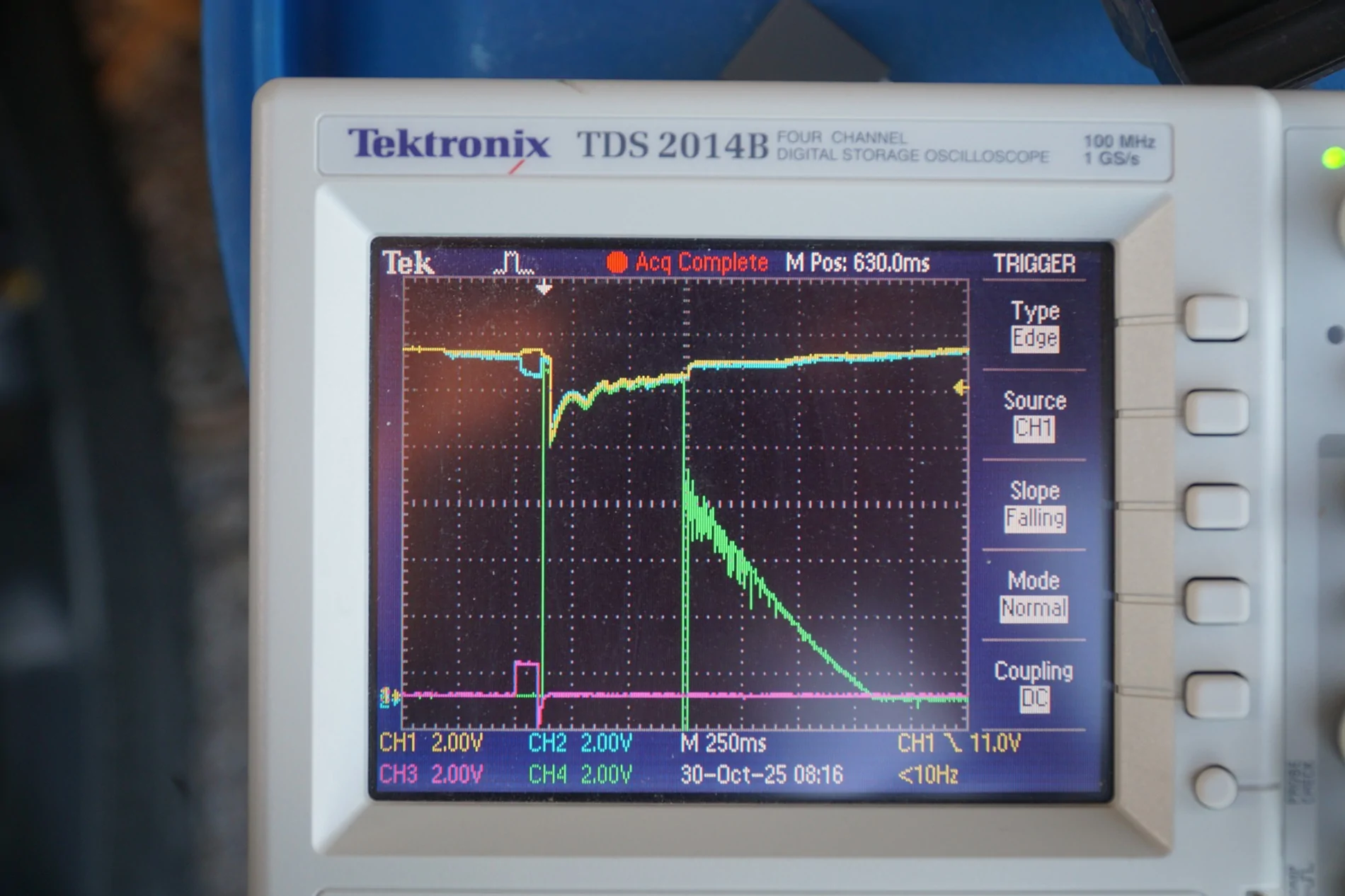
Now I have a good trigger. See all the ringing in the green trace.
Jeep Gladiator Are the batteries really isolated during ESS stops? DSC05457
Sponsored


Top