Ole Cowboy
Well-Known Member
- Thread starter
- #1
DW applies only to: ALL CARS, TRUCKS, MOTORCYCLES, SHOPPING CARTS, SOLID axle, independent suspension modes of transportation that was manufactured after 1901.
It is NOT a question of Right or Wrong, it is a question of Newton's 1st and 3rd law of motion: "Newton's first law states that every object will remain at rest or in uniform motion in a straight line unless compelled to change its state by the action of an external force. ... The third law states that for every action (force) there is an equal and opposite reaction."
1) If it is attached to the front suspension it plays a role in DW.
2 The following are generally the things you want to look in no order:
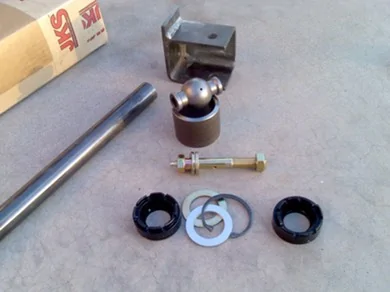
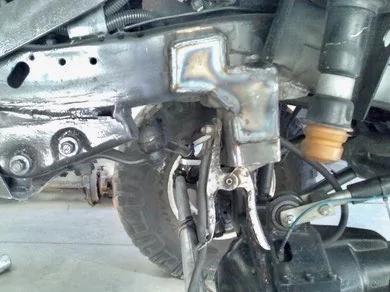
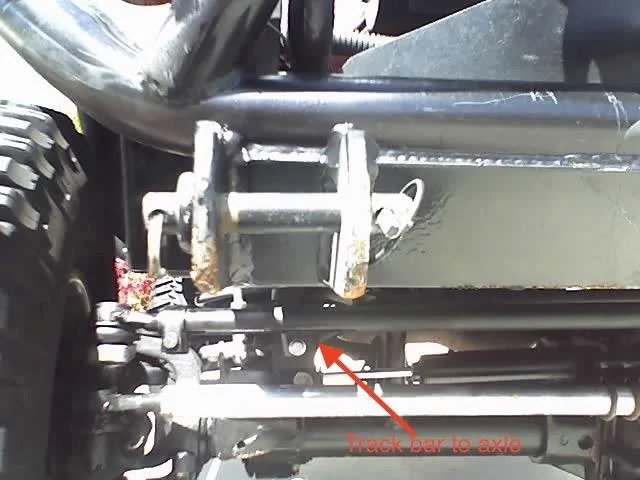
Track bar, bushings, and mounts
Steering stabilizer
Ball joint wear
Soft or worn shock
Ball joints
Rubber bushings
Tie rod ENDS being excessively worn
Tire Pressure, too low or unbalanced
Alignment and wheel balance should ALWAYS be in adjustment
Toe-in OEM specs and caster adjusted and compensated for tire size
Lower/upper control arms adjustment and bushings
Yes, anything and everything hanging under the frame of the front end
3) I recommend setting your own caster and toe because MOST shops will ONLY set to factory specs, which is fine if you are running a factory setup. But lifts, large tires etc can and will alter your toe-caster setting.
4) When you add lift or larger diameter tires you alter your caster. Toe rarely changes unless you "Y" steering setup, then when you add lift, your toe does change.
The ROOT cause of DW is an out of balance condition along with worn components. Often it is initiated when you drive over railroad tracks or a "crease" in the road from the contraction of road surface materials. The hitting of a manhole cover or pothole are other examples.
What takes place is the impact forces the tire backward and to the left or right unless you were to hit it exactly dead on. The L/R motion brings with it the OTHER side (tire). As you move forward the suspension tries to straighten out the tires. BUT Newton's laws of motion begin to interfere.
When an impact causes one tire to move L or R, then the other tires are forced to move along with it, but it exerts its own force, Newton’s 1st law of motion: "Every object continues in its state of rest or of uniform motion in a straight line, unless it is compelled to change that state by forces impressed upon it. " As you might surmise, all hell is fixing to break loose. What the automakers and engineers do is add a steering stabilizer to absorb, slow down and mitigate the violent continuing reactions…better known as DW. The SS is NOT a band-aid, it’s an integral component of your steering and suspension. It is also your First Responder to DW.
Bottom line. Bigger tires, out of alignment, worn components, and road hazards can all wreak havoc. Here I will borrow from my world of software engineering coding and Economic of money flow; the “multiplier effect”. And, if you have ever played any pool and “broke” you can plainly see it when the cue ball hits the pile of racked balls…that is the multiplier effect in action or if you have ever written a line of bad code in a software program, how that rolls thru the system to create other problems. This is what happens when an impact takes place and something in your suspension is out of whack.
There is no one singular case you can blame every time, but rather it is the sum of various components. It is this very thing that makes curing DW so elusive.
Coming soon:
Toe/Caster Understand it, DIY better than than the shops do.
DW How I Fixed it and tips on how you can too
It is NOT a question of Right or Wrong, it is a question of Newton's 1st and 3rd law of motion: "Newton's first law states that every object will remain at rest or in uniform motion in a straight line unless compelled to change its state by the action of an external force. ... The third law states that for every action (force) there is an equal and opposite reaction."
1) If it is attached to the front suspension it plays a role in DW.
2 The following are generally the things you want to look in no order:
Track bar, bushings, and mounts
Steering stabilizer
Ball joint wear
Soft or worn shock
Ball joints
Rubber bushings
Tie rod ENDS being excessively worn
Tire Pressure, too low or unbalanced
Alignment and wheel balance should ALWAYS be in adjustment
Toe-in OEM specs and caster adjusted and compensated for tire size
Lower/upper control arms adjustment and bushings
Yes, anything and everything hanging under the frame of the front end
3) I recommend setting your own caster and toe because MOST shops will ONLY set to factory specs, which is fine if you are running a factory setup. But lifts, large tires etc can and will alter your toe-caster setting.
4) When you add lift or larger diameter tires you alter your caster. Toe rarely changes unless you "Y" steering setup, then when you add lift, your toe does change.
The ROOT cause of DW is an out of balance condition along with worn components. Often it is initiated when you drive over railroad tracks or a "crease" in the road from the contraction of road surface materials. The hitting of a manhole cover or pothole are other examples.
What takes place is the impact forces the tire backward and to the left or right unless you were to hit it exactly dead on. The L/R motion brings with it the OTHER side (tire). As you move forward the suspension tries to straighten out the tires. BUT Newton's laws of motion begin to interfere.
When an impact causes one tire to move L or R, then the other tires are forced to move along with it, but it exerts its own force, Newton’s 1st law of motion: "Every object continues in its state of rest or of uniform motion in a straight line, unless it is compelled to change that state by forces impressed upon it. " As you might surmise, all hell is fixing to break loose. What the automakers and engineers do is add a steering stabilizer to absorb, slow down and mitigate the violent continuing reactions…better known as DW. The SS is NOT a band-aid, it’s an integral component of your steering and suspension. It is also your First Responder to DW.
Bottom line. Bigger tires, out of alignment, worn components, and road hazards can all wreak havoc. Here I will borrow from my world of software engineering coding and Economic of money flow; the “multiplier effect”. And, if you have ever played any pool and “broke” you can plainly see it when the cue ball hits the pile of racked balls…that is the multiplier effect in action or if you have ever written a line of bad code in a software program, how that rolls thru the system to create other problems. This is what happens when an impact takes place and something in your suspension is out of whack.
There is no one singular case you can blame every time, but rather it is the sum of various components. It is this very thing that makes curing DW so elusive.
Coming soon:
Toe/Caster Understand it, DIY better than than the shops do.
DW How I Fixed it and tips on how you can too
Sponsored