
Sponsored

Mexico vs American pug v6 ?

smlobx

Well-Known Member
First Name
Eddie
Joined
Jun 28, 2018
Threads
87
Messages
2,652
Reaction score
4,525
Location
Mid Atlantic
Vehicle(s)
JTR, F-350 diesel, Porsche Spyder, Model Y
Occupation
Semi retired consultant
The right side cams and rockers vs the left side cams and rockers have me believe it is oiling issue. If this is the case, a fix might not be feasible to Stellantis. Blame it on the Rocker/Cam, take care of the few it affects and Stellantis washes their hands.

The cam fails due to the coating on the rocker failing. Same coating that is on the left side rockers if I understand correctly. What is the oil pressure at each cylinder head? What is the volume of oil going to each cylinder head? I saw a post where they talked about the oil passages, but nothing specifically about pressure or volume of the oil.

I don't think a company as big as Stellantis would ever admit to a poor design when they could push it as third party manufacturer defect. What do I know?
That‘s something I was wondering and hopefully somebody here knows for sure…Are the 2 cams exactly the same? I.e. the same part number? Or are they different?

If they’re different than I can believe it is a manufacturing defect.
Sponsored

 

ShadowsPapa

Well-Known Member
First Name
Bill
Joined
Oct 12, 2019
Threads
247
Messages
40,445
Reaction score
53,880
Location
Runnells, Iowa
Vehicle(s)
'25 JTMX, '23 JLU 4xe, '82 SX4, '73 Javelin
Occupation
Retired auto mechanic, frmr gov't ntwrk security admin
Vehicle Showcase
3
The right side cams and rockers vs the left side cams and rockers have me believe it is oiling issue. If this is the case, a fix might not be feasible to Stellantis. Blame it on the Rocker/Cam, take care of the few it affects and Stellantis washes their hands.

The cam fails due to the coating on the rocker failing. Same coating that is on the left side rockers if I understand correctly. What is the oil pressure at each cylinder head? What is the volume of oil going to each cylinder head? I saw a post where they talked about the oil passages, but nothing specifically about pressure or volume of the oil.

I don't think a company as big as Stellantis would ever admit to a poor design when they could push it as third party manufacturer defect. What do I know?
If the oil galleries aren't restricted anywhere, the oil pressure will be the same in all galleries, both sides of the engine. ONLY if there's a restriction that reduces volume to an area where there's more bleed-off than the gallery can supply due to a blockage (or a leak like a missing plug) will there be lower pressure.
In fact, FCA has you run a test to ensure that oil at the head passage is within 5 psi of the rest of the system.
Years ago people were jumping and claiming, because some race driver wrote it in a book, that AMC rear mains failed due to lack of oil pressure at the rear of the engine. So he devised a line that ran from a hole he drilled and tapped at the lifter supply gallery and ran it back to the rear of the engine to the area that supplied the rear main. He claimed that resolved the issue. However, when you tear an engine down for such a modification - you are also doing 100 other things - swapping in new parts and so on, and likely paying a bit more attention to detail in other areas.
Others claimed that because he didn't have a failure after he put in that line that anyone who raced an AMC engine MUST have that line or else they'll blow the rear main.
A friend who is also an engineer in Canada said bull shit - that's not how hydraulics work.
So he built up a performance AMC V8 without ANY mods other than a larger oil pan and put it on a dyno with oil pressure gauges in multiple places, including the very rear of the engine which fed the rear main. The result? Pressure was all within fractions of a pound of each other. There was no discernable difference.
Other evidence was hundreds of others building engines without that line.
What we later discovered wasn't an oil pressure issue - it was a supply side issue to the pump.
The heads and parts of the block had poor oil return flow. Oil to the rockers was immense - but it couldn't get back down to the pan for the pump to pick it up. So the fix - add another quart of oil, use a different pan configuration or enlarge the return passages and smooth them.
No more blown rear mains.

So all of that is saying that unless there is a restriction in the passages somewhere, or a massive leak like a loose or missing plug from the work done after the block is die cast, the pressure should be the same, top to bottom, left to right.

Only if there is a restriction (or a leak in the gallery) causing the oil volume to not keep up with the need would there be any issue.
30 psi is more than enough to keep things totally soaked with oil - and them some.
Like I've said before - an idling small block chevy with a tiny gear type oil pump running maybe 15 psi can shoot oil clear over the fenders with the valve covers off and totally soak every part up there with so much oil it's running everywhere. We run 30 psi clear up to 3,000 RPM.

I just don't understand the fear people have of letting these run above about 2400 RPM.
Why?

Why try to keep it under 3,000?

Engines prior to the 1980s routinely ran over 3,000 RPM at highway speeds - it was normal. Those were inferior design, tiny oil pumps running at half crankshaft speed because they were distributor driven and a less than ideal flat tappet design. Yet they'd go 100,000 miles with much of their time in the upper 2s, even 3,000 RPM or better - but people with the 3.6 want to keep it in the low 2s or at least below 3,000 RPM. I don't get that. That's where it gets the best power and it has much higher oil volume over 3,000 RPM leading to more oil everywhere.

Low RPM puts a greater load on the engine, generating heat - and slow speeds are more prone to detonation than higher RPMs.
Detonation takes time. High RPM doesn't give it that time.
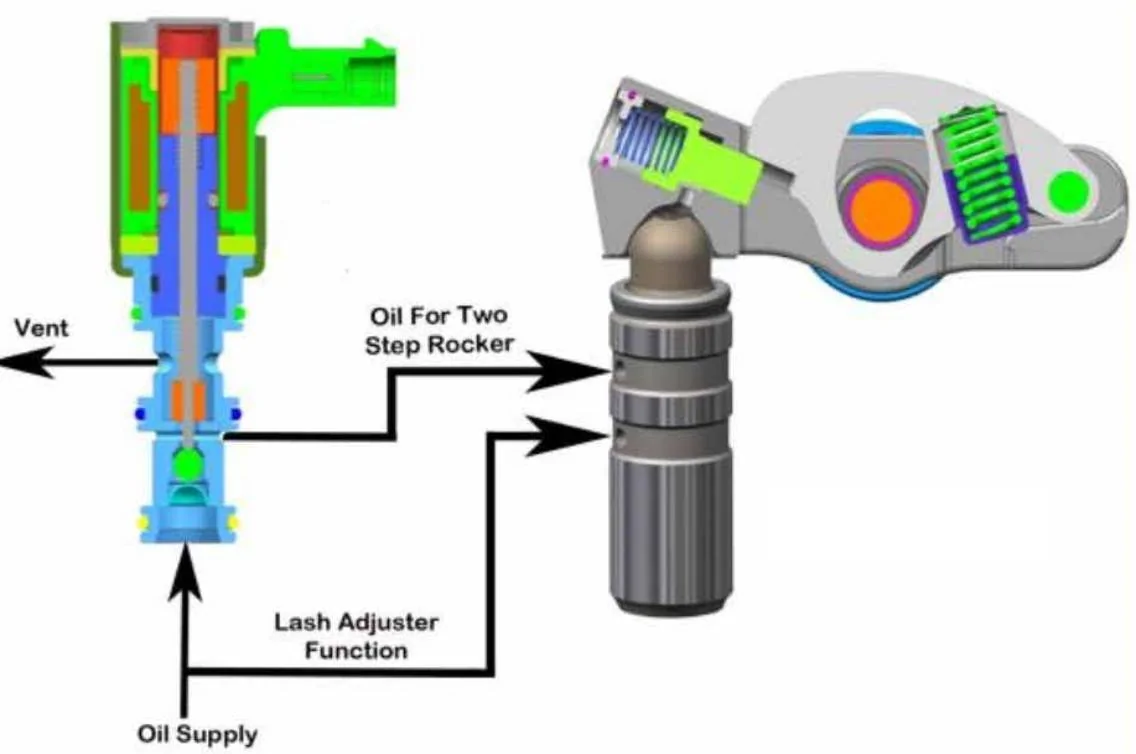
Low RPM under a load may also cause it to kick into high lift mode - while it's running the oil pump in low volume mode. Not that it's a scientific fact that's a problem, but...........
 

ShadowsPapa

Well-Known Member
First Name
Bill
Joined
Oct 12, 2019
Threads
247
Messages
40,445
Reaction score
53,880
Location
Runnells, Iowa
Vehicle(s)
'25 JTMX, '23 JLU 4xe, '82 SX4, '73 Javelin
Occupation
Retired auto mechanic, frmr gov't ntwrk security admin
Vehicle Showcase
3
That‘s something I was wondering and hopefully somebody here knows for sure…Are the 2 cams exactly the same? I.e. the same part number? Or are they different?

If they’re different than I can believe it is a manufacturing defect.
The cam profiles have to be different as they hit the follower or rocker at a different point - different distance - from the fulcrum or lash adjuster when comparing left to right.
 

Hootbro

Well-Known Member
First Name
Don
Joined
Apr 13, 2019
Threads
57
Messages
10,185
Reaction score
19,952
Location
Delaware
Vehicle(s)
2025 Gladiator Sport
Might be of interest to some, but the below thread is from the JL side of a guy last Friday starting and documenting replacing all 4 cams on both banks to include lifters and rockers. Only symptoms was a slight tick that just started at 127K miles

He is currently about 90% done but so far, the only thing I see of note is LH Intake cam side lifters having some wear but all the cams look great. It is a data point of one but almost looks like a VVL intake lifter issue first that then takes out the cams.

Another thing of note is that his replacement cams are of recent production and from Mexico origin.

https://www.jlwranglerforums.com/forum/threads/it’s-that-time…127-000-mile-3-6l-penstar-work.152366/
 

ShadowsPapa

Well-Known Member
First Name
Bill
Joined
Oct 12, 2019
Threads
247
Messages
40,445
Reaction score
53,880
Location
Runnells, Iowa
Vehicle(s)
'25 JTMX, '23 JLU 4xe, '82 SX4, '73 Javelin
Occupation
Retired auto mechanic, frmr gov't ntwrk security admin
Vehicle Showcase
3
the only thing I see of note is LH Intake cam side lifters having some wear but all the cams look great.
Lifters or lash adjusters?
Or rockers/followers?
Asking as the lash adjusters, which some call lifters, don't actually move in the bores, the only wear might be the tips where the follower/rocker runs on it.

There's a TSB for tick caused by lash adjusters...........
 

Sponsored

Commodus

Well-Known Member
First Name
Buck
Joined
Aug 11, 2019
Threads
22
Messages
662
Reaction score
719
Location
San Diego, Ca.
Vehicle(s)
Hydro Blue Gladiator, BMW X3
Occupation
Retired
Vehicle Showcase
2
What about those of us who are past the 100,000 or Those who already replaced the cams and adjusters themselves ?
When Porsche was forced to settle their engine failure law suite it covered a refund to those that had to pay out of pocket for a new engine. As far as over 100,000 how long do you expect an engine to last?
 

Hootbro

Well-Known Member
First Name
Don
Joined
Apr 13, 2019
Threads
57
Messages
10,185
Reaction score
19,952
Location
Delaware
Vehicle(s)
2025 Gladiator Sport
Lifters or lash adjusters?
Or rockers/followers?
Asking as the lash adjusters, which some call lifters, don't actually move in the bores, the only wear might be the tips where the follower/rocker runs on it.

There's a TSB for tick caused by lash adjusters...........
I guess the lash adjusters. Whatever engages the cam lobes on high lift. I get them mixed up.
 

ShadowsPapa

Well-Known Member
First Name
Bill
Joined
Oct 12, 2019
Threads
247
Messages
40,445
Reaction score
53,880
Location
Runnells, Iowa
Vehicle(s)
'25 JTMX, '23 JLU 4xe, '82 SX4, '73 Javelin
Occupation
Retired auto mechanic, frmr gov't ntwrk security admin
Vehicle Showcase
3

Lost1wing

Well-Known Member
First Name
Tim
Joined
Dec 22, 2020
Threads
24
Messages
2,609
Reaction score
2,860
Location
West Georgia
Vehicle(s)
2020 Jeep Gladiator Rubicon
Occupation
Retired AMT
The cam profiles have to be different as they hit the follower or rocker at a different point - different distance - from the fulcrum or lash adjuster when comparing left to right.
When Porsche was forced to settle their engine failure law suite it covered a refund to those that had to pay out of pocket for a new engine. As far as over 100,000 how long do you expect an engine to last?
Several of my engines are 300k-400k miles. Not one of those are variable valve timing motors. That being said, I have had 289's 350's and 302's that needed major work below 100k. Those were leaded fuel and conventional oil days. Things have improved over the years, but I think the more moving parts, the more failures we are going to have.
 

ShadowsPapa

Well-Known Member
First Name
Bill
Joined
Oct 12, 2019
Threads
247
Messages
40,445
Reaction score
53,880
Location
Runnells, Iowa
Vehicle(s)
'25 JTMX, '23 JLU 4xe, '82 SX4, '73 Javelin
Occupation
Retired auto mechanic, frmr gov't ntwrk security admin
Vehicle Showcase
3
Several of my engines are 300k-400k miles. Not one of those are variable valve timing motors. That being said, I have had 289's 350's and 302's that needed major work below 100k. Those were leaded fuel and conventional oil days. Things have improved over the years, but I think the more moving parts, the more failures we are going to have.
I took a gen 1 AMC 287 to 220,000 miles without opening it up.
The guy I sold that car to hammered on it hard, raced it, and parked it - unknown reason.
I tore up 2 transmissions but the engine was fine when i had it.
Leaded fuel was an issue for deposits........ gray gunk in the oil, build-up on the valves and so on.
Of course we can also blame the umbrella type valve seals for part of that issue. Oil got pushed down the valve guides of both intake and exhaust valves - where it burned, but was a cold burn and left a lot of deposits on the valves (sometimes blocking flow, or a piece would break off and hold the valve open a bit, allowing it to burn)
Those days are pretty much gone.
 

Sponsored

Lost1wing

Well-Known Member
First Name
Tim
Joined
Dec 22, 2020
Threads
24
Messages
2,609
Reaction score
2,860
Location
West Georgia
Vehicle(s)
2020 Jeep Gladiator Rubicon
Occupation
Retired AMT
Yes! Better oil and unleaded fuel helped a lot on those old engines, with of course updated heads to go with it.
I was happy to see EFI but somewhere they crossed the line with VVT and went backwards. The idea is awesome but not for the longevity of an engine. For most who trade in every Couple of years really don't care and will swear up and down how great an engine it was.

Pre 86 5.0 Ford was a good engine. It wore out cams pretty quick though. After 86 Ford came out with roller rockers. It saved the cams until they failed and took out the cam. Sound familiar? By the time I had my 88 5.0l, they had updated the rockers. My 91 Crown Vic had the same 5.0l and lasted over 350k miles.

I don’t expect a cam to be the fix on our 3.6. More than likely a rocker that can put up with the cam lobes is needed.
 

ShadowsPapa

Well-Known Member
First Name
Bill
Joined
Oct 12, 2019
Threads
247
Messages
40,445
Reaction score
53,880
Location
Runnells, Iowa
Vehicle(s)
'25 JTMX, '23 JLU 4xe, '82 SX4, '73 Javelin
Occupation
Retired auto mechanic, frmr gov't ntwrk security admin
Vehicle Showcase
3
and unleaded fuel helped a lot on those old engines, with of course updated heads to go with it.
In the late 70s and through the 1980s, we resolved a big head issue by knurling the valve guides, machining the top of the guide and installing "positive valve seals", scrapping the umbrella seals (scrapping the o-ring in the retainer for SBC engines)

Some engines didn't require any other mods for unleaded. AMC, for example, was among those. No need for hardened seats. People have put many hundreds of thousands of miles on original engines with no valve seat retreating or excessive valve wear.
It was a common practice to put hardened seats in heads when people switched to unleaded - but it wasn't as necessary as originally thought for some engines.
When I rebuilt the 390 in the 70 I had, the machine shop even asked if I wanted new seats "not needed, but we'll do it if you want".
I didn't work on many Chevies after the mid-1980s so I can't say how those, or Fords, faired.
 

Lost1wing

Well-Known Member
First Name
Tim
Joined
Dec 22, 2020
Threads
24
Messages
2,609
Reaction score
2,860
Location
West Georgia
Vehicle(s)
2020 Jeep Gladiator Rubicon
Occupation
Retired AMT
283's and 327's had to have valve seats, but I don’t recall the later 350's needing it. I was looking online to see when unleaded came out and surprised to discover that unleaded was the first gasoline. They started adding lead in 1950 and faded it out in the 80's.

Found this clip in the article and now I know where my troubles originated.
"These efforts were rewarded when a study in 2002 found that lead levels in children had dropped by 80 percent from 1976 to 1999 in the United States. Also, children with less lead in their blood had higher IQs and greater economic productivity. In 2008, the EPA reduced the acceptable amount of lead again to 0.15 parts per million. This is about 10 times less than the amount allowed in the 1970s."
 

Stan H

Well-Known Member
First Name
Stanley
Joined
Oct 26, 2022
Threads
10
Messages
5,500
Reaction score
5,482
Location
WV
Vehicle(s)
Gladiator Rubicon 2021
Occupation
Safety Consultant
When Porsche was forced to settle their engine failure law suite it covered a refund to those that had to pay out of pocket for a new engine. As far as over 100,000 how long do you expect an engine to last?
The length of the corrosion warranty at least geesh they gaurantee the body free from corrosion ( which has been a joke) but not the engine and transmission??? Geesh !! How about knowing the thing will last through the car loan process 🤔 😂 how's that for a novel thought. Which is generally 5-6 yrs. Miles completely aside.
I have 129k on mine it has done well , transmission is wonky and is getting replaced on the 14th this month but the motor seems strong but who knows right ?
 

Stan H

Well-Known Member
First Name
Stanley
Joined
Oct 26, 2022
Threads
10
Messages
5,500
Reaction score
5,482
Location
WV
Vehicle(s)
Gladiator Rubicon 2021
Occupation
Safety Consultant
That is what makes no sense. You are the person that I would expect to see cam issue earlier than most. Then you see the exact opposite style driver with issues very early on. What we do have in common is the warm up period. My warm up may be not as long as one would think. Start and drive idling to the highway is what I do mostly. It is at least one minute of idling. Then I try and keep it under 3k, until engine temp rises.

I did have a tapping noise on start up last week. It was after 2 weeks of sitting. It hasn't done it since. But it made me think about it.
In the winter mine idles for about 10-15 min. Every single morning on remote start up temps really plummet here . With the 70°mornings as of late about 5 min.
I have had this tick and guess what it was ???
Was an injector sorta hanging lagging sticking whatever the term is.
Solved by dumping seafoam in the fuel every now and then and its gone.
Used to work 2 weeks on and 2 weeks off . It would set for 2 weeks and get gummy and stiff. Now for last 2 yrs I have worked every day except a week at Thanksgiving ( drove it hunting everyday) and a week at Christmas . It sat the whole time.
I am having my transmission replaced . And after that it is new coil packs, plugs, and injectors. Yeah Baby !!! 🎯 :jk: :rock:
Sponsored


Top