Sponsored

troverman

Well-Known Member
Joined
Mar 31, 2023
Threads
7
Messages
114
Reaction score
84
Location
NH
Vehicle(s)
2022 Jeep Gladiator
Mishimoto has a aluminum radiator and a upgraded trans cooler. Pricy, yeah, but their quality is second to none and these are bolt in applications

https://www.mishimoto.com/performance-aluminum-radiator-jeep-gladiator-2020.html

https://www.mishimoto.com/jeep-gladiator-performance-transmission-cooler-2020.html

I've owned several late model Ford Super Duty diesel trucks. On the 2011-2016 Super Duty with the 6.7L Powerstroke, the radiator tanks are known the crack. A lot of people put very expensive and nice looking Mishimoto upgrade radiators into their trucks thinking the problem would be solved, but these radiators cracked as well and Mishimoto would not stand behind their product...I'm not sure I'd say their quality is second to none.
Sponsored

 
OP
OP
Gren71

Gren71

Well-Known Member
First Name
Matt
Joined
Jul 9, 2019
Threads
143
Messages
4,004
Reaction score
6,391
Location
Delaware
Vehicle(s)
Jeep JT sports S Max Tow (Sold) '23 Ram 1500
Occupation
Magician
Vehicle Showcase
1
Have you considered using a manometer setup to evaluate the pressure differential. This is often done in aircraft (specifically experimental or homebuilt aircraft) to make sure that the altimeter will function properly. You can build your own using plastic tubing and water. Google altimeters and manometers and you will probably get a lot of information. If that fails, try the Experitmental Aricraft Association website or Kitplanes magazine.
I have not considered this! I have it opened as a tab now to read into a bit. Thanks!
 
OP
OP
Gren71

Gren71

Well-Known Member
First Name
Matt
Joined
Jul 9, 2019
Threads
143
Messages
4,004
Reaction score
6,391
Location
Delaware
Vehicle(s)
Jeep JT sports S Max Tow (Sold) '23 Ram 1500
Occupation
Magician
Vehicle Showcase
1
These alternators do have a clutch.
Otherwise, if you stop sending, or reduce the current through the rotor - the field winding, you take the load off the belt.
I have a test bench I made for testing alternators I repair and restore - I can run them at light load, or full-field the rotor and almost stop the electric motor running the alternator.
The alternator is only a load if it's producing current - and at light electric load - batteries fully charged or nearly fully charged, lights off, AC off, etc. it's only producing enough to operate the basic systems and keep the voltage stable. Light load, fractional HP.
Kick that big fan on and it's drawing current, dropping system voltage, PCM regulates the current to the field coil (rotor) to keep the voltage up and the load increases on the alternator.
An alternator can actually operate with no drain on the engine other than what it takes to spin the rotor inside, or it can pull some horsepower - you can do the math as HP is also measured in watts.
For sake of simplicity and argument, say the normal system voltage on a vehicle is 13 volts (that's pretty darned close really)
If 1 HP is 745 watts, that means if the alternator is putting out 57 amps it's pulling 1 horsepower from the engine (very rough figures - I'm rounding, there are frictional losses from the belt and bearings and heat losses and so on)
So if the fan is pulling 800 watts, it's pulling over 1 hp. Turn the fan off and you save 1 horsepower of drain on the engine.
So when driving on the highway and there's adequate air flow and the heat rejection of the engine is such that it's pretty well balanced - BTUs from the engine are being discarded by the cooling system without the fan, then you save 1HP.
Mechanical fans would be pulling air through and taking that horsepower no matter what - needed or not. It's always a drain of power. It's why flex fans, thermostatic clutches and other devices were created in the late 60s and through the 80s - to save HP drain. when the fan clutch was hot the viscous fluid would force the fan to spin, when it cooled off enough, it let loose and the fan wasn't forced to spin.

Anyway, the fan is thermostatically controlled - it shuts off when not needed.
When the fan is off, the alternator output can be reduced - by the PCM cutting the field current.
It's easier on the old systems of constant voltage regulation where it was regulated at a set voltage of roughly 14 volts. When a load came on, it dropped the voltage because it was pulling current - the regulator tried to keep it at 14 volts and did so by increasing the field current to increase the output of the alternator which increased the load on the engine.
Full-field an alternator on a 1980 Chevy and listen to the engine draw down, the belt squeal and the alternator hum. Pull the field wire and the only load on the engine is what it takes to spin the rotor in the bearings - almost nothing at all.

You can measure the horsepower of a small engine using a generator and a amp meter, volt meter and carbon pile - increase the field current on the generator until you all but kill the engine - read the voltage and amperage the generator is putting out, calculate the wattage and you get the horsepower.
"These alternators do have a clutch."

This was an entirely new bit of info for me! Had no idea, I just sorta assumed similar to @Freems .
 
OP
OP
Gren71

Gren71

Well-Known Member
First Name
Matt
Joined
Jul 9, 2019
Threads
143
Messages
4,004
Reaction score
6,391
Location
Delaware
Vehicle(s)
Jeep JT sports S Max Tow (Sold) '23 Ram 1500
Occupation
Magician
Vehicle Showcase
1
I like the concept of actual measurements - but where are you going to measure and what are you going to compare.
To be accurate, your "testing" would need to be done at the exact same speed in the exact same direction with the exact same wind speed and direction. With winds being variable in direction and speed (at least around here) it would be difficult. An hour between tests can make a big difference due to winds, air pressure changes, air temperature changes and so on. So you'd need to be fast
You'd need to monitor the fan - is the fan on or off?
What is the goal - what's being monitored?

You would need to be measuring the pressure at the front of the radiator as the differences in pressure between the front and the back should be constant - that's a function of the resistance to air flowing through the radiator. The radiator should drop a certain amount of pressure regardless of air flow.
Air flow - such as measured in the engine air intake, would seem to make the most sense to measure, the more I think about it.
Between the radiator and fan there should be low pressure. Behind the fan should be higher pressure.
Maybe measure between fan and radiator to see if that pressure is increased by increased air forced through the radiator, which would require increased pressure ahead of the radiator.

Just tossing things out, thinking aloud while eating and getting ready to go get gas and spend the rest of the afternoon mowing........
Slowly catching up on posts.

This is sort of where my head is with the idea of using a manometer, or other device, to measure both air flow rates and/or pressure on both sides of the radiator. Ill keep rolling this through my head and see what I can find. Im still gathering my baseline data points with normal driving and towing so we have a good base to compare any changes against.

I haven't gotten an email saying the insert pieces have shipped yet, so we have time before Ill be making the swap. Its also been suggested to me to purchase the entire new grill, and not just the inserts. Which is an expense i have to take a good look at.
 
OP
OP
Gren71

Gren71

Well-Known Member
First Name
Matt
Joined
Jul 9, 2019
Threads
143
Messages
4,004
Reaction score
6,391
Location
Delaware
Vehicle(s)
Jeep JT sports S Max Tow (Sold) '23 Ram 1500
Occupation
Magician
Vehicle Showcase
1
Ive been away for nearly a week and was operating outside of the experiment parameters. But I was able to record some data points and have / will add them to the first post. Ill keep recording more as I go to try and get a good baseline.
 

Sponsored

dmwphoto

Well-Known Member
First Name
Dave
Joined
Feb 4, 2023
Threads
10
Messages
387
Reaction score
565
Location
Longs, SC
Vehicle(s)
2022 Jeep Gladiator Overland
Occupation
Retired
I wouldn't buy a new grill just for the purposes of this experiment. If you really want one, the is different.
 
OP
OP
Gren71

Gren71

Well-Known Member
First Name
Matt
Joined
Jul 9, 2019
Threads
143
Messages
4,004
Reaction score
6,391
Location
Delaware
Vehicle(s)
Jeep JT sports S Max Tow (Sold) '23 Ram 1500
Occupation
Magician
Vehicle Showcase
1
I wouldn't buy a new grill just for the purposes of this experiment. If you really want one, the is different.
yea, thats were I sort of pause when I look at it. I have NO desire for the new grill...I dont care for the way it looks. But I am a sucker for an experiment and trial and error :movember:
 

ShadowsPapa

Well-Known Member
First Name
Bill
Joined
Oct 12, 2019
Threads
247
Messages
40,442
Reaction score
53,860
Location
Runnells, Iowa
Vehicle(s)
'25 JTMX, '23 JLU 4xe, '82 SX4, '73 Javelin
Occupation
Retired auto mechanic, frmr gov't ntwrk security admin
Vehicle Showcase
3
I wouldn't buy a new grill just for the purposes of this experiment. If you really want one, the is different.
If I had the $$ I'd buy one because I like the looks and for better winch clearance. I did run the cable out the side of the winch, but still if removing a grill for other work, the extra clearance would be nice - and I like the looks.
They don't do grill re-designs just for kicks so I have to wonder - why spend the money on design and engineering?
 
OP
OP
Gren71

Gren71

Well-Known Member
First Name
Matt
Joined
Jul 9, 2019
Threads
143
Messages
4,004
Reaction score
6,391
Location
Delaware
Vehicle(s)
Jeep JT sports S Max Tow (Sold) '23 Ram 1500
Occupation
Magician
Vehicle Showcase
1
@azaustin and @ShadowsPapa

Taking a look at these monometers and wrapping my head around this.

They measure static pressure in inWC, mmWC, mbar, and PSI. They and are intended for measuring the pressure of air moving inside AC ductwork. As far as I can see they SHOULD work as a tool to measure the pressure difference between the front and the rear of the radiator. But I have some issues with it.

First is how to I gather the data when the tools are meant to be hand held. Thankfully the manufacturer seemed to have solved this for me in that they have a system called job link that links the meters to my phone via bluetooth. Watching some videos it looks like I should be able to record data as long as I can attach the two different devices in their respective locations.

Next is the variables of the readings. Measuring airflow with any of the available options seems doable, but what pressures are we looking at? Im not sure what pressures Id see while driving and im thinking that if I were to gather data while moving the pressures would be higher than the available range. This makes me wonder if I could maybe to a static test of sorts. IF I were to do a static test, just off the top of my head, I would probably use a and test that fan with the meter to see what its output was. Then use that fan on the front of the JT with the meters in place in front of, and behind, the radiator. There would still be variables here, like ambiant temperature / wind / barometric pressure / ect. I know things like baro pressure are getting WAY into the weeds here..but like I said this is just off the top of my head.

Some links for what I am seeing.

https://www.fieldpiece.com/product/jl3km2-job-link-system-dual-port-manometer-probe-kit/

https://www.fieldpiece.com/product-category/job-link-system/


ShadowsPapa

Well-Known Member
First Name
Bill
Joined
Oct 12, 2019
Threads
247
Messages
40,442
Reaction score
53,860
Location
Runnells, Iowa
Vehicle(s)
'25 JTMX, '23 JLU 4xe, '82 SX4, '73 Javelin
Occupation
Retired auto mechanic, frmr gov't ntwrk security admin
Vehicle Showcase
3
@azaustin and @ShadowsPapa

Taking a look at these monometers and wrapping my head around this.

They measure static pressure in inWC, mmWC, mbar, and PSI. They and are intended for measuring the pressure of air moving inside AC ductwork. As far as I can see they SHOULD work as a tool to measure the pressure difference between the front and the rear of the radiator. But I have some issues with it.

First is how to I gather the data when the tools are meant to be hand held. Thankfully the manufacturer seemed to have solved this for me in that they have a system called job link that links the meters to my phone via bluetooth. Watching some videos it looks like I should be able to record data as long as I can attach the two different devices in their respective locations.

Next is the variables of the readings. Measuring airflow with any of the available options seems doable, but what pressures are we looking at? Im not sure what pressures Id see while driving and im thinking that if I were to gather data while moving the pressures would be higher than the available range. This makes me wonder if I could maybe to a static test of sorts. IF I were to do a static test, just off the top of my head, I would probably use a and test that fan with the meter to see what its output was. Then use that fan on the front of the JT with the meters in place in front of, and behind, the radiator. There would still be variables here, like ambiant temperature / wind / barometric pressure / ect. I know things like baro pressure are getting WAY into the weeds here..but like I said this is just off the top of my head.

Some links for what I am seeing.

https://www.fieldpiece.com/product/jl3km2-job-link-system-dual-port-manometer-probe-kit/

https://www.fieldpiece.com/product-category/job-link-system/


Now the real trick - what to measure, where to measure, and what do the results really mean, if anything.

Keep in mind the radiator (and with that, any other heat exchange device in the same path) is resistance to air flow, a drop in pressure.
For air flow, you'd have an increase of velocity through the radiator, and a change in pressure through the radiator. (will it be a sort of venturi?)
Can you even increase the air flow through the radiator? Or has it reached a point where the stock grill gives enough flow that the weakest link is now flow through the radiator and it just can't handle more flow without increasing the pressure in the front beyond what highway driving would provide?
I ran into fun figures with my grain drying equipment - in the bin grain drying. You had a huge blower forcing air into a plenum chamber under the floor, the floor was perforated to allow air through, then the grain pressure above the floor........ at what point did the size and ability of the blower no longer matter because the floor and grain resisted air flow - you'd simply keep building pressure under the floor without increasing the flow.

Again, just tossing random thoughts out there.
I would think one place to measure pressure would be between fan and radiator. IF there's not enough air getting to the front of the rad, then the fan will draw a low pressure. Assuming the radiator could flow more air and the restriction is in the amount of air getting to it, you should see a pressure increase between fan and radiator with better air flow up front.

Real scientists can either support the above or blow so many holes in it a microscope can no longer detect it.
 

Sponsored

azaustin

Well-Known Member
First Name
Willliam
Joined
Apr 11, 2021
Threads
7
Messages
61
Reaction score
37
Location
Lake Havasu City Arizona
Vehicle(s)
2021 Jeep Gladiator Rubicon Diesel, 2014 Ford Edge
Occupation
Retired
The process I was suggesting is very simple and can be done using clear plastic tubing and water. All you would be measuring would be a relative increase of decrease in pressure. However, I believe that inches of water can be converted to inches of mercury if necessary. The two things I have seen this used for are altimeter calibration and pressure drop across the cowl area of an airplane to test the airflow through the engine area. This has a big impact on how well air-cooled aircraft engines cool. Again, I would suggest you look at the Experimental Aircraft Association web site.
 

ShadowsPapa

Well-Known Member
First Name
Bill
Joined
Oct 12, 2019
Threads
247
Messages
40,442
Reaction score
53,860
Location
Runnells, Iowa
Vehicle(s)
'25 JTMX, '23 JLU 4xe, '82 SX4, '73 Javelin
Occupation
Retired auto mechanic, frmr gov't ntwrk security admin
Vehicle Showcase
3
My question would be - where's he going to measure and what's he going to measure.
And then - what do the results mean.

Measuring at the front of the grill - if the results were lower pressure ahead of the grill - is that because air is going through and not loading up in front of the grill?

If inserts were the thing - why did they not simply modify the inserts on day one to flow better. A flow bench would show instant results in minutes.
Actually, a flow bench would test grill inserts without any variables from being on the road.
Surprised someone hasn't already done that.
I know a guy that's tested heads, intakes and carburetors for years and it would take nothing to rig grill inserts up to test and instantly tell you if they flow better or not.

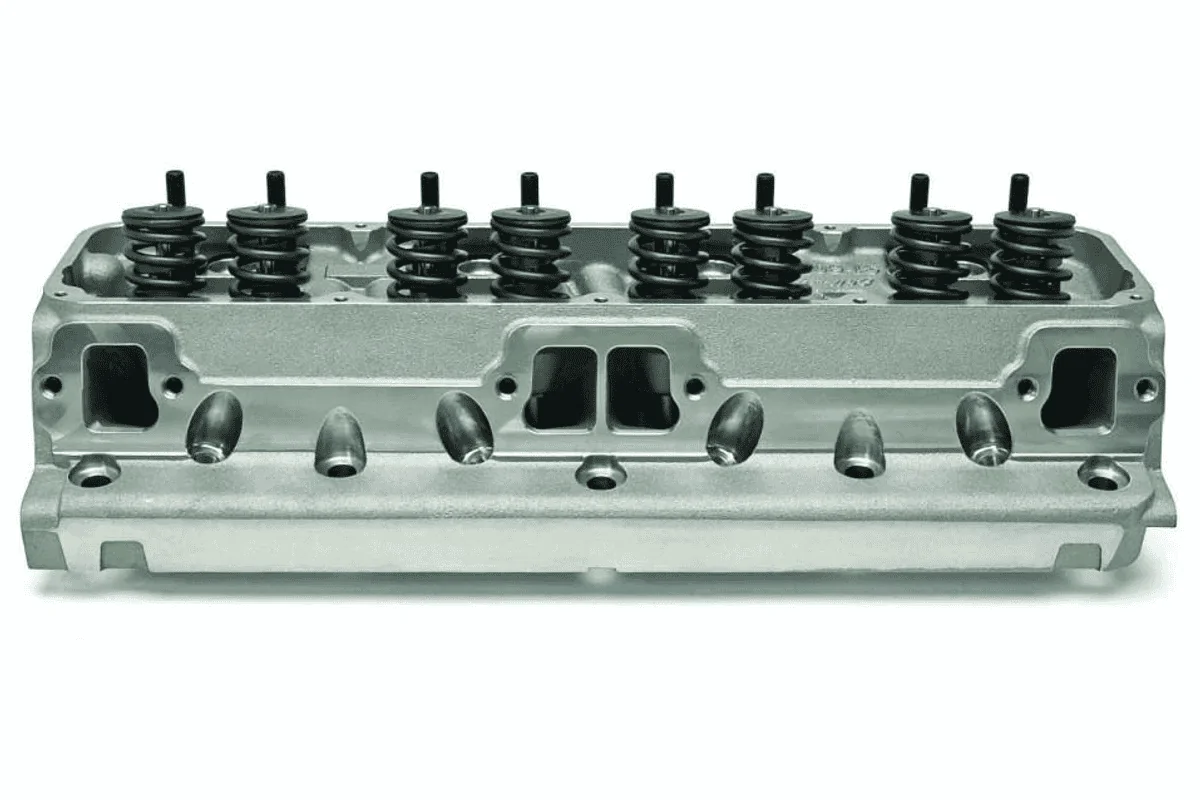
And talking about how shapes, not just sizes, impact air flow - back in 1969 a small auto maker came up with high performance high flowing heads by making a simple change to the exhaust ports - the dogleg head.
These flow 20% better than a rectangular port exhaust. Proven on a flow bench. The placement of the dogleg was critical. The heads are otherwise the same.

Shape matters, not just size. 20%, amazing.

Jeep Gladiator New 2024 grill insert experiment 1691509266904
 

GWolgamott

Well-Known Member
First Name
Guy
Joined
Jan 24, 2023
Threads
9
Messages
361
Reaction score
444
Location
West Michigan (LP)
Vehicle(s)
Jeep Gladiator
Occupation
Person sitting in the office under the stairs, behind the bathrooms... dispensing unreliable advice based on questionable numbers
These alternators do have a clutch.
Otherwise, if you stop sending, or reduce the current through the rotor - the field winding, you take the load off the belt.
I have a test bench I made for testing alternators I repair and restore - I can run them at light load, or full-field the rotor and almost stop the electric motor running the alternator.
The alternator is only a load if it's producing current - and at light electric load - batteries fully charged or nearly fully charged, lights off, AC off, etc. it's only producing enough to operate the basic systems and keep the voltage stable. Light load, fractional HP.
...
I can personally attest to what Shadows is saying here. My daily driver when driving in heat will sit in range somewhere around 190-200. If I drive it in a clay mud hole taxing it a bit you can watch the temperature jump of course. It will stay in range as it is pretty damn efficient, but the fan isn't even running until you'd stop afterwards. It would then only kick the fan on when not needing the extra hp and/or has hit a temperature near the upper end of the normal range.

It's the steam and smell from when the exhaust starts inadvertently baking clay pottery that makes you nervous for a split second, but not really ever worried about temperature. First split-second thought is usually #%@& what I'd break now, not did I overheat it.
 

GWolgamott

Well-Known Member
First Name
Guy
Joined
Jan 24, 2023
Threads
9
Messages
361
Reaction score
444
Location
West Michigan (LP)
Vehicle(s)
Jeep Gladiator
Occupation
Person sitting in the office under the stairs, behind the bathrooms... dispensing unreliable advice based on questionable numbers
Interested in the results of this experiment though. His bumper air deflector and tire experiments were of interest.
Sponsored


Top