Sponsored

Rear sway bar delete?

dcmdon

Well-Known Member
First Name
Don
Joined
Mar 31, 2021
Threads
60
Messages
3,656
Reaction score
4,427
Location
Boston Metro-West, Northern NH
Vehicle(s)
.
challenging to do back to back. that being said I drive my JT like my raptor and there is no noticeable difference. have you actually tried it on the JT?
Of course not. But I raced motorcycles and cars for years and am very familiar with adjusting roll stiffness and its impact on handling.

Based on my experience, it may not feel much different until you reach the limit of traction.

I'm pretty sure you didn't push your jeep until it actually started to slide.
Sponsored
 

shrinkhead

Well-Known Member
Joined
Dec 21, 2019
Threads
62
Messages
751
Reaction score
729
Location
Massachusetts
Vehicle(s)
Gladiator Launch Edition
I am def planning to reconnect it when I put the new lift on but am still surprised it is not noticeable and that the rear seemed quieter at moderate speed. I get your principal point though
 

Knox

Active Member
First Name
Keith
Joined
Feb 11, 2022
Threads
1
Messages
37
Reaction score
16
Location
North Bend
Vehicle(s)
2020 gladiator rubicon
Occupation
Engineer
You don’t disconnect the rear link, I thought. It’s been shown that it decreases articulation at the front
Please politely correct me if I’m incorrect, but I don’t understand why we would want to reduce rear wheel articulation in order to increase front wheel articulation. While it makes sense that having a rear sway bar increases front wheel articulation, articulation isn’t the goal. Rather the goal is to keep all four tires on the ground. Minimizing rear wheel articulation in order to increase front wheel articulation doesn’t do anything to keep all four wheels on the ground. Does it?
 

LostWoods

Well-Known Member
Joined
Mar 13, 2020
Threads
15
Messages
2,027
Reaction score
2,420
Location
Gilbert, AZ
Vehicle(s)
2024 4Runner / 1995 YJ
Please politely correct me if I’m incorrect, but I don’t understand why we would want to reduce rear wheel articulation in order to increase front wheel articulation. While it makes sense that having a rear sway bar increases front wheel articulation, articulation isn’t the goal. Rather the goal is to keep all four tires on the ground. Minimizing rear wheel articulation in order to increase front wheel articulation doesn’t do anything to keep all four wheels on the ground. Does it?
It's a common misconception because of the physics of an RTI ramp.

When you articulate hard on just one corner with no rear sway bar, you are causing a massive weight shift to the opposite side. The vehicle is literally trying to tip and this will lift your ramp side rear tire. When you have a rear sway bar, the two springs on the axle are linked and compression on one side (the corner opposite the tire up the ramp) will additionally force compression on the other as well. This is why a race car will literally squat going into a corner instead of rolling excessively.

This forces more weight to the ramp side of the vehicle and it can force additional articulation out of the front until there is a mechanical stop.

However...

I got pinged to replies so I'm sure I said this elsewhere (and I think this is what you're implying), this whole thing only really applies to when you are articulating hard on one corner. There are often cases where you want articulation over uneven ruts or something to avoid getting crossed up and in this scenario, a rear sway bar is a hindrance because you aren't dealing with the weight transfer case.

So it's really situational when it's advantageous and when it's not. The second case here is why companies like metacloak push for the 2-corner measurement for articulation rather than simply driving up a ramp. Measuring the rig while flat measures the true articulation of the suspension while something like an RTI ramp is more prone to variance from rig weight and other pieces.
 

hjdca

Well-Known Member
Joined
Oct 27, 2019
Threads
9
Messages
1,733
Reaction score
2,494
Location
Southern California Mountains
Vehicle(s)
Jeep Gladiator Rubicon manual Sting Gray
Build Thread
Link
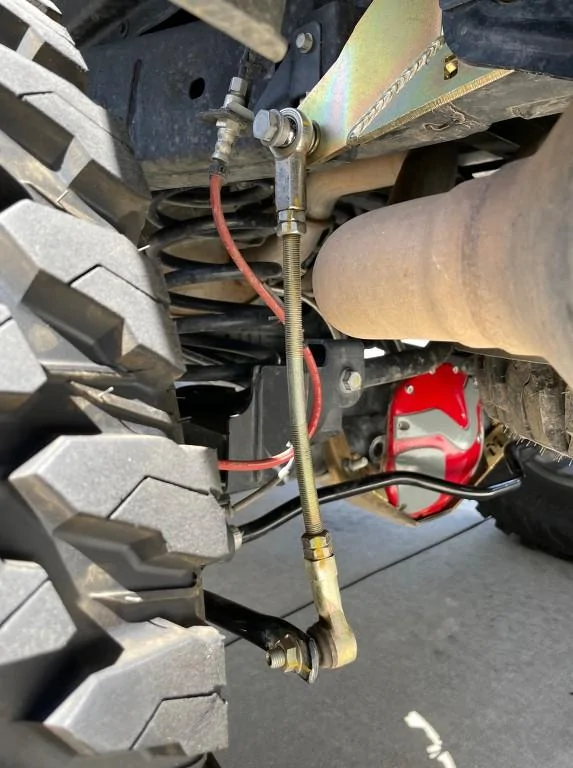
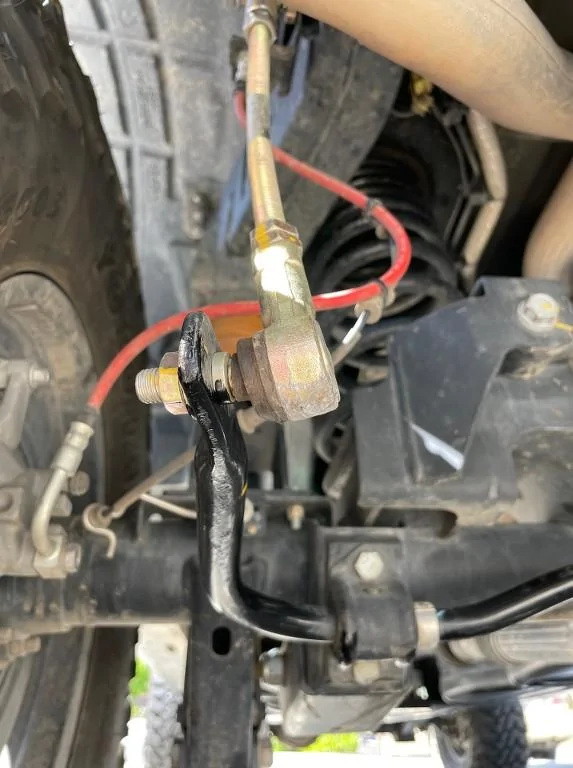
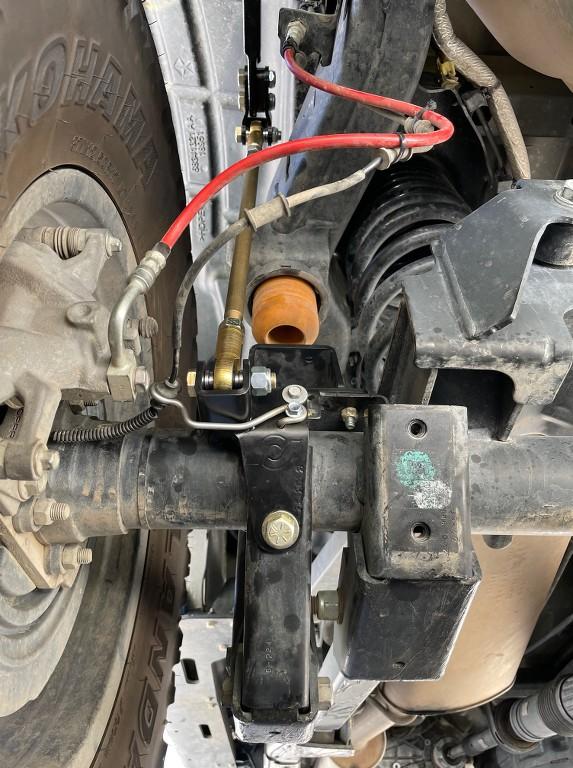
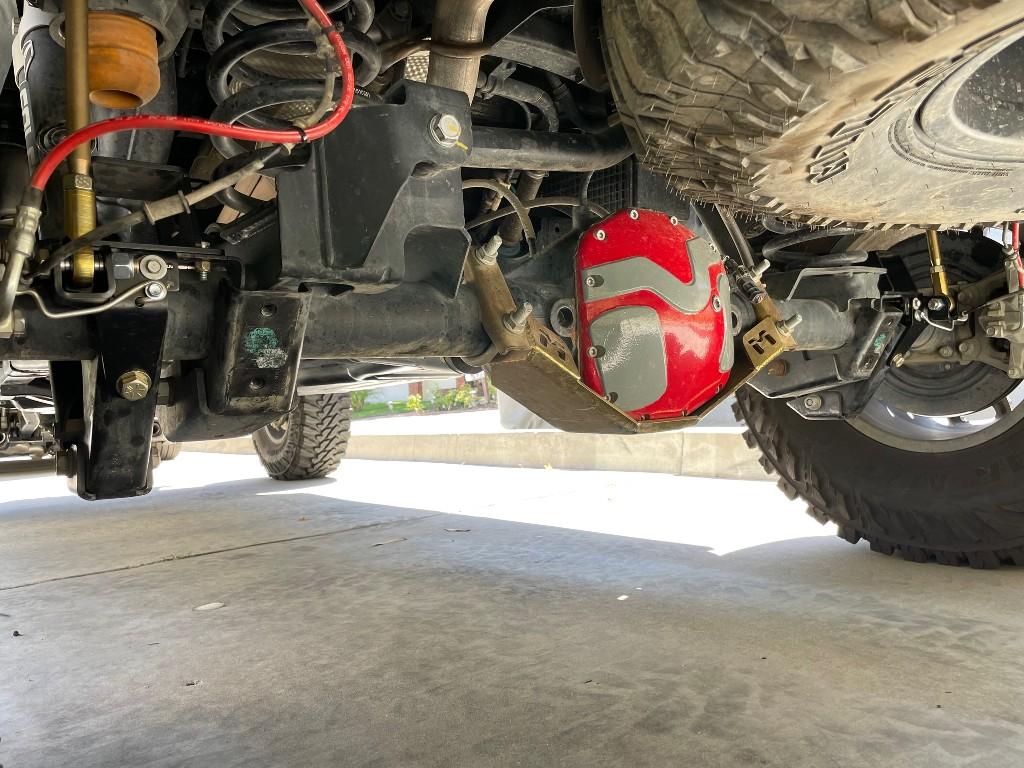
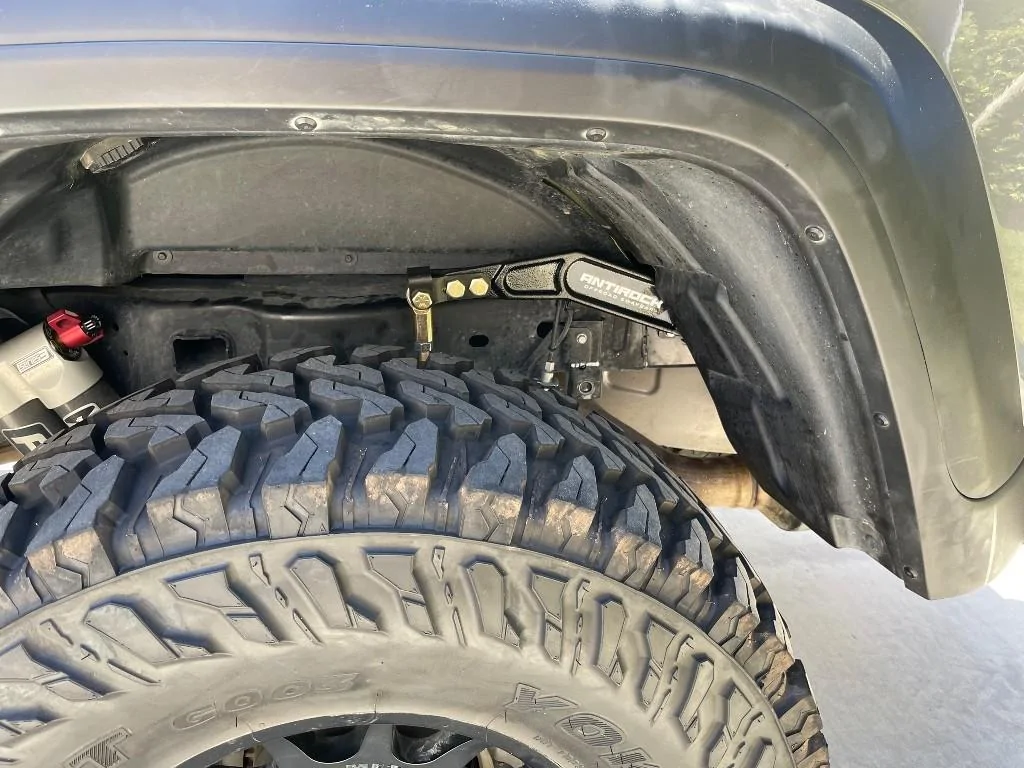
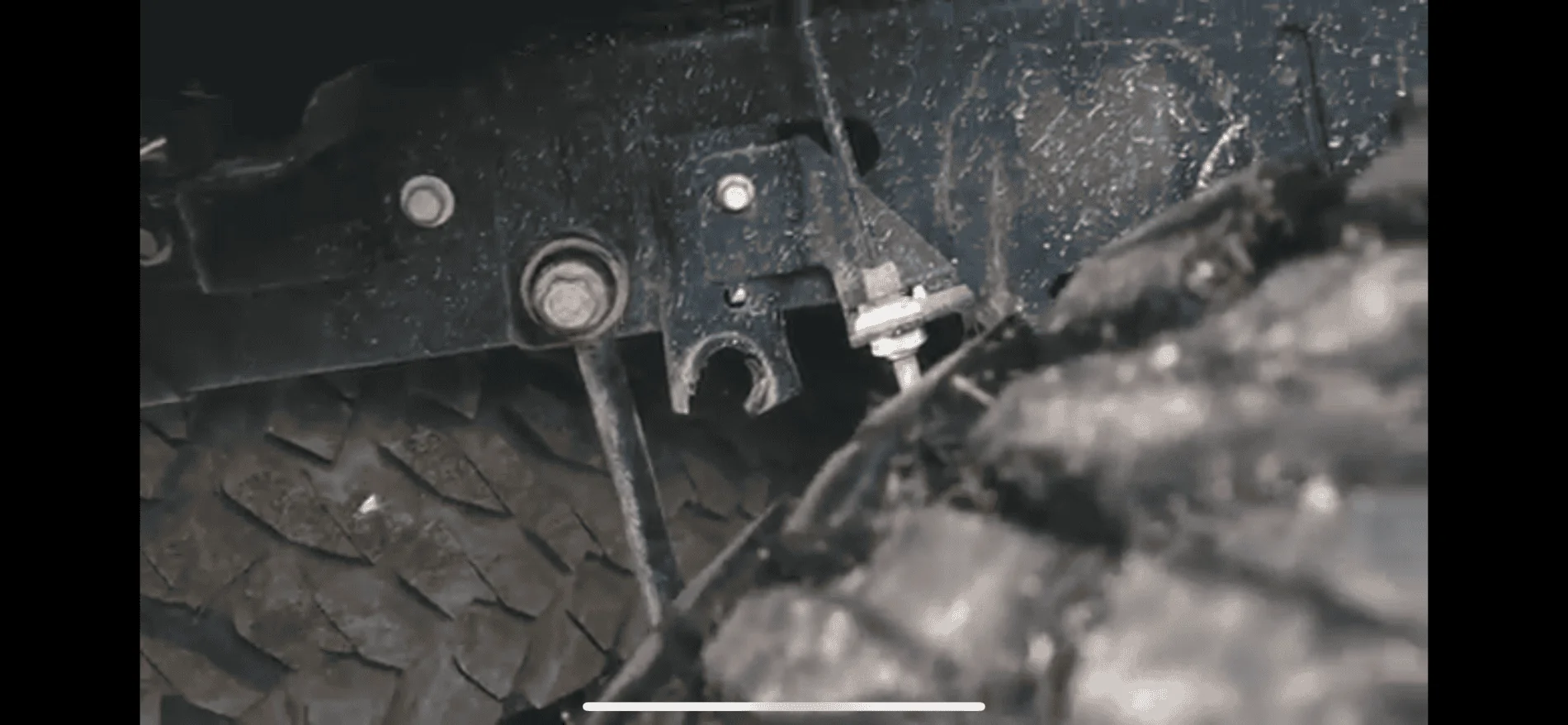
If you 4wheel a lot, expecially out west with all the rocks and boulders, the sway bar end links get constantly bent. Really not a good design for 4 wheeling. After fixing my bent end links many times, I went with the Rock Jock anti-rock torsion bar. I love how it works with my Clayton lift kit. Here are some pics.

Bent end links and sway bar tabs....

Jeep Gladiator Rear sway bar delete? sxgiGR


Jeep Gladiator Rear sway bar delete? Hc8DhJ


RockJock anti-rock torsion bar above the frame

Jeep Gladiator Rear sway bar delete? acaK1J


Jeep Gladiator Rear sway bar delete? 9y0M8o


Jeep Gladiator Rear sway bar delete? iZWJzP
 

Sponsored

Knox

Active Member
First Name
Keith
Joined
Feb 11, 2022
Threads
1
Messages
37
Reaction score
16
Location
North Bend
Vehicle(s)
2020 gladiator rubicon
Occupation
Engineer
It's a common misconception because of the physics of an RTI ramp.

When you articulate hard on just one corner with no rear sway bar, you are causing a massive weight shift to the opposite side. The vehicle is literally trying to tip and this will lift your ramp side rear tire. When you have a rear sway bar, the two springs on the axle are linked and compression on one side (the corner opposite the tire up the ramp) will additionally force compression on the other as well. This is why a race car will literally squat going into a corner instead of rolling excessively.

This forces more weight to the ramp side of the vehicle and it can force additional articulation out of the front until there is a mechanical stop.

However...

I got pinged to replies so I'm sure I said this elsewhere (and I think this is what you're implying), this whole thing only really applies to when you are articulating hard on one corner. There are often cases where you want articulation over uneven ruts or something to avoid getting crossed up and in this scenario, a rear sway bar is a hindrance because you aren't dealing with the weight transfer case.

So it's really situational when it's advantageous and when it's not. The second case here is why companies like metacloak push for the 2-corner measurement for articulation rather than simply driving up a ramp. Measuring the rig while flat measures the true articulation of the suspension while something like an RTI ramp is more prone to variance from rig weight and other pieces.
Thanks for the reply. Good info and goes along with my theory. I came across this thread after a sketchy off road experience. I’m curious to hear your thoughts. I drive a 2020 TJ Rubicon lifted 3.5” on 38s with a 135lb Alu-Cab canopy. This weekend I decided to remove my rear sway bar for a trail into a mountain lake similar to the Rubicon trail, perhaps not as extreme. There was a section of road where there was a steep drop many hundred feed down on one side. The trail went down into a rut and back up. I found myself feeling like I was going to roll when I was going uphill with one side lower than the other toward the steep bank. Would a rear sway bar have helped, or hurt in this situation. If the high center of mass is leaning heavily onto the right rear wheel, would a sway bar help prevent that corner from squatting?
 

Knox

Active Member
First Name
Keith
Joined
Feb 11, 2022
Threads
1
Messages
37
Reaction score
16
Location
North Bend
Vehicle(s)
2020 gladiator rubicon
Occupation
Engineer
If you 4wheel a lot, expecially out west with all the rocks and boulders, the sway bar end links get constantly bent. Really not a good design for 4 wheeling. After fixing my bent end links many times, I went with the Rock Jock anti-rock torsion bar. I love how it works with my Clayton lift kit. Here are some pics.

Bent end links and sway bar tabs....

sxgiGR.webp


Hc8DhJ.webp


RockJock anti-rock torsion bar above the frame

acaK1J.jpg


9y0M8o.jpg


iZWJzP.webp
Thanks. I like the RockJock, but I’m hesitant to drop that much dough on just the rear, and to ditch the rubicon front. But I’ll do what I need to do if it makes the difference. See my more recent response about my weekend and feeling scared on a cliff.
 

LostWoods

Well-Known Member
Joined
Mar 13, 2020
Threads
15
Messages
2,027
Reaction score
2,420
Location
Gilbert, AZ
Vehicle(s)
2024 4Runner / 1995 YJ
Thanks for the reply. Good info and goes along with my theory. I came across this thread after a sketchy off road experience. I’m curious to hear your thoughts. I drive a 2020 TJ Rubicon lifted 3.5” on 38s with a 135lb Alu-Cab canopy. This weekend I decided to remove my rear sway bar for a trail into a mountain lake similar to the Rubicon trail, perhaps not as extreme. There was a section of road where there was a steep drop many hundred feed down on one side. The trail went down into a rut and back up. I found myself feeling like I was going to roll when I was going uphill with one side lower than the other toward the steep bank. Would a rear sway bar have helped, or hurt in this situation. If the high center of mass is leaning heavily onto the right rear wheel, would a sway bar help prevent that corner from squatting?
That's exactly what the purpose of a sway bar is - to minimize excessive squat/roll on one side relative to the other in off-camber and cornering scenarios. If I were running something like that Alu-Cab I'd definitely be looking at the Hellwig rear bar to control the side to side that comes with all that weight above the beltline.

It's up to you whether you want to do disconnects for scenarios that need it but honestly, pulling the rear bar for me has been a get out of stuck solution and not something I roll around with normally. The benefits and stability of a rear bar on a truck in particular are too good to pass on for most trails.

What I posted above is more academic to prove a point than practical. IMO if you are twin locked then there is almost no reason to ever remove your rear bar. Worst case scenario it makes articulation more similar to an independent suspension that is more likely to lift but with a locker isn't really not an issue to cross up. For those like me who didn't option out a Rubicon and are waiting on Eaton to get off their ass, it was easy to pop the 4 bolts holding the bar to the axle and quickly strap it out of the way the one time I needed just a little more on the ground.
 

Sponsored

Knox

Active Member
First Name
Keith
Joined
Feb 11, 2022
Threads
1
Messages
37
Reaction score
16
Location
North Bend
Vehicle(s)
2020 gladiator rubicon
Occupation
Engineer
That's exactly what the purpose of a sway bar is - to minimize excessive squat/roll on one side relative to the other in off-camber and cornering scenarios. If I were running something like that Alu-Cab I'd definitely be looking at the Hellwig rear bar to control the side to side that comes with all that weight above the beltline.

It's up to you whether you want to do disconnects for scenarios that need it but honestly, pulling the rear bar for me has been a get out of stuck solution and not something I roll around with normally. The benefits and stability of a rear bar on a truck in particular are too good to pass on for most trails.

What I posted above is more academic to prove a point than practical. IMO if you are twin locked then there is almost no reason to ever remove your rear bar. Worst case scenario it makes articulation more similar to an independent suspension that is more likely to lift but with a locker isn't really not an issue to cross up. For those like me who didn't option out a Rubicon and are waiting on Eaton to get off their ass, it was easy to pop the 4 bolts holding the bar to the axle and quickly strap it out of the way the one time I needed just a little more on the ground.
Thank you again. I will re-install my OEM bar and save up for a Hellwig. I also have a 200lb Alu-Cab RTT that was not installed this weekend. I imagine the Hellwig is the right choice and would pair nicely with the heavy Rubicon front sway bar. A truck with canopy, RTT above the cab height, 3.5" lift, and 38s deflated to 18 PSI can be a recipe for disaster in certain situations.
 

ShadowsPapa

Well-Known Member
First Name
Bill
Joined
Oct 12, 2019
Threads
247
Messages
40,442
Reaction score
53,860
Location
Runnells, Iowa
Vehicle(s)
'25 JTMX, '23 JLU 4xe, '82 SX4, '73 Javelin
Occupation
Retired auto mechanic, frmr gov't ntwrk security admin
Vehicle Showcase
3
All the talk of trail makes me think no one cares about handling or safety getting to the trail, and back home again after.........

These are notes I made up years ago from my college texts and referencing our unofficial auto-cross events -

A softer rear bar:
1. Increases rear chassis roll
2. Increases rear grip or traction, while decreasing front grip or traction.
3. increases understeer (less oversteer)

A stiffer rear bar:
1. Decreases rear chassis roll.
2. Decreases rear traction, while increasing front grip or traction.
3. Faster steering response in high speed corners and chicanes.
4. decreases understeer (more oversteer)

What you are doing is changing the rate that weight gets transferred to a tire. The stiffer the sway bar, the faster the weight gets transferred to that wheel, and the sooner it reaches its limit and loses traction.

That is why a bigger front bar gives understeer, even though you think the opposite would happen. Yes, the bigger front bar gives a better camber pattern, allowing the tire to have a more efficient contact patch (i.e. it is less likely to roll over onto the shoulder). But, if you are transferring the weight to the front tire faster than to the rear, that front tire is going to lose traction faster.

So on highway conditions it would appear that if you had a situation where you really needed to steer and/or brake, having no rear sway bar would take the bit about a "softer rear bar" to the max, is that not correct?
In other words, when push came to shove, you'll go straight into trouble instead of being able to steer around it.
You may have gotten off of the boulders but died on the way home because it refused to go where you wanted it to?
 
Joined
Jan 21, 2021
Threads
7
Messages
22
Reaction score
18
Location
San Juan Mtns.
Vehicle(s)
2021 Gladiator Sport (x2)
Occupation
Jeep Tour Company owner/guide
I had to run with my rear sway bar disconnected due to the brackets ripping off the frame. I reinstalled it with the Metalcloak brackets but while it was disconnected, I didn't feel any real difference while wheeling. And just slightly more body roll on the highway.
 

hjdca

Well-Known Member
Joined
Oct 27, 2019
Threads
9
Messages
1,733
Reaction score
2,494
Location
Southern California Mountains
Vehicle(s)
Jeep Gladiator Rubicon manual Sting Gray
Build Thread
Link
I had to run with my rear sway bar disconnected due to the brackets ripping off the frame. I reinstalled it with the Metalcloak brackets but while it was disconnected, I didn't feel any real difference while wheeling. And just slightly more body roll on the highway.
Yeah, I had a couple of friends rip their brackets, and mine got bent a few times. It seems to me most of the damage to the rear sway bar end links happens at full compression. This is when the end links really hang down and can drag over boulders and rocks. With air-downed tires, full compression, you are basically lowering the endlinds at least 4 inches from level, so, you can see how they drag on the rocks/boulders.. I really like the Rock Jock anti-Rock and the Teraflex copy of the anit-rock is half the price and I believe the Teraflex bar may be stiffer, less roll, not sure, but, my friend has the Teraflex anti-rock with more of an overlanding rig and he really likes it also.
 

Escape.idiocracy

Well-Known Member
First Name
Rich
Joined
Jan 23, 2022
Threads
37
Messages
1,569
Reaction score
1,822
Location
PNW
Vehicle(s)
Jt
Occupation
Hitchhiker
All the talk of trail makes me think no one cares about handling or safety getting to the trail, and back home again after.........

These are notes I made up years ago from my college texts and referencing our unofficial auto-cross events -

A softer rear bar:
1. Increases rear chassis roll
2. Increases rear grip or traction, while decreasing front grip or traction.
3. increases understeer (less oversteer)

A stiffer rear bar:
1. Decreases rear chassis roll.
2. Decreases rear traction, while increasing front grip or traction.
3. Faster steering response in high speed corners and chicanes.
4. decreases understeer (more oversteer)

What you are doing is changing the rate that weight gets transferred to a tire. The stiffer the sway bar, the faster the weight gets transferred to that wheel, and the sooner it reaches its limit and loses traction.

That is why a bigger front bar gives understeer, even though you think the opposite would happen. Yes, the bigger front bar gives a better camber pattern, allowing the tire to have a more efficient contact patch (i.e. it is less likely to roll over onto the shoulder). But, if you are transferring the weight to the front tire faster than to the rear, that front tire is going to lose traction faster.

So on highway conditions it would appear that if you had a situation where you really needed to steer and/or brake, having no rear sway bar would take the bit about a "softer rear bar" to the max, is that not correct?
In other words, when push came to shove, you'll go straight into trouble instead of being able to steer around it.
You may have gotten off of the boulders but died on the way home because it refused to go where you wanted it to?
Has anyone contacted ORO?

I ran their SwayLoc setup on my JKU…. It’s firmer/stiffer than factory when locked, and whe unlocked it’s just as flexible as the antirock…..

It’s also great up front if you end up doing a frame chop! (We had 4” taken off the front…. Approach was outstanding!)

here is the front:
https://offroadonly.com/shop/swayloc/oro-swayloc-for-jeep-wrangler-jl-jt/
Sponsored


Top