Sponsored

Your battery voltage - truck off and at rest

OP
OP
ShadowsPapa

ShadowsPapa

Well-Known Member
First Name
Bill
Joined
Oct 12, 2019
Threads
247
Messages
40,442
Reaction score
53,859
Location
Runnells, Iowa
Vehicle(s)
'25 JTMX, '23 JLU 4xe, '82 SX4, '73 Javelin
Occupation
Retired auto mechanic, frmr gov't ntwrk security admin
Vehicle Showcase
3
Working through some RV battery issues gave me a thought - In all likelihood the batteries as installed at the factory are not at full charge. Most (battery) manufacturers recommend a full charge prior to putting a new battery into service. With the various parasitic loads as the truck winds its way from the plant to your hand the SoC is likely falling all the while. If you do not engage in long distance driving early during ownership, sufficient to get the battery to full SoC you may end up over discharging and damaging the battery. Such a damaged battery may function for some time albeit at reduced capacity. The service life however will be far less than had the battery been properly charged full.
Yes! You have echoed some thoughts I've had.
It's why I hate it when people say "I went out and bought new batteries and installed them"
NO! Don't do that!
Parts stores don't know crap about batteries.
They will not be fully charged - I don't give a rip what they say. Unless you call ahead and they put them on a correct and proper charger and charge them for hours, then you pick them up - they are not charged and ready. Oh, they'll start your truck - but it's not right.
Always fully charge each battery independently, reset the IBS, then install the batteries.
Otherwise, you are starting out with a handicap right out of the gate.

Your post hits on the reasons we see battery issues in some cases - they start out wrong.
Proper prep would be a full battery charge all day at the dealership before you even get the thing.
If you buy off the lot - it's just as bad or worse. It's been sitting with the parasitic loads for how long? Short "test drives".......batteries at 50% capacity or worse and if they are at low capacity for any period of time, the life and capacity of the battery is reduced.
It's about the number of lives the battery has - and it's capacity to take and hold a charge.
Never get it fully charged - you reduce its capacity.
Sitting at a reduced SoC - reduced the capacity.

I've added BOLD to the part of your message that is some of the most important. It's well said.
It's almost word-for-word what the better battery people state. It's the key.
Sponsored


 

Andy29847

Well-Known Member
First Name
Andy
Joined
Oct 25, 2020
Threads
14
Messages
552
Reaction score
934
Location
South Carolina
Vehicle(s)
2020 Wrangler Rubicon, 2020 Gladiator Rubicon
Occupation
Retired
Coincidental? What part of what I said?
No, I know what I'm doing and measuring.........
I know how these operate (besides being an automotive electrician)
and during an ESS stop event, the batteries are isolated. Note - that's when I said I measured the voltage with my fluke.

First - the truck's volt meter is measuring system voltage - not battery voltage, when the truck is running. It's measuring regardless of load or no load. There's going to be a load on these at all times because of the parasitic draws when it's shut off. There's going to be a load on these during ESS stop events because the aux battery supplies the electrical system at that time.
My next thing will be to run a second line - this time from the crank battery to the cabin, and use another meter to measure the crank battery voltage during an ESS stop event. It should, if it's fully charged, sit about 12.8 the entire time- because there will be ZERO draw or load on the crank battery during an ESS stop.

When it's in the middle of an ESS stop event, it's measuring the system voltage while the crank battery is disconnected or isolated from the rest of the system.
So my readings make total sense and prove that it is indeed measuring the voltage as available from the aux battery. Frankly, we needed no proof of that because the fact the voltage drops fairly quickly during a stop is proof enough.


Your conclusion that the dash voltmeter is measuring the aux battery voltage seems based on coincidental findings. First of all, at an ESS stop event, the batteries are isolated from each other, but not from the system. Any voltage measured from any point in the system will be affected by the load on the battery, no matter which battery you are monitoring. Consider that when I isolate the aux battery to measure it with my voltmeter, I disconnect the ground which also disconnects the load on the battery. I am measuring the battery with no load. The 2 voltages should NOT be the same.


I had my fluke connected to the aux battery yesterday.
That means it was measuring system voltage exactly as the truck measures it - exactly the same (save for possible minute differences due to wire sizes, miniscule voltage drop across connections, etc.) so it makes perfect sense my fluke showed what the cluster showed for voltage.
Then during an ESS stop event, my fluke still showed what the cluster showed because the cluster shows the voltage based on the AUX battery only, under load from the electrical system. That's because during ESS stops, the crank battery is disconnected from the vehicle's electric system by the PCR.
How do you do this without isolating the batteries from each other? This is a want to know question, not a Doubting Thomas question.


My ESS is ready after about 1 mile in warmer weather, about 1.5-2 miles in the 40 degree temps. Makes sense as the CATs and engine must warm up and that takes longer when it's colder out.

I'm heading out soon to measure the voltage with the truck off and at rest after having driven it a lot lately - but I'm expecting better numbers with this 2022 than I did my 2020.
I am also going to deal with my wife's Jeep since it's been sitting a lot and I'm sure the batteries are down to at least 12.4 or lower from the sitting - so I'll likely put my charger on it so when she drives it tomorrow, everything will be up to snuff.
12.4 seems to be the magic number for the system. I think I heard that from you first and I agree. My 2020 Wrangler is new to me. It will stay home when my wife and I go RVing with the Gladiator. I've asked Santa to bring me a trickle charger that I can leave connected to my Jeep while I'm gone. My only concern is having it on charge while parked in the garage.
 

BearFootSam

Well-Known Member
First Name
Jim
Joined
Oct 12, 2022
Threads
9
Messages
674
Reaction score
949
Location
PNW
Vehicle(s)
22' Gladiator Rubicon
Occupation
Fed
With all of these issues in mind, given that OEM's make much ado about a few kilo's weight savings on frames and engine blocks I have to wonder why LiFe batteries are not replacing Pb/AGM batteries. Sure the cost is double or triple Pb legacy battery tech but in the space that a 70Ah battery occupies you can mount a 100Ah LiFe usable for the full rated capacity that weighs 1/3 of the legacy.

In the very least having the electrics designed to operate with either chemistry and giving the buyer a cost option for LiFe would be a nice touch. I personally would pay another $5-800 sticker to get factory lithium over Pb batteries.

While charging LiFe below 30*F is a no go, draw down for startup shouldn't be an issue. Once the alternator is running you have sufficient alternator output to run a battery heater up to temp for re-charging. This is something I may work on designing for retrofit once the warranty is up.
 
OP
OP
ShadowsPapa

ShadowsPapa

Well-Known Member
First Name
Bill
Joined
Oct 12, 2019
Threads
247
Messages
40,442
Reaction score
53,859
Location
Runnells, Iowa
Vehicle(s)
'25 JTMX, '23 JLU 4xe, '82 SX4, '73 Javelin
Occupation
Retired auto mechanic, frmr gov't ntwrk security admin
Vehicle Showcase
3
How do you do this without isolating the batteries from each other? This is a want to know question, not a Doubting Thomas question.
During driving, normal operation, it was measuring system voltage of a running system - with charging system supplying the power, with the load of the running truck's systems.
They should be the same with the fluke or the cluster, and they were.

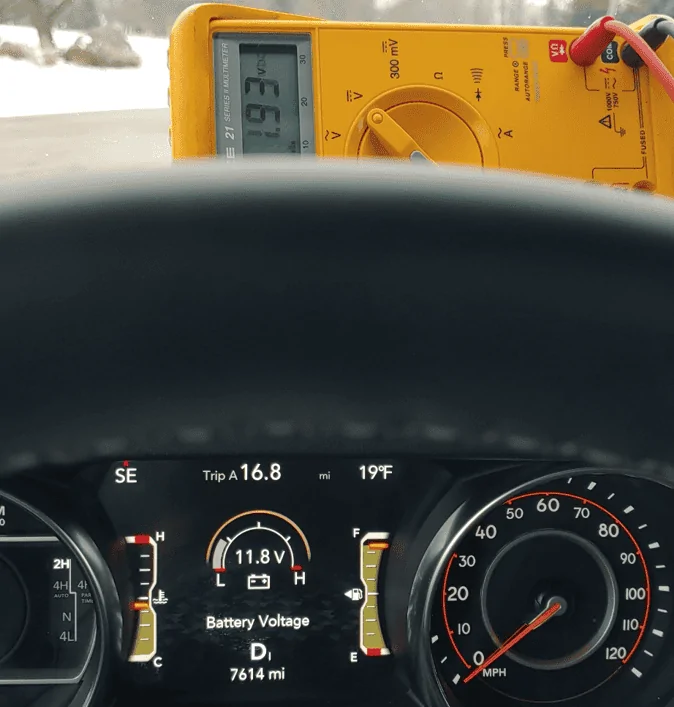
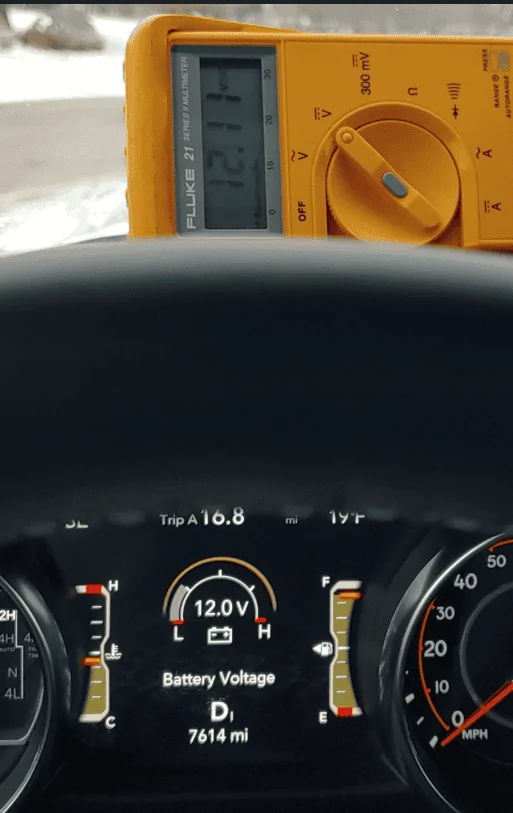
When I pulled up to a stop - the engine shut off and I watched the cluster voltage and my fluke. Again, they were the same. At that time I was measuring only the aux battery voltage under the load of the electric system during an ESS stop.
At this time they ARE isolated from each other.
The PCR disconnects the crank battery from the system so the voltage measured is only the voltage as "supplied by" the aux battery while powering the truck's electric system.

With the engine running, the "power" is 100% supplied by the alternator. Both batteries are connected in - in parallel. So any measurement taken regardless of where from should be the same.
If I had my fluke connected to the crank battery while driving - it should measure the same voltage as the cluster which is taking it from the N1 connection.
If I had my fluke connect to the crank battery while sitting with the engine off because of the ESS shut-down, the crank battery should settle to about 12.8 (likely higher due to surface charge not being drawn off) but the cluster would show a slowly dropping voltage because it would be measuring only the aux battery - they are not connected to each other during an ESS stop.

With my fluke connected where it was - it's measuring only the aux battery during an ESS stop event and would follow or parallel the cluster reading during that stop.
With my fluke connected where it was - while driving, it's seeing the voltage resulting from the charging system since the alternator is connected to the aux battery and the crank battery equally.

Your conclusion that the dash voltmeter is measuring the aux battery voltage seems based on coincidental findings.
Still not making sense - I said it's measuring the aux battery voltage - as it powers the truck's electric system.
Yes, the cluster voltage shown and my fluke voltage shown should be exactly the same during an ESS stop because I'm connected to the aux battery only with the fluke due to the PCR disconnecting the crank battery.
The crank battery has zip to do with anything at that time. It's connected to nothing at all. It could be gone and the thing will still be the same readings.
If I connect my fluke to the truck's electronics and the cluster is connected to the truck's electronics, during an ESS stop why would they not read exactly the same??
My fluke was NOT connected to the crank battery!
It was connected to the electric system - which is connected to the crank battery via the PCR while the truck is running (or parked in a garage)
Maybe you don't get or understand where and how I was connected.
At no time did I say or suggest that I was measuring the voltage while parked in my garage, engine shut off.
But even if I was - it would read the same, or should.

YOU are manually disconnecting and measuring the batteries while the truck is off. I am not in this case. I am measuring a live, living vehicle.
I know very very well how and what I'm measuring. I don't see where "coincidental" comes into it.
It's a DIRECT measure taken from the system.
I'm measuring SYSTEM voltages - not battery voltages per se.
That means I'm measuring system voltage with the load of the truck. (and the charging system while running)
When the engine shut off during the ESS stop - It's still more "system voltage" at that time, rather than static battery voltage of the aux battery. And that was my only interest - not what the SoC of the aux battery was, but what's it doing under load of the electronics.
I wanted to see how accurate the cluster voltage readings were.

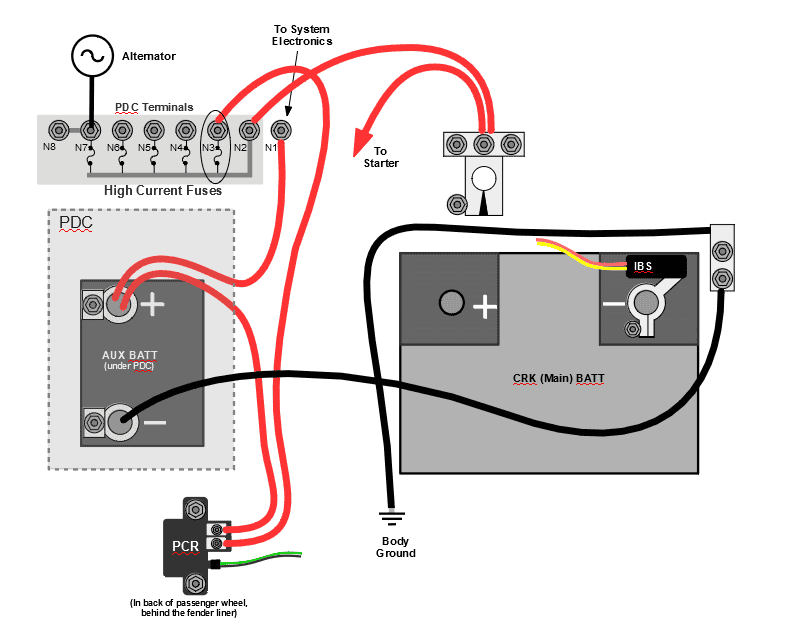
The cluster voltage is based on the N1 connection. It has to be, there's no other choice, otherwise you'd have zero volts during an ESS stop if it measured from the crank battery. It knows the crank battery state of charge (SoC) from the IBS.
So the cluster shows you SYSTEM voltage, not battery voltage.
During an ESS stop event, the crank battery is removed from the system - it's no longer connected.
So the only thing you can get is voltage supplied by the aux battery during the ESS stop.
And that will be what the battery is giving while there's the drain of the electric system during the ESS stop. You can't get the SoC of the aux battery without taking it out of the system - pulling the ground. I wasn't even looking for that. I based my finding of the health and charge of the aux battery based on how well it handled the truck's electronics during the stops.
If it was faulty, it would drop faster and not handle the load of the seat and wheel heat.
During the ESS stop event, the aux was likely sitting at or near full charge because the system voltage started in the very high 12s and dropped from there.
No coincidence to it - I knew what I was measuring, and how - and experience over the decades in automotive batteries and charging systems allowed me to conclude without doubt what I was seeing and measuring.
Ignore the fluke - if that's what is confusing you..........
ESS stop - cluster voltage showed high 12s for a short time as the surface charge was drained off and it got down to the core battery state. From there it dropped more slowly from the load of the electronics.
For about 1 minute, it stayed pretty stable and dropped very slowly. It stayed above 12.1 for over 1.5 minutes - pretty healthy, and indicates a good charge.
I have a carbon pile on my charging system/battery test bench I made that allows me to throw a crazy load on alternators and batteries while testing - my only doubts on my truck is my lack of longer drives and the fact that under ordinary circumstances, it sits for a couple of days, even more, at a stretch. So I'm off to buy yet another battery tender since I have one on my 73 Javelin and another on my 82 SX4 since they are parked for the winter.
 
OP
OP
ShadowsPapa

ShadowsPapa

Well-Known Member
First Name
Bill
Joined
Oct 12, 2019
Threads
247
Messages
40,442
Reaction score
53,859
Location
Runnells, Iowa
Vehicle(s)
'25 JTMX, '23 JLU 4xe, '82 SX4, '73 Javelin
Occupation
Retired auto mechanic, frmr gov't ntwrk security admin
Vehicle Showcase
3
With all of these issues in mind, given that OEM's make much ado about a few kilo's weight savings on frames and engine blocks I have to wonder why LiFe batteries are not replacing Pb/AGM batteries. Sure the cost is double or triple Pb legacy battery tech but in the space that a 70Ah battery occupies you can mount a 100Ah LiFe usable for the full rated capacity that weighs 1/3 of the legacy.

In the very least having the electrics designed to operate with either chemistry and giving the buyer a cost option for LiFe would be a nice touch. I personally would pay another $5-800 sticker to get factory lithium over Pb batteries.

While charging LiFe below 30*F is a no go, draw down for startup shouldn't be an issue. Once the alternator is running you have sufficient alternator output to run a battery heater up to temp for re-charging. This is something I may work on designing for retrofit once the warranty is up.
The only issues will be that the system is programmed for AGM - the size/capacity and more is plugged in and that's what it is expecting. The IBS data is going to not make the PCM and BCM happy.
I've not studied the charge rates needed for LiFe batteries, but since these can handle 200+ amps and 15 volts, that should not be an issue - the way AGM charges vs. lithium may be.
In Iowa, lithium are a no-go for me. We may spend a week or more under 0 degrees where even other batteries can be an issue.

But - if I did such a thing, REDARC already has lithium battery management under control.

BTW - glad you specified LiFe or lithium iron phosphate vs. the lithium batteries of EVs - different animals but some tend to lump them all together. You are talking batteries different from what an EV uses.

I know you know this - but here's where we keep talking about cycles, depth of discharge, life and so on -
a good AGM battery might do 1200 cycles if it is only drained by 25% (ie 75% remaining) each time, and this might drop to 500 cycles at 50% depth of discharge each time, or 200 cycles at 75% depth of discharge. A good lithium battery might deliver 3000 cycles at a 50% depth of discharge before the battery gets to a point where it no longer does its job well enough to be worth keeping.

These AGM batteries as I've noted often sit at 12.2 to 12.4 volts - that's about half charge. Don't need a scientific calculator.................... we abuse them.
Think about it - a battery sitting at 12.4 or lower is over 25% discharged! that means we're only going to get so many more "cycles" out of them. And people wonder why they need batteries at 3 years?!
 

Sponsored

Bobchadwickga

Well-Known Member
First Name
Bob
Joined
May 15, 2022
Threads
13
Messages
139
Reaction score
124
Location
Atlanta, GA
Vehicle(s)
2022 Jeep Gladiator Rubicon
Occupation
Insurance
Interesting post. You think there is going to reach some conclusions about monitoring the Aux battery using the truck's gauges and predicting failure?
 
OP
OP
ShadowsPapa

ShadowsPapa

Well-Known Member
First Name
Bill
Joined
Oct 12, 2019
Threads
247
Messages
40,442
Reaction score
53,859
Location
Runnells, Iowa
Vehicle(s)
'25 JTMX, '23 JLU 4xe, '82 SX4, '73 Javelin
Occupation
Retired auto mechanic, frmr gov't ntwrk security admin
Vehicle Showcase
3
Interesting post. You think there is going to reach some conclusions about monitoring the Aux battery using the truck's gauges and predicting failure?
This really all started along similar lines to what you mention.
If you watch the voltages, you can indeed get an idea of battery health.
If you let ESS run, it's a great indicator of the health of many things - batteries included.
So if you pull up to a stop light, engine shuts down, voltage starts in the high 12s to 13 then drops to the high 11s after only a minute and you do NOT have accessories running like headlights, seat heaters, steering wheel heat, that sort of thing - that battery has lost capacity (the aux battery)
If it drops slowly and for the first minute of a stop stays above 12 - it's still healthy and/or it's pretty well charged at the time the ESS stopped the engine.

If you push the button one time to turn on "ign" but not start it and have the voltage displayed - seeing where your battery voltage is starting is helpful. (at that point it's the batteries together, with the load of the truck's electric system)

An observant person can really almost predict trouble..............
 

Andy29847

Well-Known Member
First Name
Andy
Joined
Oct 25, 2020
Threads
14
Messages
552
Reaction score
934
Location
South Carolina
Vehicle(s)
2020 Wrangler Rubicon, 2020 Gladiator Rubicon
Occupation
Retired
Maybe you don't get or understand where and how I was connected.
At no time did I say or suggest that I was measuring the voltage while parked in my garage, engine shut off.
But even if I was - it would read the same, or should.
I've been trying to get you to say how you were connected. You never come out and say that. I deduce from all that you wrote that you are measuring voltage in the cab from the harness or some of the cab equipment. If so, I agree that you are measuring the aux battery only during a stop/start event.


The cluster voltage is based on the N1 connection. It has to be, there's no other choice, otherwise you'd have zero volts during an ESS stop if it measured from the crank battery. It knows the crank battery state of charge (SoC) from the IBS.
So the cluster shows you SYSTEM voltage, not battery voltage.
During an ESS stop event, the crank battery is removed from the system - it's no longer connected.
I believe the voltage measurement for the gauge cluster comes from the IBS. Since the IBS resides on the negative battery post of the main battery, my thoughts were that the cluster is not just showing aux battery voltage. I 'm not 100% convinced I'm right. Not understanding the magic of the IBS or multiplex systems, it seems like there would need to be a connection to the positive side of the power source to complete a circuit. Your testing is interesting enough that I may try to duplicate it. Thanks for your answers.
 

Gatorized

Well-Known Member
Joined
Sep 13, 2019
Threads
8
Messages
1,874
Reaction score
1,760
Location
ME/NH
Vehicle(s)
‘14 Mazda3, ‘20 JTR (Gator), ‘25 RAV4 PHEV
During driving, normal operation, it was measuring system voltage of a running system - with charging system supplying the power, with the load of the running truck's systems.
They should be the same with the fluke or the cluster, and they were.

I wanted to see how accurate the cluster voltage readings were.

The cluster voltage is based on the N1 connection. It has to be, there's no other choice, otherwise you'd have zero volts during an ESS stop if it measured from the crank battery. It knows the crank battery state of charge (SoC) from the IBS.
So the cluster shows you SYSTEM voltage, not battery voltage.
During an ESS stop event, the crank battery is removed from the system - it's no longer connected.
So the only thing you can get is voltage supplied by the aux battery during the ESS stop.
@Andy29847
Sounds like Bill is measuring from the N1 terminal…
Jeep Gladiator Your battery voltage - truck off and at rest 1671175752024
 

jebiruph

Well-Known Member
First Name
Jerry
Joined
Dec 9, 2018
Threads
15
Messages
806
Reaction score
730
Location
IA
Vehicle(s)
2018 Wrangler JL 2024 Grand Cherokee L WL 2020 Gladiator JT
I never hooked up a voltmeter to track down which battery voltage is displayed during an ESS event and will defer to Bill's results, but I seem to remember slight movement of the steering wheel causing the displayed voltage to drop and at the time I related that to the main battery which powers the steering during a stop. My assumption could be tatally wrong, but I have to point out that it is possible for the dash to be wired to display the main battery voltage even while the dash is powered by the aux battery.
 

Sponsored

OP
OP
ShadowsPapa

ShadowsPapa

Well-Known Member
First Name
Bill
Joined
Oct 12, 2019
Threads
247
Messages
40,442
Reaction score
53,859
Location
Runnells, Iowa
Vehicle(s)
'25 JTMX, '23 JLU 4xe, '82 SX4, '73 Javelin
Occupation
Retired auto mechanic, frmr gov't ntwrk security admin
Vehicle Showcase
3
@Andy29847
Sounds like Bill is measuring from the N1 terminal…
Rats! He's onto me.........

Jeep Gladiator Your battery voltage - truck off and at rest 20221216_083747_HDR


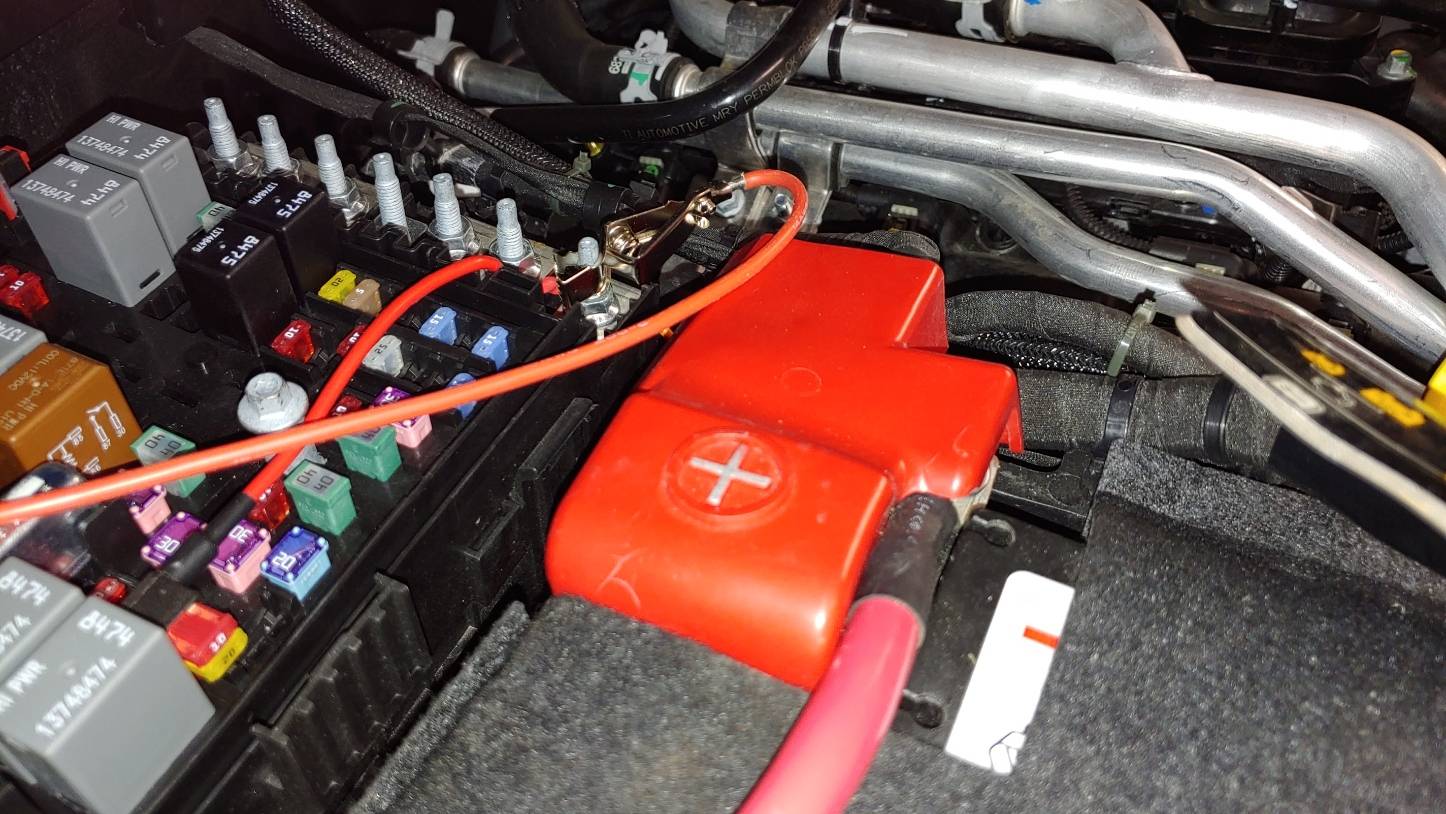
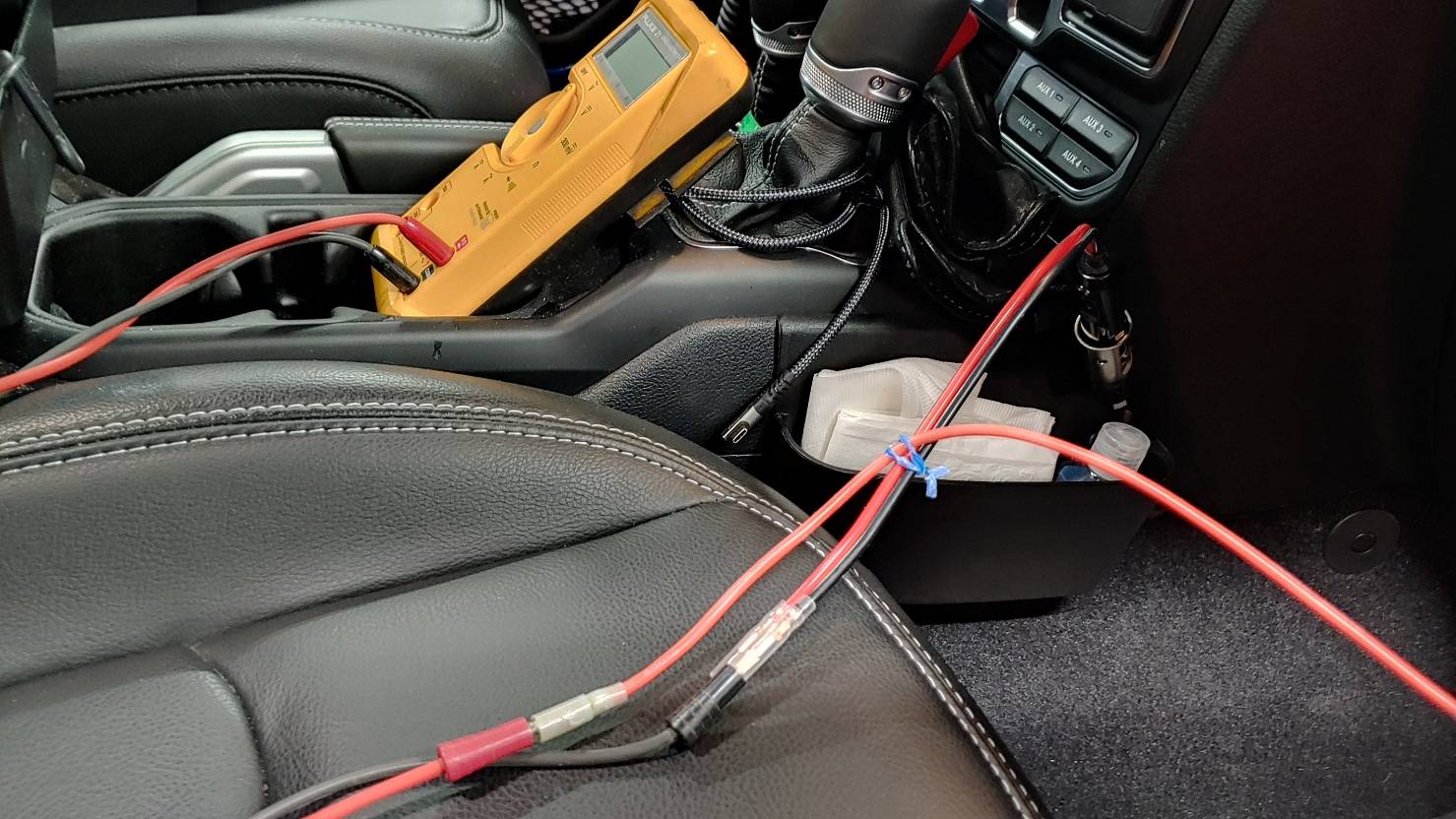
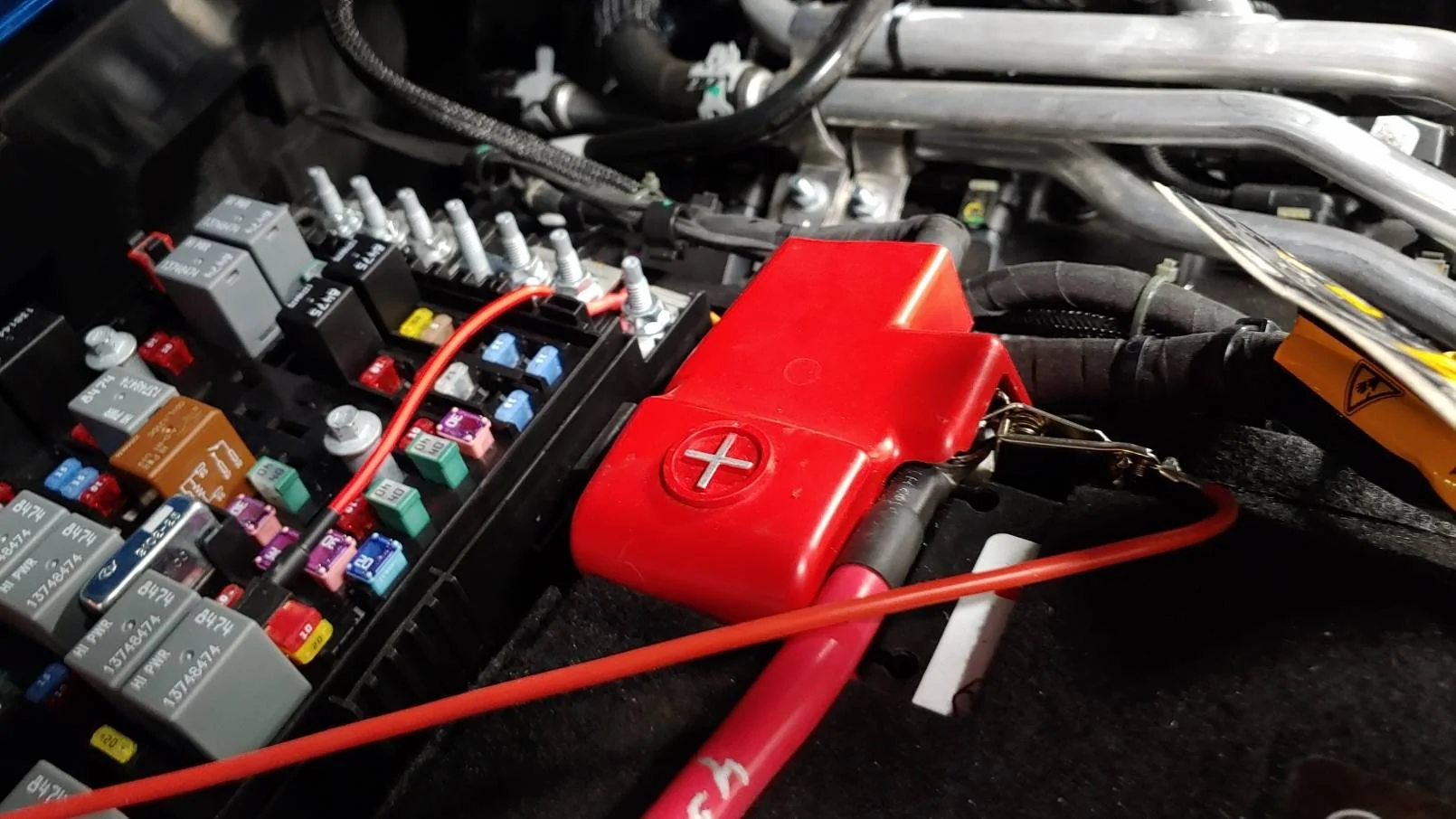
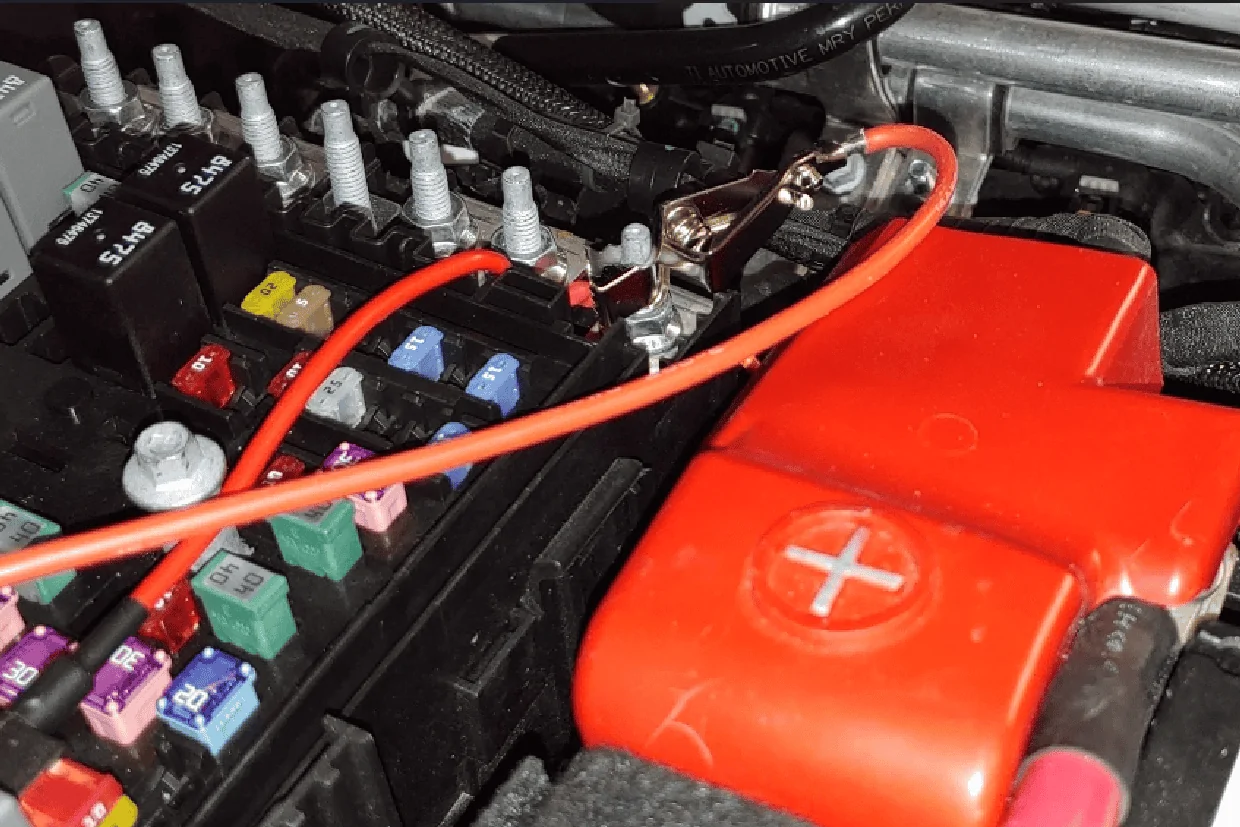
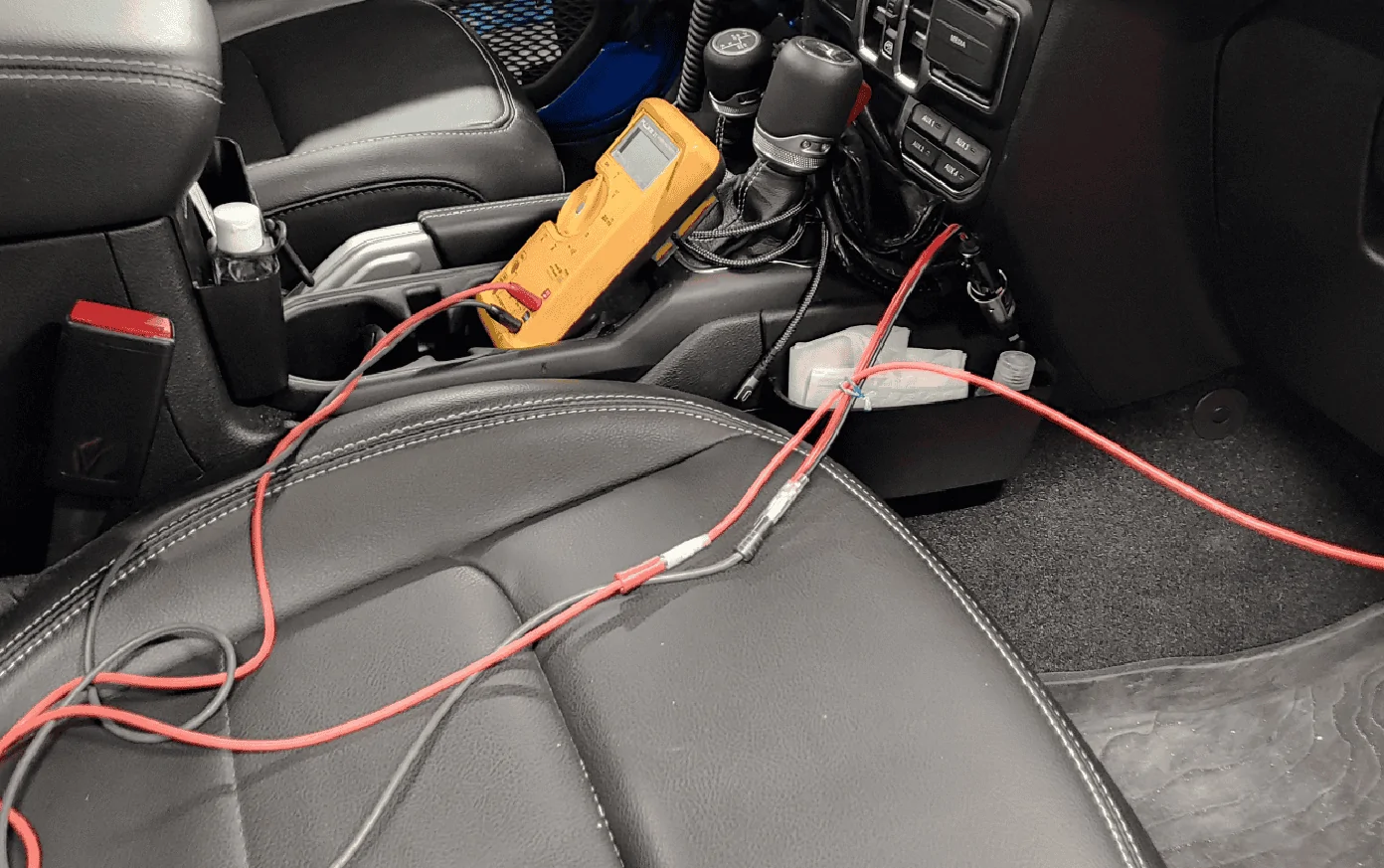
I made a lead using the same type of silicone wire used by my Fluke meter - 14 gauge to ensure no appreciable voltage loss.
Gator clip at the outboard end, female bullet on the cabin end so I can simply plug my fluke's leads into this wire.
The clip means I can connect to N1 or to the crank battery in seconds.
The bullet connection inside means I can switch my Fluke from this lead, to...................... the 12v outlet in 2 seconds without leaving my seat.
I take the ground for the Fluke from the 12v outlet. I switched back and forth on the positive Fluke lead - 12v outlet to my wire to N1 and found - identical.
Why? Because the 12v outlet is powered via N1 as it's part of the "system electronics".
I knew if I said "I took readings via the 12v outlet" the naysayers here would be all over that, questioning it, my methods and so on and saying I was wrong and I HAD to go DIRECT to the terminals. I proved it this way - the Fluke measures to the hundredth of a volt.
It reads exactly the same whether I'm connected directly to N1 or via the 12v outlet positive.

Jeep Gladiator Your battery voltage - truck off and at rest 20221216_084252_HDR


My 'gator clip on the outboard end of my 14 gauge wire means I can clip to the crank battery in seconds (well, accounting for opening and closing the hood!)
My next test will be with another lead made exactly like this one so I can flip between the two without leaving my seat. Heck, I may as well install a heavy-duty relay so I can push a button and switch between the two leads and make it easier and almost instantaneous!

Jeep Gladiator Your battery voltage - truck off and at rest 20221216_083824


Due to our change in weather (it's 18 degrees, windy and icy) and the fact the truck has been sitting for 2 days, I need to do a lot more testing - and put the charger on it for a few hours to ensure 100% SoC............. but............ this was worth doing even if I did get a bit cold in the process.

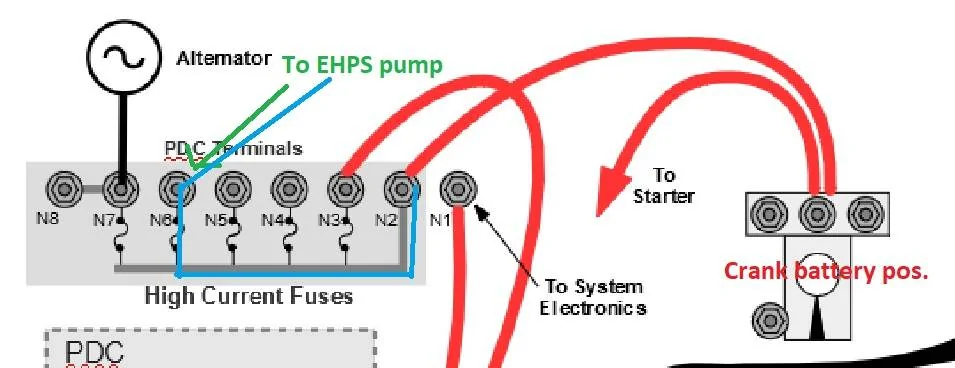
It took me 2.5498 seconds to figure out why during an ESS stop the crank battery voltage also dropped quickly, although it was always a bit higher than the aux battery. Then I realized - the EHPS is connected to the crank battery, ALWAYS.
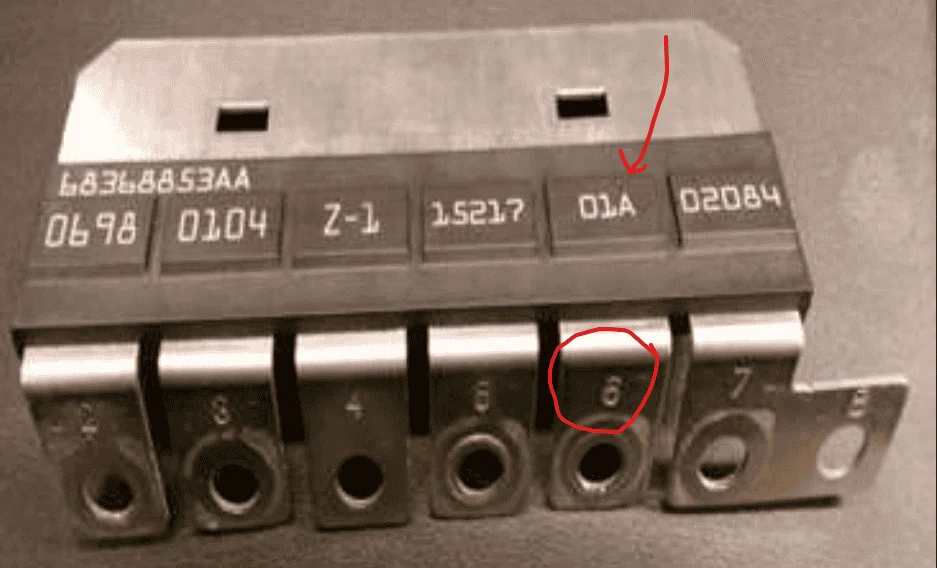
N6, 125 amp fuse part of the HCFA is a direct connection to the charging system and thus the crank battery.

Jeep Gladiator Your battery voltage - truck off and at rest 1671207251306


As such, EHPS has a direct line to full system voltage - alternator and/or crank battery. Note - that's the PUMP, not the sensing circuits which are on N1.

Jeep Gladiator Your battery voltage - truck off and at rest EHPS-power


The PS pump is always powered directly, going through no switches, just this fuse from the HCFA bus.

I did an experiment - I pulled into a parking lot and triggered an ESS stop.
Volt meter was connected to crank battery.
I carefully moved the steering wheel left to right and back and watched both readings - cluster and Fluke. Can't do it too far or it will stop the ESS due to steering angle being too high.
I noted no change at all on the crank battery - the drain and drop was constant.
I noted a slight fluctuation in the cluster display - it was down to 11.8 by this time and when I moved the wheel a little, if flickered down to 11.7 then back up to 11.8 each time. It was barely at 11.8 as even just sitting it hit 11.7 a time or two. So likely it was going from 11.8 down to something like 11.78 which is enough to cause the cluster to drop a tenth due to how it rounds.
It appears as if the steering column angle sensor is part of the "system electronics" while the EHPS pump continues to run from the crank battery during a stop causing a continual drain on the crank battery.

More to be done but here's what I find so far -

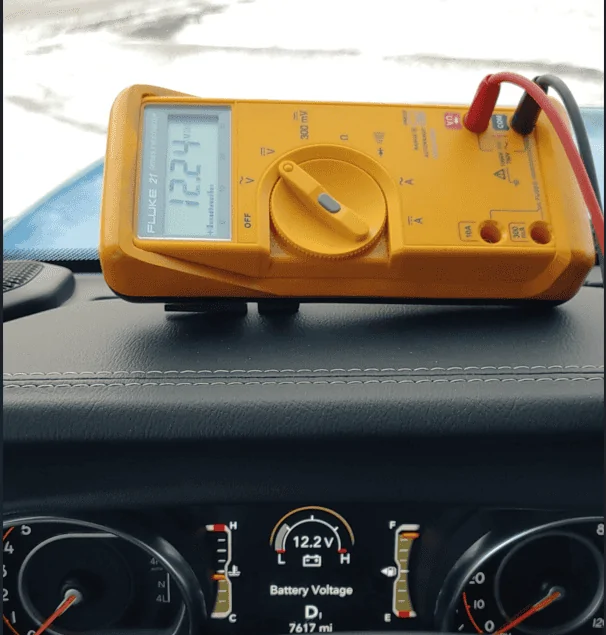
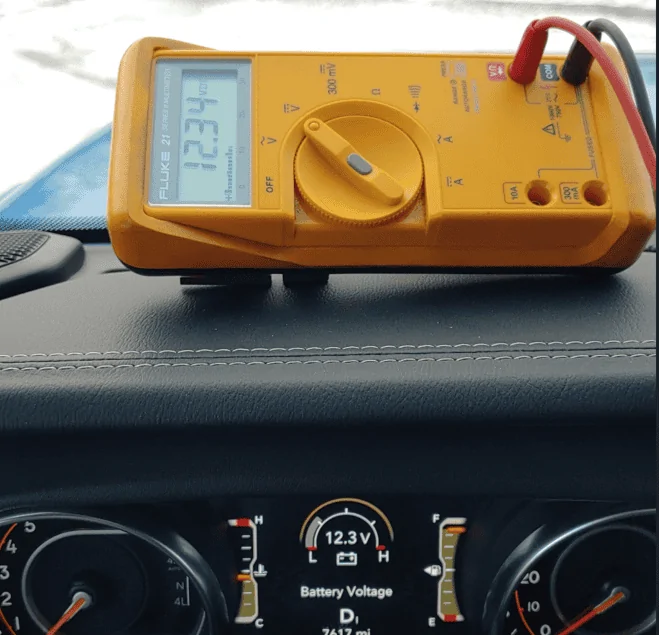
If my fluke is connected to N1, which is where the aux battery is connected, my fluke and the cluster voltage follow each other almost exactly. There's never more than .04 to .05 or so volts difference. The cluster rounds to tenths. Cluster and Fluke were always within .04 of each other.

If my Fluke is connected to the crank battery positive, I see a drop in both - but the difference is greater.


Fluke on N1 -
Jeep Gladiator Your battery voltage - truck off and at rest 1671208392994

Jeep Gladiator Your battery voltage - truck off and at rest 1671208439649


Fluke on crank battery -
Jeep Gladiator Your battery voltage - truck off and at rest 1671208492925

Jeep Gladiator Your battery voltage - truck off and at rest 1671208516174


Jeep Gladiator Your battery voltage - truck off and at rest 1671206089785


Jeep Gladiator Your battery voltage - truck off and at rest 1671206245401
 
OP
OP
ShadowsPapa

ShadowsPapa

Well-Known Member
First Name
Bill
Joined
Oct 12, 2019
Threads
247
Messages
40,442
Reaction score
53,859
Location
Runnells, Iowa
Vehicle(s)
'25 JTMX, '23 JLU 4xe, '82 SX4, '73 Javelin
Occupation
Retired auto mechanic, frmr gov't ntwrk security admin
Vehicle Showcase
3
my thoughts were that the cluster is not just showing aux battery voltage.
No matter where it is connected, a volt meter is going to show the pressure/voltage on the system.
If it's off, then it's showing the pressure caused by the batteries connected in parallel.
If it's running, it's showing the pressure/voltage caused by the higher output of the alternator.
They could connect a voltage display to almost anything and it would be showing the same thing - voltage present as "caused by" whatever is supplying that pressure.
We say "battery voltage" and the cluster display even says that but it's dead wrong. If you had no batteries in the truck at all and it was running - it would be showing the ALTERNATOR output. With batteries, the alternator is pushing to the batteries so you are reading alternator output.
So system voltage is a more accurate way of describing it.

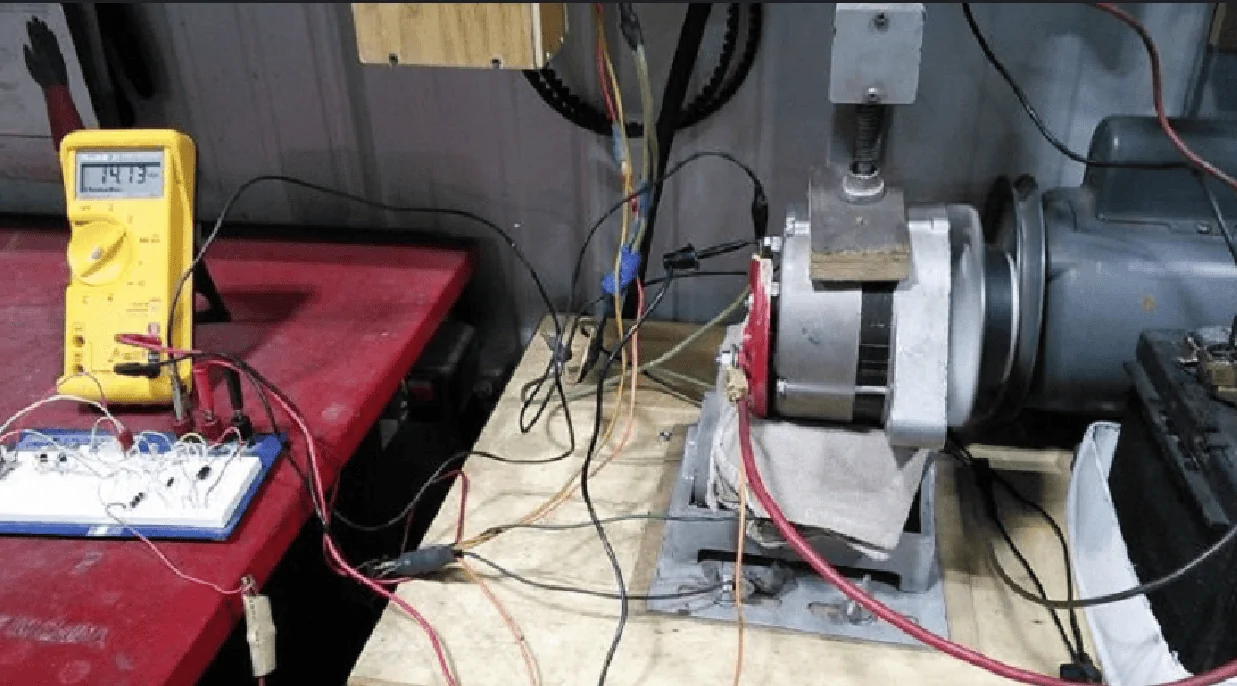
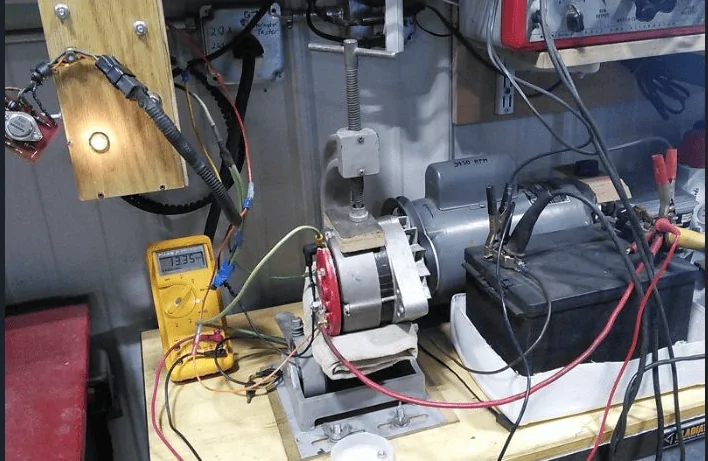
Here I have made a voltage regulator - my aim is to build a circuit that can replace the "guts" of a very rare and expensive original voltage regulator for cars like mine.
The battery I use is likely 10 years old (barely seen in the right of the photo) and at rest the voltage of that battery with no load is about 12 volts. My Fluke is connected to that battery - 14.13 volts isn't battery voltage - it's the voltage my breadboarded regulator circuit is regulating the alternator output at. So it's alternator output, not battery voltage. No way that battery is capable of anything over 13 volts even when new. So calling that volt meter "battery voltage" is not accurate in a way (some could argue it sort of is........)

System voltage. The voltage available to any electric or electronic device at that time.
If the engine is off- it's strictly battery voltage as there's nothing else alive to prove pressure.
If the engine is running, it's charging system voltage which exceeds the pressure the battery can possible produce even under perfect conditions.
This is true of the volt meter in any car or truck.

As far as the IBS - since it measures ONLY crank battery conditions - my question would be - why does the cluster always show lower than my Fluke connected to the crank battery during an ESS stop.
Once my truck's batteries have completed the complete AGM charge sequences, there will be more testing. The draw of the EHPS really sucks the power down in the crank battery in this cold weather and it's hard to get more exacting readings.

Jeep Gladiator Your battery voltage - truck off and at rest 1671209185485


(From breadboard to working prototype on PC board (upper left)..........)
Jeep Gladiator Your battery voltage - truck off and at rest 1671209627049
 

Gatorized

Well-Known Member
Joined
Sep 13, 2019
Threads
8
Messages
1,874
Reaction score
1,760
Location
ME/NH
Vehicle(s)
‘14 Mazda3, ‘20 JTR (Gator), ‘25 RAV4 PHEV
My next test will be with another lead made exactly like this one so I can flip between the two without leaving my seat. Heck, I may as well install a heavy-duty relay so I can push a button and switch between the two leads and make it easier and almost instantaneous!
how will you isolate the relay so it does not impact the readings from the crank or aux battery?
 
OP
OP
ShadowsPapa

ShadowsPapa

Well-Known Member
First Name
Bill
Joined
Oct 12, 2019
Threads
247
Messages
40,442
Reaction score
53,859
Location
Runnells, Iowa
Vehicle(s)
'25 JTMX, '23 JLU 4xe, '82 SX4, '73 Javelin
Occupation
Retired auto mechanic, frmr gov't ntwrk security admin
Vehicle Showcase
3
how will you isolate the relay so it does not impact the readings from the crank or aux battery?
I guess I'd have to go to a manual, old-fashioned, SPDT switch........
 

jebiruph

Well-Known Member
First Name
Jerry
Joined
Dec 9, 2018
Threads
15
Messages
806
Reaction score
730
Location
IA
Vehicle(s)
2018 Wrangler JL 2024 Grand Cherokee L WL 2020 Gladiator JT
@ShadowsPapa , thanks for all the testing, especially your explanation of the steering induced voltage fluctuation during an ESS stop.

Regarding the draw on the crank battery during an ESS stop, I expect that the crank battery is powering all the engine electronics like the fuel pump, injectors and under hood electronics. My diagrams are based on what was included on the charging circuit schematic and does not include information from other circuits.
Sponsored


Top