
Sponsored

Automatic Transmission fluid change interval s on 2021 JT

ShadowsPapa

Well-Known Member
First Name
Bill
Joined
Oct 12, 2019
Threads
247
Messages
40,442
Reaction score
53,859
Location
Runnells, Iowa
Vehicle(s)
'25 JTMX, '23 JLU 4xe, '82 SX4, '73 Javelin
Occupation
Retired auto mechanic, frmr gov't ntwrk security admin
Vehicle Showcase
3
Experience in rebuilding and servicing transmissions for a few years has shown me that if the fluid has gotten hot, change it. But if you are changing it because of muck or metal in it, new fluid won't fix that, your transmission already has it's life-span determined.
Change it because of heat, or in the old days, because the additives were "depleted", but new fluid won't fix mechanical damage. It may extend the life a little, but it's destined to fail.

Just my opinion…. You already waited too long. Change the fluid now or pay out-of-pocket for a new trans when it does fail. Seems like a no brainer to me.
Why? because of what peers repeat out there? "common knowledge" and opinion of the internet?

You change fluid when it's life has ended due to excessive heating or additives have been depleted or done there job and can't do any more.
Today the friction materials are superior, the shifting is done with little to no slipping of the clutches between gears, things grip better, pressures are controlled and monitored. Fluid today isn't like ATF and oils of the last century. They are superior. The additives in coolant go many years instead of 2. Oils are far better, chemistry is better. The design of the transmission blows all of them from the last century away.
Change fluid based on how it's used - heat is what ruins fluid, abuse. I've run ATF for 100,000 miles in trucks that towed farm equipment. As long as they don't get hot, you don't abuse it trying to get unstuck from mud or snow, and the transmission doesn't slip slowly into gear spinning clutches and building heat or hot spots.......
I have never lost a transmission, engine, transfer case or differential. Not where fluid would have mattered.
Lost one transfer case because of the design - the viscous coupling blew up - no fluid change would have prevented that and it was at 160,000 miles. Long time Jeep experts said it was a bad design and they opened brand new transfer cases to replace the thrust washer with a bearing and take the end play out to prevent swelling of the coupling housing.
Differential - busted the end off an axle, wore out bearings - about 180,000 miles. It was going to happen fluid or not.
People can do what they want - it's their vehicle, but there's more fear and conjecture out there, and "do it because it's what everyone else does and it feels right although I have no first-hand experience in a shop rebuilding automatics"

Go ahead and change it - but if you have problems with the transmission - it's going to fail either way.
If the fluid has been hot, the transmission has seen heavy use, then it's likely time for new fluid.
It's the additives that are depleted with heat and abuse. Anti-foam, anti-oxidation, and so on.

Do whatever but the fear I see out there based on zip is amazing.
Sponsored

 

ShadowsPapa

Well-Known Member
First Name
Bill
Joined
Oct 12, 2019
Threads
247
Messages
40,442
Reaction score
53,859
Location
Runnells, Iowa
Vehicle(s)
'25 JTMX, '23 JLU 4xe, '82 SX4, '73 Javelin
Occupation
Retired auto mechanic, frmr gov't ntwrk security admin
Vehicle Showcase
3
fair thought haha

waiting this long was just ignorance on my part. I never thought past the manual noting that it "never" needs to be changed.
LOL - why? Why was it ignorance? Because of the fear-mongers claiming "she's gonna blow, cap'n, we can't give 'er any more!"

I wonder where some of this stuff comes from, honestly.
I can see going by what ZF recommends, but saying it's going to blow and you will end up paying if you don't?
ZF design, ZF created the fluid, THAT logic makes sense........ but honestly, it's amazing the non-substantiated stuff out there and the fear. Probably YouTube certified techs started some of it.
 

Gren71

Well-Known Member
First Name
Matt
Joined
Jul 9, 2019
Threads
143
Messages
4,004
Reaction score
6,390
Location
Delaware
Vehicle(s)
Jeep JT sports S Max Tow (Sold) '23 Ram 1500
Occupation
Magician
Vehicle Showcase
1
LOL - why? Why was it ignorance? Because of the fear-mongers claiming "she's gonna blow, cap'n, we can't give 'er any more!"

I wonder where some of this stuff comes from, honestly.
I can see going by what ZF recommends, but saying it's going to blow and you will end up paying if you don't?
ZF design, ZF created the fluid, THAT logic makes sense........ but honestly, it's amazing the non-substantiated stuff out there and the fear. Probably YouTube certified techs started some of it.
Ignorance in the actual definition of it, lack of knowledge or understanding.

I didnt give any thought to possibly needing to do transmission maintenance, plain and simple.

as far as the fear mongering and such. Really thats just a laugh for me. If it goes, it goes. But I do believe there is a chance to prolong the life of my JT by doing some fluid changing. Im sure it wont do a LOT, but it at least makes me feel like im doing right by the truck to keep it going for the length that I need it to.

I have all the stuff I need on the way so I may tackle this mid Feb. Which im thinking will give me more time to add the fluid since the cold will slow the temperature rise of the trans while im adding fluid (hopefully?) Though I will be doing it "level" or nearly level I guess..in my garage.

@Hootbro you did yours a while back didnt you?
 

ShadowsPapa

Well-Known Member
First Name
Bill
Joined
Oct 12, 2019
Threads
247
Messages
40,442
Reaction score
53,859
Location
Runnells, Iowa
Vehicle(s)
'25 JTMX, '23 JLU 4xe, '82 SX4, '73 Javelin
Occupation
Retired auto mechanic, frmr gov't ntwrk security admin
Vehicle Showcase
3
which is what Ive been reading elsewhere, and part of what gave me pause. I dont particularly want to mess with something just for the sake of it. But I need to keep this JT for 150,000+ and dont want to risk missing the boat on a doable maintenance task that can prolong the trucks life.
I lean toward ZF's recommendations because I find no evidence or proof that MOPAR has changed the friction materials or done anything else to modify the core of the transmission, and because we can safely assume that the MOPAR fluid IS ZF transmission fluid.
Towing and a lot of stop and go driving would drop that number down.
Again, it's HEAT that is a fluid killer, and the additives. Those do break down even under ordinary use and with time but heat of extreme use depletes or breaks them down faster.
So it's the additives that prevent foaming, prevent oxidation, keep the seals in shape and so on that you are replacing. You can't fix mechanical issues with fluid but you can replace the additives with fluid. And don't worry that you aren't getting 100% of the fluid out. You also haven't lost 100% of the additives' ability to do the job.
So if you keep the truck forever or plan to, and you change the fluid at 80,000, I'd likely reduce the next change down a bit - don't go another 80,000 miles (because you only replaced most, not all, of it the first time, and, you now have more wear that normally happens) Go less the second time than you did the first time. Everything is new, including 100% of the fluid the first time around. Ideal conditions. Not so ideal later for the next interval.

Be wary any time there's a "lifetime" or "for the life of" involved because engineers, at least in the past, defined that as about 100,000 miles. Hmmmm.

Recommendations are all over the map - 50K to 150K, etc. I'd never go 150K but 50K is extreme for my use and driving.

I won't get all excited if I go over 80K, I may change my mind out of boredom someday though and do it sooner, doubtful, though. I won't hit 100K and don't plan on going over that for sure.
I'm standing next to a race car with a TF727 in it, with 90K on the clock and the original transmission. The fluid is as red and as good a smell as new from a bottle. But - I do plan on doing a complete rebuild on it because it's been abused. I won't stop with fluid (plus it leaks like a rusty bucket, too)
 

Hootbro

Well-Known Member
First Name
Don
Joined
Apr 13, 2019
Threads
57
Messages
10,176
Reaction score
19,943
Location
Delaware
Vehicle(s)
2025 Gladiator Sport
@Hootbro you did yours a while back didnt you?
Yeah, back in 2021 on my 2020 Gladiator. The video you posted and referenced is pretty much how I did mine. Only variance from what that guy said is he mentioned changing the metal pan gasket. You do not need to do that and is intended to be reusable. I think it would be a waste of money buying that gasket for the first pan drop and fluid change.
 

Sponsored

Maximus Gladius

Well-Known Member
First Name
Kevin
Joined
Jan 30, 2021
Threads
74
Messages
2,901
Reaction score
3,692
Location
Calgary, AB, Canada
Vehicle(s)
2021 JTR, 2023 JTR
OP, if you haven’t pulled the trigger on buying those items cuz you just don’t know if the oil is still good or not, let a lab tell you. Get a new, clean oil suction syringe and pull out 2 ounces (replace with new) and ship it off to black stone or Polaris and let them tell you it’s condition and go from there.

I did watch that video and one thing I’d do differently than that guy is after he put in his first fill and capped it, then went upstairs to run through the gears and such, I’d do that ONCE then jump down under there and top it up till it dribbles out.

Why?? Because the first fill is already “too low” and once the pump kicks on, it’s sucking up all the oil and are you sure it isn’t grabbing air too? So meanwhile, if you’re that guy waiting for it to get hot enough, the pump is sucking air (maybe) until he fills it up proper.

So if you jump under there and fill it up until it dribbles out and it’s still too cold, so what. Let it dribble out until the right temp is reached and cap it.
 

Maximus Gladius

Well-Known Member
First Name
Kevin
Joined
Jan 30, 2021
Threads
74
Messages
2,901
Reaction score
3,692
Location
Calgary, AB, Canada
Vehicle(s)
2021 JTR, 2023 JTR
My transmission has 12k kms on it and I can’t stand knowing all the break-in debris is in there floating around and plugging up the filter and magnet and just doing what it does best, the break-in debris scratches stuff up. It isn’t slippery so it’s job is to wear things out.

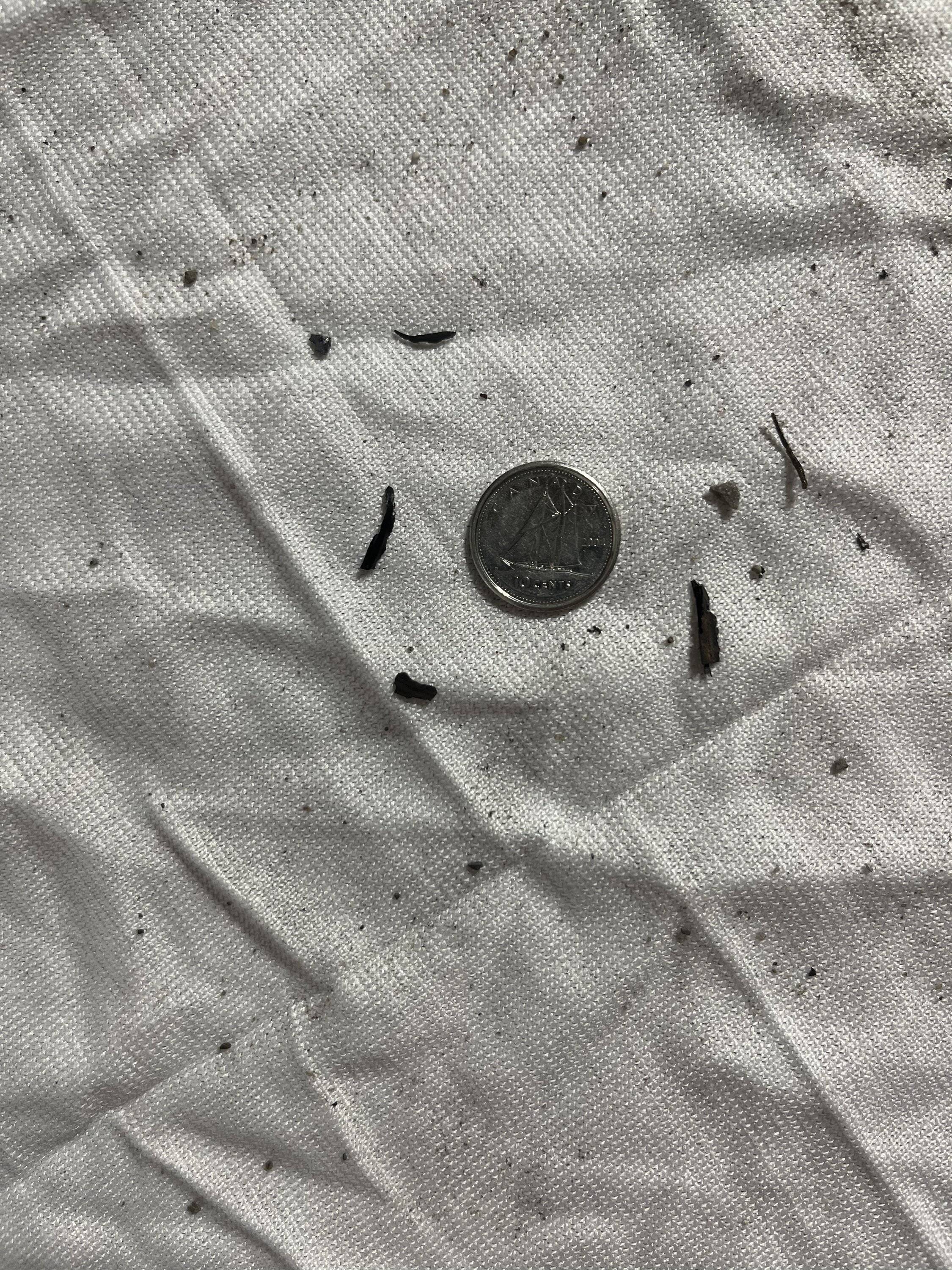
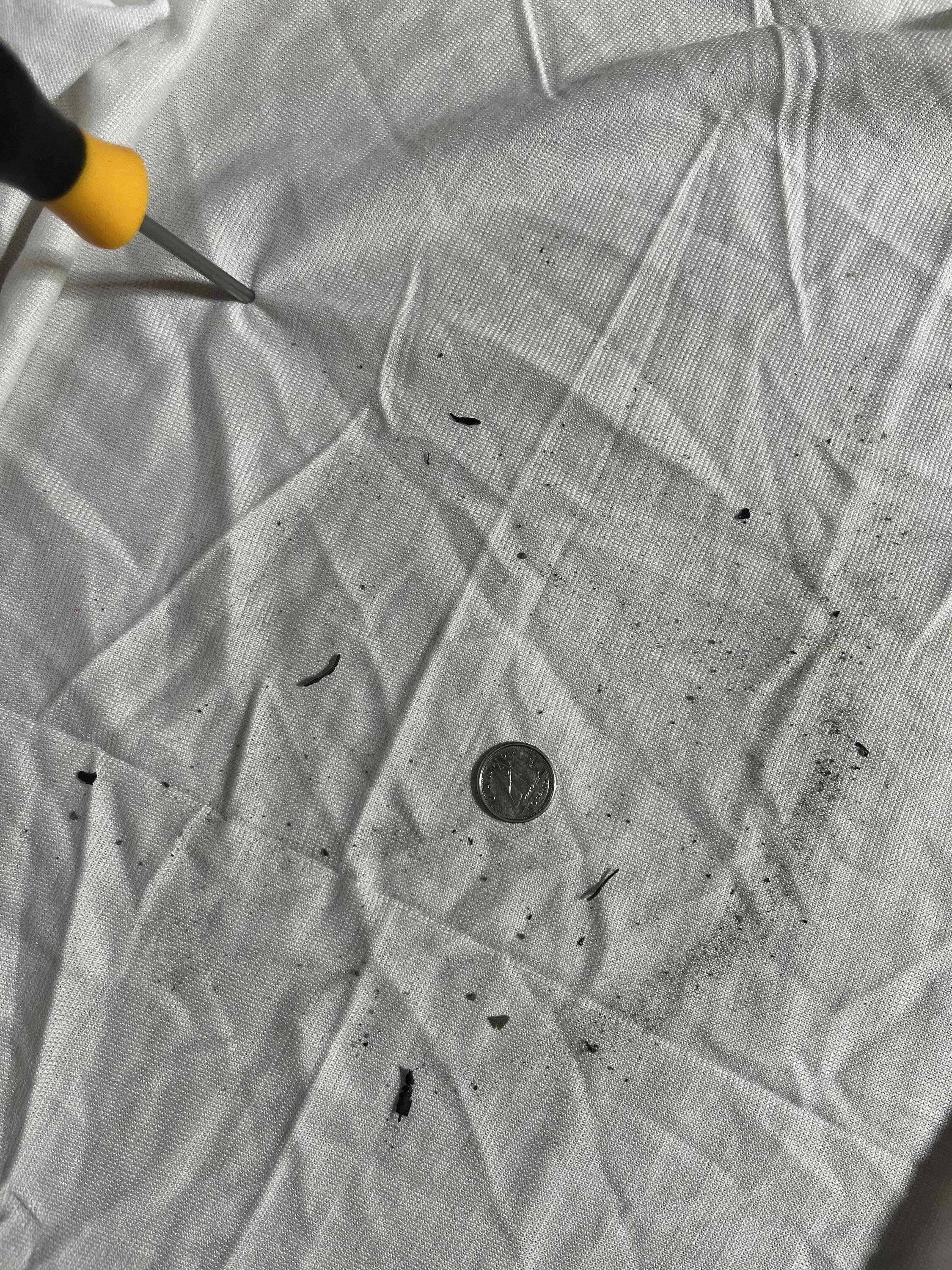
Anyway, over the past 12k kms, I’ve replaced 4 quarts of used with 4 quarts of new 8/9!Speed ATF and have done 3 oil lab samples. All showing marvellous numbers. This last time, I cleaned out the oil catch pan and wiped it down and sucked out a quart, 200 mls at a time and put in 200 mls new at a time and let it cycle a couple min before repeating.

This time I took notice of black rubbery and light grey ceramic bits I had sucked up and cool thing too, I sucked up a dime too! ?Here’s to lifetime oil that is good forever or at least until the transmission blows up.

Which fails first, the oil or the transmission. (Papa, would love to hear your answer here) Are we suppose to wait till the transmission says it’s in trouble or dies before we do anything? Should we wait till the oil is no good before doing anything about it? How would you know how the oil is if we don’t have it checked out? Labs do that.

I guess we can look at it, smell it, rub a bit around on our fingers and take a wild guess….

Jeep Gladiator Automatic Transmission fluid change interval s on 2021 JT B5DEE679-B02F-4098-B7ED-2CCCA134BCFB


Jeep Gladiator Automatic Transmission fluid change interval s on 2021 JT F5E3826D-F079-4894-81C0-362702476026
 

Scrubb84

Well-Known Member
First Name
Adam
Joined
Aug 22, 2019
Threads
6
Messages
308
Reaction score
279
Location
Saranac Lake, NY
Vehicle(s)
2020 JTR
My transmission has 12k kms on it and I can’t stand knowing all the break-in debris is in there floating around and plugging up the filter and magnet and just doing what it does best, the break-in debris scratches stuff up. It isn’t slippery so it’s job is to wear things out.

Anyway, over the past 12k kms, I’ve replaced 4 quarts of used with 4 quarts of new 8/9!Speed ATF and have done 3 oil lab samples. All showing marvellous numbers. This last time, I cleaned out the oil catch pan and wiped it down and sucked out a quart, 200 mls at a time and put in 200 mls new at a time and let it cycle a couple min before repeating.

This time I took notice of black rubbery and light grey ceramic bits I had sucked up and cool thing too, I sucked up a dime too! ?Here’s to lifetime oil that is good forever or at least until the transmission blows up.

Which fails first, the oil or the transmission. (Papa, would love to hear your answer here) Are we suppose to wait till the transmission says it’s in trouble or dies before we do anything? Should we wait till the oil is no good before doing anything about it? How would you know how the oil is if we don’t have it checked out? Labs do that.

I guess we can look at it, smell it, rub a bit around on our fingers and take a wild guess….

B5DEE679-B02F-4098-B7ED-2CCCA134BCFB.jpeg


F5E3826D-F079-4894-81C0-362702476026.jpeg
Bingo!
I sent a sample for testing before changing mine. I was not excited about the results for a new trans with only 18k miles. They recommended fluid be changed immediately and soon after to get all the shit out. I didn’t have the glycol or whatever from bad manufacturing practices that others have reported thankfully.
 
Last edited:

Maximus Gladius

Well-Known Member
First Name
Kevin
Joined
Jan 30, 2021
Threads
74
Messages
2,901
Reaction score
3,692
Location
Calgary, AB, Canada
Vehicle(s)
2021 JTR, 2023 JTR
You change fluid when it's life has ended due to excessive heating or additives have been depleted or done there job and can't do any more.
Please give us, in your opinion what temperature is “hot” to a transmission. I think we all know what is normal, like cooler than engine oil/coolant temps (200F) by a few degrees but if we are watching our off-road page dash temperatures and the gauges for engine oil/coolant/transmission is reading in the middle or under of the dial display, what is the temp for the transmission that says it’s now HOT and time to worry and is it a good practice to draw out a sample and have it lab tested to know what the additives and metals are doing or is it better to guess?
 

Sponsored

ShadowsPapa

Well-Known Member
First Name
Bill
Joined
Oct 12, 2019
Threads
247
Messages
40,442
Reaction score
53,859
Location
Runnells, Iowa
Vehicle(s)
'25 JTMX, '23 JLU 4xe, '82 SX4, '73 Javelin
Occupation
Retired auto mechanic, frmr gov't ntwrk security admin
Vehicle Showcase
3
Please give us, in your opinion what temperature is “hot” to a transmission. I think we all know what is normal, like cooler than engine oil/coolant temps (200F) by a few degrees but if we are watching our off-road page dash temperatures and the gauges for engine oil/coolant/transmission is reading in the middle or under of the dial display, what is the temp for the transmission that says it’s now HOT and time to worry and is it a good practice to draw out a sample and have it lab tested to know what the additives and metals are doing or is it better to guess?
From my memory over the years - 175-225 is pretty normal and ok. Even 240 isn't "I'm KILLING IT!" area.
Old school ATF will sort of "cook" above 240 and that's why you see some transmissions with a "varnish" inside - a brown stuff that looks sort of like the old varnish used on sewing machine cabinets and furniture. And it discolors parts, and can eventually build up if you keep running it above that. Periodic hits of 240 aren't destroying it, but if you run there too often, that's where you really need to get into more frequent changes because with each hit to 240 or above, you are "removing" more of those additives.
That's the older stuff.....

Modern synthetic fluids can handle hitting 250 without worry (but then you get into what about the seals? Hopefully modern seal materials, too)

I used to view 250 and above danger territory, today to me I don't like it, but I'm not destroying it but I use that as a point I'd rather not touch.
I view 250 as "time to take control and drop the temps.
But with modern fluids even that isn't the danger point any more.
Real life example - Valvoline MaxLife Dex/ Merc ATF can easily withstand extreme temperatures of 280*F for up to an hour.
Dexron 6 is rated to run up to 285 degrees.

You should be able to assume that the ZF fluid can do over 250.

I'd not do that. I would try hard to keep it under 250, 240 is sort of my watch point but then I'm basing that on the old school ATFs so my reactions are still based on the red ATF we are familiar with.
I suspect, like Hootbro said in another post, the sensor is in or around the valve body so it's getting some of the warmest fluid, however, if that TC isn't locked and it's doing it's torque converting, temps in it may be hotter.
A lot of shifting adds to heat, TC working - adds to heat, hard pulls, more heat because of the load on the gears shearing the fluid generating heat.

Modern fluids are nothing like the Type A, Type F, early Dexron and other fluids - these can handle a heck of a lot more, but only the driver knows the real use that vehicle has seen. Hard use is hard use - it wears things, contaminates fluid and "uses up" the additives.
Highway use without towing, little gear hunting is a different animal. You can go farther.
Only the driver knows. Books are guidelines.

Do keep in mind, if you look it up, you're going to find people posting the numbers they've known or been told over the years based on the red ATFs like the earlier Dexron numbers. So all over the web you are likely to see people saying over 220 is killing it. No, even then it really wasn't, but today it's even less of a worry. That's the trouble with the internet...... the old numbers keep coming forward instead of being current with modern tech.
It's wild the people STILL today posting stuff from that old fluid. It's almost as bad as people still insisting we need high zinc levels (not understanding it's not even the zinc that does the protecting)

Anyway, old school red stuff, early Dexron numbers- keep below 250, 240 should be a limit.
Modern stuff - 250 isn't killing it. The fluid can handle that and more. But temper that with the sort of use you are giving that vehicle. If it's running that hot, you are stressing the transmission a bit - meaning wear and where do the bits that "wear" off of the parts go? Not out into the air.
 

ShadowsPapa

Well-Known Member
First Name
Bill
Joined
Oct 12, 2019
Threads
247
Messages
40,442
Reaction score
53,859
Location
Runnells, Iowa
Vehicle(s)
'25 JTMX, '23 JLU 4xe, '82 SX4, '73 Javelin
Occupation
Retired auto mechanic, frmr gov't ntwrk security admin
Vehicle Showcase
3
I plan on doing mine at 30k. No such thing as "lifetime fluids"
LOL, no, it's true, but it is lifetime as defined by the auto makers because they view the lifetime as 100,000 miles.
But 30,000? That's 1980s numbers with Type A or Dexron fluids, non-synthetic with old thrust washers and bronze bushings and old clutch materials.
Even ZF says 80K and they make the damned thing.
It's your truck, but it's amazing how some almost brag about the low "service" intervals as if it's something big.
Go for it.
 

ecidiego

Well-Known Member
First Name
Chris
Joined
Nov 3, 2021
Threads
62
Messages
3,625
Reaction score
5,580
Location
San Diego
Vehicle(s)
2021 Gladiator Mojave
Occupation
IT
2014 MDX trans needs changed every 20k. It's insane. It will start slipping past that....acts like a bad torque converter. Our MDX had the torque converter replaced due to this....Acura asked for it to be sent to them....they determined the torque converter was fine....it was the manufacturer spec fluid that wasn't holding up. A TSB was issued.
 

Maximus Gladius

Well-Known Member
First Name
Kevin
Joined
Jan 30, 2021
Threads
74
Messages
2,901
Reaction score
3,692
Location
Calgary, AB, Canada
Vehicle(s)
2021 JTR, 2023 JTR
Bingo!
I sent a sample for testing before changing mine. I was not excited about the results for a new trans with only 18k miles. They recommended fluid be changed immediately and soon after to get all the shit out. I didn’t have the glycol or whatever from bad manufacturing practices that others have reported thankfully.
What did the lab highlight for the need to change the fluid? Can you post the lab result or post the metals numbers plz?
 

Kirk*Mojave

Well-Known Member
Joined
Sep 22, 2022
Threads
4
Messages
169
Reaction score
149
Location
So.Cal
Vehicle(s)
22' Jeep Mojave/toyota camry
LOL, no, it's true, but it is lifetime as defined by the auto makers because they view the lifetime as 100,000 miles.
But 30,000? That's 1980s numbers with Type A or Dexron fluids, non-synthetic with old thrust washers and bronze bushings and old clutch materials.
Even ZF says 80K and they make the damned thing.
It's your truck, but it's amazing how some almost brag about the low "service" intervals as if it's something big.
Go for it.
Fluids are cheap transmissions are not
Sponsored


Top