Sponsored

Is it ok to leave the Selec-Trac Full Time 4WD System on?

Joined
Aug 26, 2021
Threads
2
Messages
13
Reaction score
26
Location
US
Vehicle(s)
2021 Billet Silver Jeep Gladiator Mojave
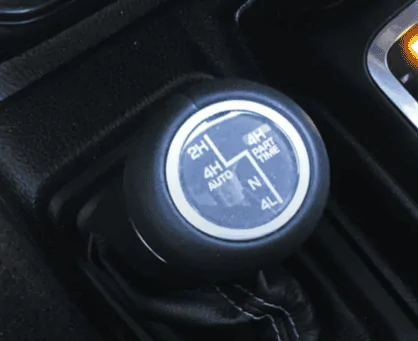
I already did my research in the manual and on this forum and it looks like it’s fine to leave it on since 4 Hi when in auto would only be activated due to a loss of traction. It also sounds like there’s a potential decrease in MPG if I leave it on, though I’m not sure if that’s been totally proven.

Anyway, two folks in service told me that the 4H Auto should never be used on dry hard surfaces. I told them that my understanding is that it’s intended to be used when you’re driving on-road in wet or icy conditions but they were adamant that wasn’t the case. I think they were wrong, can anyone confirm?
Sponsored

 
Last edited:
brianinca

Well-Known Member
First Name
Brian
Joined
Jun 8, 2020
Threads
22
Messages
1,329
Reaction score
1,384
Location
USA
Vehicle(s)
2020 Gladiator Rubicon
Occupation
IT Manager
They are ignorant and confused about 4Hi vs 4Auto. Many car people don't understand how transfer cases work and the distinctions between them, and have misconceptions about the effect of front and rear driveshafts on the overall drivetrain. It's like they heard something once and didn't understand it, but repeat it anyway.

Ford used a similar electronic clutch AWD system for many years and didn't have a 2Hi mode AT ALL.
 

dcmdon

Well-Known Member
First Name
Don
Joined
Mar 31, 2021
Threads
60
Messages
3,656
Reaction score
4,427
Location
Boston Metro-West, Northern NH
Vehicle(s)
.
I already did my research in the manual and on this forum and it looks like it’s fine to leave it on since 4 Hi would only be activated due to a loss of traction. It also sounds like there’s a potential decrease in MPG if I leave it on, though I’m not sure if that’s been totally proven.

Anyway, two folks in service told me that the 4H Auto should never be used on dry hard surfaces. I told them that my understanding is that it’s intended to be used when you’re driving on-road in wet or icy conditions but they were adamant that wasn’t the case. I think they were wrong, can anyone confirm?
4Hi isn't "activated". 4Hi is a setting.
4Hi shouldn't be used on dry hard surfaces.

But 4A or 4Auto is fine on any surface.

In 4Hi, the center transfer case is locked. The tires need to slip when turning.

In 4 Auto, the transfer case is open, allowing front and rear tires to turn at different speeds. If the computer senses a difference in wheel speed, it engages a clutch to send power to the front wheels. So it works great on dry pavement.

Re fuel economy - since the jeeps axels don't unlock, everything is turning anyway. Whether its being pushed by the road or turned by the engine doesn't matter. So there shouldn't be a difference in fuel economy.
 
Last edited:
OP
OP
nachorubicongladiator
Joined
Aug 26, 2021
Threads
2
Messages
13
Reaction score
26
Location
US
Vehicle(s)
2021 Billet Silver Jeep Gladiator Mojave
Great, thanks for confirming. I’m still learning everything about my new Jeep and how vehicles work in general and even though I thought the two guys at the service department are wrong I didn’t want assume that’s the case without checking elsewhere. ?
 

Motoarch

Well-Known Member
First Name
Ian
Joined
Apr 28, 2021
Threads
7
Messages
306
Reaction score
748
Location
Weston, CT
Vehicle(s)
Cherokee
Occupation
Architect
Yes you can leave it on.

The nice thing about that system is you can set it and forget it; thats the point.

In an over simplified description the system allows your Jeep to act like any other all wheel drive system. These days most of the systems are front drive bias and transfer power to the rear when loss of traction is detected. In your case its the other way around. All wheel drive systems are less fuel efficient but unless you'er getting wheel slip often causing the system to activate this shouldn't be a problem this specific application because its not a true all wheel drive system.
 

Sponsored

JoeJeep

Member
First Name
JW
Joined
Mar 17, 2021
Threads
0
Messages
13
Reaction score
4
Location
Long Island, NY
Vehicle(s)
2020 Jeep Gladiator Sport S Max Tow Punk'n
Occupation
IT
4H Auto (not 4H Part-Time) should be OK to leave it in when there's rain, light snow, when the wheels can 'slip' while turning. I believe that system uses a 'clutch type' system so you don't bind the front wheels. It shouldn't hurt it on dry pavement, but why have it on when it's not needed? It's great for light snow when some streets have snow and other streets are clear. Now Command Trac is different, a
Part-Time system for deep snow/sand etc and should not be used on dry pavement. It doesn't use the clutch system and the wheels won't slip and could bind up (metal things can go BING!). Thanks, JW.

Jeep Gladiator Is it ok to leave the Selec-Trac Full Time 4WD System on? Selectrac
 

brianinca

Well-Known Member
First Name
Brian
Joined
Jun 8, 2020
Threads
22
Messages
1,329
Reaction score
1,384
Location
USA
Vehicle(s)
2020 Gladiator Rubicon
Occupation
IT Manager
The Ford tuning on old Explorers sent 5% of torque to the front wheels, to tune in more understeer. Having added a power switch to turn off the relay that powered the electronic clutch, I can verify that there is virtually no loss of mileage with AWD on an already heavy vehicle (body on frame) and losing a little understeer is more fun to drive.

4H Auto (not 4H Part-Time) should be OK to leave it in when there's rain, light snow, when the wheels can 'slip' while turning. I believe that system uses a 'clutch type' system so you don't bind the front wheels. It shouldn't hurt it on dry pavement, but why have it on when it's not needed? It's great for light snow when some streets have snow and other streets are clear. Now Command Trac is different, a
Part-Time system for deep snow/sand etc and should not be used on dry pavement. It doesn't use the clutch system and the wheels won't slip and could bind up (metal things can go BING!). Thanks, JW.

Selectrac.png
 

spectre6000

Well-Known Member
Joined
Apr 18, 2021
Threads
10
Messages
555
Reaction score
588
Location
Mountains above Denver
Vehicle(s)
pending
Typical clueless dealer service. Ignore.

It is designed to be on continually. There are speed sensors on F/R output and a clutch. If a difference in speed is detected between the axles, the clutch is released to allow slip. The clutch can have variable force applied from 0-100%, and can also allow a variable transmission of torque between the axles. Once the clutch pressure is set, it's held solid mechanically. Vehicle specific programming dictates how much clutch pressure and when. Some try to be on more than off, others are more intervention-based. I believe Jeep uses the latter strategy for fuel economy purposes.

You can absolutely leave it on 365 days a year with no problem. That said, you're working that clutch, and clutches will wear. Additionally, as previously stated, you'll see a reduction in fuel efficiency for no reason.

I had a similar transfer case on my ZR2. It's excellent. It's best for conditions with "variable traction". The example I experience of this is especially good because it's sort of the extreme: I live in a canyon in the mountains above Denver, and go down to the flats regularly. In the fall, spring, and winter, it's not uncommon for us to get snow up here, and only rain in the flats. Or just variable thaw rates if you have snow followed by a warm day. Between my house (snow) and my destination (rain), there's a stretch of road that is a sheet of ice. My wife hit one of these in a particularly tight curve several years ago without studs on her snows and just conventional 4wd, and put my 4Runner on its roof after a slow motion pirouette into a soft shoulder right before a ravine opened up (no injury, truck totaled). Additionally, as the road twists and winds through the canyons, some parts are well lit and thaw/dry quickly, while others don't see the sun for months. Trees make for even more sporadic shadows/thawing. Each of those shadows will be some variation of snow/ice after the surrounding asphalt has regained full tractive surface. You go from full traction to zero on and off, over and over and over again, compounded with tight curves, rock walls on one side, and steep drop offs into a frozen creek on the other. With a regular transfer case, I'm constantly switching in and out of 4wd. If you leave it on, hit ice right after a tractive curve where you've built up some drivetrain bind, the truck can suddenly jump as that bind is released on the slick surface. It's not fun. With 4Auto, I just drop it in when I set off, and put it back in 2hi once I've firmly on dry pavement. Surefooted as a mountain goat. Add proper tires, and you have to really get cooking to slip even a little. Some people will use it seasonally, but I can't fathom why someone would be so lazy as to not want to pull a lever or press a button once or twice on a trip.
 

dcmdon

Well-Known Member
First Name
Don
Joined
Mar 31, 2021
Threads
60
Messages
3,656
Reaction score
4,427
Location
Boston Metro-West, Northern NH
Vehicle(s)
.
Yes you can leave it on.

The nice thing about that system is you can set it and forget it; thats the point.

In an over simplified description the system allows your Jeep to act like any other all wheel drive system. These days most of the systems are front drive bias and transfer power to the rear when loss of traction is detected. In your case its the other way around. All wheel drive systems are less fuel efficient but unless you'er getting wheel slip often causing the system to activate this shouldn't be a problem this specific application because its not a true all wheel drive system.
Just to expand on the less efficient aspect.

You are paying the price in efficiency whether its turned on or not. The fact that you have front driveshaft and an axel with a differential and CVJs is what costs the efficiency.

So if you have a 4 Auto setting, there is literally zero costs to leaving it on all the time since you are already paying for the weight and friction of having all that stuff in the car anyway. Unless you like oversteer, then 2H is where its at. ha.
 

jac04

Well-Known Member
First Name
Jeff
Joined
Apr 20, 2021
Threads
27
Messages
1,548
Reaction score
2,251
Location
CT
Vehicle(s)
2021 Mojave, 2014 JKRX SWB
Just to expand on the less efficient aspect.

You are paying the price in efficiency whether its turned on or not. The fact that you have front driveshaft and an axel with a differential and CVJs is what costs the efficiency.

So if you have a 4 Auto setting, there is literally zero costs to leaving it on all the time since you are already paying for the weight and friction of having all that stuff in the car anyway. Unless you like oversteer, then 2H is where its at. ha.
Well, not exactly...

In 2H, the RH side front axle disconnect is disconnected. This means the LH front axle is turning in the direction of the tire, but the driveshaft is stationary, so the RH inner axle is turning in the opposite direction of the tire and the RH outer axle is turning in the direction of the tire.

Because the driveshaft is not turning in 2H, it is supposed to be slightly more efficient.

I found that in 4HAuto on the highway in dry conditions, there is slightly more noise than in 2H. It almost sounds like slightly louder tire noise that occurs when on the throttle versus off.
 

Sponsored

ShadowsPapa

Well-Known Member
First Name
Bill
Joined
Oct 12, 2019
Threads
247
Messages
40,445
Reaction score
53,880
Location
Runnells, Iowa
Vehicle(s)
'25 JTMX, '23 JLU 4xe, '82 SX4, '73 Javelin
Occupation
Retired auto mechanic, frmr gov't ntwrk security admin
Vehicle Showcase
3
Gee, my silverado had a similar setting and guess where I LEFT IT........ yeah, "auto".
I've driven vehicles with those sort of t-case, or similar. It's made to be used for conditions like we have here - a mile of clear road, then black ice, then another half mile of clear, then snow drifts, then another half mile of clear and so on.

I am the sort that would likely leave it in 2wd mode in summers like we're having now - no rain for weeks and when it does, it's barely enough to get the grass wet.

IF this is like my car - you may wish to run in 2H most of the time unless conditions are variable because of more drag and wear - the axles would be locked. IT may make a tad more rumble noise. It would be turning the front ring and pinion all the time. But no damage would take place.
 

Motoarch

Well-Known Member
First Name
Ian
Joined
Apr 28, 2021
Threads
7
Messages
306
Reaction score
748
Location
Weston, CT
Vehicle(s)
Cherokee
Occupation
Architect
Just to expand on the less efficient aspect.

You are paying the price in efficiency whether its turned on or not. The fact that you have front driveshaft and an axel with a differential and CVJs is what costs the efficiency.

So if you have a 4 Auto setting, there is literally zero costs to leaving it on all the time since you are already paying for the weight and friction of having all that stuff in the car anyway. Unless you like oversteer, then 2H is where its at. ha.
That's not what I said. I said all wheel drive systems are less efficient and while 4A acts similarly to all wheel drive its not and therefor this logic doesn't apply unless you are experiencing excessive wheel slip.

Re-read my post.
 

dcmdon

Well-Known Member
First Name
Don
Joined
Mar 31, 2021
Threads
60
Messages
3,656
Reaction score
4,427
Location
Boston Metro-West, Northern NH
Vehicle(s)
.
Well, not exactly...

In 2H, the RH side front axle disconnect is disconnected. This means the LH front axle is turning in the direction of the tire, but the driveshaft is stationary, so the RH inner axle is turning in the opposite direction of the tire and the RH outer axle is turning in the direction of the tire.

Because the driveshaft is not turning in 2H, it is supposed to be slightly more efficient.

I found that in 4HAuto on the highway in dry conditions, there is slightly more noise than in 2H. It almost sounds like slightly louder tire noise that occurs when on the throttle versus off.
So you are saying that the hub disconnects?

That's news to me. I'm happy to delete my post if I'm wrong. Can you explain more?

My understanding was that in 2H, the only thing that disconnected was the transfer case. Which would leave the entire front drivetrain being pushed by the road.

Thanks - Don
 

dcmdon

Well-Known Member
First Name
Don
Joined
Mar 31, 2021
Threads
60
Messages
3,656
Reaction score
4,427
Location
Boston Metro-West, Northern NH
Vehicle(s)
.
That's not what I said. I said all wheel drive systems are less efficient and while 4A acts similarly to all wheel drive its not and therefor this logic doesn't apply unless you are experiencing excessive wheel slip.

Re-read my post.
Lots of AWD systems work exactly as you described. A 2 wd system with a clutch pack that is activated if the computer senses a differential in wheel speed between the front and rear wheels.
 

Motoarch

Well-Known Member
First Name
Ian
Joined
Apr 28, 2021
Threads
7
Messages
306
Reaction score
748
Location
Weston, CT
Vehicle(s)
Cherokee
Occupation
Architect
Lots of AWD systems work exactly as you described. A 2 wd system with a clutch pack that is activated if the computer senses a differential in wheel speed between the front and rear wheels.
Is this what we're doing? Really?


moving on
Sponsored


Top