Sponsored

Alignment adjustments.

First Name
Tyler
Joined
Nov 17, 2024
Threads
1
Messages
10
Reaction score
3
Location
Jefferson City, Missouri
Vehicle(s)
2024 JT, 2005 Cummins, 2000 TJ, 93 F-150, 86 Samurai
Occupation
Make Dove Body Wash
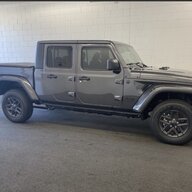
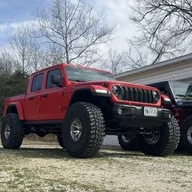
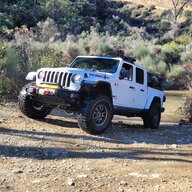
I recently finished up a lift on my Gladiator. It came with fixed control arms. Front was lower only. Rear came with uppers and lowers. It is the AccuAir air ride lift. Driving it on setting 2 which is default and 4" of lift. The front lower arms were definitely longer giving it more castor. I never touched the toe and obviously the camber. What would cause it to pull to the right now? It doesn't seem to matter what level I drive it at. still has the same results. I certainly don't recall seeing any way to adjust castor when I was swapping arms out. Thank you in advance for any tips or advice.
Sponsored
 

Rcoe

Well-Known Member
First Name
Rich
Joined
May 29, 2025
Threads
11
Messages
112
Reaction score
222
Location
Michigan
Vehicle(s)
2019 Jl Rubibcon 2D - 2022 Jeep Gladiator Rubicon - 2020 Jeep Grand Cheroke
Did you check the toe in/out after the install?

Is the axle centered under the frame?
 

kevman65

Well-Known Member
Joined
Mar 8, 2020
Threads
51
Messages
3,878
Reaction score
5,751
Location
H
Vehicle(s)
J
Contact AccuAir, their setup presents some unique geometry. They would know better than anyone else how to cure your problem.
 

CrazyCooter

Well-Known Member
First Name
Tony
Joined
Nov 1, 2020
Threads
11
Messages
2,304
Reaction score
2,557
Location
Far NorCal
Website
www.overlandvehicledynamics.com
Vehicle(s)
1991 JEEP YJ, 2021 JTR Ecodiesel
Occupation
Specialty Off Road Shop Owner
Contact AccuAir, their setup presents some unique geometry. They would know better than anyone else how to cure your problem.
Or just tell you to take it to a competent installer!
 

GuzziMoto

Well-Known Member
Joined
Jan 28, 2026
Threads
0
Messages
95
Reaction score
97
Location
Skinny part of MD
Vehicle(s)
2023 Jeep Gladiator EcoDiesel
No experience with that suspension system. So I don't know all the changes it entails that could cause a pull.
The one change I know was made in that lift install was to the side to side of the axles. With a solid axle located by a trackbar, as you raise or lower the suspension the trackbar moves in an arc, causing the axle side to side location to change. Due to the orientation of the track bars, the front track bar pivots at the chassis on the left while the rear trackbar pivots at the chassis on the right, the two axles tend to move in opposite directions when the suspension is raised or lowered. It is possible that the axles are not correctly centered, causing a pull.

Pulls are also often caused by tires and/or tire pressure.
Or a brake caliper could be dragging.

It is possible that installing a high pressure steering stabilizer would balance out the pull.
 

Sponsored

OP
OP
Gladiator_Tyler
First Name
Tyler
Joined
Nov 17, 2024
Threads
1
Messages
10
Reaction score
3
Location
Jefferson City, Missouri
Vehicle(s)
2024 JT, 2005 Cummins, 2000 TJ, 93 F-150, 86 Samurai
Occupation
Make Dove Body Wash
Did you check the toe in/out after the install?

Is the axle centered under the frame?
Axle is centered to where it was from the factory. I didn't check the toe due to I didn't mess with the tie rod. I didn't feel it would change. I am no alignment expert. After talking with Accuair yesterday, They said because of additional castor the toe could change. Now comparing apples to oranges but still the same concept when I lifted my TJ I put it on an alignment rack to have it aligned. From then on I've always done a tape measure alignment and it drives great and wears tires great. I've added castor with adjustable control arms and not change the toe and it drove and still drives great. Relocated steering box, track bar, change tie rods. It has always driven great and still does to this day. Never had death wobble and always a tape measure alignment with 1/8" of toe in. Being the Gladiator is a different animal I will rotate the tires like it has been suggested and I will put it on alignment rack and get the measurements and send them to Accuair. They're more than willing to help. Alignment rack may show the toe is out of spec too.
 

Sandman 4x4

Well-Known Member
First Name
Kevin
Joined
Jul 23, 2024
Threads
0
Messages
687
Reaction score
560
Location
Kissimmee, Florida
Vehicle(s)
2024 Gladiator Sport S
Occupation
Retired. Beach bum.
I recently finished up a lift on my Gladiator. It came with fixed control arms. Front was lower only. Rear came with uppers and lowers. It is the AccuAir air ride lift. Driving it on setting 2 which is default and 4" of lift. The front lower arms were definitely longer giving it more castor. I never touched the toe and obviously the camber. What would cause it to pull to the right now? It doesn't seem to matter what level I drive it at. still has the same results. I certainly don't recall seeing any way to adjust castor when I was swapping arms out. Thank you in advance for any tips or advice.
Having the caster set wrong without any proper amount holding the axle on a slight tilted back angle would not cause any pull to either side. That would take the toe in/out or axles not aligned correctly together. Without the proper caster the steering wheel would not self correct coming out of a turn and continue to fall into the curve. At worst cause terrible death wobble going over certain bumps.
 

Steve@AccuAir

Rock Sponsor (Level 1)
First Name
Steve
Joined
Sep 24, 2025
Threads
5
Messages
35
Reaction score
35
Location
North Carolina
Vehicle(s)
2004 LJ, Raptor
Occupation
Sales
The alignment spec sheet will reveal the culprit of your alignment issues for sure and we'll work with you to get it resolved as quickly as possible! Lots of great suggestions and ideas here too!
 

GuzziMoto

Well-Known Member
Joined
Jan 28, 2026
Threads
0
Messages
95
Reaction score
97
Location
Skinny part of MD
Vehicle(s)
2023 Jeep Gladiator EcoDiesel
Caster does affect toe, slightly. But if caster was at 4.5 degrees before you lifted, and as part of the lift you had longer lower front control arms to put caster back to 4.5 degrees, or about that, there really was no change in caster so there would be no effect on toe. It is not caster correction that affects toe, it is the actual caster that you have.
More caster means slightly less toe with the same tie rod length, whether it is toe in or toe out. Less caster means for the same tie rod length you will have more toe.
Normally toe doesn't cause a pull.
 

VA6489

Well-Known Member
First Name
Rob
Joined
Nov 2, 2017
Threads
9
Messages
293
Reaction score
349
Location
Dahlgren Va
Vehicle(s)
Mercedes E250 Bluetec
Build Thread
Link
Occupation
DoD
I recently finished up a lift on my Gladiator. It came with fixed control arms. Front was lower only. Rear came with uppers and lowers. It is the AccuAir air ride lift. Driving it on setting 2 which is default and 4" of lift. The front lower arms were definitely longer giving it more castor. I never touched the toe and obviously the camber. What would cause it to pull to the right now? It doesn't seem to matter what level I drive it at. still has the same results. I certainly don't recall seeing any way to adjust castor when I was swapping arms out. Thank you in advance for any tips or advice.

Stock caster setting are a little sporty. Most reputable suspension companies run 7 degrees of caster or more. Ran 9 on my lifted JKURR. The only way to adjust that in the Accuair kit is to replace the lower or upper control arms with adjustable units. In my case replaced all 8 with Clayton adjustable control arms.

Toe you are looking for 1/16-1/8th inch. Easy to do with simple tools and a measuring tape.

Camber can be adjusted in a variety of ways some rigs have shims some have sleeves.
Use offset ball joint sleeves to adjust

https://www.polyperformance.com/spc-jljtc-parent-spc-jeep-jl-jt-camber-sleeves

Cheers
 

Sponsored

Dragonfly

Well-Known Member
First Name
Scott
Joined
Jul 24, 2021
Threads
10
Messages
70
Reaction score
125
Location
Springfield, MO
Vehicle(s)
'24 Wrangler 392, '21 Gladiator Mojave, '22 GC Trailhawk 4xe (sold)
Occupation
Education
Axle is centered to where it was from the factory. I didn't check the toe due to I didn't mess with the tie rod. I didn't feel it would change. I am no alignment expert. After talking with Accuair yesterday, They said because of additional castor the toe could change. Now comparing apples to oranges but still the same concept when I lifted my TJ I put it on an alignment rack to have it aligned. From then on I've always done a tape measure alignment and it drives great and wears tires great. I've added castor with adjustable control arms and not change the toe and it drove and still drives great. Relocated steering box, track bar, change tie rods. It has always driven great and still does to this day. Never had death wobble and always a tape measure alignment with 1/8" of toe in. Being the Gladiator is a different animal I will rotate the tires like it has been suggested and I will put it on alignment rack and get the measurements and send them to Accuair. They're more than willing to help. Alignment rack may show the toe is out of spec too.
I have the ACCUAIR system on my Jeep. As you raise (higher lift) the jeep, the front axel will shift since the front track bar, which keeps the axel centered under the frame will need to be adjusted to ensure the axel is centered at a particular height. It is important to center the front axel via the trackbar at the setting you primarily drive at (I set mine at level 1 since this is the height I drive for all on-road travel). I also upgraded to a Metalcloak front track bar for better rigidity. Also, if you upgraded the steering stabilizer (not a through-shaft) that can cause pressure from the shock in wanting to pull (compress) the shock back resulting in a pull to one side.
 
Last edited:

Sandman 4x4

Well-Known Member
First Name
Kevin
Joined
Jul 23, 2024
Threads
0
Messages
687
Reaction score
560
Location
Kissimmee, Florida
Vehicle(s)
2024 Gladiator Sport S
Occupation
Retired. Beach bum.
Caster does affect toe, slightly. But if caster was at 4.5 degrees before you lifted, and as part of the lift you had longer lower front control arms to put caster back to 4.5 degrees, or about that, there really was no change in caster so there would be no effect on toe. It is not caster correction that affects toe, it is the actual caster that you have.
More caster means slightly less toe with the same tie rod length, whether it is toe in or toe out. Less caster means for the same tie rod length you will have more toe.
Normally toe doesn't cause a pull.
How can tiling the solid axle back on its axis effect toe in or out, with the solid tie rod perpendicular to the axle? The drag link may affect the steering wheel on center. But that’s all.
 

CrazyCooter

Well-Known Member
First Name
Tony
Joined
Nov 1, 2020
Threads
11
Messages
2,304
Reaction score
2,557
Location
Far NorCal
Website
www.overlandvehicledynamics.com
Vehicle(s)
1991 JEEP YJ, 2021 JTR Ecodiesel
Occupation
Specialty Off Road Shop Owner
How can tiling the solid axle back on its axis effect toe in or out, with the solid tie rod perpendicular to the axle?
If the camber were perfect 0° this "could" be the case, but camber on these trucks is usually -0.25 to -0.5°. It's always good practice to recheck after a change has been made.

In a negative camber scenario, rolling the axle rearward (for positive caster) would result in toe out, yes?
 
Last edited:

GuzziMoto

Well-Known Member
Joined
Jan 28, 2026
Threads
0
Messages
95
Reaction score
97
Location
Skinny part of MD
Vehicle(s)
2023 Jeep Gladiator EcoDiesel
How can tiling the solid axle back on its axis effect toe in or out, with the solid tie rod perpendicular to the axle? The drag link may affect the steering wheel on center. But that’s all.
It is geometry.
Extreme example for illustration.
Say you have zero caster and 1/8" of toe in. At that point, the angle the front wheels are toe'd in at is the most extreme it can be, so the amount of toe you get from the angle the front wheels are at is the most it can be. Now start tilting the axle back, adding more caster. As you do that, the angle the front wheels are toe'd in at is moving away from perpendicular to the measuring plane (the ground) so the amount of toe that results from the angle the front wheels are toe'd in at is being reduced. By the time the front axle was rotated 90 degrees, the amount of toe from that angle would be zero. Now, you are never going to run caster at zero or 90, but the effect of the angle the front wheels are pointing towards or away from each other vs the ground is the same. Toe is always relative to the ground. But the tie rod adjusts relative to itself. As the axle is rolled back to add caster the tie rod moves with it.
 

Sandman 4x4

Well-Known Member
First Name
Kevin
Joined
Jul 23, 2024
Threads
0
Messages
687
Reaction score
560
Location
Kissimmee, Florida
Vehicle(s)
2024 Gladiator Sport S
Occupation
Retired. Beach bum.
It is geometry.
Extreme example for illustration.
Say you have zero caster and 1/8" of toe in. At that point, the angle the front wheels are toe'd in at is the most extreme it can be, so the amount of toe you get from the angle the front wheels are at is the most it can be. Now start tilting the axle back, adding more caster. As you do that, the angle the front wheels are toe'd in at is moving away from perpendicular to the measuring plane (the ground) so the amount of toe that results from the angle the front wheels are toe'd in at is being reduced. By the time the front axle was rotated 90 degrees, the amount of toe from that angle would be zero. Now, you are never going to run caster at zero or 90, but the effect of the angle the front wheels are pointing towards or away from each other vs the ground is the same. Toe is always relative to the ground. But the tie rod adjusts relative to itself. As the axle is rolled back to add caster the tie rod moves with it.
You answered the question for yourself. The only way to adjust, or change toe in or out is by adjusting the length of the tie rod! Tilting the axle back or forward, while the axle and tie rod are set and tightened, will not move the toe adjustment. The tire contact patch on the ground will be the same. In an extreme example the only effect on the wheel would be the angle at which it is set in the relationship with the flat surface, that’s in effect changing the caster, wether the wheel is leaning in or out of the wheel well. Not toe. On a solid axle.
Sponsored


Top