Sponsored

An advantage of amber fog lights

Jefe1018

Well-Known Member
Joined
Mar 4, 2020
Threads
48
Messages
3,126
Reaction score
5,261
Location
NV
Vehicle(s)
Sold the 21 JT Rubi Ecodiesel, now a 4.5 gen Powerwagon
Build Thread
Link
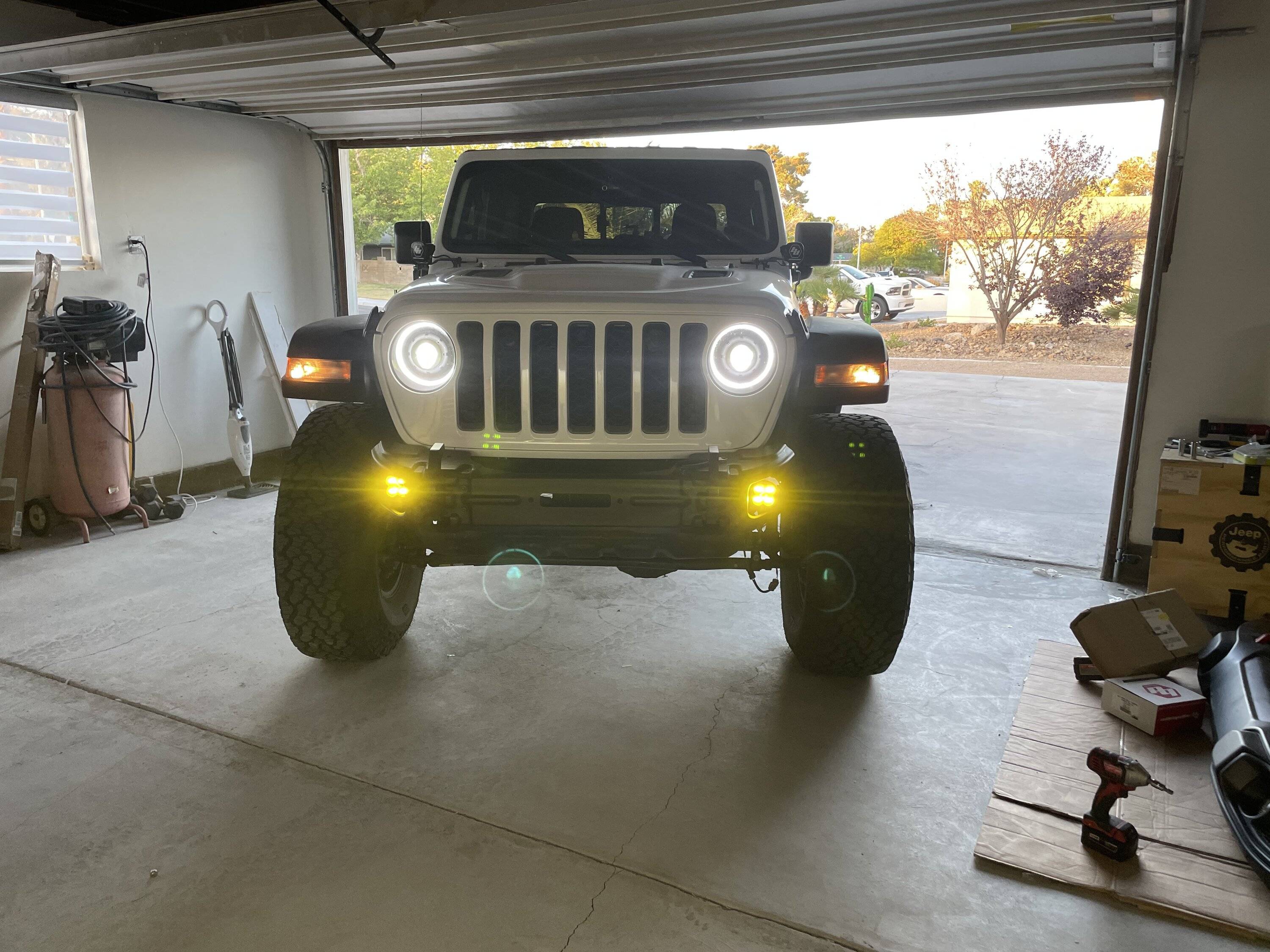
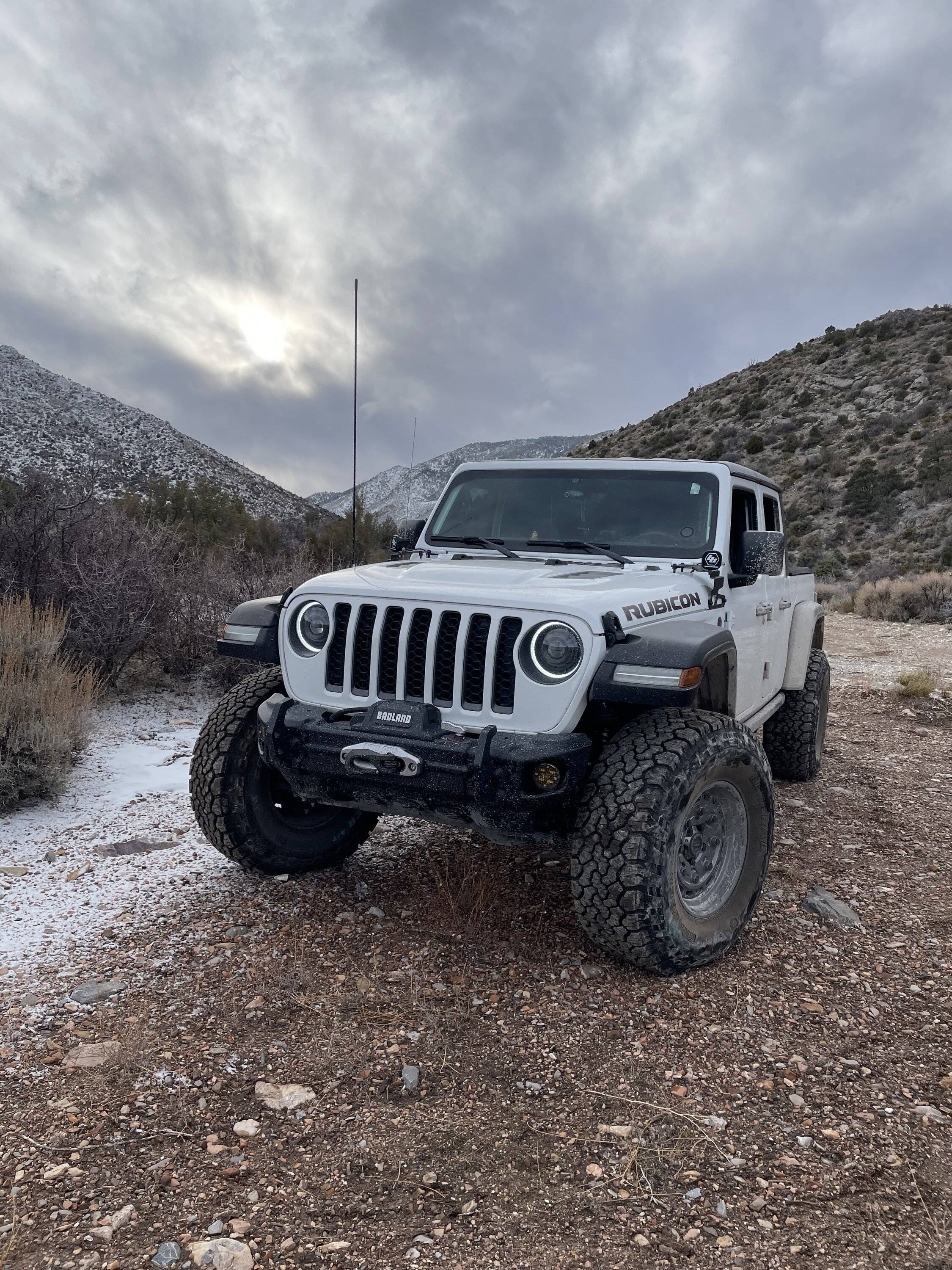
I’ve run BD fogs in amber for almost two years and like them. I forget the exact model, link should be in post 1 of my build thread.

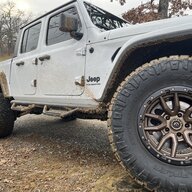
Jeep Gladiator An advantage of amber fog lights IMG_3084
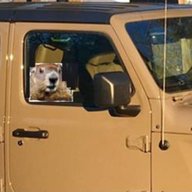
Jeep Gladiator An advantage of amber fog lights IMG_1396
Sponsored


ShadowsPapa

Well-Known Member
First Name
Bill
Joined
Oct 12, 2019
Threads
247
Messages
40,506
Reaction score
54,031
Location
Runnells, Iowa
Vehicle(s)
'25 JTMX, '23 JLU 4xe, '82 SX4, '73 Javelin
Occupation
Retired auto mechanic, frmr gov't ntwrk security admin
Vehicle Showcase
3
DiodeDynamics. Had them in my 2020 and put them in my 2022. Love them. Great on the winding curvy hilly highways around here when it's snowing bad or foggy. Can easily see edge of the road and the markings if any are there.

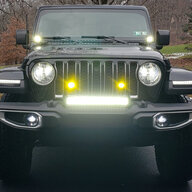
Jeep Gladiator An advantage of amber fog lights 20221027_225348
 
Last edited:
OP
OP
bd100

bd100

Well-Known Member
Joined
May 31, 2022
Threads
28
Messages
764
Reaction score
746
Location
USA Midwest
Vehicle(s)
JT, WK2, ole' Ram
May help with seasonal affective disorder, too. In fact I used to put a small incandescent lamp on my desk in the fluorescent-lit office. Too much grey blah in the air. Kind of why I don't like HID bulbs either.

Here is another theory regarding people turning out in front of an oncoming car: As someone mentioned above, people have a harder time judging distance and speed. A point source of light is hard. A larger area of light is easier to see. (In fact a solid bar-of-soap sized tail light is probably easier to see than some of these thin LED things which are so popular now.) Two large blobs of light a standard car-width apart make it easier still to measure their distance. Consider a motorcycle with additional amber bulbs next to the single head light, forming a string of lights instead of a single bulb. Better still if the marker lights are down low, forming a two-dimensional triangle. And a car with fog lights forms a box of lights. Easier still.

The other thing is in traffic in the rain sometimes you can't even tell if it's a motorcycle or a car with a dead headlight. And if you see three white lights coming at you, is it a motorcycle next to a car, a car partly obscured by another, or a Tucker?! Add marker and fog lights and things become more obvious. Make the fogs yellow and it's easier still.

And yellow is a "pay attention!" color. I especially want them on when towing.
 

JTGuy

Well-Known Member
First Name
Pascual
Joined
Jul 23, 2023
Threads
57
Messages
1,754
Reaction score
1,681
Location
San Dimas CA
Vehicle(s)
20022 Jeep Gladiator
Occupation
Manager
Jeep Gladiator An advantage of amber fog lights IMG_6330
 

JTGuy

Well-Known Member
First Name
Pascual
Joined
Jul 23, 2023
Threads
57
Messages
1,754
Reaction score
1,681
Location
San Dimas CA
Vehicle(s)
20022 Jeep Gladiator
Occupation
Manager
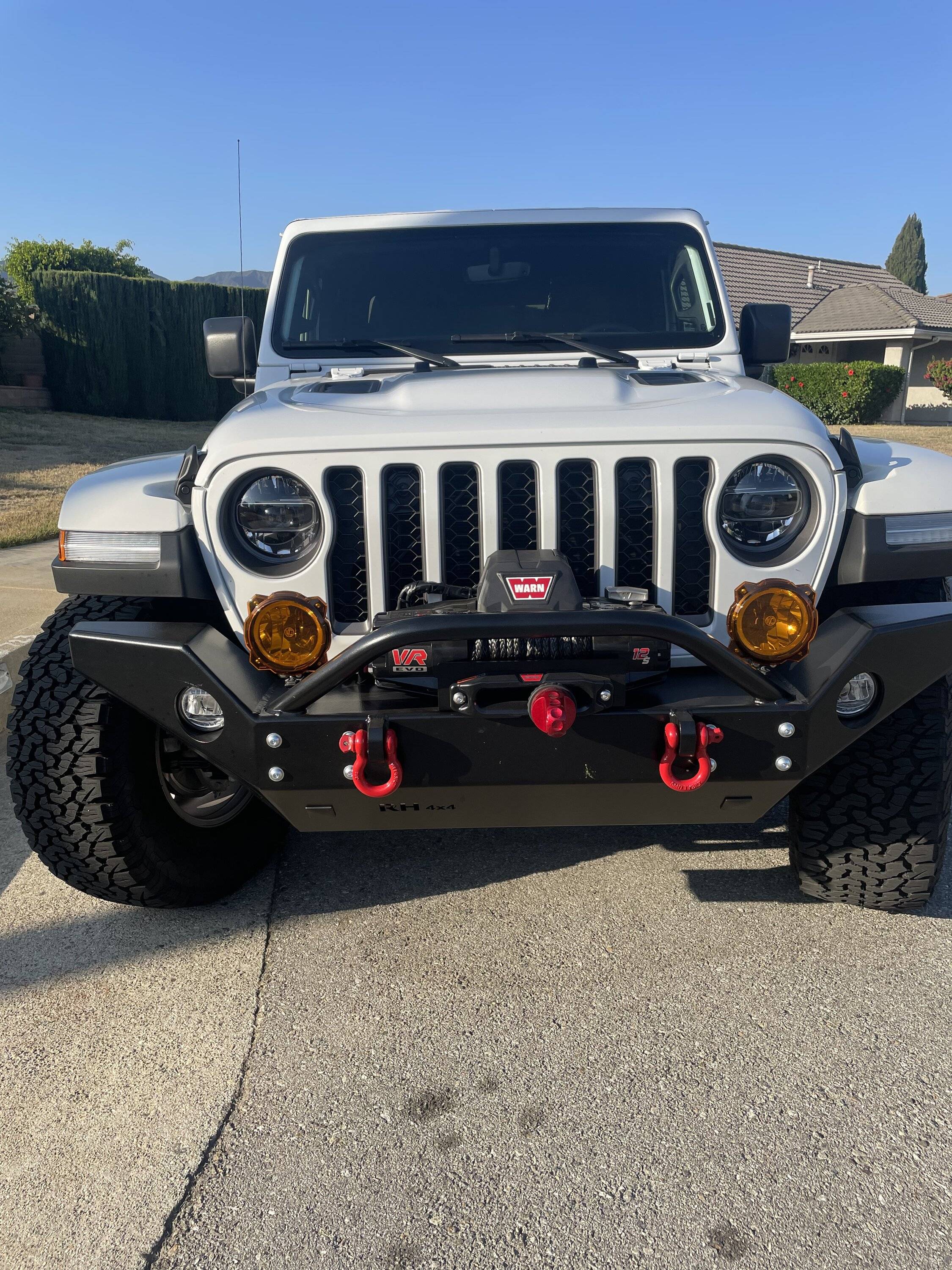
I run my KC 6 inch LED all the time . I have them aimed so I don't blind people. See and be seen is my reason.
 

Sponsored

ShadowsPapa

Well-Known Member
First Name
Bill
Joined
Oct 12, 2019
Threads
247
Messages
40,506
Reaction score
54,031
Location
Runnells, Iowa
Vehicle(s)
'25 JTMX, '23 JLU 4xe, '82 SX4, '73 Javelin
Occupation
Retired auto mechanic, frmr gov't ntwrk security admin
Vehicle Showcase
3
May help with seasonal affective disorder, too. In fact I used to put a small incandescent lamp on my desk in the fluorescent-lit office. Too much grey blah in the air. Kind of why I don't like HID bulbs either.

Here is another theory regarding people turning out in front of an oncoming car: As someone mentioned above, people have a harder time judging distance and speed. A point source of light is hard. A larger area of light is easier to see. (In fact a solid bar-of-soap sized tail light is probably easier to see than some of these thin LED things which are so popular now.) Two large blobs of light a standard car-width apart make it easier still to measure their distance. Consider a motorcycle with additional amber bulbs next to the single head light, forming a string of lights instead of a single bulb. Better still if the marker lights are down low, forming a two-dimensional triangle. And a car with fog lights forms a box of lights. Easier still.

The other thing is in traffic in the rain sometimes you can't even tell if it's a motorcycle or a car with a dead headlight. And if you see three white lights coming at you, is it a motorcycle next to a car, a car partly obscured by another, or a Tucker?! Add marker and fog lights and things become more obvious. Make the fogs yellow and it's easier still.

And yellow is a "pay attention!" color. I especially want them on when towing.
Man, I seem to see some logic in there.
Here's something to look out for in the future of headlights and lighting in general.
Lights, especially headlights, have become "brighter" over the years. I'm not the only one to notice and actually complain about it - more when idiots toss in the bazillion megawatt 100,000,000 lumen lights and then don't aim them. Well, NHTSA has taken note - as have manufacturers who have received complaints.
Future headlights may do more than just automatically dim - they may account for "the other guy" coming at you in the other lane and move the light away from that lane until that car passes.
Even properly aimed modern headlight are causing a problem for enough people - it's gotten the attention of auto makers and NHTSA. And here I thought I was the only one who wanted to carry a pellet pistol and shoot out some headlights, driving lights and what the show-offs insist are "fog lights" yet they use them 24/7/365 sun or blizzard.

I have them aimed so I don't blind people.
Thank you for that.
 

Maximus Gladius

Well-Known Member
First Name
Kevin
Joined
Jan 30, 2021
Threads
75
Messages
2,914
Reaction score
3,727
Location
Calgary, AB, Canada
Vehicle(s)
2021 JTR, 2023 JTR
I have white halogen bulbs in the DRLs, and am considering putting amber bulbs in their place.

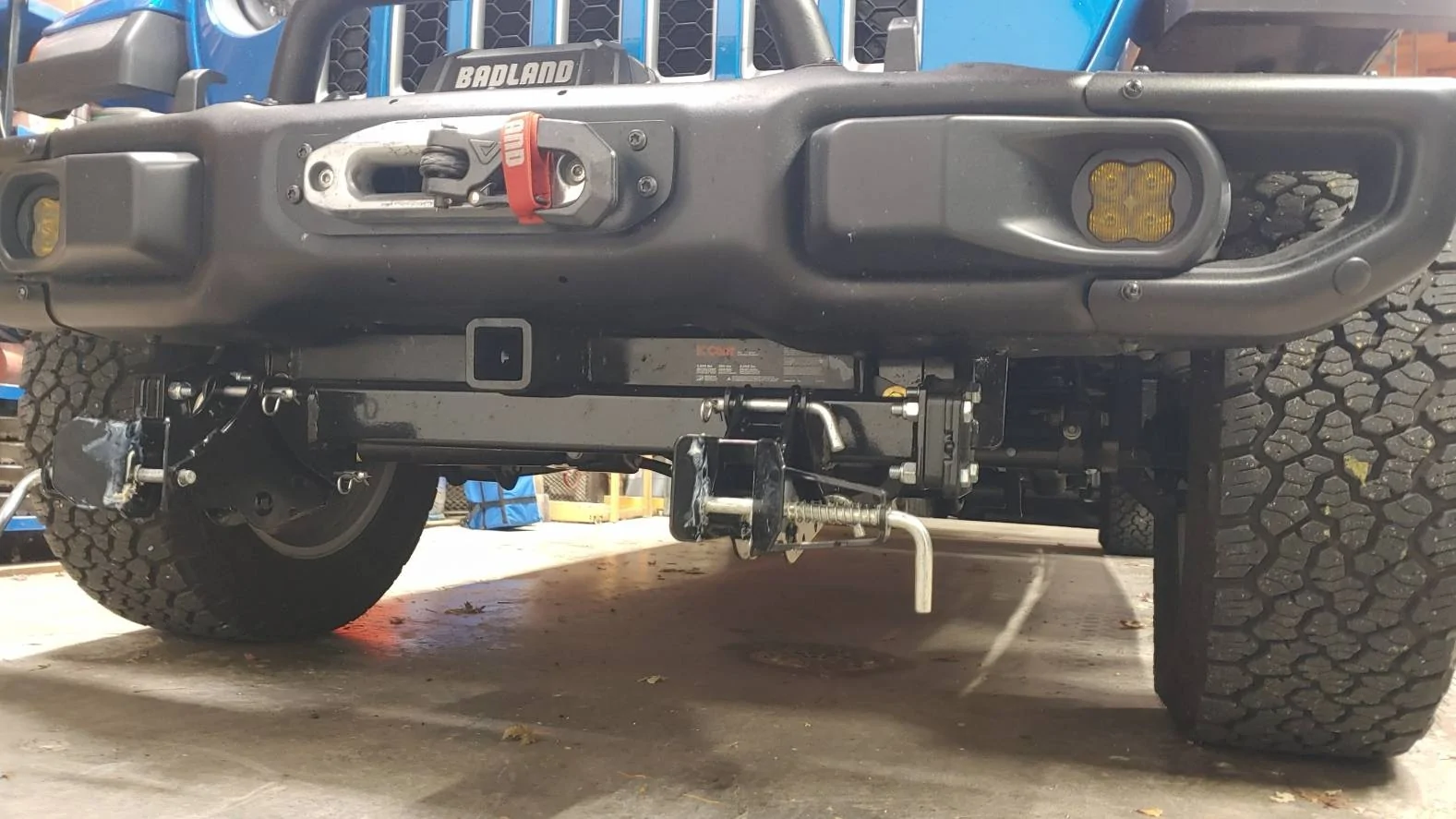
For the fogs I had yellow kapton tape on the halogen fogs and they worked great except didn't reach far. Good for people seeing me and also good for seeing the lane markings up close, which are what fogs are for, but not so much for reaching out. Now I have Baja Designs SAE fogs which put out more light, but still are not driving lights. I have them aimed a bit down more than I have to because when I hook up the trailer they will be aimed higher and it's hard to adjust them. For the headlights I can adjust them in a moment with a long 6mm hex wrench.

Anyhow, if you have halogen fogs then a yellow tape works great. If you have LED fogs then it may take several layers. On our other car we have LED fogs and it took three or so layers, but the results is great, and it sure stands out in traffic.
Consider air bags in the back to keep the truck level when the trailer hooks up. They work very well to keep the lights aimed right.
 

CampThree

Well-Known Member
First Name
Tom
Joined
Sep 28, 2023
Threads
1
Messages
75
Reaction score
134
Location
NC
Vehicle(s)
2022 Jeep Mojave, 1993 C1500 Silverado,
Occupation
Retired US Marine
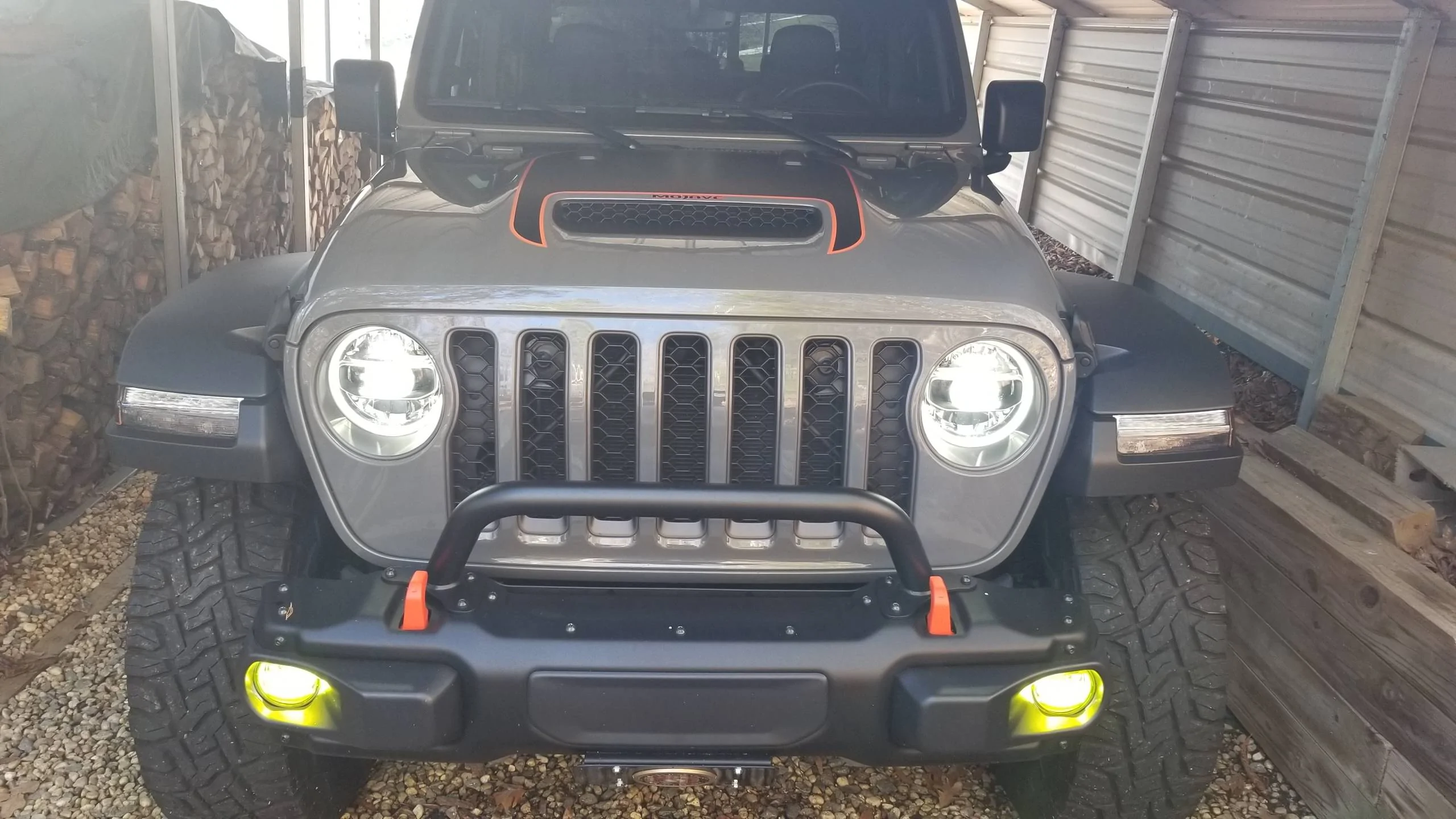
I use my own eyes as an example of the effectiveness of fogs. When I see amber or orange fogs in the day they always catch my attention over white drl's. I used LaminX covers to keep things simple and so far no issues.

Jeep Gladiator An advantage of amber fog lights 20231231_131609
 

ShadowsPapa

Well-Known Member
First Name
Bill
Joined
Oct 12, 2019
Threads
247
Messages
40,506
Reaction score
54,031
Location
Runnells, Iowa
Vehicle(s)
'25 JTMX, '23 JLU 4xe, '82 SX4, '73 Javelin
Occupation
Retired auto mechanic, frmr gov't ntwrk security admin
Vehicle Showcase
3
Consider air bags in the back to keep the truck level when the trailer hooks up. They work very well to keep the lights aimed right.
That's what I did to avoid being RUDE and dangerous for other drivers. Huge difference! Helped me as far as seeing the road directly in front of me as well.
 

Sponsored

fireproof69

Well-Known Member
First Name
Ken
Joined
Dec 6, 2023
Threads
6
Messages
162
Reaction score
309
Location
Tulsa, OK
Vehicle(s)
2023 Jeep Gladiator Sport S
Build Thread
Link
Occupation
Machinist
I put yellow film over the bumper lights on my Ram. But after a few years they started getting a little dull. And after about 8yrs… I had to use a razor blade to scrape the cooked on film off. That was with stock halogen bulbs.
I’m looking at buying a set of Diode Dynamic yellow LED for my Gladiator
 

Gatorized

Well-Known Member
Joined
Sep 13, 2019
Threads
8
Messages
1,880
Reaction score
1,762
Location
ME/NH
Vehicle(s)
‘14 Mazda3, ‘20 JTR (Gator), ‘25 RAV4 PHEV

cjoanzy

Active Member
First Name
Carl
Joined
Nov 29, 2022
Threads
4
Messages
25
Reaction score
17
Location
Chester County PA
Vehicle(s)
2022 Gladiator Overland
Occupation
Manager
Was trying to find opinions on Amber vs Yellow. Appears the Yellow is a better option for using in heavy fog conditions. Found this on the web somewhere. Seems accurate. But what do I know? I have Oracle Yellows 60mm 15w Emitter Module on my grill. May be positioned a little too high and not strong enough. Rated at "up to 1000 Lumens". Haven't used them in "Heavy Fog" yet. Might add a second set of Yellows. My "White LED" bar on the bumper is pointed down at the ground, but the white light is not good in "Heavy Fog".

https://www.oraclelights.com/products/oracle-lighting-60mm-15w-fog-beam-led-emitter-module


INFO off the Web - take it for what's it's worth, it's a little long, but has some good info:

Amber vs. Yellow vs. White Fog Lights
Visibility: How is that measured?
White and yellow light operate based on what is known as the Visibility Index (VI). It suggests a number representing how well drivers can see with the naked eye. This visibility scale ranges from 1 to 10, with 1 being extremely low visibility conditions such as heavy storms and 10 being clear, sunny skies with unlimited visibility.

The color of your fog lights affects their performance in different situations depending on your car VI falls on the spectrum.

As such, what should you take into account?

Glare

Glare can be a problem when driving at night. Glare is caused by light reflecting off a shiny surface, such as a patch of wet road or a clean, shiny car body. This light bounces back into your eyes, reducing the visibility on the road ahead.

The white fog light produces more glare when compared to the yellow fog. This is because white light is more concentrated, has less color, and therefore does not scatter as much as yellows do.

The Bright Side

Yellow may be the color of sunshine and happiness, while white makes you squint, like the glare off freshly fallen snow. Although yellow is nice, but it doesn’t wake you up.

The same goes with fog lights. A critical difference between the yellow and white light is brightness.

Once upon a time, yellow fog lights used to be the norm since the yellow filters the light to reduce glare, making it easier for other drivers on the road. However, as lighting technology progressed, bright white light was invented since it is brighter and more effective at illuminating your path.

Color Temperature

Let’s start by clearing up the dilemma between color temperature and brightness.

There is a common misconception that the higher the Kelvin reading on a light bulb, the “whiter” it will appear. More specifically, white lights may appear brighter than yellow ones, but that’s because the human eye is more sensitive to them.

That is not true. The Kelvin scale measures color temperature, which only has to do with perception and not actual brightness. Hence, changing the color temperature does not change actual brightness and can result in a spotty or uneven light if all bulbs are at different temperatures.

Additionally, white fog lights tend to have higher brightness, ranging from 5000 to 6000 kelvins. On the other hand, yellow fog lights vary from 2000 to 3000 kelvins.

It is generally true that white lights may appear brighter than yellow

Considering this, you might be thinking: “Hm, since 10,000K is brighter than 6,000K, maybe I should just get the 10,000K bulbs and call it a day.”

Well, not so fast! There’s more to this story than meets the eye. Before jumping to any conclusions about which bulb to buy for your vehicle’s fog lights—or any lights for that matter—it’s essential that we understand how different colors of light behave in different situations.

So, how do we perceive colors?
When we look at something, the light enters our eyes and is processed by our brain. We see the color of an object because it reflects specific wavelengths of light to us, and other wavelengths are absorbed. For example, green objects reflect the wavelength that appears green to us while absorbing all others. Your brain then translates these reflections into the color green.

However, when you’re looking through thick fog or smoke, the situation gets more complicated than when you’re looking at something that merely blocks out the incoming sunlight and casts a shadow on your retina.

More specifically, the human eye is sensitive to a particular wavelength or colors, with yellow at 589nm and white at 695nm. When there is fog or poor visibility, the light reflected from water droplets makes it challenging to see clearly.

On this account, instead of absorbing some colors and reflecting others, most objects are transparent to some degree in this scenario. In other words, they let some light pass through them unaltered while still blocking other frequencies of light waves from entering your eye. The result is that there’s not just one color being reflected into your eyeball; there are many.

The wavelength of the light

Different wavelengths behave differently as they come into contact with water droplets suspended in fog or mist—and some are much better at getting through than others!

Foggy Eyes, Foggy Sight
Let’s talk about how yellow and white fog lights affect the human eye because, without understanding that, it’s hard to decide on which color to choose.

Colors and Fog Lights

A similar process applies in the case of headlights and fog lights – they produce a certain wavelength to be seen by our eyes and brains. Sometimes, this can be tricky: when you’re driving through street lights or fog lights at night, your pupils get smaller to keep out all the extra light being produced by surrounding lights. This is why sudden bursts of bright headlights seem overwhelming, even though we can typically see them just fine when driving in normal lighting conditions.

Since yellow light lies towards the center of the visible spectrum, yellow fog lights make it easier for the human eye to perceive them more accurately and thus improve the visibility even during low visibility conditions such as rain, snow, or fog. On the other hand, white light has a longer wavelength, making it harder for us to process that information accurately in our brain when there’s very little visibility.

What About Amber Fog Lights?
The difference between yellow and amber fog lights is a matter of optics. It’s difficult to see the difference with the naked eye, but with scientific instruments, you can notice that yellow light has longer wavelengths than amber light.

In practice, amber beams combine red and yellow, creating a warm glow that isn’t too harsh on the eyes. Yellow headlights use purer yellow or may have a combination of yellow and green, which gives off a brighter glow than amber fog lights. Fog lights are typically in the high-intensity discharge (HID) family of light sources, with more lumens per watt than incandescent bulbs.

In addition, the yellow-green shade tends to be more common in fog lights because this color typically provides a neutral color with a good view.

Car manufacturers have agreed that this naming convention makes sense, so they label their products according to what colors are used in each product’s manufacture.

Yellow (Amber) Fog Lights vs. White Fog Lights
Wavelengths

Yellow light has a shorter wavelength, which is less intense than white light. It’s also more visible due to the shorter wavelength.

White light, on the other hand, has a longer wavelength and is more intense than yellow light. This makes it easier to reflect and causes glare.

Therefore, yellow lights could be considered preferable for low visibility conditions and white ones for higher visibility conditions. As such, for standard driving conditions (i.e., moderate visibility), white lights may be a better option.

Reflection

The strong scattering effect of fog particles causes the fog to refract light towards you. It’s as if you’re in a cloud of tiny mirrors all around you, reflecting everything at your eyes, making it difficult for you to see anything ahead of you clearly.

In this case, yellow lights are less likely to get reflected off those mirrors (fog particles), which then helps you see through the fog better without getting blinded by the reflected headlight beams from the vehicle ahead of you or even your own vehicle’s headlamps reflecting off those mirrors (fog particles).

Visibility

Consequently, when it comes to penetrating thick fog where visibility is low, yellow lights may be better than white ones because they produce a more dispersed beam of light–which is excellent for getting all over a large area quickly and efficiently, like when visibility is low.

However, when it comes to areas with higher visibility, like thinner fog or night driving conditions with no fog at all, white lights outperformed yellow ones because they produce a more concentrated beam of light that was capable of greater penetration through the environment–which is ideal for seeing further down the road and into blind spots!

Daytime vs. Nighttime

White light is ideal for nighttime driving. It offers the best visibility and helps you see everything ahead of your car, including animals, oncoming traffic, and other potential hazards on the road. However, yellow light has better contrast in low-light conditions such as rain or fog, so it can help you see better during those conditions (even though this isn’t its actual purpose).

To Clear Things Up
The answer to all precautious drivers’ questions: it depends. Both yellow and white light have their pros and cons, depending on the intended purpose.

Suppose you’re looking for fog lights strictly designed to combat heavy fog and maximize your vision during low-visibility conditions. In that case, yellow lights may be your best bet: they’ll spread across a smaller area faster than other headlights would allow.
Yellow light reduces the glare to other drivers. Because of the selective yellow light, it reduces the glare to other drivers. It is more effective during fog as well. You also have to be careful using your high beams when it’s foggy or snowy outside because you can cause visibility problems for other drivers. White light is more confusing and unfocused in foggy conditions.
Yellow light is harder to see during the day. The human eye is more sensitive to blue rather than yellow light, so it takes a bit of time for the eye to adjust quickly to such light. If you’re driving in an area with high humidity, yellow fog lights might not be as helpful as white ones because they will reflect off the moisture in the air and make it even harder for you to see through the fog.
When it comes to higher visibility, the best options would be white fog lights since they offer a higher degree of penetration through the inclement conditions, an ideal aspect for seeing further down the road and into blind spots.
White light is preferable in heavy rain and snowstorms. It will illuminate the road better, while yellow light has a harder time cutting through these inclement conditions.
White illuminates the road better, since yellow glass essentially filters the visual spectrum of the light. It creates a darker environment by filtering out more light than the human eye can perceive.
 

ShadowsPapa

Well-Known Member
First Name
Bill
Joined
Oct 12, 2019
Threads
247
Messages
40,506
Reaction score
54,031
Location
Runnells, Iowa
Vehicle(s)
'25 JTMX, '23 JLU 4xe, '82 SX4, '73 Javelin
Occupation
Retired auto mechanic, frmr gov't ntwrk security admin
Vehicle Showcase
3
Again from a lighting expert -

Jeep Gladiator An advantage of amber fog lights 1705209881723


What, then, explains the persistent subjective preference amongst experienced poor-weather drivers for selective yellow fog lamps (whether or not they happen to know that's the name of the colour), despite decades of white fog lamp prevalence? Selective yellow light can improve a driver's ability to see in fog or rain or snow, but not because it 'penetrates fog better' or 'reflects less off droplets'. In fact it's because of the way the human eye processes different colours of light. Blue, indigo, and violet are difficult for the human optical system to process correctly. They are the shortest visible wavelengths and tend to focus in front of our retina rather than upon it. To demonstrate this to yourself, after dark find a deep blue storefront sign or blue lights on an airport runway or something else that's a deep blue light emitter against a dark background in the absence of white light—from any appreciable distance, it's almost impossible for your eyes to see the blue lighted object as a sharply defined form;the edges blur. The blur effect is not present with nearby signs or lights of colours other than blue.

Blue also is a very difficult colour of light to look at; it stimulates the reaction we call glare. Within the range of allowable white light, bluer headlamps have been shown to be 46% more glaring than yellower ones for a given intensity of light — see studies here and here. So, it seems culling the blue out of the spectrum lightens the optical workload and reduces glare. For a more detailed examination of this effect with respect to driving in foul weather, see Bullough & Rea's study on the topic.
 
OP
OP
bd100

bd100

Well-Known Member
Joined
May 31, 2022
Threads
28
Messages
764
Reaction score
746
Location
USA Midwest
Vehicle(s)
JT, WK2, ole' Ram
Yea, that "off the web" stuff quoted above is full of errors and self contradictions, which I won't bother to itemize. I can see reason to have both yellow and white, and am considering keeping the yellow fogs with the low beams and adding supplemental white driving/wide cornering lights for use with the high beams.
Sponsored


Top