
Sponsored

Battery Tender

Chasm

Well-Known Member
Joined
Jul 4, 2025
Threads
8
Messages
617
Reaction score
697
Location
Illinois
Vehicle(s)
2025 Gladiator, 2020 Challenger Shaker, 65 Ford Fairlane
Occupation
Defense
Just got my truck back from the dealer and they said "you're right, the batteries were low" but not low enough to be a warranty issue, so they just charged them. I said "yeah, but the truck is supposed to do that on it's own".

So they went down the list:
"You let it sit for a while" Nope. 6 days a week at least.
"You only do short trips" Nope. 30 minutes is my normal minimum.
"You only drive in town" Nope. 26 of those 30 minutes are interstate.

After the charge it finally dropped the voltage on my way home though. Haven't seen that in a while
Sponsored

 

brsnow2585

Well-Known Member
First Name
Bryan
Joined
Jan 16, 2025
Threads
0
Messages
305
Reaction score
307
Location
Illinois
Vehicle(s)
22 JT Rubicon diesel
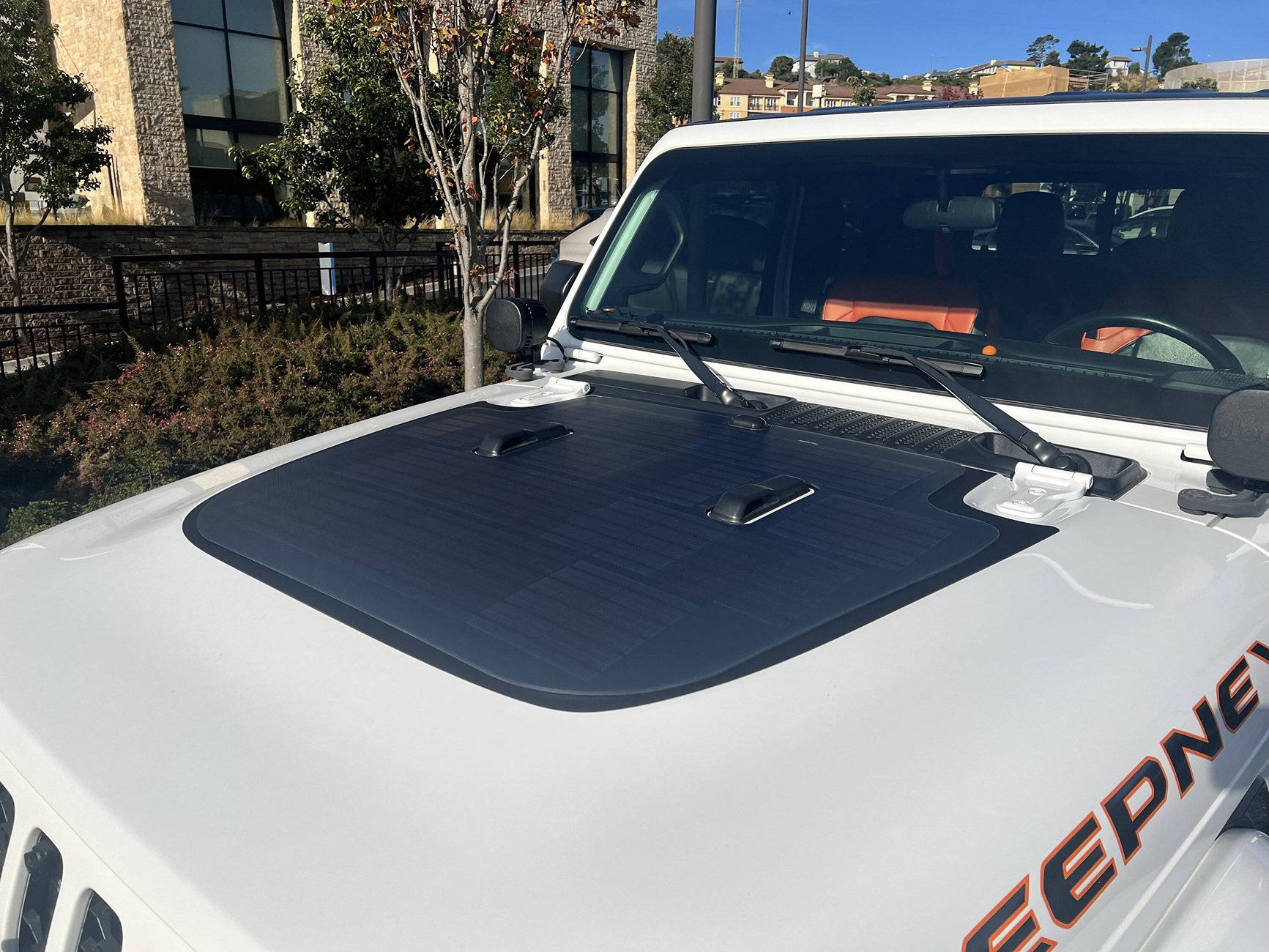
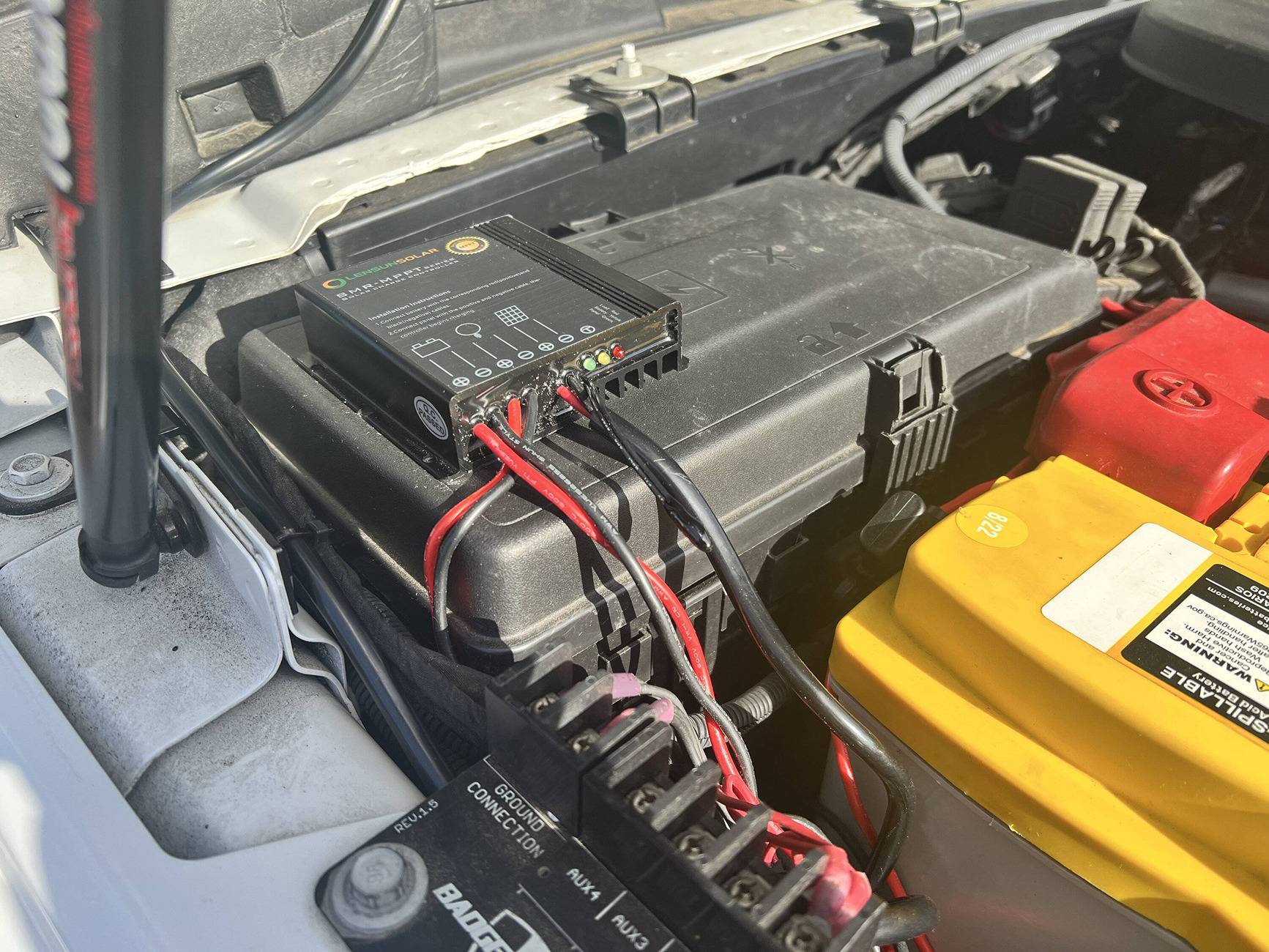
Yup!!! But I went with Solar.

There is no power outlet where my Glad is parked.

IMG_8045.jpg

IMG_8044.jpg

IMG_8662.jpg
That's cool as hell, disguising the solar panel as a hood decal. I might think about that on mine, but it's a Rubi so it's got the fake scoops. I get the message about the Aux switches unavailable, battery charging when it gets a little chilly outside on the factory batteries.
 

ShadowsPapa

Well-Known Member
First Name
Bill
Joined
Oct 12, 2019
Threads
247
Messages
40,449
Reaction score
53,885
Location
Runnells, Iowa
Vehicle(s)
'25 JTMX, '23 JLU 4xe, '82 SX4, '73 Javelin
Occupation
Retired auto mechanic, frmr gov't ntwrk security admin
Vehicle Showcase
3
Question: With so many people saying that you need to charge the batteries separately,
If they are aged and you have issues keeping them charged - otherwise for normal maintenance, just use a quality charger on the pair.

I've resolved issues by charging independently, and it's about the only real way to test them - apart.

For normal use, I find occasional charging through the trailer connector works fine. My system voltages are normal, fluctuating as they should. Everything works fine.

CTEK is one of the best I've had, but my BatteryMinders have done well for years on most of our stuff, too.
 

SamJ3

Well-Known Member
First Name
Sam
Joined
Jun 7, 2022
Threads
3
Messages
120
Reaction score
158
Location
33706
Vehicle(s)
2022 Gladiator Sport
Occupation
Technology Research and Advisory
Short answer: (if you have not eliminated the aux battery) keep the two batteries paired (given they are both in good health). In addtion to simplifying your battery maintenance routine, it may reduce parasitic draw and extend disconnected storage time.

I made an Interesting observation recently. While testing for parasitic draw, I found that when both (healthy) batteries are connected as designed, I see a much lower draw (16-35mA) than when the auxilary battey is disconnected (100-180mA). Reconnecting both batteries will almost immediately reduce the draw back to normal. Apparently, disconnecting the aux battery throws a fault, waking up the system modules and ramping up the power draw. Reconnecting the aux battery returns the battery state to normal, calling off the alarms and allowing the modules to go back to sleep.

When I last replaced both batteries (upgrading the main battery in the process), I added a quick disconnect switch on the aux, just in case it became a problem in the future. So testing battery health, draw, and the such is easy. I ultimately concluded that my preferred battery configuration is to install the highest capacity quality batteries that fit, keep the original aux set up, and take care of the batteries with a trickle charger. IF the aux battery fails, I can quickly isolate it (via the quick disconnect switch, plus pulling fuse F42). Pulling the fuse, or tying N1 to N2 together, is necessary to bypass the auxilary battery system and avoid higher parastic draw due to 'errors' from the deleted battery.

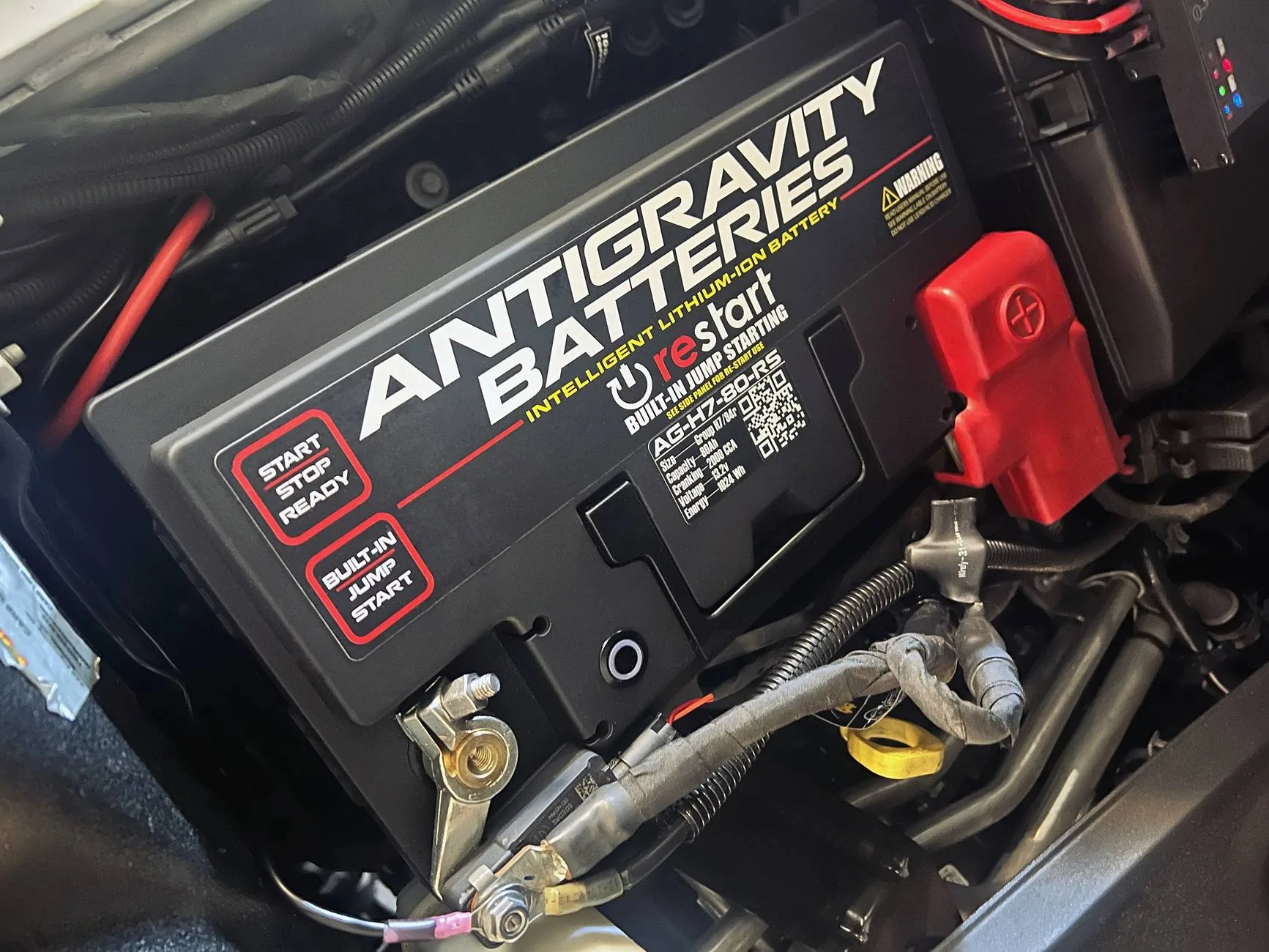
BTW, we trickle charge this with a Battery Tender (via a fast connection on the grill or through the trailer plug) when parked at home.
 

Lost1wing

Well-Known Member
First Name
Tim
Joined
Dec 22, 2020
Threads
24
Messages
2,611
Reaction score
2,863
Location
West Georgia
Vehicle(s)
2020 Jeep Gladiator Rubicon
Occupation
Retired AMT
Back in 2020, life was put on hold for everyone. Cars sat on the lot. My Jeep was a mid 2020 build. I didn't pick it up until Dec 2020. My JT was jumped so I can take it on a test ride. It had to be jumped again three days later to get it prepped. My start stop never worked right after warm up. It usually took 30+ minutes.
The next month, I installed my winch, solenoids and Aux switches. The Aux battery was dead when I put it all back together the next week. After charging both batteries and resetting the IBS, ESS worked immediately after warm up. When it stops working immediately, I put the trickle charger on it . And when I say stops working, I mean, I don’t get the ready message right away.

Two years later, I separated the grounds and charged both batteries, reset the IBS again after the ready message still taking a long time to come on.

I still have my original batteries. Time to plug in my EV, 😄.
 

Sponsored

ShadowsPapa

Well-Known Member
First Name
Bill
Joined
Oct 12, 2019
Threads
247
Messages
40,449
Reaction score
53,885
Location
Runnells, Iowa
Vehicle(s)
'25 JTMX, '23 JLU 4xe, '82 SX4, '73 Javelin
Occupation
Retired auto mechanic, frmr gov't ntwrk security admin
Vehicle Showcase
3
I made an Interesting observation recently. While testing for parasitic draw, I found that when both (healthy) batteries are connected as designed, I see a much lower draw (16-35mA) than when the auxilary battey is disconnected (100-180mA). Reconnecting both batteries will almost immediately reduce the draw back to normal. Apparently, disconnecting the aux battery throws a fault, waking up the system modules and ramping up the power draw. Reconnecting the aux battery returns the battery state to normal, calling off the alarms and allowing the modules to go back to sleep.
Huh?

That makes little sense. The batteries are always in parallel. You can disconnect the aux and not throw a fault (unless you start it)
Being anywhere close to the truck with the fob will wake things up.

As long as all things are sleeping, the draw is the same, one battery or both.

. IF the aux battery fails, I can quickly isolate it (via the quick disconnect switch, plus pulling fuse F42). Pulling the fuse, or tying N1 to N2 together, is necessary to bypass the auxilary battery system and avoid higher parastic draw due to 'errors' from the deleted battery.
What happens if the main battery goes first? It happens just about as much...............
NO, there is NOT higher parasitic draw due to "errors" from disconnecting the aux battery.
 

SamJ3

Well-Known Member
First Name
Sam
Joined
Jun 7, 2022
Threads
3
Messages
120
Reaction score
158
Location
33706
Vehicle(s)
2022 Gladiator Sport
Occupation
Technology Research and Advisory
Huh?

That makes little sense. The batteries are always in parallel. You can disconnect the aux and not throw a fault (unless you start it)
Being anywhere close to the truck with the fob will wake things up.

As long as all things are sleeping, the draw is the same, one battery or both.


What happens if the main battery goes first? It happens just about as much...............
NO, there is NOT higher parasitic draw due to "errors" from disconnecting the aux battery.
Hey, it happened. I was thinking the same thing. Batteries connected together (at the ground strap on the main battery = normal draw. Disconnect the aux from at the main battery ground strap = increased draw. I measured this at the IBS post. Reconnect = return to normal.

I do understand that the computers will monitor voltage lavels on the batteries, and can sense when the aux is low - part of the ESS health check. (If aux is low - or dead - ESS will be disabled.)

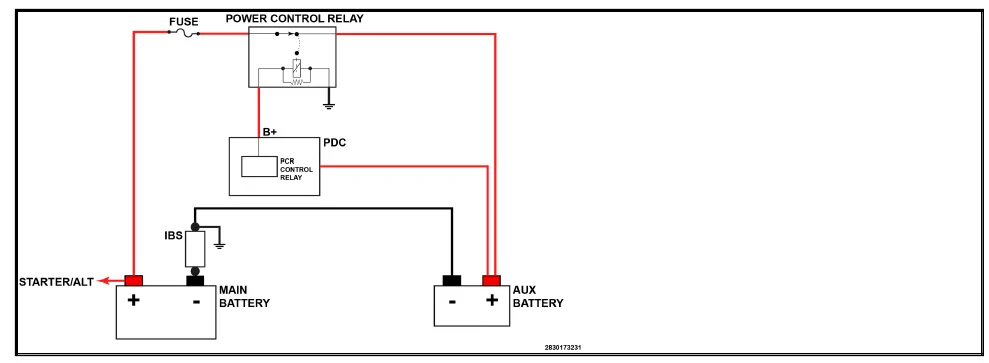
Batteries are indeed connected in parallel, but they are seperated at the PCR. (Hence, the batteries are not always in parallel; they get seperated when self-testing and when starting.) Perhaps that is where the fault can be detected, hence, throwing the fault and waking up an otherwise 'sleepy' module. For what it is worth, I confirmed the resting voltage of both batteries to be about the same just after disconnecting the aux. I suspect that if I pull the F42 (PCR) fuse, this anomolous condition would cease.
Jeep Gladiator Battery Tender 1761963748590-72
 

ShadowsPapa

Well-Known Member
First Name
Bill
Joined
Oct 12, 2019
Threads
247
Messages
40,449
Reaction score
53,885
Location
Runnells, Iowa
Vehicle(s)
'25 JTMX, '23 JLU 4xe, '82 SX4, '73 Javelin
Occupation
Retired auto mechanic, frmr gov't ntwrk security admin
Vehicle Showcase
3
Batteries are indeed connected in parallel, but they are seperated at the PCR. (Hence, the batteries are not always in parallel; they get seperated when self-testing and when starting.) Perhaps that is where the fault can be detected, hence, throwing the fault and waking up an otherwise 'sleepy' module. For what it is worth, I confirmed the resting voltage of both batteries to be about the same just after disconnecting the aux. I suspect that if I pull the F42 (PCR) fuse, this anomolous condition would cease.
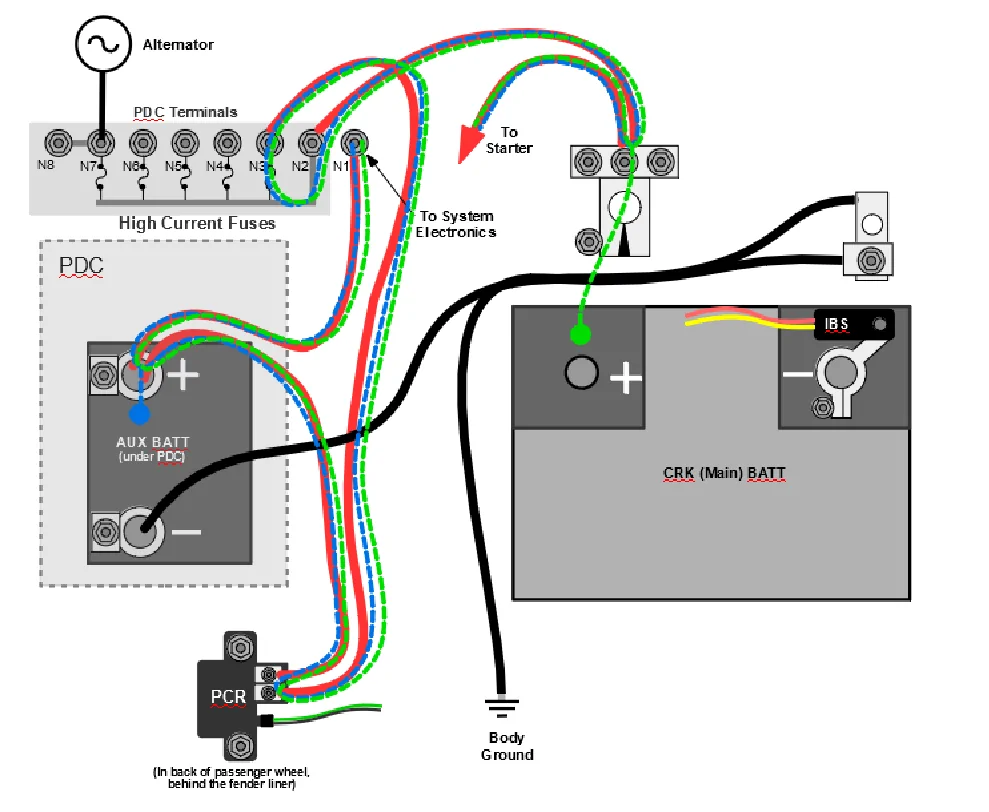
Your diagram is missing a lot of what's there. It's from an FCA document, yes, but is for "charging system and battery testing" reference and is otherwise incomplete.

That has nothing to do with draw when it's stopped/parked. There are no sleepy modules.

I know exactly how the system works - see the thread about "Are the batteries really isolated during ESS stops".
Heck, I'm the one who posted several of the documents and images there as far as how the syste works.

Been working with these electrically for quite a while now.

There is nothing about disconnecting the aux battery that causes more parasitic draw.

You confirmed voltage just after disconnecting - how about much later?

Where are you measuring? At the main battery post? Well, there's the problem - they both work to supply power to everything when it's off, and if you disconnect the aux ground and measure the load at the main battery, suddenly it's supplying everything.

The BCM has NO IDEA there is no aux battery unless you go to start it, and then, there's nothing about anything which will increase draw when the truck is off due to an error. Period.
If you are measuring draw at the main battery you are measuring is wrong.

Where this one says "to system electronics" it really should say "to everything except the starter and high current items (EHPS, cooling fan, alternator)
Jeep Gladiator Battery Tender fuse-array-5
 
Last edited:

SamJ3

Well-Known Member
First Name
Sam
Joined
Jun 7, 2022
Threads
3
Messages
120
Reaction score
158
Location
33706
Vehicle(s)
2022 Gladiator Sport
Occupation
Technology Research and Advisory
Your diagram is missing a lot of what's there. It's from an FCA document, yes, but is for "charging system and battery testing" reference and is otherwise incomplete. ...
True. I was using the simplified diagram to support the narrative of two batteries. (Also, I couldn't quickly find the diagram you shared whilst replying from my phone. I've seen it and would have posted that one if I could have quickly retrieved it.
...Heck, I'm the one who posted several of the documents and images there as far as how the syste works. ...
I've seen, followed, and used what you've shared on this and acknowlege your research and depth of knowledge. Thank you.
... Where are you measuring?...
I am measuring current draw ground strap side of the IBS. I am isolating the Aux at the ground strap, seperating it from the ground. Also, the batteries are both less than 6 months old, and trickle charges when parked. IF the extra draw is not due to an extra load forming (from a module wake up or otherwise), then the only logical conclusion I can draw is that the batteries were resting at different voltages, and when they are seperated, the main drops voltage, thus causing in increase in current to maintain the same power (workload). (I may be able to confirm this by disconnecting the Aux after both batteries have been maintained for a while, then check the voltage after a few minutes. If differenent, then I could calculate if the voltage difference is enough to explain the extra 100-150 mA from the main.)

I'm open to ideas for an explaination. The fact is, the observed current increased when the Aux was isolated as described, and returned to the prior state after it was reconnected.
Sponsored

 
Last edited:


Top