ShadowsPapa
Well-Known Member
- First Name
- Bill
- Joined
- Oct 12, 2019
- Threads
- 247
- Messages
- 40,442
- Reaction score
- 53,860
- Location
- Runnells, Iowa
- Vehicle(s)
- '25 JTMX, '23 JLU 4xe, '82 SX4, '73 Javelin
- Occupation
- Retired auto mechanic, frmr gov't ntwrk security admin
- Vehicle Showcase
- 3
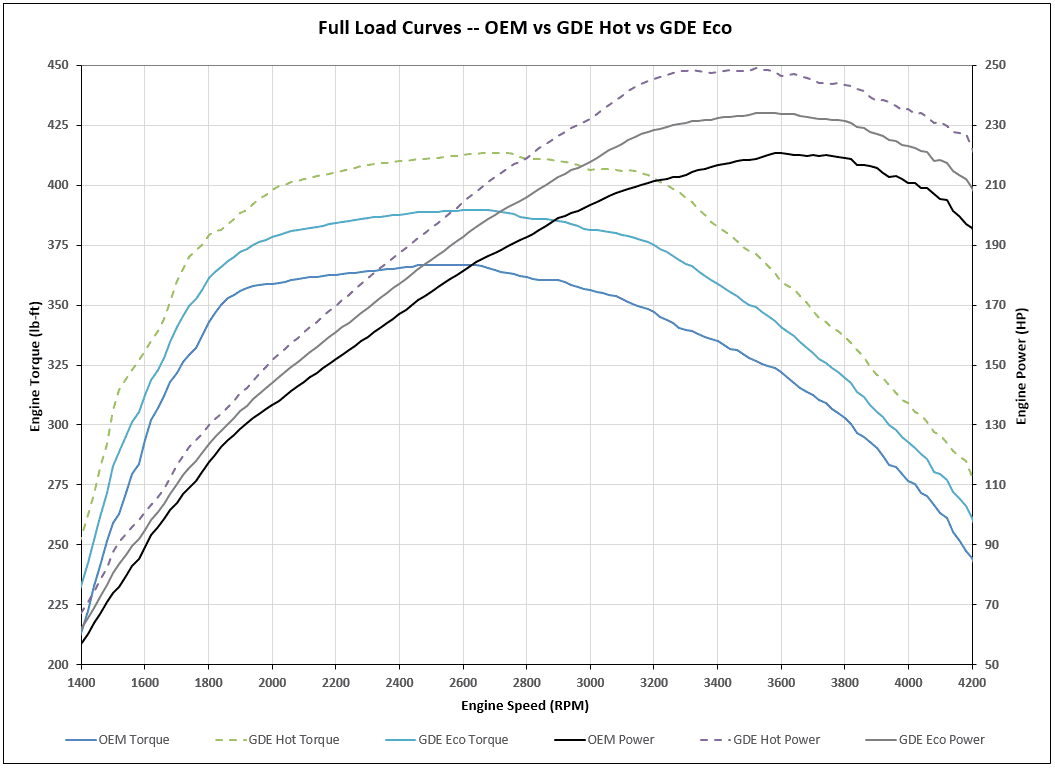
HP is originally defined as LIFTING dead weight straight up. Horses pulling hay up into the barn, etc.Torque is the amount of force being applied. HP is the amount of work getting done. Capacity is not the right word. Hence why toque ratings for bolts is the maximum amount of force applied as to not stretch, strip, or stress a bolt or part. Torque is needed to move dead weight and overcome the laws of physics against gravity. As that dead weight loses the resistance of its weight (on flat ground), you do not need as much torque to move it. Which is where the new high rev Euro diesel shines. As you hit a grade gravity increases and begins to add resistance. Torque once again is needed to maintain speed. The torque/horsepower curve of these Euro high rev diesels go past the peak of the torque curve and falls off after 3000-3200 rpm as HP climbs and surpasses it. When hauling on a grade I'd avoid running over 3200 rpm, as you will not have the torque necessary to increase or maintain speed.
So even the basic definition of HP being a measure of the work getting done is misleading since it only applies on flat ground with the least amount of load/resistance applied. Hence why people always lie about their dyno numbers and add corrections.

Sponsored