Sponsored

Finally geometry brackets data

Wolf Island Diver

Well-Known Member
Joined
Apr 14, 2021
Threads
26
Messages
1,117
Reaction score
2,450
Location
Virginia
Vehicle(s)
2021 JT Rubicon EcoDiesel
Occupation
Software Engineer
It's the break over point where the brackets will get hit. This is what everyone forgets about.
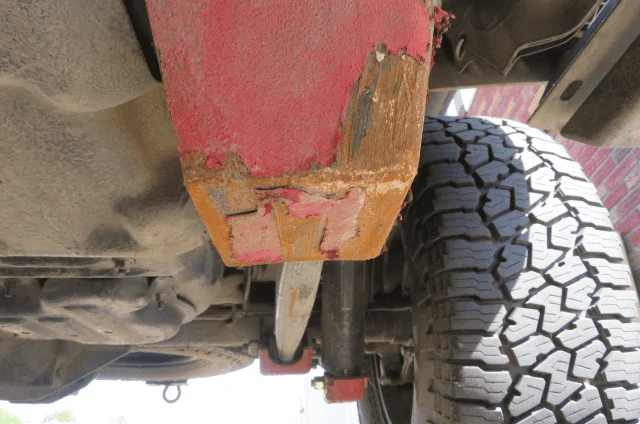
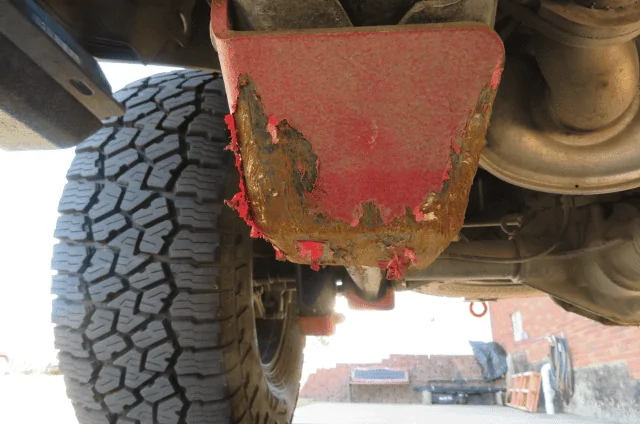
Yeah, they’re not in a great spot, but neither are the stock brackets. After Potts mountain I considered welding on some $40 skid control arm plates but never got around to it. Maybe in the spring. I came down hard on mine. There’s quite a bit of lip protecting the control arm joint itself (the part to be concerned about) on the AEV brackets. Mine got scratched and the very ends a wee bit dented. Not bad for coming hard off a rock with probably 1500lbs of gear in the back and a heavy diesel in the front. I hit em’ with some touch up paint. They had zero issue supporting 1/2 the weight of the truck. The bigger concern to me is them gouging into the rock rather than sliding off of it, hence the skids. I definitely don’t think they’re a liability that will get someone stuck or stranded.

I’ve slid down boulders on my front long arms on my TJ lots of times and scratched them all up. To me all of this is just par for the course when rock crawling. Smashing into control arms and control arm brackets just happens. Neither are the components that concern me breaking when off roading since either typically has no problem supporting the weight of the vehicle. In my experience, wheeling both Wranglers and now the Gladiator, they’re the least of my concern. I’m much more concerned about high centering in the middle of the truck on the skid plate or frame cross member and getting stuck because it’s so damn long. I’d much rather hit the LCA bracket because I can leverage or winch myself off of that. Also, they’re following the track of the tires. It’s all that shit in the center that doesn’t follow the tires which people should be worried about. My spring plan includes a full belly skid from Next Venture for this reason. I’d spend the money on that and diff sliders before worrying about the control arms or brackets beyond some cheap LCA skids.
Sponsored

 

antwon412

Well-Known Member
First Name
Tony
Joined
Sep 25, 2021
Threads
42
Messages
1,086
Reaction score
2,222
Location
Northern Ca - Yuba City
Vehicle(s)
TJ, JT Mojave
OP - once you are able to produce a post with proper grammar and spelling, somebody here might take you seriously or at least be interested in your opinion.

Until then, you are spewing your opinions and thoughts as fact. It’s a poor idea.
 

Rusty PW

Well-Known Member
First Name
Russ
Joined
Jan 10, 2022
Threads
37
Messages
11,322
Reaction score
30,204
Location
Fayette Nam, Pennsyltucky
Website
www.youtube.com
Vehicle(s)
'22 JTRD, '11 370Z Nismo, '07 Honda VFR
Build Thread
Link
Occupation
Muff Diver
There is other parts of the JT that get beat on other then the geo brackets. The rear front lower control arm mounts take a beating.

Jeep Gladiator Finally geometry brackets data 1701028554088


Jeep Gladiator Finally geometry brackets data 1701028588332
 

ShadowsPapa

Well-Known Member
First Name
Bill
Joined
Oct 12, 2019
Threads
247
Messages
40,440
Reaction score
53,854
Location
Runnells, Iowa
Vehicle(s)
'25 JTMX, '23 JLU 4xe, '82 SX4, '73 Javelin
Occupation
Retired auto mechanic, frmr gov't ntwrk security admin
Vehicle Showcase
3
Boy is the title/subject of this thread total absolute click-bait. Data? LOL. Hardly, and it's hardly news.
where's the beef, or rather - data, eh? What data? And what's new about this?
These brackets have been in use for years by a good many hard-core Jeep trail runners.
And yet - you believe you have data that proves them all wrong?

When mine was aligned at jeep with a 25 yr tech we discussed the brackets and lifts. He even said you don't need them if it's aligned properly and within specs it will ride like stock in the steering and bumps. He even said if mopar thought they was need jeep would add them in their kits.
Sorry, that guy is full of bovine excrement. LOL - ride like stock with a 3" lift and the control arms swung clear up in an arc at the back? No way.
the guy is one of those who has been in the business 25 years getting by and feeding bad info to those who bow at his technicianness.

Your data says they are a gimmick - what data?
Show the actual alignment data and how engineers around the world are so wrong.
With a tall lift and no geometry correction, you are swinging that front axle rearward a lot more, and certain impacts will actually be transmitted to the frame more. You change caster more as the axle rises and falls and there's more change in the steering forces due to some of this.
Take a pole with a handle on one end and a wheel on the other. Push it through rough ground keeping the pole totally parallel to the ground, at least as much as possible.
Now take the same pole and wheel and push that wheel - you are exerting more downward force against obstacles than you were, transmitting more shock back along the pole and into you - the frame. A pair of level control arms will let the wheel glide up and over things far more gracefully than if those arm are pointing downward at the front.

Knowing what hangs lowest and where is the key, then you can use the equipment as it is intended and designed, without destroying things.

MOST of all of our driving is on highway. That's just a simple fact.
If it isn't then you're truly in the purpose built market and should probably be running a custom buggy with long arms and much much better approach and departure capabilities than a Gladiator offers.
Well said.
If you don't drive on the highway, and it's built mostly for trails and you don't care about ride and handling getting to and from the trails.............. but don't tout this as "data". It's not. It's lashing out and lack of understanding of how suspension and steering even works.

Anyone who believes that control arms running at such an upward angle as they go to the frame is just as good at handling and ride as those that are parallel and level to the ground and each other just has no basic understanding of suspension geometry.

All I am saying is you don't need them to have your jeep to be correct.
Talk about spreading bad information, misinformation from a novice on suspension geometry...............
This is why the internet is truly the misinformation stupid highway.

Is this your first Jeep??
Are you a novice to the more difficult trails?

Do you realize how many JT owners there are here who run those brackets and aren't griping and ripping them back off because they serve no purpose - just because they bent stuff and got frustrated?

Sorry, but I bet I can find an easy half dozen members here who will totally blow your 25 year tech to oblivion with facts.


As far as hitting things, brackets are not as low as your diffs, frame, rock sliders, belly on breakover, etc. I’ve hit them once or twice on badge trails when I basically had the whole belly hitting boulders. And those other spots hit about 50 times more often, most trips don’t touch the brackets but rip up my sliders or diff skids or whatever. There are zero situations where you would hit a geometry bracket and not also grind on your frame or rock slider, or more.
Yup - doesn't take much to see that.
 
OP
OP
Mays9185

Mays9185

Well-Known Member
First Name
Josh
Joined
Sep 2, 2023
Threads
4
Messages
71
Reaction score
42
Location
Ohio
Vehicle(s)
2020 gladiator rubicon
Boy is the title/subject of this thread total absolute click-bait. Data? LOL. Hardly, and it's hardly news.
where's the beef, or rather - data, eh? What data? And what's new about this?
These brackets have been in use for years by a good many hard-core Jeep trail runners.
And yet - you believe you have data that proves them all wrong?


Sorry, that guy is full of bovine excrement. LOL - ride like stock with a 3" lift and the control arms swung clear up in an arc at the back? No way.
the guy is one of those who has been in the business 25 years getting by and feeding bad info to those who bow at his technicianness.

Your data says they are a gimmick - what data?
Show the actual alignment data and how engineers around the world are so wrong.
With a tall lift and no geometry correction, you are swinging that front axle rearward a lot more, and certain impacts will actually be transmitted to the frame more. You change caster more as the axle rises and falls and there's more change in the steering forces due to some of this.
Take a pole with a handle on one end and a wheel on the other. Push it through rough ground keeping the pole totally parallel to the ground, at least as much as possible.
Now take the same pole and wheel and push that wheel - you are exerting more downward force against obstacles than you were, transmitting more shock back along the pole and into you - the frame. A pair of level control arms will let the wheel glide up and over things far more gracefully than if those arm are pointing downward at the front.


Well said.
If you don't drive on the highway, and it's built mostly for trails and you don't care about ride and handling getting to and from the trails.............. but don't tout this as "data". It's not. It's lashing out and lack of understanding of how suspension and steering even works.

Anyone who believes that control arms running at such an upward angle as they go to the frame is just as good at handling and ride as those that are parallel and level to the ground and each other just has no basic understanding of suspension geometry.


Talk about spreading bad information, misinformation from a novice on suspension geometry...............
This is why the internet is truly the misinformation stupid highway.

Is this your first Jeep??
Are you a novice to the more difficult trails?

Do you realize how many JT owners there are here who run those brackets and aren't griping and ripping them back off because they serve no purpose - just because they bent stuff and got frustrated?

Sorry, but I bet I can find an easy half dozen members here who will totally blow your 25 year tech to oblivion with facts.


Yup - doesn't take much to see that.
Far from 1st jeep and talking Gladiator not what on a tj . 2 different vehicles with different handling characteristics.
 

Sponsored

ShadowsPapa

Well-Known Member
First Name
Bill
Joined
Oct 12, 2019
Threads
247
Messages
40,440
Reaction score
53,854
Location
Runnells, Iowa
Vehicle(s)
'25 JTMX, '23 JLU 4xe, '82 SX4, '73 Javelin
Occupation
Retired auto mechanic, frmr gov't ntwrk security admin
Vehicle Showcase
3
You’ll notice an improvement by increasing your caster since their lifts don’t do that.
You could add geometry brackets.
You could add longer mopar lift LCAs for relatively cheap, that’s a good option. I’m not sure if the caster would be in spec if you used both the longer arms and geometry brackets.
You could get adjustable arms and have to dial it in yourself/get alignment.
I chose brackets and like how it drives.
Depends on the brackets - some will have more caster add than others, some appear to have a range. The MOPAR longer LCAs really don't do that much adding. they compensate somewhat for a MOPAR 2" lift, but that's about it. 0.25" isn't a lot and likely the longer MOPAR LCAs with a lift over 2" would still be in the lower end of specs - the 4s, not deep into the 5s.
Mine still doesn't have a ton of caster and I have the longer LCAs on mine. I'm still in low specs!
And it will vary a whole lot with the truck itself as even from the factory there's a range - is it a Rubicon, a Sport or a Mojave, where's the factory caster sitting, how much lift was added, etc.

If a person doesn't like the brackets, then don't run them - but don't go trying to tell people they serve no purpose or are a waste of money and you'll bend them on even easier trails.
It's just not true.
There's a lot of hate and anger in the first post - which in itself should cause people to take a lot with a grain of salt. Likely more pissed because he bent expensive parts than anything else.

If I lifted mine more - I'd go with brackets. Maybe it's because I know geometry, and suspension and have observed and learned from what some of the more level-headed members here have done with their rigs, including some here to take to the more damaging trails (and don't gripe if they bend parts)
 

ShadowsPapa

Well-Known Member
First Name
Bill
Joined
Oct 12, 2019
Threads
247
Messages
40,440
Reaction score
53,854
Location
Runnells, Iowa
Vehicle(s)
'25 JTMX, '23 JLU 4xe, '82 SX4, '73 Javelin
Occupation
Retired auto mechanic, frmr gov't ntwrk security admin
Vehicle Showcase
3
Far from 1st jeep and talking Gladiator not what on a tj . 2 different vehicles with different handling characteristics.
Doesn't matter - come across as never really learned geometry and suspension - and definitely your first time modifying a JT.
I know about handling characteristics of course. But you came across as if this is your first time trying to figure out a JT - and then try to tell the old-timers they are all wrong about something some have done with Gladiators for 4 years?
You think that thousands of JT owners and the JT having been around for 4 years (plus) that you have new data and suddenly tell them they've all wasted their money and you know, with your "data" (data - love how that's applied to a single experience with no numbers or stats) that they are WRONG?
 

MattK

Well-Known Member
Joined
Aug 14, 2020
Threads
12
Messages
381
Reaction score
632
Location
San Diego
Vehicle(s)
2020 Jeep Gladiator (JTR)
I've used AEV's 3.5" lift with high steer, (geometry brackets included), and 35" tires on my 2013 JKR 2-door and wheeled it. Stuff hits if you wheel. Keeping the arms as flat as possible helps absorb impact to the front suspension properly. The ride is great and unless you have a dedicated trail rig you tow in you'll notice the difference as you spend at least twice as long driving to the trail than you did wheeling it.

I now use the AEV 2.5" lift w/37" tires on my 2020 Gladiator and it has great road manners, and I can wheel it. Stuff hits a lot because of the long wheelbase but I've never had a problem with the brackets.

Warning: My post should not be taken as a factual dataset derived from any scientific method. I have 11 years of AEV geometry bracket driving experience and for me they are doing their job and taking the abuse.
 

ShadowsPapa

Well-Known Member
First Name
Bill
Joined
Oct 12, 2019
Threads
247
Messages
40,440
Reaction score
53,854
Location
Runnells, Iowa
Vehicle(s)
'25 JTMX, '23 JLU 4xe, '82 SX4, '73 Javelin
Occupation
Retired auto mechanic, frmr gov't ntwrk security admin
Vehicle Showcase
3
I've used AEV's 3.5" lift with high steer, (geometry brackets included), and 35" tires on my 2013 JKR 2-door and wheeled it. Stuff hits if you wheel. Keeping the arms as flat as possible helps absorb impact to the front suspension properly. The ride is great and unless you have a dedicated trail rig you tow in you'll notice the difference as you spend at least twice as long driving to the trail than you did wheeling it.

I now use the AEV 2.5" lift w/37" tires on my 2020 Gladiator and it has great road manners, and I can wheel it. Stuff hits a lot because of the long wheelbase but I've never had a problem with the brackets.

Warning: My post should not be taken as a factual dataset derived from any scientific method. I have 11 years of AEV geometry bracket driving experience and for me they are doing their job and taking the abuse.
There ya go - long-term experience vs. a bad experience and touting opinion and a bad experience as data.

You have a 2.5" lift plus the 37" tires take the whole shootin' match even higher (axles and all sit higher)
Great first-hand examples with experience over time.
Level control arms mean the axle swings up and down with less rearward movement and less impact imparted back to the frame.
 

Sponsored

JTGuy

Well-Known Member
First Name
Pascual
Joined
Jul 23, 2023
Threads
57
Messages
1,744
Reaction score
1,671
Location
San Dimas CA
Vehicle(s)
20022 Jeep Gladiator
Occupation
Manager
I had them on my JKR with 4 inch lift and they, JKS brackets, helped the ride a lot. Now I have a JTR with 2 inch lift and 37s and it rides better than the JK. Apples and oranges. I am not a fan of the brackets but they do work to improve the ride by leveling the CAs. I won't need them on my JTR as I have 6.1 deg caster with the Mopar 2 inch lift and their front lower CAs.
 

ShadowsPapa

Well-Known Member
First Name
Bill
Joined
Oct 12, 2019
Threads
247
Messages
40,440
Reaction score
53,854
Location
Runnells, Iowa
Vehicle(s)
'25 JTMX, '23 JLU 4xe, '82 SX4, '73 Javelin
Occupation
Retired auto mechanic, frmr gov't ntwrk security admin
Vehicle Showcase
3
I won't need them on my JTR as I have 6.1 deg caster with the Mopar 2 inch lift and their front lower CAs.
Makes me wonder how you got to that much caster with those arms.
I'm not there and I'm only at about 1.5" lift with the MOPAR quarter inch LCAs
On the other hand, mine handles like a dream and is well-mannered on the highway and streets as it sits. Not complaining or wishing my JT had more caster, just interesting you gained that much. Assuming yours sat where many do in the 4.5 degree range from the factory, that's over 1.5 degrees gain, and after losing some due to a lift.
 

Dougstdig

Well-Known Member
First Name
Doug
Joined
Sep 5, 2017
Threads
26
Messages
1,600
Reaction score
1,555
Location
FL
Vehicle(s)
‘21 JTRD - '08 Dodge Ram 2500 4x4
I don't think @ShadowsPapa said anything about a TJ.
TJ's were interesting, because their truly short arms exacerbated the issue. There are several videos out there that show lifted TJ's at a tall step or shelf where when the rear tires pushed the front axle against the ledge it would actually lift the front end, putting rearward motion to the front axle. In extreme cases, the front springs would dislodge or pop out, which is when many found out in some cases only 1 lower spring tab was included to retain the spring. The shorter the arm, the greater affect this would have.

Looking at today's JL/JT, these are true mid length arms in comparison. It would take a greater lift to put these arms in the same angle. This being said, @ShadowsPapa brings up a great analogy with the shovel test. Similar to this test is an example Ben from JK Gear and Gadgets YT channel illustrates with a broom handle. If you don't want to watch the whole video, fast forward to about 7:11. After this section, he discusses "Anti-dive" characteristics.


Wheelin98TJ

Well-Known Member
First Name
Ryan
Joined
Jul 27, 2021
Threads
11
Messages
3,699
Reaction score
4,358
Location
Devils Lake, MI
Vehicle(s)
2021 Jeep Gladiator
Occupation
Bean Counter
Doesn't matter - come across as never really learned geometry and suspension - and definitely your first time modifying a JT.
I know about handling characteristics of course. But you came across as if this is your first time trying to figure out a JT - and then try to tell the old-timers they are all wrong about something some have done with Gladiators for 4 years?
You think that thousands of JT owners and the JT having been around for 4 years (plus) that you have new data and suddenly tell them they've all wasted their money and you know, with your "data" (data - love how that's applied to a single experience with no numbers or stats) that they are WRONG?
OP didn’t like drop brackets when wheeling. Not surprising. The thread title is bad.
Sponsored


Top