Stan H
Well-Known Member
Yep those are horrendous very weak nearly worthlessI concur. I believe I have those fox shocks on my 21’ Gladiator and they make me think all manner of ill and evil thoughts when I get off the pavement.
Sponsored

Yep those are horrendous very weak nearly worthlessI concur. I believe I have those fox shocks on my 21’ Gladiator and they make me think all manner of ill and evil thoughts when I get off the pavement.
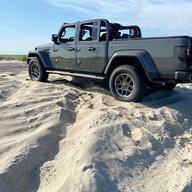

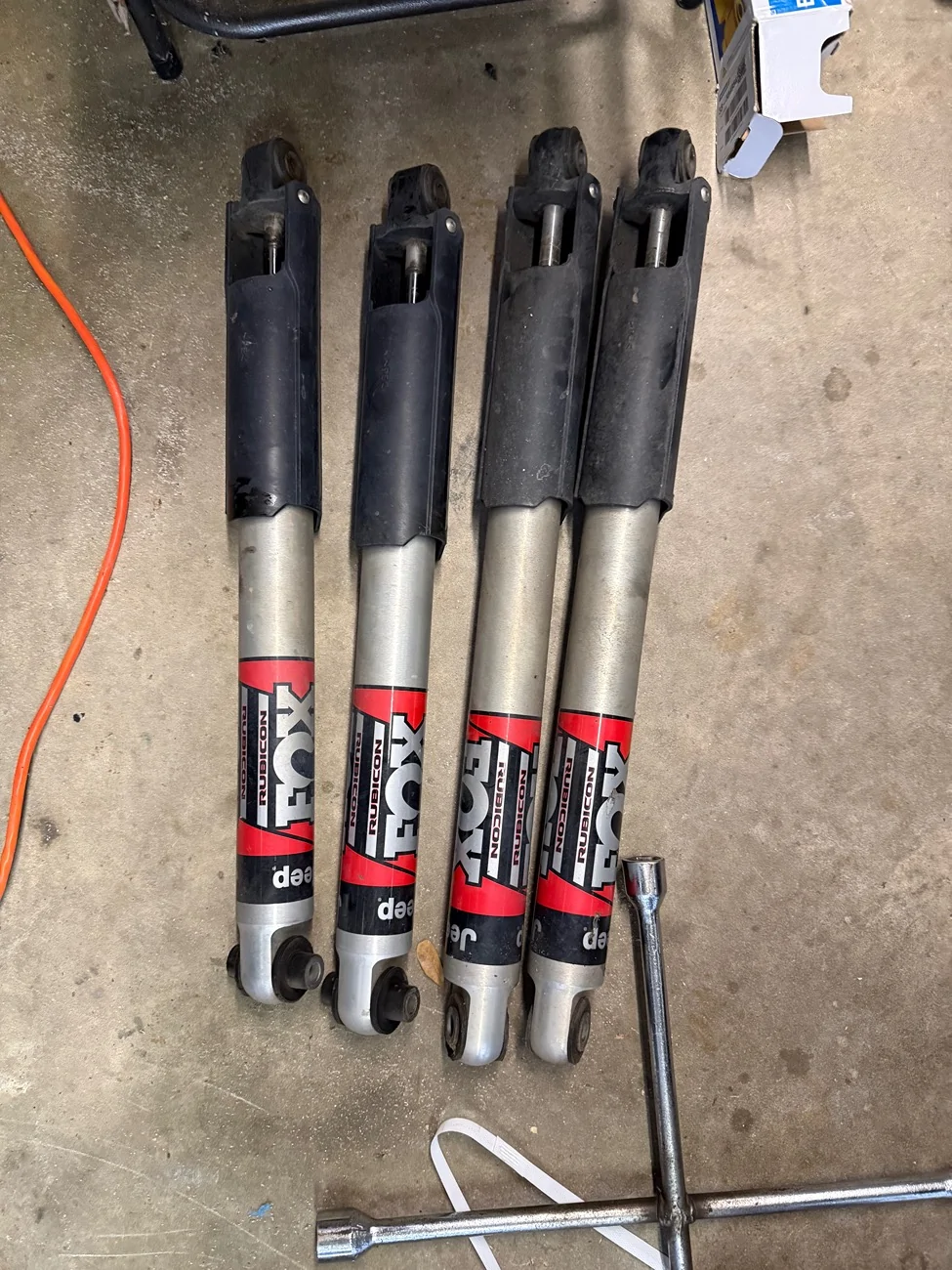

They work for now. Once I do all my research and figure out exactly what I want I’ll go from there. As long as it works and I can still run a trail I’m good for the moment.Not only are they too short stroke, the body is just to small. They heat up and fade quickly as you've noted. Even the 5100s will be too hot to touch and start to fade after a few miles of washboard. The only way to beat that is a reservoir shock and preferably a 2.5". The mojave shocks on the other hand never show any signs of fading even after 40+ miles of washboards at 70 mph. The only factory Jeep shock I've ever run that's worth a damn at speed in the desert (I guess that's why it's the only desert rated Jeep from the factory).
I have a Tacoma with dismal payload numbers and I'm researching Gladiators. This is by far the best explanation I've ever seen for why these numbers on these trucks are so low! I went down this rabbit hole and it makes a lot more sense now:We'll skip the original meaning - the historical meaning of 1/2 ton, 3/4 ton, etc., which has evolved and basically lost all meaning and is irrelevant today.
Payload is simply the GVWR - Curb weight of vehicle. So if your door sticker says your JT weighs 5075, your payload would be 6250-5075=1175.
The appropriate question is how did "they" come up with the GVWR of 6250#? Well class, open your books to page 394.
Long ago the government divided vehicles into classes for EPA gas reasons, then oversight (FHA), etc. Originally it was specified that trucks had to be GVWR/payload-limited to use unleaded fuel, but then we got rid of leaded fuel altogether and it became a moot point. Basically, that gave us consumer trucks Class 1 - 3. Class 4 to Class 8 are commercial trucks (F450/4500 & up).
Today, mid-size trucks are Class 1 trucks and have a maximum GVWR of 6000#. "GVWR includes total vehicle weight plus fluids, passengers, and cargo." GVWR over 6000# gets bumped up to Class 2a, with the usual 1500/F150 trucks.
However, Jeep has engineered the Gladiator Rubicon and Mojave models with heavy duty axles that exceed the 6000# GVWR limit, pushing the GVWR to 6250#. Here are the official Jeep GVWR numbers for Gladiator models. This is because these models (Rub/Moj) are designed for off-road use, not on-road, fleet use, etc. However Jeep wants to justify it to exempt these models from classification.
Checking numbers online, though, I do believe Jeep has transposed the numbers on the website under the model specs, since they list both the Rubicon and Mojave trims as having payload and towing capacity of 1700# and 7700#. Sport S, however, is 1050# and 4500#, respectively. Pretty sure someone done goofed on that.
The big caveat with all of this is these numbers are for the government's bureaucracy, not structural integrity. That's why when you add the weight capacity of each axle you get a number greater than 6000#/6250#. Unfortunately, people tend to misunderstand things and misapply things, then those mistakes end up becoming case law.
The point is that overall, there is an arbitrary ceiling placed by the gov't, established originally for something that no longer exists, on the payload capacity.
So in short, how they determined payload is along the same lines as why you cut the ends off the ham when you roast it.
 Fuel economy rules change
That decision shrinks payload on paper, even if the hardware isn’t the bottleneck.“We’ll cap GVWR conservatively and keep it Class 1.”
Exactly why I could care less about exceeding the paper numbers. They are effectively meaningless. Even if you were hauling commercially and subject to regular weighing it's minimal. Up to 1500 pounds over is only a $20-30 fine depending on the state. They aren't pulling you off the road, cancelling your insurance, or giving you a lecture about how little you care for others safety. Those are internet only reactions. Literally pay your $20...and continue on your merry way still overloaded. CA has the strictest standard I've found for it rising to the level of criminal and you have to be more than 4500 pounds over just to reach misdemeanor level. It's just not a big deal to go over the numbers unless you're going wildly over.I have a Tacoma with dismal payload numbers and I'm researching Gladiators. This is by far the best explanation I've ever seen for why these numbers on these trucks are so low! I went down this rabbit hole and it makes a lot more sense now:
"
Why crossing into Class 2A is a big deal
Vehicle classes (simplified)
- Class 1: ≤ 6,000 lb GVWR
- Class 2A: 6,001–8,500 lb GVWR
- Class 2B: 8,501–10,000 lb GVWR
Once a model crosses 6,000 lb GVWR, several things change at once.
EPA / CAFE implications (this is the lever)
If a vehicle moves from Class 1 → Class 2A:
- Different CAFE targets
- Often less stringent MPG requirements
- But different compliance math across the fleet
Manufacturers use this strategically:
- Some intentionally stay under 6,000
- Others intentionally jump well over it
What they avoid is the gray zone unless it’s worth it.
Why midsize trucks are “GVWR constrained”
Take the Tacoma, Gladiator, Ranger:
Structurally, they could often handle more.
But if Toyota:
- Raises GVWR by even 200–300 lb
- Pushes the truck into Class 2A
Then:
- Different emissions certification
- Different fuel economy accounting
- Different testing regimes
- Potential fleet-wide penalties
- Marketing implications
- Insurance and regulatory ripple effects
So instead they say:
That decision shrinks payload on paper, even if the hardware isn’t the bottleneck.
"

You must really like popcorn.
Remote reservoirs are not a oil cooling device. The separate the oil from the Nitrogen to help prevent cavitation in the main body of the shock. They do usually have a small amount of oil in them btu generally they are 3/4 full of nitrogen and a floating piston.Not only are they too short stroke, the body is just to small. They heat up and fade quickly as you've noted. Even the 5100s will be too hot to touch and start to fade after a few miles of washboard. The only way to beat that is a reservoir shock and preferably a 2.5". The mojave shocks on the other hand never show any signs of fading even after 40+ miles of washboards at 70 mph. The only factory Jeep shock I've ever run that's worth a damn at speed in the desert (I guess that's why it's the only desert rated Jeep from the factory).

Popcorn at the movies, you know just sit back and watch the show..... forums are a lot like movies..... a big show loosely based in reality.You must really like popcorn.
I don't like it when it gets stuck in my teeth.

The short stroke is limiting in suspension travel and articulation. The low capacity, cavitation, and heat are issues at speed. My point was, the factory shocks are limiting no matter how you use your truck unless you just cruise to the mall in it. The reservoirs main purpose is a you mentioned, but the extra oil capacity also results in it running significantly cooler. Same with larger diameter shocks. A truck as heavy as these with large tires just needs more shock in every way than what is offered stock. As good as the mojave shocks are at speed, they are still too short stroke and limit flex as seen here.Remote reservoirs are not a oil cooling device. The separate the oil from the Nitrogen to help prevent cavitation in the main body of the shock. They do usually have a small amount of oil in them btu generally they are 3/4 full of nitrogen and a floating piston.
Shock heat, normal operating temperature for my King Smoothies is around 250*, yup you can touch that but not recommended. the "fade" experienced is actually cavitation changing the overall viscosity of the oil.
Stroke is not the issue in a washboard, it is the valve stack. Valving is all about frequency, High frequency (washboard)requires a more flexible shim stack. Where as low frequency (Big rolling Bumps) require a less flexible shim stack. Yes you can have both in a shock, but not something you are buying in the mass produced market.
Larger diameter is not always the answer, you need to control cavitation to beat the lack of performance over time.
OEM equipment is build to fit within the overall price point. You rarely get a Good quality shock on a mass produced vehicle under $150K.
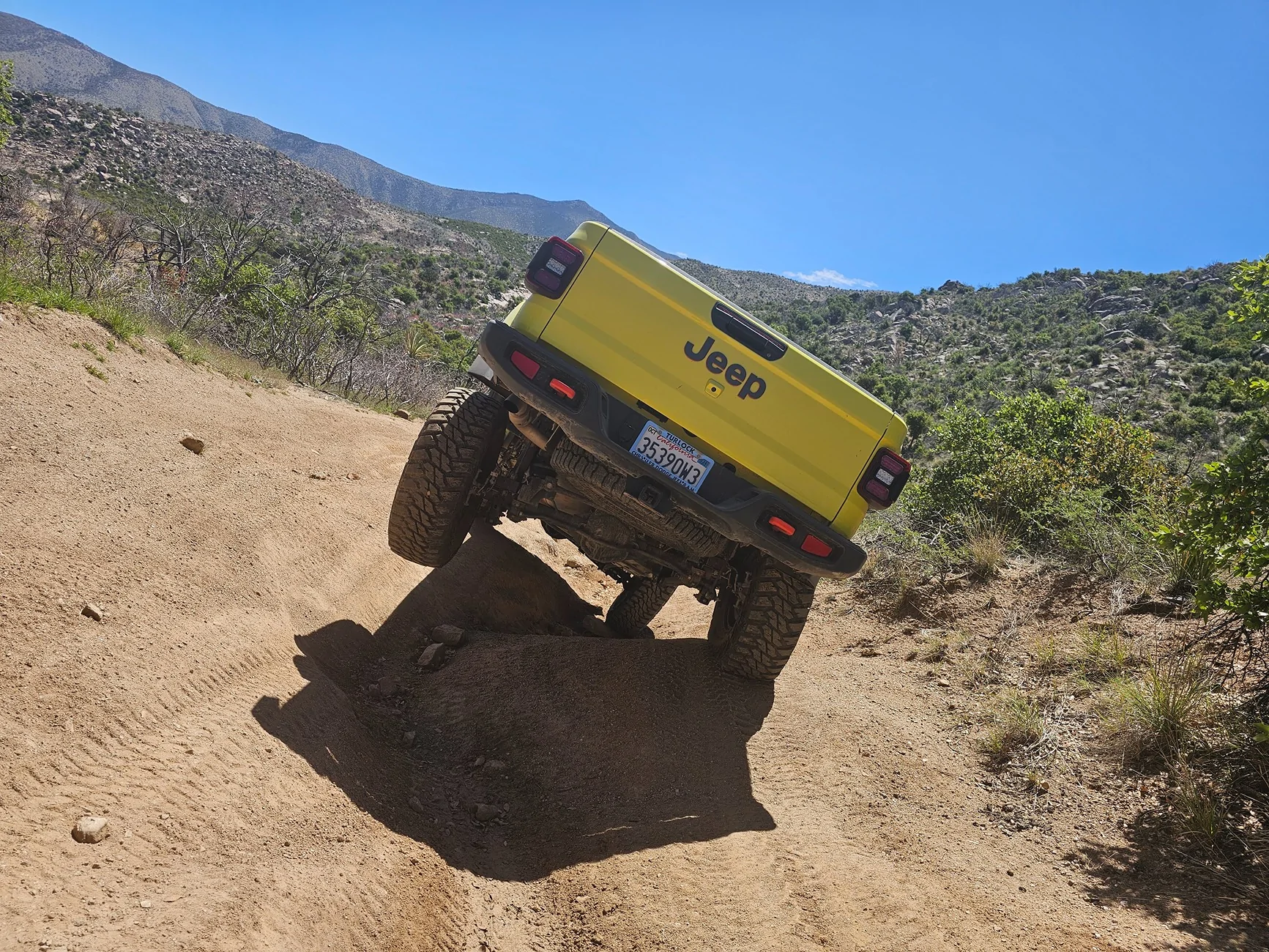
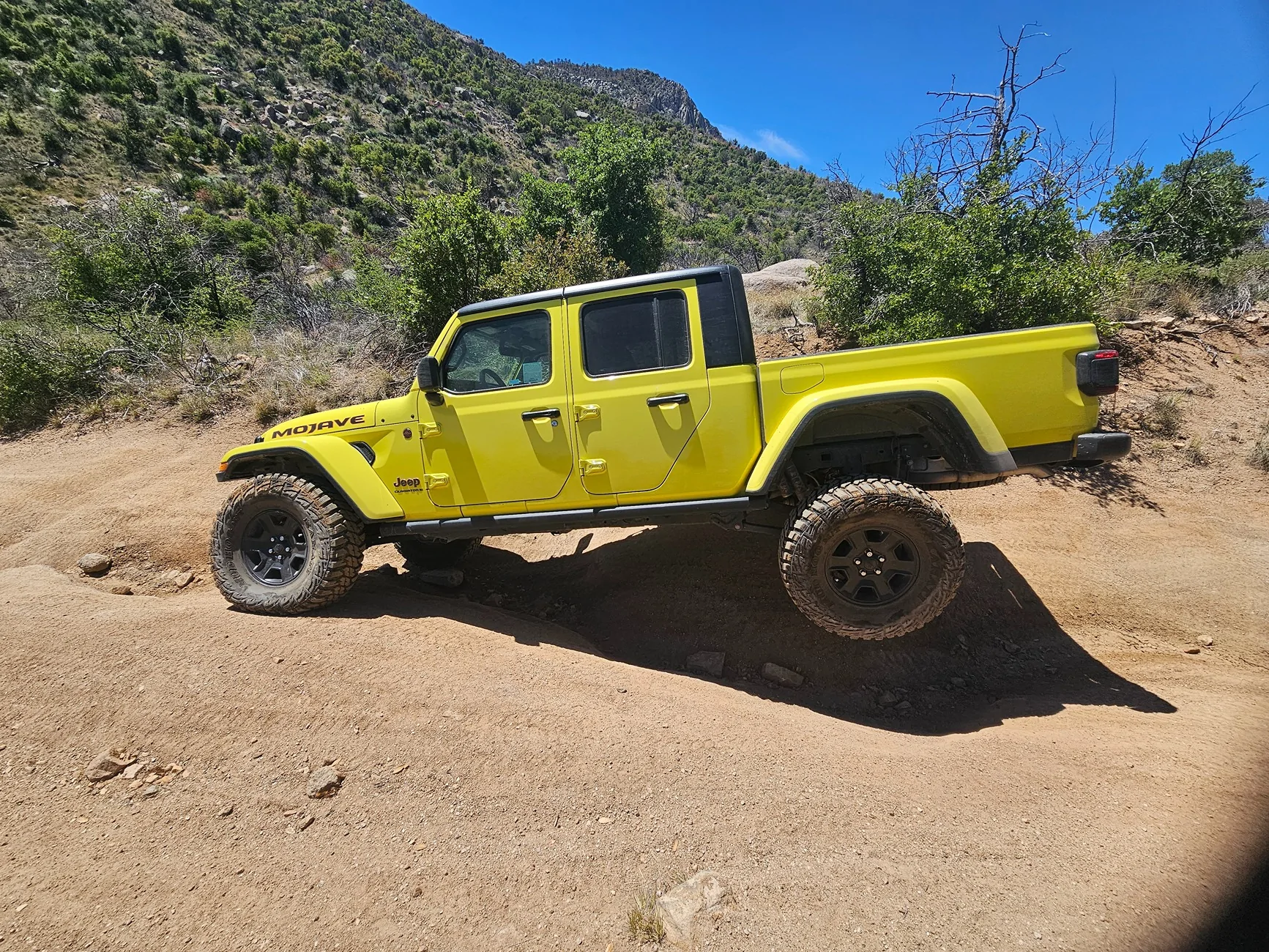
The stiff front sway bar tremendously limits flex and also severely imbalances the front/rear articulation bias. The Mojave simply isn't intended for rockcrawling, but it still does worlds better than any OEM IFS truck.As good as the mojave shocks are at speed, they are still too short stroke and limit flex as seen here.
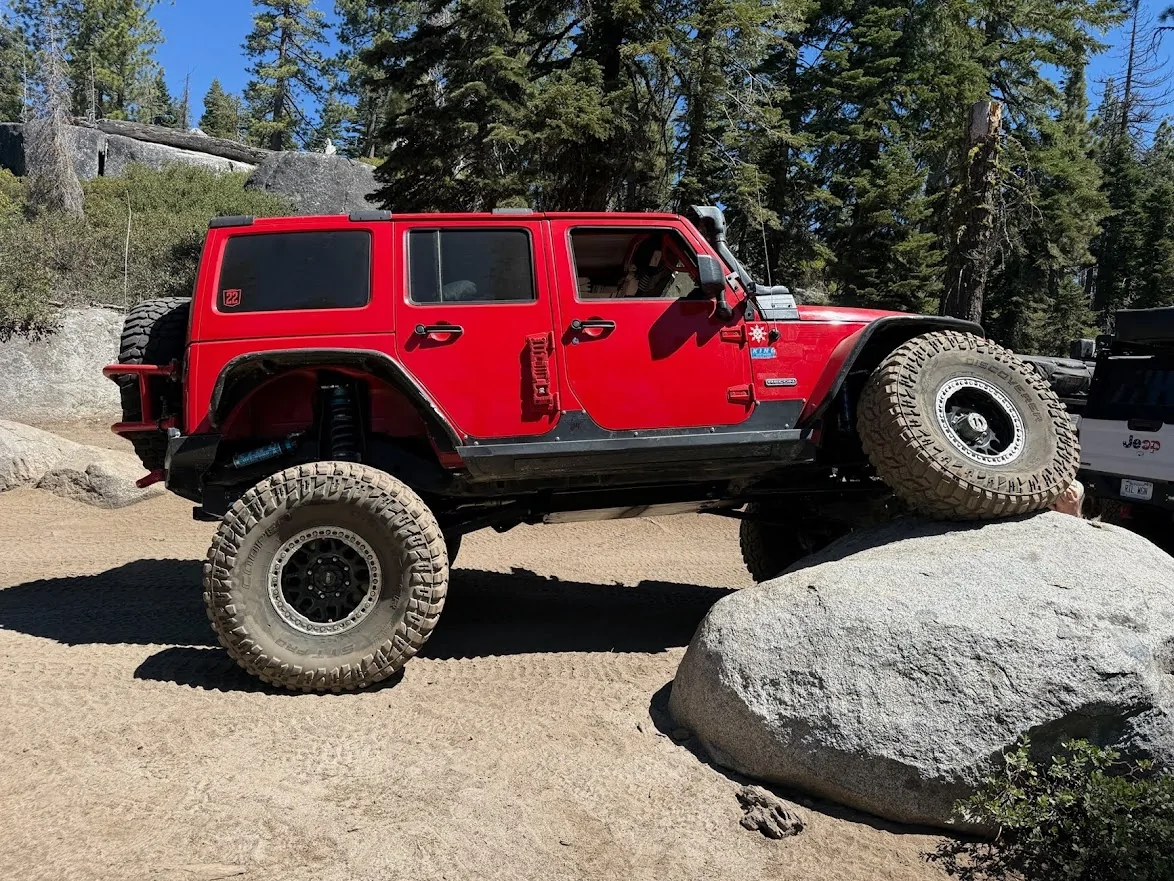
I agree with the sway bar, although the mojave actually did better on the rti ramp than the rubicon with the sway bar connected. After these pics I did add a set of sway bar disconnects, but the shocks are still very limiting. Our 2019 JLUR still had stock control arms everywhere but the front lowers (for caster correction). Bushings were all good after 63k miles on rocksport red shocks and it would use all 12.2" of stroke. The short shocks are limiting for no reason in my experience. The JL sport/saharahs have all the same parts and front shocks with only 5.8" of stroke. You can easily double that travel with a shock change and nothing else.The stiff front sway bar tremendously limits flex and also severely imbalances the front/rear articulation bias. The Mojave simply isn't intended for rockcrawling, but it still does worlds better than any OEM IFS truck.
The OEM shocks' travel is roughly matched to the OEM control arm bushings' capacity to flex. With longer-travel shocks allowing for more articulation, the OEM bushings rapidly out. All of these parts play individual roles in a complete system.
 ), almost all of you guys are right and wrong at the same time.


