Sponsored

Jrgunn5150

Well-Known Member
First Name
J.R.
Joined
May 15, 2024
Threads
10
Messages
1,330
Reaction score
2,757
Location
Ionia Mi
Vehicle(s)
2023 Gladiator Mojave
And frankly, that's how many thousands of Jeep owners do it. Forum members are usually exceptions, but the general population does just that.
Dealer oil changes, spec'd oil at spec'd weight, and tow what the Jeep can tow.
My oil analysis always came back great even after towing and snow plowing (I usually tried to get samples after non-ordinary uses like that)
This is why I quit doing oil analysis a long, long time ago, probably almost 20 years since I've sent a sample in.

To me, wasn't worth the cost or effort. And I've never had a major engine failure on a vehicle I've purchased new. And I pile miles on, 37,000 on this Gladiator in 15 months, for example.
Sponsored

 

ShadowsPapa

Well-Known Member
First Name
Bill
Joined
Oct 12, 2019
Threads
247
Messages
40,442
Reaction score
53,859
Location
Runnells, Iowa
Vehicle(s)
'25 JTMX, '23 JLU 4xe, '82 SX4, '73 Javelin
Occupation
Retired auto mechanic, frmr gov't ntwrk security admin
Vehicle Showcase
3
This is why I quit doing oil analysis a long, long time ago, probably almost 20 years since I've sent a sample in.

To me, wasn't worth the cost or effort. And I've never had a major engine failure on a vehicle I've purchased new. And I pile miles on, 37,000 on this Gladiator in 15 months, for example.
I've proven what I do works. For me it was gathering information, setting some baselines and such - and wondering - what about this abuse with the snow plow (running fast and ramming the snow hard, engine winding up and down, up and down and running it HOT with the snow plow on.
There there was towing in our hills with the RPMs getting up there where people here start to freak out. Always came back just fine. And the oil life monitor was proven to be accurate (Motor Oil Geek also did testing proving their accuracy). So.......... may be a while before I do it again.

54 years of driving cars, trucks, tractors, combines, grain trucks and more, and years in shops working on cars, trucks, tractors, and more for others - never lost an engine.

There's always tomorrow, but worry about that if it ever happens.
 
OP
OP
DavenFla

DavenFla

Well-Known Member
First Name
Davy
Joined
Mar 26, 2025
Threads
3
Messages
46
Reaction score
73
Location
Florida
Vehicle(s)
2002 Ford Excursion, 2019 Lincoln MKC, 2022 Jeep Gladiator
Occupation
Retired (electric utilities)
Knowledge is power. Numbers is the science of logic. If you can't quantify and measure the "why I do it this way", you're guessing. Don't let your feelings outsmart your common sense.

The 3.6 when it first came to market, the recommended viscosity 5W-30. Find out why, and what was the causation, for the change .... to 0W-20.
 

ShadowsPapa

Well-Known Member
First Name
Bill
Joined
Oct 12, 2019
Threads
247
Messages
40,442
Reaction score
53,859
Location
Runnells, Iowa
Vehicle(s)
'25 JTMX, '23 JLU 4xe, '82 SX4, '73 Javelin
Occupation
Retired auto mechanic, frmr gov't ntwrk security admin
Vehicle Showcase
3
The 3.6 when it first came to market, the recommended viscosity 5W-30. Find out why, and what was the causation, for the change .... to 0W-20.
I have the documents showing the changes. When the upgrade was done, bearing sizes, crank journal sizes, were changed. Bearing materials were changed - no longer the same size or materials or construction for rod and main bearings and journals.
Cam phasers were changed - more range was added.
VVL was added - oil control solenoids added to handle the VVL followers. The intake lash adjusters have a normal function plus another path that feeds oil to the followers to engage the pin locking them out of high lift. The solenoids have an orifice that allows a certain amount of oil through to keep the followers charged for fast response when changing modes. In other words, oil is not allowed to drain out of the passage, lash adjusters or followers. So when low lift is called for, it's almost instantaneous, no waiting for oil to make it to the followers to retract the pin and release high lift mode.
The phaser and solenoid tolerances are very tight and they wanted very fast response.

So aside from economy, it was for response of the high and low lift mode change, and the extra range of the cam phasers to allow the cams to change timing more quickly.

The upgrade engine is very different in many ways, heads, valve train and more. It was literally designed for 0w20..

And this all fits what we were taught in factory training and college engine courses over the years...........

Some Mercedes engines are also very sensitive to viscosity because so much is run by the oil system, including the variable displacement intake manifolds and more. (as per a master Mercedes tech friend of mine)
We've sat down with the engines and parts and discussed what operates and how. (we meet up each fall at race and show events and he always brings along something of interest)
 

Gladiator007

Member
Joined
Jul 27, 2025
Threads
1
Messages
21
Reaction score
35
Location
OR
Vehicle(s)
2025 Gladiator
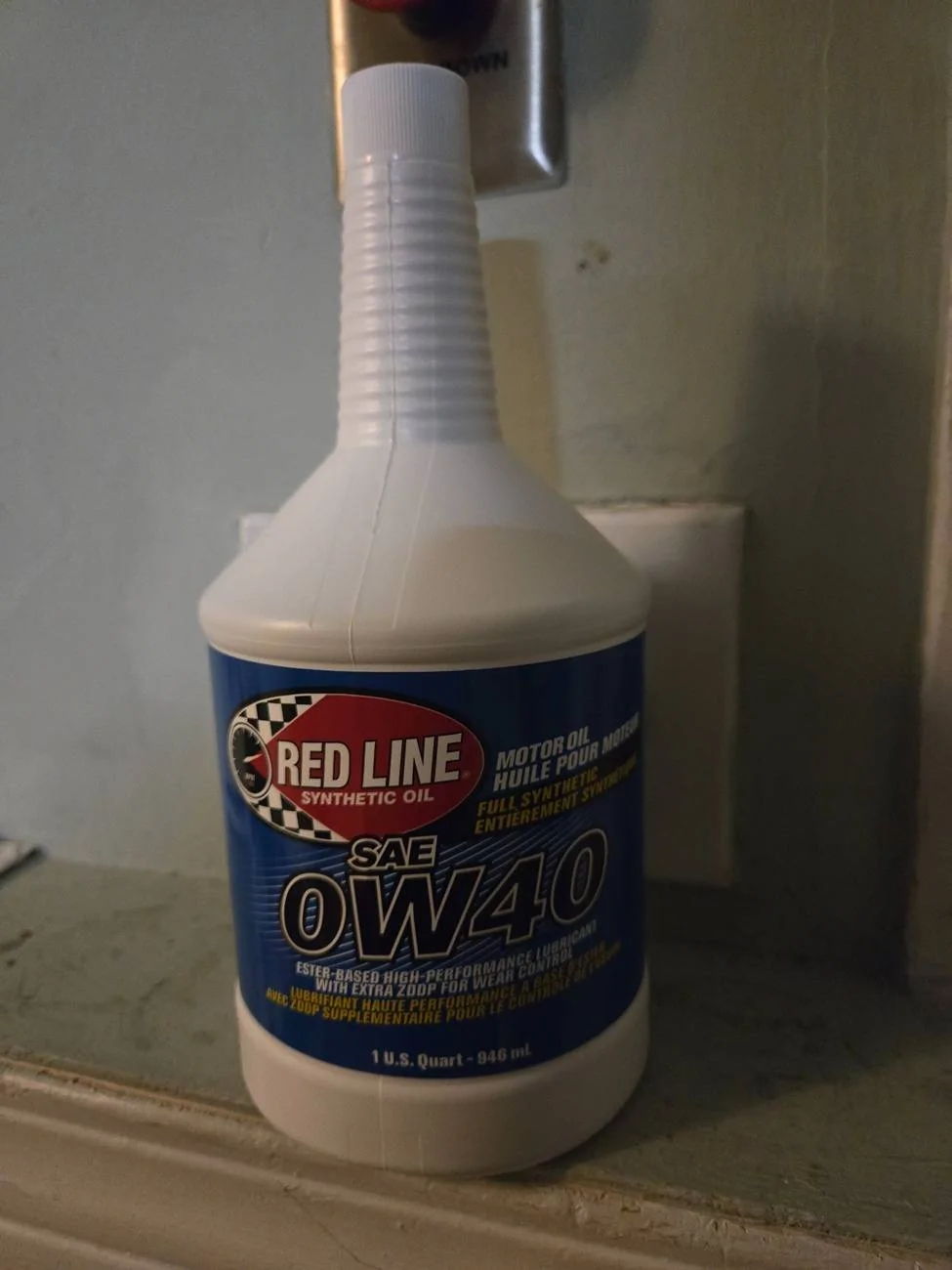
OP, I am trying this.
If you apply the science of lubrication to the (my) conditions... then 0W-20 is not the right viscosity. My conditions were high load, high heat. The number one reason for viscosity breakdown is the shear down or loss of the viscosity-index (VI) improver in the oil. This can occur due to exposure to high heat, which is the biggest factor in causing the sheer of the viscosity-index improver.

The advantages of 40W oil over 20W oil in towing applications are primarily related to viscosity and engine protection. I was running 230*-250*F at times, meaning my 40W oil with 176 VI index maintains a higher thickness and provides better lubrication under heavy loads and high heat conditions. This makes 40W oil more suitable for my towing, as it can handle the increased stress and heat generated by heavy-duty use. 40W oil at 250°F (121°C) would behave like a lower viscosity oil at normal temperatures. This is because as temperature increases, the viscosity of an oil decreases, making it thinner. In practical terms, my 5W-40 Shaeffer oil at 250°F would behave similarly viscosity as a 20W oil at normal temperatures, as the higher temperature reduces the oil's viscosity. The high VI index helps maintain viscosity from shear. 12.6 value shown on the oil sample test sheet for my 40W oil demonstrates the oil resisted shear very, very well.

In contrast, 20W oil has a lower viscosity at high temperatures, will not provide sufficient protection for engines under the strain of towing. While 20W oil flows more easily in cold temperatures, its lower viscosity at high temperatures can lead to inadequate lubrication and increased wear on engine components during towing.

Science matters. Conditions change. Lubricate based on conditions, not feelings, not what you 'think' is right, that is called... stinkin' thinkin'.

Towing high profile 4K+ trailer, 500+lbs of gear, driver plus fuel, running 3000 to 4500 RPM. Engine oil temperatures 230+ depending on grade. As I mentioned earlier, I drove in the Rocky mountains from NM, AZ, UT, WY, MT, ID, British Columbia and Alberta Canada. 20W oil is incorrect based on my conditions.

Science meets common sense.
Which is why I will run this

Jeep Gladiator Oil analysis after Towing 20K miles 20250727_224159
 

Sponsored

DanW

Well-Known Member
First Name
Dan
Joined
Mar 2, 2017
Threads
45
Messages
1,866
Reaction score
2,446
Location
Brownsburg, Indiana
Vehicle(s)
21 JT Rubi, 18 JLU Rubi, 2008 JKU Rubi, 07 Vette
I've proven what I do works. For me it was gathering information, setting some baselines and such - and wondering - what about this abuse with the snow plow (running fast and ramming the snow hard, engine winding up and down, up and down and running it HOT with the snow plow on.
There there was towing in our hills with the RPMs getting up there where people here start to freak out. Always came back just fine. And the oil life monitor was proven to be accurate (Motor Oil Geek also did testing proving their accuracy). So.......... may be a while before I do it again.

54 years of driving cars, trucks, tractors, combines, grain trucks and more, and years in shops working on cars, trucks, tractors, and more for others - never lost an engine.

There's always tomorrow, but worry about that if it ever happens.
That's why I did UOA's on my JL. New engine for me. I wanted a baseline, but also really it was just curiosity. I don't smoke or drink. It was less money than my buddies spend on Bourbon, for sure. But I learned what I needed to learn and so I've not done a single UOA on my Gladiator and have not done one on the JL for a good while. And the Gladiator behaves exactly the same way. I see the same coolant and oil temps under the same conditions as I do with the JL, even with the different transmissions. The PUG's are very consistent.

@Jrgunn5150 is demonstrating what a good 0w20 can do with those 10k OCI''s while towing. That right there should get some folks to rest easy and not worry too much about it. These things just don't need a 30 or 40. The 20's are darned good.
 

ShadowsPapa

Well-Known Member
First Name
Bill
Joined
Oct 12, 2019
Threads
247
Messages
40,442
Reaction score
53,859
Location
Runnells, Iowa
Vehicle(s)
'25 JTMX, '23 JLU 4xe, '82 SX4, '73 Javelin
Occupation
Retired auto mechanic, frmr gov't ntwrk security admin
Vehicle Showcase
3
No one has ever said "heading for total destruction, she's gonna blow!"
Me - I look for long term, not short term 10 or 20K results. How will it be way down the road. There are things you just can't get from an oil analysis as well.
I'm more concerned about things creeping up that won't show up.
A quality 0w20 with a good base and viscosity index will hold that viscosity.
it's not always about the thickness, it's about the oil chemistry itself, will it hold that viscosity? What's the viscosity index?
AMSOIL and Mobil 1 had a good base with a good ability to hold that viscosity with heat, not lose it, not break down.
 

DanW

Well-Known Member
First Name
Dan
Joined
Mar 2, 2017
Threads
45
Messages
1,866
Reaction score
2,446
Location
Brownsburg, Indiana
Vehicle(s)
21 JT Rubi, 18 JLU Rubi, 2008 JKU Rubi, 07 Vette
No one has ever said "heading for total destruction, she's gonna blow!"
Me - I look for long term, not short term 10 or 20K results. How will it be way down the road. There are things you just can't get from an oil analysis as well.
I'm more concerned about things creeping up that won't show up.
A quality 0w20 with a good base and viscosity index will hold that viscosity.
it's not always about the thickness, it's about the oil chemistry itself, will it hold that viscosity? What's the viscosity index?
AMSOIL and Mobil 1 had a good base with a good ability to hold that viscosity with heat, not lose it, not break down.
Agree! My longest run in my JL was about 8k and it was on Mobil 1 EP. The viscosity was right where it needed to be and all the numbers looked good. I would bet that oil could've gone much longer, easily.

In my JK, I saw a couple times where 5w30 dropped into the 20w range after 6k miles. I've not seen a 20 weight drop out of grade. To be fair, those were probably Pennzoil Platinum runs where they started out very thin for a 30 to begin with. But they still dropped out of grade. Otherwise, the oil was still in good shape with good TBN, no oxidation, and wear metals not causing any worry.

I try to do 5k runs nowadays in my JL and JT. Just because it paces them both for two oil changes a year....usually one in the spring and one in the fall. And it makes me feel good. I probably should do it once a year or every 10k, but again, I feel really good about the schedule I'm running.
 

ShadowsPapa

Well-Known Member
First Name
Bill
Joined
Oct 12, 2019
Threads
247
Messages
40,442
Reaction score
53,859
Location
Runnells, Iowa
Vehicle(s)
'25 JTMX, '23 JLU 4xe, '82 SX4, '73 Javelin
Occupation
Retired auto mechanic, frmr gov't ntwrk security admin
Vehicle Showcase
3
I try to do 5k runs nowadays in my JL and JT. Just because it paces them both for two oil changes a year....usually one in the spring and one in the fall. And it makes me feel good. I probably should do it once a year or every 10k, but again, I feel really good about the schedule I'm running.
That's part of it - line it up with other maintenance, tire rotation or the seasons as well.
I've gone under 5K and I've gone over 7K and would not be afraid to go the span of the oil life indicator. But it's easier to line it up with other things.

My cars get oil changed annually need it or not, typically before winter so they don't sit with anything in them for several months of winter.
 

g2020

Well-Known Member
First Name
David
Joined
Oct 30, 2024
Threads
22
Messages
214
Reaction score
272
Location
Texas USA
Vehicle(s)
2020 Jeep Gladiator Sport
As you saw in post #13 earlier in this thread, I follow the owner's manual or the internal dealer spec sheet.

In post #27 in this thread, DavenFla lays out a logical argument to use a thicker grade for frequent trailer towing up steep grades. Although using a motor oil grade different from 0W-20 incurs at least some warranty risk, I think that this topic deserves more discussion.

I have noticed an inconsistency in the manufacturer's advice on 1) motor oil grade and 2) gear oil grade for the rear differential:
  • Advice on motor oil grade does not waver; both the owner's manual and the internal dealer spec sheet call for 0W-20
  • Advice on gear oil grade, for the rear differential, changes from 75W-85 (owner's manual) to 75W-140 "if equipped with a Trailer Tow package" (internal dealer spec sheet); on a related note, 75W-140 is required for Sales Code DRZ
To state the obvious, one of the main considerations for any component is to maintain the operating temperature within a specific range.

I have to question whether the advice on motor oil grade, of 0W-20, is largely driven by CAFE/environmental standards. It seems to me that the internal dealer spec sheet should recommend 5W-30 at least for "mountain towing". 5W-30 is the thickest (Mobil 1 EP) grade that meets API and MS-6395.

From some decent Google AI results (decent in this case), we know that the Pentastar V6 can handle (officially nonstandard) 5W-30. This thicker grade may affect engine wear, but trailer towing up steep grades for long distances on (recommended, but thinner) 0W-20 also affects engine wear.

Not my advice: For the sake of argument, if we treat 5W-30 as the midpoint of the range of oils that a Pentastar V6 can handle, then 0W-20 will be the low end (for fuel economy / normal driving) and 5W-40 would be the high end (for durability / mountain towing). This range of motor oil grades, particularly if it were more narrowly defined as 0W-20 (low end) and 5W-30 (high end), would be similar to the way that the manufacturer handled the case of different grades for the rear differential.

Please keep in mind that using a thicker motor oil 1) will incur warranty risk, and 2) will not make your engine indestructible. You will still need to watch your coolant/engine/transmission temps. In case it is unclear, warranty risk means that a dealer may refuse to cover a failure if a thicker grade of motor oil is used.

Regardless of the grade that is used for towing, I think that it is best to use a motor oil that is API Certified and MS-6395 compliant. 0W-20 is still the only grade of motor oil that is recommended by the manufacturer.
 
Last edited:

Sponsored

ShadowsPapa

Well-Known Member
First Name
Bill
Joined
Oct 12, 2019
Threads
247
Messages
40,442
Reaction score
53,859
Location
Runnells, Iowa
Vehicle(s)
'25 JTMX, '23 JLU 4xe, '82 SX4, '73 Javelin
Occupation
Retired auto mechanic, frmr gov't ntwrk security admin
Vehicle Showcase
3
Not my advice: For the sake of argument, if we treat 5W-30 as the midpoint of the range of oils that a Pentastar V6 can handle, then 0W-20 will be the low end (for fuel economy / normal driving) and 5W-40 would be the high end (for durability / mountain towing). This range of motor oil grades, particularly if it were more narrowly defined as 0W-20 (low end) and 5W-30 (high end), would be similar to the way that the manufacturer handled the case of different grades for the rear differential.
Apples and rocks.

Engine was designed around a viscosity, the oil makers were involved.
bringing differentials into it is grasping. Those are extreme pressure devices, are totally reliant on ambient temps and air for cooling, among other massive/major differences.
 
Last edited:

Stan H

Well-Known Member
First Name
Stanley
Joined
Oct 26, 2022
Threads
10
Messages
5,481
Reaction score
5,461
Location
WV
Vehicle(s)
Gladiator Rubicon 2021
Occupation
Safety Consultant
This is why I quit doing oil analysis a long, long time ago, probably almost 20 years since I've sent a sample in.

To me, wasn't worth the cost or effort. And I've never had a major engine failure on a vehicle I've purchased new. And I pile miles on, 37,000 on this Gladiator in 15 months, for example.
I've never done one either in 4.6yrs I have 131,218 miles on mine
 

ShadowsPapa

Well-Known Member
First Name
Bill
Joined
Oct 12, 2019
Threads
247
Messages
40,442
Reaction score
53,859
Location
Runnells, Iowa
Vehicle(s)
'25 JTMX, '23 JLU 4xe, '82 SX4, '73 Javelin
Occupation
Retired auto mechanic, frmr gov't ntwrk security admin
Vehicle Showcase
3
I've never done one either in 4.6yrs I have 131,218 miles on mine
Over 100,000 miles including "wheeling" in the badlands.
 

Jrgunn5150

Well-Known Member
First Name
J.R.
Joined
May 15, 2024
Threads
10
Messages
1,330
Reaction score
2,757
Location
Ionia Mi
Vehicle(s)
2023 Gladiator Mojave
I've never done one either in 4.6yrs I have 131,218 miles on mine
The counter point people will say is, they like to be informed.

It's a false sense of control and security, but makes people happy, like additives and Amsoil and Baxter oil filters and various religions except the one that's true, etc etc.
Sponsored


Top