Sponsored

Oil Pan Gasket?

Gregors

Well-Known Member
First Name
Greg
Joined
Oct 31, 2022
Threads
9
Messages
48
Reaction score
42
Location
North Carolina
Vehicle(s)
2022 Gladiator Overland
Occupation
Divisional Director
I changed both Diff covers to ARB, and love the look. Now thinking of changing to the PPE Aluminum oil pan. Is the oil pan gasket reusable like the differentials? I can't seem to find an after market oil pan gasket and just a personal preference, I am not a fan of RTV. Thanks! Greg
Sponsored
 

Gvsukids

Well-Known Member
First Name
Justin
Joined
Mar 7, 2020
Threads
26
Messages
7,259
Reaction score
6,897
Location
Grand Rapids
Website
www.youtube.com
Vehicle(s)
2020 Gladiator Sport S Max Tow
Occupation
Delivery Driver
I changed both Diff covers to ARB, and love the look. Now thinking of changing to the PPE Aluminum oil pan. Is the oil pan gasket reusable like the differentials? I can't seem to find an after market oil pan gasket and just a personal preference, I am not a fan of RTV. Thanks! Greg
I would not reuse.
 

Charles 236

Well-Known Member
First Name
Charles
Joined
Feb 13, 2022
Threads
0
Messages
607
Reaction score
1,228
Location
Greenville, SC
Vehicle(s)
Jeep Gladiator Overland
Occupation
Jeep technician
The OE oil pan "gasket" is Mopar ThreeBond RTV. If the surfaces to be sealed are properly cleaned and prepped, and directions followed, there is no better sealer for the oil pan (and timing cover also). I often use it on other applications because it works so well.
 

ShadowsPapa

Well-Known Member
First Name
Bill
Joined
Oct 12, 2019
Threads
247
Messages
40,440
Reaction score
53,853
Location
Runnells, Iowa
Vehicle(s)
'25 JTMX, '23 JLU 4xe, '82 SX4, '73 Javelin
Occupation
Retired auto mechanic, frmr gov't ntwrk security admin
Vehicle Showcase
3
The OE oil pan "gasket" is Mopar ThreeBond RTV. If the surfaces to be sealed are properly cleaned and prepped, and directions followed, there is no better sealer for the oil pan (and timing cover also). I often use it on other applications because it works so well.
I hope the MOPAR stuff is different - because I can show you how well regular RTV doesn't work on the ends of intake manifolds on V8s where the only exposure is oil splash and fumes.

I never use off the shelf conventional RTV gasket maker or whatever you want to call it for anything submerged in oil.
50 years shows me that stuff is trouble for anything other than a supplement to a real gasket. (and that most folks use it improperly, thinking more is better)

I've used "RightStuff" with success, but not with coolant or fuel.
I use an anaerobic sealant made for coolant in places where coolant touches - RTV doesn't do well with most coolants. (classic engine thermostat housing flanges, for example)

When using RTV on real gaskets - I thoroughly clean both surfaces. I use something like a brake or electronic cleaner or acetone.
Then it doesn't get touched at all, period. Hands have oils even if you think they are dry and clean.
I then put a thin layer of the RTV on the sealing surface, if a gasket is used, put that in place, often another thin - very thin - layer of RTV. I assemble the parts, finger tight the fasteners, and let it sit a few hours to cure. I then torque things proper.
In any case, a thin layer, assemble parts, hand tighten, let it set, then torque, has been my rule over the years. Boss didn't like comebacks for any reason. He'd be all over anyone who had a customer come back even for something as small as a leak. Unacceptable. IHP had a fit if you fixed a valve cover leak on those big block MOPARs and then it leaked again - even way down the road.

As far as the RTV for sale at Autozone, NAPA, O'Reilly's and other parts places, I try to avoid it except in cases of legacy V8 assembly where it's needed where the rear main bearing cap goes into place (in the corners) or the pan gasket ends on such engines.
I never use RTV around intakes. Regular RTV only seems to last under the front and rear ends of legacy V8 intakes (where the intake is the valley cover as well) for so long. Right Stuff lasts longer there. Some oils seem to have chemicals in them that tend to slowly soften and melt away at standard RTV gasket makers.
My last intake install has been in place for about 4 years now and seems to be doing well, but I changed oil brands/types and wonder if that's why it's lasting longer.
 

Sponsored

Charles 236

Well-Known Member
First Name
Charles
Joined
Feb 13, 2022
Threads
0
Messages
607
Reaction score
1,228
Location
Greenville, SC
Vehicle(s)
Jeep Gladiator Overland
Occupation
Jeep technician
I hope the MOPAR stuff is different - because I can show you how well regular RTV doesn't work on the ends of intake manifolds on V8s where the only exposure is oil splash and fumes.

I never use off the shelf conventional RTV gasket maker or whatever you want to call it for anything submerged in oil.
50 years shows me that stuff is trouble for anything other than a supplement to a real gasket. (and that most folks use it improperly, thinking more is better)

I've used "RightStuff" with success, but not with coolant or fuel.
I use an anaerobic sealant made for coolant in places where coolant touches - RTV doesn't do well with most coolants. (classic engine thermostat housing flanges, for example)

When using RTV on real gaskets - I thoroughly clean both surfaces. I use something like a brake or electronic cleaner or acetone.
Then it doesn't get touched at all, period. Hands have oils even if you think they are dry and clean.
I then put a thin layer of the RTV on the sealing surface, if a gasket is used, put that in place, often another thin - very thin - layer of RTV. I assemble the parts, finger tight the fasteners, and let it sit a few hours to cure. I then torque things proper.
In any case, a thin layer, assemble parts, hand tighten, let it set, then torque, has been my rule over the years. Boss didn't like comebacks for any reason. He'd be all over anyone who had a customer come back even for something as small as a leak. Unacceptable. IHP had a fit if you fixed a valve cover leak on those big block MOPARs and then it leaked again - even way down the road.

As far as the RTV for sale at Autozone, NAPA, O'Reilly's and other parts places, I try to avoid it except in cases of legacy V8 assembly where it's needed where the rear main bearing cap goes into place (in the corners) or the pan gasket ends on such engines.
I never use RTV around intakes. Regular RTV only seems to last under the front and rear ends of legacy V8 intakes (where the intake is the valley cover as well) for so long. Right Stuff lasts longer there. Some oils seem to have chemicals in them that tend to slowly soften and melt away at standard RTV gasket makers.
My last intake install has been in place for about 4 years now and seems to be doing well, but I changed oil brands/types and wonder if that's why it's lasting longer.
The Mopar ThreeBond is what the factory seals oil pans and timing covers on the Pentastar engines with, there is no conventional gasket. If a seal using ThreeBond leaks, it was an error in preparation or assembly. It bonds the cover and oil pan so well that it is possible to break the pan or cover if not careful when removing them.
 

ShadowsPapa

Well-Known Member
First Name
Bill
Joined
Oct 12, 2019
Threads
247
Messages
40,440
Reaction score
53,853
Location
Runnells, Iowa
Vehicle(s)
'25 JTMX, '23 JLU 4xe, '82 SX4, '73 Javelin
Occupation
Retired auto mechanic, frmr gov't ntwrk security admin
Vehicle Showcase
3
If a seal using ThreeBond leaks, it was an error in preparation or assembly.
That's where most after-the-factory leaks happen........errors.

Are you referring to this part number - 68082860AB ?
If so I may get some to try on a couple trouble areas on one of my cars.
It's supposedly good as a gasket dressing as well - like I'd use other sealers in a thin layer (thin enough you can't really see the color) on conventional gaskets.

It's obviously not used on the transmission pan of the ZF made transmissions.
 
OP
OP

Gregors

Well-Known Member
First Name
Greg
Joined
Oct 31, 2022
Threads
9
Messages
48
Reaction score
42
Location
North Carolina
Vehicle(s)
2022 Gladiator Overland
Occupation
Divisional Director
Thank you for the info and replies. I may just leave the original pan on since there are no issues and no leaks currenlty.
 

Charles 236

Well-Known Member
First Name
Charles
Joined
Feb 13, 2022
Threads
0
Messages
607
Reaction score
1,228
Location
Greenville, SC
Vehicle(s)
Jeep Gladiator Overland
Occupation
Jeep technician
That's where most after-the-factory leaks happen........errors.

Are you referring to this part number - 68082860AB ?
If so I may get some to try on a couple trouble areas on one of my cars.
It's supposedly good as a gasket dressing as well - like I'd use other sealers in a thin layer (thin enough you can't really see the color) on conventional gaskets.

It's obviously not used on the transmission pan of the ZF made transmissions.
Not sure of the part number, but it is available at the dealership parts department. It is in a tube that requires a caulking gun; I have never seen it in the small tubes that aftermarket RTV is packaged in. It is such a strong bond that one tech in our shop broke a timing cover trying to pry it off. It is not used on the pan of the ZF eight speed, on the cars the ZF uses a gasket that is part of the pan and is not serviced separately. I have not had a reason to go into a ZF eight speed on a Gladiator, so I'm not sure about how that pan is sealed. I am sure that the metal pan has a separate seal, whether it is some sort of RTV or a conventional gasket I don't know.

I don't know where your trouble areas are that you mentioned, but the Mopar ThreeBond is the absolute best RTV that I have ever used. I wish I had this stuff back in the day, it would have made sealing the china wall corners easier on the old B and RB engines. Modern sealers are SO much better than dum dum and the Permatex "blue goo" from decades ago.
 

Vtur

Well-Known Member
First Name
Le
Joined
Mar 6, 2021
Threads
11
Messages
1,914
Reaction score
2,263
Location
Norcal
Vehicle(s)
JTOD
Occupation
Electrical Foreman
Threebond is the same stuffs as HondaBond or Yamabond. It's great stuff.

Edit: I've repaired some timing cover leaks using Hondabond without removing the covers. I trimmed and removed old excess rtv, cleaned with simple green and applied this stuff.
 
Last edited:

Sponsored

ShadowsPapa

Well-Known Member
First Name
Bill
Joined
Oct 12, 2019
Threads
247
Messages
40,440
Reaction score
53,853
Location
Runnells, Iowa
Vehicle(s)
'25 JTMX, '23 JLU 4xe, '82 SX4, '73 Javelin
Occupation
Retired auto mechanic, frmr gov't ntwrk security admin
Vehicle Showcase
3
ZF built transmissions in the 4xe use a pan gasket.
 

ShadowsPapa

Well-Known Member
First Name
Bill
Joined
Oct 12, 2019
Threads
247
Messages
40,440
Reaction score
53,853
Location
Runnells, Iowa
Vehicle(s)
'25 JTMX, '23 JLU 4xe, '82 SX4, '73 Javelin
Occupation
Retired auto mechanic, frmr gov't ntwrk security admin
Vehicle Showcase
3
I don't know where your trouble areas are that you mentioned, but the Mopar ThreeBond is the absolute best RTV that I have ever used.
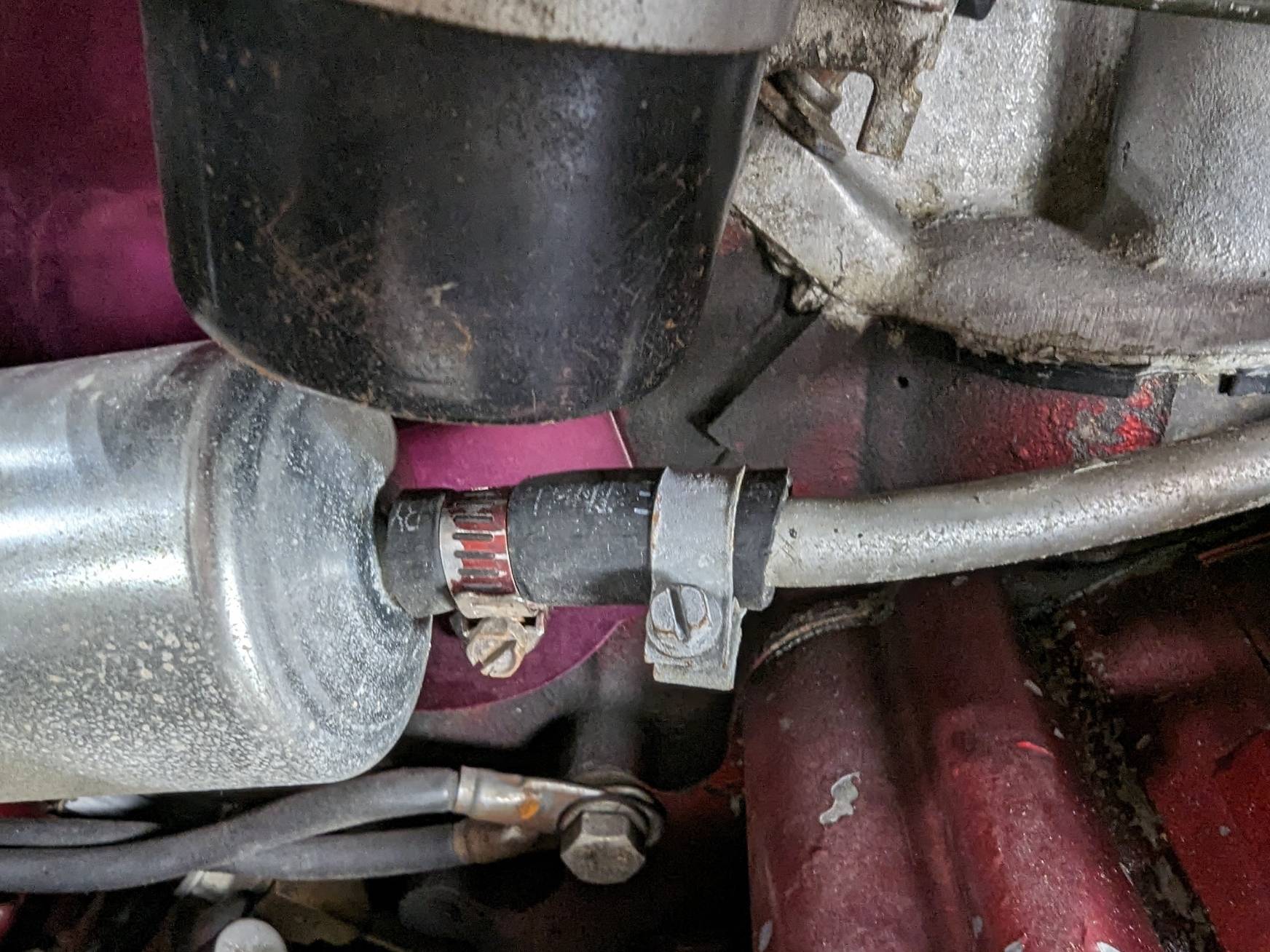
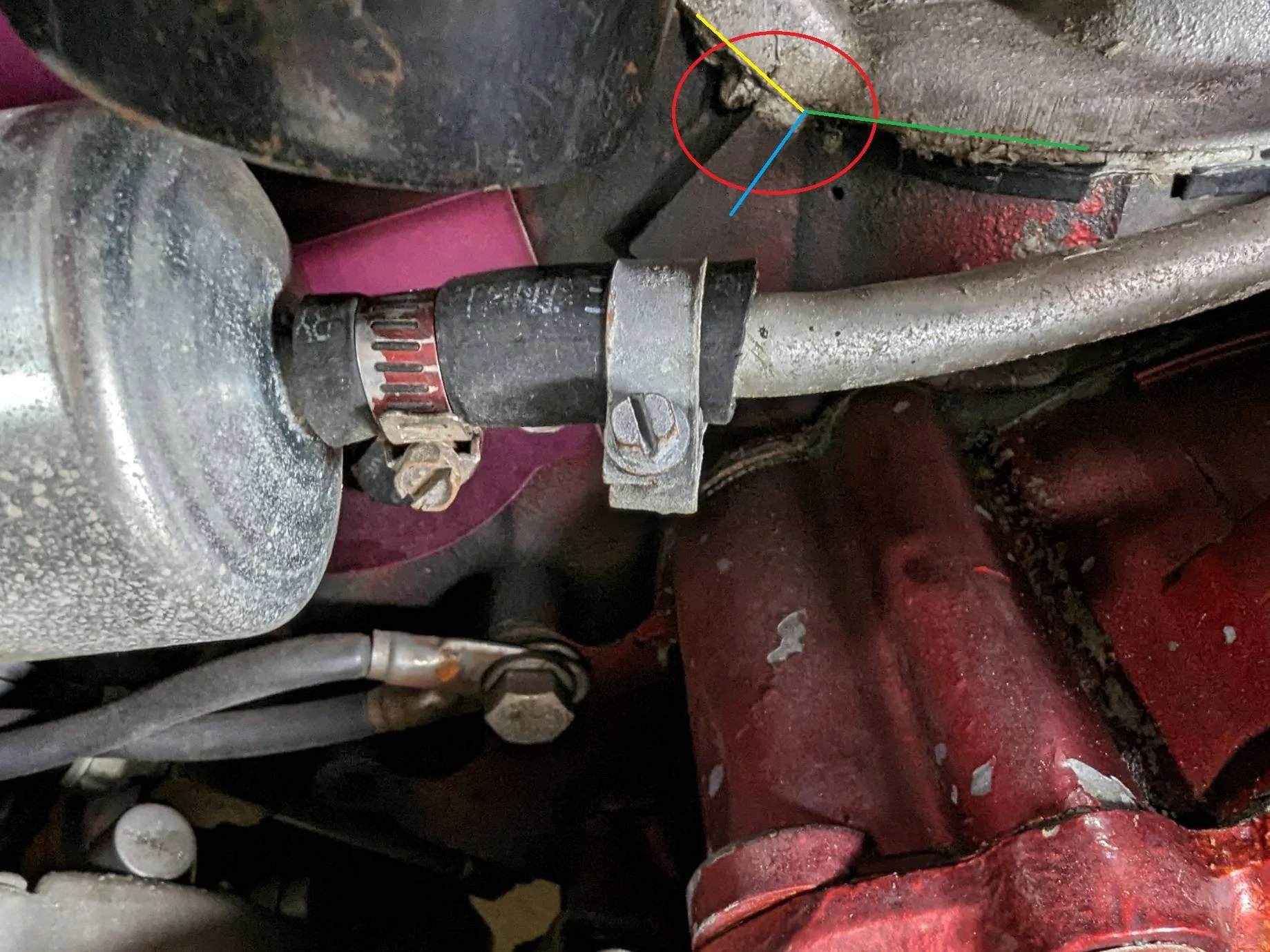
Here is one of the trouble areas we experience - intake manifold - sealing between the valley and the intake runners (prevent oil getting in) and on the end in the circle, where the intake meets the seal on the block at the front and rear, there's a 3 way corner there. Head gasket (blue) meets intake to head gasket (yellow) meets rubber valley seal (green). That corner where things meet needs some sort of sealant and some of us skip the rubber seal between intake and ends of the block in favor of sealer because the rubber tends to slip out after time.
The other area is where the rear main bearing cap meets the block and where the pan meets the main cap in the rear, and the timing cover in the front. Again, it's multiple gaskets and surfaces meeting. Some of us remove the timing cover to replace chain and sprocket but leave the pan in place - there's a rubber seal between timing cover bottom and the front of the pan and where that meets the timing cover to block gasket. Another trouble area for maintenance. .When building an engine there's an order to assembly and things generally work. When working on them later, it's different.

Jeep Gladiator Oil Pan Gasket? PXL_20230930_194312735


The engine is filthy. The guy who built it originally didn't seal things worth a crap. i've tried to clean things up and take care of leaks. Intake has been off twice.

Jeep Gladiator Oil Pan Gasket? PXL_20230930_194310061
 

Charles 236

Well-Known Member
First Name
Charles
Joined
Feb 13, 2022
Threads
0
Messages
607
Reaction score
1,228
Location
Greenville, SC
Vehicle(s)
Jeep Gladiator Overland
Occupation
Jeep technician
I see. The "T" is one of the hardest things to get sealed effectively. Getting the old sealer and oil film out is a big part of the repair. If you can get them out, clean it with rubbing alcohol and then reseal, it should be good. I would ditch the china wall seals and lay down a bead of Three Bond on top of the china wall. A former coworker would take a punch and run a series of dimples on the china wall and the corresponding sealing surface on the manifold to increase the bond of the sealer we used back then, but I don't think it would be necessary when using ThreeBond.

I agree about following the sequence when building or repairing an engine. I have seen guys shortcut the timing cover R&R on the Pentastar engines by leaving the valve covers in place. It never works, but it does give another trip to the shop for an oil leak repair.
 

Maximus Gladius

Well-Known Member
First Name
Kevin
Joined
Jan 30, 2021
Threads
74
Messages
2,901
Reaction score
3,692
Location
Calgary, AB, Canada
Vehicle(s)
2021 JTR, 2023 JTR
So, reviving this thread to ask the application process for Mopar Threebond engine RTV 68082860AB.
I picked this stuff up to day to pull my engine oil pan and of course theres no instructions on the process and timing of pan install, finger tighten bolts, wait 15 min, wait an hour, two or three, before torquing or dont wait at all, just slap on and torque down.

I asked my service advisor to ask and she asked two techs that said it's quick dry so slap on and torque down right away. Can fill oil right away too.

I asked my parts counter guy and he went back and only came back to say, wait an hour before filling with oil. Thats all I got. There's nothing online to the process instructions but I don't want to screw this up. Can someone point to a link on instructions?

@ShadowsPapa has suggested above that he hand tightens bolts and waits a few hours to cure, then torques down the bolts but if this stuff is quick dry, wouldn't the RTV get hard before torquing down and how would that seal be anyway?
Sponsored


Top