Sponsored

Water fording depth - Update

Mark Doiron

Well-Known Member
First Name
Mark
Joined
Aug 14, 2019
Threads
7
Messages
602
Reaction score
1,277
Location
Oklahoma City, OK
Vehicle(s)
2007 JKU X, 1979 Tenth Anniversary Trans Am, 2020 Gobi Gladiator Rubicon
Occupation
Retired
No the cap responds to pressure differential so it's no different if it's water pressure pushing it closed or vacuum inside the housing pulling it closed. The rapid cooling is enough to create sufficient vacuum that it will seal and pull the water in since the seals are designed to keep particulates in and higher viscosity fluids (i.e. gear oil) under the assumption the breather is working properly and allowing the housing pressure to be similar to atmosphere.
So, no breather hose--a completely sealed housing of old--and what have you lost over a breather hose that is clamped down? A couple cubic inches of air? I'm thinking there's something missing from your description of "problems" with these types of breathers. Like maybe they work for a bit until the axle housing actually does cool down, before finally closing off. And most of the time that's sufficient for you to ford the stream.
Sponsored


LostWoods

Well-Known Member
Joined
Mar 13, 2020
Threads
15
Messages
2,027
Reaction score
2,420
Location
Gilbert, AZ
Vehicle(s)
2024 4Runner / 1995 YJ
So, no breather hose--a completely sealed housing of old--and what have you lost over a breather hose that is clamped down? A couple cubic inches of air? I'm thinking there's something missing from your description of "problems" with these types of breathers. Like maybe they work for a bit until the axle housing actually does cool down, before finally closing off. And most of the time that's sufficient for you to ford the stream.
Sealed housings haven't been common for decades and issues related to pressure are why they now have breathers in the first place. Self-sealing valves are designed to seal quickly and are used by OEMs to reduce liability from the idiot tax when someone drives through deep water. In the hot axle scenario, it doesn't matter if the valve is raised or on the axle housing - the hose makes little difference in volume as you pointed out and when the cap seals, it is a sealed axle at that point.

Water has a much higher thermal capacity than the housing so it will rapidly suck heat out of the axle when it hits. To put it in perspective, think about how fast a sink full of water can make a hot cast iron pan cool enough to handle. These valves close with almost any pressure differential and water barely provides 1psi of pressure at the full fording depth of a JT let alone the Tacoma. A 20 degree F drop in air temperature at normal operating temps in a sealed housing will provide a greater drop in pressure so even without an immediate seal, you'll still have some vacuum inside the axle after it has closed the valve.

The solution is to use a free-flowing breather so that the axle can quickly equalize pressure without restriction. The location of the breather is irrelevant to solving the vacuum inside the axle problem but the non-restricted breather doesn't stop water either - you need to raise it higher to prevent submersion. On the JL/JT they're already fairly raised since they were built with fording in mind but on the Tacoma (and let's be real, most other trucks and older Jeeps) the breather is directly on top of the diff housing. 18" of water with a bronze breather on a Tacoma rear axle and you're sucking in water so people typically pipe it up behind the taillight.

A JT doesn't have as immediate a need to raise the breather but it's cheap insurance if you're using a free-flowing breather which, IMO, is essential if you plan on playing in any water or wet mud holes.
 
OP
OP
PyrPatriot

PyrPatriot

Well-Known Member
Joined
Oct 27, 2019
Threads
193
Messages
2,668
Reaction score
1,875
Location
Kentucky, USA
Vehicle(s)
JT Sport S Max Tow; Honda Element
I have, through a combination of reading and spending time under and working on my JT, found the following list of air passage ways for water to get into the Jeep and cause damage.

Stock JT tires are 31.5", and I measured mine being about 30-30.5" under load. This will be important later.

Main air intake: passenger side, at the top just under the hood - above 30"

Differential breather tubes (rear is attached to the truck bed, you can see it just behind and above the passenger rear tire. Front diff breather tube is by the driver side tire. - above 30"
The breather tubes don't look to be vented. They have caps on them, and I read on the JL forum that they are a Gortex material that lets air out but not water in. If so, that's great!

Transfer case breather tube - extends 1" above the top of the transfer case - uknown height.

Grill air intake - just to the right of the passenger side headlight as you are looking at it. Goes to the wheelwell air tube

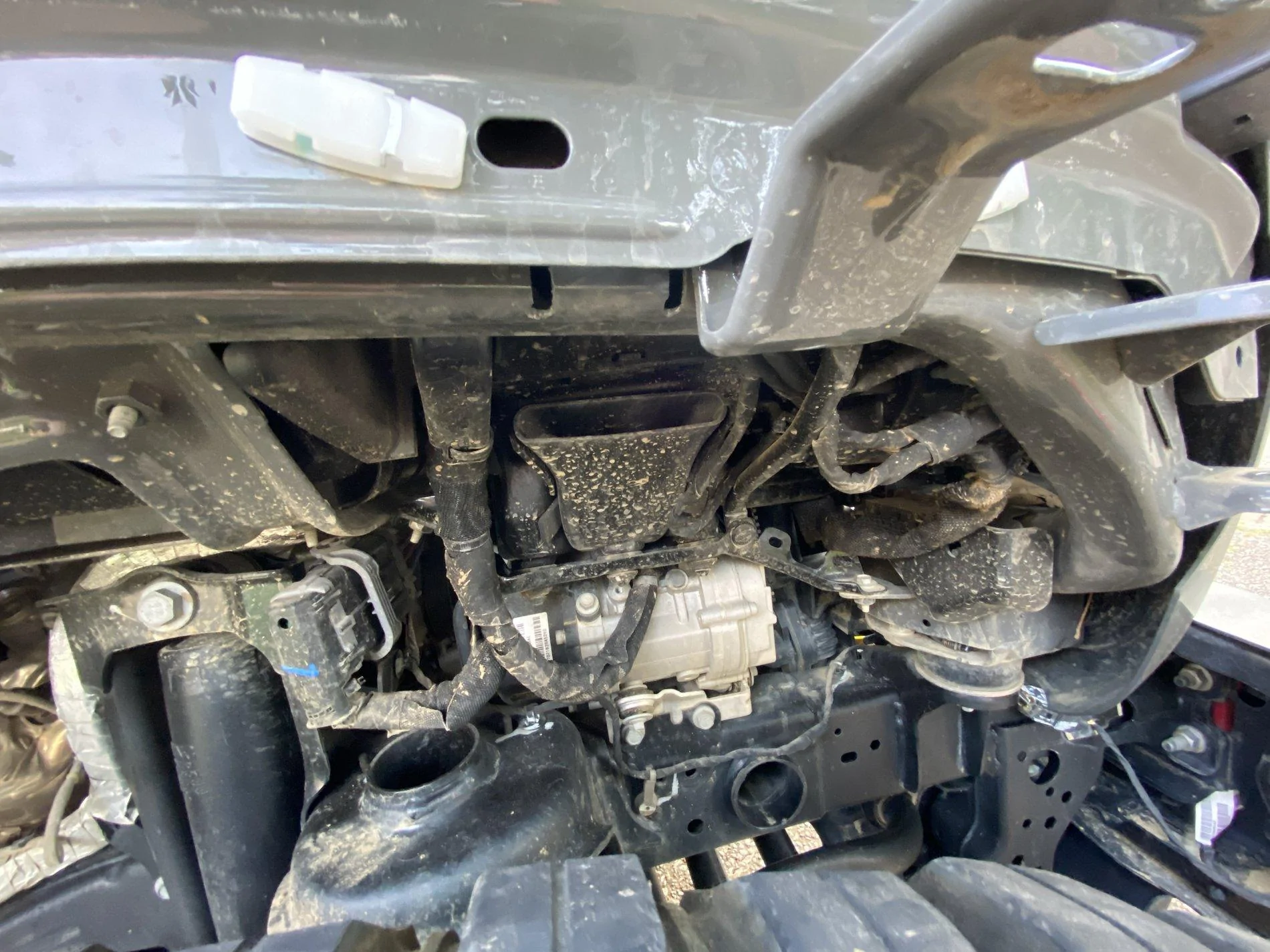
Wheelwell air intake tube- just under the passenger side fender (not flare!) -

Jeep Gladiator Water fording depth - Update 41e6501d-ab1a-47b3-845c-fb3fd21d03a5-jpeg


I think this is what limits the 30" at 5mph. At first I was reading that faster than 5mph will push water into seals that are not rated to withstand the pressure. Now I think that it is because the tire spinning will throw too much water into this vent. If this is incorrect someone please correct me.

Edit: I actually see now that this doesn't go to the air filter box. It connects to the grill air intake hole.
 
Last edited:

jeepguy225

Well-Known Member
First Name
Dan
Joined
Nov 12, 2018
Threads
3
Messages
481
Reaction score
800
Location
Maryland
Vehicle(s)
'20 Gator JTR, '04 Rubicon
Occupation
Buyer of Jeep parts
Vehicle Showcase
1
I think this is what limits the 30" at 5mph. At first I was reading that faster than 5mph will push water into seals that are not rated to withstand the pressure. Now I think that it is because the tire spinning will throw too much water into this vent. If this is incorrect someone please correct me.
that air tube channels air from the grill area to the air box, watch the rugged ridge snorkel install video and you'll see what I'm talking about.

the 30inches is for the electronics and breather tubes in stock form
 
OP
OP
PyrPatriot

PyrPatriot

Well-Known Member
Joined
Oct 27, 2019
Threads
193
Messages
2,668
Reaction score
1,875
Location
Kentucky, USA
Vehicle(s)
JT Sport S Max Tow; Honda Element
that air tube channels air from the grill area to the air box, watch the rugged ridge snorkel install video and you'll see what I'm talking about.

the 30inches is for the electronics and breather tubes in stock form
Ah yes forgot to mention the grill air intake hole. thanks. And that the air filter box has holes in the bottom of its case

And I do see that this doesn't go straight to the box! thanks!


Sponsored

WMWHV

Well-Known Member
First Name
Matt
Joined
Nov 25, 2018
Threads
24
Messages
277
Reaction score
285
Location
Houston, TX
Vehicle(s)
2021 Gladiator Rubicon EcoDiesel, 1947 Willys CJ2A
Build Thread
Link
I suppose this may be a stupid question, but since I don’t have my Gladiator yet (diesel holdout) I have no way of testing this. The rated fording capacity is 30 inches. I measured a lifted Galdiator with 37s and 30 inches is still well above door level. In my current Jeep, I try to keep to about 24 inches of water, which is where the floor pan of the tub is. If you have the doors on, do the gaskets seal well enough to keep the water out or does your Jeep survive at 30 inches, but you have a mess to clean out in the cabin? I try to pull the carpet before getting in high water if I know it is coming, but have had to disinfect and dry it and the seats more than once after getting nasty water in it, mainly water draining off of me from getting in and out in high water and having it drain off my wetsuit. I know results will vary with tube doors!
 
OP
OP
PyrPatriot

PyrPatriot

Well-Known Member
Joined
Oct 27, 2019
Threads
193
Messages
2,668
Reaction score
1,875
Location
Kentucky, USA
Vehicle(s)
JT Sport S Max Tow; Honda Element
I suppose this may be a stupid question, but since I don’t have my Gladiator yet (diesel holdout) I have no way of testing this. The rated fording capacity is 30 inches. I measured a lifted Galdiator with 37s and 30 inches is still well above door level. In my current Jeep, I try to keep to about 24 inches of water, which is where the floor pan of the tub is. If you have the doors on, do the gaskets seal well enough to keep the water out or does your Jeep survive at 30 inches, but you have a mess to clean out in the cabin? I try to pull the carpet before getting in high water if I know it is coming, but have had to disinfect and dry it and the seats more than once after getting nasty water in it, mainly water draining off of me from getting in and out in high water and having it drain off my wetsuit. I know results will vary with tube doors!
If you keep moving the doors keep water out. For me, no lift, on 35s, 30" is halfway up the lower door hinge. I've gotten close to there I think, wife was in the back watching. No water got in
 

jeepguy225

Well-Known Member
First Name
Dan
Joined
Nov 12, 2018
Threads
3
Messages
481
Reaction score
800
Location
Maryland
Vehicle(s)
'20 Gator JTR, '04 Rubicon
Occupation
Buyer of Jeep parts
Vehicle Showcase
1
I suppose this may be a stupid question, but since I don’t have my Gladiator yet (diesel holdout) I have no way of testing this. The rated fording capacity is 30 inches. I measured a lifted Galdiator with 37s and 30 inches is still well above door level. In my current Jeep, I try to keep to about 24 inches of water, which is where the floor pan of the tub is. If you have the doors on, do the gaskets seal well enough to keep the water out or does your Jeep survive at 30 inches, but you have a mess to clean out in the cabin? I try to pull the carpet before getting in high water if I know it is coming, but have had to disinfect and dry it and the seats more than once after getting nasty water in it, mainly water draining off of me from getting in and out in high water and having it drain off my wetsuit. I know results will vary with tube doors!
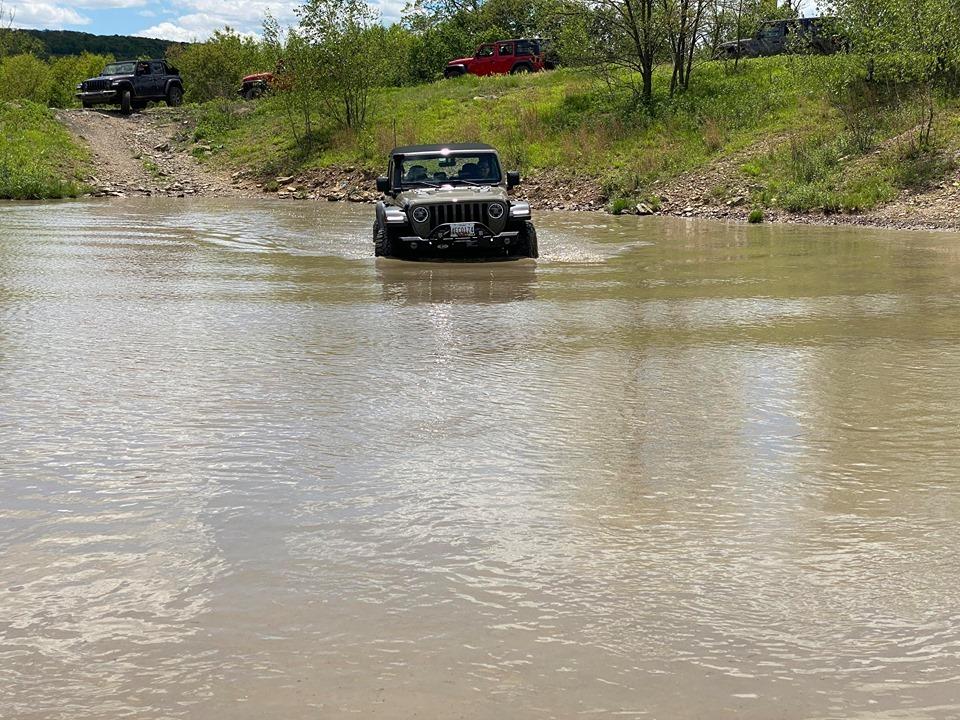
Doors on, the door gaskets seal well enough to keep the water out, just don't stop in the water, keep driving to get out of it, or eventually it will find a way in. Also, be sure to put your drain plugs in the actual floor pan hole, I forgot to and left my drain plugs in the Mopar floor mats (yes I removed the little piece of carpet so the mats seated correctly) and water seeped into the floor pan carpet area, very little, but I still had to pull them later to let it all dry. The water line for the day was about 5 inches above door level.

**picture is before I got to the deep spot.

Jeep Gladiator Water fording depth - Update 82347383_3043687185686381_820653226746445824_n
 
OP
OP
PyrPatriot

PyrPatriot

Well-Known Member
Joined
Oct 27, 2019
Threads
193
Messages
2,668
Reaction score
1,875
Location
Kentucky, USA
Vehicle(s)
JT Sport S Max Tow; Honda Element
Also, be sure to put your drain plugs in the actual floor pan hole, I forgot to and left my drain plugs in the Mopar floor mats (yes I removed the little piece of carpet so the mats seated correctly) and water seeped into the floor pan carpet area
I thought you couldn't get the rubber mopar mats to fit if you had the drain plug in the floor because they have molds to go into the drain plug, and the plug goes to plug the mat
 

Erievon

Well-Known Member
First Name
Al
Joined
Apr 20, 2020
Threads
1
Messages
695
Reaction score
933
Location
Cleveland, OH
Vehicle(s)
2023 JTR., 2021 JLU Altitude
Occupation
International Banker
They are molded to go in the hole, yes, and then the plug goes in the mat. Do they seal? No, not really. It's ok for driving in the rain and such, keeps the water out for the most part. But submerged, no, it's not a water tight seal like having the actual plug in the drain.
 

Sponsored

WMWHV

Well-Known Member
First Name
Matt
Joined
Nov 25, 2018
Threads
24
Messages
277
Reaction score
285
Location
Houston, TX
Vehicle(s)
2021 Gladiator Rubicon EcoDiesel, 1947 Willys CJ2A
Build Thread
Link
They are molded to go in the hole, yes, and then the plug goes in the mat. Do they seal? No, not really. It's ok for driving in the rain and such, keeps the water out for the most part. But submerged, no, it's not a water tight seal like having the actual plug in the drain.
This is good to know and will influence my purchase decision. I think I will go with the aftermarket mats like I have on my current Jeep. The water off my feet puddles in the bottom and I either towel it out or try to remove the mat to pour it out (which never works well). I would rather have that hassle than the hassle of water coming up from the outside through a leaky drain hole.
 

Erievon

Well-Known Member
First Name
Al
Joined
Apr 20, 2020
Threads
1
Messages
695
Reaction score
933
Location
Cleveland, OH
Vehicle(s)
2023 JTR., 2021 JLU Altitude
Occupation
International Banker
This is good to know and will influence my purchase decision. I think I will go with the aftermarket mats like I have on my current Jeep. The water off my feet puddles in the bottom and I either towel it out or try to remove the mat to pour it out (which never works well). I would rather have that hassle than the hassle of water coming up from the outside through a leaky drain hole.
I don't mean to dissuade you, actually they are rather nice. I didn't buy them, they came with my North. They aren't to be trusted to seal the floor completely though. The solution is to leave the plug in the floor, and order spare plugs for the front mats to seal them, they're only a few bucks. And when you need to drain the mats themselves, reach under and pull the plug from the floor, put the funnel of the mat into the floor hole, and then pull the plug on the mat.
 
OP
OP
PyrPatriot

PyrPatriot

Well-Known Member
Joined
Oct 27, 2019
Threads
193
Messages
2,668
Reaction score
1,875
Location
Kentucky, USA
Vehicle(s)
JT Sport S Max Tow; Honda Element
This is good to know and will influence my purchase decision. I think I will go with the aftermarket mats like I have on my current Jeep. The water off my feet puddles in the bottom and I either towel it out or try to remove the mat to pour it out (which never works well). I would rather have that hassle than the hassle of water coming up from the outside through a leaky drain hole.
The ability to drain the mats has been very helpful. Wish you could do it with the rear mats
 
OP
OP
PyrPatriot

PyrPatriot

Well-Known Member
Joined
Oct 27, 2019
Threads
193
Messages
2,668
Reaction score
1,875
Location
Kentucky, USA
Vehicle(s)
JT Sport S Max Tow; Honda Element
I don't mean to dissuade you, actually they are rather nice. I didn't buy them, they came with my North. They aren't to be trusted to seal the floor completely though. The solution is to leave the plug in the floor, and order spare plugs for the front mats to seal them, they're only a few bucks. And when you need to drain the mats themselves, reach under and pull the plug from the floor, put the funnel of the mat into the floor hole, and then pull the plug on the mat.
Mats wont fit right if you dont pull the drian plug in the floor


Top