
ShadowsPapa
Well-Known Member
- First Name
- Bill
- Joined
- Oct 12, 2019
- Threads
- 247
- Messages
- 40,465
- Reaction score
- 53,916
- Location
- Runnells, Iowa
- Vehicle(s)
- '25 JTMX, '23 JLU 4xe, '82 SX4, '73 Javelin
- Occupation
- Retired auto mechanic, frmr gov't ntwrk security admin
- Vehicle Showcase
- 3
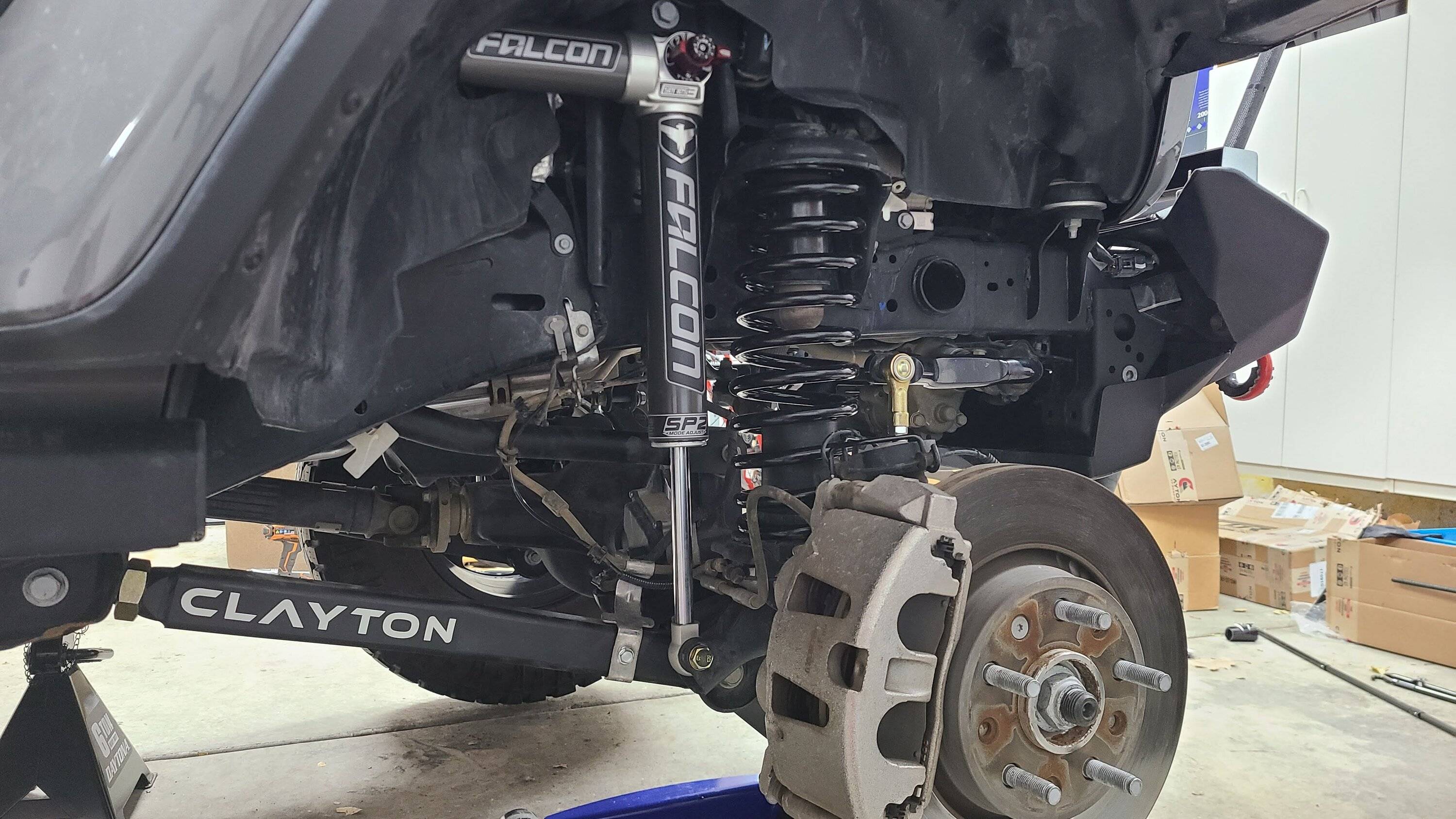
It won't happen to most - but certainly can happen to some.Ball joints at 55,000 miles? I have 65,500 miles on mine and have had 35's on it And 37's now for the past 35,000 miles and my ball joints are still good. I have my stock drag link and tie rod as well. Not sure what more he should need to replace at 55,000 miles, everything should be good still. I didn't replace the ball joints on my JKU until 125,000 miles and they didn't start feeling like they needed replaced until around 120,000
This dates back not only to experience, but to my college texts -
If you live and drive in an area where the roads are rough, especially along the right edge (think East University Ave. in Des Moines) the suspension is in constant motion - on the right side. This leads to the tires on the right wearing faster as well as the ball joints and bushings on the right side.
Experience has shown me that it's not uncommon to see the right side go first on SOME vehicles, depending on where the owner lives and drives, the roads around them, etc.
And then there the "stack-up of tolerances" thing. Easiest explained on a crankshaft or similar part where Joe's Ford truck engine went 200,000 miles with good oil pressure and no unusual sounds while Sam's Ford truck, same year, same engine, had trouble at 80,000 miles.
Joe was lucky - the bearings were on the good side of tolerances, the crankshaft was at the maximum spec in diameter.
Sam wasn't so lucky - his rod bearings were on the low side and the crankshaft had some journals just below the middle of the spec range.
Joe started out with things being a closer fit, Sam's engine was on the high side of clearances when new.
Not as big an issue today - things are much much more closely machined and tolerances checked by laser and machine, not micrometer and eyeball. And if they do like AMC did in the 1980s, they mechanically spin the engine while taking pressure readings from throughout the oil gallery system and can tell exactly where loose spots are, if anyway, by the pulses of oil pressure as they know where passages align and more. Today they could spot a loose bearing before that engine ever left the plant.
There's similar tolerances for steering and suspension parts. Back to AMC - they measured the force needed to press spring support bushings into the spring support. If it wasn't up to snuff, the bushing shell was tack welded to the spring support.
If a cash-strapped company could do all of that, gotta suspect any company could if they desired.
So you have tolerances - ranges of tolerances, and driving habits, road conditions, driving speed....... all playing into the life of parts. Drive fast over rough roads - it's a hammering effect. Stay along the really rough right lane on East University, you are going to need ball joints on the right side sooner than most. (try to convince my wife of that)
Sponsored