Sponsored

Dealer Trying to Void Warranty

Zachanadandy

Well-Known Member
First Name
Zach
Joined
Oct 17, 2023
Threads
4
Messages
3,015
Reaction score
4,770
Location
Patterson, ca
Vehicle(s)
2023 gladiator Mojave
Occupation
Electrical foreman
I've bought a warn winch that came with one and I know people with warn winch's that have them installed. Other brands provide them as well. You can argue all you want about it but maybe back in the day that didn't but a lot of people use them in today's times. I'm not saying your winch is the problem but it absolutely gives the dealership ammunition to void a warranty if you have it wired directly to the battery without a kill switch. Just saying, my dealership had no problem fixing my battery on mine with a winch installed with a kill switch.
I'm not the OP and haven't had a battery problem in either JL or my JT. I wouldn't want another garbage factory battery even if I did have a problem. I can change a battery in 1/10th the time it would take to drive to the dealer. Not saying you can't run one, hell people are still wearing masks, do whatever makes you feel safe. I've been to the warn headquarters, pop the hood on every vehicle in the parking lot and see what percentage are wired straight to the battery.
Sponsored


ShadowsPapa

Well-Known Member
First Name
Bill
Joined
Oct 12, 2019
Threads
247
Messages
40,465
Reaction score
53,916
Location
Runnells, Iowa
Vehicle(s)
'25 JTMX, '23 JLU 4xe, '82 SX4, '73 Javelin
Occupation
Retired auto mechanic, frmr gov't ntwrk security admin
Vehicle Showcase
3
I was just keeping it simple. I do have a toggle switch in the engine bay that cuts power to the winch unless in use. My winch isn’t remote, just a cabled controller.
Then no chance of a draw there.
I recall when I had my 2020 and it wasn't keeping the voltage up, ESS didn't work, etc. I was busy fixing things for other people (electrical restorations) and the beast was under warranty and I wanted a couple of other things checked out anyway (and was headed there for other business), I took it to the dealer and talked of the low battery voltage.
They told me my winch was draining the batteries while it sat.
I guess they ignored the big fat red switch sitting right next to the battery, in the OFF position.
Their fix was so laughable - the tech moved the winch ground cable from the top of the IBS over to the chassis/fender ground.
They literally said "we fixed it for you".
I guess they didn't realize that one of those black cables on the IBS went from the battery negative over to the chassis ground so all they did was to add one more link into the winch ground. It was still going right to the negative. Electrically it was identical except for a possible voltage drop through the extra cable length and extra connection.
I took it home, disconnected both batteries, charged each of them independently with a good AGM charger, reset the IBS and all electrical issues went away. ESS worked fine again, battery voltage stayed up, no more "ESS not ready, battery charging" message. It was fine with original batteries until I traded it for my 2022.
So I guess that just because they work in a shop doing Jeep stuff doesn't mean they know squat about what they are working on.

Warn not only doesn't provide one, if you call and talk to them they don't recommend one. Even their solenoid kit is listed under rear mounted winch accessories in their catalog as that is a temporary connection and having live wires hanging at the back all the time just isn't necessary. I'm not saying you can't run one, but it's not necessary at all.
Marketing among other reasons. They don't supply one because it's more expensive to do so. It would increase the cost of the winch and add complexity to an install that too many don't do right or even understand to begin with. Price point. Participate in some study groups. "would you buy this if the price was xxxx" and they keep going up until people start dropping off and saying no. OK, how can we keep the cost down?
Doesn't matter that many will buy the cut-off kit anyway - that doesn't impact their view of the cost of the winch. That's an accessory item in the consumer mind.
There's another reason - if they say "you should run a safety cutoff" you then get the group of consumers who will go to ebay or amazon and buy a $29.99 solenoid and install it and fry the winch and then go back to Warn.
I can name several business reasons and tech reasons they don't say in the manual to use a solenoid or switch - they have to keep it dumbed down for the lowest common denominator. Look around the internet and see those who ask such basic questions that you'd expect most might know about winches or electrical connections.


Of all of the "how do I connect my winch" threads and discussions here over the years, all of the winch threads, dozens if not hundreds of posts about it, you are the first and only one I've seen actually advocating against installing such a device. And yet - many, if not most, of us do.

Not saying you can't run one, hell people are still wearing masks, do whatever makes you feel safe. I've been to the warn headquarters, pop the hood on every vehicle in the parking lot and see what percentage are wired straight to the battery.
Ouch, and wow. One of those. Comparing.
I don't judge those wearing masks because before covid, in a busy shopping area I'd typically see at least a couple of people wearing a mask. Could be a transplant patient, cancer victim, maybe a lung disease, who knows.
But then if you could out those who wear masks for very valid medial reasons, then my comparison would be those wearing masks to those who run with no safety device in line with the winch - not fully educated on the dangers, not experienced, not having directly seen the results.
We've seen enough pictures and videos here of fires, and accidents................ and having worked with emergency services, been responsible for fire control and safety in the past, and having seen a demonstration where a cable was applied directly across a fully charged car battery - the results? Melted and burning insulation, red hot conductor eventually melted to the ground while the insulation burned.

If running a solenoid or switch device was a problem, then how have the many hundreds of Jeep owners who have such devices and who have used their winches in real life gotten by?

So you were at Warn Headquarters and opened the hood of every Jeep there and there were no safety devices - marketing, keep it simple for some of the simple people who buy winches. The smarter ones play it safe.
BTW - long time member of the Wrangler forums by any chance?

Amazing - no reasons to not run a cutoff switch or solenoid and yet there are multiple reasons TO run a switch or solenoid and you literally advocate against running one.

You have missed the many threads, many discussions on this, including pictures of Jeeps burning down and one question that comes up - was the winch directly wired?

Things can also go wrong - and having a way to kill power to such a powerful and strong device capable of drawing hundreds of amps is just smart.
 

obrianmcc

Well-Known Member
First Name
Mike
Joined
Mar 10, 2020
Threads
4
Messages
471
Reaction score
585
Location
Meridian, Idaho
Vehicle(s)
2020 Gladiator Sport S
Vehicle Showcase
1
Sounds like your trying to warranty your batteries ... that's equivalent to trying to warranty brake pads.....

AUX delete and upgrade your starter battery
 

Zachanadandy

Well-Known Member
First Name
Zach
Joined
Oct 17, 2023
Threads
4
Messages
3,015
Reaction score
4,770
Location
Patterson, ca
Vehicle(s)
2023 gladiator Mojave
Occupation
Electrical foreman
LOL totally aware of things electric.
You can STILL control them like I did - solenoid turned on by aux switch controls my winch. You can control the compressor... Just not eun the compressor power thru the aux switch relay. On the other hand, a compressor that draws only 30 amps max could be run via aux switch. You have not seen my jeep wiring and winch and plow, etc
I was responding to the question as to why the op had those items hardwired to the battery. Yours are also effectively hardwired to the battery even if they are solenoid controlled. Unfused hot for amp draw reasons.
 

Zachanadandy

Well-Known Member
First Name
Zach
Joined
Oct 17, 2023
Threads
4
Messages
3,015
Reaction score
4,770
Location
Patterson, ca
Vehicle(s)
2023 gladiator Mojave
Occupation
Electrical foreman
Then no chance of a draw there.
I recall when I had my 2020 and it wasn't keeping the voltage up, ESS didn't work, etc. I was busy fixing things for other people (electrical restorations) and the beast was under warranty and I wanted a couple of other things checked out anyway (and was headed there for other business), I took it to the dealer and talked of the low battery voltage.
They told me my winch was draining the batteries while it sat.
I guess they ignored the big fat red switch sitting right next to the battery, in the OFF position.
Their fix was so laughable - the tech moved the winch ground cable from the top of the IBS over to the chassis/fender ground.
They literally said "we fixed it for you".
I guess they didn't realize that one of those black cables on the IBS went from the battery negative over to the chassis ground so all they did was to add one more link into the winch ground. It was still going right to the negative. Electrically it was identical except for a possible voltage drop through the extra cable length and extra connection.
I took it home, disconnected both batteries, charged each of them independently with a good AGM charger, reset the IBS and all electrical issues went away. ESS worked fine again, battery voltage stayed up, no more "ESS not ready, battery charging" message. It was fine with original batteries until I traded it for my 2022.
So I guess that just because they work in a shop doing Jeep stuff doesn't mean they know squat about what they are working on.


Marketing among other reasons. They don't supply one because it's more expensive to do so. It would increase the cost of the winch and add complexity to an install that too many don't do right or even understand to begin with. Price point. Participate in some study groups. "would you buy this if the price was xxxx" and they keep going up until people start dropping off and saying no. OK, how can we keep the cost down?
Doesn't matter that many will buy the cut-off kit anyway - that doesn't impact their view of the cost of the winch. That's an accessory item in the consumer mind.
There's another reason - if they say "you should run a safety cutoff" you then get the group of consumers who will go to ebay or amazon and buy a $29.99 solenoid and install it and fry the winch and then go back to Warn.
I can name several business reasons and tech reasons they don't say in the manual to use a solenoid or switch - they have to keep it dumbed down for the lowest common denominator. Look around the internet and see those who ask such basic questions that you'd expect most might know about winches or electrical connections.


Of all of the "how do I connect my winch" threads and discussions here over the years, all of the winch threads, dozens if not hundreds of posts about it, you are the first and only one I've seen actually advocating against installing such a device. And yet - many, if not most, of us do.


Ouch, and wow. One of those. Comparing.
I don't judge those wearing masks because before covid, in a busy shopping area I'd typically see at least a couple of people wearing a mask. Could be a transplant patient, cancer victim, maybe a lung disease, who knows.
But then if you could out those who wear masks for very valid medial reasons, then my comparison would be those wearing masks to those who run with no safety device in line with the winch - not fully educated on the dangers, not experienced, not having directly seen the results.
We've seen enough pictures and videos here of fires, and accidents................ and having worked with emergency services, been responsible for fire control and safety in the past, and having seen a demonstration where a cable was applied directly across a fully charged car battery - the results? Melted and burning insulation, red hot conductor eventually melted to the ground while the insulation burned.

If running a solenoid or switch device was a problem, then how have the many hundreds of Jeep owners who have such devices and who have used their winches in real life gotten by?

So you were at Warn Headquarters and opened the hood of every Jeep there and there were no safety devices - marketing, keep it simple for some of the simple people who buy winches. The smarter ones play it safe.
BTW - long time member of the Wrangler forums by any chance?

Amazing - no reasons to not run a cutoff switch or solenoid and yet there are multiple reasons TO run a switch or solenoid and you literally advocate against running one.

You have missed the many threads, many discussions on this, including pictures of Jeeps burning down and one question that comes up - was the winch directly wired?

Things can also go wrong - and having a way to kill power to such a powerful and strong device capable of drawing hundreds of amps is just smart.
Sure some people have legitimate reasons to wear an actual n95. The studies have proven the cloth mask does nothing. The people on the freeway, by themselves in their cars, still wearing masks? That's an illusion of safety at best. I'm not saying YOU shouldn't run a switch or solenoid (although I have seen a few solenoid fires over the years too), just that I don't. If it makes you comfortable to complicate your wiring, by all means. If your switch or solenoid fails on the trail I'll have no problem helping you fix the wiring or pull you out with my winch.
 

Sponsored

ShadowsPapa

Well-Known Member
First Name
Bill
Joined
Oct 12, 2019
Threads
247
Messages
40,465
Reaction score
53,916
Location
Runnells, Iowa
Vehicle(s)
'25 JTMX, '23 JLU 4xe, '82 SX4, '73 Javelin
Occupation
Retired auto mechanic, frmr gov't ntwrk security admin
Vehicle Showcase
3
I was responding to the question as to why the op had those items hardwired to the battery. Yours are also effectively hardwired to the battery even if they are solenoid controlled. Unfused hot for amp draw reasons.
Nothing else could handle the load - or in better words, you'd be introducing voltage drop via cables and connections not going "direct".
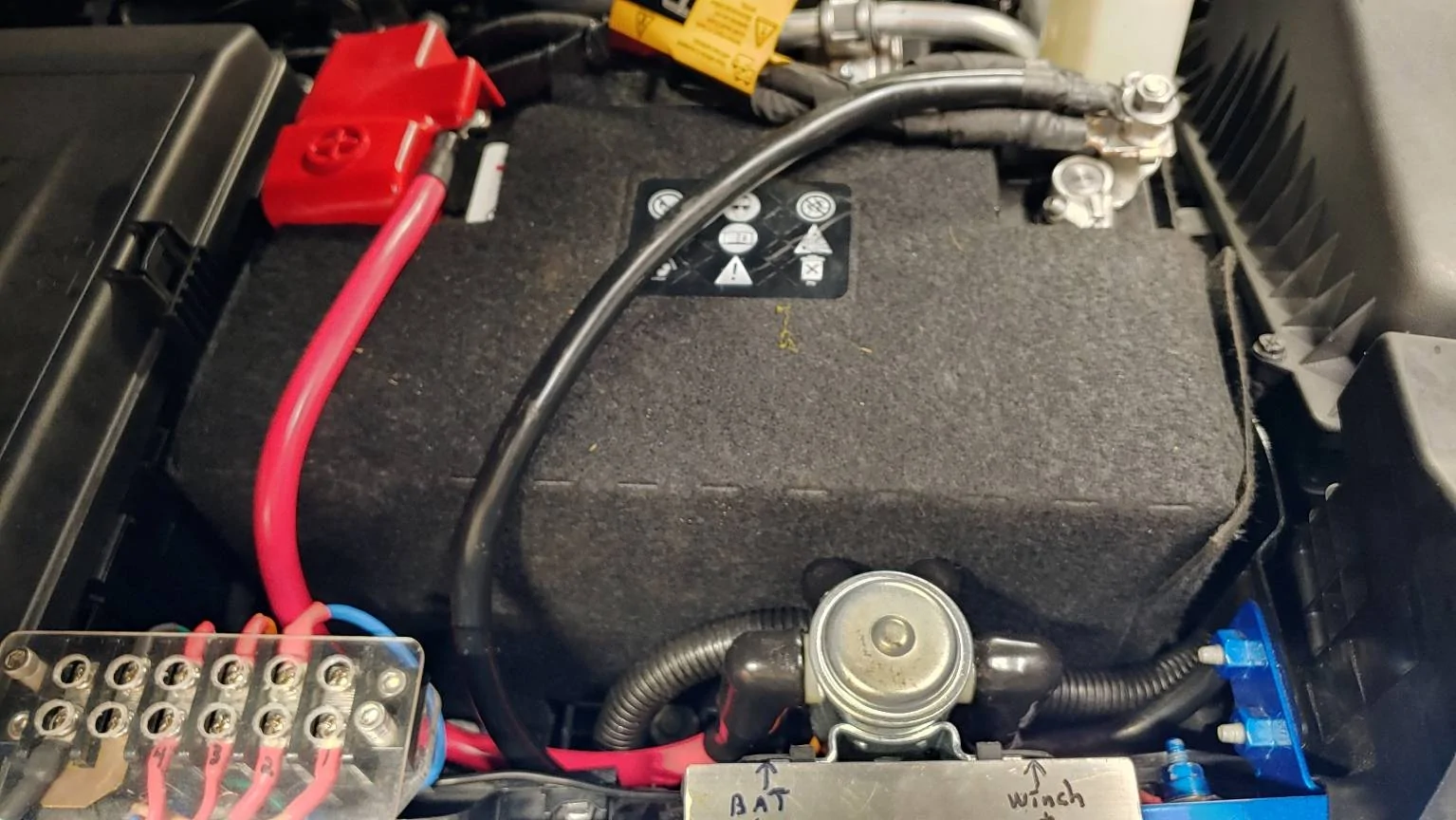
Very interesting you mention that as here's an early picture of my solenoid setup (I may opt for a heavier solenoid one day but for my use, and I've used it, this one is fine)

Jeep Gladiator Dealer Trying to Void Warranty 20220825_221501_HDR


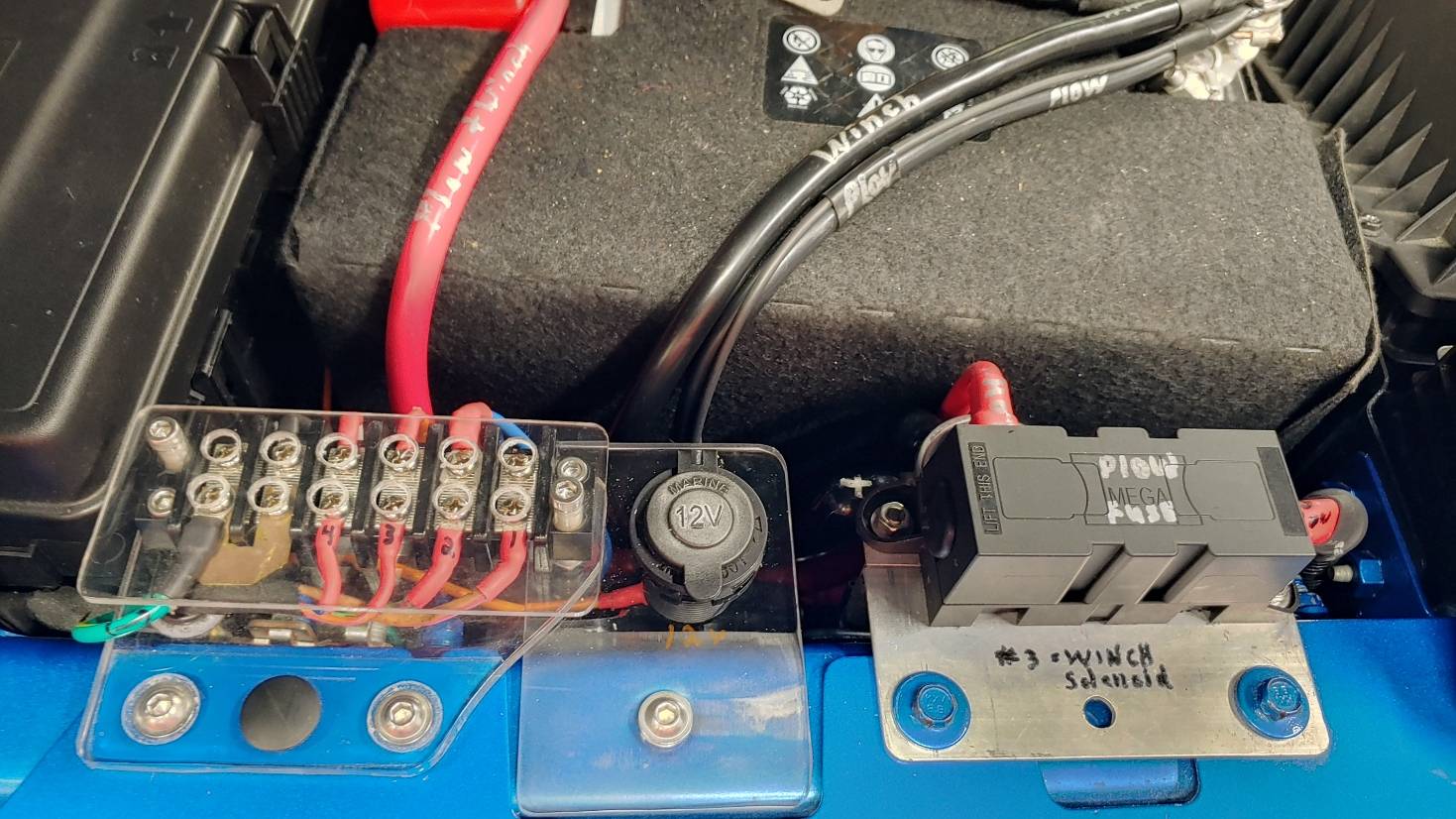
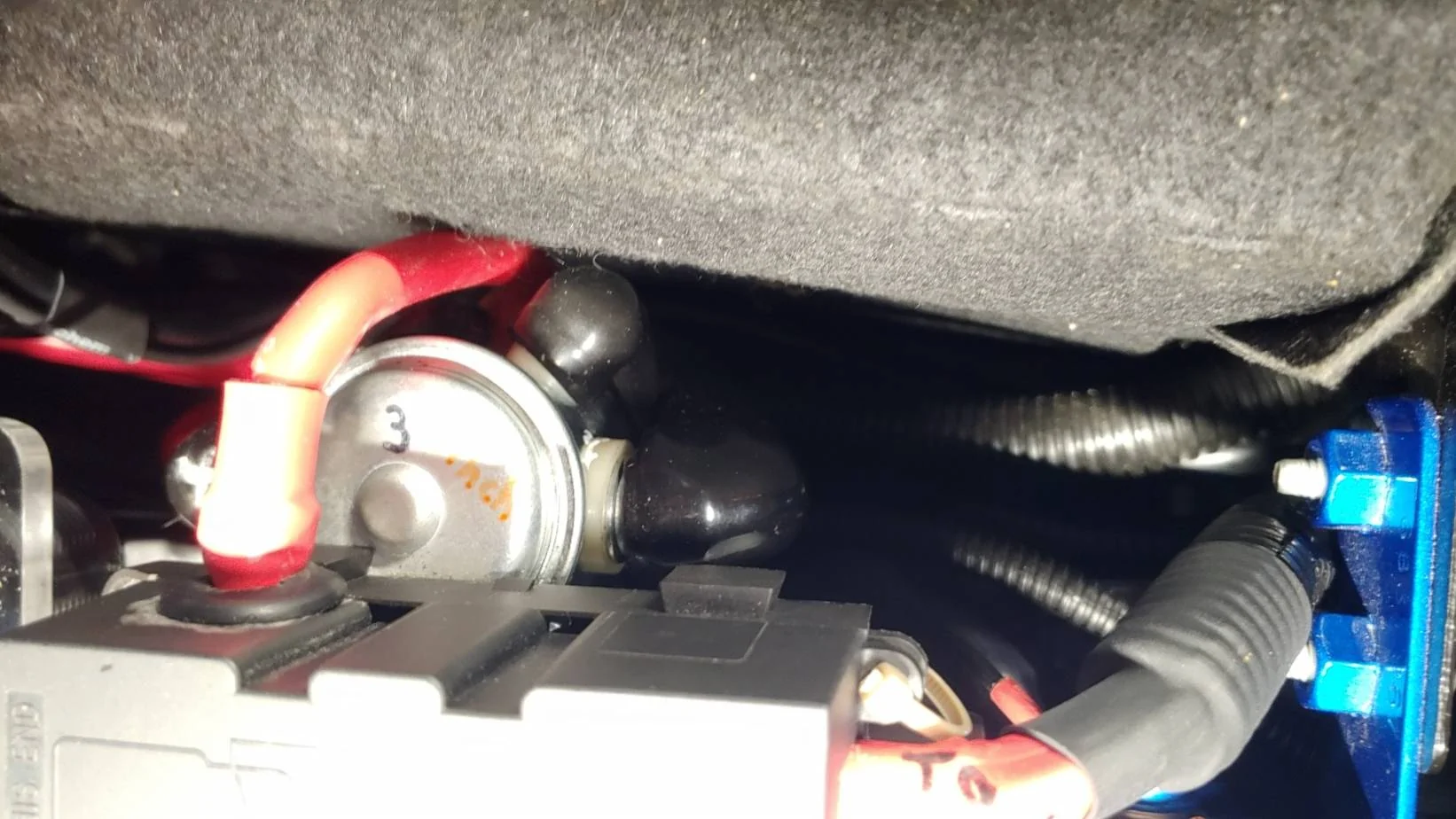
When I wired in my snow plow - they wanted their fuse to be used. fine, but I'm not taking another cable up to that battery, so used the battery side of the winch solenoid as a source - a "terminal" in a sense -

The acrylic terminal strip area is my aux switch connections. Protected from anything metal falling across anything yet easily able to access the screws and disconnect or connect anything as needed.
12v outlet is for Christmas wreath and for a 12v "trouble light" I carry in the truck. Plug it in and it lights up the engine bay. 12v outlet in the bed makes it usable back there.

Jeep Gladiator Dealer Trying to Void Warranty 20221109_160600_HDR


Jeep Gladiator Dealer Trying to Void Warranty 20221109_160629


One of these days i'll re-do some of this and make it look nicer, neater, proper labels.

I didn't consider the winch wiring complicated at all - piece of cake. It's what I do. Took a few minutes to mount the solenoid, another couple minutes to run the wire over to my aux switch terminal strip, and it was basically the same as wiring that hot cable right over to the battery. I don't see anything complex about it at all - but then few wiring things are that complex if you know electric and think just a bit about it. it's never been difficult.

The fun was putting a 4.0 in my car and making the Jeep cruise work with the original stalk mounted cruise switch of the car, or rigging in the AC to work with the Jeep's pdc and PCM, that sort of thing. That's complex in a way and it baffles many auto people. So this winch wiring was nothing, not more complex at all. Just one more part, a couple more wires. Simple as heck.

When you say complicating it - you must mean the general population - I see you are involved in electric so you can't mean it would be complicating it for you.
 
Last edited:

ShadowsPapa

Well-Known Member
First Name
Bill
Joined
Oct 12, 2019
Threads
247
Messages
40,465
Reaction score
53,916
Location
Runnells, Iowa
Vehicle(s)
'25 JTMX, '23 JLU 4xe, '82 SX4, '73 Javelin
Occupation
Retired auto mechanic, frmr gov't ntwrk security admin
Vehicle Showcase
3
If your switch or solenoid fails on the trail I'll have no problem helping you fix the wiring or pull you out with my winch.
No problems there, the last 50 years i've specialized in auto-electric and can make it work in a heartbeat with a single wrench.

I suspect some of the issues you've seen is because too many don't know about winch duty cycles and they load it to the max, press hard on that control button and insist after 2 minutes "it's about loose, just another second".
I can fry almost anything by being dumb about it.
Even the best winches sold for Jeeps have a duty cycle and aren't intended for maximum load continuously. And maybe they are those I mentioned who went to ebay or amazon and saved themselves a few bucks by getting that Chinese $29.95 special solenoid rated for 500 amps (but they fail to see the 10 second duty cycle in fine print)
 

shawnebell

Well-Known Member
Joined
Aug 16, 2017
Threads
2
Messages
96
Reaction score
169
Location
Big Bear Lake, CA
Vehicle(s)
MB, CJ5, CJ7, CJ8, M109, M38, TJ, JK
Contrary to what some would say, dealerships aren't looking to void anybody's warranty. Warranty is guaranteed money for the dealership; they're not losing business to Hank's Automotive down the street, they're keeping the customer within their walled garden.

Could your adding accessories void your entire electrical warranty? Nope. It could void your battery warranty, but your entire electrical system is covered under the warranty. The Magnuson Moss Warranty Act is VERY clear about manufacturer warranties.

Could your adding accessories void your third party/extended warranty? Maybe. It depends on what the aftermarket warranty covers, and how it's worded. If it's not a manufacturer's warranty all bets are off as to what they'll cover and what they won't.

For example: my Uconnect radio was covered under my manufacturer's warranty and it was replaced. When the same radio failed in the same way under the extended (non-manufacturer's) warranty it wasn't. Had I purchased the Mopar extended warranty ... well, it still wouldn't have been covered.

Extended warranties are good for usually one catastrophic failure of one system. After that, most aftermarket warranties have a specific dollar figure they'll repair to, and then they'll deny any additional coverage. Carmax offers a pretty good aftermarket warranty, and even it does this.
 

Zachanadandy

Well-Known Member
First Name
Zach
Joined
Oct 17, 2023
Threads
4
Messages
3,015
Reaction score
4,770
Location
Patterson, ca
Vehicle(s)
2023 gladiator Mojave
Occupation
Electrical foreman
Nothing else could handle the load - or in better words, you'd be introducing voltage drop via cables and connections not going "direct".
Very interesting you mention that as here's an early picture of my solenoid setup (I may opt for a heavier solenoid one day but for my use, and I've used it, this one is fine)

20220825_221501_HDR.webp


When I wired in my snow plow - they wanted their fuse to be used. fine, but I'm not taking another cable up to that battery, so used the battery side of the winch solenoid as a source - a "terminal" in a sense -

The acrylic terminal strip area is my aux switch connections. Protected from anything metal falling across anything yet easily able to access the screws and disconnect or connect anything as needed.
12v outlet is for Christmas wreath and for a 12v "trouble light" I carry in the truck. Plug it in and it lights up the engine bay. 12v outlet in the bed makes it usable back there.

20221109_160600_HDR.jpg


20221109_160629.webp


One of these days i'll re-do some of this and make it look nicer, neater, proper labels.
Again, I was replying to a post asking why the winch and compressor were hardwired instead of wired to the aux switches. Wether solenoid controlled or not, whether you run 1 hot to a solenoid and then tap it from there, the winch is hardwired to the battery not the aux switches due to amp draw. You could run a 1/0 cable to the rear of the truck, wire 10 solenoids off of it, and control them via the aux switches, but the items powered off the relays are still hardwired to the battery not the aux switches. Obviously you know that, but I wasn't talking voltage drop or cable resistance. Direct power to the winch is direct power no matter how you control it or how it gets there.
 

ShadowsPapa

Well-Known Member
First Name
Bill
Joined
Oct 12, 2019
Threads
247
Messages
40,465
Reaction score
53,916
Location
Runnells, Iowa
Vehicle(s)
'25 JTMX, '23 JLU 4xe, '82 SX4, '73 Javelin
Occupation
Retired auto mechanic, frmr gov't ntwrk security admin
Vehicle Showcase
3
For example: my Uconnect radio was covered under my manufacturer's warranty and it was replaced. When the same radio failed in the same way under the extended (non-manufacturer's) warranty it wasn't. Had I purchased the Mopar extended warranty ... well, it still wouldn't have been covered.
Glad you mentioned it wasn't a MOPAR warranty - because replacement parts from MOPAR are covered even if they fail again within the warranty period.
Any MOPAR part with a MOPAR part number (save for some accessories and performance parts) either get a 2 year warranty, or inherit the remainder of the vehicle's warranty.
Put a MOPAR trailer brake controller in a JT with a factory warranty remaining of 33 months and that trailer brake controller is now warranted for 33 months. If it fails in 12 months, they replace it again and it's got either the 2 year warranty or the remainder of the Jeep's warranty, whichever is LONGER or more advantageous for the owner.
 

Sponsored

ShadowsPapa

Well-Known Member
First Name
Bill
Joined
Oct 12, 2019
Threads
247
Messages
40,465
Reaction score
53,916
Location
Runnells, Iowa
Vehicle(s)
'25 JTMX, '23 JLU 4xe, '82 SX4, '73 Javelin
Occupation
Retired auto mechanic, frmr gov't ntwrk security admin
Vehicle Showcase
3
Again, I was replying to a post asking why the winch and compressor were hardwired instead of wired to the aux switches. Wether solenoid controlled or not, whether you run 1 hot to a solenoid and then tap it from there, the winch is hardwired to the battery not the aux switches due to amp draw. You could run a 1/0 cable to the rear of the truck, wire 10 solenoids off of it, and control them via the aux switches, but the items powered off the relays are still hardwired to the battery not the aux switches. Obviously you know that, but I wasn't talking voltage drop or cable resistance. Direct power to the winch is direct power no matter how you control it or how it gets there.
We get into semantics there because when you say "hard wired" for most that means a single wire from device to power source. So if you say "hardwired to the battery" most think of a single cable running directly from the device to the positive battery post.
It's not switched power.
If you run a solenoid, it's technically switched power because the solenoid is a switch.
When you install a level 2 EV charger, you can use a 220 outlet of the proper rating or you can hardwire it - and that means you have a single wire from the charger to the breaker. it's hardwired. No switch, no outlet.
Hardwired implies a switch or other device is not in the line. A solenoid is a switch so mine is switched power. Not direct to battery.
I contend that in your example, the device or items at the rear are switched, not hardwired. Hardwired is a direct connection to the power source, unswitched, no connections.

Jeep Gladiator Dealer Trying to Void Warranty 1701967896728


It refers to a type of wiring with no switches and no outlets.
A solenoid is a switch (it's really a relay, a high current relay)
Add a relay, you now have a switch in the mix it's no longer hardwired, it's switched.

People also have a bad picture of the aux switches in mind - nothing you connect actually goes through those switches in the center pod.
Any device you wire using the aux switches goes through relays. The aux switch simply controls the relay. No power from the light bar goes into the cabin.
So the aux switch is actually controlling a relay which in turn power the coil in a "solenoid" which electrically is another relay. Not a lick of the power goes to the aux switch.
So technically you wire nothing "to" the aux switches themselves, you connect to the colored wires that come from the PDC where the aux switch relays sit. The switches only power the relays, and even that is not done directly because you can have them be momentary, NO, NC, ignition source or battery source. So the switches don't even directly control the relays. The aux switches control electronics that in turn control the relays which in turn control a device like a solenoid (a form of relay) or a device like a light bar.
You have 2 40 amp and 2 15 amp "aux switch circuits")
So if anyone says "you can't connect that to an aux switch!" - they are technically correct, you are connecting to a wire that runs to a relay controlled by the aux switch, and if the draw is under 40 amps, you can control if via one of the two 40 amp circuit aux switches.
 
Last edited:

Zachanadandy

Well-Known Member
First Name
Zach
Joined
Oct 17, 2023
Threads
4
Messages
3,015
Reaction score
4,770
Location
Patterson, ca
Vehicle(s)
2023 gladiator Mojave
Occupation
Electrical foreman
We get into semantics there because when you say "hard wired" for most that means a single wire from device to power source. So if you say "hardwired to the battery" most think of a single cable running directly from the device to the positive battery post.
It's not switched power.
If you run a solenoid, it's technically switched power because the solenoid is a switch.
When you install a level 2 EV charger, you can use a 220 outlet of the proper rating or you can hardwire it - and that means you have a single wire from the charger to the breaker. it's hardwired. No switch, no outlet.
Hardwired implies a switch or other device is not in the line. A solenoid is a switch so mind is switched power.
I contend that in your example, the device or items at the rear are switched, not hardwired. Hardwired is a direct connection to the power source, unswitched, no connections.

1701967896728.png


It refers to a type of wiring with no switches and no outlets.
A solenoid is a switch (it's really a relay, a high current relay)
Add a relay, you now have a switch in the mix it's no longer hardwired, it's switched.
The point is it's still not wired "to" the aux switch. It's direct power from the battery that is controlled by the aux switch.
 

ShadowsPapa

Well-Known Member
First Name
Bill
Joined
Oct 12, 2019
Threads
247
Messages
40,465
Reaction score
53,916
Location
Runnells, Iowa
Vehicle(s)
'25 JTMX, '23 JLU 4xe, '82 SX4, '73 Javelin
Occupation
Retired auto mechanic, frmr gov't ntwrk security admin
Vehicle Showcase
3
The point is it's still not wired "to" the aux switch. It's direct power from the battery that is controlled by the aux switch.
See my edit/addition.
In your description - every single item in a vehicle is direct power from the battery.
In reality, very little is direct power from the battery. Everything is switched or controlled via PCM, BCM and so on, through switches, relays, solenoids, whatever. The only thing direct is the thing that has a cable from the device to the battery terminals. All else is indirect, switched or controlled via some other device.

People also have a bad picture of the aux switches in mind - nothing you connect actually goes through those switches in the center pod.
Any device you wire using the aux switches goes through relays. The aux switch simply controls the relay. No power from the light bar goes into the cabin.
So the aux switch is actually controlling a relay which in turn power the coil in a "solenoid" which electrically is another relay. Not a lick of the power goes to the aux switch.
So technically you wire nothing "to" the aux switches themselves, you connect to the colored wires that come from the PDC where the aux switch relays sit. The switches only power the relays, and even that is not done directly because you can have them be momentary, NO, NC, ignition source or battery source. So the switches don't even directly control the relays. The aux switches control electronics that in turn control the relays which in turn control a device like a solenoid (a form of relay) or a device like a light bar.
You have 2 40 amp and 2 15 amp "aux switch circuits")
So if anyone says "you can't connect that to an aux switch!" - they are technically correct, you are connecting to a wire that runs to a relay controlled by the aux switch, and if the draw is under 40 amps, you can control if via one of the two 40 amp circuit aux switches.
 

sharpsicle

Well-Known Member
Joined
Apr 29, 2021
Threads
22
Messages
2,771
Reaction score
6,265
Location
Tampa, FL / Milwaukee, WI
Vehicle(s)
2020 Gladiator Overland, 2002 VTX1800
Again, I was replying to a post asking why the winch and compressor were hardwired instead of wired to the aux switches. Wether solenoid controlled or not, whether you run 1 hot to a solenoid and then tap it from there, the winch is hardwired to the battery not the aux switches due to amp draw. You could run a 1/0 cable to the rear of the truck, wire 10 solenoids off of it, and control them via the aux switches, but the items powered off the relays are still hardwired to the battery not the aux switches. Obviously you know that, but I wasn't talking voltage drop or cable resistance. Direct power to the winch is direct power no matter how you control it or how it gets there.
Curious what you'd call "indirect power" then? Based on your definition, anything that gets power is "direct". Kinda makes the word meaningless in that context.
 

Zachanadandy

Well-Known Member
First Name
Zach
Joined
Oct 17, 2023
Threads
4
Messages
3,015
Reaction score
4,770
Location
Patterson, ca
Vehicle(s)
2023 gladiator Mojave
Occupation
Electrical foreman
Curious what you'd call "indirect power" then? Based on your definition, anything that gets power is "direct". Kinda makes the word meaningless in that context.
If it's not fused it's direct power. If it shorts or draws too much current while in use it will melt things. It's a simple enough concept.
Sponsored


Top