Sponsored

am I doing something wrong in snow/ice Winter driving?

Wolf Island Diver

Well-Known Member
Joined
Apr 14, 2021
Threads
26
Messages
1,117
Reaction score
2,451
Location
Virginia
Vehicle(s)
2021 JT Rubicon EcoDiesel
Occupation
Software Engineer
This is the first significant snow/ice since getting the gladiator - it's all stock standard mojave, and this isn't about the tires, Falken Wildpeak ATs.

I've driven these same roads no issue in similar conditions in previous vehicles. Sealed surface, fun and windy with sections unplowed, unsalted, salted, salted/plowed. I have only needed to use 4H/4L on soft gravel a few times.

Driving in 4H seems like the appropriate choice for mixed snow/ice... but anything short of the slightest turn seemed like the wheels were dragging laterally and without power steering. (as opposed to expected heavy load). This is all driving at low speed. Trying to maneuver for parking was a nightmare.

Driving in 2H was a delicate endeavor, frequent loss of traction but at least I could make a regular turn at the stop signs and sharper corners. Again, driving at low speed.

Any advice, suggestions, recommendations?
Sounds like you’re plowing, i.e., you’re sliding and when you turn your tires, you’re now plowing the sidewalls into the snow as you move forward. Turning the wheels usually causes your vehicle to follow the direction in which they turn, but because the low coefficient of dynamic friction in snow, you’re turned tires just keep moving forward in the initial direction of travel. Even when they do hookup, there are repeated instances of this sliding/plowing. If you’re driving in previous tracks your also feel your tires hitting the buildup. All this feels like jerky resistance. Like the truck doesn’t want to steer. It’s worse on more aggressive and or bigger tires.


My SUV/Truck Snow driving spiel. Feel free to read or not.

I’ve noticed 1 thing about people and snow driving with trucks and SUVs over the years. They suck at it. I successfully drove an FRS with summer performance tires past a myriad of crashed SUVs, through a snow storm in the winter of 15/16. When lived in the mountains I would go out in my truck and count the number of SUVs and trucks stuck on the side of the road on Interstate 81. The truckers done seem to crash, but every 1/4 mile there’s another SUV or pickup in a ditch.

I’ve driven fire trucks in deep snow and ambulances on ice covered interstates. I’ve done a significant amount of off road driving in snow as well. I’ve never crashed. I’ve never slid off the road. I’ve only been severely (requiring a shovel) stuck once and that was off road. My only trick/skill has been to not overestimate my vehicle or its/my abilities. In other words, to be careful. That’s it. That’s the secret to successful snow driving. Drive slow, make slow movements/changes in direction. Afford massively increased stopping distances.

Here’s some specific thoughts on this. I’m sure some people will be triggered.
  • SUVs suck ass in snow. Pickup trucks are worse. Both have high centers of gravity, and weigh a lot. 4x4 tends to get people in more trouble than it solves because of a false sense of capability. Years of marketing + stupidity.
  • Pickups (unless you’re hauling hunting dogs or overland gear) have light rear ends and in snow this means less rear end traction. Off road, it can be hard to get up a hill. They also tend to spin because of their poor weight distribution.
  • On road, M/T, or really large tires all feel worse in snow especially once they begin to plow (turned to the side and still loving forward). They tend to have much more steering resistance and just feel odd on snowy roads. Fully off road in deep snow, they’re better, but snow tracks will still kick them around.
  • For driving in snow on the road, the best thing is a AWD car like a Subaru or even a small crossover. People assume 4x4s would be best and either find themselves disappointed, or worse over confident and in a ditch.
  • Unfortunately, probably due to testosterone poisoning, what I mostly see crashed in winter is large SUVs and full size pickups driven by men who think 4x4 means they can drive semi-normally in snow. So they crash.
  • 4x4 only helps you go. It doesn’t significantly reduce stopping times in snow. It often only works for going with lockers, because frequently each axle has 1 wheel with minimal to no traction, but there’s no reason all 4 tires can’t spin either. By all means, drive in 4x4 but don’t alter your care compared to driving in a RWD car. In my experience 4x4 provides only a slight help in lane keeping in snow. It’s not dynamic in the way advanced AWD is. Power in a 4x4 system (goes where resistance is the least. Power in a modern advanced AWD system goes where it’s needed.
  • A LSD isn’t great when already moving in snow. It can cause the rear end to violently jerk to the side. Any sudden increase in traction can do this. I like to start/stop in 4x4 and locked. Not flip back and forth on the fly while moving in snow/ice. You want to avoid sudden changes in traction, braking, etc.
  • There’s almost never just snow. It’s always a combination of ice and snow or just compressed snow on the road which functions a lot like ice. Driving on snow, melts it which in turns to ice.
  • Nothing helps you go or stop in ice. The best thing is to allow for the possibility of sliding. Position yourself on the road where you have some runout if you slide. Drive slowly, brake early and lightly, accelerate slowly. Consider not driving at all. DoorDash and give them a big tip.
  • I can’t think of a time that I needed the additional torque of 4-low driving in snow. However, off road, I often prefer the RPM range of 4-low and a higher gear, even in snow. Just keep in mind the ease at which you can spin tires with the extra torque. Obviously you shouldn’t need/use 4-low in snow/ice on road.

All of this really adds up to 1 thing. You should drive in snow/ice as if your truck is no better in snow than a 2WD car because, to a large degree it isn’t and the few advantages of 4x4 can disappear in an instant. The overconfidence 4x4 seems to create in people probably outweighs any actual advantages of 4x4 driving on snowy/icy roads. So drive carefully.

One side benefit of driving as if your Gladiator isn’t a snow cheat code is that you’ll really piss off other SUV/truck drivers who are idiots. I can’t tell you how many times I’ve had someone roar past me in snowy road conditions because I was driving too slow, only to immediately lose control and crash in front of me.
Sponsored
 

ErylFlynn

Well-Known Member
First Name
Brett
Joined
Aug 15, 2023
Threads
40
Messages
447
Reaction score
397
Location
Washington
Vehicle(s)
2023 Punkn Mojave, 2008 JK Unlimited Det Yellow
On my JK I rarely even shift into 4h on snow and ice. Just drive smart, don't go to fast and give everything extra time. 4h is great for not getting stuck and occasionally some stability due to spreading the force on the vehicle across the 4 corners. And remember all cars are 4 wheel stop. Just because you have 4 tires that can push doesn't make you better at stopping.

Also when I go to park I shift out of 4h for the reasons talked about above.

On that note I may need to get some sand bags just in case. We don't get much snow here, not like other places I have lived but it happens.
 

Wheelin98TJ

Well-Known Member
First Name
Ryan
Joined
Jul 27, 2021
Threads
11
Messages
3,699
Reaction score
4,358
Location
Devils Lake, MI
Vehicle(s)
2021 Jeep Gladiator
Occupation
Bean Counter
Sounds like you’re plowing, i.e., you’re sliding and when you turn your tires, you’re now plowing the sidewalls into the snow as you move forward. Turning the wheels usually causes your vehicle to follow the direction in which they turn, but because the low coefficient of dynamic friction in snow, you’re turned tires just keep moving forward in the initial direction of travel. Even when they do hookup, there are repeated instances of this sliding/plowing. If you’re driving in previous tracks your also feel your tires hitting the buildup. All this feels like jerky resistance. Like the truck doesn’t want to steer. It’s worse on more aggressive and or bigger tires.


My SUV/Truck Snow driving spiel. Feel free to read or not.

I’ve noticed 1 thing about people and snow driving with trucks and SUVs over the years. They suck at it. I successfully drove an FRS with summer performance tires past a myriad of crashed SUVs, through a snow storm in the winter of 15/16. When lived in the mountains I would go out in my truck and count the number of SUVs and trucks stuck on the side of the road on Interstate 81. The truckers done seem to crash, but every 1/4 mile there’s another SUV or pickup in a ditch.

I’ve driven fire trucks in deep snow and ambulances on ice covered interstates. I’ve done a significant amount of off road driving in snow as well. I’ve never crashed. I’ve never slid off the road. I’ve only been severely (requiring a shovel) stuck once and that was off road. My only trick/skill has been to not overestimate my vehicle or its/my abilities. In other words, to be careful. That’s it. That’s the secret to successful snow driving. Drive slow, make slow movements/changes in direction. Afford massively increased stopping distances.

Here’s some specific thoughts on this. I’m sure some people will be triggered.
  • SUVs suck ass in snow. Pickup trucks are worse. Both have high centers of gravity, and weigh a lot. 4x4 tends to get people in more trouble than it solves because of a false sense of capability. Years of marketing + stupidity.
  • Pickups (unless you’re hauling hunting dogs or overland gear) have light rear ends and in snow this means less rear end traction. Off road, it can be hard to get up a hill. They also tend to spin because of their poor weight distribution.
  • On road, M/T, or really large tires all feel worse in snow especially once they begin to plow (turned to the side and still loving forward). They tend to have much more steering resistance and just feel odd on snowy roads. Fully off road in deep snow, they’re better, but snow tracks will still kick them around.
  • For driving in snow on the road, the best thing is a AWD car like a Subaru or even a small crossover. People assume 4x4s would be best and either find themselves disappointed, or worse over confident and in a ditch.
  • Unfortunately, probably due to testosterone poisoning, what I mostly see crashed in winter is large SUVs and full size pickups driven by men who think 4x4 means they can drive semi-normally in snow. So they crash.
  • 4x4 only helps you go. It doesn’t significantly reduce stopping times in snow. It often only works for going with lockers, because frequently each axle has 1 wheel with minimal to no traction, but there’s no reason all 4 tires can’t spin either. By all means, drive in 4x4 but don’t alter your care compared to driving in a RWD car. In my experience 4x4 provides only a slight help in lane keeping in snow. It’s not dynamic in the way advanced AWD is. Power in a 4x4 system (goes where resistance is the least. Power in a modern advanced AWD system goes where it’s needed.
  • A LSD isn’t great when already moving in snow. It can cause the rear end to violently jerk to the side. Any sudden increase in traction can do this. I like to start/stop in 4x4 and locked. Not flip back and forth on the fly while moving in snow/ice. You want to avoid sudden changes in traction, braking, etc.
  • There’s almost never just snow. It’s always a combination of ice and snow or just compressed snow on the road which functions a lot like ice. Driving on snow, melts it which in turns to ice.
  • Nothing helps you go or stop in ice. The best thing is to allow for the possibility of sliding. Position yourself on the road where you have some runout if you slide. Drive slowly, brake early and lightly, accelerate slowly. Consider not driving at all. DoorDash and give them a big tip.
  • I can’t think of a time that I needed the additional torque of 4-low driving in snow. However, off road, I often prefer the RPM range of 4-low and a higher gear, even in snow. Just keep in mind the ease at which you can spin tires with the extra torque. Obviously you shouldn’t need/use 4-low in snow/ice on road.

All of this really adds up to 1 thing. You should drive in snow/ice as if your truck is no better in snow than a 2WD car because, to a large degree it isn’t and the few advantages of 4x4 can disappear in an instant. The overconfidence 4x4 seems to create in people probably outweighs any actual advantages of 4x4 driving on snowy/icy roads. So drive carefully.

One side benefit of driving as if your Gladiator isn’t a snow cheat code is that you’ll really piss off other SUV/truck drivers who are idiots. I can’t tell you how many times I’ve had someone roar past me in snowy road conditions because I was driving too slow, only to immediately lose control and crash in front of me.
You have some good points.

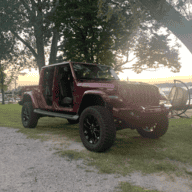
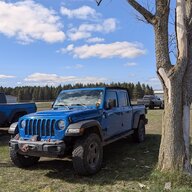
I see trucks and SUVs off the road, but I can't say if its any more or less than cars. Last snow storm we had a few days ago, I took pics of the vehicles off the road. There were 5 total vehicles: 3 cars, 1 SUV, and a FedEx van.

The high center of gravity with an SUV or truck can be a benefit when you're driving in deep snow. An AWD Subaru is not the best when there is a foot on the road.

With weight distribution, the Gladiator is 53 front/47 rear. An F150 4 door, 5.5' bed is 55/45. A Subaru Outback is 54/46. It doesn't seem the pickup rear ends are as light as they used to be with regular cabs and 8' beds.
 

Wolf Island Diver

Well-Known Member
Joined
Apr 14, 2021
Threads
26
Messages
1,117
Reaction score
2,451
Location
Virginia
Vehicle(s)
2021 JT Rubicon EcoDiesel
Occupation
Software Engineer
You have some good points.

I see trucks and SUVs off the road, but I can't say if its any more or less than cars. Last snow storm we had a few days ago, I took pics of the vehicles off the road. There were 5 total vehicles: 3 cars, 1 SUV, and a FedEx van.

The high center of gravity with an SUV or truck can be a benefit when you're driving in deep snow. An AWD Subaru is not the best when there is a foot on the road.

With weight distribution, the Gladiator is 53 front/47 rear. An F150 4 door, 5.5' bed is 55/45. A Subaru Outback is 54/46. It doesn't seem the pickup rear ends are as light as they used to be with regular cabs and 8' beds.
So all of this above is true and worth noting.
  • AWD cars don’t do well in deep snow. They just do better in the kinds of snowy road conditions they can actually drive in. If their underbodies are making contact, certainly the added ground clearance of an SUV makes a difference.
  • SUVs are far more popular so it stands to reason they make up a bigger percentage of the wrecks. Also SUV drivers are more likely to go out than car drivers. But that’s sort of the problem too. There’s probably a lesser tendency for an SUV/truck owner to hedge their bets and stay home.
  • It’s simply been my observation, so this isn’t some statistical analysis, that a lot of people in trucks and SUVs, certainly not the majority, but a sizable number that I’ve observed don’t significantly alter their driving in snow. Certainly marketing has contributed to an impressing that SUVs are made for these conditions. Crossovers, and modern SUVs maybe with advanced AWD, but to my point, traditional part time 4x4 systems aren’t as good in these conditions to warrant the driving I’ve seen
  • I suspect all of this is also highly regional too. I’m in southeastern Virginia. I’m going to go out on a limb here and posit that drivers in upstate New York of Vermont are better and probably more careful winter/snow drivers than my fellow Virginians.
  • Short bed pickup point is also good. The weight distribution is indeed better on these trucks. My Gladiator drives decidedly less truck like than my old Nissan which was an extend cab with a full 6 foot bed. Full size pickups with true 8 foot beds have a bigger issue with the light rear end problem. However, when braking the center of mass shifts forward exacerbating the difference. So any difference inherent in the design is worse. This is why a Porsche has such fantastic rear wheel traction even when braking. It’s only achilles heel is it’s moment of inertia when it does start to rotate.
  • All this being said, my Wranglers were all a bit better in snow than my Gladiator. They tended to yaw more but it was more predictable than the Gladiator and it tends to plow a lot more. It’s weight (and the diesels front end is heavy) doesn’t help.
I should also note that I keep using the term SUV too broadly. Newer generations of AWD small crossovers are actually pretty good in snow, except for their tires frequently because they’re basically AWD cars with added ground clearance. More traditional, (paradoxically, more off road oriented and associated with capability) SUVs have the disadvantage except in deep snow. Some SUVs which are sort of in that grey area also seem to have issues. I see a lot of Honda pilots in ditches in winter. It’s AWD but it’s pretty big. Maybe that’s more of a demographic issue. I’ve always seen lots of pickups slid off the road.
 

Gvsukids

Well-Known Member
First Name
Justin
Joined
Mar 7, 2020
Threads
26
Messages
7,265
Reaction score
6,899
Location
Grand Rapids
Website
www.youtube.com
Vehicle(s)
2020 Gladiator Sport S Max Tow
Occupation
Delivery Driver
Vehicles suck with sucky tires.
 

Sponsored

InvertedLogic

Well-Known Member
Joined
Aug 2, 2018
Threads
6
Messages
405
Reaction score
467
Location
Denver, CO
Vehicle(s)
20 JTR
If I lived in snow country and hardcore offroading was not my thing, I think the ideal "snow cat" set up would be the max tow (with the Dana 44 wide axles) package, an aftermarket mechanical/gear (not clutch pack) limited rear slip differential, a locker in front (to get me out of any jams), and something like Goodyear duratrac tires.
I had this exact setup in my old TJ. Eaton Truetrac helical gear LSD in the rear, Eaton e-locket up front, 3PMSF tires. It was very confidence inspiring in all snow conditions. I found that the gear driven LSD tended to be less likely to kick the rear end out compared to a clutchpack LSD. It was fantastic for mixed snow conditions.
 

Minty JL

Well-Known Member
First Name
Jeremy
Joined
May 15, 2019
Threads
25
Messages
4,793
Reaction score
7,612
Location
Ft Meade, MD - AOR
Vehicle(s)
23 JTM - 19 JLUR - 22 Compass LTD - 04 355 ZQ8
Occupation
USA(R), DoD - MD TM lead - Field Operations
Just kill the traction and stability controls and BAM, drive
 

KW80

Well-Known Member
Joined
Feb 24, 2021
Threads
4
Messages
174
Reaction score
214
Location
Illinois
Vehicle(s)
2020 Pacifica Hybrid Ltd, 2021 JT Sport S Diesel
I had this exact setup in my old TJ. Eaton Truetrac helical gear LSD in the rear, Eaton e-locket up front, 3PMSF tires. It was very confidence inspiring in all snow conditions. I found that the gear driven LSD tended to be less likely to kick the rear end out compared to a clutchpack LSD. It was fantastic for mixed snow conditions.
Clutchpack or no, with the factory rear LSD I rarely break loose at the rear axle in snowy or rainy conditions on road, unless I am trying to :devil:
I will probably end up adding a locker up front one day but will not give up LSD in the rear which has more benefits for me day to day. I don’t think most people realize how well it works.
 

RandyP111

Active Member
First Name
Lance
Joined
Nov 12, 2022
Threads
0
Messages
29
Reaction score
37
Location
82009
Vehicle(s)
2022 Jeep Gladiator Sport
Occupation
Retired USAF WSO, Law Enforcement Retired
This is the first significant snow/ice since getting the gladiator - it's all stock standard mojave, and this isn't about the tires, Falken Wildpeak ATs.

I've driven these same roads no issue in similar conditions in previous vehicles. Sealed surface, fun and windy with sections unplowed, unsalted, salted, salted/plowed. I have only needed to use 4H/4L on soft gravel a few times.

Driving in 4H seems like the appropriate choice for mixed snow/ice... but anything short of the slightest turn seemed like the wheels were dragging laterally and without power steering. (as opposed to expected heavy load). This is all driving at low speed. Trying to maneuver for parking was a nightmare.

Driving in 2H was a delicate endeavor, frequent loss of traction but at least I could make a regular turn at the stop signs and sharper corners. Again, driving at low speed.

Any advice, suggestions, recommendations?
That is normal 4WD operation on dry/mostly dry pavement in my experience, many 4wd. It is a very different system from AWD and does not allow as much differential discretion... or getting stuck either.
 

Sponsored

Mad Mac

Well-Known Member
Joined
May 2, 2021
Threads
41
Messages
723
Reaction score
1,260
Location
Far Northwest Deep East Texas in the Dirty South
Website
www.best-motorcycle.com
Vehicle(s)
2021 Gladiator Rubicon, 1998 Wrangler Sahara
And, at the risk of stating the obvious,
don't forget to fill up your tank ahead of time.

The extra weight of a full tank
nice and low between the wheels
will keep the center of gravity low
and help with traction.

If there is an electrical power outage
caused by a storm
gas stations may not be pumping gas
but you will have a full tank.

Even if gas stations stay open
who wants to gas up in a blizzard.
 

Skennedy505

New Member
First Name
Shayne
Joined
May 3, 2023
Threads
0
Messages
4
Reaction score
2
Location
Rockwood, MI
Vehicle(s)
2921 Jeep Gladiator
Occupation
Retired
4 wheel drive is not going to help on ice.

Throw some weight (250-400 pounds) in the bed of the truck.

When in 4x4 all tight maneuvering is out the window, front wheels are locked together trying to make a turn at the same speed, bounce, hop, skip.
I noticed that when I went to the pharmacy window to pick up my prescription. Taking that hard left 90° turn in 3H was a pain in the ass.
 

Sigz

Well-Known Member
First Name
Brent
Joined
Mar 28, 2022
Threads
41
Messages
465
Reaction score
367
Location
Wisconsin
Vehicle(s)
2022 Jeep Gladiator Sport S
Occupation
Registered Nurse
Do you folks really air down your tires in the winter to gain traction?

I usually have my Falken At3w 285/70/17's at 35PSI cold. By the time winter comes, in the AM on the drive into work they are down to 31-32psi, but work up to around 34.
Sponsored


Top