OP
OP
thedigitalmc
Member
- Thread starter
- #16
@Zachanadandy - Noted! I'm 95% sure this is where I'm ending up. Thank you for your time, it means a lot!
Sponsored



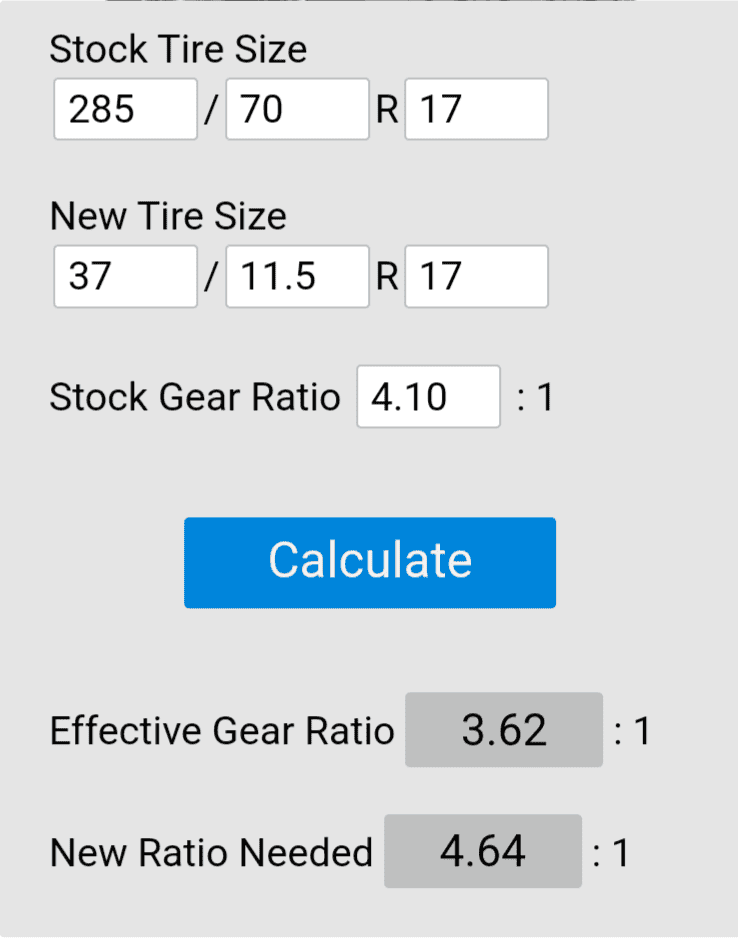
4.88 with 37s is about 2,200 RPM at 70 mph.@Wheelin98TJ Hilly but not mountains. Lots of low grade ups and downs.
Good point, I wasn’t thinking of an automatic, my Wrangler is a manual and I have really primarily driven manual trans vehicles for most of the past 40 years. So, lugging the engine would happen if I left it in too high a gear.Lugging under load with an automatic is as misinformed as the mechanic saying 4.88s are too low for driving long distances. It's an 8 speed automatic, it won't lug under load because it will downshift. 4.88s would be great for 37s, I'd hate them with 33s but I drive faster than most. Even the 4 56s with the factory 315s on our xr felt like it could use another gear on the freeway to me, but again the cruise control gets set at 85mph on roadtrips. The 8 speed has such a low 1st gear and 2 overdrives which allow nearly any gearing combo to work. Even from the factory Jeep is all over the map. A JLU sport/Sahara/willys (up until 2024) all came with 32s and 3.45s, which works out to 4.10s and 37s by comparison. The rubicons got 33s and 4.10s, which works out to 4.59s and 37s. The xr's came with 35s and 4.56s, making 4.88s the equivalent ratio for 37s. And now you can order 4.88s and 33s, equal to 5.47s and 37s. The right answer even according to Jeep engineers is run whatever you like for your usage. Having run 5.38s and 38s in our 2019 I can tell you I hated super deep gears and lost 2-3mpg on roadtrips because of it. It was in 8th gear all the time like some want, like any speed over 40mph. For me what's the point of 8 gears if you're through them all by half the speed limit?
Lugging is worse for the engine than running at high rpm. High rpm increases piston and rod momentum but lugging increases cylinder pressure. High cylinder pressure exposes the engine to greater risk of knock, blowby and imposes more stress on the engine. It's similar to climbing on a bicycle, at too high a gear each pedal stroke flexes the frame from the force which doesn't occur at a lower gear and higher RPM.4.88s should be fine on the highway and arguably better for the Jeep if you have large tires like 35s or 37s. The JL Rubicon can be ordered with factory 4.88s and stock 33s. I know because I have a JLUR with this option. It runs fine on the highways. The engine revs a little more, but I actually find that it work well. It doesn’t lug and doesn’t require multiple downshifts frequently. With the pentastar, I would worry more about engine lugging under load than higher rpms particularly with the dual stage oil pump and lower oil pressure at lower rpms.
Again, with the auto it will spin as fast as necessary. It's not lugging when you're cruising 2500 rpms on the freeway under low loads. You could drive around at 3k rpms all day if you wanted to, but there's 0 benefit. 4.88s with 37s at 85mph puts you right at 2500, perfect for cruising freeway speeds and 1 downshift away from the peak power output of the pentastar when needed. It will still downshift to get the rpms up around 6k when you need the horsepower just as fast as it will if you go 5.38s but you'll be saving 300 rpm under low loads. The pentastar makes little power below 4500rpm, that doesn't mean I want to cruise around in 4th gear so I'm always into the power?Lugging is worse for the engine than running at high rpm. High rpm increases piston and rod momentum but lugging increases cylinder pressure. High cylinder pressure exposes the engine to greater risk of knock, blowby and imposes more stress on the engine. It's similar to climbing on a bicycle, at too high a gear each pedal stroke flexes the frame from the force which doesn't occur at a lower gear and higher RPM.
It's not a diesel, the Pentastar is happy spinning fast where it makes power.
The manual is a little different. The pentastar makes nothing under 2100 and the second stage of the oil pump kicks in at 3000 rpm, so you need to gear backwards from what your cruising speed is and pick a gear.Good point, I wasn’t thinking of an automatic, my Wrangler is a manual and I have really primarily driven manual trans vehicles for most of the past 40 years. So, lugging the engine would happen if I left it in too high a gear.
Having said that, I still think 4.88s are fine with 33s or above. Especially with the double overdrive 6th(manual) and 8th gear(auto) for highway cruising
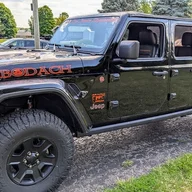
Which is what I try to point out to the auto guys all the time. 7th with 4.10s is identical to 8th with 5.13s and it works all the way down to 2nd gear at nearly the same. If you think 5.13s are going to gain you some magic on the freeway they aren't, you're a downshift away from the exact same final drive which is all the engine sees. You'll gain some 1st gear get up and go, but from there on your only changing which gear you're in. The jeep will pull just as hard in 5th gear with 4.10s as it will in 6th with 5.13s. Even with the stock 4.10s and 37s in my mojave I see 8th regularly. Obviously not up hills, or under heavy headwinds. But when you drive back down those hills I'm spinning 2k rpms in 8th gear at 80+mph. Driving back across the desert with the wind at my back...8th gear. If I want more rpms I'll downshift. If I need more rpms the auto will downshift...automatically.The manual is a little different. The pentastar makes nothing under 2100 and the second stage of the oil pump kicks in at 3000 rpm, so you need to gear backwards from what your cruising speed is and pick a gear.
37s and 4.56s in 5th is the same as 37s and 5.13s in sixth, so if you run 85+ on the regular, don't do 5.13s or you'll be in the second stage of the oil pump all the time.
Weight is a factor, but also, rotating mass is a factor.Also to @jjdustr340 's point... 4.88 is close assuming all I changed was tires/gears. But since I added the significant weight, I'm curious though if this changes things.


