Sponsored

So disappointed in this Diesel platform; wish there was a return policy.

yolo

Well-Known Member
First Name
Keith
Joined
Nov 25, 2020
Threads
2
Messages
61
Reaction score
140
Location
Texas
Vehicle(s)
2021 Gladiator Rubicon (Diesel)
Occupation
Software Engineer
I am glad some with diesels are doing fine. I can’t tow yet because I am waiting on a boat build but I am putting miles on mine while waiting. I hope the few of you get things worked out. I would have still bought a diesel after reading this thread because I never planed to tow max loads. I did not go gas because I did not want to gear hunt or drive in lower gears.
It will really depend on the weight you are towing, the ambient temps, and the load. For me, not in the mountains in Colorado or Utah, it's only happened on really hot days when going up and down hills. And even then, it's not every hill and has only happened 3 times for me.

My guess is if you spend most of your time in Florida, you will be fine. Even with hot weather, it does not get much flatter than that. It's an entirely different story if you add hot weather and hills. Others have reported the same issue towing light loads in mountains with this heat so YMMV.

But, as others have mentioned, there are other factors at play: how you drive, what wheels/tires/extra equipment you have, tire pressures, how much wind resistance your tow is causing, what trim you have, and so on.
Sponsored

 

yolo

Well-Known Member
First Name
Keith
Joined
Nov 25, 2020
Threads
2
Messages
61
Reaction score
140
Location
Texas
Vehicle(s)
2021 Gladiator Rubicon (Diesel)
Occupation
Software Engineer
Some people are towing loads with their Gladiator EcoDiesel that should be towed with a Ram 1500. Likewise, there are some people towing loads with their Ram EcoDiesel that should be towed with a Ram 2500/3500.

The Gladiator EcoDiesel is a great truck for the right application, but everything has limitations. If the Gladiator doesn't meet expectations, then it's time to move up to a 1/2 ton.
You should be able to tow under max weight in all seasons. Period. If the truck cannot do that, Jeep needs to be upfront about it. From jeep.com's front page:

Powered by the available 3.0L EcoDiesel V6 engine, the Jeep®Gladiator offers Best-in-Class torque of up to 442 pound-feet, so you can take on the toughest drives with ease. Plus, a fuel economy rating of up to 28 highway mpg provides impressive efficiency. Whether crawling over off-road trails or towing cargo on the open road, this engine delivers.
I did not see anything about Fall, Winter, and Spring only.

While I do not expect to rocket up mountain roads with heavy loads.. let's be reasonable. If we cannot tow 1k to 2k below max, in the summer, up a few hills in Texas, then something is wrong. And I've said this before. Yes. I fully expect the Gladiator to do both truck and jeep things, in all seasons, without going into limp mode. What the hell else is the point of the thing? Especially when you pay so much extra money for the

Best-in-Class torque of up to 442 pound-feet, so you can take on the toughest drives with ease. Plus, a fuel economy rating of up to 28 highway mpg provides impressive efficiency. Whether crawling over off-road trails or towing cargo on the open road, this engine delivers.
 

biodiesel

Well-Known Member
Joined
Dec 8, 2018
Threads
15
Messages
2,286
Reaction score
2,968
Location
New Mexico
Vehicle(s)
2015 Ram 1500 Ecodiesel
You should be able to tow under max weight in all seasons. Period. If the truck cannot do that, Jeep needs to be upfront about it.
The Jeep is rated based off the SAE j2807 towing test. Assuming the truck is still running stock sized tires, drivers need to lockout some of the higher gears and slow down. On the 2014 - 2019 EcoDiesel, the rule of them is to stay under 3,000 RPM and you won't have any problems with water and oil temperatures.

My 2020 runs much cooler than my 2015. I can run 3,500 RPM in 5th gear up a mountain pass with no issues.
 

biodiesel

Well-Known Member
Joined
Dec 8, 2018
Threads
15
Messages
2,286
Reaction score
2,968
Location
New Mexico
Vehicle(s)
2015 Ram 1500 Ecodiesel
I did not see anything about Fall, Winter, and Spring only.
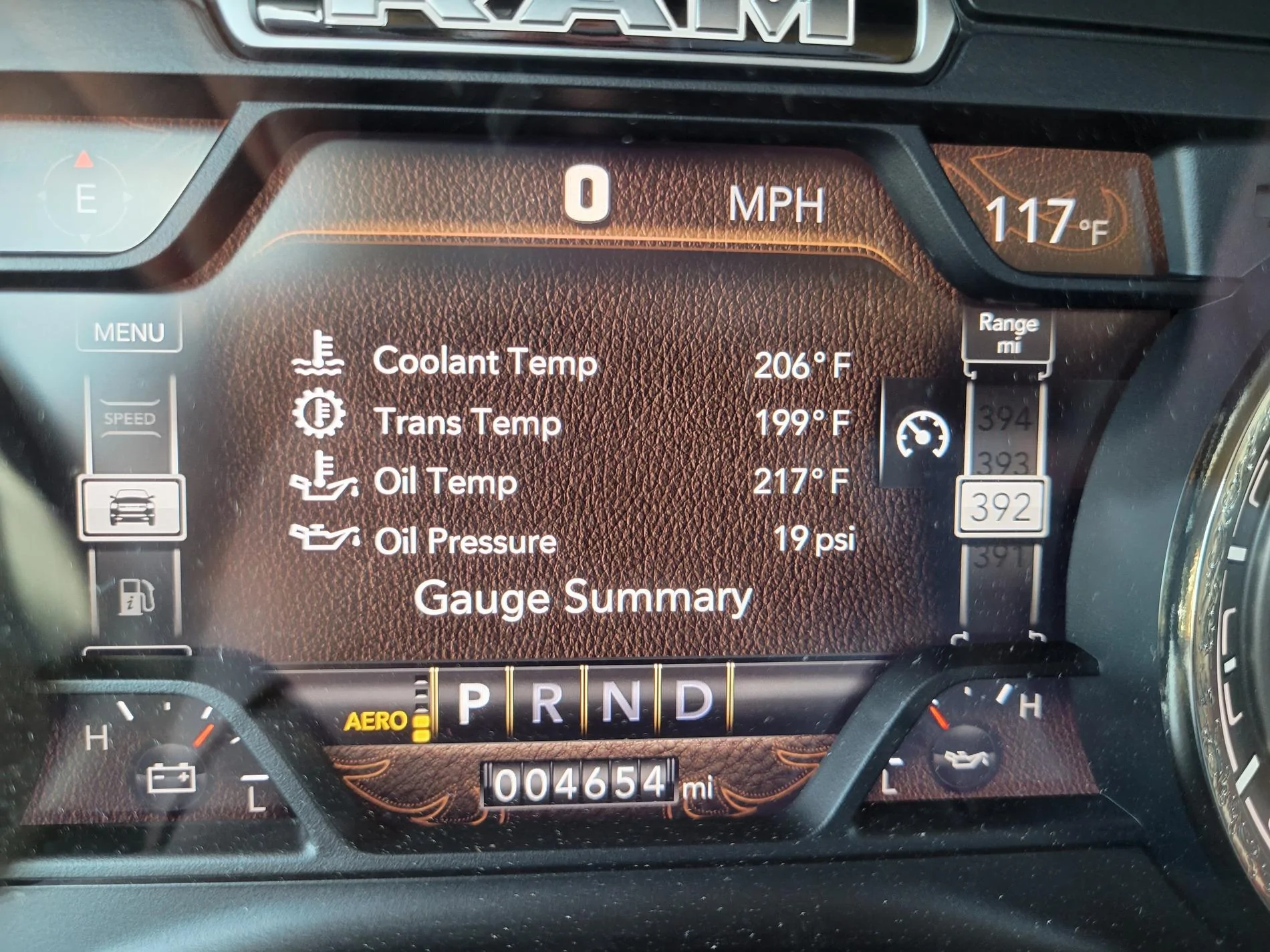
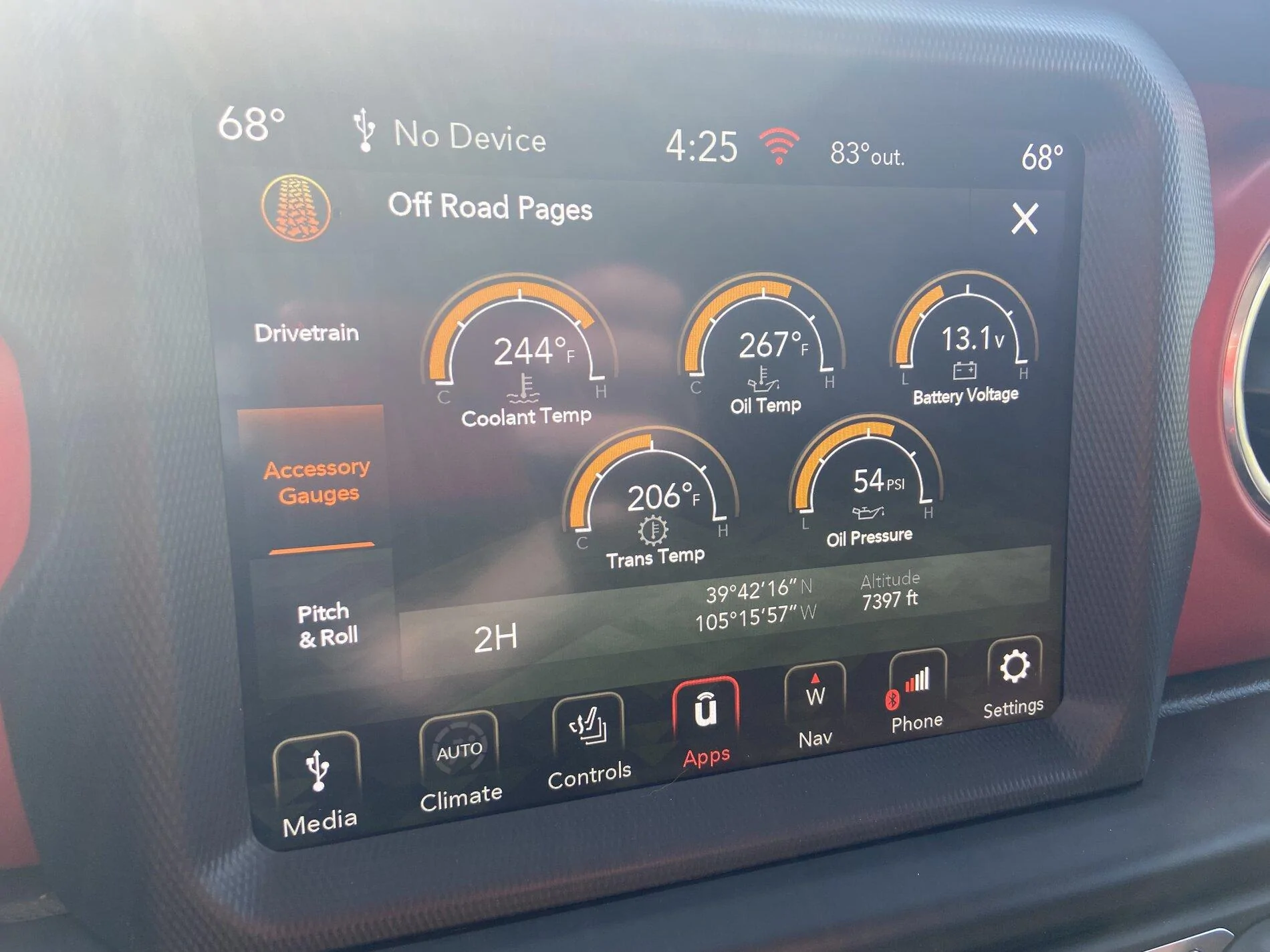
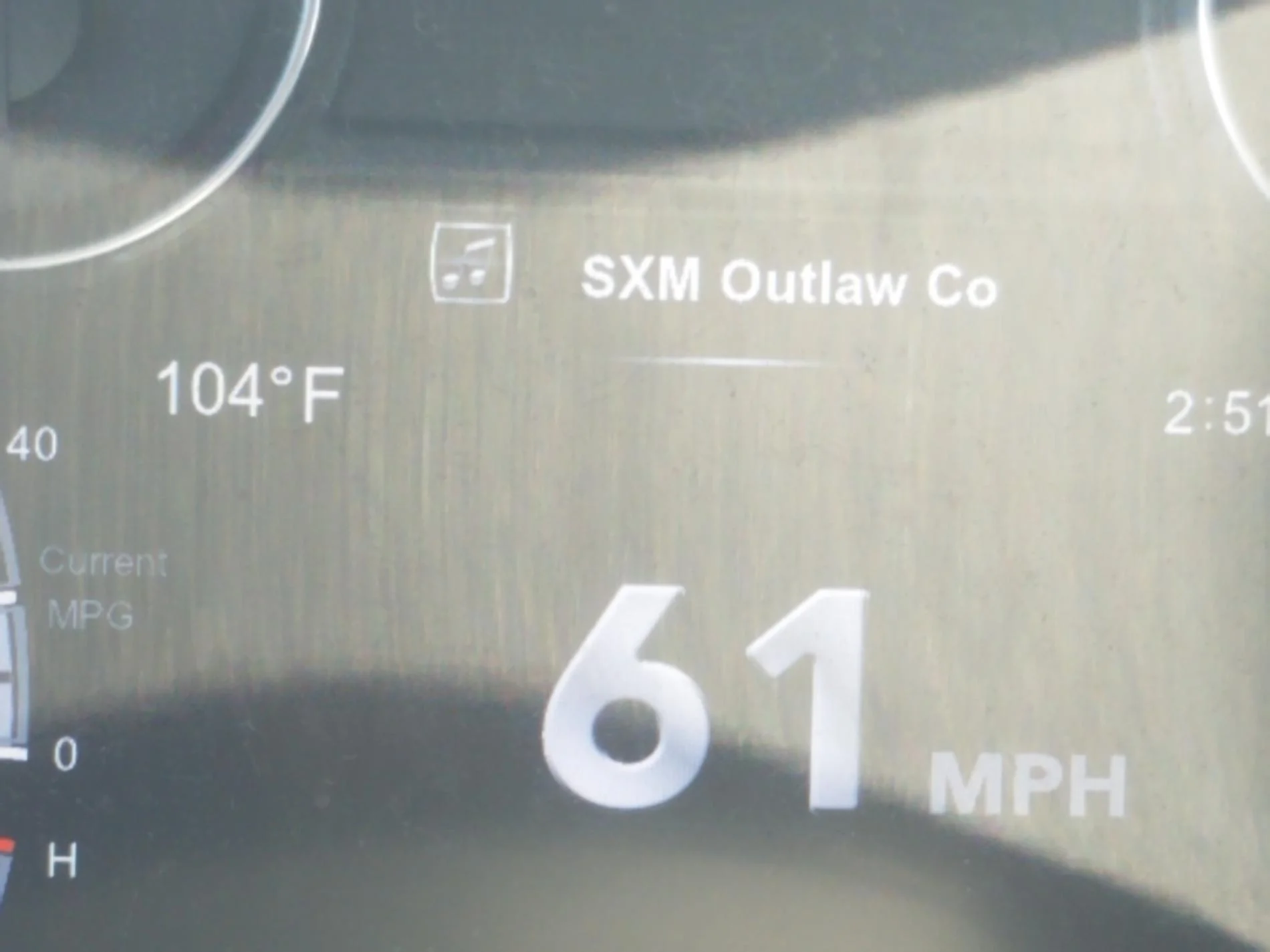
These are the hottest temperatures I've towed in with my two trucks. The key is to slow down!

2015 Ram EcoDiesel - 104*F
2020 Ram EcoDiesel - 117*F

Jeep Gladiator So disappointed in this Diesel platform; wish there was a return policy. zN6nPRA


Jeep Gladiator So disappointed in this Diesel platform; wish there was a return policy. x215gp1
 

Jonny A

Well-Known Member
First Name
Jon
Joined
Nov 1, 2020
Threads
10
Messages
293
Reaction score
295
Location
Eliot, Maine
Vehicle(s)
2020 Rubicon Gladiator
Occupation
Bridge Construction and Maintenance
I figured - you were making perfect sense but the numbers didn't jive and I didn't think of the conversion factor. Maybe some day the US will adopt world measuring standards.......
I been waiting and wanting the metric system since 1978 when we were in school. We were told all will be metric by 1980. No such case. Comparing volumes, distances and areas is so much simpler done metric.
 

Sponsored

ShadowsPapa

Well-Known Member
First Name
Bill
Joined
Oct 12, 2019
Threads
247
Messages
40,463
Reaction score
53,912
Location
Runnells, Iowa
Vehicle(s)
'25 JTMX, '23 JLU 4xe, '82 SX4, '73 Javelin
Occupation
Retired auto mechanic, frmr gov't ntwrk security admin
Vehicle Showcase
3
I been waiting and wanting the metric system since 1978 when we were in school. We were told all will be metric by 1980. No such case. Comparing volumes, distances and areas is so much simpler done metric.
And to make it worse - I graduated in 75 - and years before that we were being told it would all be metric by 19xx.
So I bought a lot of metric tools - great for working on motorcycles and import household items.
I may be old but I'm willing to convert - it's so easy, no dividing or multiplying things by 16 or 32 or 64 when measuring things.
It's weird when you measure things by the 64th of an inch - until you get down so far and then switch to thousandths.
 

biodiesel

Well-Known Member
Joined
Dec 8, 2018
Threads
15
Messages
2,286
Reaction score
2,968
Location
New Mexico
Vehicle(s)
2015 Ram 1500 Ecodiesel
At this point is when my diesel started running like a honda civic towing 10,000lb.
Wow, that's identical to where the 2014 - 2019 engines derate. Thanks for posting!
 

ratherbskiing

Well-Known Member
Joined
Feb 24, 2020
Threads
1
Messages
45
Reaction score
45
Location
Utah + PA
Vehicle(s)
JTR+JLUWD
Wow, that's identical to where the 2014 - 2019 engines derate. Thanks for posting!
Mine derated much sooner than those temps. Once it cracks 233 water or 255 oil I lost power.

I can only "slow-down" so much. Would barely do 55MPH at some points on an interstate that is signed 80MPH. I was a hazard to others. I do not believe I should have to purchase a full size truck to tow a low-profile teardrop trailer in the summer. My expectations are inline with the job I'm asking the 3.0 to do as it corresponds to its rated and stated capabilities. Throw in the exorbitant prices of Jeeps, especially diesels, and a material disconnect can be plainly observed.
 

PancakeCritter

Well-Known Member
First Name
Alex
Joined
May 19, 2021
Threads
2
Messages
98
Reaction score
75
Location
Sioux Falls
Vehicle(s)
M3
Occupation
Engineer
Mine derated much sooner than those temps. Once it cracks 233 water or 255 oil I lost power.
I'm a little surprised they're pulling power with an SAE40 oil around 260F. My thought when I saw my 3.6 oil above 250F, "That's a bit hot for SAE20." But for SAE40? Wow. But then again, modern mil spec helicopter gear oils I'm familiar with are comparable to SAE20, if not even thinner.

The coolant temp is a bit more understandable. I wouldn't want my coolant anywhere above 230F for very long.

It seems for you diesel folks, a larger radiator for the coolant and or oil would be useful to help avoid the limiters. Or at least reduce the time spent in that scenario.

Both systems effectively remove heat, but coolant is twice as efficient as oil. When either is beyond its thermal envelope, the other has to carry the remaining heat load.
 

Sponsored

ShadowsPapa

Well-Known Member
First Name
Bill
Joined
Oct 12, 2019
Threads
247
Messages
40,463
Reaction score
53,912
Location
Runnells, Iowa
Vehicle(s)
'25 JTMX, '23 JLU 4xe, '82 SX4, '73 Javelin
Occupation
Retired auto mechanic, frmr gov't ntwrk security admin
Vehicle Showcase
3
I'm a little surprised they're pulling power with an SAE40 oil around 260F. My thought when I saw my 3.6 oil above 250F, "That's a bit hot for SAE20." But for SAE40? Wow. But then again, modern mil spec helicopter gear oils I'm familiar with are comparable to SAE20, if not even thinner.

The coolant temp is a bit more understandable. I wouldn't want my coolant anywhere above 230F for very long.

It seems for you diesel folks, a larger radiator for the coolant and or oil would be useful to help avoid the limiters. Or at least reduce the time spent in that scenario.

Both systems effectively remove heat, but coolant is twice as efficient as oil. When either is beyond its thermal envelope, the other has to carry the remaining heat load.
Don't go by viscosity! It's at the point where the oil or additives suffer thermal breakdown.

Many oils degrade (PROTECTION-WISE) at temps around 270 - and it's not about film strength or viscosity, it's that the additives literally break down at that temperature or above. And if they do - it won't get better letting it cool, you have to change the oil because it will no longer protect.
So regardless of the "weight" or viscosity, oils typically break down and are "ruined" by temperatures around 270.

Below are some test numbers, but note many hover around that 270 degree mark, some less, some more - The oil literally starts to "vaporize" at these temperatures.

The “Official” test for this is called the NOACK Volatility Test. In this test, per the ASTM spec, the oil is heated to 250*C (482*F) for one hour. The lighter oil fractions will vaporize, leaving thicker and heavier oil, contributing to poor circulation, reduced fuel economy, increased oil consumption, increased wear and increased emissions.
(maybe good to note here that if the reading in the pan is 250 degrees, you know there are isolated hot spots where the oil is a lot hotter - say the oil that hits the cylinder wall as the piston moves up, other areas where the oil is going through sheer forces and so on. Also of note is that "heavier" oil will run hotter because it doesn't circulate through and to the pan as fast, and will suffer more sheer forces that generate heat. So while a less viscous oil may seem more of a problem, to a point it would actually run cooler under the same conditions as a more viscous oil. 482 degrees for the test is way up there compared to the oil in the sump of your engine - but is it?)

The test reports results in the percentage, by weight, lost due to “volatilization.”
Before July 1, 2001, 5W-30 motor oil in the United States could lose up to 22 percent of its weight and still be regarded as “passable.”
Now, with GF-4, the maximum NOACK volatility for API licensing is 15 percent. European standards limit high quality oils to a maximum of 13 percent loss.

Any motor oil that has been heated above its onset of thermal breakdown point has started to deteriorate. If that point is reached - seems like time for an oil change...........

These numbers indicate actual breakdown as far as protection - when these oils (and this is a fraction of the total list) reach these temperatures, they no longer protect to the same PSI as they did before they reached that temperature.

5W30 Mobil Super Synthetic, API SN = 285*F

10W30 Joe Gibbs XP3 NASCAR Racing Oil, synthetic = 280* F

5W30 Pennzoil Ultra, API SM, synthetic = 280* F

5W20 Castrol Edge w/Titanium, API SN, synthetic = 280* F

0W30 Mobil 1 Racing Oil, synthetic = 280* F

5W50 Motorcraft, API SN, synthetic = 275* F

5W20 Quaker State Ultimate Durability, API SN, GM dexos 1 approved, synthetic = 270*F

0W50 Mobil 1 Racing Oil, synthetic = 270* F

5W30 Mobil 1 Advanced Full Synthetic, API SN = 265* F (this is an earlier version without GM dexos 1 approval)

5W30 Quaker State Ultimate Durability, API SN, GM dexos 1 approved, synthetic = 260*F

0W40 Pennzoil Ultra, API SN, synthetic = 260* F

5W30 Mobil 1, Advanced Full Synthetic, API SN, GM dexos 1 approved = 255*F
 
Last edited:

PancakeCritter

Well-Known Member
First Name
Alex
Joined
May 19, 2021
Threads
2
Messages
98
Reaction score
75
Location
Sioux Falls
Vehicle(s)
M3
Occupation
Engineer
Don't go by viscosity! It's at the point where the oil or additives suffer thermal breakdown.
Its about reduced film thickness still providing protection from material asperities. Lubrication and cooling engineering is a massive topic beyond the scope of this thread.
 

foo.c

Well-Known Member
Joined
Oct 3, 2017
Threads
6
Messages
271
Reaction score
372
Location
127.0.0.1
Vehicle(s)
2021 JTR, 2021 Corvette
My track cars see over 270F every session. I'd go broke changing the oil after every time they got above that. Never had a problem changing once per year and checking the level.
 
OP
OP
CreepyJeepy

CreepyJeepy

Well-Known Member
First Name
Ryan
Joined
Jul 2, 2021
Threads
34
Messages
463
Reaction score
627
Location
Denver
Vehicle(s)
2021 Jeep Gladiator Rubicon 3.0
Occupation
Cyber Security
My track cars see over 270F every session. I'd go broke changing the oil after every time they got above that. Never had a problem changing once per year and checking the level.
I have hit 290-300 in my miata on track. In short sustained periods, and is not running at that temp all the time. I do agree to some extent and will likely do 5k oil changes during summer season / towing.
 

ShadowsPapa

Well-Known Member
First Name
Bill
Joined
Oct 12, 2019
Threads
247
Messages
40,463
Reaction score
53,912
Location
Runnells, Iowa
Vehicle(s)
'25 JTMX, '23 JLU 4xe, '82 SX4, '73 Javelin
Occupation
Retired auto mechanic, frmr gov't ntwrk security admin
Vehicle Showcase
3
My track cars see over 270F every session. I'd go broke changing the oil after every time they got above that. Never had a problem changing once per year and checking the level.
I think I pointed out that it's also based on the particular oil you use - note that some don't start to lose wear protection until higher - 280, 285, even 290 - And I read one that doesn't lose protection until higher than that. It doesn't suddenly stop working, it loses the ability to maintain protection against the higher pressures. Like said by another - a lot of variables, a huge topic.
Various oils have various abilities to protect at given pressures, and have differing film strengths. One might be able to protect with a film less thick than the next.

And I'm sure the military takes it even further than any other organization - lives depend on it and they are brutal on their lubes. Any failure is likely a disaster.
I used to do contract work when I was between jobs and changing careers (again) and did the networking for a company that made concrete handling equipment for the military. The head of the company shared some of the specs they had to meet - and the special measuring equipment that had to buy to meet those specs. The specs for the paint alone - wow. The mechanical parts in their concrete handling equipment had to go through testing no other buyer would demand.
Sponsored


Top