Sponsored

AEV 2" Spacer Lift

KB34

Well-Known Member
First Name
Karl
Joined
Sep 6, 2021
Threads
8
Messages
76
Reaction score
52
Location
Fort Worth, Texas
Vehicle(s)
2021 Gladiator Mojave
Occupation
Mechanical Engineer
Don't make it personal. You have no idea how I think.

I have no problem with AEV. They make lots of great stuff. Their spacer lift is simply a low budget alternative to lifting your Gladiator 2-inches. Sounds like lots of people here took advantage of that savings.

However, that does not mean that the AEV 2-inch lift is the best lift they offer or that there were no compromises made to get the price down to $449. Creating a polyurethane spacer that also replaces the factory rubber isolator kept the cost down but it wasn't done because it's superior to a rubber isolator.

AEV doesn't make control arms because they are very aware how the durometer of the rubber Mopar users is key to the way the suspension works. You can take a factory Jeep with the shocks removed and drive it over a bumpy test track and the body remains level. That's how much the rubber bushings and spring rates matter to the engineering of the ride. So when you pull off a rubber isolator it matters. How much? Probably not nearly as much as suspension bushings but it's no accident the factory isolators are made out of rubber.

If I was into overlanding I would probably choose the AEV Dual Sport lift. Unlike Mopar they use progressive rate springs and their shocks are tuned to those springs. As a result get a firmer more controlled ride than stock. You can also carry more cargo without the rear squatting nearly as much.

But I am not into overlanding. I like my Gladiator pretty much as is. I just wanted to make sure I didn't hit high center on the trails. The best solution for me is to install the Mopar 2-inch lift which achieves the following:
1. Improved suspension sound deadening.
2. Preserves stock ride quality.
3. Increases the amount of articulation.
4. Maintains optimal front pinion angle.
Ok, so let me preface by saying that I work as a mechanical engineer for a major supplier to FCA (now Stellantis).
There are a few reasons the factory isolators are rubber. And it isn’t because they soak up the bumps. It’s for noise and vibration, as well as cost.
Rubber isolators, bushings, etc are far cheaper to make than poly-urethane and every penny counts towards the bottom line to make the most profit, you want the cheapest part that accomplishes what you need it to do and pass all your tests and requirements. Why pay for poly if you can accomplish what you want with rubber? Poly will give better performance but when rubber meets spec, why pay more?
Poly-urethane, which is technically neither a rubber or a plastic, it is a rubberized plastic (elastomeric plastic), a combination of the two to get the best qualities of each. You get the flex of rubber with the stiffness of plastic. This is why a lot of sports cars, muscle cars, etc that want to go fast around corners use it for bushings.

The fact that you’re getting noise from spacers on springs means one thing, improper installation. The springs do not rotate, the compress and decompress. This is why there is a notch on the spring to sit into the isolators. If you’re springs aren’t seated right in the isolators they will move around and make noise, or if a control arm isn’t tightened enough it will make noise. The only thing poly-urethane will cause over rubber is a slightly, SLIGHTLY, bumpier ride due to the increase in stiffness of the isolators. But this should all be absorbed by the Shock ABSORBERS if they are installed correctly and working properly, i.e correct angles, lengths, etc.

The other thing poly-urethane will cause which in this case is highly unlikely since the springs should not be rotating in the perch is squeaking. Squeaking poly-urethane is a common issue with poly bushing when they are not greased properly, which is why a lot of sports cars with poly bushings on the control arms have zerk fittings.

As many others have stated, check that everything is tight and installed correctly.
Sponsored
 
OP
OP
CyberTom

CyberTom

Active Member
Joined
Aug 11, 2021
Threads
1
Messages
30
Reaction score
20
Location
North East Ohio
Vehicle(s)
2020 Jeep Gladiator Rubicon
I'll agree that the Mopar 2" lift will increase your articulation over stock. Sound deadening realistically isn't going to be any different vs. stock, and I doubt it will be different vs. the AEV (based on my experience). The ride quality will be a little stiffer with the Mopar lift with the Fox Performance shocks, but most people do like them better than stock Rubicon shocks. When you say that it "maintains optimal front pinion angle", are you referring to caster angle? Because pinion angle isn't necessarily the 1st (or even the 2nd) concern when considering front control arm lengths (with a CV driveshaft).
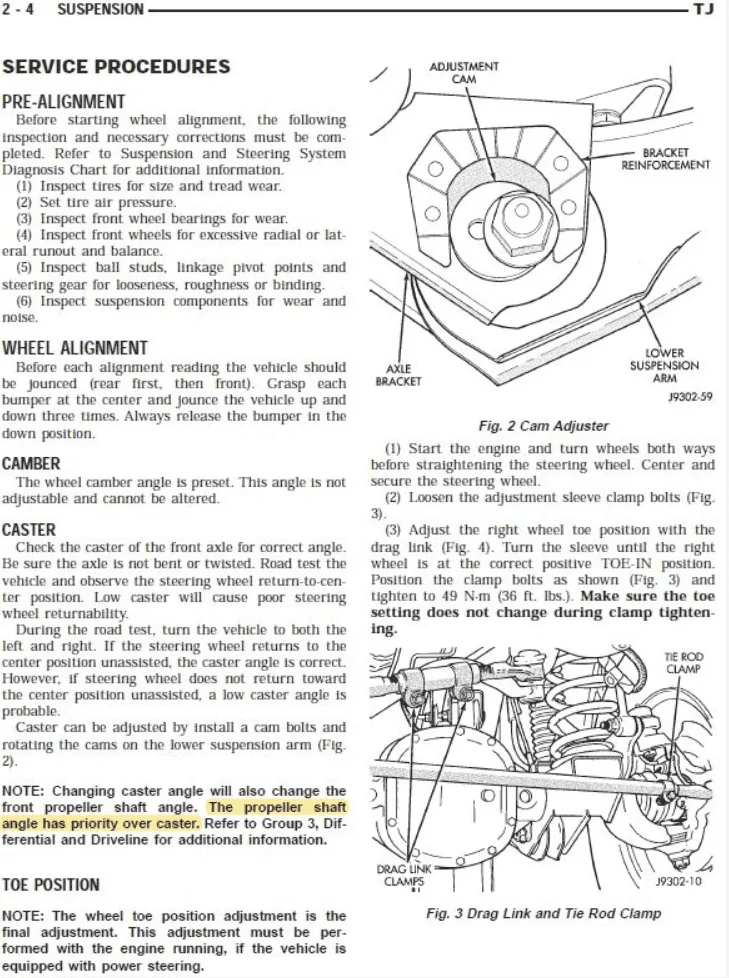
Your comment about the pinion angle or angle of the front drive shaft is INCORRECT according to the Mopar factory manual. Please read the words in the screen shot highlighted in yellow. Since they designed it I don't think there is much room for debate.

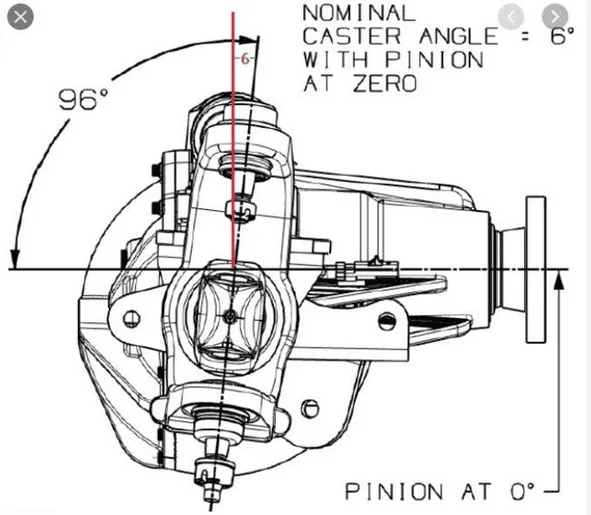
The caster and pinion angle drawing are not Mopar specifications. I merely added it for the sake of clarity. Someone not familiar can see that the relationship between these 2 angles are permanently set in the assembly and not independently adjustable.

"THE PROPELLER SHAFT ANGLE HAS PRIORITY OVER CASTER".

Jeep Gladiator AEV 2" Spacer Lift MOPAR MANUAL


Jeep Gladiator AEV 2" Spacer Lift pinion angl
 
Last edited:

KB34

Well-Known Member
First Name
Karl
Joined
Sep 6, 2021
Threads
8
Messages
76
Reaction score
52
Location
Fort Worth, Texas
Vehicle(s)
2021 Gladiator Mojave
Occupation
Mechanical Engineer
Your comment about the pinion angle or angle of the front drive shaft is INCORRECT according to the Mopar factory manual. Please read the words in the screen shot highlighted in yellow. Since they designed it I don't think there is much room for debate.

The caster and pinion angle drawing are not Mopar specifications. I merely added it for the sake of clarity. Someone not familiar can see that the relationship between these 2 angles are permanently set in the assembly and not independently adjustable.

"THE PROPELLER SHAFT ANGLE HAS PRIORITY OVER CASTER".

MOPAR MANUAL.webp


pinion angle.webp
Typically caster is used in alignments since they can align using all 4 wheels. Pinion angle is fixed relative to caster angle and caster adjustment affects pinion angle. So by setting one you set the other. Most alignment shops (at least off-road shops I have worked with) will set the caster angle then verify after that the pinion angle is correct after the adjustments.
 

Renegade

Well-Known Member
First Name
Zac
Joined
Sep 11, 2017
Threads
38
Messages
3,616
Reaction score
4,818
Location
Signal Mountain, TN
Vehicle(s)
2020 JT
Build Thread
Link
Your comment about the pinion angle or angle of the front drive shaft is INCORRECT according to the Mopar factory manual. Please read the words in the screen shot highlighted in yellow. Since they designed it I don't think there is much room for debate.

The caster and pinion angle drawing are not Mopar specifications. I merely added it for the sake of clarity. Someone not familiar can see that the relationship between these 2 angles are permanently set in the assembly and not independently adjustable.

"THE PROPELLER SHAFT ANGLE HAS PRIORITY OVER CASTER".

MOPAR MANUAL.webp


pinion angle.webp
What manual is that from, a TJ? Those didn’t have CV joints in the driveshafts, and they also didn’t have a FAD (front axle disconnect). Things have changed, and pinion angle is less of a consideration than it was before 2007 (start of the JK).
Edit: I now see that the manual you are referencing is indeed for a JT. That is incredibly outdated (TJs were first produced 25 years ago). That was based on a standard u-joint driveshaft, which required the joint angles at each end of the shaft to match, or vibration would result. With a CV at the t-case, you would ideally want 0 angle at the differential. The need for this to be exact is minimized by the driveshaft not spinning during 2wd operation, and the relatively minor angle which results from reasonable caster angles.
 
Last edited:

Sponsored

OP
OP
CyberTom

CyberTom

Active Member
Joined
Aug 11, 2021
Threads
1
Messages
30
Reaction score
20
Location
North East Ohio
Vehicle(s)
2020 Jeep Gladiator Rubicon
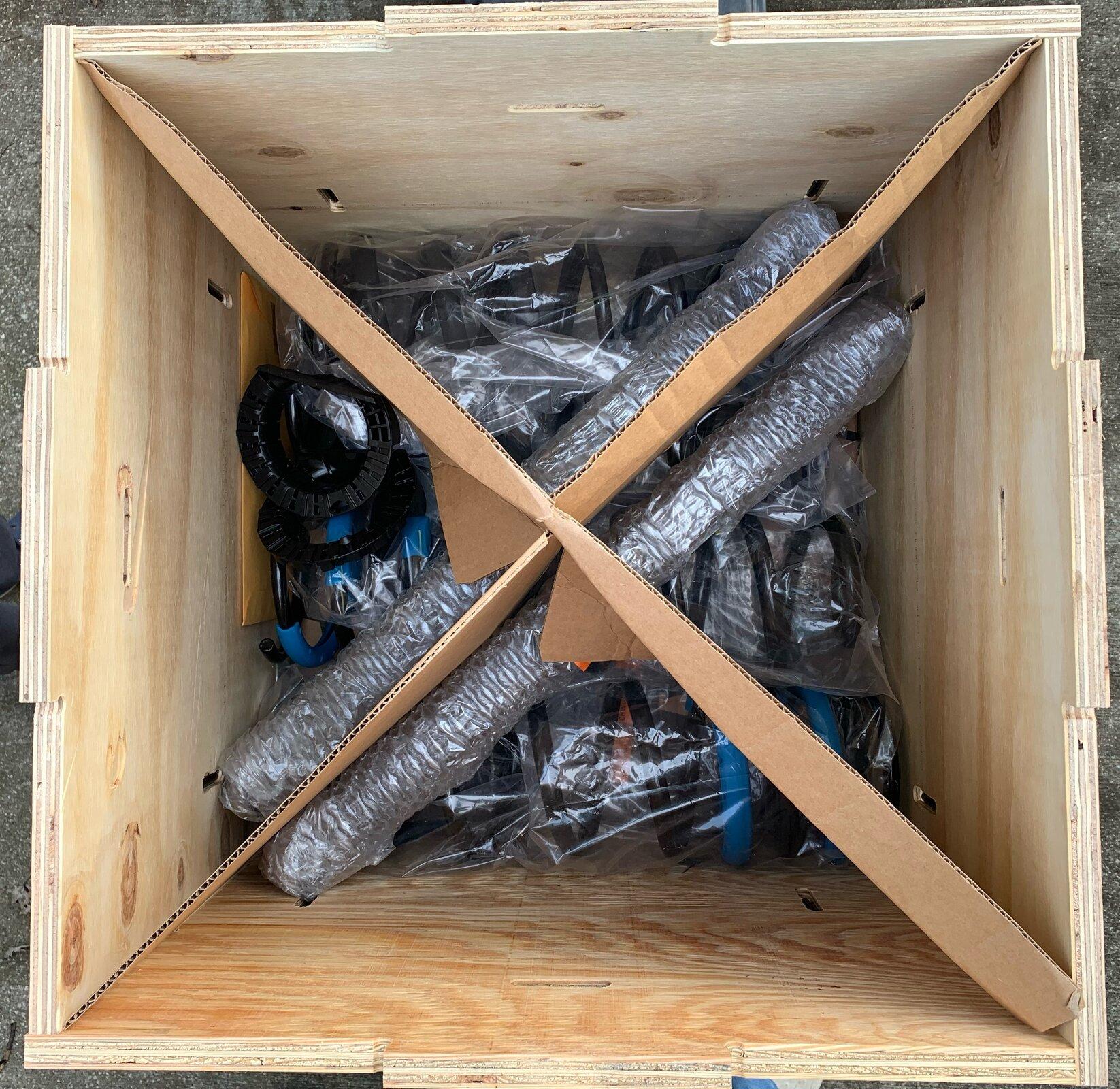
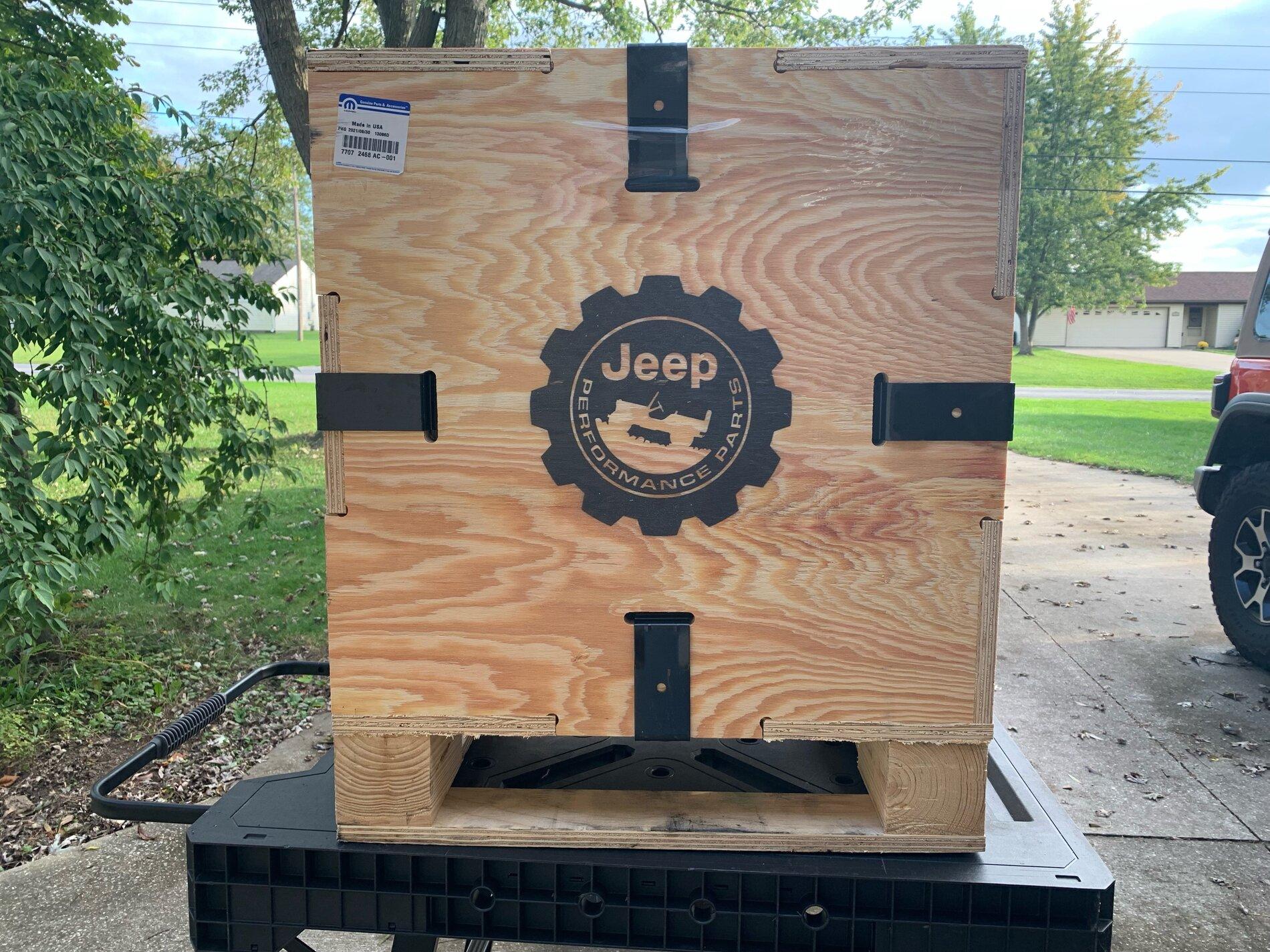
The Mopar lift kit arrived. The weather looks good for this weekend to do the install.

Jeep Gladiator AEV 2" Spacer Lift image0


Jeep Gladiator AEV 2" Spacer Lift image1
 
  • Like
Reactions: Mac

BluRubY

Well-Known Member
First Name
Allen
Joined
Sep 29, 2021
Threads
3
Messages
72
Reaction score
149
Location
KY
Vehicle(s)
25 Gladiator Rubicon X
I just put the AEV kit on my Rubicon yesterday. I do not have any noise. I have not driven it much yet. I only did the front to level it out. I don't think I will do the rear. It kind of has the Mojave stance now. I still need to get it aligned.
 

jeepers29

Well-Known Member
First Name
Joel
Joined
Aug 24, 2021
Threads
10
Messages
1,565
Reaction score
2,557
Location
Georgetown Tx
Vehicle(s)
JKUR, GC
Occupation
Domestic engineer
So, what is the thought on the longer LCA's vs the geo brackets? I would prefer the longer arms so as to not lose clearance, but do not want flighty.
 

Renegade

Well-Known Member
First Name
Zac
Joined
Sep 11, 2017
Threads
38
Messages
3,616
Reaction score
4,818
Location
Signal Mountain, TN
Vehicle(s)
2020 JT
Build Thread
Link
So, what is the thought on the longer LCA's vs the geo brackets? I would prefer the longer arms so as to not lose clearance, but do not want flighty.
If you will use the clearance, go with the arms. If you don’t need the clearance, go with the brackets.
 

Mac

Well-Known Member
Joined
Nov 30, 2017
Threads
33
Messages
2,177
Reaction score
2,375
Location
MA
Vehicle(s)
2020 JT Hydro Blue Max Tow
I believe the brackets give you more caster, Mopar arms make a difference but not a big difference they are only .25” longer. Brackets also handle bumps better due to the angle of arms being more parallel to the ground.
 

Sponsored

OP
OP
CyberTom

CyberTom

Active Member
Joined
Aug 11, 2021
Threads
1
Messages
30
Reaction score
20
Location
North East Ohio
Vehicle(s)
2020 Jeep Gladiator Rubicon
Removing the AEV 2" Spacer Lift and installing the 2" Mopar Lift this weekend. I have the front done. I will do the rear tomorrow.

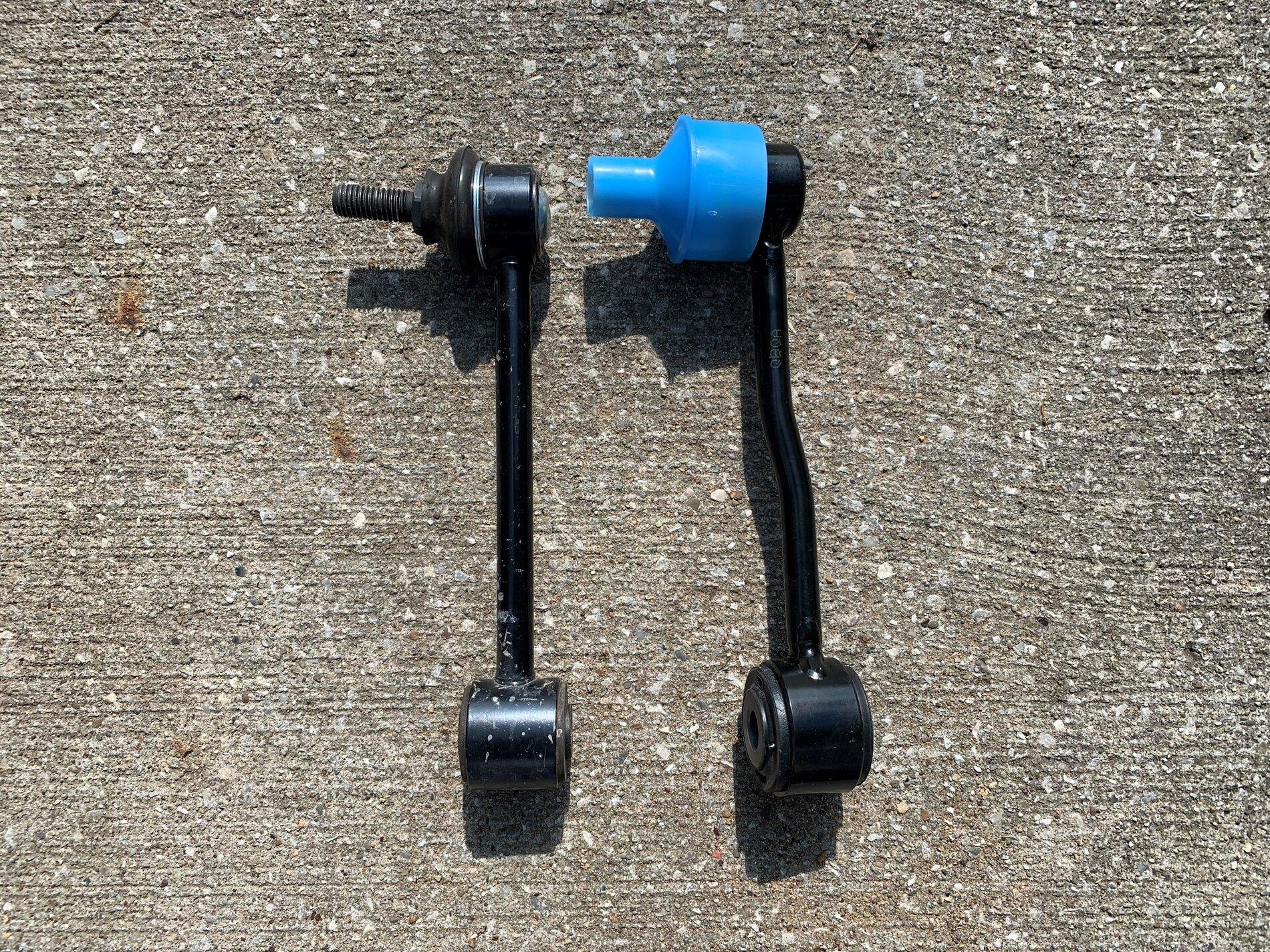
Some things I noticed. The Mopar SWAY BAR LINKS are beefier than the AEV links. They also have a nice little offset that lines everything up prefectly.

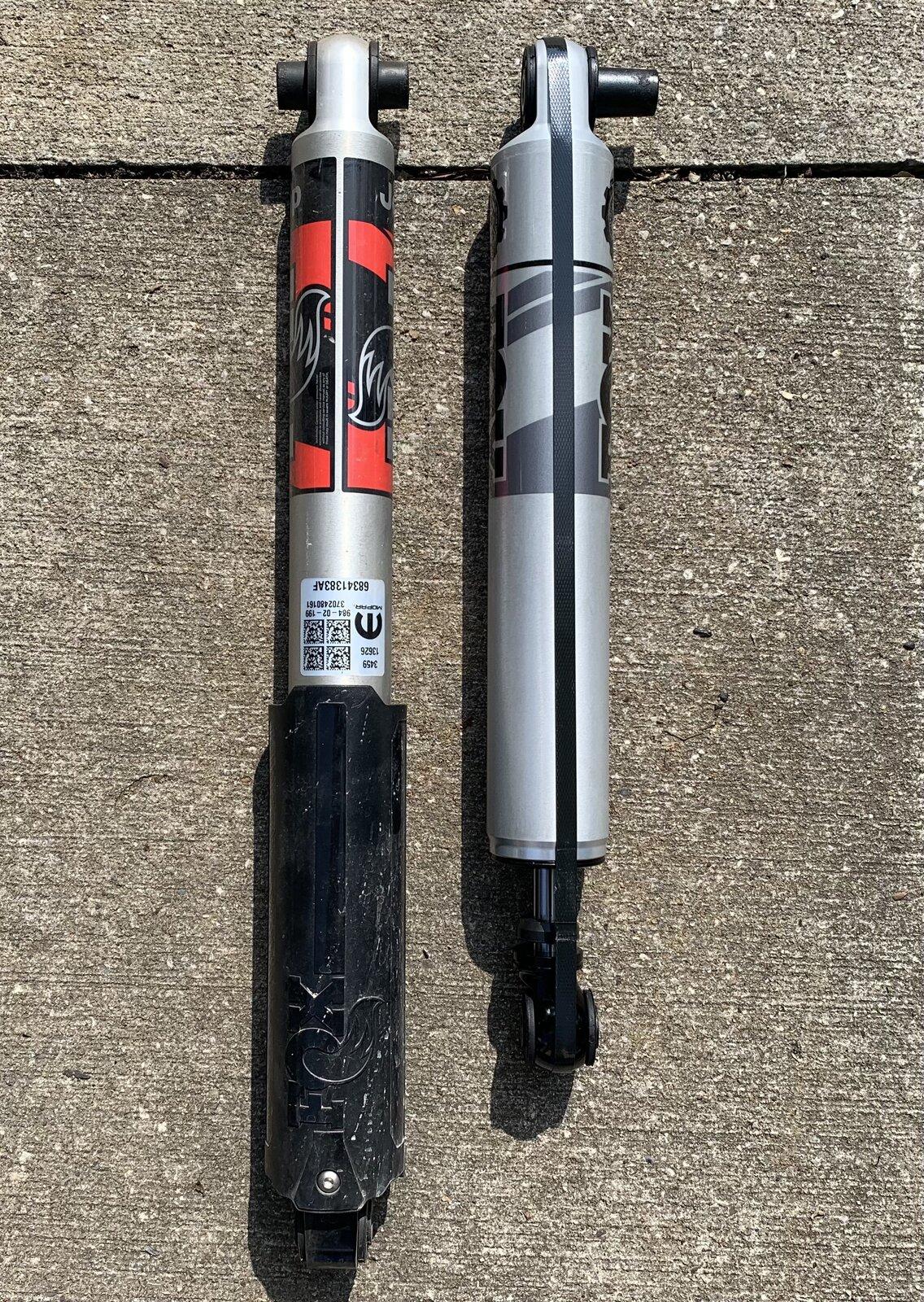
They repositioned the FRONT SHOCKS and pushed the top out a little to give it more of a straight down configuration. The are also slightly larger in diameter.

I installed the new front CONTROL ARMS that came with the lift kit. The engineers at Mopar really dialed this lift in and wanted to maintain the perfect pinion angle from the front drive shaft.

So far this lift is impressive. Very detailed and no short cuts were taken. I will finish up the rear tomorrow and take it for a drive and see what it's like.

Jeep Gladiator AEV 2" Spacer Lift IMG_2268


Jeep Gladiator AEV 2" Spacer Lift IMG_2269
 
OP
OP
CyberTom

CyberTom

Active Member
Joined
Aug 11, 2021
Threads
1
Messages
30
Reaction score
20
Location
North East Ohio
Vehicle(s)
2020 Jeep Gladiator Rubicon
AEV 2” lift here too, love it, no rattles.
Lift or Spacer Lift? I’m glad you like it. The price is now $499. I think it’s a good value if the goal is to lift your Gladiator 2 inches with minimal expense.

However,
If you want to keep the rubber spring isolators to retain all their benefits a spacer lift is not the way to go.

In addition a full blow lift kit gives you additional articulation which is invaluable when going over obstacles.
 

Mac

Well-Known Member
Joined
Nov 30, 2017
Threads
33
Messages
2,177
Reaction score
2,375
Location
MA
Vehicle(s)
2020 JT Hydro Blue Max Tow
What are you doing with the AEV lift you removed?
Sponsored


Top