
Sponsored

dcmdon

Well-Known Member
First Name
Don
Joined
Mar 31, 2021
Threads
60
Messages
3,656
Reaction score
4,427
Location
Boston Metro-West, Northern NH
Vehicle(s)
.
Chances of the HO being an option in a JL/JT probably nil.
I'd take the low output version. 400 hp and 450 lb-ft of torque is fine by me.
Sponsored


IanNubbit

Well-Known Member
First Name
Ian
Joined
Jul 5, 2020
Threads
5
Messages
552
Reaction score
605
Location
New Jersey
Vehicle(s)
2023 JL 2 Door Sport 6MT & 2022 JT 6MT Sport
Occupation
Mopar Dealer Tech
The 392 barely fits length wise. Idk how this possibly could. The radiator is tucked on a 392 already
 

tampahoosier

Well-Known Member
First Name
Heath
Joined
Feb 11, 2020
Threads
12
Messages
858
Reaction score
690
Location
Tampa, FL
Vehicle(s)
2021 Diesel Gladiator Rubicon
Build Thread
Link
Occupation
Cybersecurity - Cyber Intelligence
Vehicle Showcase
1
Wow! It is a $2,000 option over the 6.4L V8 in the Wagoneer. How much will it cost in the JL / JT? As much as the Hemi?
Where do you see the option price?
 

Oilburner

Well-Known Member
First Name
Tim
Joined
Jun 8, 2018
Threads
37
Messages
1,759
Reaction score
2,949
Location
Nowhere, AR
Vehicle(s)
1982 Scrambler, 1969 Wagoneer, 2022 JTR Ecodiesel
The 392 barely fits length wise. Idk how this possibly could. The radiator is tucked on a 392 already
The cylinder bore in the 6.4L is 4.095". 4 cylinders on each side.
Cylinder bore in the 2.0L = 3.27" I think it's the same bore for the new I6 = 6 pistons in a row.
So all things being equal, 4 x 4.095 = 16.38"
6 x 3.27 = 19.62" 3.24" difference.
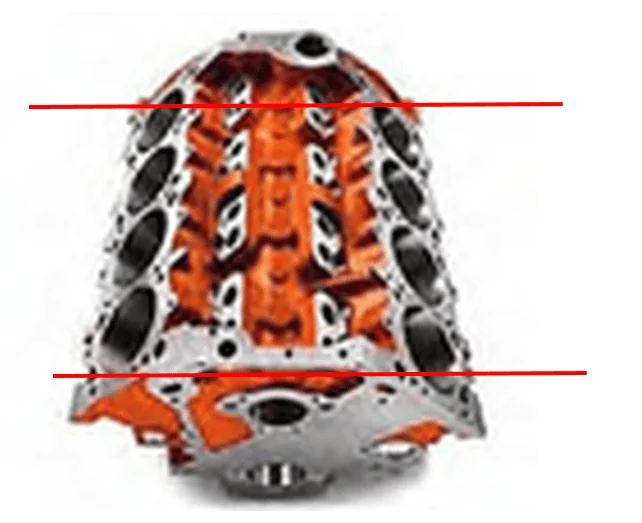
At first glance, it seems too long, however the pistons are closer together in the 2.0/3.0 vs the 6.4. The wall between them is thinner (which is kinda scary) Add to this, the 2 banks of pistons in the 6.4 are offset so you can't just add up the diameter of 4 pistons. One row of pistons is shifted forward from the other
For reference (pic is a 6.4L)
Jeep Gladiator Official: Hurricane Twin-Turbo 3.0 I-6 Coming for Jeep With Over 500 HP and 475 ft-lbs! 1648299681829


If the banks are offset enough, I could see the overall length of the 3.0L being near the same as the 6.4L, allowing it to fit in the current JL/JT platform. Probably be Tight tho-
 
Last edited:

spectre6000

Well-Known Member
Joined
Apr 18, 2021
Threads
10
Messages
555
Reaction score
588
Location
Mountains above Denver
Vehicle(s)
pending
I recall reading that one of the design parameters of the Hurricane was to be able to drop in to replace the V8s. Assuming they accomplished this, and the above analysis makes a strong case that they did, length shouldn't be an issue.

That being said, if they can shoehorn a V8 into the JL/JT engine bay, they should have no issues with the Hurricane. The Pentastar is long in the tooth, and it doesn't make the most sense to have two essentially interchangeable engines (the mass consumer sees 6 cylinders as 6 cylinders, regardless much anything else). I don't know that we'll see the Hurricane in a mid-cycle coming soon (though that would extract my wallet from my pocket in a hurry), but I expect this will end up in the Wrangler/Gladiator platform before ICE is completely phased out. I think hybridization was also in the design parameter list, so expect that as well at least as an option.

Personally, I think a V6 is a stupid option for an engine in any truck. They really don't do torque low in the RPM band very well. I6 is the best option, IMO. Smooth and linear power delivery feels so good. Forced induction only makes it that much better. I welcome our new lengthy overlord.
 

Sponsored

DailyMoparGuy

Well-Known Member
First Name
Gone
Joined
Mar 6, 2021
Threads
7
Messages
1,547
Reaction score
3,094
Location
Gone
Vehicle(s)
None
Occupation
Ghost Rider
The cylinder bore in the 6.4L is 4.095". 4 cylinders on each side.
Cylinder bore in the 2.0L = 3.27" I think it's the same bore for the new I6 = 6 pistons in a row.
So all things being equal, 4 x 4.095 = 16.38"
6 x 3.27 = 19.62" 3.24" difference.
At first glance, it seems too long, however the pistons are closer together in the 2.0/3.0 vs the 6.4. The wall between them is thinner (which is kinda scary) Add to this, the 2 banks of pistons in the 6.4 are offset so you can't just add up the diameter of 4 pistons. One row of pistons is offset from the other
For reference (pic is a 6.4L)
1648299681829.webp


If the banks are offset enough, I could see the overall length of the 6.4L being near the same as the 3.0L, allowing it to fit in the JL/JT. Probably be Tight tho-
I love a good extrapolation
 

eternus

Well-Known Member
First Name
Jody
Joined
Mar 23, 2018
Threads
60
Messages
1,070
Reaction score
1,033
Location
Longmont, CO
Vehicle(s)
2021 Sting-Gray Sport S Max Tow
Build Thread
Link
Occupation
Product Manager
I’m not really convinced that the JT will get either. These seem like options for the Ram, Grand Cherokee, Charger/Challenger, Wagoneer, and Durango.

Is this part referring to a JT/JL application?
If they were ever going to put a hemi in the gladiator (which many think was the next big announcement) then this is certainly the more realistic reality. If they already said the engine bay won't accommodate the v8, it WILL accommodate this new engine.
 

eternus

Well-Known Member
First Name
Jody
Joined
Mar 23, 2018
Threads
60
Messages
1,070
Reaction score
1,033
Location
Longmont, CO
Vehicle(s)
2021 Sting-Gray Sport S Max Tow
Build Thread
Link
Occupation
Product Manager
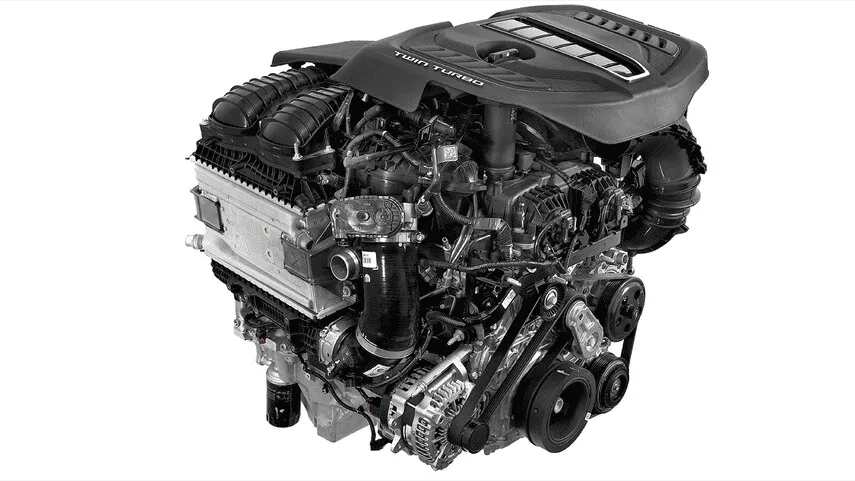
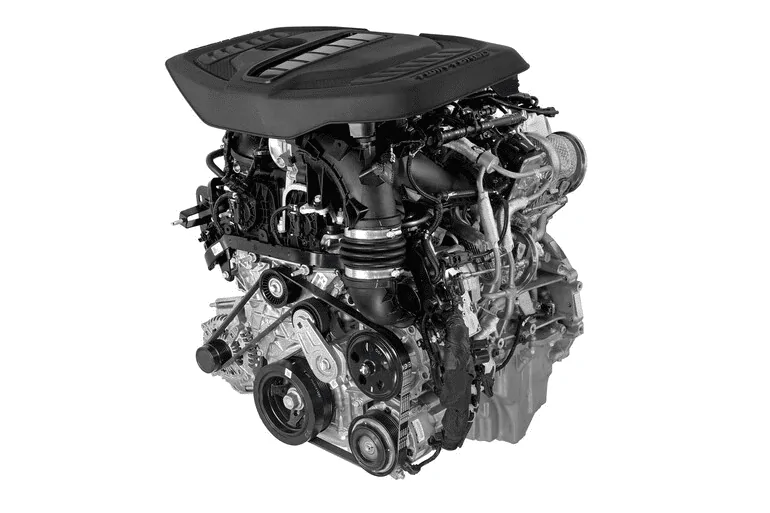
Stellantis Debuts Hurricane Twin-turbo I-6 Engine That Cuts Emissions, Increases Fuel Economy And Is More Powerful
  • New 3.0-liter Hurricane twin-turbo, inline, six-cylinder engine puts out less tailpipe emissions and uses less gasoline than larger engines, yet delivers V-8 levels of power
  • Robust architecture enables Stellantis Propulsion Systems to deliver two distinct variants – one tuned for efficiency, one tuned for performance
  • Hurricane twin-turbo I-6 designed to account for potential future integration with electrification for low-emission vehicles (LEVs)
  • Two low-inertia turbochargers power the Hurricane’s rapid response to throttle inputs, along with enhanced torque output for chores such as towing without sacrificing fuel economy
  • State-of-the-art technologies include Plasma Transfer Wire Arc (PTWA) sprayed cylinder coating, high-pressure gasoline direct injection
  • First vehicles with Hurricane reach dealership showrooms this year
  • Cleaner-running Hurricane twin-turbo moves Stellantis toward its commitment of a 50% reduction in carbon emissions by 2030 and to be Carbon Net Zero by 2038, key elements of the Dare Forward 2030 strategic plan
March 25, 2022 , Auburn Hills, Mich. - Stellantis today revealed its new, 3.0-liter, twin-turbo, inline, six-cylinder engine, named Hurricane, that delivers better fuel economy and fewer emissions than larger engines while at the same time generates more horsepower and torque than many competitors’ naturally aspirated V-8 and boosted six-cylinder power plants.

Designed with an inherently smooth-running I-6 configuration and state-of-the-art technology, the Hurricane twin-turbo’s robust base architecture enables Stellantis propulsion systems engineers to create two distinct variants:
  • Standard Output (SO): Optimized for fuel economy, including the use of cooled exhaust gas circulation (EGR), while delivering enhanced power and torque (more than 400 hp/450 lb.-ft. of torque)
  • High Output (HO): Optimized for great performance (more than 500 hp/475 lb.-ft.) while maintaining significant fuel economy during heavy use, such as towing.
The Hurricane twin-turbo achieves this V-8-rivaling performance while being up to 15% more efficient than larger engines.

“As Stellantis aims to become the U.S. leader in electrification, with a 50% battery-electric vehicle (BEV) sales mix by 2030, internal combustion engines will play a key role in our portfolio for years to come and we owe it to our customers and the environment to provide the cleanest, most efficient propulsion possible,” said Micky Bly, Stellantis head of propulsion systems. “The Hurricane twin-turbo is a no-compromise engine that delivers better fuel economy and an important reduction in greenhouse gases without asking our customers to give up performance.”

Reducing greenhouse gas emissions is one part of Stellantis’ commitment to cut its carbon footprint by 50% by 2030 and to lead the transportation industry by achieving Net Carbon Zero by 2038. Those goals are key elements of the Stellantis Dare Forward 2030 strategic plan.

The Hurricane twin-turbo flexes its muscle with a broad, flat torque band that sees the engine maintain at least 90% of peak torque from 2,350 rpm all the way to its red line.

Specific horsepower and torque ratings will vary based on vehicle. The first vehicles powered by the Hurricane twin-turbo I-6 reach dealership showrooms this year.

The foundation of the Hurricane twin-turbo is a deep-skirt cast-aluminum block with a structural aluminum alloy oil pan. Cross-bolted steel main bearing caps contain the strong rotating assembly of a forged steel crankshaft and forged steel connecting rods. During manufacturing the block is deck-plate honed to optimize the cylinder bore shape, which helps improve fuel efficiency.

Stellantis propulsion system engineers employed a suite of state-of-the-art technologies for the Hurricane twin-turbo to deliver reduced emissions and attain big-engine power:
  • Two low-inertia, high-flow turbochargers, each feeding three cylinders, for rapid response to throttle inputs
  • Plasma Transfer Wire Arc (PTWA) coating in the cylinder bores for an ultra-thin, low-friction wear surface
  • High-pressure (5,075 psi/350 bar) direct fuel injection with pumps (single for SO/dual for HO) actuated by a dedicated chain-driven shaft
  • Dual overhead camshafts with wide-range, fully independent variable valve timing
  • Fuel-saving engine stop-start (ESS) function with robust starter motor for quick restarts
  • Engine-mounted water-to-air charge cooler with a dedicated cooling circuit (single inlet for SO/dual inlet for HO)
  • Dual water-cooled exhaust manifolds integrated in the cylinder head
  • Continuously variable displacement oil pump with integrated scavenge stage tailors pump output to engine demand, reducing frictional losses and helping save fuel
  • High-flow ball-valve thermostat minimizes restriction in the cooling system, reducing mechanical losses
The Incredible Power of Air
Each turbocharger in the Hurricane twin-turbo I-6 feeds three cylinders. From a performance standpoint, two smaller turbochargers with less inertia spin up faster and deliver boost to the engine at lower rpm than a single, large turbo.

The compressed air passes through an engine-mounted water-to-air charge air cooler to reduce its temperature before entering the intake manifold. Cooler air is denser, enabling better performance via advanced ignition timing, and helping manage in-cylinder temperatures. An electric pump circulates coolant after the engine is shut down to help cool the turbocharger units for enhanced durability.

The high-pressure direct fuel injection system runs at 5,075 psi (350 bar) and uses injectors mounted centrally in the cylinder head combustion chamber. This design promotes finer atomization and super-fine control of fuel delivery into the cylinder for the optimum air/fuel mixture, enhanced by the turbocharged intake air, for higher power and lower emissions.

The Hurricane’s turbochargers are optimized for each version. The turbos on the Hurricane SO deliver peak boost of 22 psi, while the Hurricane HO turbos deliver 26 psi of peak boost.

Helping the Hurricane HO deliver its enhanced performance are lightweight, oil-jet cooled, forged aluminum pistons with an anodized top ring land and a diamond-like coating (DLC) on the pins to minimize friction. The Hurricane HO runs with a 9.5:1 compression ratio and uses 91 octane premium fuel.

With a focus on fuel economy, the Hurricane SO uses cast aluminum pistons with cast iron top ring land insert, running with a 10.4:1 compression ratio. It’s use of cooled EGR helps reduce engine pumping losses and manage in-cylinder temperatures. Premium fuel is recommended.

Tough Coating for the Cylinders
Less friction, reduced weight and unparalleled wear resistance from a thermal sprayed microstructure of metallic and oxide components that metallurgically transform are the key benefits of the PTWA coating inside the cylinders, an alternative to the traditional cast-in-place or pressed-in cast iron cylinder liners. The PTWA coating is ultra-thin, compared with 3 to 4 millimeters of a cast iron liner and has 10 times the wear resistance.

Minimizing friction throughout the engine enhances its efficiency, reducing its emissions and fuel consumption.

The PTWA coating is applied to the Hurricane block during the manufacturing process at the Saltillo Engine Plant. The process, adapted from the aerospace industry, melts a steel alloy wire at 2,300 degrees Celsius (4,150 degrees Fahrenheit), producing microscopic particles sprayed onto the cylinder walls at high velocities, where the particles splat-cool to form the coating and form a physical bond to the aluminum cylinder bore. Honing the surface gives it a super-fine cross hatch pattern with controlled micro porosity for oil retention.

The PTWA spray process leaves more aluminum between the cylinders for better heat transfer and engine cooling. This enables propulsion engineers to optimize the air-fuel mixture and advance the ignition timing (spark) over a wide operating range, another mechanism to reduce carbon dioxide and other emissions.

New Member of the Stellantis Propulsion System Family
The 3.0-liter Hurricane twin-turbo I-6 shares design features, including bore and stroke and cylinder spacing, with the globally produced turbocharged 2.0-liter I-4. In North America, the 2.0-liter engine is currently available in the Jeep® Wrangler, Wrangler 4xe, Cherokee and recently launched Grand Cherokee 4xe.

The Hurricane twin-turbo I-6 is the primary internal combustion power plant of the future in North America for vehicles using the STLA Large and STLA Frame platforms.

The 3.0-liter Hurricane twin-turbo I-6 is produced at Stellantis’ Saltillo Engine Plant in Mexico.


1648182767536-png.png


1648182804430-png.png
This is awesome/exciting news, but I'm still looking for a high performance PHEV or straight up electric more than a a straight gasser.
 

Dakota Kid

Well-Known Member
Joined
Jun 5, 2021
Threads
7
Messages
133
Reaction score
280
Location
North Dakota
Vehicle(s)
‘21 Gladiator Willys 3.0 Eco Diesel
Occupation
Pro Snipe Hunter
As someone who has owned both a 2011 Ford Flex AWD Limited and a 2014 F-150 Limited with the 3.5L Ecoboost engine as well as a 2017 Ford Escape Titanium with the 2.0 L Ecoboost engine…. And I’m currently driving a 2021 Willys 3.0L ecodiesel Gladiator,…. All I can say is I’d take either version of this tomorrow!!!

i have the Ecodiesel specifically because I found the 3.6 gasser to be seriously lacking when I test drove the Willys with both engines. If I can get that giddy up from a gas engine again, DONE.

As the diesel was a $4,000 option, I’m fine paying for the twin turbo gas?.
 

Caraholic

Well-Known Member
First Name
M
Joined
Sep 11, 2019
Threads
11
Messages
335
Reaction score
323
Location
NORCAL AKA STATE OF JEFFERSON
Vehicle(s)
81’ Cherokee,20' GMC AT4, ‘18 4Runner, cross-trek
Occupation
professional big dumb animal.........
Will it fit in the Jt/jl?
I would be just fine without a turbo, give me a silky smooth i6 everyday. Goodbye 3.6??
 

Sponsored

texanjeeper

Well-Known Member
Joined
Apr 22, 2021
Threads
37
Messages
718
Reaction score
1,253
Location
Texas
Vehicle(s)
2020 Gladiator Sport-S Granite Crystal Metallic
Occupation
I.T.
And is more powerful....than what? Certainly not the Hemi V8, or even the 392. Yeah, probably more powerful than the Pentastar, but what isn't? It's hard to get excited about losing arguably the most powerful V8 on the planet for electric shangri-la and unicorns.
 

rharr

Well-Known Member
Joined
May 6, 2021
Threads
29
Messages
2,030
Reaction score
2,787
Location
Tucson, AZ
Vehicle(s)
21 JTRD 3" RKK lift, (former) 95 XJ 5sp 8" lift
It wont go in the wrangler gladiator...

Nikasil plated cylinders have issues and always have with peeling chipping and flaking coating. This required engine block replacement vs boring/honing like a standard engine. Add to that the harsh enviroments our vehicles are in and thats a recipe for disaster.

Also twin turbo so two to fail. Turbo's dont like extreme heat like in 4 wheeling trail use.

Direct injection? here we go again. Ford learned their lesson and have reverted to providing a port injector to keep the valves clean. When every wrangler owner needs to walnut blast their valves at 30k miles like VW owners the brand will suffer quickly.

They should further develop the 2.0L turbo into a more effective power plant and offer it in more midsize vehicles similar to what ford did.
Dirt bikes have used nikasil Cylinders for years and don't have issues. I suspect the peeling was growing pains in the very beginning. And Dirt bike motors see a harder life than a jeep.
 

Uparms

Well-Known Member
Joined
Feb 23, 2019
Threads
109
Messages
1,080
Reaction score
869
Location
Delaware
Vehicle(s)
2023 JT, 2020 JT, 72 CJ5,2005 LJ, 2002 TJ, 92 YJ
Vehicle Showcase
1
If anyone sees reference to the JL, JT and future Wranglers getting this, please point it out ( or message me). I have read all these articles and have not seen it.

And also note, this thing is not a long as the old 4.0, they say it is the size of a four cylinder physically, so it should fit in the JT/Wranglers.

Seems logical that the JT and Wranglers will eventually get it cause every other manufacturer is going this way ( Silverado, Raptor, Bronco).
 

Uparms

Well-Known Member
Joined
Feb 23, 2019
Threads
109
Messages
1,080
Reaction score
869
Location
Delaware
Vehicle(s)
2023 JT, 2020 JT, 72 CJ5,2005 LJ, 2002 TJ, 92 YJ
Vehicle Showcase
1
If anyone sees reference to the JL, JT and future Wranglers getting this, please point it out ( or message me). I have read all these articles and have not seen it.

And also note, this thing is not a long as the old 4.0, they say it is the size of a four cylinder physically, so it should fit in the JT/Wranglers.

Seems logical that the JT and Wranglers will eventually get it cause every other manufacturer is going this way ( Silverado, Raptor, Bronco).
I tried searching on these platforms yesterday but can't find a Model or identification ????

Jeep Gladiator Official: Hurricane Twin-Turbo 3.0 I-6 Coming for Jeep With Over 500 HP and 475 ft-lbs! 1648384301020
 

jay21mojave

Well-Known Member
First Name
J. T.
Joined
Jun 28, 2021
Threads
22
Messages
449
Reaction score
419
Location
S.E. Pa. West Chester County
Vehicle(s)
2021 Mojave Gladiator 2013 JKU Sport '09 Patriot
Occupation
Sales Acct Mgr - OEM Wholesale DLR Group


Top