kyoung05
Well-Known Member
- Thread starter
- #1
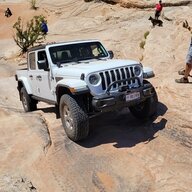
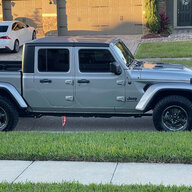
I have a 2022 Gladiator Sport w/ Manual transmission and I've been looking for ways to add more power. While I don't think it necessarily NEEDS it, it is the one area where I think the truck could be improved upon. That said, I've always run 93 octane since brand new, and I felt that might've helped the engine feel a bit more peppy than it would have when running 87 - even with the manual transmission and standard gearing. I've since added the HikeIt throttle controller, and feel like this helped a lot too - most of the low end 'lag' is now gone - and accelerating from stop lights isn't so sluggish. If anything, depending on the setting, it can now feel too jerky.
Since I have a 2022 model I figured I wouldn't be able to use any of the Supercharger kits because of the GPEC5 ECU. However, I just checked it after all this time, and it seems like I actually have the older GPEC2A version in my truck despite it being a mid-2022 build. So, I am now reconsidering a Supercharger, but am really torn based on the overwhelming number of issues people seem to be having. Now, it's totally possible that there are tons of Gladiators out there running superchargers just fine and have no reason to complain on the forums. But, I suspect that probably isn't the case.
Based on what I've read, it seems like most of the issues are due to the tunes - either the ones supplied by the manufacturer or even custom tunes done by tuners. What I am trying to determine is - what exactly is the root cause of these tunes leading to failures?
Now, for context, I come from the Subaru community where aftermarket upgrades and tunes are very very common. In stock form, the WRX/STI platforms have iffy reliability - some of it is hardware related (weak ringlands), but a lot of it is due to the factory tune. Generally, for those cars, even "off-the-shelf" aftermarket tunes are kind of considered last resorts, and everyone typically gets a "pro-tune" done by an actual tuner that is specific to their car, their mods, their elevation, fuel, etc. Once that's done, assuming you don't abuse the car, reliability is pretty good.
But, the things that tend to be common across most of the failures for those cars is (1) not letting the car fully warm up before really getting into boost, (2) partial-throttle high load situations where boost continues to build but no additional fuel is being sent - this is mostly due to the transition from open loop to closed loop that is inherent in the ECU's, and (3) general poor maintenance like too infrequent oil changes, running the wrong oil weight, bad gas, etc.
Basically - the issues are either user error, or bad tunes. Rarely bad hardware (unless you install something that requires a tune/retune and you fail to do that).
Are these the same things that are causing the supercharged Gladiators to fail too? Or, is there something inherently wrong with either the stock engine or supercharger kit hardware that is the cause? I know that some of the folks here have run custom tunes and still had failures - and I'm wondering if maybe they were caused by something unrelated to the tune like not letting the car warm up, or partial throttle-full boost situations, etc.
Since I have a 2022 model I figured I wouldn't be able to use any of the Supercharger kits because of the GPEC5 ECU. However, I just checked it after all this time, and it seems like I actually have the older GPEC2A version in my truck despite it being a mid-2022 build. So, I am now reconsidering a Supercharger, but am really torn based on the overwhelming number of issues people seem to be having. Now, it's totally possible that there are tons of Gladiators out there running superchargers just fine and have no reason to complain on the forums. But, I suspect that probably isn't the case.
Based on what I've read, it seems like most of the issues are due to the tunes - either the ones supplied by the manufacturer or even custom tunes done by tuners. What I am trying to determine is - what exactly is the root cause of these tunes leading to failures?
Now, for context, I come from the Subaru community where aftermarket upgrades and tunes are very very common. In stock form, the WRX/STI platforms have iffy reliability - some of it is hardware related (weak ringlands), but a lot of it is due to the factory tune. Generally, for those cars, even "off-the-shelf" aftermarket tunes are kind of considered last resorts, and everyone typically gets a "pro-tune" done by an actual tuner that is specific to their car, their mods, their elevation, fuel, etc. Once that's done, assuming you don't abuse the car, reliability is pretty good.
But, the things that tend to be common across most of the failures for those cars is (1) not letting the car fully warm up before really getting into boost, (2) partial-throttle high load situations where boost continues to build but no additional fuel is being sent - this is mostly due to the transition from open loop to closed loop that is inherent in the ECU's, and (3) general poor maintenance like too infrequent oil changes, running the wrong oil weight, bad gas, etc.
Basically - the issues are either user error, or bad tunes. Rarely bad hardware (unless you install something that requires a tune/retune and you fail to do that).
Are these the same things that are causing the supercharged Gladiators to fail too? Or, is there something inherently wrong with either the stock engine or supercharger kit hardware that is the cause? I know that some of the folks here have run custom tunes and still had failures - and I'm wondering if maybe they were caused by something unrelated to the tune like not letting the car warm up, or partial throttle-full boost situations, etc.
Sponsored