
Sponsored

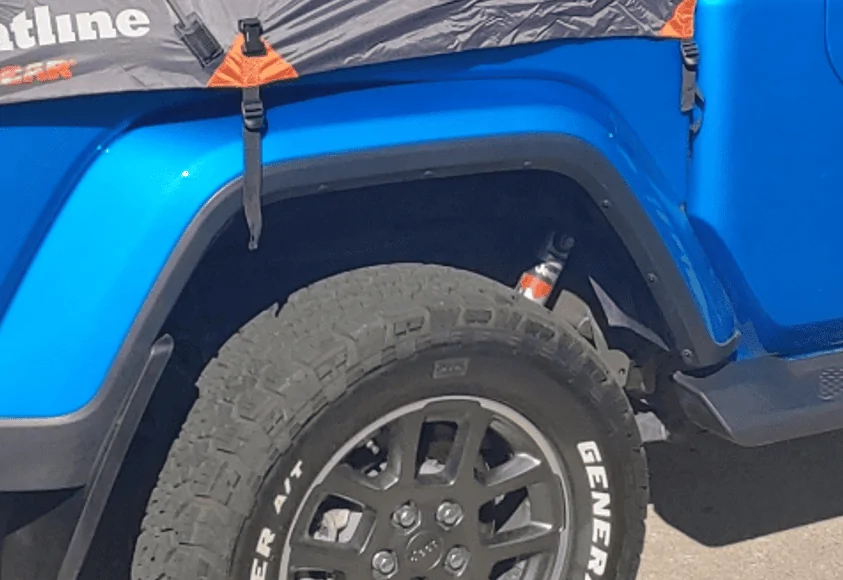
Are those shocks installed upside down?

MadMax

Well-Known Member
First Name
John
Joined
Aug 19, 2019
Threads
15
Messages
75
Reaction score
105
Location
Beaumont, Texas
Vehicle(s)
2020 Gladiator Sport S
Vehicle Showcase
1
So, ok, I'm a newbie when it comes to knowledge of off road components of the suspension. But...I've seen photos, and my own vehicle, where shocks are mounted upside down (piston rod mounted on the top mount and cylinder on the bottom mount). And on other vehicles I've seen the shocks mounted with the cylinder on the top mount and the logo of the shock can be seen through the wheel well. So...why are some shocks mounted upside down and some right side up? Can they be mounted either way? or are some shocks designed to be installed upside down and not right side up?
Sponsored

 

ACAD_Cowboy

Well-Known Member
First Name
Francis
Joined
May 1, 2019
Threads
22
Messages
1,414
Reaction score
1,960
Location
NY
Vehicle(s)
15 jkur
Shock orientation shouldn't make a difference to operation. Packaging is another matter.
 

Renegade

Well-Known Member
First Name
Zac
Joined
Sep 11, 2017
Threads
38
Messages
3,615
Reaction score
4,816
Location
Signal Mountain, TN
Vehicle(s)
2020 JT
Build Thread
Link
Traditionally, hydro shocks are mounted with the shaft up, and nitrogen charged shocks are mounted with the shaft down. I’m sure there are specific deviations from this.
 

WhatExit?

Well-Known Member
First Name
Dan
Joined
Sep 13, 2018
Threads
54
Messages
1,943
Reaction score
2,688
Location
48th State
Vehicle(s)
2020 JT Rubicon Launch Edition - Granite Crystal Metallic | 2017 Ford Raptor SuperCrew - Metallic
Vehicle Showcase
3

ACAD_Cowboy

Well-Known Member
First Name
Francis
Joined
May 1, 2019
Threads
22
Messages
1,414
Reaction score
1,960
Location
NY
Vehicle(s)
15 jkur
Okay so looking at it that way, you'd mount the can at the top so crud falls or is washed away from the wiper seal for the shaft.

It makes no difference from a "strength" view as the forces should NEVER be being transmitted through the shock, you know unless you've done something very bad.
 

Sponsored

Jimmy

Active Member
Joined
Nov 17, 2019
Threads
1
Messages
42
Reaction score
51
Location
CO
Vehicle(s)
1994 Land Rover Discovery, 2009 Toyota Tacoma
Some shocks can be mounted with the can up or down, and some cannot. Just need to understand the technology within for the reason why.
 

Demo_slug

Well-Known Member
First Name
Greg
Joined
Feb 2, 2020
Threads
3
Messages
125
Reaction score
196
Location
SF Bay Area, CA
Vehicle(s)
Gladiator 2020
Vehicle Showcase
1
twin tube vs mono tube shocks. Don’t run a twin tube upside down.
 

Knox

Active Member
First Name
Keith
Joined
Feb 11, 2022
Threads
1
Messages
37
Reaction score
16
Location
North Bend
Vehicle(s)
2020 gladiator rubicon
Occupation
Engineer
It really doesn’t matter, but there are justifications. 1. You can’t mount a shock reservoir to a shaft, so reservoir shocks need to be mounted with the shock body bolted to the frame, not the axle. 2. The shock body and oil weigh more than the shaft, and it’s best to minimize unsprung weight. 3. Mounting the body filled with oil to a violently shaking axle seems less than ideal. 4. Pointing the seal down could potentially decrease intrusion of debris into the shock. Maybe.
 

sass JT

Banned
Banned
First Name
Bryan
Joined
Jun 12, 2019
Threads
31
Messages
1,688
Reaction score
2,896
Location
Colorado
Website
youtube.com
Vehicle(s)
2020 Jeep Gladiator Rubicon
Build Thread
Link
Occupation
MWD
Thread alive!!!! :devil:
I live by what manufactures say. They put a label or stamp the housing, put the shock body so you can read the info.
 

ACAD_Cowboy

Well-Known Member
First Name
Francis
Joined
May 1, 2019
Threads
22
Messages
1,414
Reaction score
1,960
Location
NY
Vehicle(s)
15 jkur
Not the worst necropost I've been part of.

It really doesn’t matter, but there are justifications. 1. You can’t mount a shock reservoir to a shaft, so reservoir shocks need to be mounted with the shock body bolted to the frame, not the axle. 2. The shock body and oil weigh more than the shaft, and it’s best to minimize unsprung weight. 3. Mounting the body filled with oil to a violently shaking axle seems less than ideal. 4. Pointing the seal down could potentially decrease intrusion of debris into the shock. Maybe.
So just thinking about nearly every live axle and mcpherson strut suspension I've ever touched or supplied parts for, we run into some logic traps.

Modern gas charged shock dampers utilize some pretty advanced seals so that the nitrogen overpressure doesn't spit all the oil past the shaft seal. In effect this means orientation doesn't matter. However looking at my own rig, the damper body, the reservoirs, are mounted down on the axle side. This would intuitivly lead one to deduce that axle motion is going to agitate the oil regardless of where the unit is mounted. Being down would get the body into increased airflow and away from hot engine components. Resistance through distance and all that. Yes I would grant you that mounting to the body/frame would shift the load from unsprung to sprung and all of the advantages that gives. The Mojave has the remote resevoirs tucked up by the bumper for protection and cooling.

Ultimatly it's packaging in my opinion, how to best get the bits tucked away.
 

Sponsored

Knox

Active Member
First Name
Keith
Joined
Feb 11, 2022
Threads
1
Messages
37
Reaction score
16
Location
North Bend
Vehicle(s)
2020 gladiator rubicon
Occupation
Engineer
Not the worst necropost I've been part of.


So just thinking about nearly every live axle and mcpherson strut suspension I've ever touched or supplied parts for, we run into some logic traps.

Modern gas charged shock dampers utilize some pretty advanced seals so that the nitrogen overpressure doesn't spit all the oil past the shaft seal. In effect this means orientation doesn't matter. However looking at my own rig, the damper body, the reservoirs, are mounted down on the axle side. This would intuitivly lead one to deduce that axle motion is going to agitate the oil regardless of where the unit is mounted. Being down would get the body into increased airflow and away from hot engine components. Resistance through distance and all that. Yes I would grant you that mounting to the body/frame would shift the load from unsprung to sprung and all of the advantages that gives. The Mojave has the remote resevoirs tucked up by the bumper for protection and cooling.

Ultimatly it's packaging in my opinion, how to best get the bits tucked away.
And perhaps aesthetics. Many pay $3000 just to see their shocks. They’d be harder to see down on the axle.
 

ShadowsPapa

Well-Known Member
First Name
Bill
Joined
Oct 12, 2019
Threads
247
Messages
40,442
Reaction score
53,860
Location
Runnells, Iowa
Vehicle(s)
'25 JTMX, '23 JLU 4xe, '82 SX4, '73 Javelin
Occupation
Retired auto mechanic, frmr gov't ntwrk security admin
Vehicle Showcase
3
And perhaps aesthetics. Many pay $3000 just to see their shocks. They’d be harder to see down on the axle.
Damn, ya got me...........

Jeep Gladiator Are those shocks installed upside down? 1655302387408


Jeep Gladiator Are those shocks installed upside down? 1655302453330


But seriously - and I've not kept up on shock technology of the last 10 years or so - is there still a possibility of the oil "foaming" at all (not talking the 2,000/shock shock absorbers) and if so - should that be orientated away from the valving inside?
I replace 'em, I don't repair them or study them unless necessary so I know for a fact there are members here who are shock experts and know exactly how they are engineered and can name every part, etc.

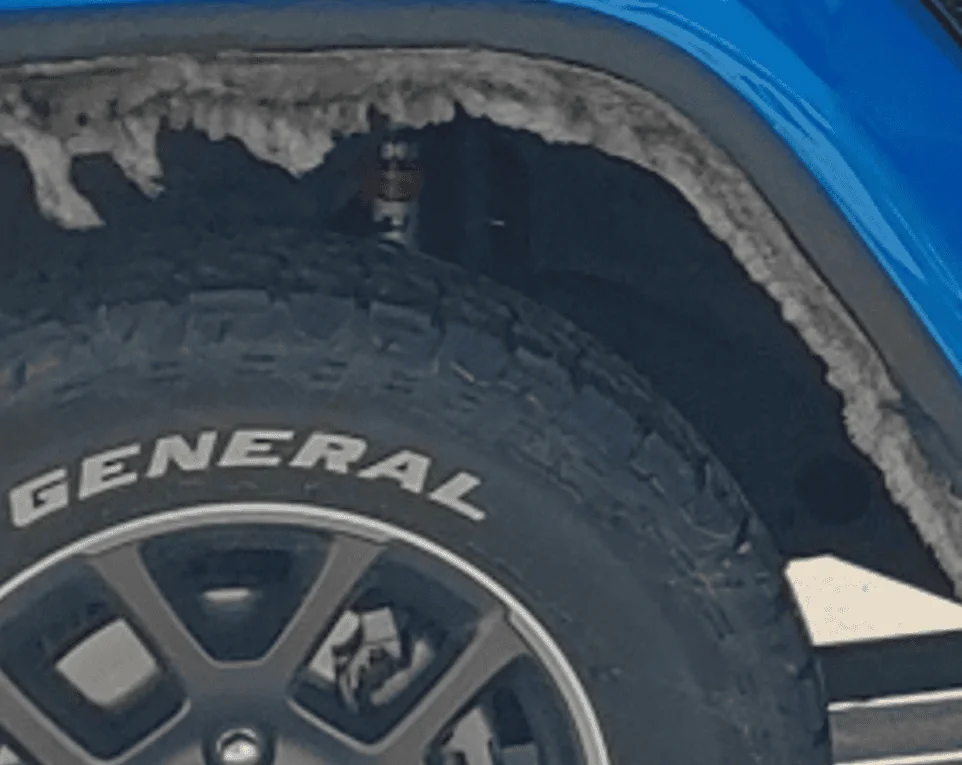
And as far as the seals and rods - around here, you get a lot of salt and sand spray in the winter. I would imagine that it would make sense to orient the seal and shaft so that stuff doesn't settle down onto the top of the shock body, rotting away at the shaft and messing with the seal. This stuff is abrasive.
Disclaimer - the above paragraph is speculation, based on experiences and observations of shocks and other parts, but is not in fact proven.
 

Knox

Active Member
First Name
Keith
Joined
Feb 11, 2022
Threads
1
Messages
37
Reaction score
16
Location
North Bend
Vehicle(s)
2020 gladiator rubicon
Occupation
Engineer
Great questions. Having an internal floating piston with high pressure nitrogen on one side keeps the oil under pressure and free of air. And if there was a possibility of contaminants finding their way in, it would be very difficult with 200+ psi pressing against the seals. Your basic oem Fox shock has internal floating pistons. The downside to having that in the shock body like the oem shocks is that it limits the travel some, and limits the amount of oil inside which could cause the shock to run warmer. Most of our Jeeps don’t see high shock temps, so not really a big issue.
As for adjustability on shocks, if they’re tuned right it should not be needed. But it makes fine tuning easier, and allows us gladiator folks to tune for the load.
There’s much debate around tuning for road vs tuning for off road. I think that’s nonsense. Off road could be going slow over boulders (light tune), or hauling ass through the desert (firm tune). On road could be riding like a Cadillac (light tune), or tuned for performance (firm tune). Essentially, you run as little damping as needed for your terrain. Damping only prevents the Jeep from diving, bouncing, bottoming, pogoing, leaning, etc. you run enough to limit these, but there’s always compromise. If you tune a shock to drive 100 mph through the desert, it’s going to be firm on normal low speed roads which could lead to discomfort.
salt and chemicals do kill shocks. You can actually wax them as recommended by some tuners.
 

ShadowsPapa

Well-Known Member
First Name
Bill
Joined
Oct 12, 2019
Threads
247
Messages
40,442
Reaction score
53,860
Location
Runnells, Iowa
Vehicle(s)
'25 JTMX, '23 JLU 4xe, '82 SX4, '73 Javelin
Occupation
Retired auto mechanic, frmr gov't ntwrk security admin
Vehicle Showcase
3
Great questions. Having an internal floating piston with high pressure nitrogen on one side keeps the oil under pressure and free of air. And if there was a possibility of contaminants finding their way in, it would be very difficult with 200+ psi pressing against the seals. Your basic oem Fox shock has internal floating pistons. The downside to having that in the shock body like the oem shocks is that it limits the travel some, and limits the amount of oil inside which could cause the shock to run warmer. Most of our Jeeps don’t see high shock temps, so not really a big issue.
As for adjustability on shocks, if they’re tuned right it should not be needed. But it makes fine tuning easier, and allows us gladiator folks to tune for the load.
There’s much debate around tuning for road vs tuning for off road. I think that’s nonsense. Off road could be going slow over boulders (light tune), or hauling ass through the desert (firm tune). On road could be riding like a Cadillac (light tune), or tuned for performance (firm tune). Essentially, you run as little damping as needed for your terrain. Damping only prevents the Jeep from diving, bouncing, bottoming, pogoing, leaning, etc. you run enough to limit these, but there’s always compromise. If you tune a shock to drive 100 mph through the desert, it’s going to be firm on normal low speed roads which could lead to discomfort.
salt and chemicals do kill shocks. You can actually wax them as recommended by some tuners.
Good info, thanks.
I'd heard of waxing - but just never did it. Maybe because my JT gets driven through our winter crap, I should think about it. The one pic I posted above shows the environment mine sees...
I try to knock that stuff off our vehicles before they go into the garage because the salt pits the concrete and causes flaking.
 

ACAD_Cowboy

Well-Known Member
First Name
Francis
Joined
May 1, 2019
Threads
22
Messages
1,414
Reaction score
1,960
Location
NY
Vehicle(s)
15 jkur


Top