Sponsored

Decided to supercharge over a swappina to a Hemi

ericw.

Well-Known Member
First Name
Eric
Joined
Aug 18, 2025
Threads
5
Messages
356
Reaction score
534
Location
USA
Vehicle(s)
23 Gladiator Rubicon Diesel, JKU, Audi S7, Mercedes AMG GLB
Build Thread
Link
You meanie!

I have to keep JSCAN up and trigger the fan for long drives with my plow on the front if I don't want to freeze to death in the cabin.
Because the outside temp sensor is up front, and the plow creates a low pressure area just ahead of the grill, hot engine bay air is pulled forward over that temp sensor.
I've seen snow on the ground on 101 degree days! Well, according to my Jeep it was over 100 degrees, in reality it was about 0 degrees.
Most recently I was driving in 15 degrees and that sensor read 84
Now that wouldn't be a big deal except the HVAC uses that temperature reading, so it shuts your heat off and tries to give you fresh air inside. Last time my wife was with me and we had the plow in, she had a blanket over her legs and mittens on.
So I trigger the high speed fan to draw cold air across that sensor so we can have heat in the truck.
Engine temp climbs as well it typically peaks at about 230 or so, so I don't worry about that part.
lol a big meanie.

That's an interesting problem to have and wouldn't expect in freezing temps.

In my JK I saw as high as 265* for short spans climbing highway hills near Moab, and I was in a 2 door and wasn't towing anything. These little fellas can make some HEAT in the right conditions.
I saw 265 once on the million dollar highway and pulled off to let it cool down. lol

Unrelated but forever ago when I was taught to drive I was always taught to anticipate hills (when you can see them) and speed up a bit prior to hitting the climb to avoid momentum loss. Seems like you're in the same camp. Decades later and I'm still doing this, but I've noticed lots of other drivers just step on it a bit more and send their RPM's to the roof.

Just cool to hear it from someone else, anywho, carry on!
I didn't know that was a known strategy. I just sort of figured it out after so many long painful drives with an overloaded pentastar.

I got pretty good at it on our last trip, to where it was almost just happening on instinct. If my trips were longer or I was a full-time overlander, I imagine the 3.6 could suffice if I established that driving style as my normal but... going home and driving my other cars makes me wonder why I'm dealing with it. lol


The other side that worries me is that, my wife isn't a car person. She's not a tech person. She very... simple šŸ˜…... and would not be able to figure out shift points if there was an emergency that I couldn't drive. That always weighed on me a bit because if something happened to me, even if I just caught a flu on a trip, I don't have many back-up plans that wouldn't cause even more of a burden.

So here I am slow building a diesel.
Sponsored

 
Last edited:

OP
OP
Flyin6

Flyin6

Well-Known Member
First Name
Don
Joined
Jan 2, 2023
Threads
17
Messages
1,354
Reaction score
1,849
Location
Kintuckee
Vehicle(s)
22AEV JT370, 24 Ram 3500, 22 Caddy XT6
Build Thread
Link
Occupation
Aviator, rotary and fixed wing, Writer
The 3.6L Pentastar engine is generally considered a poor choice for supercharging due to its high stock compression ratio, internal components not designed for the added stress, and potential difficulties in reliable engine management tuning.
Key reasons why supercharging the 3.6L Pentastar can be problematic include:
  • High Compression Ratio: The engine has a high compression ratio from the factory, which makes it prone to detonation (engine knocking) when boost is added. While lower boost levels (around 5-7 psi) might be manageable with appropriate tuning and high-octane fuel, higher boost significantly increases the risk of engine failure.
  • Weak Internal Components: The stock internal components, such as pistons and cylinder liners, are not built to withstand the substantially increased cylinder pressures and temperatures that come with forced induction. Adding significant power can lead to issues like cracked pistons or cylinder liners.
  • Rocker Arm and Valvetrain Issues: The engine is already known for common problems with rocker arms and lifters, even in naturally aspirated applications. The added stress from a supercharger can exacerbate these pre-existing weaknesses, leading to premature valvetrain failure.
  • Tuning Challenges: Safely and effectively tuning the engine for forced induction is a significant challenge. Erratic fueling and misfires can lead to severe engine damage, including hydro-locking (where a cylinder fills with fuel, causing catastrophic failure). Off-the-shelf tunes are often considered a "dice roll" in terms of long-term reliability.
  • Heat Management: The increased power output from a supercharger generates significantly more heat, which puts extra strain on the cooling system components (e.g., water pump, oil cooler housing), which themselves are potential failure points in the stock engine.
For those seeking more power, many experienced owners and mechanics often recommend an engine swap to a V8 (like a HEMI) as a more reliable, albeit more expensive, path to achieving substantial horsepower gains.
To most of the above: I disagree and the information is not correct. It seems like the result of some Ai search that used a myriad of sources, some of which were opinion and speculation.

Lets take this apart piece by piece:

  • High Compression Ratio: The engine has a high compression ratio from the factory, which makes it prone to detonation (engine knocking) when boost is added. While lower boost levels (around 5-7 psi) might be manageable with appropriate tuning and high-octane fuel, higher boost significantly increases the risk of engine failure
High compression in itself does not lead to detonation, the Octane rating of the fuel does. So does a 12:1 CR motor in my old Ninja motorcycle detonate? Nope, I use 93 octane and its fine.

Weak Internal Components: The stock internal components, such as pistons and cylinder liners, are not built to withstand the substantially increased cylinder pressures and temperatures that come with forced induction.

This motor was initially designed to be turbocharged. It is a strong casting with internal parts that are more than up to the task. Cast pistons are routinely used in turbo- and supercharged applications, which depend heavily on the casting process and metallurgy.

This is fun!


  • Rocker Arm and Valvetrain Issues: The engine is already known for common problems with rocker arms and lifters, even in naturally aspirated applications. The added stress from a supercharger can exacerbate these pre-existing weaknesses, leading to premature valvetrain failure.
Snake oil messaging!
Supercharging, Nitrous, Turbocharging, or adding stellar matter does not affect the cam, rocker arms, springs, and the rest of the valvetrain. Lubrication, metallurgy, and RPM do. No camshaft I ever knew had any idea what was going on in the combustion chamber!

  • Tuning Challenges: Safely and effectively tuning the engine for forced induction is a significant challenge. Erratic fueling and misfires can lead to severe engine damage, including hydro-locking (where a cylinder fills with fuel, causing catastrophic failure). Off-the-shelf tunes are often considered a "dice roll" in terms of long-term reliability.
Yep, you're correct here.
But
The same holds true if the motor is not boosted!
The quality of the tune affects all motors, whether boosted, operated in orbit, or underwater. So why does supercharging add complexity to the tune?


  • Heat Management: The increased power output from a supercharger generates significantly more heat, which puts extra strain on the cooling system components (e.g., water pump, oil cooler housing), which themselves are potential failure points in the stock engine.
Yep, I agree with ya on this one...But, same same for any motor. In a previous post a gentleman was talking about his normally aspirated motor hitting 250 degrees in the desert! I'll bet I can find an Eskimo driving his boosted Gladiator around the Arctic Circle who has to put a blanket on the grill to get some heat in the cab.

You see, this illustration clearly shows how environmental conditions are the real factors, not what the motor is doing.

I don't know, some people like to go negative, and if that works for them, fine. But for me, I'm going to look for the positives and solve the problems that may (or may not) arise.
 
Last edited:

JTdiRtyD

Well-Known Member
First Name
Wes
Joined
Dec 15, 2024
Threads
36
Messages
1,131
Reaction score
2,079
Location
MN
Vehicle(s)
'22 JTRD
Build Thread
Link
Occupation
Army vet, low-code dev
I don't know, some people like to go negative, and if that works for them, fine. But for me, I'm going to look for the positives and solve the problems that may (or may not) arise.
This forum is full of know-it-alls that can't help but regurgitate their "factual" opinions. Some threads remind me of stubborn adolescent teens who just have to get the last word in.

And I'll admit, I'm guilty of some of it, but I also try to shut up after a couple replies. Give my .02c and then bounce.
 
OP
OP
Flyin6

Flyin6

Well-Known Member
First Name
Don
Joined
Jan 2, 2023
Threads
17
Messages
1,354
Reaction score
1,849
Location
Kintuckee
Vehicle(s)
22AEV JT370, 24 Ram 3500, 22 Caddy XT6
Build Thread
Link
Occupation
Aviator, rotary and fixed wing, Writer
This forum is full of know-it-alls that can't help but regurgitate their "factual" opinions. Some threads remind me of stubborn adolescent teens who just have to get the last word in.

And I'll admit, I'm guilty of some of it, but I also try to shut up after a couple replies. Give my .02c and then bounce.
I think you get it regarding your observations of the "well-informed."

Thinking and critical decision-making are lost skills. The smartphone is no substitute for the educated mind.

I look for those with gray matter and interact with them...And have fun with the rest! ;-)))
 
Last edited:

ChrisNLA

Well-Known Member
First Name
Chris
Joined
Jun 7, 2022
Threads
17
Messages
2,145
Reaction score
3,874
Location
Louisiana
Vehicle(s)
2022 JT Sport Max Tow
Build Thread
Link
  • Rocker Arm and Valvetrain Issues: The engine is already known for common problems with rocker arms and lifters, even in naturally aspirated applications. The added stress from a supercharger can exacerbate these pre-existing weaknesses, leading to premature valvetrain failure.
Snake oil messaging!
Supercharging, Nitrous, Turbocharging, or adding stellar matter does not affect the cam, rocker arms, springs, and the rest of the valvetrain. Lubrication, metallurgy, and RPM do. No camshaft I ever knew had any idea what was going on in the combustion chamber!

Well, to be fair - high enough boost pressures can adversely affect valve operation if the springs can't withstand the additional force behind them. That can also contribute to valve float at high enough RPM.

This is not going to be an issue in this build 🤣
 

Sponsored

ShadowsPapa

Well-Known Member
First Name
Bill
Joined
Oct 12, 2019
Threads
247
Messages
40,514
Reaction score
54,044
Location
Runnells, Iowa
Vehicle(s)
'25 JTMX, '23 JLU 4xe, '82 SX4, '73 Javelin
Occupation
Retired auto mechanic, frmr gov't ntwrk security admin
Vehicle Showcase
3
Well, to be fair - high enough boost pressures can adversely affect valve operation if the springs can't withstand the additional force behind them. That can also contribute to valve float at high enough RPM.

This is not going to be an issue in this build 🤣
Are you suggesting the SC can blow the intake valves open? Oh. Fun! Damn, what sort of SC are you using??
If you float the valves on a 3.6 - let me know, I'll put on my hard hat.
 

ChrisNLA

Well-Known Member
First Name
Chris
Joined
Jun 7, 2022
Threads
17
Messages
2,145
Reaction score
3,874
Location
Louisiana
Vehicle(s)
2022 JT Sport Max Tow
Build Thread
Link
Are you suggesting the SC can blow the intake valves open? Oh. Fun! Damn, what sort of SC are you using??
If you float the valves on a 3.6 - let me know, I'll put on my hard hat.
The 3.6 likely could never handle that sort of boost. You'd be carrying it home in a bucket, after picking it up with a broom and dust pan.

I'm talking 20-25+ pounds in an LS V8. I have some friends that run that kinda stuff. It's another world. Those are thousand HP to the wheel vehicles, though, lol.

That's why I said plausible - just not in relation to Don's truck, lol.
 

JTGuy

Well-Known Member
First Name
Pascual
Joined
Jul 23, 2023
Threads
57
Messages
1,754
Reaction score
1,681
Location
San Dimas CA
Vehicle(s)
20022 Jeep Gladiator
Occupation
Manager
As far as a SC goes in Calif. few are CARB approved. To SC the 3.6 Penta with its high compression ratio could be a mess. Getting the computer to play nice with it also. It's about a $12K install here and could take out the engine.
 

Stan H

Well-Known Member
First Name
Stanley
Joined
Oct 26, 2022
Threads
10
Messages
5,517
Reaction score
5,497
Location
WV
Vehicle(s)
Gladiator Rubicon 2021
Occupation
Safety Consultant
I think you get it regarding your observations of the "well-informed."

Thinking and critical decision-making are lost skills. The smartphone is no substitute for the educated mind.

I look for those with gray matter and interact with them...And have fun with the rest! ;-)))
Thats me Funning when needed and getting serious when needed.
Hey when it comes to wise cracking look at it like this someone has to do it might as well be us šŸ˜‚
 

Stan H

Well-Known Member
First Name
Stanley
Joined
Oct 26, 2022
Threads
10
Messages
5,517
Reaction score
5,497
Location
WV
Vehicle(s)
Gladiator Rubicon 2021
Occupation
Safety Consultant
To most of the above: I disagree and the information is not correct. It seems like the result of some Ai search that used a myriad of sources, some of which were opinion and speculation.

Lets take this apart piece by piece:

  • High Compression Ratio: The engine has a high compression ratio from the factory, which makes it prone to detonation (engine knocking) when boost is added. While lower boost levels (around 5-7 psi) might be manageable with appropriate tuning and high-octane fuel, higher boost significantly increases the risk of engine failure
High compression in itself does not lead to detonation, the Octane rating of the fuel does. So does a 12:1 CR motor in my old Ninja motorcycle detonate? Nope, I use 93 octane and its fine.

Weak Internal Components: The stock internal components, such as pistons and cylinder liners, are not built to withstand the substantially increased cylinder pressures and temperatures that come with forced induction.

This motor was initially designed to be turbocharged. It is a strong casting with internal parts that are more than up to the task. Cast pistons are routinely used in turbo- and supercharged applications, which depend heavily on the casting process and metallurgy.

This is fun!


  • Rocker Arm and Valvetrain Issues: The engine is already known for common problems with rocker arms and lifters, even in naturally aspirated applications. The added stress from a supercharger can exacerbate these pre-existing weaknesses, leading to premature valvetrain failure.
Snake oil messaging!
Supercharging, Nitrous, Turbocharging, or adding stellar matter does not affect the cam, rocker arms, springs, and the rest of the valvetrain. Lubrication, metallurgy, and RPM do. No camshaft I ever knew had any idea what was going on in the combustion chamber!

  • Tuning Challenges: Safely and effectively tuning the engine for forced induction is a significant challenge. Erratic fueling and misfires can lead to severe engine damage, including hydro-locking (where a cylinder fills with fuel, causing catastrophic failure). Off-the-shelf tunes are often considered a "dice roll" in terms of long-term reliability.
Yep, you're correct here.
But
The same holds true if the motor is not boosted!
The quality of the tune affects all motors, whether boosted, operated in orbit, or underwater. So why does supercharging add complexity to the tune?


  • Heat Management: The increased power output from a supercharger generates significantly more heat, which puts extra strain on the cooling system components (e.g., water pump, oil cooler housing), which themselves are potential failure points in the stock engine.
Yep, I agree with ya on this one...But, same same for any motor. In a previous post a gentleman was talking about his normally aspirated motor hitting 250 degrees in the desert! I'll bet I can find an Eskimo driving his boosted Gladiator around the Arctic Circle who has to put a blanket on the grill to get some heat in the cab.

You see, this illustration clearly shows how environmental conditions are the real factor, not what the motor is doing.

I don't know, some people like to go negative, and if that works for them, fine. But for me, I'm going to look for the positives and solve the problems that may (or may not) arise.
I am extremely intrigued and can't wait to read results postings .
I have tossed a tuner around for awhile now . If everything lines up your idea isn't out of the realm of possibilities either.
Anxiously waiting.
When are ya doing the install?
 

Sponsored

ShadowsPapa

Well-Known Member
First Name
Bill
Joined
Oct 12, 2019
Threads
247
Messages
40,514
Reaction score
54,044
Location
Runnells, Iowa
Vehicle(s)
'25 JTMX, '23 JLU 4xe, '82 SX4, '73 Javelin
Occupation
Retired auto mechanic, frmr gov't ntwrk security admin
Vehicle Showcase
3
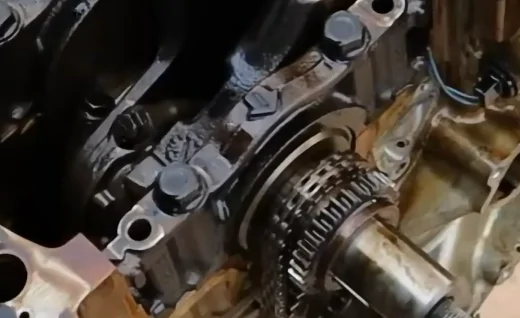
Gee, if only I could tweak dynamic compression and change combustion chamber pressures by managing valve lift and valve timing............ I wonder if 70 degrees of intake valve timing variation is enough. Hmmmm.
I wonder - would 4 bolt mains help? If so, would 6 bolt mains be even better, with a block girdle. I wonder why FCA didn't think of that - oh, wait, they did!

Jeep Gladiator Decided to supercharge over a swappina to a Hemi 1765479503150-6d
 

ChrisNLA

Well-Known Member
First Name
Chris
Joined
Jun 7, 2022
Threads
17
Messages
2,145
Reaction score
3,874
Location
Louisiana
Vehicle(s)
2022 JT Sport Max Tow
Build Thread
Link
Gee, if only I could tweak dynamic compression and change combustion chamber pressures by managing valve lift and valve timing............ I wonder if 70 degrees of intake valve timing variation is enough. Hmmmm.
I wonder - would 4 bolt mains help? If so, would 6 bolt mains be even better, with a block girdle. I wonder why FCA didn't think of that - oh, wait, they did!

1765479503150-6d.webp

Don't bring sensible things like variable valve timing and variable valve lift into this, Bill.

Or a shit load of main cap bolts, either.

🤣
 
OP
OP
Flyin6

Flyin6

Well-Known Member
First Name
Don
Joined
Jan 2, 2023
Threads
17
Messages
1,354
Reaction score
1,849
Location
Kintuckee
Vehicle(s)
22AEV JT370, 24 Ram 3500, 22 Caddy XT6
Build Thread
Link
Occupation
Aviator, rotary and fixed wing, Writer
I am extremely intrigued and can't wait to read results postings .
I have tossed a tuner around for awhile now . If everything lines up your idea isn't out of the realm of possibilities either.
Anxiously waiting.
When are ya doing the install?
When? Good question.
Ripp has not shipped me the supercharger yet. They had a ton of orders from black friday, which they are still building/shipping. Mine is in that pile somewhere.

Once I get it, I'll be able to remove and ship off the ECM to HP Tuners, which will be step number one—following that, I will start the teardown and installation. Of course, in the middle of all this, we have Christmas and New Year's. I will devote a bunch of time to family. One of my sons who serves will be home, so I plan to give him my time.
I'll have to hustle because later on in January, I get a new knee installed. That should slow me down for at least a couple of days! ;-)
 
OP
OP
Flyin6

Flyin6

Well-Known Member
First Name
Don
Joined
Jan 2, 2023
Threads
17
Messages
1,354
Reaction score
1,849
Location
Kintuckee
Vehicle(s)
22AEV JT370, 24 Ram 3500, 22 Caddy XT6
Build Thread
Link
Occupation
Aviator, rotary and fixed wing, Writer
Got this message from RIPP this morning:


Hi Don, Thank you for your order! We don't spend much time on forums anymore but, yeah there's still a community of people that use them. Some good information for sure but with any social media you get a lot of noise as well. We honestly don't have the man power to span the forums and talk shop with everyone. Were a team of 6 people, 3 are part time, so all our time is spent in R&D, tuning, cutting welding, powdercoating, sales, assembly, shipping, tech support etc... we simply don't have the energy to participate on socials as much as we would like (it's embarrassing, but that's the truth). But what we do best if making a great supercharger kit and high performance upgrades for MOPAR vehicels. We have assembled and shipped close to 20,000! 3.6l superchargers since 2012. Nothing beats the feeling of a rig, with a massive 42" tire, flying down the road effortlessly! a little bit of boost to tow our boats and toy haulers up the long Appalachain hills, reliably! But like anything else you'll see some skeptics on-line, it's unavoidable this day in age. But I'm confident nothing on this kit will fail, and if by any chance it does, we will replace it as quick as possible. We don't let anything warranty related sit, any customer that had any type of supercharger related problem (and it's rare) will tell you replacement part will be in there hands next day. Most skeptics (haters) have little to no experience with their vehicles or with upgrades such as a superchargers, upgraded engines, huge tires and axles etc..But we live this life, and most people just talk about it. Your going to have a good result, probably 100hp increase (were not building a race car after all, the 3.6 dodge chargers and challengers we can push to 460hp lol)

One thing that’s absolutely critical after upgrading your Jeep and this is extremely important is understanding a known limitation in the engine’s oiling and valvetrain system. (I’m not sure if we previously discussed this?), but much like the 5.7L and 6.4L Hemi engines, the 3.6L also has an inherent valvetrain weak point. The V8 ā€œlifter issuesā€ are well known, 3.6 has the same thing, They believe it's a camshaft hardness issue / rocker lifter issue. Either way to help avoid these problems, we strongly recommend upgrading your engine oil to 5W-40 and performing oil changes every 3,000–3,500 miles. The factory-recommended 0W-20 is not formulated for heavy duty or high stress use it’s mainly specified to reduce emissions and improve MPG for EPA ratings, not to provide maximum protection under load. Stop the use of 0w20, and upgrade to 5w40 to protect your engine.
 

Rcoe

Well-Known Member
First Name
Rich
Joined
May 29, 2025
Threads
12
Messages
116
Reaction score
229
Location
Michigan
Vehicle(s)
2019 Jl Rubibcon 2D - 2022 Jeep Gladiator Rubicon - 2020 Jeep Grand Cheroke
Once I get it, I'll be able to remove and ship off the ECM to HP Tuners, which will be step number one—
Have you thought about buying a spare PCM and sending it out, keeping your original as a backup?
Sponsored


Top