chorky
Well-Known Member
- First Name
- Chad
- Joined
- Feb 26, 2022
- Threads
- 175
- Messages
- 3,466
- Reaction score
- 3,801
- Location
- Montana
- Website
- www.youtube.com
- Vehicle(s)
- '22JTR, '06 LJ, '06 TJ GE
- Build Thread
- Link
- Occupation
- GIS Specialist
But considering the market is basically built for people to get a new vehicle every 5-10 years, I doubt it would be a corrosion resistant metal like you see on bridges and structural steel... Maybe just some really good coatings?That’s not necessarily correct. Corrosion resistant steel like Corten will form surface rust. That creates what is called a patina layer. The alloying elements in the steel are chosen to bond with the iron and carbon of the steel so that moisture can not bond with the iron and create iron oxide past a surface layer.
Normally when plain carbon steel rusts, the rust is soft and porous that allows moisture to move through it to the base metal and more rust is created when thhe water bonds with the iron. The patina of corrosion resistant steel in contrast is hard and dense and blocks furthure moisture incursion into the base metal.
Now steels that have alloying elements that completely prevent a patina start to fall into the family of steels known as stainless. The chemistry is different between the two, but the principle is similar. O
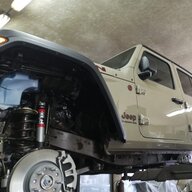
One thing that is interesting though, in my experience, is I always see rust in some form on frames. But, I rarely see rust on the underside of bodies. Bodies are usually steel. I'm not sure about the gladiator, but if you think about how many rocks get thrown up under the body and how much paint chipping there must be its surprising it doesn't rust more than the frame.
it would be neat to hear from some engineers at Jeep what they actually use.
Sponsored