Sponsored

3.0 Derating Problem SOLVED…(maybe)

OP
OP
Maximus Gladius

Maximus Gladius

Well-Known Member
First Name
Kevin
Joined
Jan 30, 2021
Threads
74
Messages
2,901
Reaction score
3,692
Location
Calgary, AB, Canada
Vehicle(s)
2021 JTR, 2023 JTR
It says 1% water wetter? So for our 11qt cooling system we only need 3.2oz? If that's the case, and especially if it is less effective at higher concentrations, I'd bet that almost everyone who's tried it is using way too much and that's why they aren't seeing results. Being that it's rarely below freezing where I live I think I might try dropping my coolant to 33% and adding 1% water wetter and see what happens.
From reading this through a couple times, my first take on their study is that:
1. Most, if not all of us have a 50/50 water/coolant mix and that has been the problem with the derating (over heating) problem. I have always since the 80’s, since driving, learned to maintain 50/50 mix.
2. if those who have tried this product and say it doesn’t work, probably didn’t do the 33% coolant to 67% water (more water, less coolant as report states) with one 15 ounce bottle added. (*check my math is correct)

Summit’s report states to replenish the super coolant every year…. Does that mean flush and do over or just keep adding a bottle every year??

Because I do live where temps drop to below -30c in the winter, my mix will keep that in mind when I test solution for freeze temps.
Sponsored

 

Zachanadandy

Well-Known Member
First Name
Zach
Joined
Oct 17, 2023
Threads
4
Messages
2,995
Reaction score
4,736
Location
Patterson, ca
Vehicle(s)
2023 gladiator Mojave
Occupation
Electrical foreman
From reading this through a couple times, my first take on their study is that:
1. Most, if not all of us have a 50/50 water/coolant mix and that has been the problem with the derating (over heating) problem. I have always since the 80’s, since driving, learned to maintain 50/50 mix.
2. if those who have tried this product and say it doesn’t work, probably didn’t do the 33% coolant to 67% water (more water, less coolant as report states) with one 15 ounce bottle added. (*check my math is correct)

Summit’s report states to replenish the super coolant every year…. Does that mean flush and do over or just keep adding a bottle every year??

Because I do live where temps drop to below -30c in the winter, my mix will keep that in mind when I test solution for freeze temps.
It still says 1% water wetter which is only 3.52oz of our cooling system though? I don't know that adding a 16oz bottle would hurt anything but that's 4.5% of the 11qt capacity. I ordered the hyper lube so I'll see what it says on the bottle but it seems like an engrossed bottle is 4.5x what they recommend for the water wetter. We are definitely better off with more water than antifreeze, but is there a negative effect of running more than 1% water wetter?
 
OP
OP
Maximus Gladius

Maximus Gladius

Well-Known Member
First Name
Kevin
Joined
Jan 30, 2021
Threads
74
Messages
2,901
Reaction score
3,692
Location
Calgary, AB, Canada
Vehicle(s)
2021 JTR, 2023 JTR
It still says 1% water wetter which is only 3.52oz of our cooling system though? I don't know that adding a 16oz bottle would hurt anything but that's 4.5% of the 11qt capacity. I ordered the hyper lube so I'll see what it says on the bottle but it seems like an engrossed bottle is 4.5x what they recommend for the water wetter. We are definitely better off with more water than antifreeze, but is there a negative effect of running more than 1% water wetter?
Ya, I’ve got some math to do when mixing for my 3.6. Geee, wouldn’t it be a “light bulb” moment to realize 50/50 has been the culprit?! Something else I’ve not read in this entire derating issue.
 

Zachanadandy

Well-Known Member
First Name
Zach
Joined
Oct 17, 2023
Threads
4
Messages
2,995
Reaction score
4,736
Location
Patterson, ca
Vehicle(s)
2023 gladiator Mojave
Occupation
Electrical foreman
Ya, I’ve got some math to do when mixing for my 3.6. Geee, wouldn’t it be a “light bulb” moment to realize 50/50 has been the culprit?! Something else I’ve not read in this entire derating issue.
Assuming the 11qt system is full of 50/50 mix, draining 4 quarts leaves 7qts of 50/50 or 3.5qts of coolant. Filling the 4qts back with water would be 7.5qts water and 3.5qts coolant. 32% coolant is close enough for me. Now the only real question is how much hyper lube? 1%/3.5 Oz or just go for the whole bottle?
 

Sweetums

Well-Known Member
Joined
Mar 30, 2023
Threads
28
Messages
2,004
Reaction score
4,313
Location
Utah
Vehicle(s)
'05 LJR, '21 JTDR, '00 VFR800, RSV4, '11 MTS 1200
Well, I don’t drive a diesel so why would this guy who owns a gasser have anything to say about this? I did have the 94 Dodge Cummins and loved it when I bought it new in 94/95 but this post isn’t even about the DEF system issues.

The 3.6 and 3.0 has something in common they both need to run and operate in peak performance and that’s OXYGEN.

What I haven’t seen, at all, in the many comments and complaints forum pages of “over heating” and “derating” for the 3.0 is someone saying “my derating problem or plugged up soot problem is caused by a lack of oxygen”. (Take a moment to think about this)

Most comments I read when derating and power limping takes place is when someone is driving their diesel UP some mountainous pass or UP some grade and the engine craps out and can only limp along or it just can’t go any more.

Now, my uneducated and simple brain has been critically thinking about your derating problems and:
1. No body talks about the elevation derating took place going up some grade or mountain pass.
2. No body has understood yet, the higher you go, the less oxygen there is and either the computer is cutting back the fuel to match the oxygen (power loss) OR it’s dumping in more fuel because your foot is pressing the peddle in more to keep the speed up where it was at lower elevation, and this just causes more heat and plugs up stuff.

If your driving around sea level, everything runs great, engine is happy, you’re getting great milage and you barely need to stomp on the throttle to maintain speed….now try that at 12,000 feet and tell me it’s the same experience.

Let’s go higher… think of being on a climbing expedition to mark off your bucket list. You picked some peak of the Himalayan mountains and you have to take along oxygen tanks to get your sorry ass to the top and it’s all you can do just to get your own weight up there. ….now shed the oxygen tank and pull up a couple climbers on a sled and see if you would also derate and blow a code.

So, consulting with goggle and Ai, the 3.0 engine is manufactured in Cento, Italy at the elevation of 49 (forty nine) ft. and I’m ASSUMING the engine is calibrated to it’s computer here (I may be wrong) but I think the manufacturer would want to make sure the engine is in proper running order before shipping to the Gladiator assembly complex in Toledo, Ohio, elevation at 604 ft.

So let’s now remember the good ‘ol days where back in the 80’s our engines had distributors and points and as we drove up higher grades and mountain passes our engines would start knocking so you would just pull over and turn the distributor to adjust the timing and off you go with no knocking. It was to compensate for the lack of oxygen at the higher elevation. So, now we don’t deal with distributors but the computer makes those timing adjustments the higher you go until it can’t and as you keep climbing the more your stepping into the throttle, more heat is generated and the less oxygen there is.

So here’s my fix (idea) for this (keep reading) let’s say the assembly plant in Ohio recalibrates the engine to 604 ft, from 49 feet before putting it on the transport truck to deliver them all over the place. When you’ve taken this truck on a road trip to New Mexico or AZ, NV or maybe even to Trinidad, Colorado where I’m told you can’t get a hot cup of coffee or hot shower there because the elevation is over 6000 ft, RECALIBRATE the computer when you’re starting to notice derating because as I said, the computer can only adjust so much before it can’t or it wasn’t programmed to adjust more than it’s designed to do. I think recalibrating would reset it at the elevation the truck is having problems with and you’d be good to go.

I have a well seasoned red seal friend that is invited all over the world to speak to heavy industry shop mechanics to explain or examine major engine issues on the big stuff like million dollar cat engines for fracking and other oil exploration companies and he told me of one call out to a drill site in New Mexico where all these fracking units were headed up some crazy high mountain pass until the semis pulling the fracking units couldn’t go up any further. They all derated and stopped on the highway. My friend was called and he took an emergency flight out to the site and he told me what was funny is that you could see from the highway the drill sites but the trucks couldn’t go any more. Elevation was around 9000 ft. He told all the drivers who were just sitting there to “back up the units in reverse to the site, the gearing in reverse is much higher and doesn’t require the HP going forward needs. So they all backed up to the drill site and set up. The next problem was the CAT engines could only perform at limited power and what was not understood by all the equipment operators and mechanics is that on every engine, CAT had a small aluminum spec plate that said MAX elevation for peak performance was just over 700 ft. ….and they’re having to do this job at 9000 ft.

(disclaimer) I’m speculating here, because I’m good at it.
A few problems with that theory:
One: Modern engines have mass air flow sensors that know how much air is entering the engine and adjust the throttle body and fuel mix accordingly. It doesn't matter where the engine was made, in most of the habitable world fuel injected engines should run just fine. There is no "altitude calibration" by the manufacturer, that's done on the fly several times a second by the engine computer.

Two: Turbo charger. The whole point of turbos is to get more air into the engine for combustion than you would have by breathing in whatever the ambient altitude-density is at the time. This is why piston airplanes going back to the 1930s had turbochargers and superchargers (and sometimes both).
 

Sponsored

OP
OP
Maximus Gladius

Maximus Gladius

Well-Known Member
First Name
Kevin
Joined
Jan 30, 2021
Threads
74
Messages
2,901
Reaction score
3,692
Location
Calgary, AB, Canada
Vehicle(s)
2021 JTR, 2023 JTR
Assuming the 11qt system is full of 50/50 mix, draining 4 quarts leaves 7qts of 50/50 or 3.5qts of coolant. Filling the 4qts back with water would be 7.5qts water and 3.5qts coolant. 32% coolant is close enough for me. Now the only real question is how much hyper lube? 1%/3.5 Oz or just go for the whole bottle?
The only thing I’m reading is that more water than coolant is better. I’m sticking with the 1%.
 
OP
OP
Maximus Gladius

Maximus Gladius

Well-Known Member
First Name
Kevin
Joined
Jan 30, 2021
Threads
74
Messages
2,901
Reaction score
3,692
Location
Calgary, AB, Canada
Vehicle(s)
2021 JTR, 2023 JTR
Assuming the 11qt system is full of 50/50 mix, draining 4 quarts leaves 7qts of 50/50 or 3.5qts of coolant. Filling the 4qts back with water would be 7.5qts water and 3.5qts coolant. 32% coolant is close enough for me. Now the only real question is how much hyper lube? 1%/3.5 Oz or just go for the whole bottle?
I’d phone their customer care number and ask.

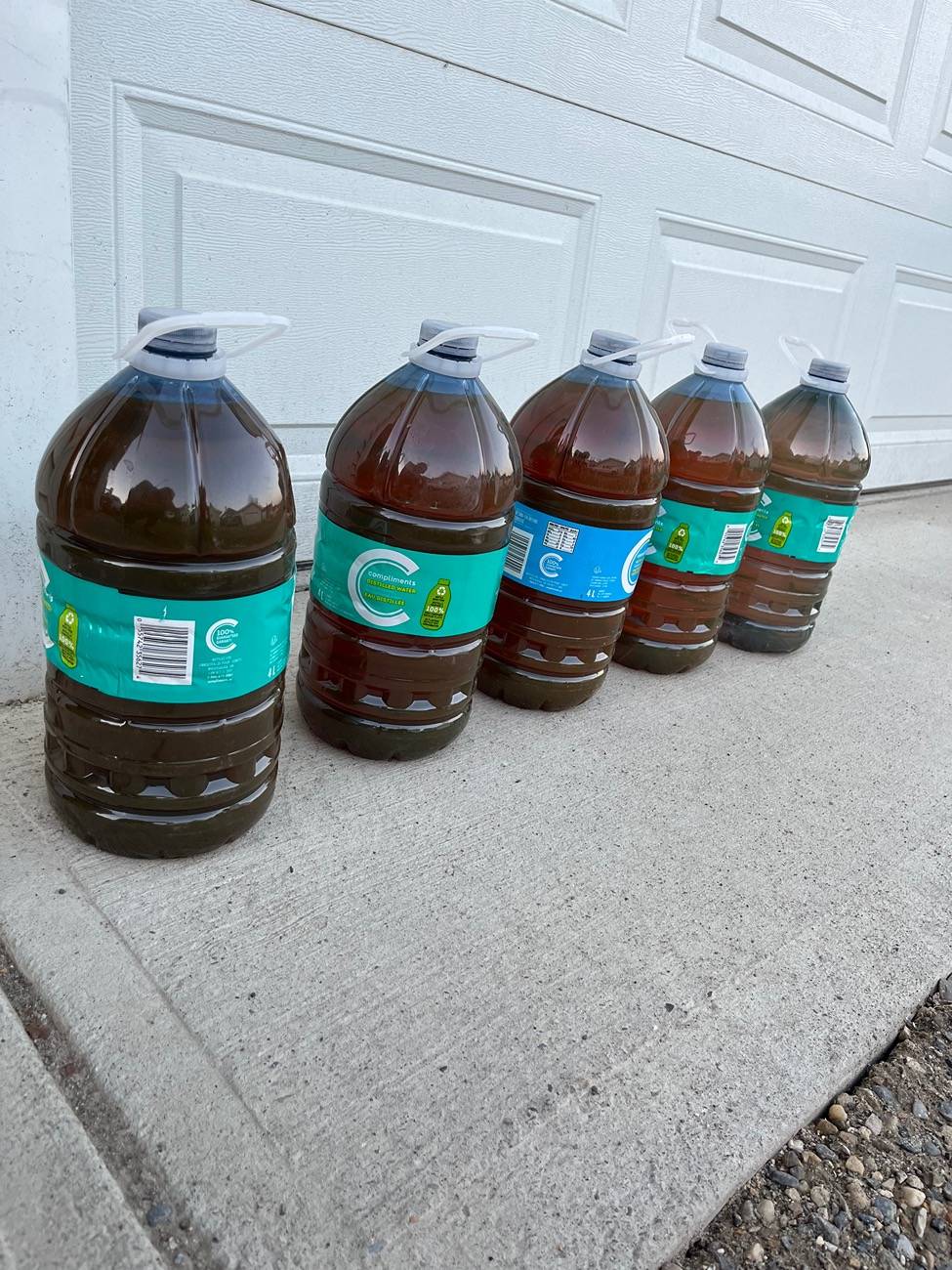
Also, if you haven’t done a flush yet, I’d highly recommend doing one if only to rid the system of assembly sand and other debris floating around in there. I did the flush on my second 3.6 at just 10k klms. …well actually, I ran 5 jugs of distilled water through, draining each one after reaching full temp, then strained it all through a rag into a bucket. This is what I no longer have floating around creating havoc.

Jeep Gladiator 3.0 Derating Problem SOLVED…(maybe) IMG_0980


Jeep Gladiator 3.0 Derating Problem SOLVED…(maybe) IMG_0981
 

JTdiRtyD

Well-Known Member
First Name
Wes
Joined
Dec 15, 2024
Threads
34
Messages
1,065
Reaction score
1,958
Location
MN
Vehicle(s)
'22 JTRD
Build Thread
Link
Occupation
Army vet, low-code dev
OP
OP
Maximus Gladius

Maximus Gladius

Well-Known Member
First Name
Kevin
Joined
Jan 30, 2021
Threads
74
Messages
2,901
Reaction score
3,692
Location
Calgary, AB, Canada
Vehicle(s)
2021 JTR, 2023 JTR
UPDATE: So, wanting to try the Red Line Diesel Water Wetter product on my 3.6, I did 3 coolant flushes today using 3 - 4L bottles of distilled water. I didn’t tamper with the small plastic drain valve at the bottom driver’s side corner of the rad and just went with pulling the bottom main hose off at the bottom middle location of the rad. Pulling the hose off here doesn’t dump everything out but good enough. I put in a 4L jug of water and ran it to temp and even encourage the thermostat to open and fluid to cycle through before shutting it off and dumping the fluid (x3).

After the 3rd flush, I did a test of the fluid and it showed a boiling point of 156F and freeze temp of -12c so I figured I had run enough through and there was plenty of watered down solution in the engine cooling system. I dumped the whole 15 ounce bottle of Red Line Diesel Water Wetter in and then poured a full 3.7L jug of 50/50 Cummins Fleet Guard OAT coolant (yes, I run this in my 3.6 gasser) in and ran it for a while to get the bubbles out and for the thermostat to open.

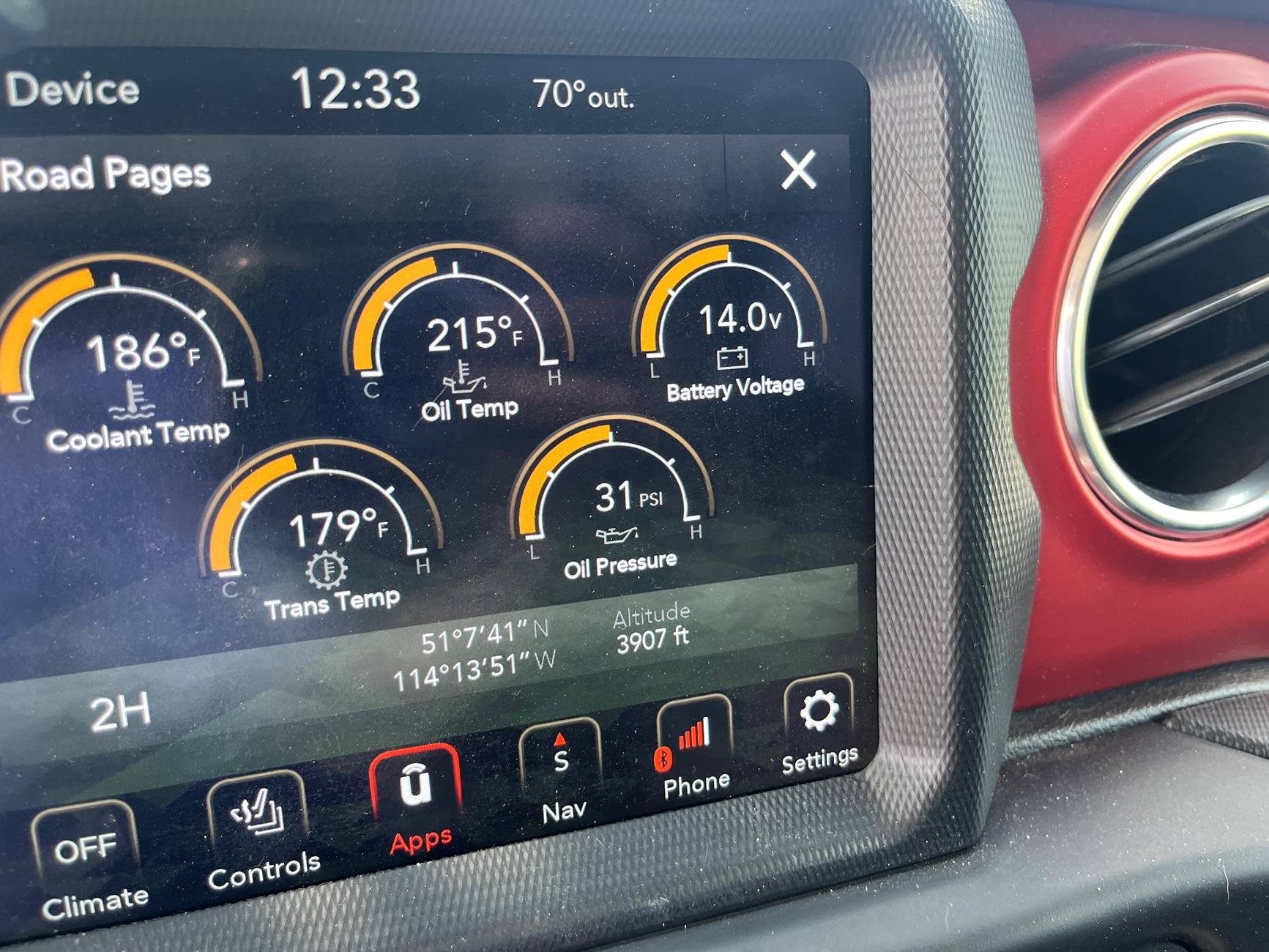
It took a very long time but I managed to get it to 222F before it opened and temps dropped to about 198F. I then drove it off the ramps and went for a drive out on the highway and up a steep grade near me. Now, I can tell you I frequent this highway often and when I’m going up this grade, my coolant temps will get to 222F. The oil temps can fluctuate a bit but are typically close range together.

After doing this flush and adding this one bottle, the coolant temp was nowhere near what I was expecting.

Jeep Gladiator 3.0 Derating Problem SOLVED…(maybe) IMG_4743


Jeep Gladiator 3.0 Derating Problem SOLVED…(maybe) IMG_4738
 
OP
OP
Maximus Gladius

Maximus Gladius

Well-Known Member
First Name
Kevin
Joined
Jan 30, 2021
Threads
74
Messages
2,901
Reaction score
3,692
Location
Calgary, AB, Canada
Vehicle(s)
2021 JTR, 2023 JTR
I’m nervous. Everything I’ve learned about keeping the mixture at 50/50 is telling me to put more concentrate in but I’m seeing what I’m seeing and I’ll hold off and keep the solution diluted as Red Line and the summit racing report suggests.
 

Sponsored

OP
OP
Maximus Gladius

Maximus Gladius

Well-Known Member
First Name
Kevin
Joined
Jan 30, 2021
Threads
74
Messages
2,901
Reaction score
3,692
Location
Calgary, AB, Canada
Vehicle(s)
2021 JTR, 2023 JTR
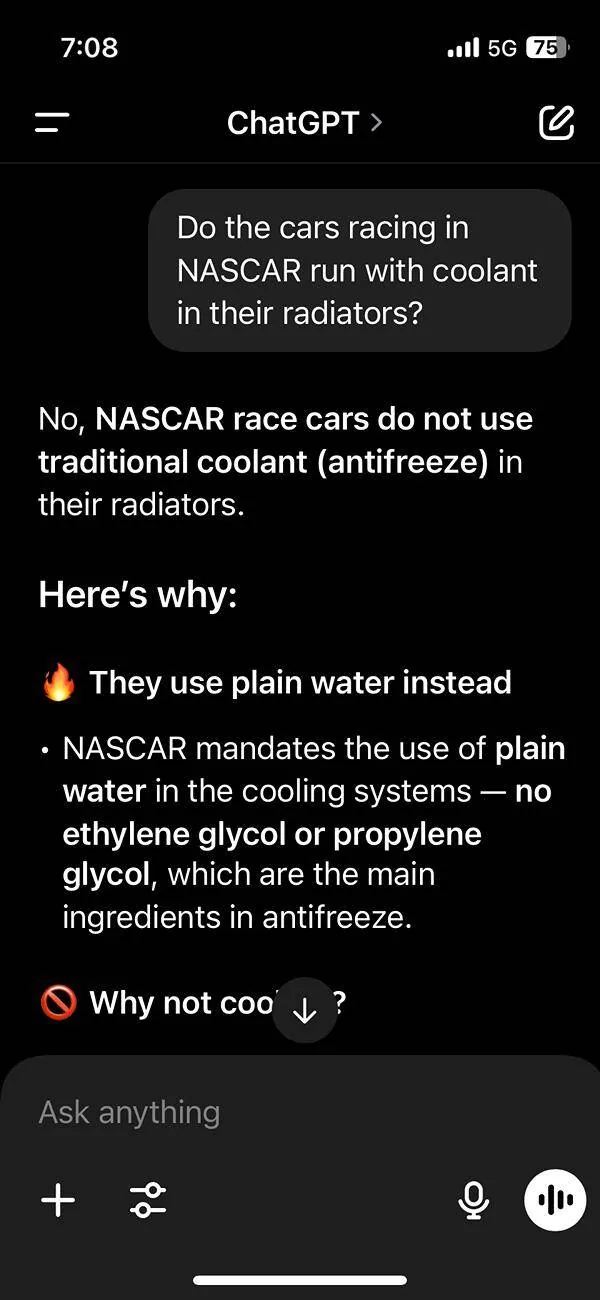
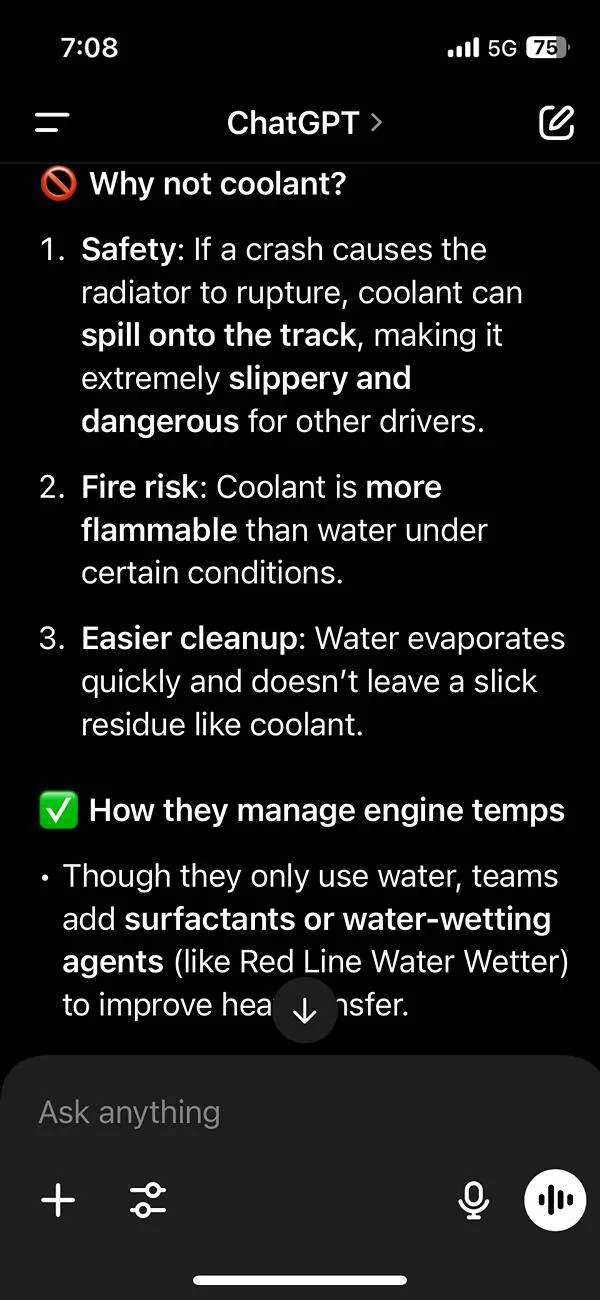
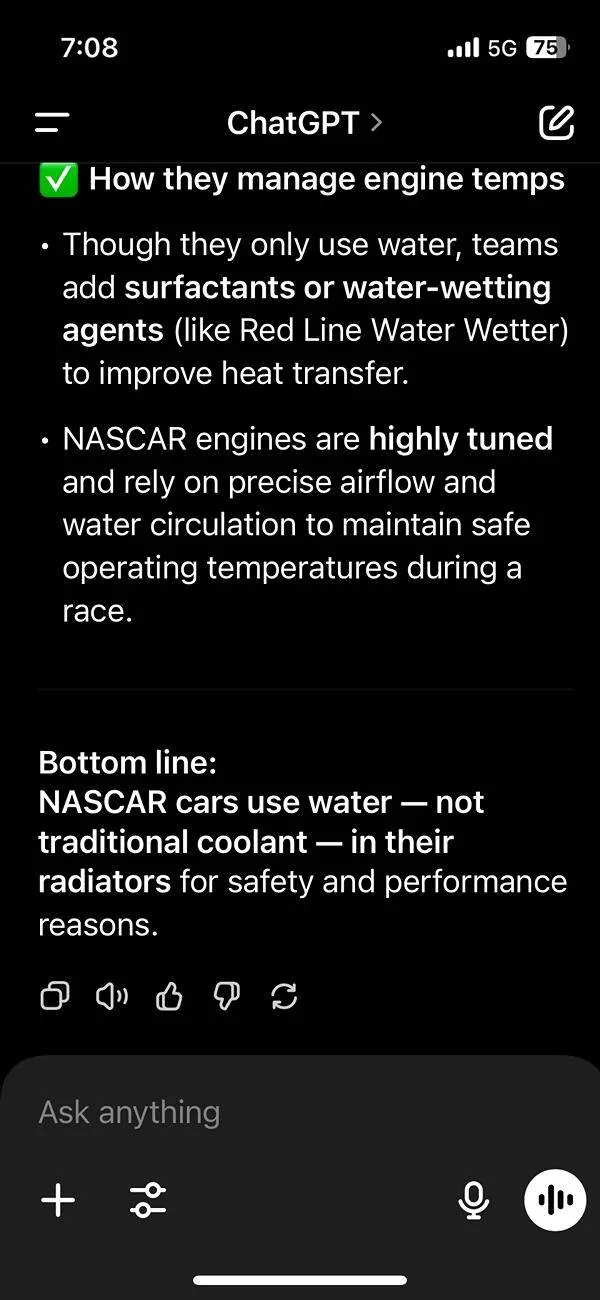
Here’s a little FUN FACT for all you Americans that would appreciate this little info. I once heard many years ago that the cars that race NASCAR don’t run with any coolant and it dawned on me yesterday as I was concerned I was running more water and Red Line Water Wetter and less coolant in my rad flush.

I asked the question to GPT and this is how these cars keep cool. They also run under load, they run hot and they also race on hot days. How do they manage so well??


Jeep Gladiator 3.0 Derating Problem SOLVED…(maybe) IMG_4744
Jeep Gladiator 3.0 Derating Problem SOLVED…(maybe) IMG_4745
Jeep Gladiator 3.0 Derating Problem SOLVED…(maybe) IMG_4746
 

Zachanadandy

Well-Known Member
First Name
Zach
Joined
Oct 17, 2023
Threads
4
Messages
2,995
Reaction score
4,736
Location
Patterson, ca
Vehicle(s)
2023 gladiator Mojave
Occupation
Electrical foreman
Here’s a little FUN FACT for all you Americans that would appreciate this little info. I once heard many years ago that the cars that race NASCAR don’t run with any coolant and it dawned on me yesterday as I was concerned I was running more water and Red Line Water Wetter and less coolant in my rad flush.

I asked the question to GPT and this is how these cars keep cool. They also run under load, they run hot and they also race on hot days. How do they manage so well??


IMG_4744.jpg
IMG_4745.jpg
IMG_4746.jpg
Water has always cooled better than antifreeze/coolant or any combination of water and coolant. There are 3 major issues with running straight water on a street vehicle. Number 1 is freezing, although that's not an issue for a lot of us. Number 2 is corrosion. Straight water will rust out everything from radiators to coolant passages in the block. 3 is cavitation wear (think of erosion on a hill side in a heavy rain). Straight water will eat the pump impeller amongst other things rather quickly. Chat GPT got the no need for anti freeze part and the safety due to the lubricating nature part, but missed the other 2 factors which aren't an issue for Nascar engines as they are constantly being torn down and rebuilt. It was confidence inspiring to read that cavitation wear certification is done at 33% coolant which is why I'll only be running 33% going forward. Plenty of wear/corrosion resistance and plenty of anti-freeze for my use. That plus the water wetter seem to be the best we can do on the street. We'll see if it helps.
 

Sweetums

Well-Known Member
Joined
Mar 30, 2023
Threads
28
Messages
2,004
Reaction score
4,313
Location
Utah
Vehicle(s)
'05 LJR, '21 JTDR, '00 VFR800, RSV4, '11 MTS 1200
Here’s a little FUN FACT for all you Americans that would appreciate this little info. I once heard many years ago that the cars that race NASCAR don’t run with any coolant and it dawned on me yesterday as I was concerned I was running more water and Red Line Water Wetter and less coolant in my rad flush.

I asked the question to GPT and this is how these cars keep cool. They also run under load, they run hot and they also race on hot days. How do they manage so well??


IMG_4744.jpg
IMG_4745.jpg
IMG_4746.jpg
This is true of almost any track motorsport, although glycol based coolant is banned you almost have to use some kind of non-glycol additive, like Water Wetter, to effectively cool the engine.
 

caryt

Well-Known Member
First Name
Cary
Joined
May 29, 2023
Threads
33
Messages
427
Reaction score
285
Location
Wellington NV
Vehicle(s)
'84 stretched CJ7/LS/tons/40's, 2021 Rubicon JT 39
Occupation
Retired/ Build jeeps
I'll play... Engines do not run on air they run on oxygen, higher ya go less their is and compressor or SC only compresses what is coming in. Result less HP/TQ as elevation goes up. Derate happens when water temp and or oil gets above specs. Water temps seem to be easyly controled at least in my case with a Tazar set fan on high but don't seemlower the oil temps as much. IMO thats why I think a better seperate oil cooler would solve our issues.
 

biodiesel

Well-Known Member
Joined
Dec 8, 2018
Threads
15
Messages
2,258
Reaction score
2,927
Location
New Mexico
Vehicle(s)
2015 Ram 1500 Ecodiesel
I use Amsoil's water wetter with the Mopar coolant. Not only does the water wetting dissipate heat better, but it also helps with quicker warm up times in the winter months. Amsoil advertises an average of 54% faster warm up.

I've considering switching to Amsoil coolant because it already has the water wetter in the formula. This would make it easier for me since I do a lot of coolant drain and fills. It's hard to stay up on the math and get the correct water wetter/coolant ratio when doing those drain and fills.
Sponsored


Top