GuzziMoto
Well-Known Member
- Joined
- Jan 28, 2026
- Threads
- 0
- Messages
- 115
- Reaction score
- 127
- Location
- Skinny part of MD
- Vehicle(s)
- 2023 Jeep Gladiator EcoDiesel
If your threshold for TPMS hasn't been adjusted, I would expect the warning to persist until all four tires have been inflated to the stock tire pressure or above it.
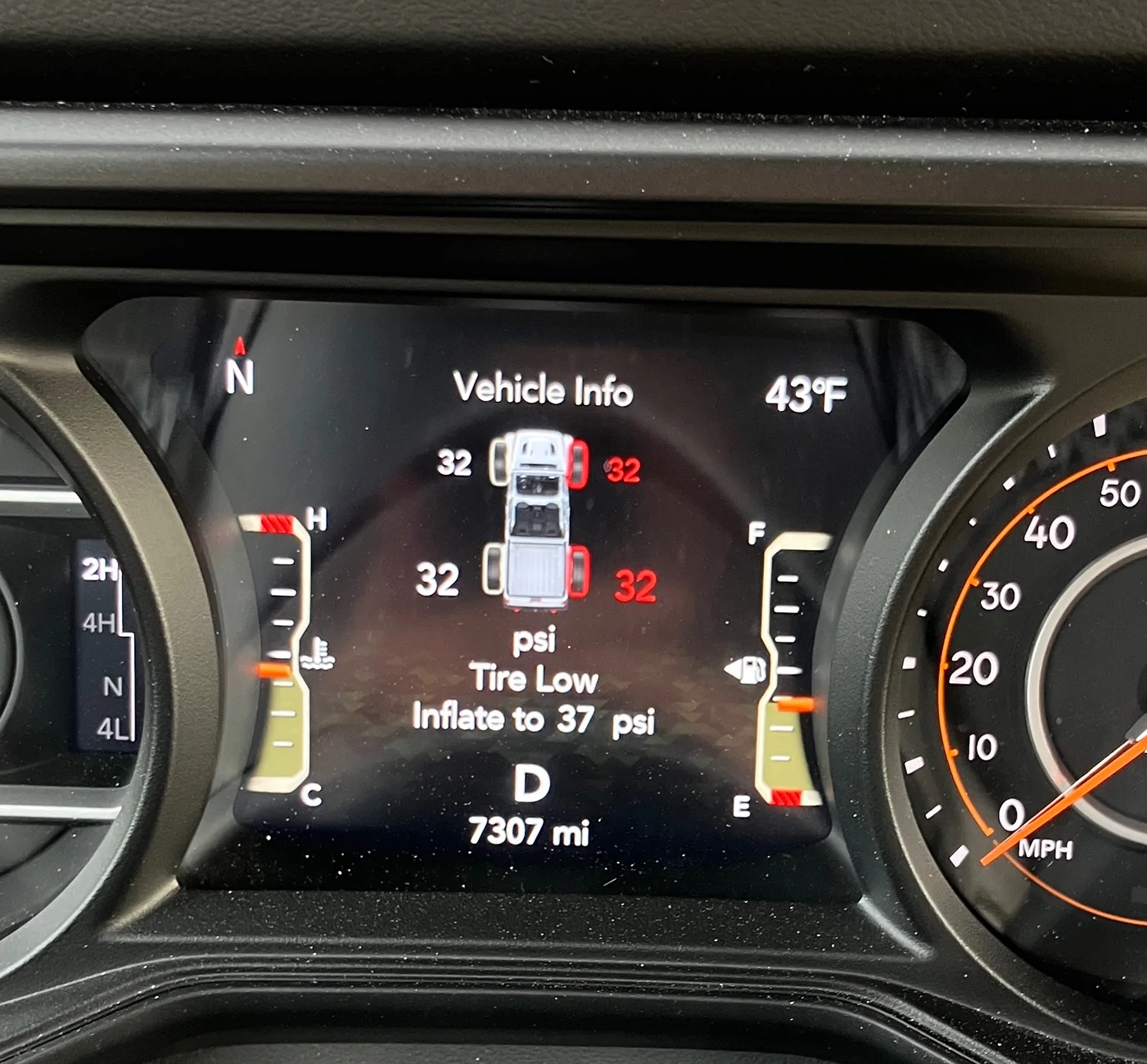
The TPMS system works as what we in my business call a deadband switch. There are two values, the value that the switch turns on at, what I call the threshold pressure, in this case by memory I think it is 5 or 6 psi below the target pressure, and the target pressure. The warning stays off until one or more pressures drop below the threshold pressure. Once the warning is triggered, the pressure has to go above (even fractionally) above the target pressure to reset the warning, to turn the switch off. So if the target pressure is 37 psi, and the threshold pressure is 32 psi, the warning stays off until the pressure drops below 32 psi. Once it does that, the pressure must be raised not above the threshold pressure of 32 but above the target pressure of 37 to reset the warning.
I the pressure drops down to near, but not below the threshold pressure of 32 and then goes back up, never turning the warning on, it does not need to go above the target pressure of 37.
When you use a tool like Jscan or a Tazer or Procal to adjust the TPMS, it typically adjusts both the target pressure and the threshold pressure as a set, maintaining the 5 or 6 psi gap between them. There might be a way to adjust the two values independently, but the options I have seen adjust them as a set. For example, if I adjust the system to 28 psi for the target pressure the threshold, the point at which the warning will turn on, will be 5 or 6 psi below that.
The TPMS system works as what we in my business call a deadband switch. There are two values, the value that the switch turns on at, what I call the threshold pressure, in this case by memory I think it is 5 or 6 psi below the target pressure, and the target pressure. The warning stays off until one or more pressures drop below the threshold pressure. Once the warning is triggered, the pressure has to go above (even fractionally) above the target pressure to reset the warning, to turn the switch off. So if the target pressure is 37 psi, and the threshold pressure is 32 psi, the warning stays off until the pressure drops below 32 psi. Once it does that, the pressure must be raised not above the threshold pressure of 32 but above the target pressure of 37 to reset the warning.
I the pressure drops down to near, but not below the threshold pressure of 32 and then goes back up, never turning the warning on, it does not need to go above the target pressure of 37.
When you use a tool like Jscan or a Tazer or Procal to adjust the TPMS, it typically adjusts both the target pressure and the threshold pressure as a set, maintaining the 5 or 6 psi gap between them. There might be a way to adjust the two values independently, but the options I have seen adjust them as a set. For example, if I adjust the system to 28 psi for the target pressure the threshold, the point at which the warning will turn on, will be 5 or 6 psi below that.
Sponsored