Sponsored

Are we in denial about the factory oil viscosity and grade specifications?

OP
OP

TheRealStreetcommander

Well-Known Member
Joined
Apr 13, 2023
Threads
4
Messages
211
Reaction score
383
Location
East Coast
Vehicle(s)
Gladiator
Occupation
None of your business.
Sharpsicle, Not sure what manufacturing oddities you are talking about, please be more clear.

Maybe my post 58 of this thread is what you're referencing? I would call the VVL intake lifter update a normal manufacturing running change. Also, I'm not seeing where anyone in this thread has stated the factory viscosity spec is the root cause for pentastar cam failures.

I'm waiting for knowledgeable contributors to review my findings for accuracy. I'm concerned that DAVECS1 may have simply made an honest misidentification and thought the early VVL IN lifter was an EX lifter. It was easy to snowball from there. The fact that so many senior forum contributors perpetuated that mistaken narrative for 18 pages in that thread, and then many additional threads since; that is the tragedy.

Please know that If I'm wrong in my assessment stated in post 58, I'll be rapid in my apology.
Sponsored

 

sharpsicle

Well-Known Member
Joined
Apr 29, 2021
Threads
22
Messages
2,776
Reaction score
6,272
Location
Tampa, FL / Milwaukee, WI
Vehicle(s)
2020 Gladiator Overland, 2002 VTX1800
Also, I'm not seeing where anyone in this thread has stated the factory viscosity spec is the root cause for pentastar cam failures.
Well, for starters, you made these statements saying the oil isn't good enough and that it is causing cam failure:

The cam and interface damage appears to be a textbook example of insufficient oil film strength. Between the reduction in viscosity and the reduction in friction modifiers in modern xW20 and xW30 oils, are we simply refusing to accept that Jeep has sacrificed longevity for CAFE and questionable catalyst poisoning concerns?
That doesn't automatically mean that 0W20 is the best choice for absolute longevity.
Then, when the cam conversation came around, you said this:

I found this in a different thread here. Courtesy of DC3. This idea that the I&E lifters can be mixed up really needs to be evaluated a bit deeper.
. . .
This topic really deserves it's own thread.
So I'm just not sure what you're getting at anymore. Is it a problem with the oil? I think you've been rebuffed on that sufficiently by knowledgeable forum members. But I would understand if that's what you're going for, since that was the spirit of this thread. If that lifter thing needs its own thread (which it already has), then continuing to mention it infers that you believe there's a connection. Do you believe there is one?

The only logical way to read your posts is that you believe the oil is a problem, and since you don't believe the lifters made any difference in @DAVECS1's engine (which no matter how you look at it is a damn odd thing to discover), that means you believe the oil was then an issue with the cam wear.

This thread is giving off tin-foil hat oil conspiracy vibes. Please feel free to clarify what you're actually getting at so myself and others can help by responding appropriately.
 
Last edited:

DAVECS2

Well-Known Member
First Name
Dave
Joined
Aug 23, 2022
Threads
8
Messages
127
Reaction score
227
Location
Chillicothe, IL
Vehicle(s)
2020 Gladiator
Occupation
Engineer
No need to get riled up here. I will state what I know and some added opinion.

To clarify I have helped over 180 different people, including independent shops and dealers diagnose and fix cam failure.

I have a data trace overlay, that has been right except for two times. Both of this ended up being phaser issues. Lowest mileage was 8k highest mileage so far 74K.

67% passenger side, 22% drivers side, 11% both sides. 5% have had repeat failures, they seemed to be earlier failed engine 2021 2nd qtr.

I believe I was one of the first to dig in as I am not much for arguing about warranty, and I prefer my own workmanship. I also have friends within Chrysler as I used to work in Detroit. When I showed my friend the lifters I had on my intake side, he told me those were not designed to go there. I took that as they where exhaust lifters, I was not entirely wrong.

There was rumor of a engine that would have VVL on both cams, the lifters I had were evidently designed with that in mind and the undercut head was supposed to be designed to hold the clip the exhaust rocker would need, while still being able to be used for the intake. At the end of the day they obviously scrapped the VVL exhaust cam idea. From what I understand the lifters should not have made it to production either, but according to my source they were in my engine and his concern was oil leakage at the head of the lifter with that design.

I have pictures posted that show the two next to each other, there is a marked difference, whether it contributes to cam failure is debatable.

As for oil it is always a mixed bag and you will find millions of opinions and some facts. My biggest concern is the Highlift cam is a friction lobe, not a roller, on top of that it is a high lift, high contact load lobe design. Not unlike old school flat tappet cams. With that being the case, I personally was not comfortable with 0w-20. I have seen cam damage from high pressure springs and flat tappets abd it was very similar to what I found in my motor. Looking at additive packages, 5w-30 synthetics seem to contain more high pressure contact additives then the 0w-20 stuff and was close enough to the factory viscosity not to mess with phaser operation.

My complaint with the VVL system is the following.

1. No pressure sensor to ensure the VVL system is actuating when it should.

2. There is a position sensor on the cam but there are no diagnostics for when the position is not in the commanded position

3. Oil filtration and lifter feeds are precarious at best, what happens when a rock is not locked into high lift. How tolerant to dirt debris and viscosity is the whole system


I originally thought the cams where tuned for emissions, and I believe that is a large part of it, but with the research I have done after some engine failures, I also believe there is tuning in ther to combat EVA or Engine Vibration Analysis, that is a seriously slippery slope.

I was able to make fantastic power manipulating the cams to work with forced induction. When it worked it was phenomenal. If I had known what a can of worms the cams where I would of never touched the cam timing, like I did. I have hours of dyno time into that tuning.

The problem I soon found is a significant number of Jeeps are struggling with cam position, lift, or destruction, and my tunes find that deficiency quickly, leads to a long drawn out diagnoses and multiple tune revisions. In severe cases it leads to rapid come apart.

I have sense spent time to revise ALL my tunes to not utilize cam timing for performance. I only utilize it as a safety valve now to blow off pressure in the event of severe detonation or misfire. I now use airflow limiting to control boost and power. Unfortunately this has its issues too, as the Throttlebody seems to be a running quality issue with Jeep and there are like 15 revisions of hardware and tuning from the factory, which leads 1 out of every three customers having to have a customer tune to make it driveable.

All of this is what lead to me not wanting to push down this path on my own any longer. In my opinion there are to many engineering pitfalls to navigate, and it has taken the fun out of it.

I still offer services to those that want to go down this route, I try to be as transparent as possible about what I know. I spend how ever much time each owner wants to, to perfect his ride. I spend many nights and weekends doing product support.
 

Maximus Gladius

Well-Known Member
First Name
Kevin
Joined
Jan 30, 2021
Threads
75
Messages
2,918
Reaction score
3,731
Location
Calgary, AB, Canada
Vehicle(s)
2021 JTR, 2023 JTR
I reached out to my friend (Bernie Weibe, ALERT SYSTEMS LTD.) I mentioned earlier in this thread to give his knowledge of running diesel oil in gas engines. Below is Bernie's explanation of who he is and his thoughts on the matter at hand.

Background and context:
(Bernie Weibe) I am a fully certified, in Canada as a “Red Seal” accredited Heavy Duty and Diesel mechanic since 1972. I worked in numerous settings as a mechanic and later in middle and senior management for Caterpillar, John Deere, International Harvester and Detroit Diesel.

In 1984 I started Alert Systems Ltd. and have been doing consulting work in various industries but most importantly in the oil industry around the world. During this time, I have performed maintenance audits, compiled preventive maintenance programs and have trained more than 32,000 persons worldwide in “proactive’ maintenance procedures, and I continue to be active today.

  • Any OEM, whether in the gas or diesel world has to consider the “engineered in” clearances when specifying their recommended oil. To say, ”Why don’t we run 0W40 diesel oil in our 3.6L gas engine” is a really poor and ill-informed consideration. There are many reasons. One of the largest reasons is that a person asking that question really doesn’t know what 0W40 means. That’s a huge leap from 0W20, and will never answer the question about camshaft failures. Also, diesel oils have a whole different set of additives because their fuel source uses the heat of compression for ignition whereas gasoline engines use a spark plug to initiate ignition. Their fuels are also very different, especially when it comes to lubricity and volatility. And additionally, the downstream hardware; i.e. catalytic convertor, sensors, muffler, emissions systems,… all have to live by your choices.

  • Diesel engine oils must contain numerous similar and different additives than gas engines do. That is why it is so crucial to first understand the API specs for both gas and diesel oils. Not all, but some oils, carry both the gasoline and diesel oil designations in one blend. Again, so first the API symbol and the codes stamped in the upper part of that symbol have to be understood. That fact in itself is a whole lot of evolving science. Those specs have all changed over the years and continue to change today.

  • If a gasoline engine is run with “gasoline” spec’d oil for a long time,…let’s say 150K and then is switched over to a “gas-diesel” oil, there will be a whole host of other problems. The most dominant problem will be that of oil consumption. That has to be understood and the reasons behind the problem. Make your choice of oil supplier (Brand name) when the engine is new and then stick with it for the duration of its life. Don’t flip back and forth between suppliers simply because of price or ease of availability. Stay with one brand name but be flexible about the API updates as they come along. Go to API | Motor Oil Guide for the latest info.

  • The most important and first consideration that needs to be addressed is that of filtration. You can have the most sophisticated oil that money can buy, but if you install a $1.49 filter on it,…you’ve still got nothing. Along with the proper oil, you must choose a proper “high efficiency” oil filter. Just as different oil brands have a “rating”, so do oil filters. Immediately, you must stay away from all jobber filter brands and at the very least, use and OEM element, and if possible a “high efficiency” OEM filter. There are a whole lot of considerations that need attention in filtration, but at the very least, find out what the BETA ratio is.

  • When a gas engine is new, your first consideration should always be to follow OEM specs. All of the clearances will now be at their minimum (crankshaft bearings, camshaft bearings, piston rings, timing chains, gears, turbo, etc.). It takes time to “wear in” the running clearances, and remember that we are talking about clearances that are measured in microns, not in millimeters or inches. Oil has to penetrate, saturate and flow through these clearances at a rate that both lubricates and cools.

  • There is so very much that needs to be understood in the above 5 points. But the problems that you are sighting with camshafts cannot be repaired by messing with different types of oils. Repeat failed camshafts fail because of engineering problems. A band-aid will not stop an injury, …it will only cover the injury temporarily. The failure of camshafts require someone to look at the failure, measure, analyze, think, and apply a whole lot of “know-how” to the problem. The band-aid here is not a different choice of oil, it’s an application of context of the failure. A root cause analysis needs to be done and the solution “engineered in” to the component failure.
I hope this helps. I know “forums” want quick solutions and everybody has a remedy. Its not quite that easy.

B.G. Bernie Wiebe
Web: www.alertsystems.net
Mail: [email protected]
 
Last edited:

DAVECS2

Well-Known Member
First Name
Dave
Joined
Aug 23, 2022
Threads
8
Messages
127
Reaction score
227
Location
Chillicothe, IL
Vehicle(s)
2020 Gladiator
Occupation
Engineer
A pressure sensor on the downstream side of the VVLs would give loads of insight as to the function of this feature and if it is going south.

Diagnostics for camshaft out of range would be good also, but I imagine this is not done as it would instigate a million questions from an emissions standpoint, and could possibly be identified as emissions equipment which then has a bumch of obligations.

One thing I would like to see in that reply is the thoughts on using friction surface cam technology in a modern engine using modern oils. It is touched upon with know your hardware and clearances, but I work in a big company and the communication game is a very difficult one to pull off, was everyone aware of a non roller cam being imemented?????
 

Sponsored

smlobx

Well-Known Member
First Name
Eddie
Joined
Jun 28, 2018
Threads
87
Messages
2,662
Reaction score
4,552
Location
Mid Atlantic
Vehicle(s)
JTR, F-350 diesel, Porsche Spyder, Model Y
Occupation
Semi retired consultant
This is a site where you’ll get all the info you need on whether or not high ZINC or added ZINC or a thicker viscosity is good for engines. The science is spelled out and with over one million views to this engineer’s site, I’d say his work, tests and opinions are worth the time of day to read.
https://540ratblog.wordpress.com/
I have spent some time over the past few days reading the entire Blog. It must have been a few hundred pages. But for those who want the short version the author is a licensed automotive mechanical engineer with decades of experience, is a member of the Society of American Engineers and has made his life’s work testing various oils for wear and protection capabilities.

In general he states that in an effort to get every last hundredth of a mpg out of an engines performance the bean counter, not the engineers who designed the engines, have gone to spec very light oils (0w-16 and 0w-20). According to his testing and papers he’s written the best viscosity for normally driven engines (not raced etc) is one that rates highly in his testing and is either 0w-30 or 5w-30.

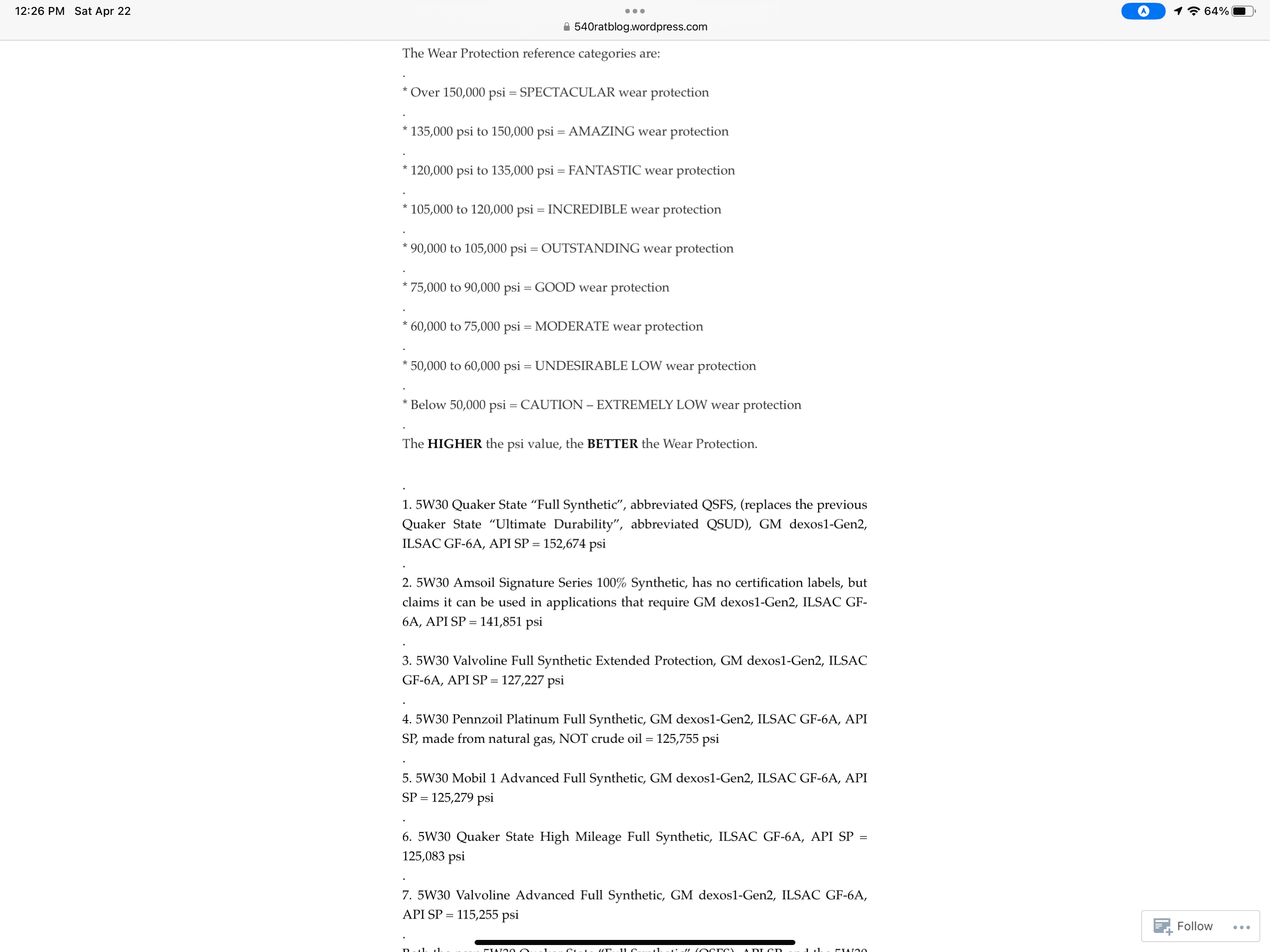
Here is his list of the top performing engine oils for water cooled modern engines: this is over 200 oils tested.

Jeep Gladiator Are we in denial about the factory oil viscosity and grade specifications? IMG_1140
 

Fastwake

Well-Known Member
First Name
Mike
Joined
Jun 8, 2021
Threads
3
Messages
197
Reaction score
225
Location
Rocklin ca.
Vehicle(s)
2020 Gladiator Sport S
Occupation
Retired
Vehicle Showcase
1
Note: My solution is to use what the factory recommends and keep fresh oil and filters in all my vehicles. For the JTR, I change the oil and filter before 4K miles, usually at 3.5K miles. I am coming up on my 15th oil change at 56K miles. Motor has been perfect so far. No ticking.

Note: I used The Mopar oil filter which is inexpensive on Amazon, and I used Pennzoil Platinum 0w-20 Synthetic for all the oil changes.
That is exactly what I do Mopar oil filter and Mobil 1 full synthetic 0-20 as per the manufacturer. Why does everyone think the manufacturers are always wrong.
 

Vincent

Well-Known Member
First Name
Vincent
Joined
Oct 11, 2019
Threads
4
Messages
306
Reaction score
397
Location
46514
Vehicle(s)
2025 Mojave X
I have spent some time over the past few days reading the entire Blog. It must have been a few hundred pages. But for those who want the short version the author is a licensed automotive mechanical engineer with decades of experience, is a member of the Society of American Engineers and has made his life’s work testing various oils for wear and protection capabilities.

In general he states that in an effort to get every last hundredth of a mpg out of an engines performance the bean counter, not the engineers who designed the engines, have gone to spec very light oils (0w-16 and 0w-20). According to his testing and papers he’s written the best viscosity for normally driven engines (not raced etc) is one that rates highly in his testing and is either 0w-30 or 5w-30.

Here is his list of the top performing engine oils for water cooled modern engines: this is over 200 oils tested.

IMG_1140.png
Amsoil 5w30 here with 133,000 miles on the clock:fingerscrossed:
 
OP
OP

TheRealStreetcommander

Well-Known Member
Joined
Apr 13, 2023
Threads
4
Messages
211
Reaction score
383
Location
East Coast
Vehicle(s)
Gladiator
Occupation
None of your business.
Some good constructive feedback.

My first oil change around 5k, I will transition my personal Pentastar to Rotella 5w40 and a Mopar filter. Despite the aforementioned concerns about HDDOs, I've never had any issues running heavy duty diesel oil in my gas vehicles, and they routinely pass 200K miles before I trade them away running like new. I'm not saying that the concerns are completely invalid --I just have too much counter evidence to worry much about that.

I'm doing this for a few reasons. Primarily, because I trust HDDO's based on my personal experiences. Their use has never manifested a problem for me or anyone I know who uses them in gas engines. --this is critical for me. They are universally available unlike some of the newer well formulated euro 0w40's, high spec xW20s and xW30s, and they are very inexpensive which means I can OCI much more frequently. I routinely tow 5-7k pounds, and I run my engines to redline through the first couple gears nearly once, every time I drive.

If I'm not too lazy, I may pull the valve cover to photo the cam interfaces before the Rotella transition. This way we can track the destruction caused by the HDDO's over the coming years. If I do, I'll post those photos.

Overall, the chances of having any Pentastar cam problems are probably statistically insignificant. The group-think from many of the most prolific forum "contributors" is that using ANYTHING accept 0w20 is wildly irresponsible, inappropriate, dangerous, and will destroy your engine and cats rapidly. If they're correct, I'll need a motor very soon...

Take luck.
 

bleda2002

Well-Known Member
Joined
May 11, 2021
Threads
24
Messages
2,759
Reaction score
4,500
Location
34655
Vehicle(s)
2021 JTR Firecracker Red
.... The group-think from many of the most prolific forum "contributors" is that using ANYTHING accept 0w20 is wildly irresponsible, inappropriate, dangerous, and will destroy your engine and cats rapidly. If they're correct, I'll need a motor very soon...

Take luck.
I'd say that's not an accurate take at all. The group think is that 0w20 is more than adequate since that was what the engine was designed with in mind and most likely more appropriate for the motor than diesel engine oil. Diesel engine oil at best will not be better in terms of longevity than 0w20 and at worst may cause issues down the line.

At the end of the day a sample size of a handful of engines proves nothing so if running diesel oil makes you happy go for it, chances are it won't cause any problems before you get rid of the truck.
 

Sponsored

Maximus Gladius

Well-Known Member
First Name
Kevin
Joined
Jan 30, 2021
Threads
75
Messages
2,918
Reaction score
3,731
Location
Calgary, AB, Canada
Vehicle(s)
2021 JTR, 2023 JTR
I am convinced from all you’ve said and done in the past that you know to be on solid ground. You are a hero to half of this crowd watching and responding and something else to the other half. It’s all good as long as you feel you’ve done the research and ready to pull the trigger.

God speed to a better running and cared for engine. May nothing adverse ever happen to it where blame can be placed. Look forward to updates and any oil analysis reports you care to post.
 
OP
OP

TheRealStreetcommander

Well-Known Member
Joined
Apr 13, 2023
Threads
4
Messages
211
Reaction score
383
Location
East Coast
Vehicle(s)
Gladiator
Occupation
None of your business.
Update:

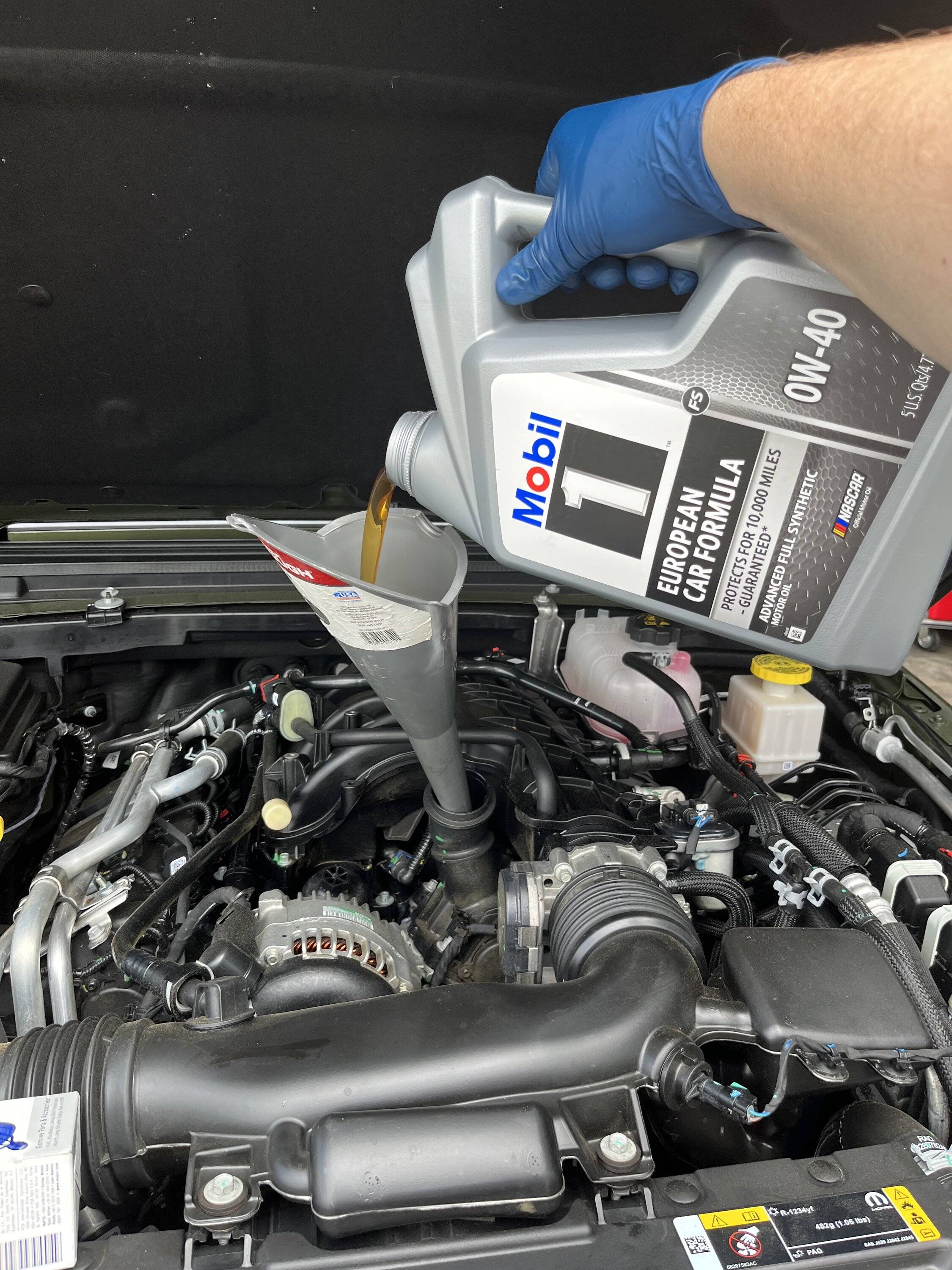
As I indicated I would do, I have done my first OC at 2100 miles. I did not use the Rotella T6, instead I used Mobil-1 0w40 Eurospec and a Mopar filter. I will periodically report back my findings and experience with the 40 weight over time. I started a separate clean thread for that topic.

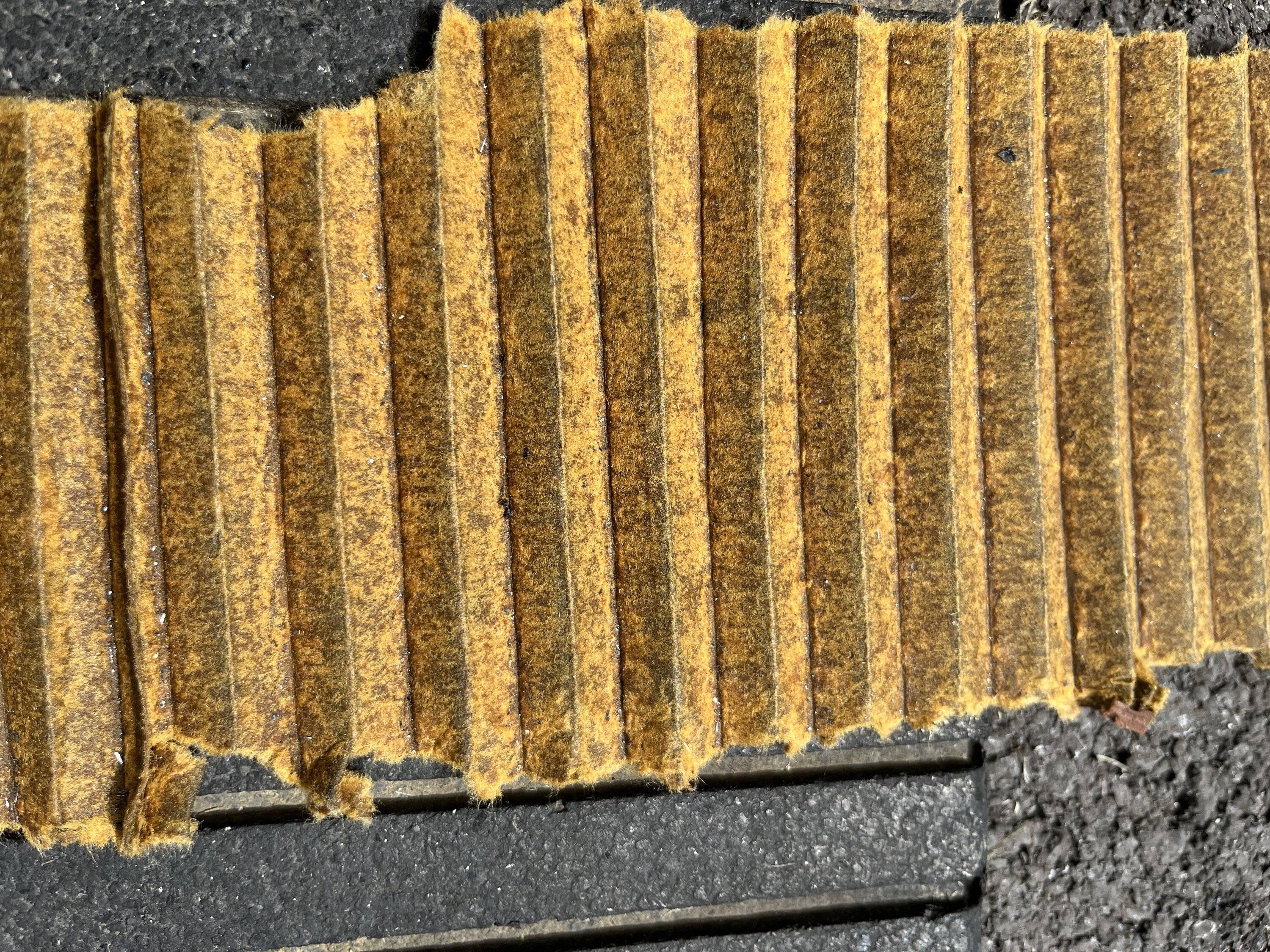
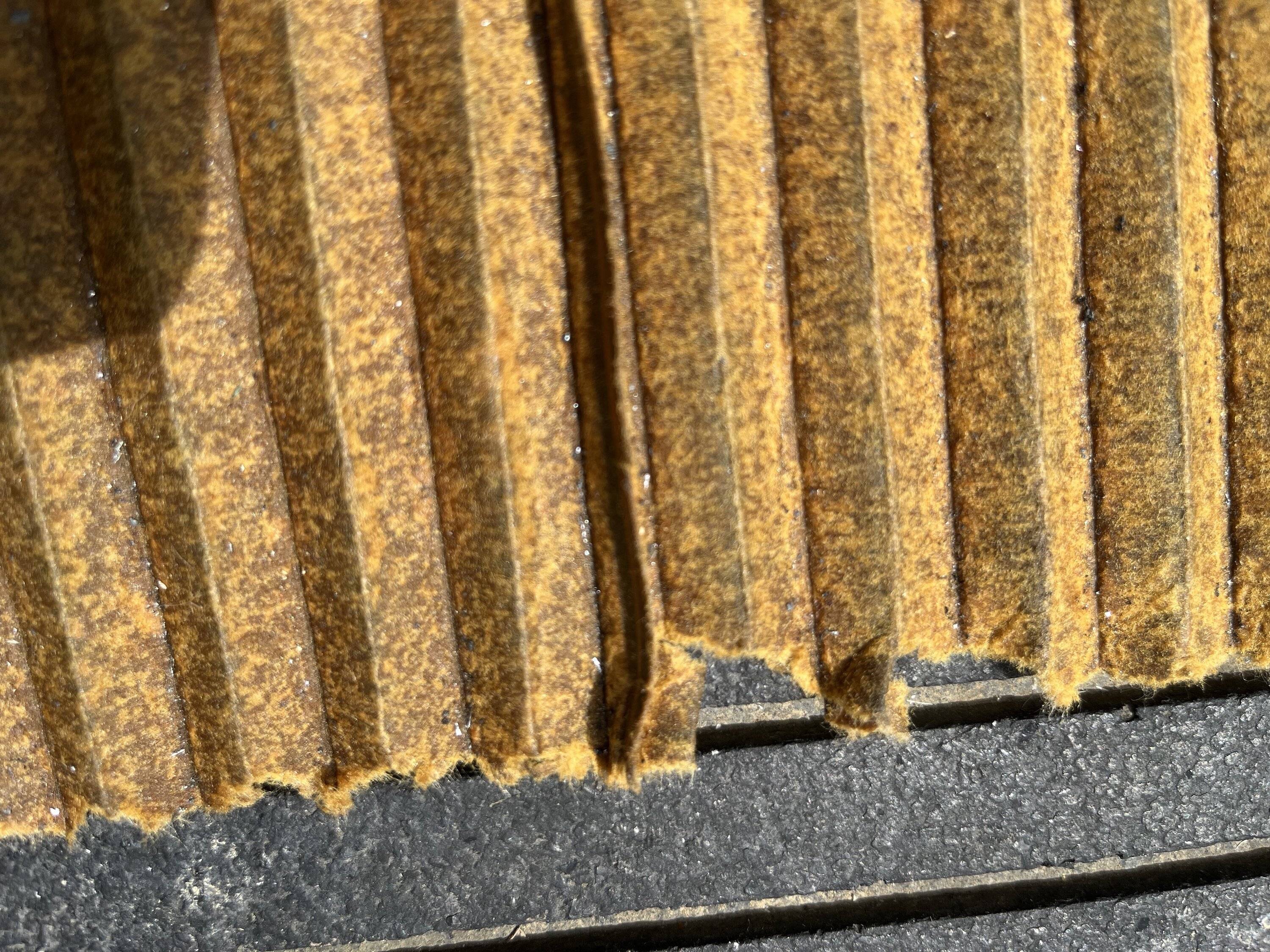
Pictures of factory filter media @2100 miles below. Very minor break-in metals present. Very good outcome in my view.

Jeep Gladiator Are we in denial about the factory oil viscosity and grade specifications? Oil fill
Jeep Gladiator Are we in denial about the factory oil viscosity and grade specifications? Filter media 1
Jeep Gladiator Are we in denial about the factory oil viscosity and grade specifications? Filter media 2
 

Nuclear_Inc

Active Member
Joined
Sep 8, 2021
Threads
3
Messages
27
Reaction score
27
Location
USA
Vehicle(s)
Jeep Gladiator
My 21 JT accumulates roughly 8-10k miles a year. It receives Amsoil Signature 0W-20 and filter once a year. All my oil lab tests are fine. People overthink oil. Pick brand and sample it at different intervals to establish a trend. Most name brand full synthetics should be able to perform well 12 months/ 10k miles per the owners manual. I simply change the oil/ filter and forget about it till next year. Zero issues in extreme Minnesota weather 50/ 50 city-highway miles.
Sponsored


Top