
Jeepmonster
Well-Known Member
Very interesting. Thanks for the explanation.The 2020’s had longer bolts. The theory is that the supply chain shortages starting with the ‘21 models caused them to use shorter bolts. Mine had shorter ones.
Sponsored
Very interesting. Thanks for the explanation.The 2020’s had longer bolts. The theory is that the supply chain shortages starting with the ‘21 models caused them to use shorter bolts. Mine had shorter ones.
Ya great upgraded bolts you guys think your gettingYou can use AEV's torque specs from their lift installation, since the rear end links are replaced as part of the process.
TORQUE SPECS
Front Upper Control Arms: 80 ft-lbs
Front Lower Control Arms: 190 ft-lbs
Front Track Bar: 110 ft-lbs
Front Sway Bar End Links: 60 ft-lbs
Brake Line Brackets: 15 ft-lbs
Rear Upper Control Arms: Frame 111 ft-lbs plus 95° / Axle 111 ft-lbs plus 90°
Rear Lower Control Arms: 111 ft-lbs plus 65° / Axle 111 ft-lbs plus 60°
Rear Track Bar: Frame 85 ft-lbs / Axle 100 ft-lbs
Rear Sway Bar End Links: Upper Bolt 81 ft-lbs Lower Nut 70 ft-lbs
Front Lower Shock Bolts (and relocation bolts): 75 ft-lbs
Rear Lower Shock Bolts (and relocation bolts): 89 ft-lbs
M10 Shock Bracket Bolts: 35 ft-lbs
Bumpstop Spacer Hardware (front and rear): Tighten until slight deformation of plastic spacer
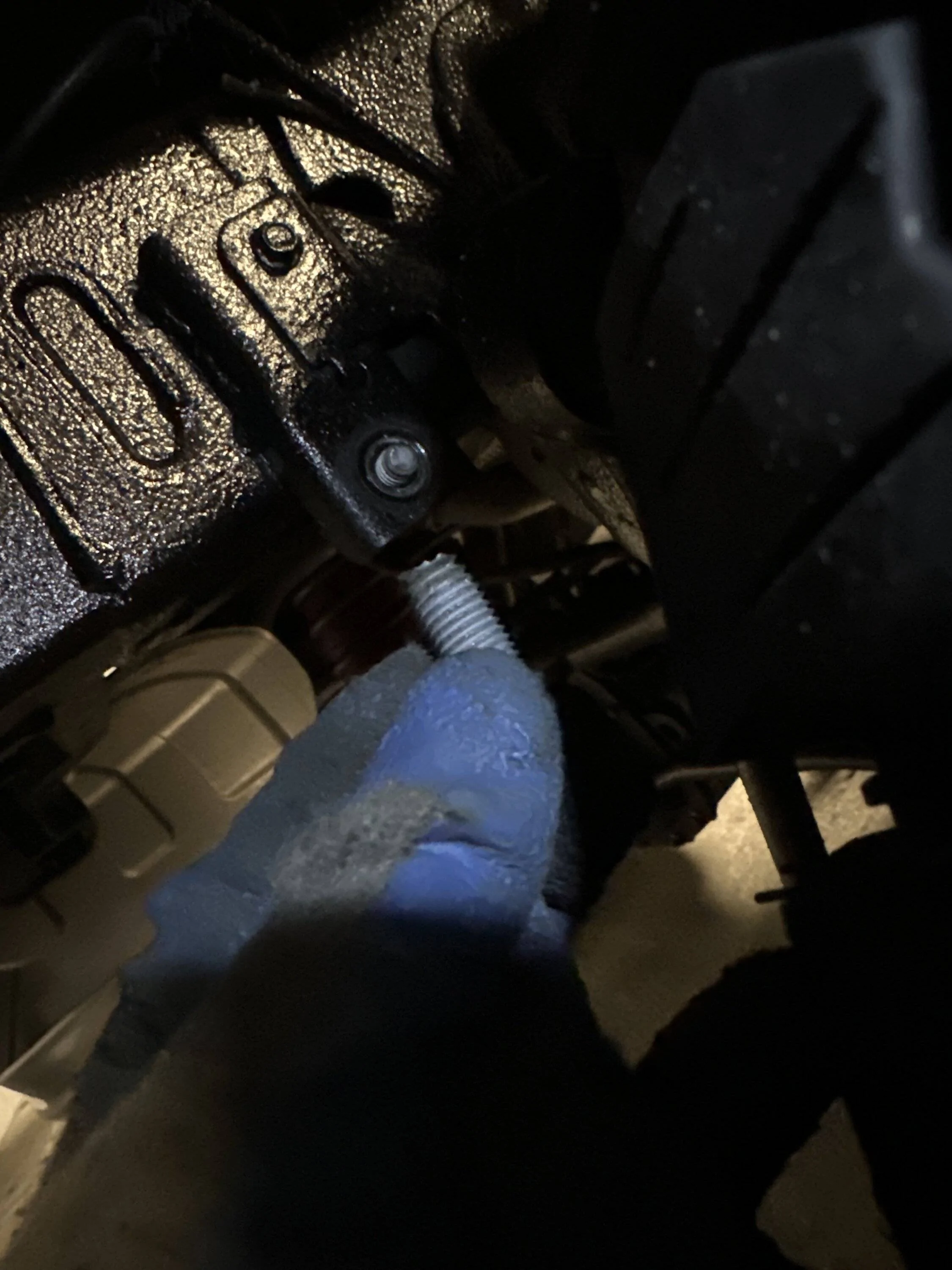
How do I get this out, I’m losing and stripping threads trying to grip with a monkey wrenchYa great upgraded bolts you guys think your getting

You didn’t use the bolts from metal cloak did you? You’re only supposed to use those if your press nut is broken and gone. The metal cloak bolts are SAE. The press nut is metric. I bought my replacement from belmetric.dotcom.Ya great upgraded bolts you guys think your getting

The problem with after-market companies making lifts and specialty parts - they don't have access to the engineering that FCA has - and too often they go by comparable charts for off the shelf bolts. Or they copy what someone else is doing.I copied those torque numbers directly from AEV's installation instructions, but the end link numbers look higher than they should be.
Yeah, I saw those 'new' higher torques. I have an older copy of the AEV Spacer Lift instructions dated 02/04/21 that read:I copied those torque numbers directly from AEV's installation instructions, but the end link numbers look higher than they should be.
I can't figure why the **** these companies are still using SAE spec parts when they are making kits and parts for vehicles that have been metric for years. What's up? Actually, I have my suspicions.......You didn’t use the bolts from metal cloak did you? You’re only supposed to use those if your press nut is broken and gone. The metal cloak bolts are SAE. The press nut is metric. I bought my replacement from belmetric.dotcom.
The torque spec depends on the link being used as well. Depending on the bushing, they might want it higher or lower to be tight enough, without squashing the bushing. Either way, with this one, use common sense by watching the bushing as you tighten, but add a nut on the back side with blue loctite and you’ll never have an issue.Yeah, I saw those 'new' higher torques. I have an older copy of the AEV Spacer Lift instructions dated 02/04/21 that read:
"Rear Sway Bar End Links: Upper Bolt 55 ft-lbs Lower Nut 37 ft-lbs"
I also have a copy of the Mopar lift instructions date April 10, 2019 that shows 50 ft-lbs for the upper frame bolt.
Lots of them do if the parts are made in the US. but the bolts from metal cloak for these brackets are supposed to be used when the frame bracket has failed and the press nut is no longer in the picture.I can't figure why the **** these companies are still using SAE spec parts when they are making kits and parts for vehicles that have been metric for years. What's up? Actually, I have my suspicions.......
This is actually right out of the MOPAR tech torque specs - what the techs use when replacing or installing parts.Rear Sway Bar End Links: Upper Bolt 81 ft-lbs Lower Nut 70 ft-lbs
The bushing has an inner steel sleeve. There is no 'squashing' the bushing.The torque spec depends on the link being used as well. Depending on the bushing, they might want it higher or lower to be tight enough, without squashing the bushing. Either way, with this one, use common sense by watching the bushing as you tighten, but add a nut on the back side with blue loctite and you’ll never have an issue.
How are you going to squash the bushing that has a metal sleeve? The rubber will squish a bit - but the sleeve in the middle won't let it crush. The idea is to clamp that center sleeve hard. That center piece must never move. So don't hold back.The torque spec depends on the link being used as well. Depending on the bushing, they might want it higher or lower to be tight enough, without squashing the bushing. Either way, with this one, use common sense by watching the bushing as you tighten, but add a nut on the back side with blue loctite and you’ll never have an issue.
But not all of them have the same inner sleeve style. My links are JKS as mine is lifted around 4.5” years n the rear. They’re totally different than the OEM link bushings.The bushing has an inner steel sleeve. There is no 'squashing' the bushing.


