Sponsored

Flushing Brake Fluid

WILDHOBO

Well-Known Member
First Name
Dan
Joined
Sep 24, 2021
Threads
73
Messages
11,666
Reaction score
17,748
Location
Colorado
Vehicle(s)
2021 Gladiator Rubicon
Occupation
Network Engineer
Vehicle Showcase
1
You can always try ghetto bleeding the ABS.....dirt/snow....lock them up. Air will go into the system...do manual bleed.
That’s what I did when the test wouldn’t work.
Sponsored


Lost1wing

Well-Known Member
First Name
Tim
Joined
Dec 22, 2020
Threads
24
Messages
2,609
Reaction score
2,858
Location
West Georgia
Vehicle(s)
2020 Jeep Gladiator Rubicon
Occupation
Retired AMT
If we could do a public survey on how often they have their brake fluid changed, most would answer never. In forums you will get every X years, but in reality I doubt that is the case.

Drum brakes were horrible compared to disc brakes. I can see why they had a 2 year recommendation for replacement. Disc brakes, ABS newer fluids definitely make braking safer, but a 2 year 20k mile recommendation is a bit early.
Going to get groceries or lipstick, you will never see contaminated brake fluid get to a point where you lose noticeable braking. Do I want to do a long downhill descent with constant braking? No! Trail riding, water crossings because that's what Jeeps do, sure! I wouldn't waste my time on a mall car.
 

ShadowsPapa

Well-Known Member
First Name
Bill
Joined
Oct 12, 2019
Threads
247
Messages
40,442
Reaction score
53,860
Location
Runnells, Iowa
Vehicle(s)
'25 JTMX, '23 JLU 4xe, '82 SX4, '73 Javelin
Occupation
Retired auto mechanic, frmr gov't ntwrk security admin
Vehicle Showcase
3
Drum brakes were horrible compared to disc brakes. I can see why they had a 2 year recommendation for replacement. Disc brakes, ABS newer fluids definitely make braking safer, but a 2 year 20k mile recommendation is a bit early.

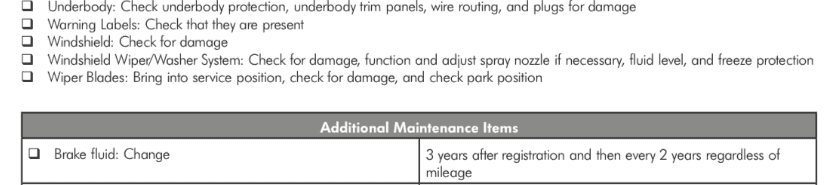
Better check with Toyota, Honda, VW and others - first flush at 3 years, subsequent at 2 year intervals. Honda even has a dash reminder that follows that exact schedule.

Drum brakes were more frequent - the 2 years is a newer thing.

You can find it in their manuals - yes, current, new vehicles since 2020.
Jeep Gladiator Flushing Brake Fluid 1711060488116-oa


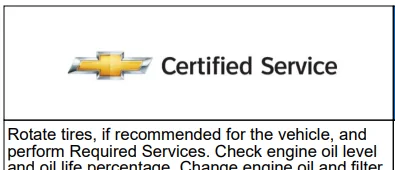
And this for Silverado models up to about 2019 straight from the Chevrolet owner manual -

Jeep Gladiator Flushing Brake Fluid 1711060911084-c7

Jeep Gladiator Flushing Brake Fluid 1711060739710-ta


The current for GM may be longer.


No, it's not an old drum brake thing. Brake fluid loses it's ability to resist corrosion, hold viscosity and other factors just like your ATF or engine oil or coolant. It loses attributes with age and heat. It's not just "it absorbs water".

But we know how the internet is........ most service is based strictly on opinions or "I think" or "I believe" or "that's silly".

It's in the books - most major manufacturers. (well, aside from perhaps Jeep)

If we could do a public survey on how often they have their brake fluid changed, most would answer never. In forums you will get every X years, but in reality I doubt that is the case.
Asking the public? Most "public" - including a typical jeep owner, isn't exactly the best to ask about best maintenance practices or about honesty in their maintenance.

And I go back to - so many get wound up on differential lube changes - it's critical, she'll blow if you don't do it, but when it comes to safety - naw, I've gotten by for 10 years, never a problem.
That's clever.
 

Charles 236

Well-Known Member
First Name
Charles
Joined
Feb 13, 2022
Threads
0
Messages
607
Reaction score
1,228
Location
Greenville, SC
Vehicle(s)
Jeep Gladiator Overland
Occupation
Jeep technician
Properly performed maintenance has never done any harm to any vehicle, even if it is done earlier than recommended. Maintenance that is skipped, or done after a too long interval, has created problems that could have been avoided. An old school example is transmission servicing. Many people don't have it done until the transmission has some issue that makes them think about it. At that point, a fluid and filter service is not going to fix the issue, the damage is done.

Brake hydraulic systems are the same, properly flushing brake fluid will not hurt the system. On the other hand, if you don't flush it and save all that money instead, when there is an HCU problem there won't be enough money to pay for replacing it.
 

Sponsored

Lost1wing

Well-Known Member
First Name
Tim
Joined
Dec 22, 2020
Threads
24
Messages
2,609
Reaction score
2,858
Location
West Georgia
Vehicle(s)
2020 Jeep Gladiator Rubicon
Occupation
Retired AMT
Better check with Toyota, Honda, VW and others - first flush at 3 years, subsequent at 2 year intervals. Honda even has a dash reminder that follows that exact schedule.

Drum brakes were more frequent - the 2 years is a newer thing.

You can find it in their manuals - yes, current, new vehicles since 2020.
1711060488116-oa.png


And this for Silverado models up to about 2019 straight from the Chevrolet owner manual -

1711060911084-c7.png

1711060739710-ta.png


The current for GM may be longer.


No, it's not an old drum brake thing. Brake fluid loses it's ability to resist corrosion, hold viscosity and other factors just like your ATF or engine oil or coolant. It loses attributes with age and heat. It's not just "it absorbs water".

But we know how the internet is........ most service is based strictly on opinions or "I think" or "I believe" or "that's silly".

It's in the books - most major manufacturers. (well, aside from perhaps Jeep)


Asking the public? Most "public" - including a typical jeep owner, isn't exactly the best to ask about best maintenance practices or about honesty in their maintenance.

And I go back to - so many get wound up on differential lube changes - it's critical, she'll blow if you don't do it, but when it comes to safety - naw, I've gotten by for 10 years, never a problem.
That's clever.

I'm not disagreeing what the book says. I'm just saying in reality, brake fluid changes are rarely done until usually a brake service is required. These are not race cars subjective to abuse and extreme temps.
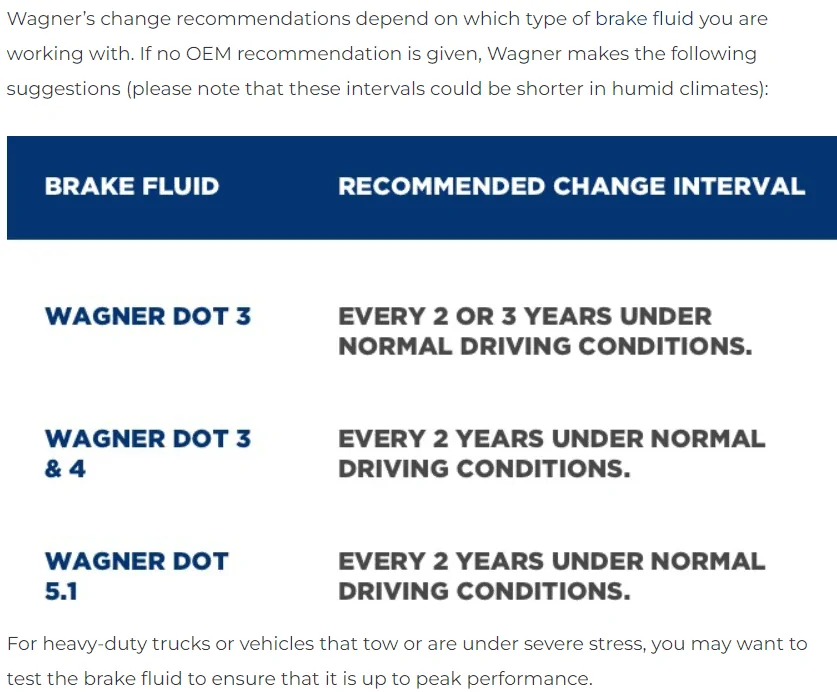
Heavens sake, most people can't keep their tires inflated despite the indication flashing in their face, and their going to read an owners manual.

It just doesn't happen the way the book says. I just asked my 70 year old neighbor if she ever had her brake fluid flushed. She replied " no, do I need to?". I asked her if her dealer ever recommended it being done. She replied, "yes, but she declined ". 2016 Buick with 70k miles. I could ask around more and I'm guessing I'll get the same answer.
 

Hootbro

Well-Known Member
First Name
Don
Joined
Apr 13, 2019
Threads
57
Messages
10,183
Reaction score
19,948
Location
Delaware
Vehicle(s)
2025 Gladiator Sport
I'm not disagreeing what the book says. I'm just saying in reality, brake fluid changes are rarely done until usually a brake service is required. These are not race cars subjective to abuse and extreme temps.

Heavens sake, most people can't keep their tires inflated despite the indication flashing in their face, and their going to read an owners manual.

It just doesn't happen the way the book says. I just asked my 70 year old neighbor if she ever had her brake fluid flushed. She replied " no, do I need to?". I asked her if her dealer ever recommended it being done. She replied, "yes, but she declined ". 2016 Buick with 70k miles. I could ask around more and I'm guessing I'll get the same answer.
I think this falls under the difference between best practices vs. what one can get away with. Grandma will never tax her Buick brake system to a point of it being an issue of having old brake fluid.
 

ShadowsPapa

Well-Known Member
First Name
Bill
Joined
Oct 12, 2019
Threads
247
Messages
40,442
Reaction score
53,860
Location
Runnells, Iowa
Vehicle(s)
'25 JTMX, '23 JLU 4xe, '82 SX4, '73 Javelin
Occupation
Retired auto mechanic, frmr gov't ntwrk security admin
Vehicle Showcase
3
I'm just saying in reality, brake fluid changes are rarely done until usually a brake service is required. These are not race cars subjective to abuse and extreme temps.

My points are being missed again - "race cars"? Abuse? Extreme temps?
Doesn't matter. It's not all about "water" either.
Brake fluid contains compounds that help keep the rubber seals and cups supple, keep them from drying out, etc.
It contains corrosion inhibiters (sort of like coolant does) among other things.
Over time those things lose their ability to work.
And of course add in the water bits..........

You are talking about what people do and the fact most don't - I'm talking about what they don't - until they need brakes and then don't have them, or years down the road they are spending hundreds - or more - on repairs that could be avoided.
So I'm keeping it at what they should do. Hell, around here people should use turn signals but even the TV stations have shown few Iowan's do. People should do a lot of things but don't - but that's not what this is about.
It's about avoiding disaster, preventative maintenance, best practices, being safe and not slamming into a semi because you never had anything checked out and never did any maintenance.

Brake fluid, over time, like other fluids, breaks down and loses the ability to keep the seals supple and flexible. It loses the ability to prevent corrosion (regardless of how much water is has absorbed, it has anti-corrosion chemicals - corrosion inhibiters in it)


Brake fluid has viscosity stabilizers, among other things, note what's stated here -

Just because a fluid falls within a certain classification doesn’t mean it won’t provide equal or better performance than a fluid with a higher classification. Depending on the composition, a DOT 3 fluid may have a better boiling point than a DOT 4 fluid. In addition, vehicles with an anti-lock braking system (ABS) are designed to work within the viscosity range of the specified classification.


The presence of copper is a good indicator of the condition of brake fluid. When brake fluid deteriorates, copper levels rise, signaling that the fluid is losing its effectiveness. As brake fluid breaks down (high copper levels), the brake fluid no longer has adequate anticorrosive inhibitors so corrosion of internal brake hydraulic components may occur.


  • DOT 3, 3 & 4 and 5.1 are all glycol-based brake fluids that are compatible with each other and can be mixed without having harmful effects on a vehicle’s braking system.
  • It is important never to mix or mistake DOT 5.1 (glycol based) with DOT 5, which is silicone based. DOT 5 can never be mixed with any other DOT fluid but DOT 5.


If you tow or live in mountain areas - this will vary:
Jeep Gladiator Flushing Brake Fluid 1711122260049-cz


pH and other things change over time for various reasons -

The Federal Motor Vehicle Safety Standards (FMVSS) No. 116 stipulates the requirements for motor vehicle brake fluids. To be considered for one of the DOT classifications, a brake fluid must go through the following tests:
1. Equilibrium reflux boiling point (dry boiling point)
2. Wet equilibrium reflux boiling point (tested with 3.7 percent water)
3. Kinematic viscosities
4. pH value
5. Brake fluid stability (high-temperature and chemical stability)
6. Corrosion
7. Fluidity and appearance at low temperature
8. Reserved
9. Water tolerance (low temperature and at 60 degrees C)
10. Compatibility (low temperature and at 60 degrees C)
11. Resistance to oxidation
12. Effects on cups
13. Stroking properties
14. Fluid color

Copper Is a Big Problem and a Tell-Tale Indicator
Brake lines have a copper lining that begin a slow corrosion process from the time brake fluid is added during manufacturing. Copper levels can actually predict when more damaging corrosion will occur. It’s like a wear indicator for your brake fluid. Copper plays a vital role in brake system safety. Government studies have proven that copper can actually plate to ABS components causing them not to operate properly resulting in longer stopping distance. In addition, copper can accelerate the corrosion of iron components used in the brake system.
  • Brake lines are lined with copper.
  • Copper predicts more damaging corrosion, it’s a wear indicator!
  • Copper can damage ABS components.
  • Copper accelerates corrosion.
  • Proper brake fluid exchange removes copper and replenishes the corrosion inhibitors.

So ABS system could be more prone to damage from lack of brake system service...........

Just because "most don't" doesn't mean anything other than they are not reading the books or listening to people who know. (or they are lazy or cheap or whatever)
 

Lost1wing

Well-Known Member
First Name
Tim
Joined
Dec 22, 2020
Threads
24
Messages
2,609
Reaction score
2,858
Location
West Georgia
Vehicle(s)
2020 Jeep Gladiator Rubicon
Occupation
Retired AMT
My points are being missed again - "race cars"? Abuse? Extreme temps?
Doesn't matter. It's not all about "water" either.
Brake fluid contains compounds that help keep the rubber seals and cups supple, keep them from drying out, etc.
It contains corrosion inhibiters (sort of like coolant does) among other things.
Over time those things lose their ability to work.
And of course add in the water bits..........

You are talking about what people do and the fact most don't - I'm talking about what they don't - until they need brakes and then don't have them, or years down the road they are spending hundreds - or more - on repairs that could be avoided.
So I'm keeping it at what they should do. Hell, around here people should use turn signals but even the TV stations have shown few Iowan's do. People should do a lot of things but don't - but that's not what this is about.
It's about avoiding disaster, preventative maintenance, best practices, being safe and not slamming into a semi because you never had anything checked out and never did any maintenance.

Brake fluid, over time, like other fluids, breaks down and loses the ability to keep the seals supple and flexible. It loses the ability to prevent corrosion (regardless of how much water is has absorbed, it has anti-corrosion chemicals - corrosion inhibiters in it)


Brake fluid has viscosity stabilizers, among other things, note what's stated here -

Just because a fluid falls within a certain classification doesn’t mean it won’t provide equal or better performance than a fluid with a higher classification. Depending on the composition, a DOT 3 fluid may have a better boiling point than a DOT 4 fluid. In addition, vehicles with an anti-lock braking system (ABS) are designed to work within the viscosity range of the specified classification.


The presence of copper is a good indicator of the condition of brake fluid. When brake fluid deteriorates, copper levels rise, signaling that the fluid is losing its effectiveness. As brake fluid breaks down (high copper levels), the brake fluid no longer has adequate anticorrosive inhibitors so corrosion of internal brake hydraulic components may occur.


  • DOT 3, 3 & 4 and 5.1 are all glycol-based brake fluids that are compatible with each other and can be mixed without having harmful effects on a vehicle’s braking system.
  • It is important never to mix or mistake DOT 5.1 (glycol based) with DOT 5, which is silicone based. DOT 5 can never be mixed with any other DOT fluid but DOT 5.


If you tow or live in mountain areas - this will vary:
1711122260049-cz.png


pH and other things change over time for various reasons -

The Federal Motor Vehicle Safety Standards (FMVSS) No. 116 stipulates the requirements for motor vehicle brake fluids. To be considered for one of the DOT classifications, a brake fluid must go through the following tests:
1. Equilibrium reflux boiling point (dry boiling point)
2. Wet equilibrium reflux boiling point (tested with 3.7 percent water)
3. Kinematic viscosities
4. pH value
5. Brake fluid stability (high-temperature and chemical stability)
6. Corrosion
7. Fluidity and appearance at low temperature
8. Reserved
9. Water tolerance (low temperature and at 60 degrees C)
10. Compatibility (low temperature and at 60 degrees C)
11. Resistance to oxidation
12. Effects on cups
13. Stroking properties
14. Fluid color

Copper Is a Big Problem and a Tell-Tale Indicator
Brake lines have a copper lining that begin a slow corrosion process from the time brake fluid is added during manufacturing. Copper levels can actually predict when more damaging corrosion will occur. It’s like a wear indicator for your brake fluid. Copper plays a vital role in brake system safety. Government studies have proven that copper can actually plate to ABS components causing them not to operate properly resulting in longer stopping distance. In addition, copper can accelerate the corrosion of iron components used in the brake system.
  • Brake lines are lined with copper.
  • Copper predicts more damaging corrosion, it’s a wear indicator!
  • Copper can damage ABS components.
  • Copper accelerates corrosion.
  • Proper brake fluid exchange removes copper and replenishes the corrosion inhibitors.

So ABS system could be more prone to damage from lack of brake system service...........

Just because "most don't" doesn't mean anything other than they are not reading the books or listening to people who know. (or they are lazy or cheap or whatever)

I am getting your point. I'm just trying explain we are not seeing pile-ups on the highway because someone missed a two year brake fluid flush.
 

dayusmc

Well-Known Member
Joined
Mar 6, 2023
Threads
60
Messages
969
Reaction score
698
Location
Jersey Shore
Vehicle(s)
2020 Gobi Mojave & 2022 JLU High-Tide
Occupation
Retired Marine
So what was the consensus for what Dot 3 brake fluid is the best?

 

Sponsored

Viper501

Well-Known Member
Joined
Oct 1, 2022
Threads
3
Messages
715
Reaction score
1,013
Location
COLASC
Vehicle(s)
2022 JT Sting Gray Mojave; 2025 Range Rover Sport, 2020 Mercedes GLE (Gone)
Occupation
Ninja
I think this falls under the difference between best practices vs. what one can get away with. Grandma will never tax her Buick brake system to a point of it being an issue of having old brake fluid.
I agree to an extent. I think the risks / cost v. benefit analysis is pretty clear. It is a fluid in a mechanical device that facilitates the single most important safety system. Flush it every so often and reduce the risk of failure to perform as expected in unexpected situations. For the cost it is a worthwhile preventative maintenance item everyone should do.

As to grandma, I have seen a fatality of an older driver who drove a pickup not more than 45 mph anywhere. He had an emergency and pushed hard on the brake pedal for probably the first time in its life. Pedal went all the way to the floor due to the failure of the master cylinder’s seals. Shot brake fluid into the cab. Truck only stopped when it hit a tree, killing the driver when he hit the steering wheel as an unrestrained occupant.

Bottom line is pay attention to the brakes and ensure they are maintained. It is cheap insurance.
 

Hootbro

Well-Known Member
First Name
Don
Joined
Apr 13, 2019
Threads
57
Messages
10,183
Reaction score
19,948
Location
Delaware
Vehicle(s)
2025 Gladiator Sport
So what was the consensus for what Dot 3 brake fluid is the best?
That is good question but almost like a motor oil question, going to be opinionate and personal brand bias.

Basically you want any DOT 3 fluid that meets the SAE J1703 spec which is the minimum spec for DOT 3 fluid.

You will also hear the term "synthetic" used on some brands labels but it is considered that all DOT 3 fluids are full synthetic based just by the Glycol manufacturing process. There is also some products advertised as "Racing" DOT 3 fluid but those are generally just DOT 4 fluid with the higher boiling point just being downward DOT 3 mix compatible.

Over the years, I have used the whole gambit of DOT 3 fluid from store brands to boutique European branded stuff and it all worked the same and any felt difference I think was more of a placebo effect.
 

Rusty PW

Well-Known Member
First Name
Russ
Joined
Jan 10, 2022
Threads
37
Messages
11,358
Reaction score
30,311
Location
Fayette Nam, Pennsyltucky
Website
www.youtube.com
Vehicle(s)
'22 JTRD, '11 370Z Nismo, '07 Honda VFR
Build Thread
Link
Occupation
Muff Diver
I've always used Dot 4 for the higher boiling point. Heavy brake usage like towing, or live in a hilly, mountainous area with some steep down hills. Will put some heat into the brakes. Nothing worse than having brake fade.


And who's spells brake as break. Give us a break.
 

Maximus Gladius

Well-Known Member
First Name
Kevin
Joined
Jan 30, 2021
Threads
74
Messages
2,901
Reaction score
3,692
Location
Calgary, AB, Canada
Vehicle(s)
2021 JTR, 2023 JTR
Anyone know how to take out the little screen thingy in the reservoir so I can suck out the old stuff before i do my flush?


Top