
WILDHOBO
Well-Known Member
That’s what I did when the test wouldn’t work.You can always try ghetto bleeding the ABS.....dirt/snow....lock them up. Air will go into the system...do manual bleed.
Sponsored

That’s what I did when the test wouldn’t work.You can always try ghetto bleeding the ABS.....dirt/snow....lock them up. Air will go into the system...do manual bleed.



Better check with Toyota, Honda, VW and others - first flush at 3 years, subsequent at 2 year intervals. Honda even has a dash reminder that follows that exact schedule.Drum brakes were horrible compared to disc brakes. I can see why they had a 2 year recommendation for replacement. Disc brakes, ABS newer fluids definitely make braking safer, but a 2 year 20k mile recommendation is a bit early.

Asking the public? Most "public" - including a typical jeep owner, isn't exactly the best to ask about best maintenance practices or about honesty in their maintenance.If we could do a public survey on how often they have their brake fluid changed, most would answer never. In forums you will get every X years, but in reality I doubt that is the case.
I'm not disagreeing what the book says. I'm just saying in reality, brake fluid changes are rarely done until usually a brake service is required. These are not race cars subjective to abuse and extreme temps.Better check with Toyota, Honda, VW and others - first flush at 3 years, subsequent at 2 year intervals. Honda even has a dash reminder that follows that exact schedule.
Drum brakes were more frequent - the 2 years is a newer thing.
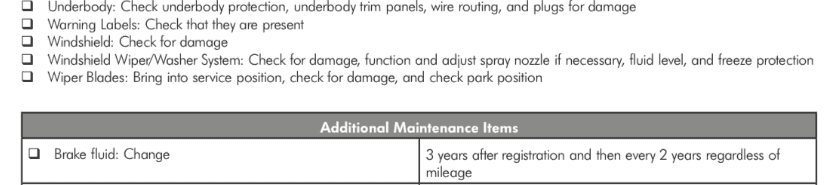
You can find it in their manuals - yes, current, new vehicles since 2020.

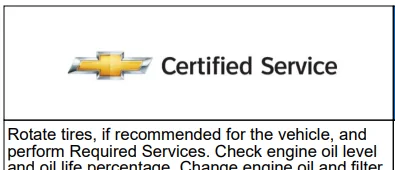
And this for Silverado models up to about 2019 straight from the Chevrolet owner manual -


The current for GM may be longer.
No, it's not an old drum brake thing. Brake fluid loses it's ability to resist corrosion, hold viscosity and other factors just like your ATF or engine oil or coolant. It loses attributes with age and heat. It's not just "it absorbs water".
But we know how the internet is........ most service is based strictly on opinions or "I think" or "I believe" or "that's silly".
It's in the books - most major manufacturers. (well, aside from perhaps Jeep)
Asking the public? Most "public" - including a typical jeep owner, isn't exactly the best to ask about best maintenance practices or about honesty in their maintenance.
And I go back to - so many get wound up on differential lube changes - it's critical, she'll blow if you don't do it, but when it comes to safety - naw, I've gotten by for 10 years, never a problem.
That's clever.

I think this falls under the difference between best practices vs. what one can get away with. Grandma will never tax her Buick brake system to a point of it being an issue of having old brake fluid.I'm not disagreeing what the book says. I'm just saying in reality, brake fluid changes are rarely done until usually a brake service is required. These are not race cars subjective to abuse and extreme temps.
Heavens sake, most people can't keep their tires inflated despite the indication flashing in their face, and their going to read an owners manual.
It just doesn't happen the way the book says. I just asked my 70 year old neighbor if she ever had her brake fluid flushed. She replied " no, do I need to?". I asked her if her dealer ever recommended it being done. She replied, "yes, but she declined ". 2016 Buick with 70k miles. I could ask around more and I'm guessing I'll get the same answer.
I'm just saying in reality, brake fluid changes are rarely done until usually a brake service is required. These are not race cars subjective to abuse and extreme temps.
I am getting your point. I'm just trying explain we are not seeing pile-ups on the highway because someone missed a two year brake fluid flush.My points are being missed again - "race cars"? Abuse? Extreme temps?
Doesn't matter. It's not all about "water" either.
Brake fluid contains compounds that help keep the rubber seals and cups supple, keep them from drying out, etc.
It contains corrosion inhibiters (sort of like coolant does) among other things.
Over time those things lose their ability to work.
And of course add in the water bits..........
You are talking about what people do and the fact most don't - I'm talking about what they don't - until they need brakes and then don't have them, or years down the road they are spending hundreds - or more - on repairs that could be avoided.
So I'm keeping it at what they should do. Hell, around here people should use turn signals but even the TV stations have shown few Iowan's do. People should do a lot of things but don't - but that's not what this is about.
It's about avoiding disaster, preventative maintenance, best practices, being safe and not slamming into a semi because you never had anything checked out and never did any maintenance.
Brake fluid, over time, like other fluids, breaks down and loses the ability to keep the seals supple and flexible. It loses the ability to prevent corrosion (regardless of how much water is has absorbed, it has anti-corrosion chemicals - corrosion inhibiters in it)
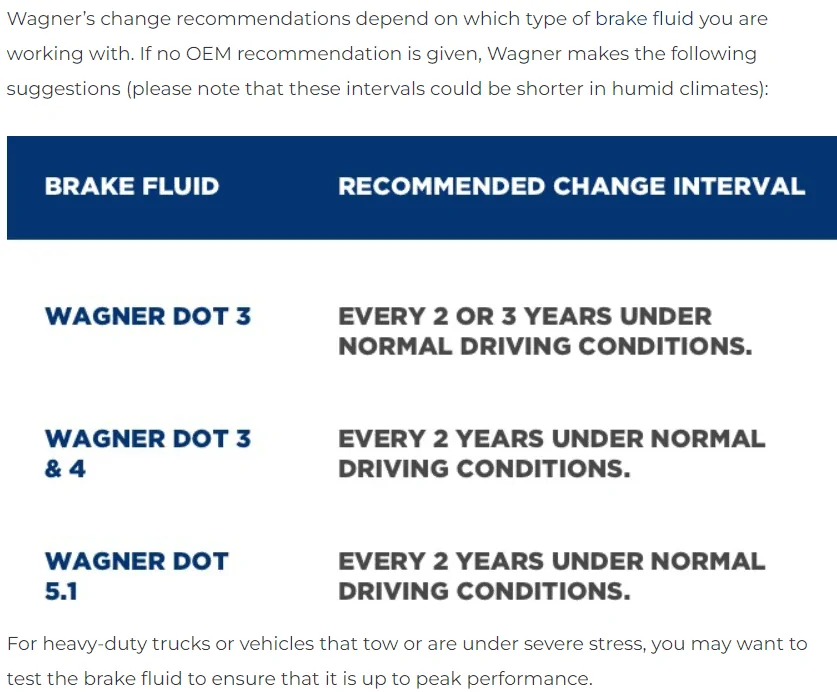
Brake fluid has viscosity stabilizers, among other things, note what's stated here -
Just because a fluid falls within a certain classification doesn’t mean it won’t provide equal or better performance than a fluid with a higher classification. Depending on the composition, a DOT 3 fluid may have a better boiling point than a DOT 4 fluid. In addition, vehicles with an anti-lock braking system (ABS) are designed to work within the viscosity range of the specified classification.
The presence of copper is a good indicator of the condition of brake fluid. When brake fluid deteriorates, copper levels rise, signaling that the fluid is losing its effectiveness. As brake fluid breaks down (high copper levels), the brake fluid no longer has adequate anticorrosive inhibitors so corrosion of internal brake hydraulic components may occur.
- DOT 3, 3 & 4 and 5.1 are all glycol-based brake fluids that are compatible with each other and can be mixed without having harmful effects on a vehicle’s braking system.
- It is important never to mix or mistake DOT 5.1 (glycol based) with DOT 5, which is silicone based. DOT 5 can never be mixed with any other DOT fluid but DOT 5.
If you tow or live in mountain areas - this will vary:

pH and other things change over time for various reasons -
The Federal Motor Vehicle Safety Standards (FMVSS) No. 116 stipulates the requirements for motor vehicle brake fluids. To be considered for one of the DOT classifications, a brake fluid must go through the following tests:
1. Equilibrium reflux boiling point (dry boiling point)
2. Wet equilibrium reflux boiling point (tested with 3.7 percent water)
3. Kinematic viscosities
4. pH value
5. Brake fluid stability (high-temperature and chemical stability)
6. Corrosion
7. Fluidity and appearance at low temperature
8. Reserved
9. Water tolerance (low temperature and at 60 degrees C)
10. Compatibility (low temperature and at 60 degrees C)
11. Resistance to oxidation
12. Effects on cups
13. Stroking properties
14. Fluid color
Copper Is a Big Problem and a Tell-Tale Indicator
Brake lines have a copper lining that begin a slow corrosion process from the time brake fluid is added during manufacturing. Copper levels can actually predict when more damaging corrosion will occur. It’s like a wear indicator for your brake fluid. Copper plays a vital role in brake system safety. Government studies have proven that copper can actually plate to ABS components causing them not to operate properly resulting in longer stopping distance. In addition, copper can accelerate the corrosion of iron components used in the brake system.
- Brake lines are lined with copper.
- Copper predicts more damaging corrosion, it’s a wear indicator!
- Copper can damage ABS components.
- Copper accelerates corrosion.
- Proper brake fluid exchange removes copper and replenishes the corrosion inhibitors.
So ABS system could be more prone to damage from lack of brake system service...........
Just because "most don't" doesn't mean anything other than they are not reading the books or listening to people who know. (or they are lazy or cheap or whatever)

I agree to an extent. I think the risks / cost v. benefit analysis is pretty clear. It is a fluid in a mechanical device that facilitates the single most important safety system. Flush it every so often and reduce the risk of failure to perform as expected in unexpected situations. For the cost it is a worthwhile preventative maintenance item everyone should do.I think this falls under the difference between best practices vs. what one can get away with. Grandma will never tax her Buick brake system to a point of it being an issue of having old brake fluid.
That is good question but almost like a motor oil question, going to be opinionate and personal brand bias.So what was the consensus for what Dot 3 brake fluid is the best?


Break us off a piece of that kit - kat bar...And who's spells brake as break. Give us a break.


