
Sponsored

Hood Mounted Solar Panels

Delhux

Well-Known Member
Joined
Aug 23, 2019
Threads
43
Messages
574
Reaction score
889
Location
Boston, MA
Vehicle(s)
2020 Gladiator - Overland - Gator
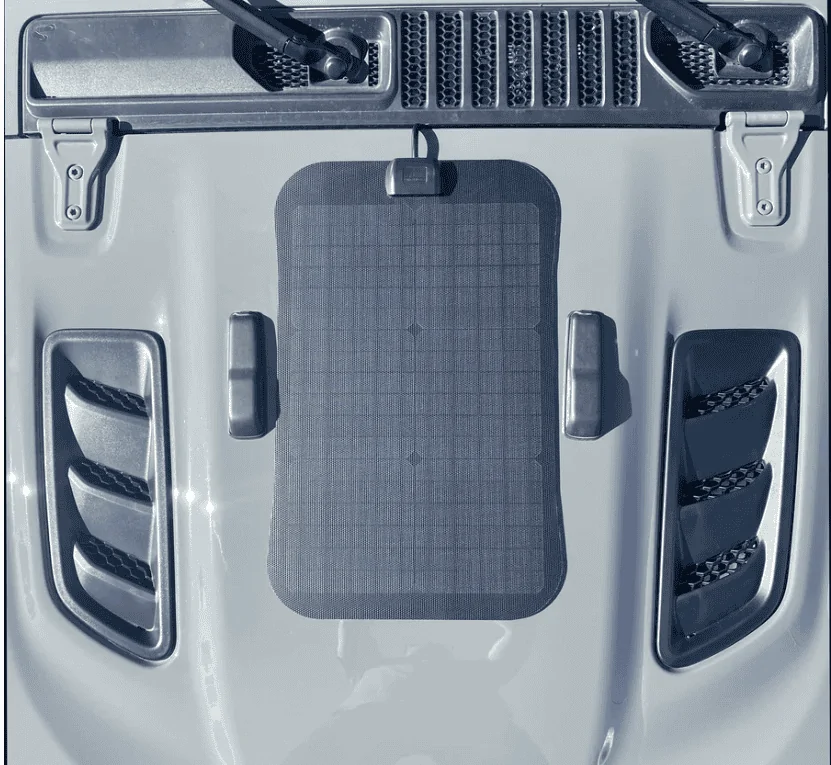
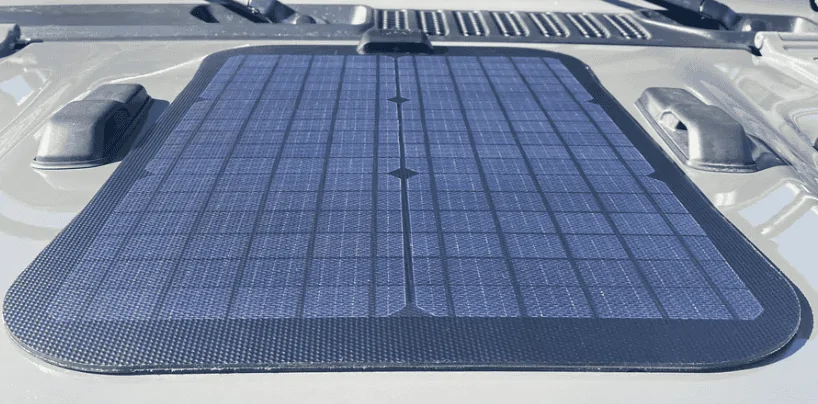
I have the larger Cascadia panel on my Overland hood. 95% of the time it is simply maintaining the awful batteries from the factory.

I do like that 5% of the time I can run additional accessories and have confidence that I won’t risk draining the batteries without running the engine .

I wasn’t that concerned about price per watt, I just saw it as a way to avoid headaches regarding the batteries.
Sponsored


 

WILDHOBO

Well-Known Member
First Name
Dan
Joined
Sep 24, 2021
Threads
73
Messages
11,647
Reaction score
17,713
Location
Colorado
Vehicle(s)
2021 Gladiator Rubicon
Occupation
Network Engineer
Vehicle Showcase
1
So it's not powering the appliance, the Jeep's battery is, and the solar panel is simply supplementing the battery but not maintaining the voltage.


It was confusing as there's no way a 30 watt power supply (the solar panel) can power a device pulling 70 watts.
But if your 30w panel puts out 25 like most 30s max out at, especially flat, then you were at least relying on the Jeep batteries for only 45 watts of that power.
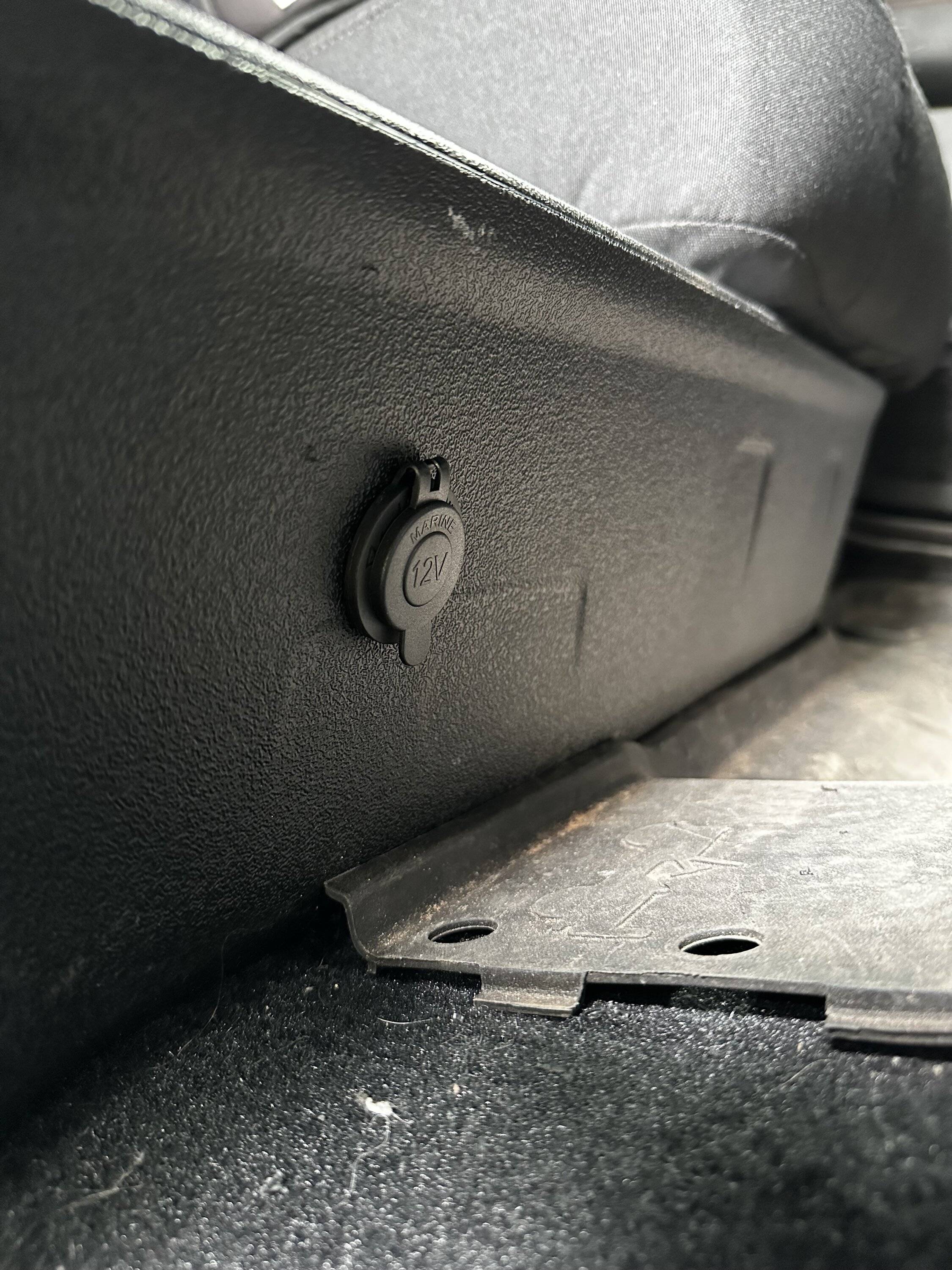
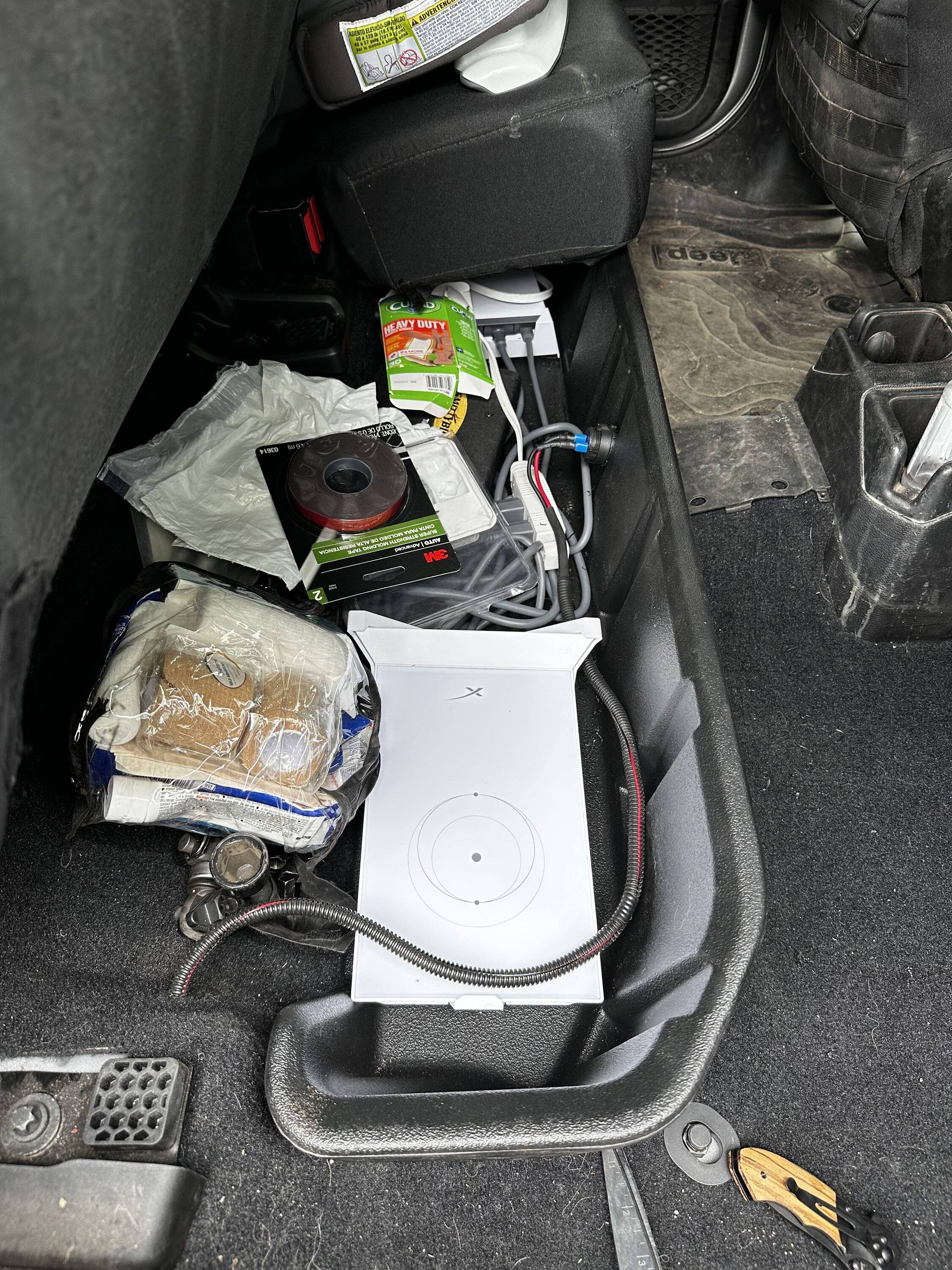
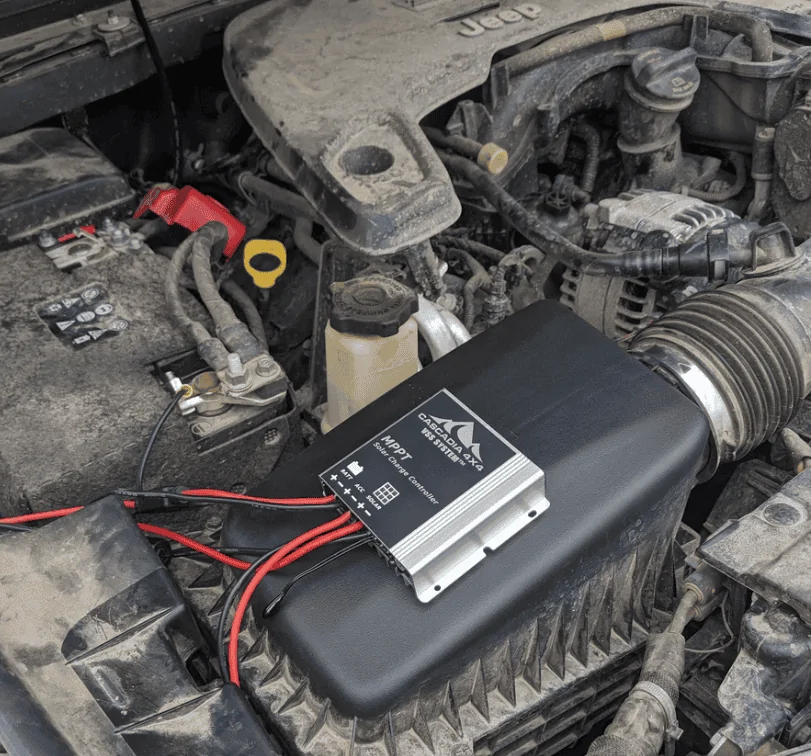
Correct. The kit comes with the panel, the charge controller, and a vinyl layer to protect the hood. It requires that it be connected to a battery. For me, it’s great. The charge controller connects to the battery, and also has a 12v output for accessories. The accessory output protects the battery by not allowing it to get below 11.4v. I hard wired it to a 12v outlet in the back seat. The 7+ hour test was with a 70w average draw device connected to that port. I would have tested longer, but had to leave. I didn’t start it for the entire time, and the battery was at 11.9v before I did.
 

ShadowsPapa

Well-Known Member
First Name
Bill
Joined
Oct 12, 2019
Threads
247
Messages
40,440
Reaction score
53,854
Location
Runnells, Iowa
Vehicle(s)
'25 JTMX, '23 JLU 4xe, '82 SX4, '73 Javelin
Occupation
Retired auto mechanic, frmr gov't ntwrk security admin
Vehicle Showcase
3
I didn’t start it for the entire time, and the battery was at 11.9v before I did.
that's a death knell for these batteries. Drastically reducing long-term capacity and life.
I'd want it set to not go quite that low.
Too bad you can't daisy-chain other panels to increase capacity.
 

WILDHOBO

Well-Known Member
First Name
Dan
Joined
Sep 24, 2021
Threads
73
Messages
11,647
Reaction score
17,713
Location
Colorado
Vehicle(s)
2021 Gladiator Rubicon
Occupation
Network Engineer
Vehicle Showcase
1
that's a death knell for these batteries. Drastically reducing long-term capacity and life.
I'd want it set to not go quite that low.
Too bad you can't daisy-chain other panels to increase capacity.
You can daisy chain them. They also sell roof top panels. 11.4v is nothing. But it would take a hell of a lot to get close to that. After 7 hours of use, I was only down to 11.9. The charge controller’s protected circuit works great. Here’s where I wired mine.

Jeep Gladiator Hood Mounted Solar Panels IMG_5900


Jeep Gladiator Hood Mounted Solar Panels IMG_5899
 

ShadowsPapa

Well-Known Member
First Name
Bill
Joined
Oct 12, 2019
Threads
247
Messages
40,440
Reaction score
53,854
Location
Runnells, Iowa
Vehicle(s)
'25 JTMX, '23 JLU 4xe, '82 SX4, '73 Javelin
Occupation
Retired auto mechanic, frmr gov't ntwrk security admin
Vehicle Showcase
3
You can daisy chain them. They also sell roof top panels. 11.4v is nothing. But it would take a hell of a lot to get close to that. After 7 hours of use, I was only down to 11.9. The charge controller’s protected circuit works great. Here’s where I wired mine.

IMG_5900.jpeg


IMG_5899.jpeg
No way I'd accept a controller that let a vehicle's battery get down that low - I'd hope that can be adjusted or set. That's abusing the battery and risking a no-start situation on an older battery.
For an auxiliary battery that's not part of the vehicle electric system that's ok if it's a deep cycle battery...............but........
I wonder why they set that for 11.4 before shutoff. 11.9 is really bad, 11.4 is battery killer territory. Ouch. AGM batteries don't do well getting below 12 volts.

It's why I'm opting for a distinct battery - not relying on the vehicle's main batteries for aux power.
 

Sponsored

WILDHOBO

Well-Known Member
First Name
Dan
Joined
Sep 24, 2021
Threads
73
Messages
11,647
Reaction score
17,713
Location
Colorado
Vehicle(s)
2021 Gladiator Rubicon
Occupation
Network Engineer
Vehicle Showcase
1
No way I'd accept a controller that let a vehicle's battery get down that low - I'd hope that can be adjusted or set. That's abusing the battery and risking a no-start situation on an older battery.
For an auxiliary battery that's not part of the vehicle electric system that's ok if it's a deep cycle battery...............but........
I wonder why they set that for 11.4 before shutoff. 11.9 is really bad, 11.4 is battery killer territory. Ouch. AGM batteries don't do well getting below 12 volts.

It's why I'm opting for a distinct battery - not relying on the vehicle's main batteries for aux power.
The fact is, the whole point of a system like this is to create an easy maintainer without the need for ac power and a charger. Draining your battery down isn’t the fault of the controller. It would never happen unless you deliberately try to push it. I did that once as a test to prove that I’d be able to start it, which I did without a problem. I’d expect my original batteries to last longer than most others, since it’s always being maintained, as long as the sun isn’t down, and it isn’t totally overcast.
 

ShadowsPapa

Well-Known Member
First Name
Bill
Joined
Oct 12, 2019
Threads
247
Messages
40,440
Reaction score
53,854
Location
Runnells, Iowa
Vehicle(s)
'25 JTMX, '23 JLU 4xe, '82 SX4, '73 Javelin
Occupation
Retired auto mechanic, frmr gov't ntwrk security admin
Vehicle Showcase
3
The fact is, the whole point of a system like this is to create an easy maintainer without the need for ac power and a charger. Draining your battery down isn’t the fault of the controller. It would never happen unless you deliberately try to push it. I did that once as a test to prove that I’d be able to start it, which I did without a problem. I’d expect my original batteries to last longer than most others, since it’s always being maintained, as long as the sun isn’t down, and it isn’t totally overcast.
If they are decent panels, even with some overcast, you may get a few watts out of it - enough to give maybe 0.5 amp which is what some small battery tenders do.
That's more than the parasitic drain of the Jeep's systems and the self-discharge rate of the battery.
 

Steven_B

Well-Known Member
First Name
Steven
Joined
Dec 20, 2020
Threads
8
Messages
480
Reaction score
749
Location
Federal Way, WA
Website
aroundthenw.com
Vehicle(s)
2018 WK2, 2001 XJ, 1993 YJ, 2021 JT EcoDiesel
Occupation
Digital Marketing Manager
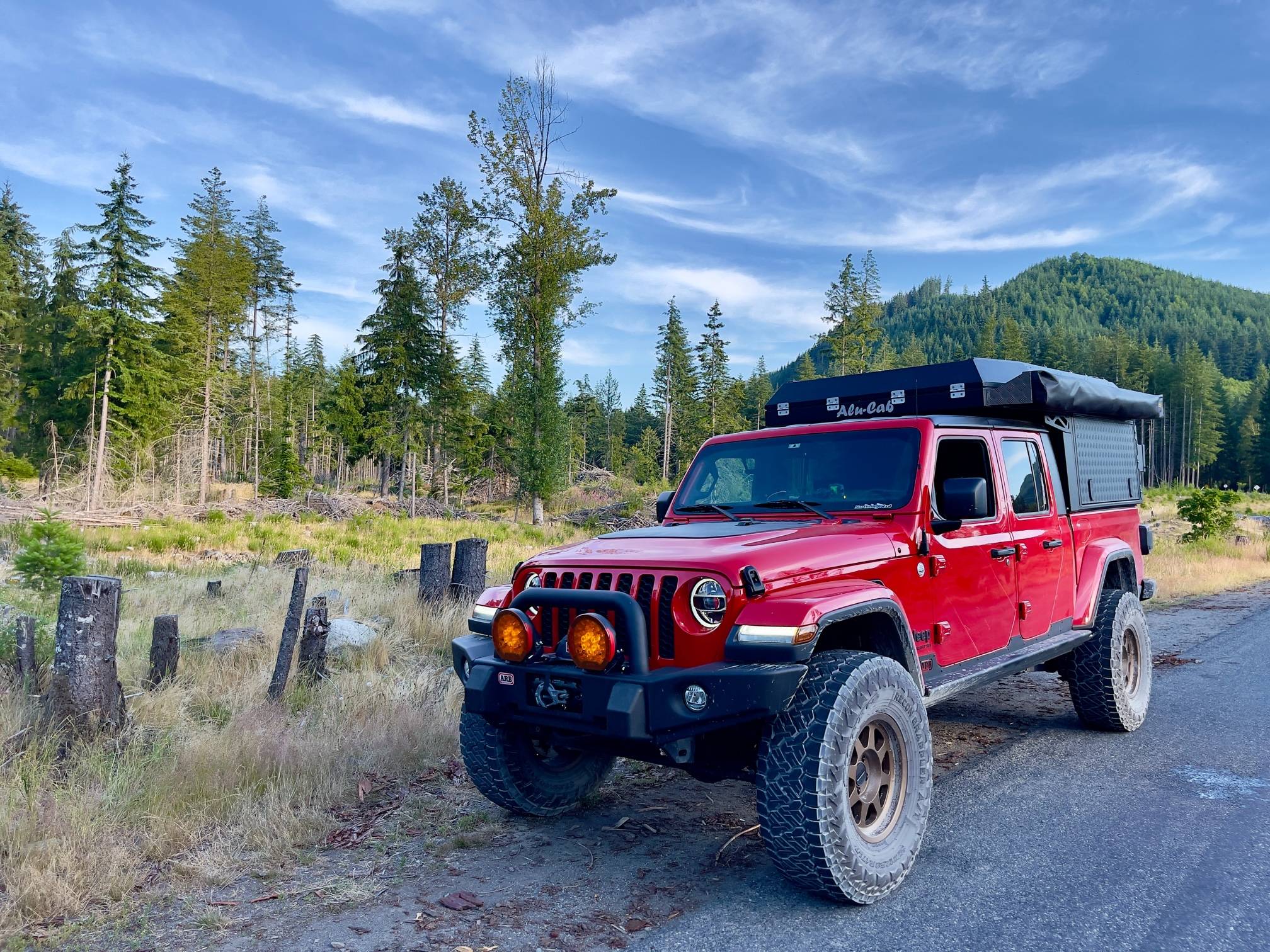
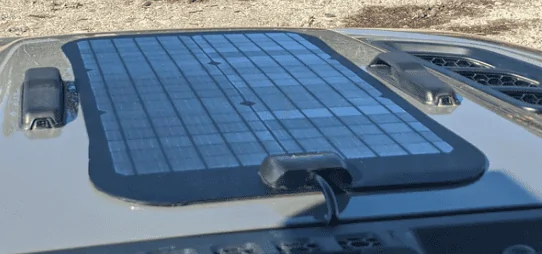
Another happy Cascadia 4x4 customer here (85W). I work from home, so the Jeep sits in the driveway sometimes up to a couple of weeks at a time. Every non-ignition accessory is powered by my camper's house battery, so the hood-mounted panel's sole job is to maintain the starting battery.

Jeep Gladiator Hood Mounted Solar Panels image0
 

BearFootSam

Well-Known Member
First Name
Jim
Joined
Oct 12, 2022
Threads
9
Messages
673
Reaction score
947
Location
PNW
Vehicle(s)
22' Gladiator Rubicon
Occupation
Fed
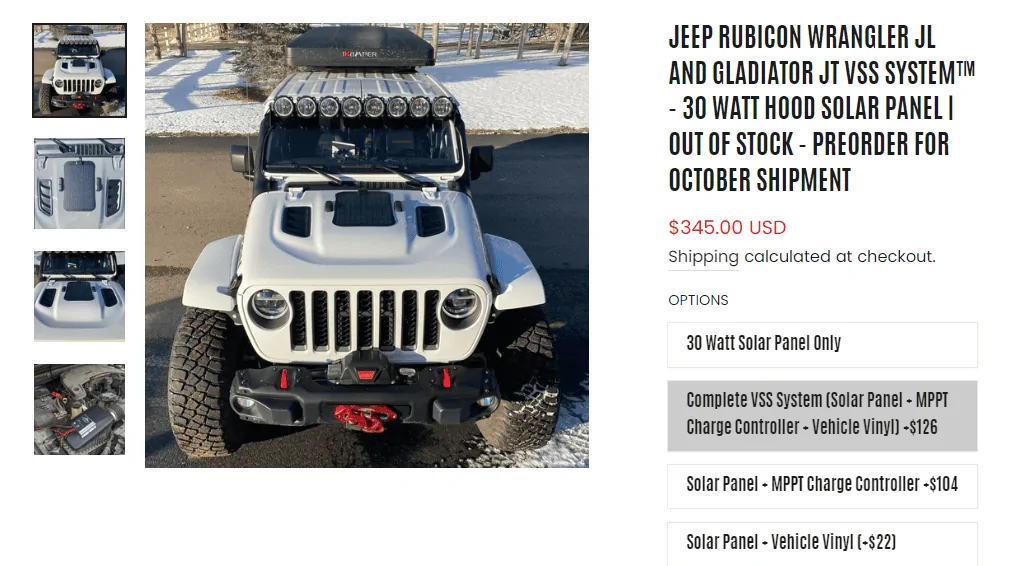
I think the draw, no pun intended is the flexible nature of the panel, electronics have been sorted out and it's sold as a package. Hook it up and forget it.

The Cascadia setup is only 30 watts, but again, easy set up...and your done.

1694314136299.png


It's obvious why the Rubicon model has a smaller panel. The Non Rubicon/Mohave hood puts out 85watts.

1694314360070.png


1694314395978.png


1694314434641.png


1694314453995.png


https://www.cascadia4x4.com/collections/jeep-vss-systems
30w rated works out to probably 12-15w actual output. At 12v (w/v=a) this is less then 1Ah without accounting for charger loss @ ~10%. This is hardly a practical return on investment sorry to say.

The heat soak issue is legitimate, in high sun area where you are getting the most benefit the engine heat + conduction from solar heating of the hood will further hit efficiency.

For the price I would buy a 50Ah Li battery and a DC-DC charger to pickup charge while driving which is no sweat. Then you have 50Ah reserve capacity or probably 4-5 days output of that 30w charger. You would be better off even using that 50Ah lithium looped back through that DC-DC charger to top up the mains.

Don't get me wrong this is a cool idea and definitely something to aspire to with better panel technology, but it isn't practical. For serious solar capacity an alternate option is a flexible 200w panel on a bed cap / RTT / kickstand etc.
 

WILDHOBO

Well-Known Member
First Name
Dan
Joined
Sep 24, 2021
Threads
73
Messages
11,647
Reaction score
17,713
Location
Colorado
Vehicle(s)
2021 Gladiator Rubicon
Occupation
Network Engineer
Vehicle Showcase
1
30w rated works out to probably 12-15w actual output. At 12v (w/v=a) this is less then 1Ah without accounting for charger loss @ ~10%. This is hardly a practical return on investment sorry to say.

The heat soak issue is legitimate, in high sun area where you are getting the most benefit the engine heat + conduction from solar heating of the hood will further hit efficiency.

For the price I would buy a 50Ah Li battery and a DC-DC charger to pickup charge while driving which is no sweat. Then you have 50Ah reserve capacity or probably 4-5 days output of that 30w charger. You would be better off even using that 50Ah lithium looped back through that DC-DC charger to top up the mains.

Don't get me wrong this is a cool idea and definitely something to aspire to with better panel technology, but it isn't practical. For serious solar capacity an alternate option is a flexible 200w panel on a bed cap / RTT / kickstand etc.
This isn’t meant to be large scale power generation or storage. It’s meant to maintain your Jeep batteries, while providing a small amount of extra for small 12v draw. For the purpose it was designed for, it works flawlessly.

I personally also have a 1500wh battery with an inverter, and 200w of solar, for longer term camping use. It’s a separate solution unrelated to the small hood solar.
 

Sponsored

JRobes

Well-Known Member
Joined
Oct 27, 2019
Threads
10
Messages
947
Reaction score
1,505
Location
South Dakota
Vehicle(s)
2020 JT Sport S Max Tow, 2004 WJ Overland
Occupation
Enginerd
Based off a lot of the negative comments, it sure seems many are just wanting to hate on the Cascadia for reasons it wasn't even designed for. It's a slow charger/maintainer (as many actual users have posted), not some add-on main power bank/source. It takes up nearly zero space on/in the vehicle and provides a charge source (pending ample sunlight) to slowly charge/maintain the main batteries, nothing more. It give peace of mind when you get out there that you won't need an extra jump pack if the batteries run down a bit. I personally like it for what it is, and seems like it works perfect for some user's situations. Is it expensive for what it is? Maybe, but what isn't these days.

If you need a separate dedicated power source you can drain down without worry, this aint it and no one is saying it is.

About the only con I see with it is I like to park my vehicle in the shade which drastically (totally) reduces its ability to work. For this reason I ended up with a portable power bank (EcoFlow Pro) with its own 110W solar panel so I can locate it separate from the truck and always face the panel towards the sun as it moves. But I also have to stash those in the vehicle somewhere...
 

WILDHOBO

Well-Known Member
First Name
Dan
Joined
Sep 24, 2021
Threads
73
Messages
11,647
Reaction score
17,713
Location
Colorado
Vehicle(s)
2021 Gladiator Rubicon
Occupation
Network Engineer
Vehicle Showcase
1
Based off a lot of the negative comments, it sure seems many are just wanting to hate on the Cascadia for reasons it wasn't even designed for. It's a slow charger/maintainer (as many actual users have posted), not some add-on main power bank/source. It takes up nearly zero space on/in the vehicle and provides a charge source (pending ample sunlight) to slowly charge/maintain the main batteries, nothing more. It give peace of mind when you get out there that you won't need an extra jump pack if the batteries run down a bit. I personally like it for what it is, and seems like it works perfect for some user's situations. Is it expensive for what it is? Maybe, but what isn't these days.

If you need a separate dedicated power source you can drain down without worry, this aint it and no one is saying it is.
Spot on. I wish I could have said it as well.
 

CrazyCooter

Well-Known Member
First Name
Tony
Joined
Nov 1, 2020
Threads
11
Messages
2,304
Reaction score
2,557
Location
Far NorCal
Website
www.overlandvehicledynamics.com
Vehicle(s)
1991 JEEP YJ, 2021 JTR Ecodiesel
Occupation
Specialty Off Road Shop Owner
The Cascadia 30W for the Rubi is a joke.

I gave it a negative review for pretty much no measurable power output. They obviously blocked the review from hitting their website and reached out claiming first that my charge controller (MPPT Victron) was defective so I shared the data with them........Then they claimed the panel I had was defective and offered to send me another. I took them up on the offer as I really wanted a trickle charger on the Jeep, but even the new panel performed poorly and I just haven't taken the time to tear it back off.......

I suspect the consumption from the charge controller exceeds the daily harvest especially during the winter. I saw a peak of 9w tilted at the angle to the sun, but as the panel temp increased it dropped. Mounted flat to the hood netted even less. As soon as the hood gets warm, by by power........
 

ShadowsPapa

Well-Known Member
First Name
Bill
Joined
Oct 12, 2019
Threads
247
Messages
40,440
Reaction score
53,854
Location
Runnells, Iowa
Vehicle(s)
'25 JTMX, '23 JLU 4xe, '82 SX4, '73 Javelin
Occupation
Retired auto mechanic, frmr gov't ntwrk security admin
Vehicle Showcase
3
My take on the hood mounted chargers is - if that truck battery is staying up while it's parked at home, then why would it not stay up if out in the sticks somewhere - unless you are using your truck batteries as power supplies and then that's hard as heck on them as cycling them kills their life, period. Doesn't matter if you otherwise always keep them up, draining down, charging, draining down, charging - battery killer. Starter batteries hate it and they get to a point you lose a lot of capacity so soon a fridge will suck them down even faster.
So unless you have the solar capacity to prevent them from going to the low 12s or less, you are still killing capacity in the longer run and making them live a shorter lift.
So if there's a need like that - do what others have done and add a 3rd battery that is charged by the truck, but isolated from the truck systems while you are parked using it.

To use a solar charger when you don't have a garage and the Jeep sits quite a bit- the small solar unit is good for that. (Mine is garaged when not in use to save the interior, the paint and tires and just make things last longer so solar maintenance is out unless I put a small panel on the garage which I've actually considered doing anyway)

You'd need the 85 watt panel to keep up with an real load and not kill the starter battery in the truck. The advertised draw of my Coleman cooler is 4 amps - should work out to about 50 watts. I would out the TRUE draw is closer to 65 watts. 70 watts all but kept up with it during the day. Yeah, bit the bullet, solar panel, power supply. Kept things cold all weekend and my truck battery never went below 12.5 volts even though I was in and out of it a lot, power steps working, lights working, charging phone and hearing aids over night. (by the time I got home, towing, lights on, radio on, AC on, batteries were 100% and the cluster showed 12.8 volts driving down the interstate so maybe that volt meter I installed in the back of the truck by the charging ports is off by a tiny bit?)
 

CrazyCooter

Well-Known Member
First Name
Tony
Joined
Nov 1, 2020
Threads
11
Messages
2,304
Reaction score
2,557
Location
Far NorCal
Website
www.overlandvehicledynamics.com
Vehicle(s)
1991 JEEP YJ, 2021 JTR Ecodiesel
Occupation
Specialty Off Road Shop Owner
My take on the hood mounted chargers is - if that truck battery is staying up while it's parked at home, then why would it not stay up if out in the sticks somewhere - unless you are using your truck batteries as power supplies and then that's hard as heck on them as cycling them kills their life, period. Doesn't matter if you otherwise always keep them up, draining down, charging, draining down, charging - battery killer. Starter batteries hate it and they get to a point you lose a lot of capacity so soon a fridge will suck them down even faster.
So unless you have the solar capacity to prevent them from going to the low 12s or less, you are still killing capacity in the longer run and making them live a shorter lift.
So if there's a need like that - do what others have done and add a 3rd battery that is charged by the truck, but isolated from the truck systems while you are parked using it.

To use a solar charger when you don't have a garage and the Jeep sits quite a bit- the small solar unit is good for that. (Mine is garaged when not in use to save the interior, the paint and tires and just make things last longer so solar maintenance is out unless I put a small panel on the garage which I've actually considered doing anyway)

You'd need the 85 watt panel to keep up with an real load and not kill the starter battery in the truck. The advertised draw of my Coleman cooler is 4 amps - should work out to about 50 watts. I would out the TRUE draw is closer to 65 watts. 70 watts all but kept up with it during the day. Yeah, bit the bullet, solar panel, power supply. Kept things cold all weekend and my truck battery never went below 12.5 volts even though I was in and out of it a lot, power steps working, lights working, charging phone and hearing aids over night. (by the time I got home, towing, lights on, radio on, AC on, batteries were 100% and the cluster showed 12.8 volts driving down the interstate so maybe that volt meter I installed in the back of the truck by the charging ports is off by a tiny bit?)
You would need A LOT more than 85 watts to keep up with one of those POS Coleman coolers since they run nonstop and have poor insulation. 70w * 24 hours is 1680wh. an 85W panel *might* average 65-70W * 5 hours average sunlight......350wh. That leaves you with a 1330wh deficit or about 110AH. Most of the H7/94R batteries are 60-75AH?

I can tell you I had one and it could smoke 3 group 31s in my Peterbilt in a day easy.
Sponsored


Top