
Sponsored

Hood Mounted Solar Panels

ShadowsPapa

Well-Known Member
First Name
Bill
Joined
Oct 12, 2019
Threads
247
Messages
40,440
Reaction score
53,854
Location
Runnells, Iowa
Vehicle(s)
'25 JTMX, '23 JLU 4xe, '82 SX4, '73 Javelin
Occupation
Retired auto mechanic, frmr gov't ntwrk security admin
Vehicle Showcase
3
You would need A LOT more than 85 watts to keep up with one of those POS Coleman coolers since they run nonstop and have poor insulation. 70w * 24 hours is 1680wh. an 85W panel *might* average 65-70W * 5 hours average sunlight......350wh. That leaves you with a 1330wh deficit or about 110AH. Most of the H7/94R batteries are 60-75AH?

I can tell you I had one and it could smoke 3 group 31s in my Peterbilt in a day easy.
Sunny day with 70 watts of solar panel (putting out 60 watts much of Friday afternoon) kept the coleman cooler going and slowly gained power pack charge for a while through the day until the solar wattage dropped to about 45-50 then it very slowly took the power supply down. Didn't need to run the cooler over night as it dropped into the 50s and I had a large ice pack and 4 bottles of water -frozen - in it.
So that took through Friday and Saturday and on the way home Saturday my sandwich meat and cheese was still cold, the water still mostly frozen, and my pop was cold.
Another 50 watts should do it.
I came back with between 50 and 60% charge in the solar generator power pack.
Sponsored


 

JRobes

Well-Known Member
Joined
Oct 27, 2019
Threads
10
Messages
947
Reaction score
1,505
Location
South Dakota
Vehicle(s)
2020 JT Sport S Max Tow, 2004 WJ Overland
Occupation
Enginerd
I see it mainly as a safety backup... think of accidentally leaving an aux switch on charging something when you get to site and make camp, maybe you left something powered off the jeep batteries while you got tuned up by the fire some night. This allows the situation to fix itself the next day while you sleep the hangover off.
 

WILDHOBO

Well-Known Member
First Name
Dan
Joined
Sep 24, 2021
Threads
73
Messages
11,647
Reaction score
17,713
Location
Colorado
Vehicle(s)
2021 Gladiator Rubicon
Occupation
Network Engineer
Vehicle Showcase
1
My take on the hood mounted chargers is - if that truck battery is staying up while it's parked at home, then why would it not stay up if out in the sticks somewhere - unless you are using your truck batteries as power supplies and then that's hard as heck on them as cycling them kills their life, period. Doesn't matter if you otherwise always keep them up, draining down, charging, draining down, charging - battery killer. Starter batteries hate it and they get to a point you lose a lot of capacity so soon a fridge will suck them down even faster.
So unless you have the solar capacity to prevent them from going to the low 12s or less, you are still killing capacity in the longer run and making them live a shorter lift.
So if there's a need like that - do what others have done and add a 3rd battery that is charged by the truck, but isolated from the truck systems while you are parked using it.

To use a solar charger when you don't have a garage and the Jeep sits quite a bit- the small solar unit is good for that. (Mine is garaged when not in use to save the interior, the paint and tires and just make things last longer so solar maintenance is out unless I put a small panel on the garage which I've actually considered doing anyway)

You'd need the 85 watt panel to keep up with an real load and not kill the starter battery in the truck. The advertised draw of my Coleman cooler is 4 amps - should work out to about 50 watts. I would out the TRUE draw is closer to 65 watts. 70 watts all but kept up with it during the day. Yeah, bit the bullet, solar panel, power supply. Kept things cold all weekend and my truck battery never went below 12.5 volts even though I was in and out of it a lot, power steps working, lights working, charging phone and hearing aids over night. (by the time I got home, towing, lights on, radio on, AC on, batteries were 100% and the cluster showed 12.8 volts driving down the interstate so maybe that volt meter I installed in the back of the truck by the charging ports is off by a tiny bit?)
I admittedly didn’t read your entire post. But the batteries are not draining and being recharged. They’re being used and charged continuously, similar to an alternator. Please, no slamming me for the amount of amperage that an alternator puts out in comparison. That isn’t my point. And I’m not an idiot. My point is that if the battery isn’t drained like a deep cycle and charged back up, this will not be bad enough for the battery to be material.
 

ShadowsPapa

Well-Known Member
First Name
Bill
Joined
Oct 12, 2019
Threads
247
Messages
40,440
Reaction score
53,854
Location
Runnells, Iowa
Vehicle(s)
'25 JTMX, '23 JLU 4xe, '82 SX4, '73 Javelin
Occupation
Retired auto mechanic, frmr gov't ntwrk security admin
Vehicle Showcase
3
The way it seems to me is that those hood mounted panels can have their purpose and place.
Will they fit every need? Naw, but it's nice to have the batteries being kept up while out and about away from real power for days, or maybe needing to use the truck to power a laptop, charge your cell phone, run a small TV or whatever. Or just to keep the battery up while parked anywhere.
Good to have options.
They won't do what I need or intend at this point but I have looked into them in the past considering possibilities.

I admittedly didn’t read your entire post. But the batteries are not draining and being recharged. They’re being used and charged continuously, similar to an alternator
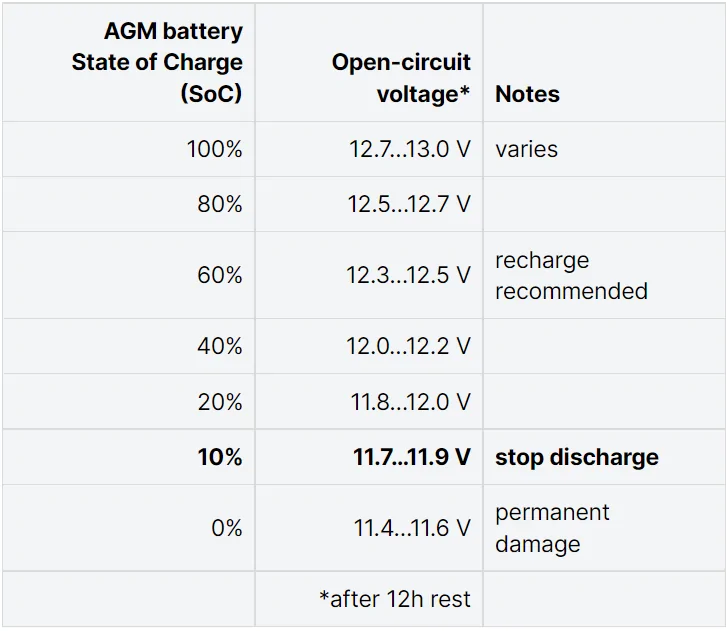
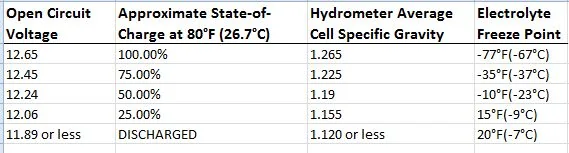
You said voltage was 11.9.
That's being drained.
You took more out than the panel could even ever dream of keeping up with.
Yes, that's called cycling, depending on the ambient temperature, that's down to 70% SoC
Sulfate forms in a battery that is constantly being cycled in the middle of its capacity range (somewhere between 80% charged and 80% discharged), and is never recharged to 100%.
(solar panels can't properly fully charge an automotive battery unless they use all phases, hold the voltage once absorption phase is reached for a couple of hour or so. Can those put out over 14 volts? and hold a high amperage?)
Over time, a portion of the plate's active materials turns into hard sulfate. If the battery is continually cycled in this manner, it will lose more and more of its capacity.
Bottom line - no way I'd ever take my truck's batteries under 12 volts on purpose even if I was constantly charging it at the same time. It's the net effect - low voltage,

Jeep Gladiator Hood Mounted Solar Panels agm-battery-charg


Jeep Gladiator Hood Mounted Solar Panels battery-chart
 

WILDHOBO

Well-Known Member
First Name
Dan
Joined
Sep 24, 2021
Threads
73
Messages
11,647
Reaction score
17,713
Location
Colorado
Vehicle(s)
2021 Gladiator Rubicon
Occupation
Network Engineer
Vehicle Showcase
1
The way it seems to me is that those hood mounted panels can have their purpose and place.
Will they fit every need? Naw, but it's nice to have the batteries being kept up while out and about away from real power for days, or maybe needing to use the truck to power a laptop, charge your cell phone, run a small TV or whatever. Or just to keep the battery up while parked anywhere.
Good to have options.
They won't do what I need or intend at this point but I have looked into them in the past considering possibilities.


You said voltage was 11.9.
That's being drained.
You took more out than the panel could even ever dream of keeping up with.
Yes, that's called cycling, depending on the ambient temperature, that's down to 70% SoC
Sulfate forms in a battery that is constantly being cycled in the middle of its capacity range (somewhere between 80% charged and 80% discharged), and is never recharged to 100%.
(solar panels can't properly fully charge an automotive battery unless they use all phases, hold the voltage once absorption phase is reached for a couple of hour or so. Can those put out over 14 volts? and hold a high amperage?)
Over time, a portion of the plate's active materials turns into hard sulfate. If the battery is continually cycled in this manner, it will lose more and more of its capacity.
Bottom line - no way I'd ever take my truck's batteries under 12 volts on purpose even if I was constantly charging it at the same time. It's the net effect - low voltage,

agm-battery-charge.webp


battery-chart.webp
I get it. And good battery maintenance is not foreign to me. Again. This was a one time test to prove that if something was left on for hours, that my Jeep would start. If that decreased my battery by a few percentage points, the test was worth it. I have it for insurance and convenience. At less than $400 and taking up no roof rack space, I’ve got zero complaints. It also looks good. People spend money on black out hood decals for looks alone. My black out hood has functionality. :)
 

Sponsored

WILDHOBO

Well-Known Member
First Name
Dan
Joined
Sep 24, 2021
Threads
73
Messages
11,647
Reaction score
17,713
Location
Colorado
Vehicle(s)
2021 Gladiator Rubicon
Occupation
Network Engineer
Vehicle Showcase
1
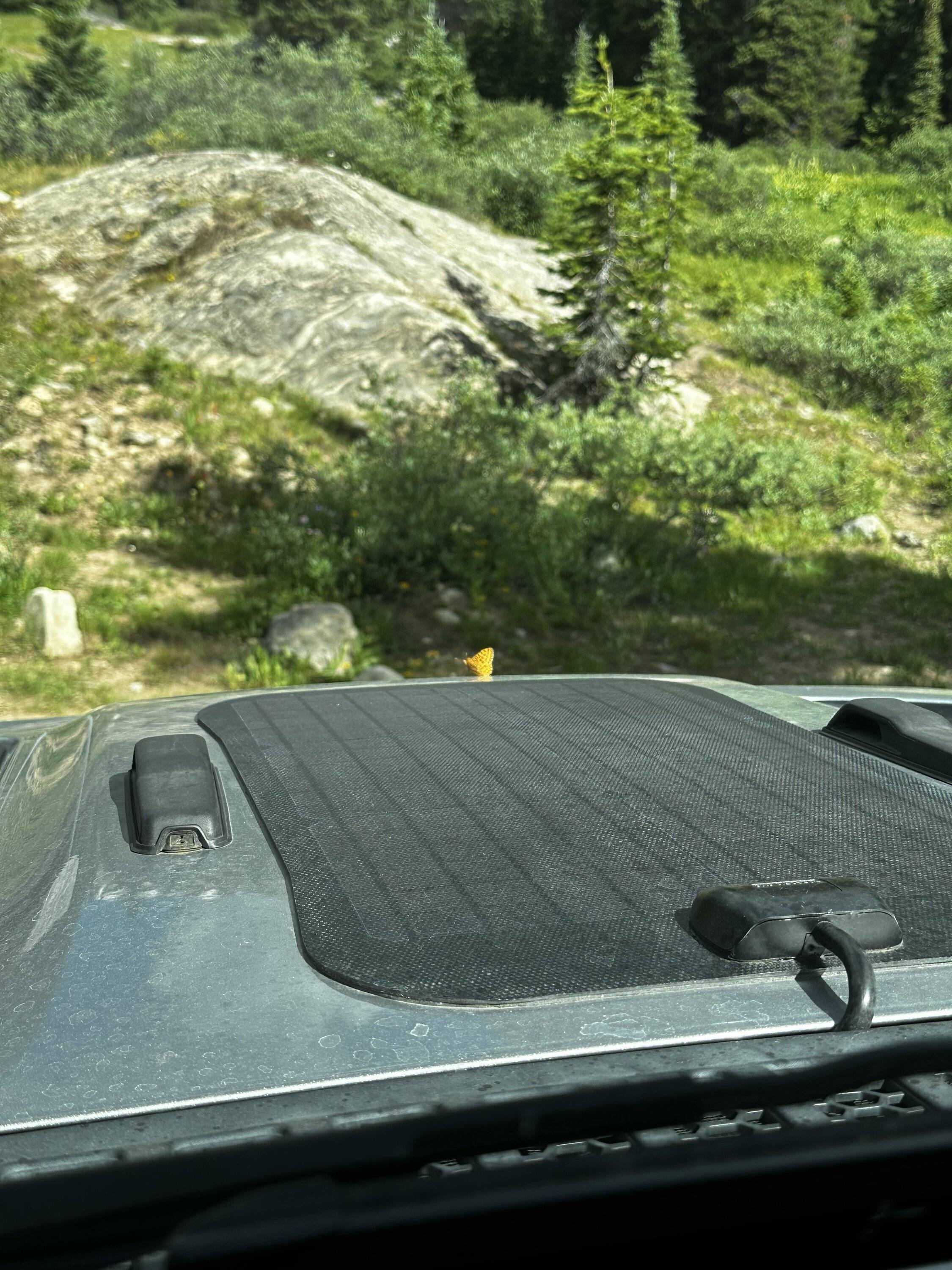
As everyone knows, butterflies are simply brilliant, and they are the metric for our successes as a race. As is obvious, this one loved my hood solar so much, it hung out near it, for at least 93 seconds while I was on Holy Cross. It winked at me. I can’t make that up.

Jeep Gladiator Hood Mounted Solar Panels IMG_6659
 

MattK

Well-Known Member
Joined
Aug 14, 2020
Threads
12
Messages
381
Reaction score
632
Location
San Diego
Vehicle(s)
2020 Jeep Gladiator (JTR)
I would love to have one if they weren't so permanent. "Once installed the VSS system is not designed to be removed from the vehicle. The solar panel can be removed only if absolutely necessary. ie. the panel needs to be replaced. ". So it's a one shot deal and can't be moved to another vehicle. I wonder what that process is like on the hood paint to take it off?

I'm an apartment dweller with no access to be able to trickle charge my battery while it sits. (I work from home). It sits a lot and I make a lot of short trips to run errands etc. so my battery hates me as it's my only vehicle.

Something like the Cascadia 4x4 setup would be nice for me I think if it could be removed somehow. I'm not sure why I'm obsessed with that thought about this product but I am.
 

WILDHOBO

Well-Known Member
First Name
Dan
Joined
Sep 24, 2021
Threads
73
Messages
11,647
Reaction score
17,713
Location
Colorado
Vehicle(s)
2021 Gladiator Rubicon
Occupation
Network Engineer
Vehicle Showcase
1
I would love to have one if they weren't so permanent. "Once installed the VSS system is not designed to be removed from the vehicle. The solar panel can be removed only if absolutely necessary. ie. the panel needs to be replaced. ". So it's a one shot deal and can't be moved to another vehicle. I wonder what that process is like on the hood paint to take it off?

I'm an apartment dweller with no access to be able to trickle charge my battery while it sits. (I work from home). It sits a lot and I make a lot of short trips to run errands etc. so my battery hates me as it's my only vehicle.

Something like the Cascadia 4x4 setup would be nice for me I think if it could be removed somehow. I'm not sure why I'm obsessed with that thought about this product but I am.
It includes a vinyl layer to protect the hood. The only place that actually contacts the hood is the 3m tape. It can definitely be removed carefully. I talked to the company about it actually. You’d need to be careful removing it, but it’s not ruined upon removal.
 

Econn2000

Active Member
First Name
Erich
Joined
Sep 3, 2019
Threads
0
Messages
30
Reaction score
25
Location
Arizona
Vehicle(s)
2020 Gladiator Launch Edition
Is there an 80W panel for a Rubicon hood? The flat-hood units I've seen are 85 W - Rubicon only 30 W, or 50 W, or 35 W. You can do almost as well at peak with a generic panel on top of the dashboard (though obviously the hood will have much better average exposure), or use a folding panel in the windshield (not so convenient as a hood panel).

Ideally placing the panel anywhere else would have a better payoff. The fixed rear section of a hardtop for instance.

FWIW I have a 200W Renogy panel on my camper top, and with hot CA sun exposure at nearly any angle, I get at least 100W out of it. Less if it's cloudy, like 35W. (We'll see over this winter, my first with the panel)

Ideally one would start with how much power they need, translate that to panel area, then look for where to put it. I'm sure you already know the hood panel won't do much other than maintain the starter battery charge to some extent.
Nit-picking here, but if they're thinking of putting it on the dash, that interior heat would significantly reduce the efficiency...thus making your roof-mount a much better option.
 

Wolf Island Diver

Well-Known Member
Joined
Apr 14, 2021
Threads
26
Messages
1,117
Reaction score
2,450
Location
Virginia
Vehicle(s)
2021 JT Rubicon EcoDiesel
Occupation
Software Engineer
I don’t want to hijack this considering the OP asked direct questions. I’ll just say the following as food for thought. I was looking at a Cascadia system. In my case because I also wanted to install a house battery with a DC-to-DC charger, which is obviously a more expensive undertaking than a just a purpose built solar hood maintainer, it was more cost effective and versatile to buy a cheaper 100W flexible Solar panel for the rear of the truck, and use that to charge the starting battery back through the DC-to-DC charger. So anyone considering a Lifepo4 setup anyway might want to forgo the hood mount option. Even Cascadias 30w panel alone is far more expensive than a Renogy 100W.
 

Sponsored

Jay61

Member
First Name
Jay
Joined
Jan 29, 2023
Threads
1
Messages
22
Reaction score
48
Location
Leesburg GA
Vehicle(s)
2018JKUR 2023 JT Rubicon
Occupation
Attorney
I have a 100w one on my JKUR and have had it for a couple of years now, it works great, I have a Genesis Dual Battery System and run an ARB 50qt Fridge/Freezer plus a good many electronic gadgets in the cab. I can go out after it setting two days and still be over 12.5 or so on my cranking battery with my Aux battery at the same level, this is with the fridge running along with assorted electronics. I have a 2023 JT Rubicon with an Alu Cab Canopy Camper on it, I also have dual batteries for the items in the cab and run a Redarc BC/DC charger/solar optimizer to the 100ah Lithium-Ion battery I use for house power, it also has a 200w solar panel. I am thinking about getting the 30w panel for the dual system in the future, depending on how much I will be running an inverter in the cab for battery charging for my chain saw and impact wrench, along with the other gadgets I have.
 

Jay61

Member
First Name
Jay
Joined
Jan 29, 2023
Threads
1
Messages
22
Reaction score
48
Location
Leesburg GA
Vehicle(s)
2018JKUR 2023 JT Rubicon
Occupation
Attorney
Regardless of the naysayers that probably don’t have one, the Cascadia 4x4 unit works great. Does it power fridges? Of course not. But it’s inexpensive and easy, and does a great job powering a 70w appliance for 7+ hours without the Jeep battery dying. And I can let my Jeep sit for weeks without starting it, and I’ll find a fully charged battery when I return, without plugging in a maintainer.
I agree 100% been running one on my JKUR for a couple of years now.
 

Blade1668

Well-Known Member
First Name
Darrell
Joined
Jan 7, 2020
Threads
12
Messages
3,263
Reaction score
3,148
Location
N. AL.
Vehicle(s)
90XJ, 91XJ, 91MJ, 05 LJ, 20 JT
Build Thread
Link
Vehicle Showcase
1
Late to this thread... I'm one of the early purchases of the Cascadia solar system, so I paid for part of the R&D on it. Would I buy it again possibly. I've got the 85w one, I can leave my JT parked for well over a week and be at a 13.1-13-7v charge. This is one of two systems I have on mine. The second I planned out and wired 200w system.
One long-term faults is the rubber gasket by windshield washer nozzles, it shrinking and started blocking it. I trimmed the rubber a week or so back to not block it. The directions were good and complete one stop shopping, with added benefit less glare off hood. If I had a Rubicon I probably would not buy it to little for to much $$$, you can build a better than that for way less unless the cost is way less now.
No, it's not ideal and does have a losses from heat. But I've had no battery problems yet my JT is a Nov 2019 build date. :like::fingerscrossed: now I've jinxed myself.
You could definitely build as good and better systems, my second one cost way less and over double output. (Other that the battery I have added). That is an area of concern depending on temperatures your system is subjected to. LiPo batteries don't like to hot and especially to cold. The latter has shutdown it on mine a few times and days over a week actually.

Jeep Gladiator Hood Mounted Solar Panels 20230509_232104
 

Blade1668

Well-Known Member
First Name
Darrell
Joined
Jan 7, 2020
Threads
12
Messages
3,263
Reaction score
3,148
Location
N. AL.
Vehicle(s)
90XJ, 91XJ, 91MJ, 05 LJ, 20 JT
Build Thread
Link
Vehicle Showcase
1
My take on the hood mounted chargers is - if that truck battery is staying up while it's parked at home, then why would it not stay up if out in the sticks somewhere - unless you are using your truck batteries as power supplies and then that's hard as heck on them as cycling them kills their life, period. Doesn't matter if you otherwise always keep them up, draining down, charging, draining down, charging - battery killer. Starter batteries hate it and they get to a point you lose a lot of capacity so soon a fridge will suck them down even faster.
So unless you have the solar capacity to prevent them from going to the low 12s or less, you are still killing capacity in the longer run and making them live a shorter lift.
So if there's a need like that - do what others have done and add a 3rd battery that is charged by the truck, but isolated from the truck systems while you are parked using it.

To use a solar charger when you don't have a garage and the Jeep sits quite a bit- the small solar unit is good for that. (Mine is garaged when not in use to save the interior, the paint and tires and just make things last longer so solar maintenance is out unless I put a small panel on the garage which I've actually considered doing anyway)

You'd need the 85 watt panel to keep up with an real load and not kill the starter battery in the truck. The advertised draw of my Coleman cooler is 4 amps - should work out to about 50 watts. I would out the TRUE draw is closer to 65 watts. 70 watts all but kept up with it during the day. Yeah, bit the bullet, solar panel, power supply. Kept things cold all weekend and my truck battery never went below 12.5 volts even though I was in and out of it a lot, power steps working, lights working, charging phone and hearing aids over night. (by the time I got home, towing, lights on, radio on, AC on, batteries were 100% and the cluster showed 12.8 volts driving down the interstate so maybe that volt meter I installed in the back of the truck by the charging ports is off by a tiny bit?)
BTW:
How did your trip go? If I had not needed to go back AL. I would have tried to drive up there to crash the car show event. :)
 

ShadowsPapa

Well-Known Member
First Name
Bill
Joined
Oct 12, 2019
Threads
247
Messages
40,440
Reaction score
53,854
Location
Runnells, Iowa
Vehicle(s)
'25 JTMX, '23 JLU 4xe, '82 SX4, '73 Javelin
Occupation
Retired auto mechanic, frmr gov't ntwrk security admin
Vehicle Showcase
3
BTW:
How did your trip go? If I had not needed to go back AL. I would have tried to drive up there to crash the car show event. :)
Trip went fine.
I wish you had crashed it. You'd have been able to watch at least one crash due to a slick track or "driver error" and enjoyed FREE FOOD from a couple of the vendors at the swap meet (and some free drinks, I hear)
Would be great to meet some of the forum people. Like my wife reminds me "all of your friends are hundreds of miles away, mine are 20 minutes away". Yeah, I know.
Sponsored


Top