
JeepLife175
Well-Known Member
- First Name
- Jacob
- Joined
- Sep 25, 2025
- Threads
- 36
- Messages
- 357
- Reaction score
- 275
- Location
- Putnam Connecticut
- Vehicle(s)
- 2022 Jeep Wrangler My mom's
I was thinking the same thing we Need a 4xe Gladiator JT.
Sponsored


I was thinking the same thing we Need a 4xe Gladiator JT.

Tyler just turned 582,000 on his 2015 EcoDiesel. He's on track to turn 600,000 by the end of the year.Theres thousands of Ram EcoD's out there with well over 100k and 200k miles still going strong, and a lot with 300k and 400k. Same engine.
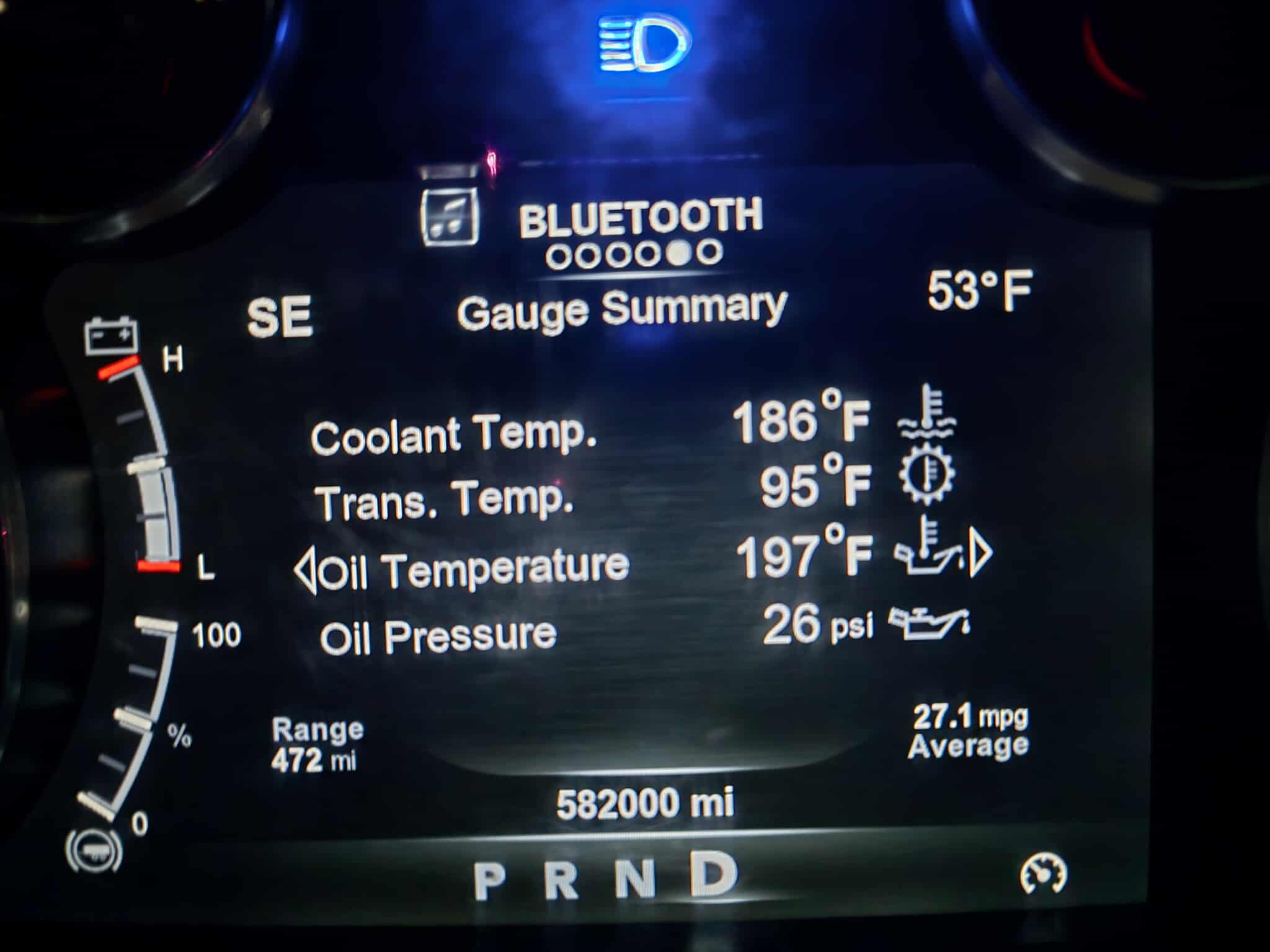
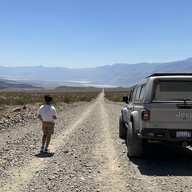
I prefer that gauge summary display over our Gladiator. Don't need to scrolls back and forthTyler just turned 582,000 on his 2015 EcoDiesel. He's on track to turn 600,000 by the end of the year.


I didn't say it was cheaper, I said it makes up for it.Sorry, no. I did a cost comparison of fuel/mile my JT vs. real world reports from JTD owners here as far as mileage, and the costs at the pump here.
It costs me the same in fuel for every mile as it does a diesel JT owner. So there's no cost savings at all. The differences in fuel prices in most locations, most of the time, make it a total wash.
No one needs to run those $10/quart oils - the fancy colors or boutique brands - a good quality Pennzoil, Mobil 1, Valvoline, etc. are just as good. So that argument falls flat as well. The oil changes for the diesel are a whole lot more expensive. I've never used anything but recommended oils, and I won't pay higher prices because of a fancy or funky name or "it's the cool thing to do".
So there's that argument failing.
Fuel costs - a wash.
Oil changes for the diesel - way more expensive.
the only real benefit is towing and low-end grunt under loads and how it makes the driver feel warm and fuzzy.
But don't talk about the fuel "savings" - it doesn't exist, and it certainly can't possibly offset other maintenance items.


You might note that I'm not the only one saying the fuel costs are a wash.I didn't say it was cheaper, I said it makes up for it.
Fuel costs are not a wash. It's cheaper to drive diesel even though diesel is higher per gallon UNTIL it gets towards $1/gallon more than 89. But diesel usually hovers around the price of premium and at times falls below. It becomes a larger cost difference in places that tend to be more green or see less diesel use, but on average it's around the price of premium.
If it costs me $50 more for an oil change then so be it, that's not an every day or even an every month thing.
Overall it doesn't really balance itself out until you add in the cost of maintenance. It's cheaper per year on fuel to drive a diesel, but it's about the same per year when factoring in maintenance costs. But to be honest annual costs mean nothing to me, I'd much rather pay less at the pump, or even the same at the pump for that matter, not have to stop and fill up every other town, and have power and torque when I want/need it.
I'd also argue that the diesel is the better route if looking to upsize tires or add weight. A gasser is simply not going to perform as well as a diesel when adding that weight. Thats when you will really start seeing savings at the pump.
The crazy part is having to replace the battery pack in 8 - 10 years which could cost $$$$$$. It's not a vehicle you would want to keep for 10+ years. There's a growing number of complaints already about battery packs needing replaced on the early 4xe models. Quite a few have already sold/traded their 4xe due to avoiding heavy depreciation and the fear of having to replace the battery pack.Otherwise you are just toting around a bunch of dead weight in those batteries that diminish your MPG.

It seems 4xe are made for the rental industry and the reseller market for the poors.The crazy part is having to replace the battery pack in 8 - 10 years which could cost $$$$$$. It's not a vehicle you would want to keep for 10+ years. There's a growing number of complaints already about battery packs needing replaced on the early 4xe models. Quite a few have already sold/traded their 4xe due to avoiding heavy depreciation and the fear of having to replace the battery pack.
Sorry, I meant 87, not 89.I went by multiple gas stations, noted the prices. I averaged their price for diesel as well as ordinary 87 octane gas (where are you getting 89 from? No one needs to run 89 in a 3.6)
It's a difference of $2.88/week at most.
Obviously which engine choice is better depends on local fuel markets. When you begin to consider other things like DEF, consumables like tires, etc., I don't think the EcoDiesel is really sitting at an advantage with all things considered.
No trash talk here. I've owned diesels ....granted from the last century, but I do try to follow modern engines as well.Sorry, I meant 87, not 89.
As I said, overall its pretty much a wash. For roughly the same cost I'd rather have the power and torque. Even if owning a diesel did end up costing more annually, which is going to be negligible if it does, it's simply a better and more enjoyable platform to drive, especially when you start looking into adding weight (and if you want more you can get 25+ mpg out of them).
My biggest issue, which is why I usually find myself getting into this, is the trash talking about diesels, mostly from folks who don't own and have never owned one (EcoD or others), while spreading misinformation saying things like they are so prone to problems that they were discontinued, that they cost a fortune to own, etc.
As I said in my original post, they aren't for everyone. Live in the big city and do short commutes back and forth to Starbucks, don't get a diesel. Long commutes, want a truck to do some truck stuff, or want to add weight while maintaining drivability? The diesel is a great option.
I didn't mean you specifically, nor was it directed at Splenda to whom I was originally replying to. It was more of a generalized statement.No trash talk here. I've owned diesels ....granted from the last century, but I do try to follow modern engines as well.
It seems to me you realize more advantage beyond the 100,000 mile mark. Then the cost of the engine is spread out- where a gas engine needs "more care", the diesel is made for long ownership.
Ram 1500?Tyler just turned 582,000 on his 2015 EcoDiesel. He's on track to turn 600,000 by the end of the year.


