RJinPV
Well-Known Member
- First Name
- Roger
- Joined
- Jul 19, 2022
- Threads
- 6
- Messages
- 309
- Reaction score
- 392
- Location
- Southern Cal
- Vehicle(s)
- 2023 JT Rubicon, 2017 Grand Cherokee Trailhawk
- Occupation
- Retired
- Thread starter
- #1
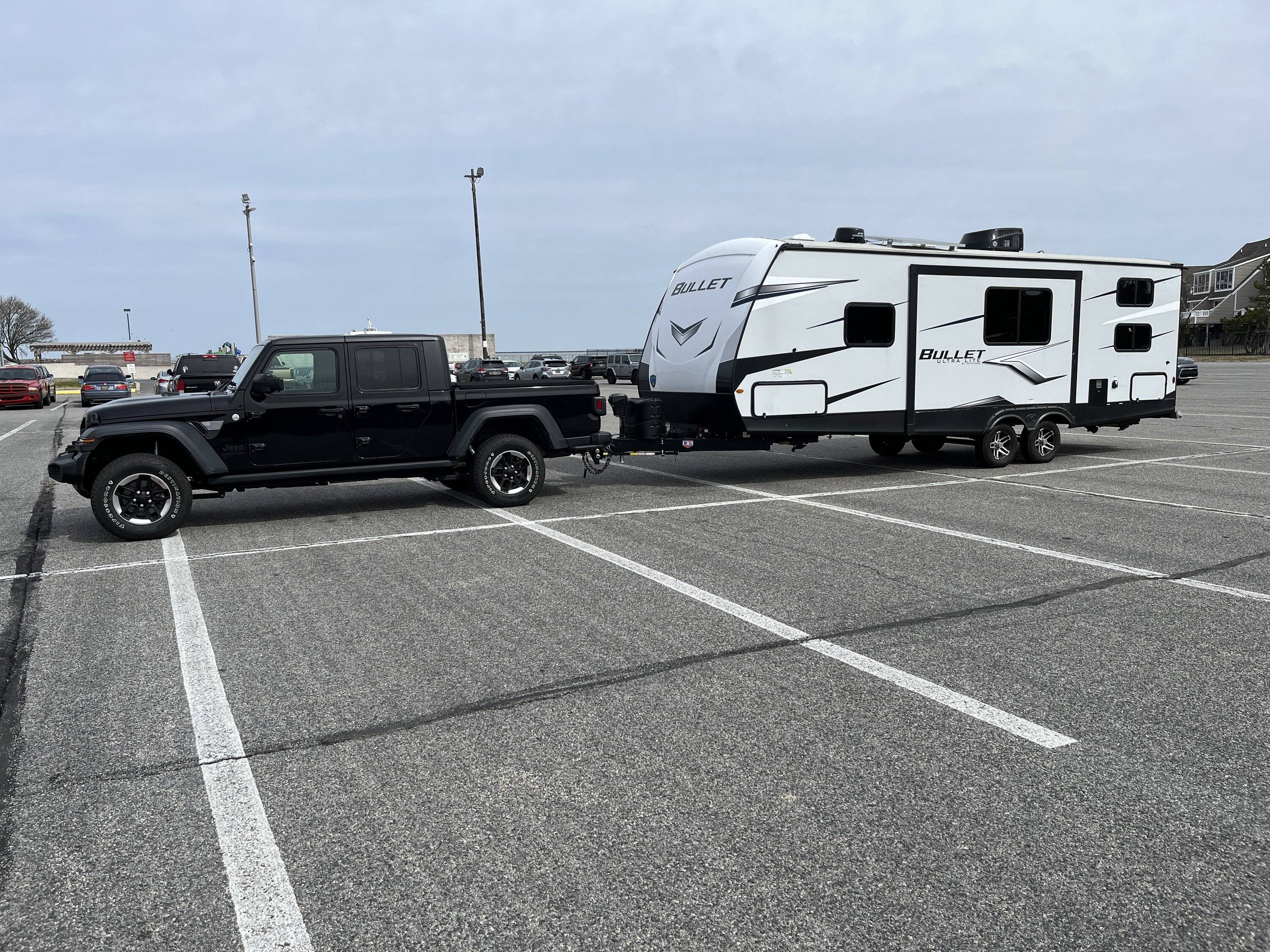
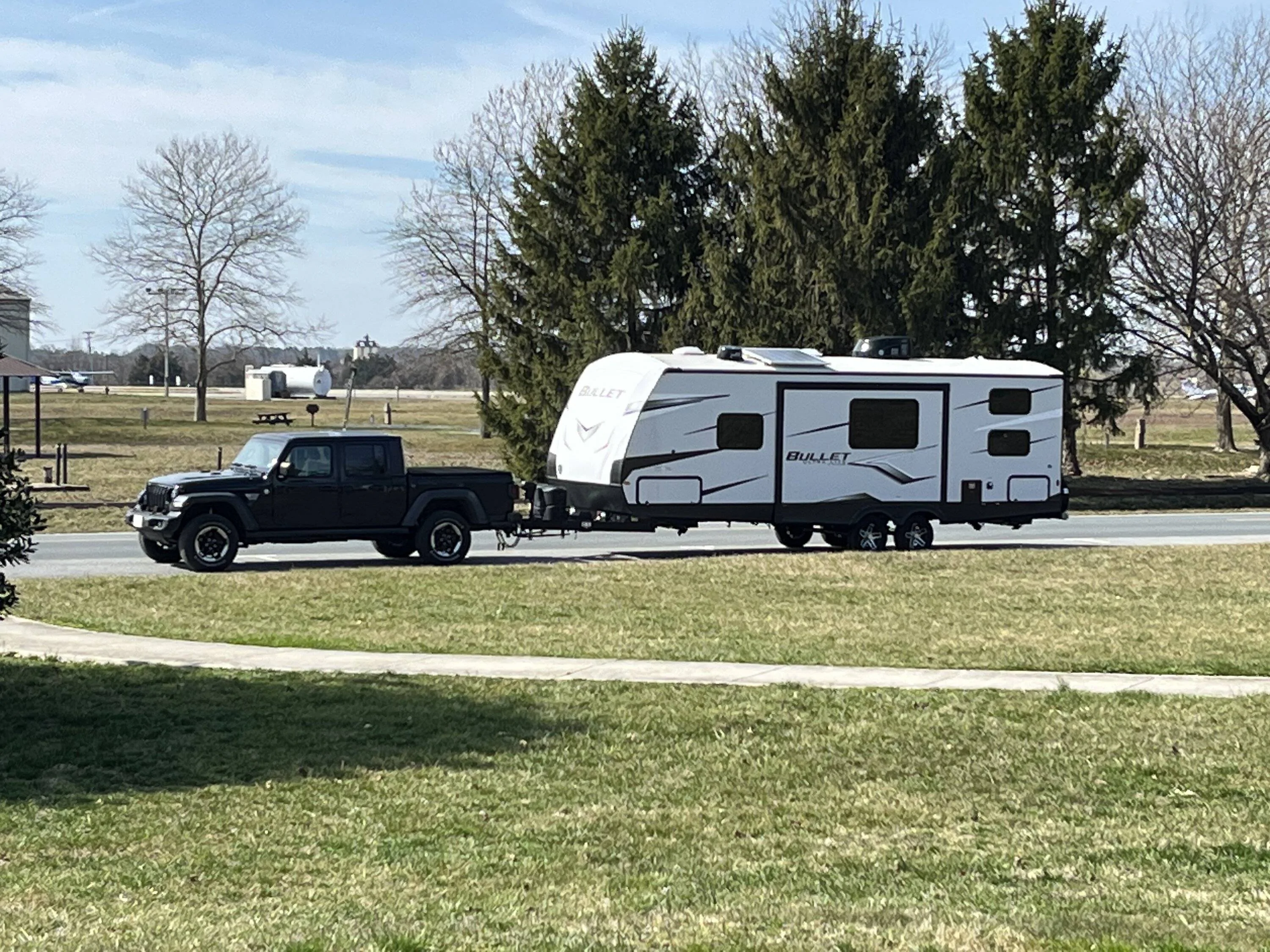
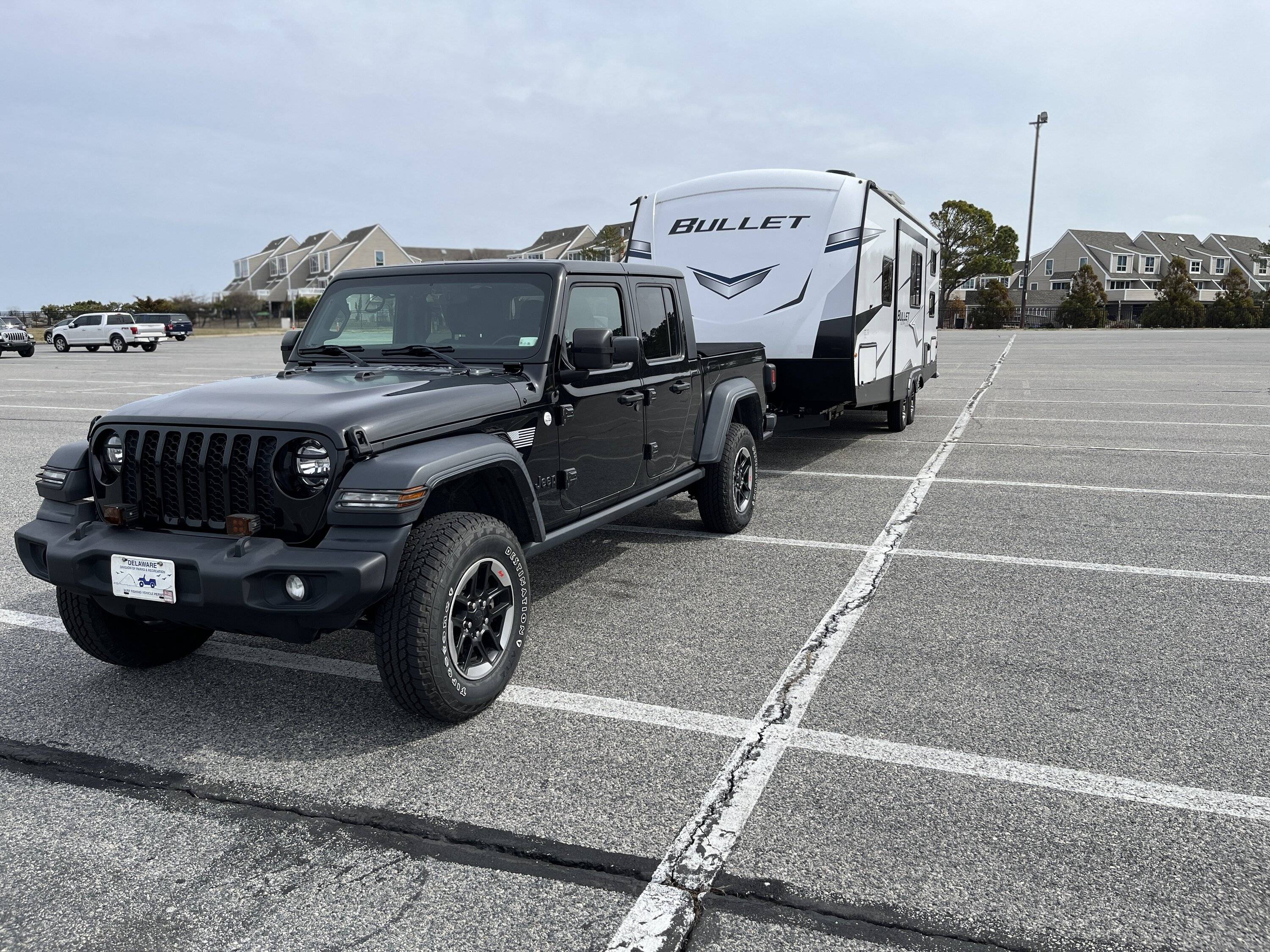
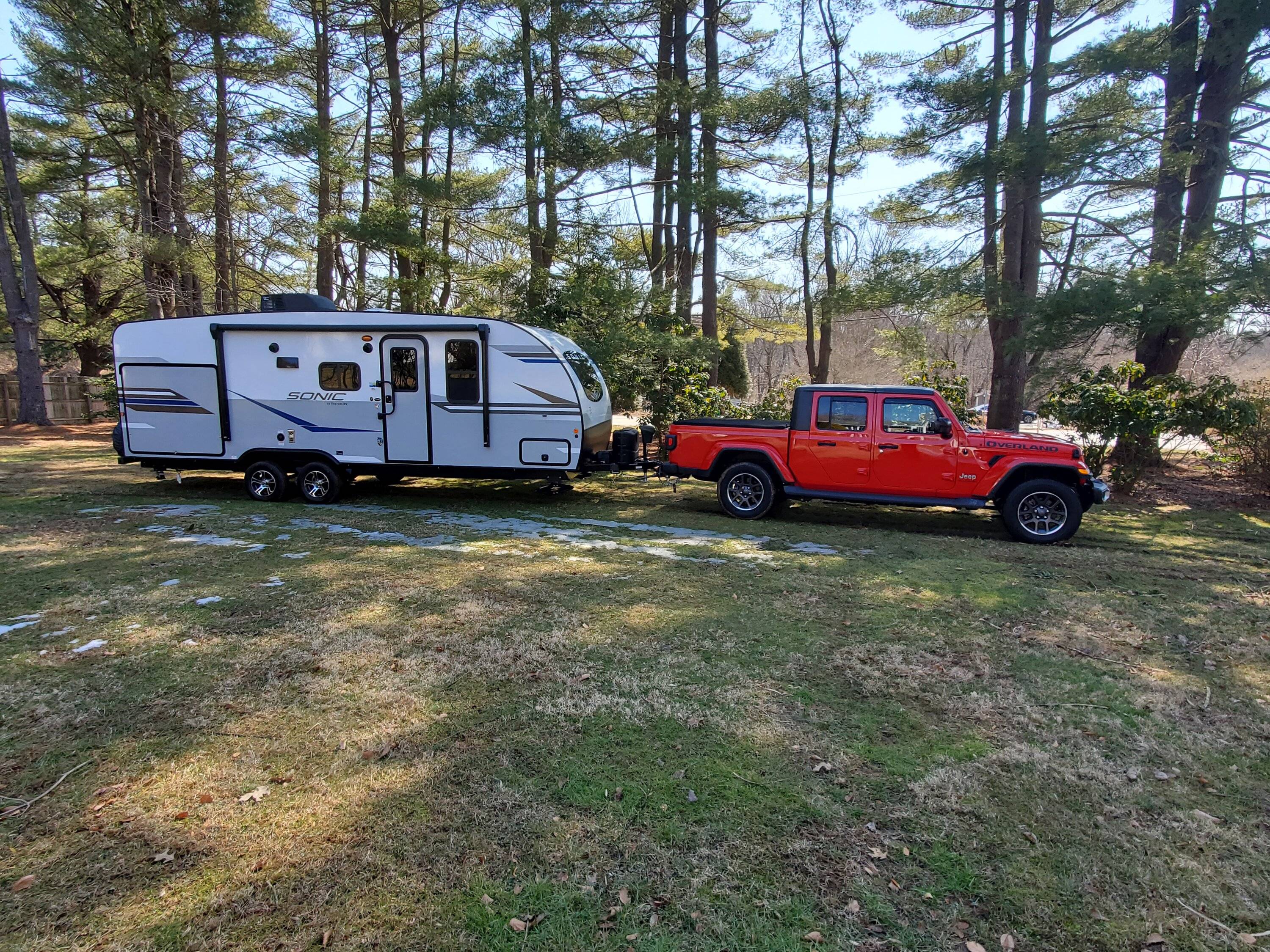
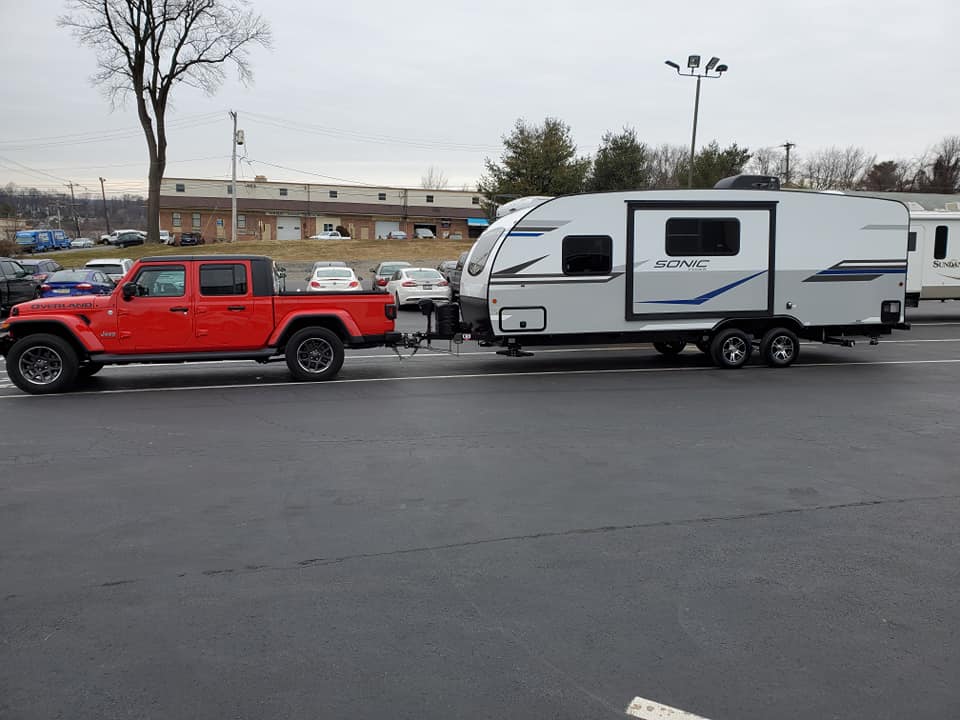
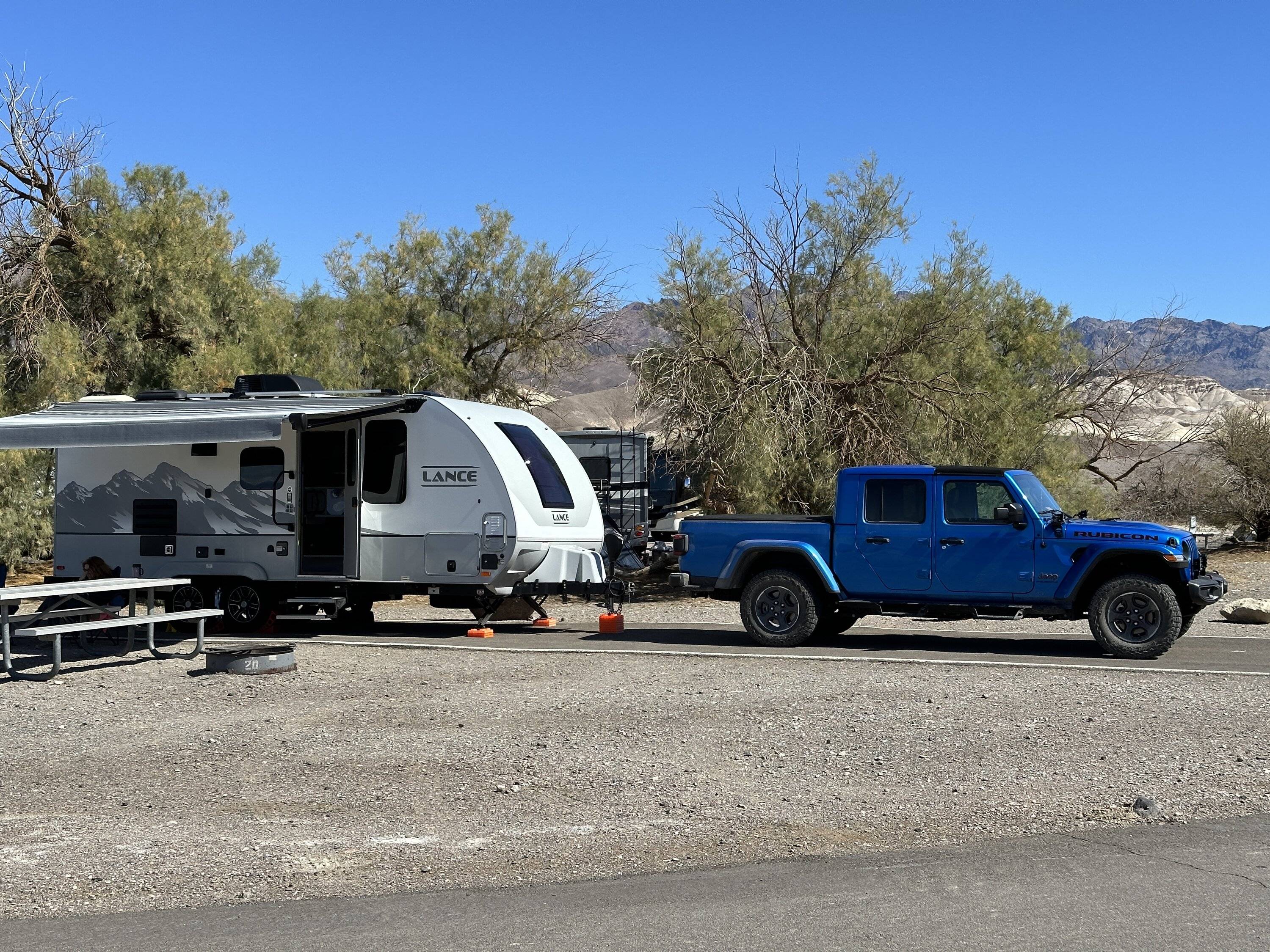
I have a Lance trailer, model# 1985, that I towed with my Ecodiesel Ram. I’ve wanted a Wrangler for a while, but they can’t tow very much. So, when it came time to replace the Ram I chose a 3.6L V6 Gladiator Rubicon. I considered the Max Tow version but since I’ve always wanted a Rubicon I decided to go with that. I reasoned that I would compromise on the trailer if I had to, and not on the vehicle I wanted to drive.
I went about light weighting the trailer by tossing extra stuff I would likely not use, drop down to 2 propane tanks instead of 3, and tow without freshwater. The freshwater alone can add 360 lbs. Eliminating the water was the only way to get tongue weight down under 700 lbs. I was careful with the the my JTR’s weight by replacing the rock rails with aluminum nerf steps and the freedom panels with a Bestop Sunrider top. That weight reduction was offset by the addition of some aux lights and a soft tonneau cover. Given that I am at the limits, there are no molle panels, 35” tires, racks, or winches in this truck’s future. This kind of makes me sad. Before I took delivery of the Jeep, my calculations showed I would be at, or slightly above, the JTR GVWR and slightly below the GCWR.
My first stop was a Cat Scale to get the weights with the trailer fully provisioned and the JTR with a full tank of gas, cargo, and 2 adults. Front axle: 2740 lb; Drive Axle: 3520 lb, trailer axle: 5140 lb: gross wgt: 11,400 lb. I’m 10 lbs over GVWR and ~1000 lbs under the GCWR. These numbers are almost exactly what I calculated last October before I took delivery. By the way, my total trailer weight is the 5140 lbs plus ~680 lbs tongue weight sitting on the drive axle. It's well under the 6200 lb GTWR on my trailer’s sticker.
So here is my experience the first time I towed the trailer from the Los Angeles basin to Death Valley. This is a trip from ~300 ft elevation, over a 4000 ft pass, a couple of 3000 ft passes, and down to -150 ft elevation. So how did it do? I would say it was adequate, not exceptional, but not too worrisome either. The trick was to take it easy. I kept it in cruise control at 50 mph on the outbound trip. I wanted to keep it at 50 mph or less for the first 500 miles while towing, as the owners manual states. The rig was stable and my mpg was a surprising 14 mpg. I was happy. It turns out I was being pushed by a 20-30 mph tailwind. It became a crosswind while I was descending into the valley. The driving then started to require my attention because the wind was definitely pushing the trailer around. A few days later, the drive back home was a little less relaxing. I was now driving into a head wind of ~20 mph. This required more driving attention and my mpg dropped to 8.3 mpg. Plus, I increased my speed to 55-60 mph. Overall the truck handled well. It lived between 5th and 7th gear on the levels and 4th gear on the climbs with occasional downshifts into 3rd. In 3rd gear you’re getting about 5500 rpm and you start to feel sorry for the engine. Temperatures were well controlled but the ambient temperatures (~60 deg F) were not stressful at all. The same type of hill climbs in the summer may be a different story.
If you’re considering a trailer then get a lighter weight one than I have. Especially if you want to go 65 to 70 mph. If you live in the midwest with little climbing, then my setup could be OK. I had no qualms on level grades. Climbing some 5000 ft passes with my setup may be ok if you take it easy. I’ll see how this goes over the next few trips to Anza Borrega and the Eastern Sierras. If I were regularly taking the 10,000 ft passes in the rockies, then my trailer would be up for sale right now. If I can find a lighter weight trailer that I like, then I will shoot for about 5200 lbs GTWR, instead of the 6200 GTWR of my Lance. if you are towing most anything then I would measure your weights and know where you stand. The Cat Scales are so convenient with their smartphone app. You just drive up, punch in a location code and get the weights emailed to you in a few seconds. It couldn’t be simpler.

I went about light weighting the trailer by tossing extra stuff I would likely not use, drop down to 2 propane tanks instead of 3, and tow without freshwater. The freshwater alone can add 360 lbs. Eliminating the water was the only way to get tongue weight down under 700 lbs. I was careful with the the my JTR’s weight by replacing the rock rails with aluminum nerf steps and the freedom panels with a Bestop Sunrider top. That weight reduction was offset by the addition of some aux lights and a soft tonneau cover. Given that I am at the limits, there are no molle panels, 35” tires, racks, or winches in this truck’s future. This kind of makes me sad. Before I took delivery of the Jeep, my calculations showed I would be at, or slightly above, the JTR GVWR and slightly below the GCWR.
My first stop was a Cat Scale to get the weights with the trailer fully provisioned and the JTR with a full tank of gas, cargo, and 2 adults. Front axle: 2740 lb; Drive Axle: 3520 lb, trailer axle: 5140 lb: gross wgt: 11,400 lb. I’m 10 lbs over GVWR and ~1000 lbs under the GCWR. These numbers are almost exactly what I calculated last October before I took delivery. By the way, my total trailer weight is the 5140 lbs plus ~680 lbs tongue weight sitting on the drive axle. It's well under the 6200 lb GTWR on my trailer’s sticker.
So here is my experience the first time I towed the trailer from the Los Angeles basin to Death Valley. This is a trip from ~300 ft elevation, over a 4000 ft pass, a couple of 3000 ft passes, and down to -150 ft elevation. So how did it do? I would say it was adequate, not exceptional, but not too worrisome either. The trick was to take it easy. I kept it in cruise control at 50 mph on the outbound trip. I wanted to keep it at 50 mph or less for the first 500 miles while towing, as the owners manual states. The rig was stable and my mpg was a surprising 14 mpg. I was happy. It turns out I was being pushed by a 20-30 mph tailwind. It became a crosswind while I was descending into the valley. The driving then started to require my attention because the wind was definitely pushing the trailer around. A few days later, the drive back home was a little less relaxing. I was now driving into a head wind of ~20 mph. This required more driving attention and my mpg dropped to 8.3 mpg. Plus, I increased my speed to 55-60 mph. Overall the truck handled well. It lived between 5th and 7th gear on the levels and 4th gear on the climbs with occasional downshifts into 3rd. In 3rd gear you’re getting about 5500 rpm and you start to feel sorry for the engine. Temperatures were well controlled but the ambient temperatures (~60 deg F) were not stressful at all. The same type of hill climbs in the summer may be a different story.
If you’re considering a trailer then get a lighter weight one than I have. Especially if you want to go 65 to 70 mph. If you live in the midwest with little climbing, then my setup could be OK. I had no qualms on level grades. Climbing some 5000 ft passes with my setup may be ok if you take it easy. I’ll see how this goes over the next few trips to Anza Borrega and the Eastern Sierras. If I were regularly taking the 10,000 ft passes in the rockies, then my trailer would be up for sale right now. If I can find a lighter weight trailer that I like, then I will shoot for about 5200 lbs GTWR, instead of the 6200 GTWR of my Lance. if you are towing most anything then I would measure your weights and know where you stand. The Cat Scales are so convenient with their smartphone app. You just drive up, punch in a location code and get the weights emailed to you in a few seconds. It couldn’t be simpler.
Sponsored
Last edited: