bastage
Well-Known Member

Sponsored

I have the no doubt lighter duty black and decker version of this. Love taking it on the boat for inflating floats. It has settings and fittings for tires but I wonder if it could really handle the job. Any thoughts?I keep one of these under the back seat for all my inflation needs...
20V MAX* Corded/Cordless Air Inflator - DCC020IB | DEWALT
Absolutely love it, but I also always have a couple 20v/60v Flexvolt batteries with me too in my tool bag. Just screw on to tire valve, set desired pressure (up or down, can deflate as well) and let it do it's thing.

I keep one of these under the back seat for all my inflation needs...
20V MAX* Corded/Cordless Air Inflator - DCC020IB | DEWALT
Absolutely love it, but I also always have a couple 20v/60v Flexvolt batteries with me too in my tool bag. Just screw on to tire valve, set desired pressure (up or down, can deflate as well) and let it do it's thing.

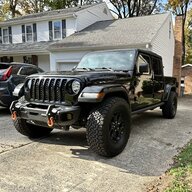
I use it all the time for RV tires and the 285/75/17's BFG KO2s on my Tundra. When hauling a heavy load in the bed or heavy tongue weight with trailer I'll pump the backs up to around 60psi from the normal 35ish I normally keep them. Works great, I've never even had a battery drop a bar on the little charge indicator. Just dial in the desired PSI and give it a few minutes.I have the no doubt lighter duty black and decker version of this. Love taking it on the boat for inflating floats. It has settings and fittings for tires but I wonder if it could really handle the job. Any thoughts?
Very good thanks. I would have more confidence in the DeWalt than my B&D. Your's is heavier duty. I'll try mine when I get to the OBX one of these daysI use it all the time for RV tires and the 285/75/17's BFG KO2s on my Tundra. When hauling a heavy load in the bed or heavy tongue weight with trailer I'll pump the backs up to around 60psi from the normal 35ish I normally keep them. Works great, I've never even had a battery drop a bar on the little charge indicator. Just dial in the desired PSI and give it a few minutes.
But yes, it is also great for inflatables, basketballs, bikes, airplane tires, etc. Anything that needs cordless air at a moments notice. Truly love it.
Now pumping up 40's might take longer, never tried, I don't have anything that big. But the 34" KO2s to 60PSI is no sweat at all, or trailer tires to 90PSI, no issue. And just keeping the tires at the right PSI on vehicles in driveway is just so easy.
But, like I said, I'm in construction and well stocked in the Dewalt 20/60v eco system, so always have a battery around. It can also be plugged in but I've never needed to try it out.

You mean someone actually increases pressure for the extra load? Cool.I use it all the time for RV tires and the 285/75/17's BFG KO2s on my Tundra. When hauling a heavy load in the bed or heavy tongue weight with trailer I'll pump the backs up to around 60psi from the normal 35ish I normally keep them. Works great, I've never even had a battery drop a bar on the little charge indicator. Just dial in the desired PSI and give it a few minutes.
But yes, it is also great for inflatables, basketballs, bikes, airplane tires, etc. Anything that needs cordless air at a moments notice. Truly love it.
Now pumping up 40's might take longer, never tried, I don't have anything that big. But the 34" KO2s to 60PSI is no sweat at all, or trailer tires to 90PSI, no issue. And just keeping the tires at the right PSI on vehicles in driveway is just so easy.
But, like I said, I'm in construction and well stocked in the Dewalt 20/60v eco system, so always have a battery around. It can also be plugged in but I've never needed to try it out.

No, hooked up to the batteryI don't know much about that compressor, did you plug it into the inverter in your Gladiator? No issues?

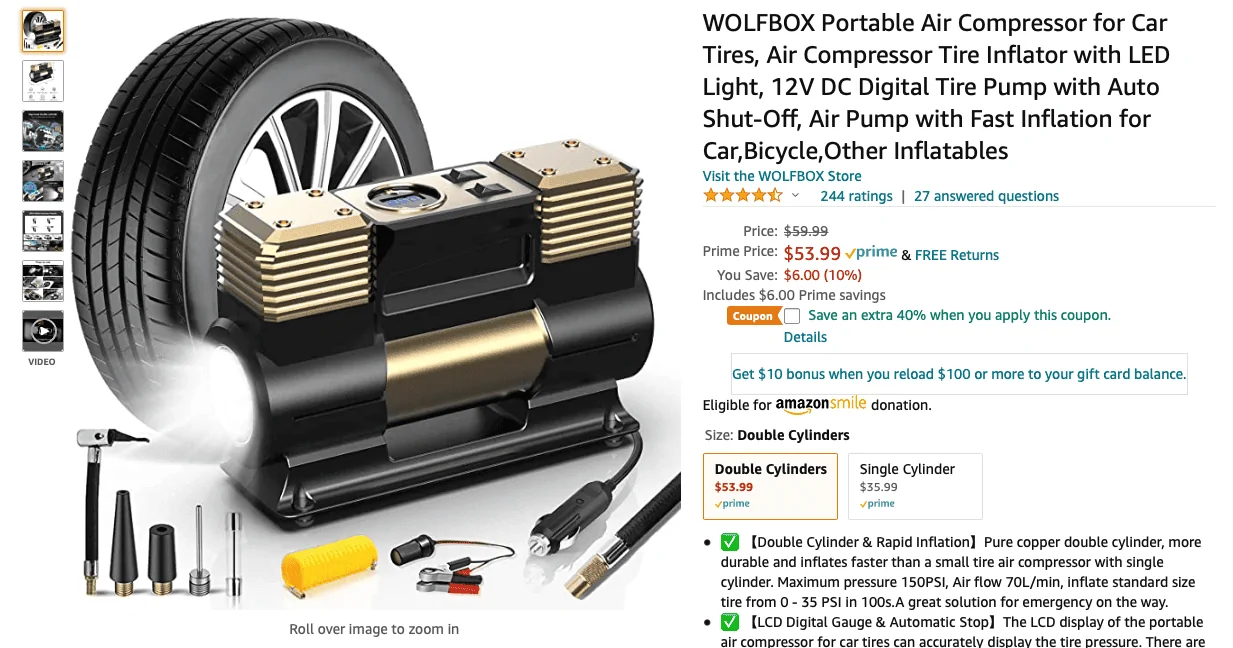
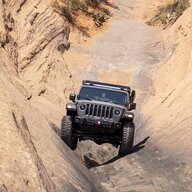
The CFM on that is super misleading. I have the smaller single ARB compressor with half the CFM yet it is way faster then the advertised Smittybilt 5.65 one. Theres several videos comparing the two and the single arb wins every time. Theres not a huge difference in price between them either.I have the Smittybilt 5.65 CFM compressor (part#2781)
Nothing comes close to the amount of air (without a bottle)
takes me about 20min to air up 40x13.50R17 from 10psi to 30psi.
I have had it just over a year and have used it several times...even aired up my 40's then a buddys 37's and no problems.
it's a fraction of the price of an ARB so if I burn it up, its no big deal to get another one.
Take a look at the power rating- most pancake compressors are in the 1.5hp range- which won't run on the inverter. China Freight does have tiny 1/3hp model that would run on an inverter.I'm sure a lot of you guys do, I'm looking at carrying a small 100 PSI pancake compressor after my tonneau cover is on. I had one laying around the garage, and after using teflon tape on all of the threading, cleaning it up a bit, I fired it up and it seems to be good. I figured I could keep it in the back, it will have a tire inflator attached to it with an analog gauge built into it so I don't have to worry about batteries to see the tire pressure on a digital readout. Any issues with using the inverter for this? I could always go plan B which would be a battery operated tire inflater, but if the inverter works, I think this would be a better solution.

The CFM on that is super misleading. I have the smaller single ARB compressor with half the CFM yet it is way faster then the advertised Smittybilt 5.65 one. Theres several videos comparing the two and the single arb wins every time. Theres not a huge difference in price between them either.
cfm at what pressures.......... are they both rating their own compressors at the same psi as the others? That's a big thing to watch on even shop compressors.The CFM on that is super misleading. I have the smaller single ARB compressor with half the CFM yet it is way faster then the advertised Smittybilt 5.65 one. Theres several videos comparing the two and the single arb wins every time. Theres not a huge difference in price between them either.
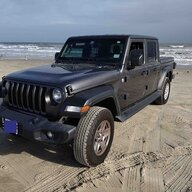
 It's obvious I'll have to come up with a better solution, my research will likely lead me to, direct connection to the battery or 12V interface. Seems like those are the two choices for a compressor that I've seen in this thread.


