Oneshotlucky
Well-Known Member
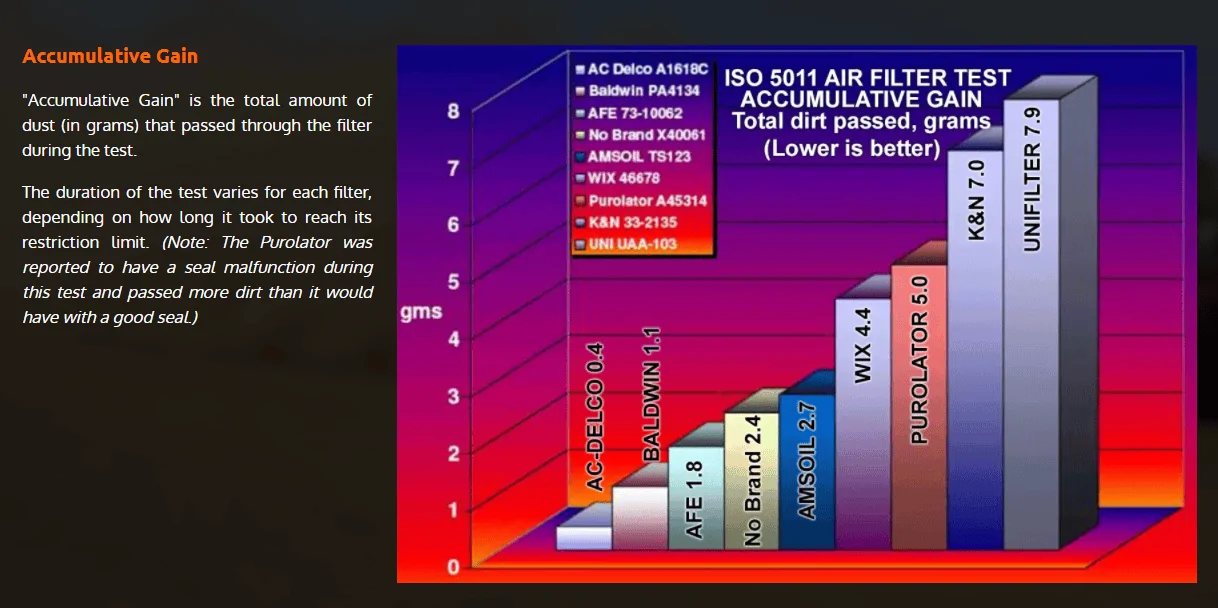
So sticking with the OEM filter would be the best route then??They let too much dirt through, they are among the very worst for dirt allowed to pass. They also fill to capacity faster than most, meaning you have the advantage of freer flow for a short time, then they lose their free-flow advantage, and let dirt through in the process.
This isn't just internet lore - it's based on ISO dyno testing.
Other similar dyno testing showed that the only flow advantage was up in RPM ranges most people would never see unless racing. How often to you drive with your engine running over 4,000 RPM? On a Ford pickup, the advantage was over 5,000 RPM. Even the LS in my chevy didn't see 5,000 very often.
Here is one chart showing the dirt that PASSED THROUGH the filter, into the engine, before the filter reached the restriction limit- it shows that K&N allowed the second most amount of dirt to pass, and it's possible it came in second worst only because it "plugs up" faster.
They are made more for the drag strip where you can clean them after every few passes, and there's not a lot of dust in the air due to the track being kept so clean. Still, a lot of people I see at our annual meets are running paper filters on the track.

Sponsored