BearFootSam
Well-Known Member
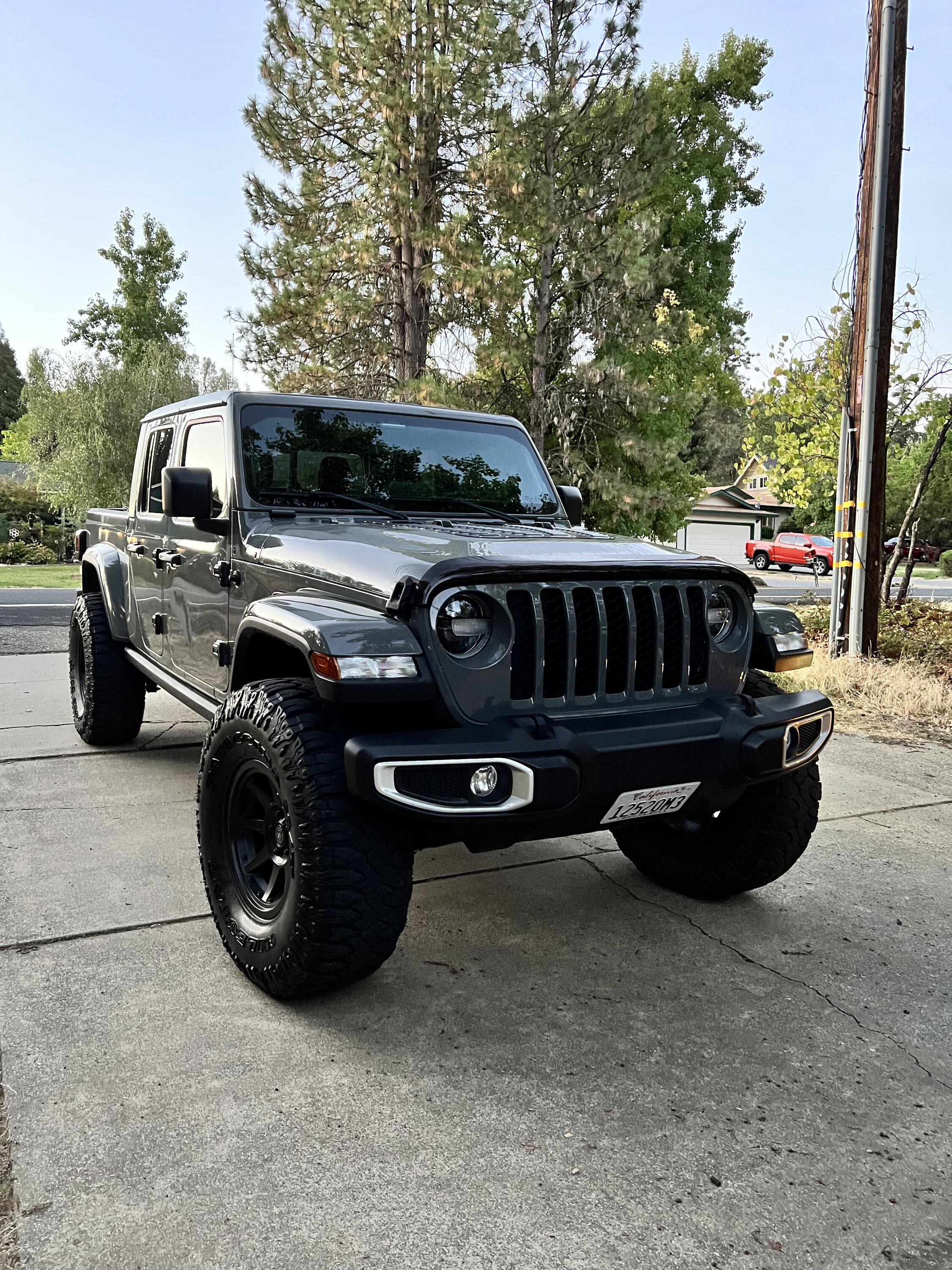
Howdy y'all! I hope you know those fake looking vents behind the front wheel arches are real and do exhaust air from the under-hood compartment? These are engineered vehicles, my suspicion is that the folks who designed the cooling system knew what they were doing and had the benefit of decades of institutional knowledge on how to cool not only jeep body vehicles but Ram trucks as well.
At speed the under-hood compartment is a pressurized space. Air flowing into the grill passes over at least three radiators by my eyes (coolant, trans and aircon?). Aside from some bleed via the front quarter panel vents, the majority of air flows out through the underbody. Apart from cooling I'd guess that airflow impacts drag and efficiency and thereby the load on the engine and hence heat production. That air also flows down past the crankcase and transmission providing some degree of case cooling. It is also possible that there is some venturi effect created by the restriction between the front air dam and the road causing a low-pressure region under the front of the car drawing hot engine compartment air under the body. This is purely speculative but given these trucks have seen air tunnel time during development it is totally conceivable that the cooling system relies on the effect.
When we are talking about optimum cooling there are really two competing conditions to design for - low speed and high-speed operation. At low speed the system would probably work most effectively with no front body work other than ducting between the fan and radiator. Conversely, at high speed, the bodywork aids in efficient airflow management to optimize cooling system performance. The two conditions are at odds and so the engineers have to balance the system for the best middle ground for all types of operation.
That said, there is likely room to improve upon the cooling system for a specific use case at the sacrifice of performance in another. You could optimize airflow for high speed, high load conditions like towing but then may suffer during steep low speed trail riding or vice versa. For me, the gladiator is the best compromise between all my vehicle needs and so the as packaged design is perfect. It is neither a two-door wrangler or an aerodynamic full time towing machine, it does both and does them adequately by making compromises that is the beauty of it.
The fact that jeep could fit a big V8 under the hood with the only modification being a questionable air intake change tells me the stock cooling (tow package) is totally adequate for the 3.6 at least. I would be interested to see the engine temperature difference between the MT and AT under equivalent towing conditions. My guess is that the AT would run lower due to the greater number of gear ratios and lower cruise RPM, though the transmission temps would be higher. The owner's manual goes so far to suggest towing using manual mode which may be to make lockup more likely if the tranny isn't hunting for gears.
At speed the under-hood compartment is a pressurized space. Air flowing into the grill passes over at least three radiators by my eyes (coolant, trans and aircon?). Aside from some bleed via the front quarter panel vents, the majority of air flows out through the underbody. Apart from cooling I'd guess that airflow impacts drag and efficiency and thereby the load on the engine and hence heat production. That air also flows down past the crankcase and transmission providing some degree of case cooling. It is also possible that there is some venturi effect created by the restriction between the front air dam and the road causing a low-pressure region under the front of the car drawing hot engine compartment air under the body. This is purely speculative but given these trucks have seen air tunnel time during development it is totally conceivable that the cooling system relies on the effect.
When we are talking about optimum cooling there are really two competing conditions to design for - low speed and high-speed operation. At low speed the system would probably work most effectively with no front body work other than ducting between the fan and radiator. Conversely, at high speed, the bodywork aids in efficient airflow management to optimize cooling system performance. The two conditions are at odds and so the engineers have to balance the system for the best middle ground for all types of operation.
That said, there is likely room to improve upon the cooling system for a specific use case at the sacrifice of performance in another. You could optimize airflow for high speed, high load conditions like towing but then may suffer during steep low speed trail riding or vice versa. For me, the gladiator is the best compromise between all my vehicle needs and so the as packaged design is perfect. It is neither a two-door wrangler or an aerodynamic full time towing machine, it does both and does them adequately by making compromises that is the beauty of it.
The fact that jeep could fit a big V8 under the hood with the only modification being a questionable air intake change tells me the stock cooling (tow package) is totally adequate for the 3.6 at least. I would be interested to see the engine temperature difference between the MT and AT under equivalent towing conditions. My guess is that the AT would run lower due to the greater number of gear ratios and lower cruise RPM, though the transmission temps would be higher. The owner's manual goes so far to suggest towing using manual mode which may be to make lockup more likely if the tranny isn't hunting for gears.
Sponsored